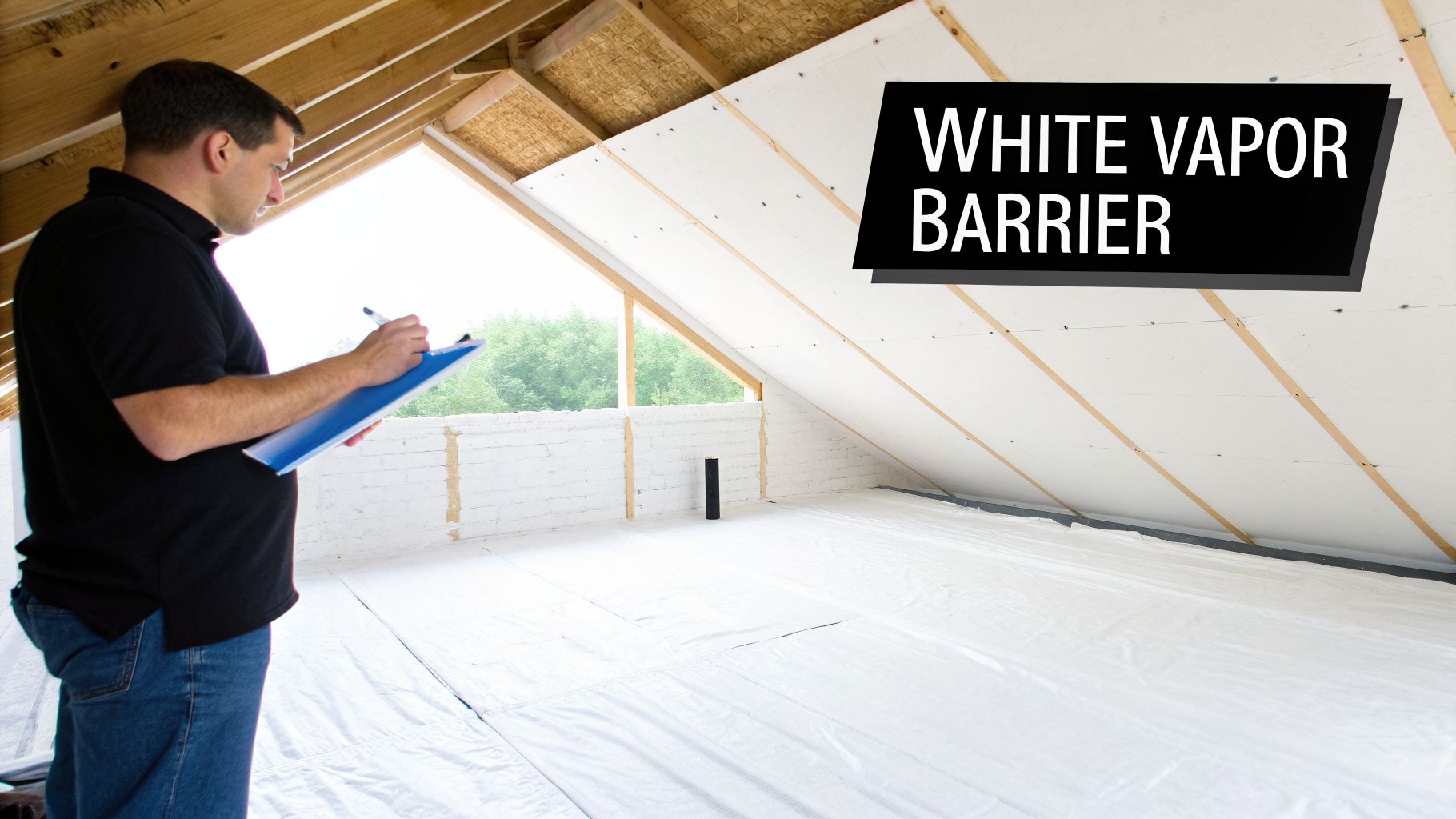
Think of a white vapor barrier as the ultimate raincoat for your home, but instead of blocking rain, it’s designed to stop something far more persistent: humidity. Here in South Florida, we often use these systems, especially with spray foam insulation, to create a bright, seamless shield in attics and crawl spaces against that relentless moisture.
The air in South Florida feels heavy for a reason—it’s saturated with water. This invisible moisture, or water vapor, is always looking for a way into your cooler, air-conditioned home. Once inside, it condenses on any cool surface it finds in your attic or walls, creating the perfect environment for all sorts of trouble.
This is exactly where a high-performance white vapor barrier makes all the difference. We’re not talking about a simple plastic sheet you staple to the studs. The systems we install, particularly those using closed-cell spray foam, create a solid, continuous layer that's bonded directly to your home's structure.
This seamless application is critical. I’ve seen it countless times—moisture vapor will find and exploit any gap, tear, or unsealed seam. A single weak point can undermine the entire system, making it useless against our humidity.
And the "white" finish isn't just for looks. It makes a huge difference. Those dark, cramped attics and crawl spaces become bright and easy to inspect for any pest activity or maintenance needs. It also reflects light, which makes the space much safer to move around in.
To give you a quick overview, here are the main jobs a white vapor barrier does for your property.
| Key Function | Primary Benefit for Your Property |
|---|---|
| Blocks Water Vapor | Prevents moisture from getting into your walls and attic. |
| Creates a Seamless Seal | Eliminates gaps where humidity and pests can enter. |
| Improves Energy Efficiency | Reduces the load on your AC system by keeping humid air out. |
| Brightens Dark Spaces | The white surface makes inspection and maintenance easier and safer. |
A well-installed vapor barrier is one of the most effective tools we have for protecting a home's structure and the health of the people inside it.
In a hot and humid climate, our main enemy isn't just the heat; it's the moisture that comes with it. If you let water vapor run wild, you’re setting yourself up for some expensive and unhealthy problems down the road. If you’re new to the concept, it’s worth understanding the fundamentals of what a vapor barrier is and how it controls moisture movement.
Here are the exact threats a properly installed white vapor barrier protects your home from:
For homeowners here in Jupiter, West Palm Beach, and Stuart, putting in a solid vapor barrier system isn’t just an upgrade—it's essential protection. If you're looking into ways to fortify your home, our guide on the connection between vapour barriers and insulation is a great next step. A white vapor barrier is a shield, plain and simple, safeguarding your property's value and your family's health from the quiet damage humidity causes every single day.

In the construction world, it’s easy to get tangled up in the terminology. Two terms that get confused all the time are vapor barrier and vapor retarder. Getting them straight isn't just about semantics—it's the key to a healthy, efficient building, especially here in South Florida.
Think about it like picking the right jacket for the weather. A vapor retarder is like a breathable windbreaker. It slows moisture down, but it still lets a little bit through. A true vapor barrier, on the other hand, is like a heavy-duty waterproof rain slicker. Nothing is getting past it.
The building industry has a way to measure this: a "perm" rating. This number tells us exactly how much moisture vapor a material will let pass through it. It's how we separate the "windbreakers" from the "rain slickers."
For the kind of relentless humidity we face in South Florida, just slowing moisture down isn't enough. You need to stop it in its tracks with a Class I vapor barrier. The white vapor barrier we create with closed-cell spray foam provides this top-tier, impermeable Class I protection.
In our hot and humid climate, the goal isn't just to slow moisture down; it's to put up a full-stop barrier. A Class I vapor barrier acts as a definitive stop sign for humidity, preventing it from ever reaching the cooler surfaces inside your walls or attic where it can condense and cause damage.
Understanding this difference is absolutely critical. For a deeper dive into how these barriers perform in our local attic environments, you can read our guide on vapor barriers in attics, which lays out the specifics for Florida homes.
Now, let's talk about something called drying potential. Every wall and roof system has to have a way to dry out if it gets wet, whether from a roof leak or hidden condensation. This is where the placement of your vapor barrier becomes everything.
Imagine you install a Class I vapor barrier on the wrong side of your wall. In a cold climate, the vapor barrier goes on the warm, interior side to keep house moisture from hitting the cold sheathing outside. But here in Florida, everything is flipped.
Our main moisture problem comes from the hot, humid outdoors pushing its way toward our cool, air-conditioned interiors. That means the vapor barrier must be on the exterior side of the insulation. In an attic, that means applying it directly to the underside of the hot roof deck.
If you put an impermeable barrier on the interior side (like behind the drywall), you create what we call a "vapor sandwich." This design traps any moisture that finds its way into the wall cavity, giving it no path to escape. It's a catastrophic mistake that creates a perfect breeding ground for mold and rot.
A properly installed white vapor barrier of closed-cell spray foam on the roof deck stops vapor before it can ever enter the attic space. This allows the entire assembly to stay dry, just the way it was designed.
Choosing a vapor barrier is one of those behind-the-scenes decisions that has huge consequences for your home’s health. I've spent years in this industry, and I can tell you firsthand that the material you pick can mean the difference between a durable, healthy home and one plagued by moisture issues. The choice really boils down to two paths: the old-school plastic sheets or a modern, integrated system like spray foam.
For decades, the standard approach was to use big rolls of polyethylene sheeting, tacked or taped up against the framing. It’s cheap, which is why it was so common. But the problem is, it’s also incredibly difficult to get right and almost always fails over time. The installation is a pain, and trying to create a perfect, continuous seal around every pipe, wire, and corner is next to impossible. Those sheets tear, sag, and leak at the seams, eventually becoming useless.
Spray foam is a completely different animal. When we apply closed-cell spray foam, it’s a liquid that expands to fill every single crack and gap, bonding directly to the structure itself. It creates one solid, seamless barrier that’s far more durable and reliable than any sheet of plastic could ever hope to be.
The world is waking up to how important good moisture control is. The construction sector, which uses 54.7% of all vapor barriers, is a huge part of a market that hit USD 12.2 billion in 2023. This isn't just a trend; it's a direct response to stricter building codes focused on energy efficiency and healthier indoor air. We're finally addressing problems like condensation, which is a factor in a staggering 70% of humidity-related building failures.
While old-school polymer sheets still make up 47.4% of the market, better solutions are taking over. Insulation applications now account for 39.3% of all vapor barrier use, which shows just how well insulation and moisture control work together—something spray foam does perfectly. If you want to dive deeper into the numbers, you can read the full research on the vapor barrier market growth and statistics.
Let's get practical and break down what this means in the real world.
Polyethylene Sheeting (The Old Way)
Spray Foam (The Airtight Method)
Beyond being a top-tier vapor barrier, the white vapor barrier finish you can get with certain spray foam systems adds some serious practical benefits. This isn't just for looks; it's a functional upgrade that makes your property better and easier to manage.
Picture a typical dark, dusty attic or a creepy crawl space. It’s a place you try to avoid, right?
A bright white finish completely transforms these areas. It reflects light, making them feel clean, open, and far less intimidating. But more importantly, it makes it incredibly easy to spot potential issues like a roof leak, signs of pests, or any other damage during a quick inspection.
The benefits are straightforward and tangible:
At the end of the day, while traditional plastic sheets might look like a bargain, their unreliability makes them a gamble you don't want to take. A monolithic, closed-cell white vapor barrier from a company like Airtight Spray Foam Insulation delivers a durable, seamless, and multifunctional system that provides true, lasting protection for your home.
Here in South Florida, managing moisture isn't just a good idea—it’s the single most important part of building a home that lasts. The relentless heat and humidity are constantly trying to force their way inside, and this is where understanding spray foam insulation really pays off. It’s one thing to know the theory, but how you apply it in the real world is what protects your home from rot and mold.
Spray foam isn’t a one-size-fits-all product. It comes in two main flavors, and knowing the difference is absolutely critical for getting the job done right and meeting building codes in places like Jupiter and West Palm Beach.
Think of closed-cell spray foam as the ultimate workhorse for our climate. When we spray it, it does three crucial jobs at once:
That last point is a game-changer for South Florida. A professionally installed layer of closed-cell foam creates a seamless, monolithic white vapor barrier. It doesn't just slow moisture down; it stops it completely.
On the other hand, you have open-cell spray foam. It has a softer, spongier texture. While it's a fantastic air barrier and great for soundproofing, it's also vapor-permeable. Moisture can pass right through it.
Because of this, open-cell foam simply can't be used as a standalone vapor barrier in our humid environment. To meet code and prevent serious moisture problems down the road, it must be paired with a separate, specially designed vapor-retarding primer or coating. This is a non-negotiable extra step. You can read more about how we combine these systems in our guide to moisture barrier insulation.
The visual below shows how different materials, from traditional sheets to modern spray foams, are used to control vapor.
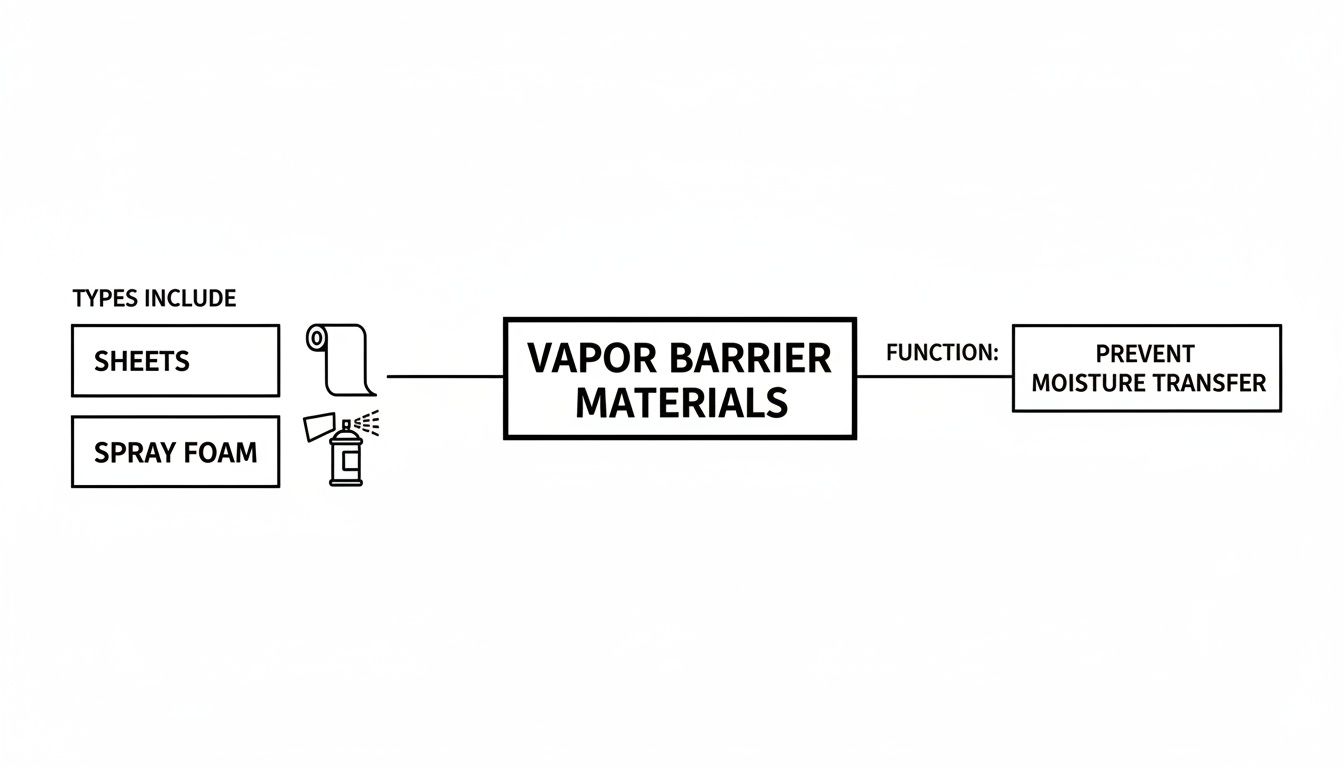
When deciding between foam types, you have to consider their inherent ability to manage moisture. This table breaks down the fundamental differences and the strategy we use for each in South Florida.
| Foam Type | Perm Rating | Built-in Vapor Barrier? | Recommended South Florida Strategy |
|---|---|---|---|
| Open-Cell Foam | High (Vapor-Permeable) | No | Must be paired with a separate vapor-retarding primer or paint to meet code. |
| Closed-Cell Foam | Low (Vapor-Impermeable) | Yes (Class I Barrier) | Acts as an all-in-one insulation, air, and vapor barrier solution. No extra barrier needed. |
In short, closed-cell foam has the vapor barrier built right in, making it the more direct and robust solution for our climate. Open-cell can work, but only with an additional, professionally applied vapor retarder.
Up north, they install vapor barriers on the warm, interior side of the insulation to keep moisture from the heated living space out of the walls. Here in Florida, we have to do the exact opposite. Our enemy is the hot, humid air outside trying to push its way into our cool, air-conditioned homes.
This means the vapor barrier must be on the "outside" of the insulation. In an attic, that means applying it directly to the underside of the hot roof deck. This strategy stops water vapor before it can ever hit a cool surface and condense, which is the root cause of nearly all mold and rot issues I see.
Applying closed-cell spray foam directly to the roof deck is the gold standard for high-performance homes in our climate. It creates a conditioned attic, bringing the entire thermal and moisture boundary up to the roofline itself. For contractors and homeowners, getting this right is non-negotiable for long-term durability and efficiency. It’s a precise job where professional experience makes all the difference.
I’ve seen it time and again: a property owner invests in the best vapor barrier material on the market, only to have it fail because of a sloppy installation. A high-performance barrier is only as good as the hands that install it. In South Florida, with our relentless humidity, there's no room for error.
Think of it like a boat. A tiny, unseen pinhole is all it takes to let water in, and before you know it, you're sinking. The goal of a vapor barrier is to create a perfectly continuous, unbroken seal. This is especially true for a seamless system like a white vapor barrier from closed-cell spray foam, where the expertise of the installer is everything.
Before we even think about spraying foam, we focus on the surface. This is the single most rushed and overlooked step in the industry, but it’s the foundation for the entire system. Any professional installer worth their salt knows the surface has to be perfectly clean, dry, and free of any dust, oils, or loose bits of material.
If you skip this step, the foam won't bond correctly. We call it delamination, and it creates hidden air pockets where moisture gets trapped. That’s a recipe for disaster. It’s why our team at Airtight Spray Foam Insulation is meticulous about prep work—it’s the difference between a system that fails in five years and one that lasts the lifetime of your building.
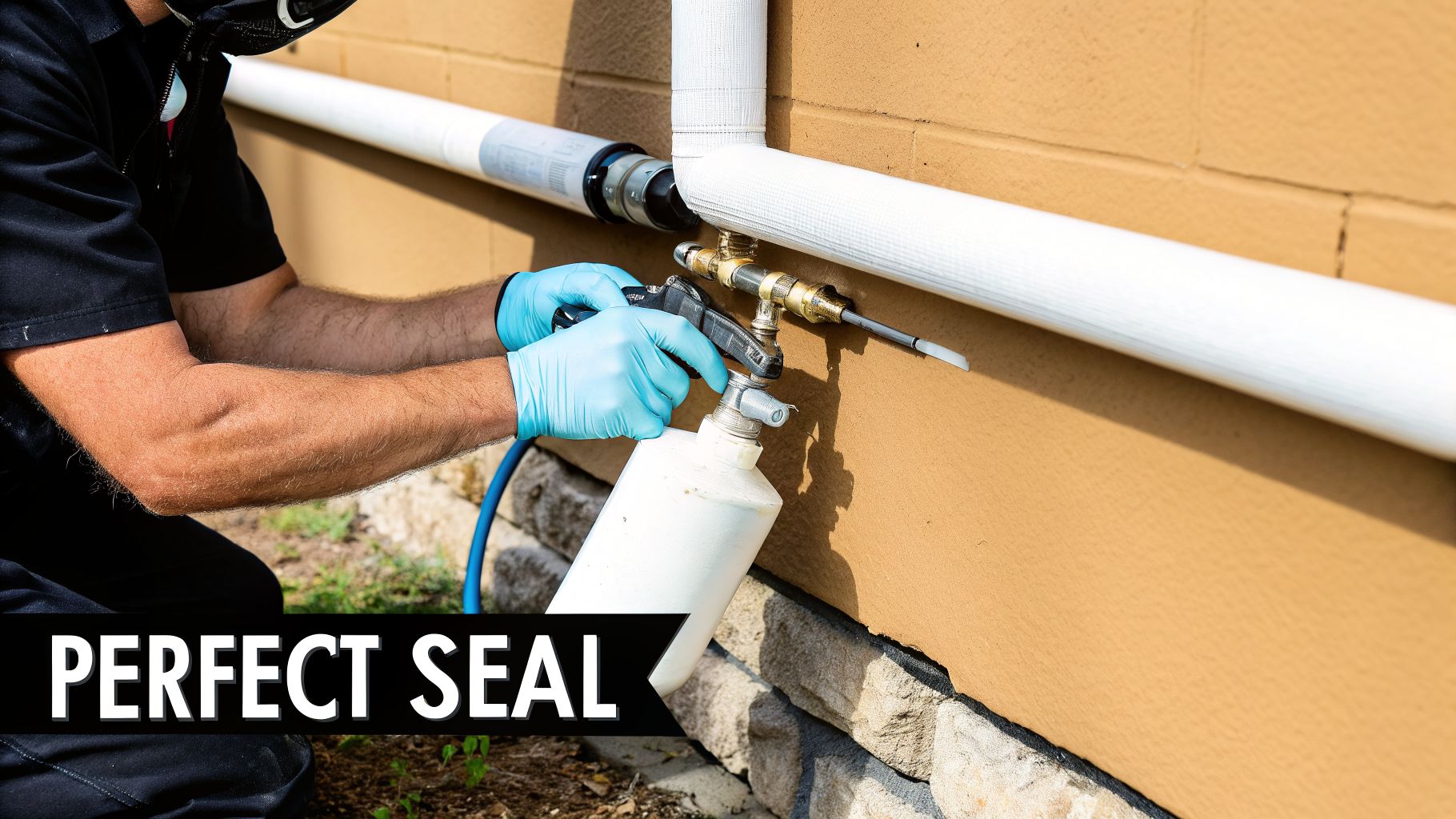
A truly sealed building envelope comes down to the details. The weakest links are always the penetrations—all those spots where pipes, vents, electrical boxes, and wiring cut through the structure.
A skilled installer methodically seals around every single one. This isn’t a job for a can of generic gap filler from the hardware store. It takes the right materials and techniques to create a permanent, flexible seal that can expand and contract with the building without cracking.
A vapor barrier is a complete system, not just a product. Its performance is only as strong as its weakest point. A single unsealed pipe can funnel gallons of moisture vapor into your attic or walls over a year, completely defeating the purpose of your investment.
This focus on a tight building envelope is why the global vapor barriers market is expected to hit USD 27.1 billion by 2035. Here in West Palm Beach, we’ve seen these systems extend the life of roofs and walls by 10-15 years by stopping moisture damage in its tracks. With South Florida getting over 60 inches of rain a year, a professionally installed white vapor barrier isn't a luxury; it's essential. You can dig into the numbers and trends yourself in the full industry analysis on vapor barrier markets.
I've been called in to fix countless failed projects. Most of the time, the failure comes down to one of these common but costly mistakes.
In the end, the precision needed for a flawless installation just proves the value of working with certified experts who live and breathe this stuff. A properly installed white vapor barrier isn't just an expense; it's a long-term investment in your property's health, efficiency, and your own peace of mind.
When it comes to protecting your home, especially here in South Florida, a lot of questions come up. We get them all the time from homeowners and builders. Here are some straightforward answers to the most common ones we hear about white vapor barriers.
Without a doubt. In a hot, humid climate like ours, a vapor barrier isn't just a good idea—it's a critical line of defense. Think of the constant, heavy humidity as always trying to push its way into your cooler, air-conditioned home. This process is called vapor drive, and it’s relentless.
Without a proper barrier, that moisture gets inside your walls and attic, condenses, and creates the perfect environment for mold, wood rot, and terrible indoor air quality. A Class I vapor barrier, like the one formed by closed-cell spray foam, is your best defense against this invisible threat. It's so important that local building codes often require it.
While you might see some tapes and sealants on the shelf at a home improvement store, a true vapor barrier system is not a DIY project. Its success depends entirely on a perfect, unbroken seal, and that's especially true for systems like spray foam that create a seamless white vapor barrier.
A vapor barrier is only as strong as its weakest point. A professional installer knows how to prep every surface and meticulously seal every gap around pipes, wires, and joists. Even a single small mistake can compromise the entire system, potentially trapping moisture and causing more damage than if you had no barrier at all.
For performance you can count on for decades, professional installation is the only way to go. It’s about getting the job done right the first time.
No, and confusing the two is a common and costly mistake. A vapor barrier stops moisture in its gas form—what we feel as humidity. Waterproofing is designed to stop liquid water, like rain from a leaky roof or a busted pipe.
Here’s an easy way to think about it: waterproofing is your home’s raincoat, keeping it dry during a storm. A vapor barrier is the breathable GORE-TEX® layer that stops you from feeling damp and clammy on a humid day. While some materials like closed-cell spray foam excel at both, they are engineered to solve two very different, but equally important, problems.
At Airtight Spray Foam Insulation, we bring the hands-on expertise needed to install a flawless white vapor barrier that will protect your South Florida property for years to come. Get a free quote today and learn how our Airtight Comfort System can make your home healthier and more efficient.