If you own a home or manage a building in South Florida, you probably know the pattern. The AC runs hard by late morning. One room feels sticky while another feels cold. Supply vents sweat. The garage stays hot. The upstairs bonus room never seems to settle down, even after the thermostat drops.
That usually points to more than “not enough insulation.” In this climate, the bigger problem is often uncontrolled air movement and moisture moving through the building shell. When outside air slips in through gaps at the roofline, wall penetrations, rim areas, soffits, or foundation transitions, the cooling system has to fight both heat and humidity.
That’s why spray foam insulation applications matter so much here. Spray foam isn’t just filling space in a wall or attic. It creates an air seal where other materials often leave small pathways behind.
Demand for that kind of performance keeps rising. The global spray foam market was valued at USD 2.4 billion in 2023, and that growth is tied to energy efficiency needs because air leakage can account for up to 40% of a building’s energy loss, according to GM Insights on the spray foam market. In South Florida, that leakage also brings moisture with it, which changes the comfort picture fast.
A lot of people start looking into insulation after a specific frustration finally gets old. It might be an attic AC handler struggling through summer. It might be a back bedroom that smells musty after a stretch of rain. It might be a workshop or metal building that turns into a sauna by noon.
In this region, those aren’t minor annoyances. They’re signs that the building envelope isn’t controlling heat and humidity the way it should. Traditional insulation can slow heat transfer, but if the assembly still leaks air, the system keeps chasing the same problem.
Spray foam changes the job from “stuffing insulation into a cavity” to sealing the cavity and insulating it at the same time. That’s a major difference in homes and light commercial buildings near Jupiter, Palm Beach Gardens, West Palm Beach, Wellington, and Stuart, where humidity loads can be as punishing as the heat itself.
When spray foam is applied correctly, it expands into cracks, seams, and irregular framing areas that batt products often leave exposed. That makes a noticeable difference in places like:
Practical rule: If a room is hard to cool, feels damp, or gets dusty faster than the rest of the house, don’t assume the problem is only the AC. The enclosure often needs work first.
A generic insulation guide usually says “insulate the attic” and leaves it there. That’s not enough for coastal Florida. You have to think about salt air, wind-driven rain, condensation risk, roof deck conditions, and hidden leakage paths that keep feeding humidity indoors.
Good spray foam work is specific. It matches the foam type to the assembly, the building use, and the moisture profile of the space. It also accounts for details most homeowners never see, like transitions at wall tops, cantilevered floors, kneewall backs, and foundation edges.
That’s where most of the value comes from. Not from a product label. From using the right material in the right place, for the right reason.
Most spray foam discussions get muddled because people compare products without first asking where the foam is going. The right choice for an interior partition wall isn’t automatically the right choice for a roof deck, crawl space, or masonry-adjacent application.
At a simple level, open-cell foam is more like a dense sponge. Closed-cell foam is more like a rigid mass of sealed bubbles. Both insulate. They don’t behave the same around moisture, structure, or thickness limits.
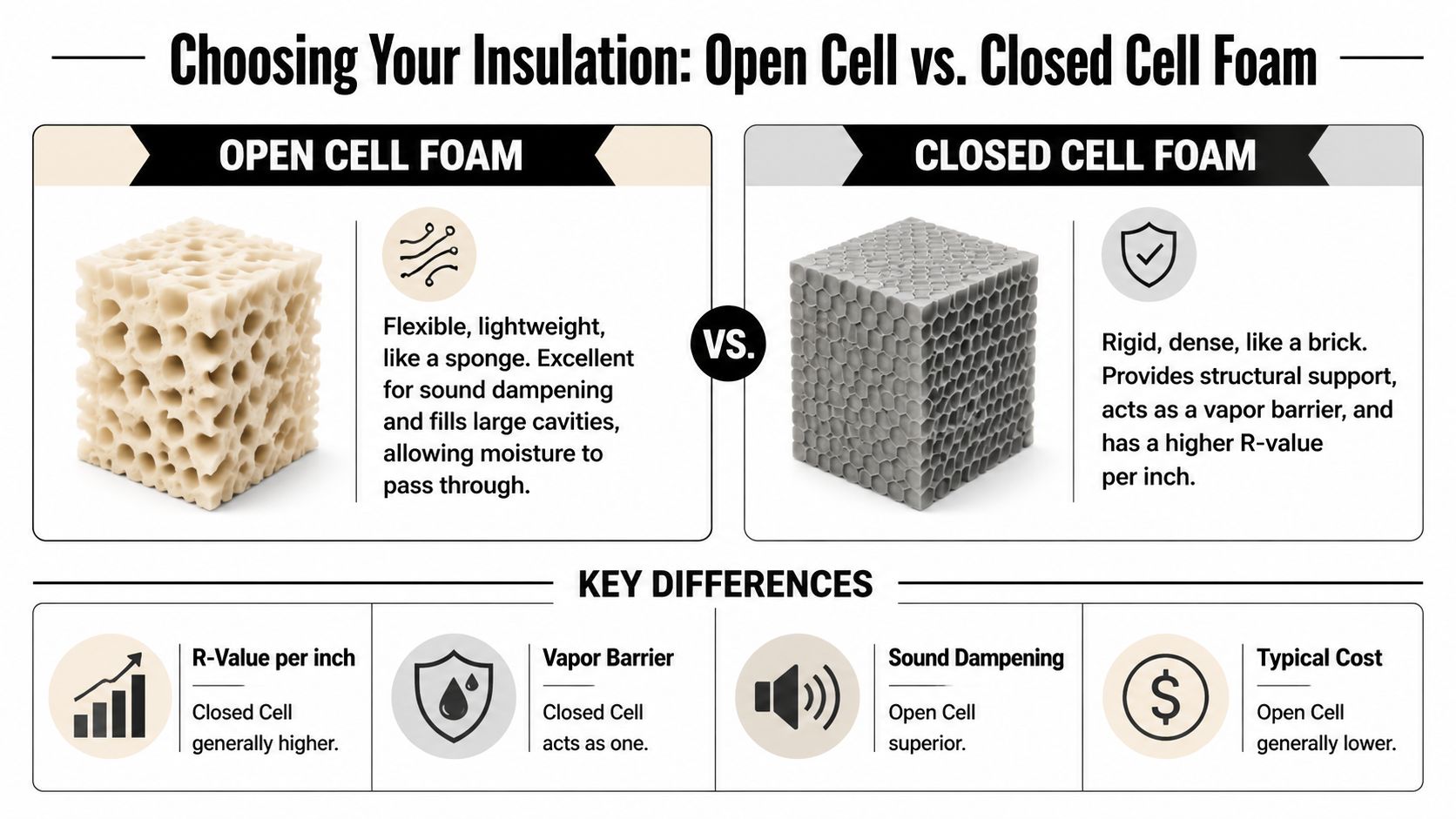
Open-cell foam expands aggressively and fills cavities nicely. It’s useful where sound control matters and where the assembly can dry appropriately. In practical terms, that often makes it a fit for interior applications where moisture resistance isn’t the primary concern.
It can work very well in certain wall and roof assemblies when the design supports it, but it isn’t my first choice for every South Florida exterior condition. In a humid climate, you need to be very clear on how the assembly manages vapor and drying.
Closed-cell foam is denser, more rigid, and more defensive. It offers an R-value of 6.0 to 7.0 per inch, compared with fiberglass at 3.1 to 4.3 per inch, and its low vapor permeability helps limit condensation and mold risk in humid climates, according to Arizton’s U.S. spray foam insulation market analysis.
That matters in South Florida because thickness is often limited by framing depth, roof geometry, or retrofit conditions. If you need strong thermal performance in less space, closed-cell gives you more insulation per inch.
It also makes sense where the assembly needs added rigidity or where the building is exposed to persistent moisture pressure.
| Feature | Open-Cell Foam | Closed-Cell Foam |
|---|---|---|
| Texture | Softer and more flexible | Dense and rigid |
| Best fit | Interior cavities and sound-focused applications | Exterior-facing, moisture-prone, and high-performance assemblies |
| R-value per inch | Lower | 6.0 to 7.0 per inch |
| Moisture behavior | More vapor open | Low vapor permeability |
| Sound control | Strong sound dampening | Good, but not usually the top reason to choose it |
| Structural contribution | Minimal | Adds rigidity |
| Typical budget position | Usually lower | Usually higher |
The fastest way to sort this out is to ask three questions.
For a deeper side-by-side explanation, this breakdown of closed-cell vs open-cell spray foam is useful when you’re comparing options for a specific project.
Closed-cell is usually the safer answer when moisture control is part of the problem, not just temperature control.
The best spray foam insulation applications aren’t always the biggest surfaces. Some of the most important work happens in the small, ugly, awkward areas where air leaks hide.
That said, a few parts of the building deliver outsized results when they’re handled correctly.
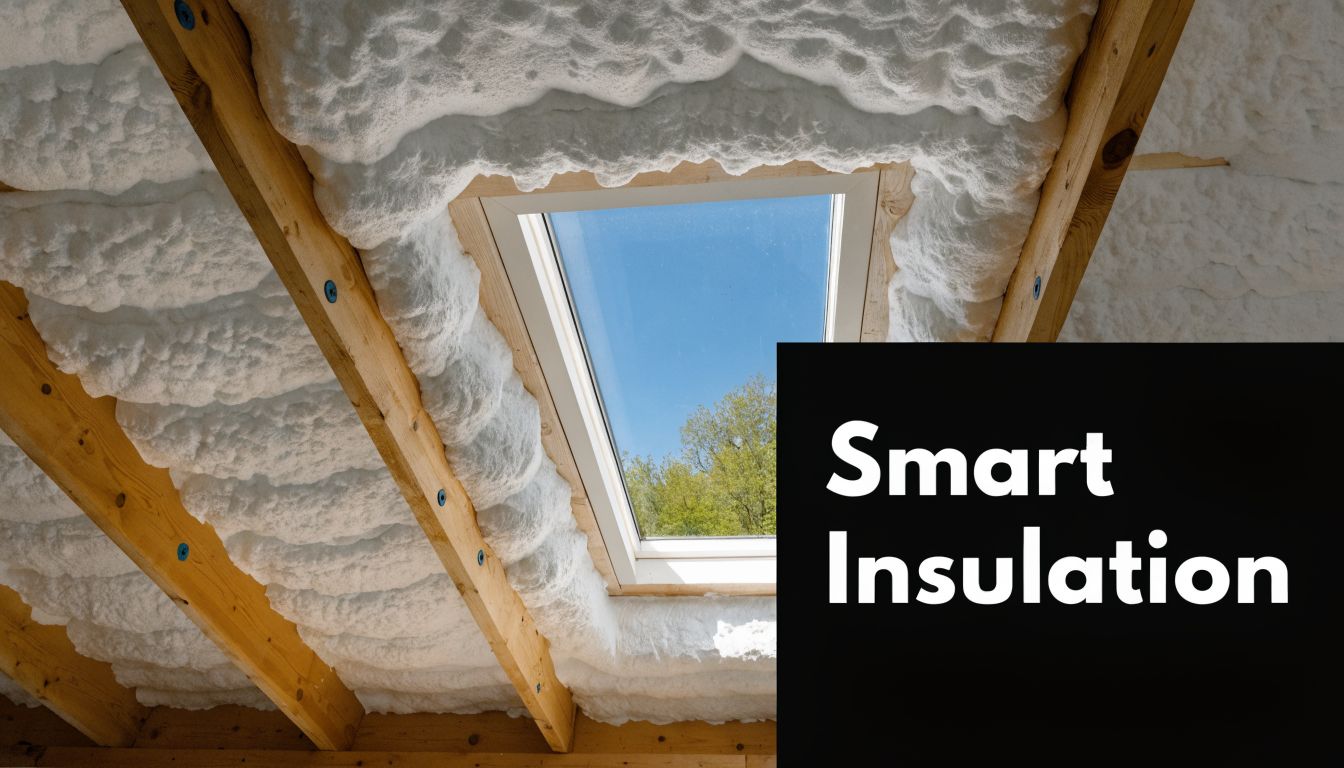
In South Florida, the attic is often the first place to look. A vented attic can become brutally hot, and if air handlers or ductwork are up there, the cooling system starts every day from behind.
Applying spray foam at the roof deck changes the attic from a hostile buffer zone into a more controlled part of the structure. That can help stabilize temperatures around ducts and equipment, reduce infiltration, and improve comfort in rooms below.
Closed-cell foam is often the stronger candidate for roofline work here because of its moisture resistance and higher R-value per inch. The exact assembly still matters. Roof condition, decking, indoor humidity control, and overall ventilation strategy all have to line up.
Homeowners comparing roofline upgrades can get more local context from this guide to attic insulation in Florida.
Walls look simple on paper. In the field, they rarely are. You have electrical penetrations, plumbing, framing irregularities, window rough openings, and intersections that batt insulation doesn’t always seal well.
Spray foam works well in these cavities because it conforms to the shape it finds. That cuts down on drafts and helps reduce the uneven feel many homes have between shaded and sun-exposed sides of the structure.
Open-cell foam can be a good fit in some framed wall assemblies. Closed-cell is usually the better option when wall performance depends heavily on moisture control, added rigidity, or getting more thermal value in limited depth.
These are common complaint zones. A room over the garage gets hot. A detached office feels clammy. A workshop or hobby room stays uncomfortable even with a mini-split running.
The reason is usually a combination of radiant heat, poor air sealing, and leaky transitions between conditioned and unconditioned spaces. Spray foam helps because it doesn’t just insulate broad surfaces. It also closes up the little bypasses around top plates, corners, and service penetrations that keep feeding warm damp air inward.
For metal buildings, this gets even more important. Metal transfers heat quickly and can create serious condensation headaches if the assembly isn’t planned properly. Closed-cell foam is often chosen there because it adheres well and helps control both thermal gain and moisture.
New construction gives you the easiest access to the full envelope. That’s when you can make spray foam part of a coordinated enclosure plan instead of trying to patch weaknesses later.
In renovation work, the value often comes from targeting the right problem areas instead of trying to foam every inch of the house. A focused retrofit at the roofline, rim area, garage ceiling, or cantilever can fix performance issues that homeowners have lived with for years.
Often, generic guides miss key details. They talk about attics and walls, then stop. But band joists, knee walls, and stairway soffits can account for up to 25% of a home’s total energy loss, according to this discussion of overlooked residential spray foam targets.
Those spaces are problem zones because they combine odd geometry with leakage pathways. Traditional insulation often leaves edges, corners, and penetrations exposed.
The most important overlooked areas include:
If these areas stay leaky, the main insulation package won’t perform the way the owner expects.
Some practical truth helps here.
What works:
What doesn’t:
Spray foam is powerful, but it’s not magic. It performs best when the installer understands where air is moving, where moisture is coming from, and which parts of the building are doing the most damage.
A professional spray foam job should look controlled from the start. Not rushed, not sloppy, and not improvised on site. Good crews don’t show up and just start spraying. They inspect the surfaces, confirm the scope, protect adjacent areas, and make sure the building is ready.

Before any foam is applied, the crew needs to check the substrate, access, environmental conditions, and what nearby materials need masking or protection. In existing homes, that often includes isolating the work area and planning airflow during the install and curing period.
Experienced installers distinguish themselves by recognizing that the quality of the finished job depends on surface condition, temperature awareness, spray technique, and sequencing. If those are wrong, the foam can’t make up for it.
During application, the installer is watching for coverage consistency, adhesion, expansion behavior, and thickness control. Spray foam isn’t just “point and shoot.” It requires trained handling and judgment, especially in tight assemblies and irregular framing.
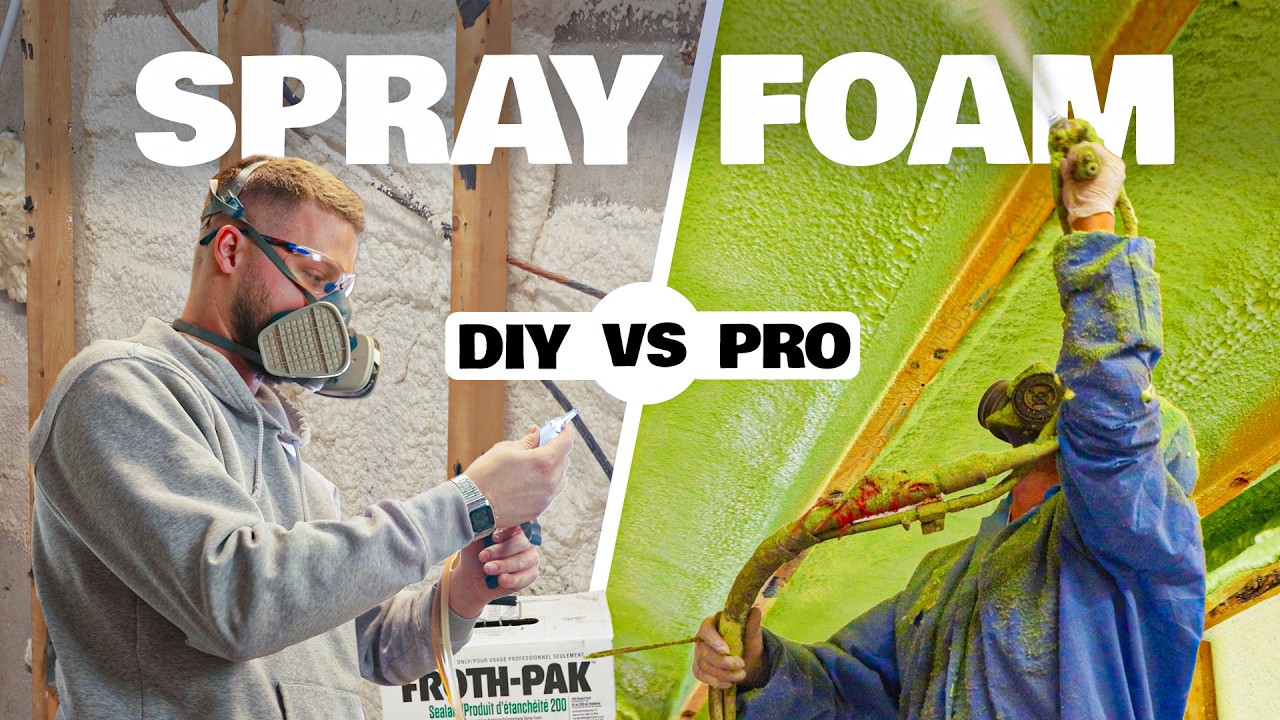
A proper crew also uses the right protective gear and follows safety procedures for occupancy and ventilation. That’s one reason DIY spray foam is risky. The material chemistry, application conditions, and curing process all need to be handled correctly.
Field advice: The cheapest quote often skips the hardest part of the work, which is control. Control of mix, control of thickness, control of prep, and control of cleanup.
Here’s a look at installation in action:
Most spray foam problems trace back to workmanship, not the idea of spray foam itself. Common failure points include poor surface prep, uneven passes, missed transitions, and treating the job like cavity filling instead of enclosure work.
A weak installation can leave voids behind wiring, thin spots at edges, or adhesion issues where the substrate wasn’t ready. It can also create a rough-looking finish that signals the crew was moving too fast.
A solid contractor should be able to explain:
When the answers are vague, the project usually gets vague results. Spray foam rewards precision. It punishes shortcuts.
People usually ask about price first, and that’s fair. Spray foam costs more upfront than many traditional insulation options. But judging it only by installation cost misses the bigger financial picture, especially in South Florida where cooling demand is relentless.
The important question isn’t just “What will it cost?” It’s “What am I paying to fix, and what keeps costing me if I leave it alone?”
The biggest cost drivers are usually:
For a closer look at what shapes pricing, this guide on spray foam insulation installation cost breaks down the variables homeowners and builders usually need to compare.

Return on investment shows up in more than one place.
First, a properly sealed envelope can reduce the burden on mechanical equipment. Properly applied spray foam acts as both an insulator and an air barrier, which can allow for HVAC system downsizing of up to 35%, according to Why Spray Foam fast facts. That matters most in new construction and major renovations where equipment selection is still on the table.
Second, utility bills often improve because the system isn’t fighting the same infiltration load every day. I won’t put a blanket savings number on every project because homes and buildings vary too much, but owners usually notice the difference in runtime, comfort stability, and humidity control.
Third, there’s the protection side. In this climate, moisture damage is expensive. If the insulation strategy helps limit condensation-prone areas and cuts down on humid air intrusion, it may prevent a chain of repair costs that never show up on the initial bid sheet.
Some of the payoff is hard to quantify but easy to feel:
That matters in homes. It matters just as much in commercial spaces, warehouses, and workshops where comfort affects use of the building every day.
South Florida punishes generic insulation advice. What works adequately in a drier climate can fail here because moisture doesn’t behave politely. It moves with air leakage, condenses on cooler surfaces, and lingers in hidden spaces long enough to create bigger problems.
That’s why spray foam insulation applications in this region have to be planned around humidity first, not as an afterthought.
In a coastal climate, the enclosure has to control warm, damp outdoor air before that air reaches cooler interior surfaces. If you leave leakage paths at roof transitions, wall penetrations, soffits, or floor connections, the building keeps importing moisture every day the AC runs.
That’s also why low-permeability assemblies matter more here than they might inland. Closed-cell foam often makes sense in exposed or moisture-prone locations because it gives the structure a more defensive layer instead of adding insulation value.
If mold is already part of the concern, it helps to learn about mold in Tampa Bay because the same climate drivers behind mold issues there are familiar across Florida homes.
South Florida buildings don’t just need insulation. They need controlled drying, controlled air movement, and fewer places for damp air to hide.
One of the most overlooked issues in this market is ground-related moisture. Slabs, crawl spaces, and foundation transitions can keep feeding humidity into the structure if they aren’t detailed properly.
For this climate, applying 1 to 2 inches of closed-cell spray foam from grade level down into the footings can create a unified, watertight system that helps prevent ground moisture from wicking into the structure, according to SprayWorks Equipment on unique spray foam applications.
That’s not a universal prescription for every building. Site drainage, concrete condition, flood exposure, and assembly type still matter. But the principle is important. You can’t solve all humidity problems from the attic downward if the lower parts of the structure are still pulling moisture in.
Salt air and wind-driven rain make weak assemblies show themselves quickly. Exterior-facing applications need to hold up under harsher conditions, and transitions between materials become more important near the coast.
This is one reason closed-cell foam gets specified so often in South Florida. It gives strong thermal performance in limited depth and supports moisture control in spaces where failure is costly. Roof edges, mechanical rooms, cantilevers, and foundation-adjacent areas all deserve closer attention here than a generic national guide would suggest.
If the property is in Jupiter, West Palm Beach, Palm Beach Gardens, Wellington, Stuart, or another nearby coastal market, the best starting points are usually these:
A good insulation plan in South Florida is never just about hitting an R-value target. It’s about controlling where heat and moisture enter the building in the first place.
A professionally installed spray foam system can perform for many years. The bigger issue isn’t usually age alone. It’s whether the foam was installed correctly, whether the surrounding assembly stays dry, and whether later renovation work damages it.
There can be an odor during installation and curing, which is one reason proper ventilation and jobsite procedures matter. With a professional install, the work area should be managed carefully and re-entry expectations should be explained clearly before the job starts.
If someone treats that part casually, that’s a red flag.
Spray foam itself is generally low-maintenance once cured and protected within the assembly. What does require attention is the building around it. Roof leaks, bulk water intrusion, or later electrical and mechanical work can affect any insulation system.
If the building stays sound, spray foam usually doesn’t need regular service.
No. That’s one of the biggest misconceptions. The best results come from matching the foam type to the location and the building goal. Some spaces benefit most from closed-cell. Some interior areas are better candidates for open-cell. Some problems aren’t insulation problems at all and need water management or HVAC correction first.
Yes, especially when the existing insulation slows heat transfer but doesn’t stop air movement. Many comfort complaints come from leakage at transitions, voids, and irregular framing areas rather than from a total lack of insulation.
That’s why targeted spray foam work can change how a home feels without requiring a full gut renovation.
Ask what foam type they recommend and why. Ask how they handle prep, ventilation, coverage consistency, and cleanup. Ask where they think leakage paths are.
If they can’t explain the building science in plain language, keep looking.
If you want project-specific guidance for your home, business, metal building, or new construction job, Airtight Spray Foam Insulation can help you evaluate the right spray foam insulation applications for South Florida conditions. Their team serves Jupiter, Palm Beach Gardens, West Palm Beach, Wellington, Stuart, and surrounding areas with project-specific recommendations, professional installation, and free estimates.