South Florida homeowners usually start looking into insulation after the same pattern repeats for months. The AC runs all afternoon. The upstairs stays warmer than the downstairs. The garage feels like an oven. The attic is brutal. Then the power bill shows up and confirms what the house has been telling you all along.
In this climate, insulation isn't just about slowing heat. It's about controlling heat, air movement, and moisture at the same time. If you only solve one of those, the house still struggles. That's why the best spray foam insulation for South Florida isn't automatically the product with the highest label rating. It's the one that fits the assembly, the humidity load, and the way the building functions.
By August, many South Florida houses show the same pattern. The thermostat says one number, the back bedrooms feel warmer, the attic is punishing, and the AC seems to run without much of a break. In this climate, the insulation choice has to do more than post a high R-value on paper. It has to help control humid air, roof-driven heat, and the moisture problems that show up when assemblies are set up the wrong way.
That is why the best spray foam insulation for South Florida is not just the foam with the highest rated R-value per inch. The right choice depends on where it is being installed, how the assembly dries, and whether the goal is to air seal a vented attic floor, condition an attic, or tighten up problem areas around ducts and cantilevers. Get that decision right and the house is easier to cool. Get it wrong and you can trap moisture, stress the HVAC system, or spend money in the wrong place.
Properly installed spray foam becomes part of the building shell instead of just filling a cavity. Analysts at Arizton note that spray foam is being adopted across the U.S. as owners look for better energy performance and air sealing in residential and commercial buildings, a trend that reflects what contractors see every day in hot, humid markets like ours. U.S. spray foam market and energy data from Arizton
One practical rule holds up on real jobs. In South Florida, many comfort complaints start with outside air getting into the house where it should not.
I treat spray foam as one part of a whole-house system. Duct location matters. Roof design matters. Mechanical sizing and runtime matter. If a property owner wants the envelope and the cooling equipment working together, Expert HVAC management for owners is worth reviewing, because insulation alone will not fix short cycling, bad duct leakage, or poor humidity control.
If you are comparing insulation types before making that call, this side-by-side look at spray foam vs fiberglass insulation in real assemblies helps show where each one fits. In South Florida, the winning approach usually comes from matching the material to the moisture load and the assembly details, not from chasing the highest label number.
Think of traditional insulation as a blanket laid inside the house. It helps, but air can still move around it, through it, and around the edges. Spray foam acts more like a form-fitting, windproof jacket. It fits the cavity, seals irregular gaps, and insulates at the same time.
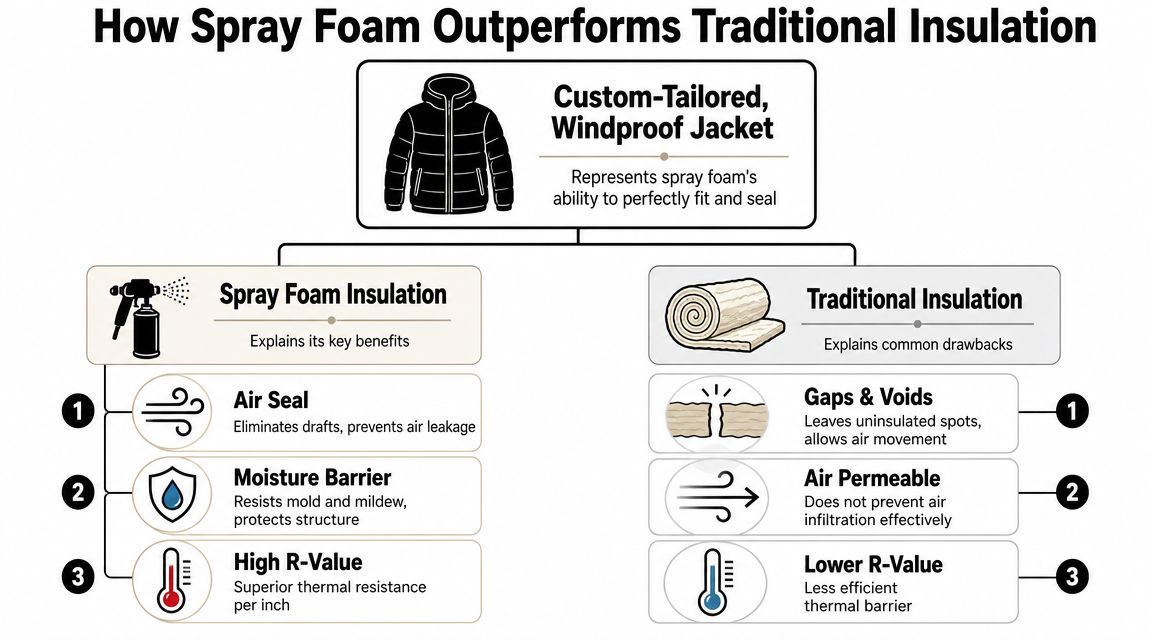
The first advantage is simple. Spray foam gives you more thermal performance in less space. Closed-cell spray foam typically delivers about R-5.5 to R-8.0 per inch, open-cell is around R-3.6, and fiberglass batts are cited at roughly R-2.2 per inch in this spray foam versus fiberglass guide.
That matters in rooflines, block furring strips, cantilevers, and wall cavities where you don't have unlimited depth. If you want a clearer side-by-side breakdown, this guide on spray foam vs fiberglass insulation shows where each approach fits and where fiberglass starts to give up performance in real assemblies.
R-value by itself doesn't tell the whole story in South Florida. A house can have insulation in the cavity and still leak hot, wet air through top plates, wiring penetrations, can lights, rim areas, and odd framing transitions. Once that air gets in, the AC has to deal with it.
Spray foam's real edge is that it insulates and seals in one application. That reduces drafts, lowers attic-to-house air exchange, and helps rooms hold temperature more evenly. Homeowners usually notice that as fewer hot spots and a house that doesn't feel muggy every time the AC cycles off.
A Florida house doesn't need insulation that only tests well on paper. It needs an assembly that still performs when wind, humidity, and solar load show up together.
Traditional insulation can slow heat, but it doesn't automatically control air movement or moisture migration. That's where many South Florida problems begin. If humid air reaches the wrong surface, condensation risk goes up. Over time that can affect sheathing, framing, finishes, and indoor comfort.
Spray foam helps because it can reduce uncontrolled air leakage, and closed-cell products can also provide meaningful vapor control in the right assembly. That's why the best spray foam insulation isn't just about hitting a target R-value. It's about whether the assembly can stay dry while it stays cool.
A homeowner in South Florida usually asks one question first. Which spray foam is best for my house?
The honest answer depends on where the foam is going and what that part of the building has to handle. In this climate, the right choice is not just about getting the highest R-value. It is about controlling humid air, limiting moisture trouble, and holding up under a heavy cooling load without creating a hidden failure.
Closed-cell foam is the denser product, and it earns its keep where assembly depth is limited or moisture exposure is part of the risk. Major building references place closed-cell at about R-5.7 per inch versus R-3.6 per inch for open-cell in this high-performance envelope reference.
That extra thermal resistance per inch matters at roof decks, rim areas, garage boundaries, and metal structures where every inch counts. Closed-cell also has very low vapor permeance and qualifies as an air-impermeable insulation at typical installed thicknesses, based on closed-cell product data from Carlisle. In practical terms, it can insulate, air seal, and slow vapor movement in one system when the assembly is designed correctly.
In South Florida, that combination often makes closed-cell the safer roofline choice. If a house has a low-slope transition, limited rafter depth, or exposure to wind-driven rain, I would rather start with the product that gives more control.
Open-cell foam still has a place. It works well in interior partitions, deeper wall cavities, and areas where sound control matters more than vapor resistance.
It is softer, more vapor-open, and usually less expensive per inch. That lower upfront cost can make sense in the right assembly.
The mistake is using open-cell as the default choice just because it costs less. In a hot-humid region, roof assemblies and other high-moisture locations need more scrutiny. Open-cell can work in some designs, but it gives you less margin for error if the assembly cannot dry as intended or if humid air is likely to reach vulnerable surfaces.
Field takeaway: For roof decks and other assemblies that face heat, humidity, and limited cavity depth at the same time, closed-cell is usually the better fit.
If you want a side-by-side breakdown by application, this guide to open-cell vs closed-cell foam lays out the differences in plain terms.
| Feature | Open-Cell Foam | Closed-Cell Foam |
|---|---|---|
| Thermal resistance per inch | Lower | Higher |
| Vapor behavior | More vapor-permeable | Much more vapor-resistant |
| Best use cases | Interior walls, deep cavities, sound control | Roof decks, garages, metal buildings, humid assemblies |
| Material feel | Softer, lighter | Denser, more rigid |
| Thickness sensitivity | Usually needs more depth | Works better where cavity depth is limited |
| South Florida caution | Can be the wrong fit in roof assemblies if moisture design is ignored | Usually the safer choice where heat and humidity both need control |
Good results come from matching the foam to the assembly instead of picking one product for the whole property. Closed-cell fits tight rooflines, garage ceilings, crawlspace perimeter areas, and other locations where moisture control and space limits are part of the job. Open-cell fits interior sound walls and deeper cavities where drying potential is less of a concern.
Houses in Jupiter, Wellington, and Stuart do not all carry the same risk profile. A sealed attic, a room over a garage, and a metal outbuilding can each call for a different answer. The best spray foam insulation in South Florida is the material that manages heat and humidity together, without setting up the assembly for moisture problems later.
Some areas of a South Florida property give you far more return than others. If you're trying to prioritize the project, start where heat gain, air leakage, and humidity are doing the most damage.
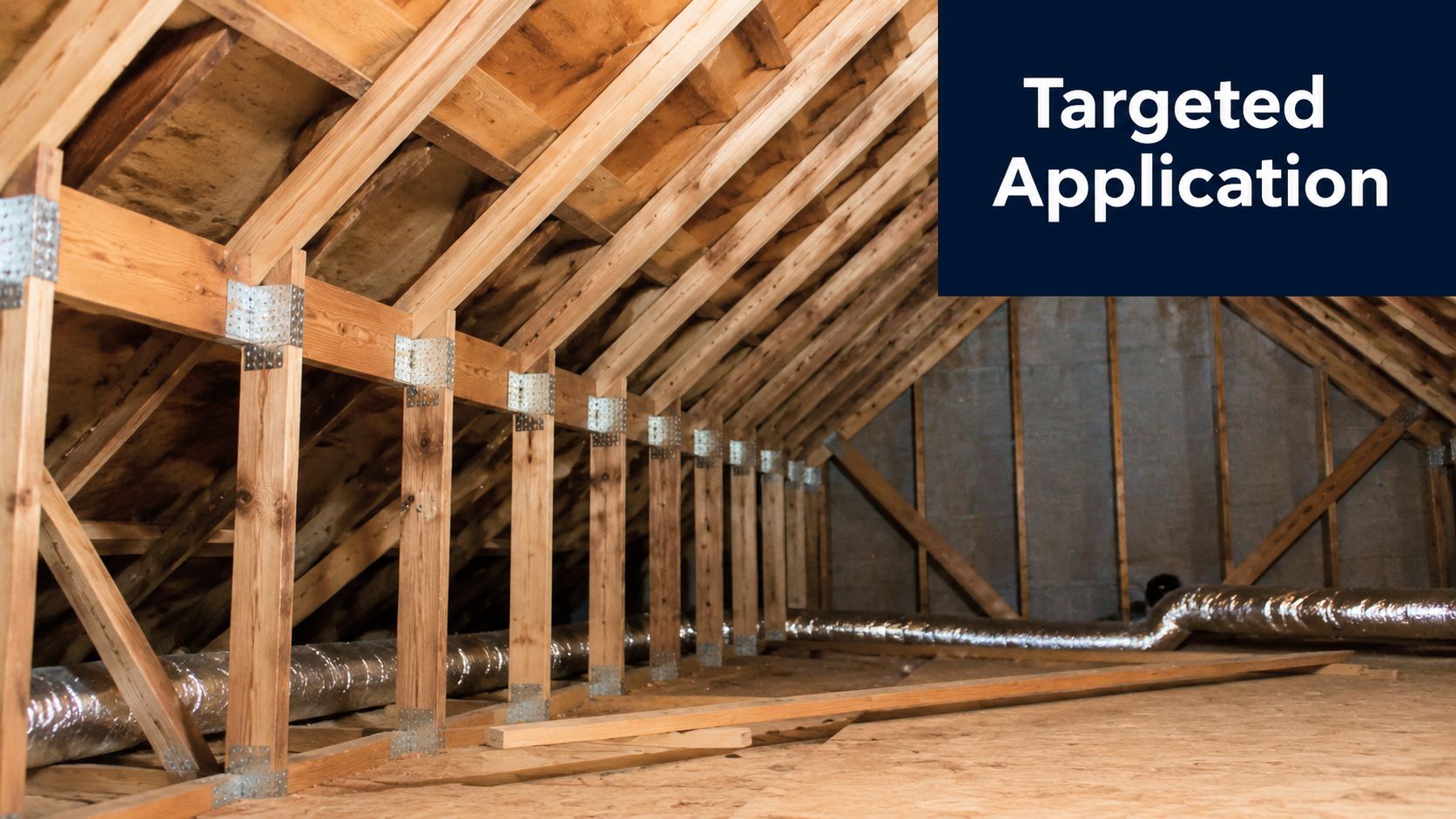
Attics are usually the first place I look. In this region, the attic often carries extreme heat load, and many homes also have ductwork and air handlers up there. If the attic is vented and the ceiling plane leaks, the house pays for that every day in comfort and cooling demand.
Applying spray foam at the roofline can bring the attic closer to indoor conditions and reduce the punishment on ducts and equipment. This is especially useful when you want a conditioned attic strategy instead of trying to protect the living space from a superheated vented attic above it.
Garages are another common weak point. In South Florida, attached garages can push heat into adjacent rooms through shared walls and ceilings. If there's a room over the garage, poor insulation details tend to show up fast.
Spray foam helps here because it doesn't just slow heat flow. It also seals the cracks and transitions that let outside air and garage air move where it shouldn't. That can make the room next to or above the garage much easier to control.
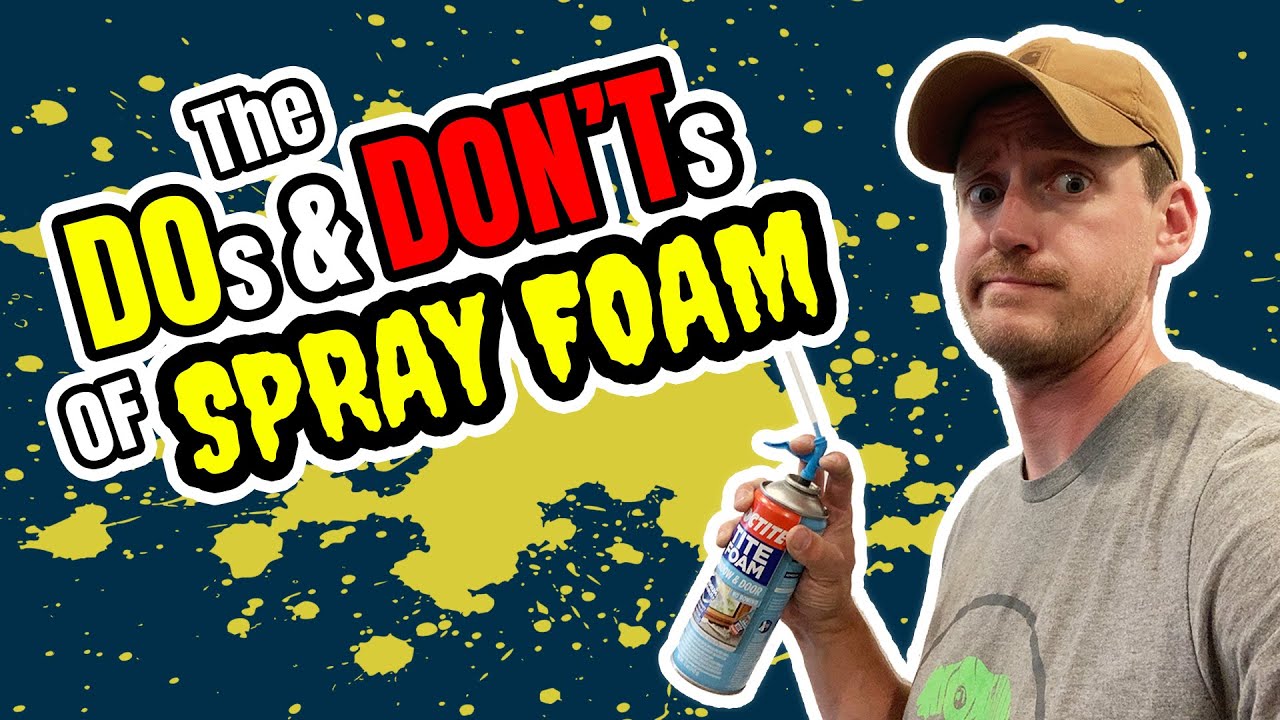
A short walkthrough helps show how this works in real assemblies:
Metal buildings are notorious for temperature swings and condensation issues. The metal skin reacts quickly to outdoor conditions, and if warm humid air reaches the wrong surface, you can get sweating and comfort problems. Closed-cell foam is often the practical answer because it insulates and helps control condensation risk in one layer.
Concrete block homes create a different challenge. The structure is durable, but the interior comfort depends on how the wall assembly is finished and sealed. In retrofit work, spray foam can improve performance in framed interior build-outs, additions, and problem rooms where a conventional insulation approach leaves too many gaps.
If the budget doesn't allow a full-house project, prioritize the spots with the highest penalty:
A South Florida homeowner usually asks the same question after hearing the estimate. Why spend more on spray foam when fiberglass costs less? The right answer depends on what the house is doing right now. If the attic is driving heat into the living space, humid air is slipping through the envelope, or the AC runs hard and still leaves rooms sticky, the low bid may not solve the actual problem.
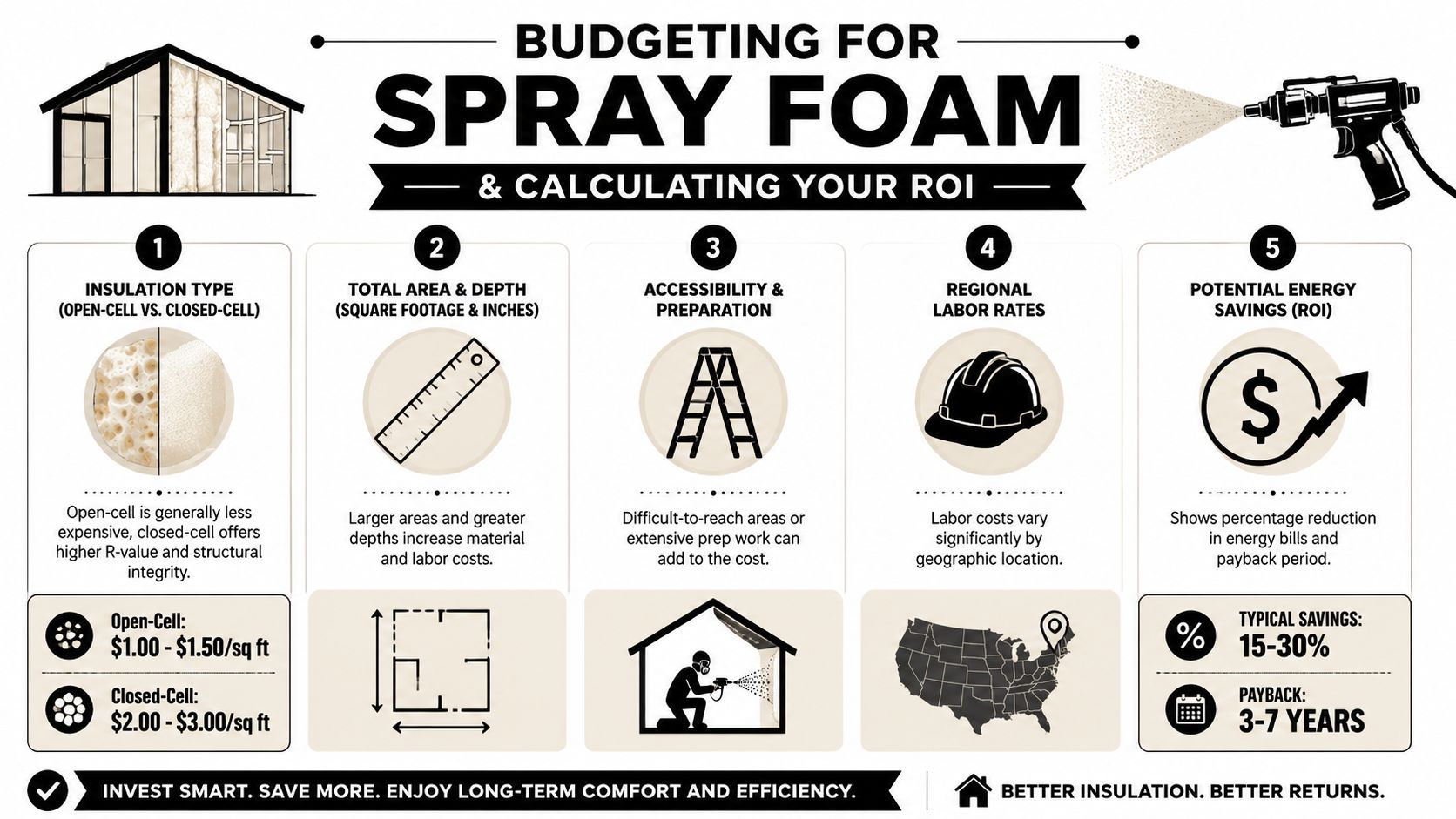
Spray foam pricing is shaped by job conditions more than by square footage alone.
Comparing spray foam by coverage alone is a budgeting mistake. A house does not get cooler because a contractor sprayed a certain number of inches. It gets better when the insulation choice fits the assembly and controls air movement and moisture well enough to reduce the load on the HVAC system.
That is why the "best" spray foam in this market is not automatically the one with the highest published R-value. In South Florida, the better choice is the one that fits the roof, wall, or garage assembly and lowers the chance of condensation, comfort complaints, and moisture damage.
Return on investment should include more than utility savings. Lower cooling demand matters, but so do steadier indoor humidity, fewer hot spots, less attic heat pushing into the house, and less risk of hidden moisture problems.
I tell owners to start with the failure they are paying to fix. If the goal is only to add R-value, the math may look one way. If the goal is to seal a leaky roofline, reduce AC runtime, and keep humid outdoor air out of the assembly, the value picture changes.
For a simple framework on the math side, this guide on figuring out investment performance helps owners compare upfront cost with long-term return.
A cheaper insulation bid can cost more over time if the house still leaks air, still struggles with humidity, or still leaves the HVAC system doing extra work.
Use these questions when reviewing proposals:
A spray foam job usually earns its keep when it fixes several issues at once. Lower heat gain. Better humidity control. Less air leakage. Fewer comfort complaints. That is the ROI homeowners feel every day, not just on the power bill.
A South Florida foam job can look fine on day one and still cause trouble later. I have seen attics with decent-looking coverage that missed key transitions, left gaps at penetrations, or used the wrong foam for the assembly. The result is usually the same. Rooms stay hot, indoor humidity stays high, and the owner paid for foam without getting the full benefit.
That is why contractor selection matters as much as material selection. In this climate, the best spray foam is not merely the product with the highest R-value. It is the product and installation method that fit the roofline, wall, garage, or metal building so the assembly can handle heat, air leakage, and moisture safely.
Large-area spray foam work requires control. The installer has to read the substrate, spray to consistent depth, protect adjacent surfaces, and keep the foam continuous at corners, framing transitions, and penetrations. Those details decide whether the assembly performs.
DIY kits have a place for small repairs. Whole-attic, wall, and roofline projects are different. They involve chemical handling, ventilation planning, trimming, and assembly-specific judgment that homeowners and general handymen often underestimate. In South Florida, a small installation mistake can leave you with hidden condensation risk or a leaky thermal boundary that keeps the HVAC system working harder than it should.
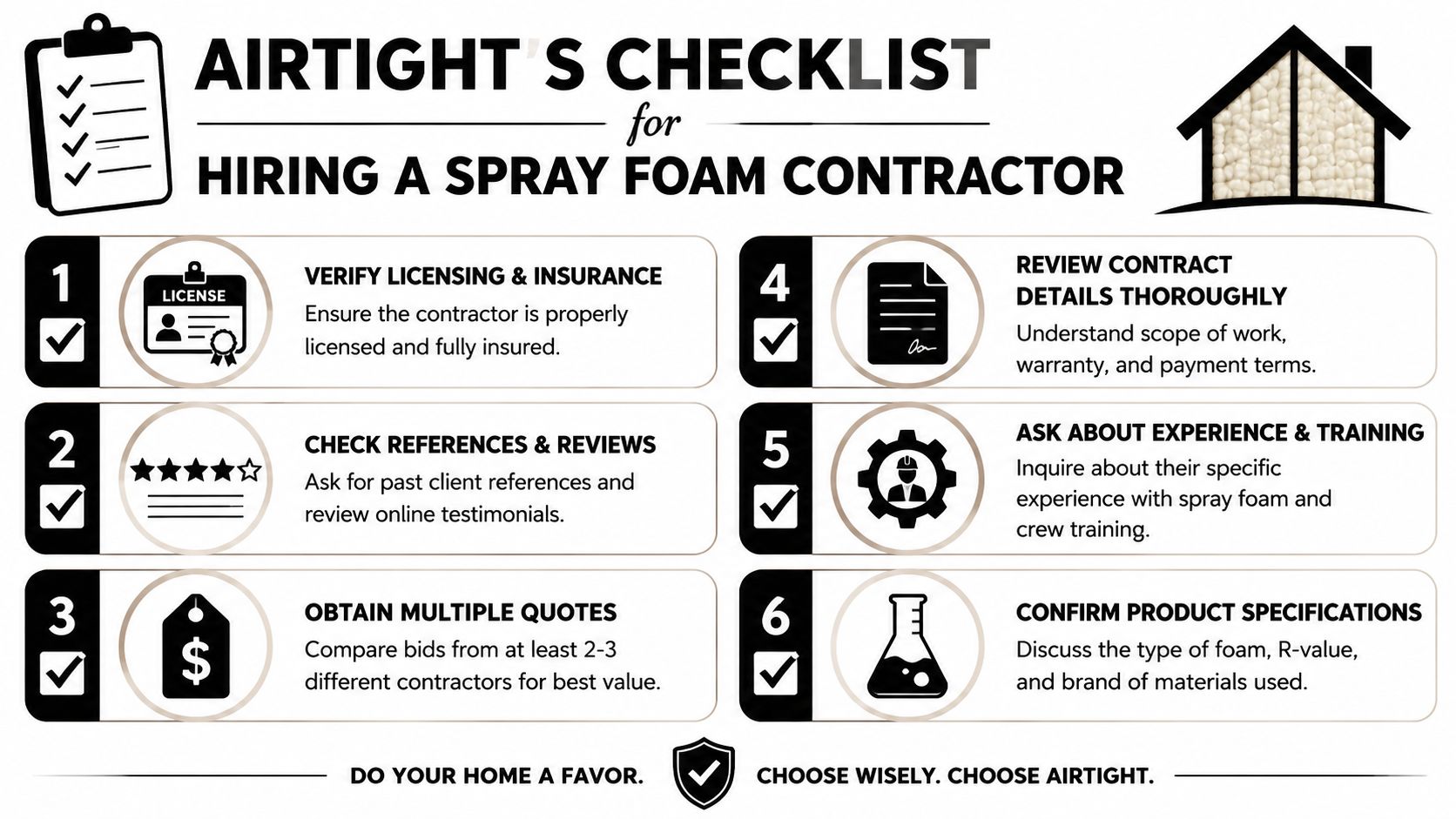
Use this checklist when you talk to bidders:
If you want a baseline for what a specialist should be able to discuss, review these spray foam insulation contractor services in South Florida. The scope should sound specific, not generic.
Ask direct questions. A qualified contractor should answer without dodging.
| Ask this | Strong answer sounds like |
|---|---|
| Which foam belongs in my roofline? | It depends on cavity depth, roof assembly, and how we need the assembly to handle moisture in this climate. |
| How do you handle penetrations and framing irregularities? | We spray for continuity at transitions, not just broad open areas. |
| What prep is required before spraying? | We protect surfaces, plan access, control ventilation, and explain occupancy requirements. |
| How do you verify the job is complete? | We review thickness, coverage, transitions, and the final scope with the owner. |
Airtight Spray Foam Insulation is one local option that installs open-cell and closed-cell systems in attics, roofs, walls, garages, metal buildings, and new construction across South Florida. That range matters because a contractor who understands multiple assemblies is more likely to recommend the right foam for the job instead of forcing every project into the same template.
Good foam work starts with good judgment. The contractor needs to understand how South Florida heat, humid air, and wet-season conditions move through a building before the first pass of foam goes on.
Yes, if the installer follows the product requirements for mixing, temperature, ventilation, and re-entry time. Problems usually come from poor installation practices, not from the fact that foam is being used.
A careful contractor treats the jobsite like a controlled process. That matters in South Florida, where tight homes, high humidity, and long cooling seasons leave little room for sloppy work.
For many South Florida attics, closed-cell is the better fit at the roofline because moisture control matters as much as R-value. A higher labeled insulation value alone does not make a foam the right choice here. The material also has to match the way the roof assembly dries, the available depth, and the amount of humid outdoor air trying to push inward.
Open-cell still has a place. In the right assembly, it can work well and usually costs less. The mistake is assuming one foam wins every time. In this climate, the best spray foam is the one that manages heat and moisture together so the attic does not become a hidden failure point.
Yes. Open-cell usually does a better job reducing airborne sound in interior walls because it is softer and more absorptive. Closed-cell is denser, but it is typically chosen for its compact R-value and added moisture resistance, not for sound control.
Sometimes. The answer depends on what is in the attic and what you want the house to do.
If the air handler and ducts are up there, insulating only the attic floor often leaves that equipment in a brutal hot attic environment. In South Florida, that can work against the energy savings you were hoping to get. If the mechanicals are out of the attic and the ceiling plane can be sealed well, attic-floor insulation may still make sense.
No. The right foam is the one that fits the assembly, the moisture exposure, and the space available for insulation.
I have seen homeowners pay more for closed-cell in places where open-cell was a perfectly sound choice. I have also seen projects cut costs with the wrong foam and create moisture problems later. Good results come from matching the product to the job, not from buying the highest price option.
If you're weighing attic, roofline, garage, wall, or metal building insulation in South Florida, Airtight Spray Foam Insulation can help you sort out which foam fits the assembly and which approach makes sense for your property.