If you're searching for how to keep attic cool in summer, you're probably feeling the symptoms already. The upstairs rooms stay warmer than the thermostat setting. The AC runs long into the evening. The garage side of the house feels baked, and when you crack open the attic hatch, the heat hits you in the face.
In South Florida, that isn't a minor comfort issue. It's a building performance problem. Between hard sun, high outdoor humidity, and long cooling seasons, an attic can turn into the hottest and most punishing part of the house. The fix is rarely one product by itself. The solution is a combination of air control, insulation, moisture management, and ventilation, done in the right order.
A lot of generic attic advice falls apart in Jupiter, Palm Beach Gardens, West Palm Beach, Wellington, and Stuart because it treats heat like the only enemy. Here, humidity matters just as much. If insulation can't manage humid air, performance drops and moisture problems follow. That's why the best attic strategy in South Florida looks different from what works in a dry climate.
By midafternoon in South Florida, the attic is often the harshest environment in the house. The roof has been baking for hours. The wood framing, roof deck, ducts, and insulation are all absorbing heat, and that stored heat keeps pressing down on the rooms below long after the sun starts to drop.
That pattern is worse here because heat is only part of the problem. Humid air finds its way into the attic through soffits, vents, leaks, and ceiling penetrations. Once that moisture mixes with high attic temperatures, common insulation products can lose effectiveness, ductwork can sweat, and the house feels harder to cool even when the AC is running steadily.
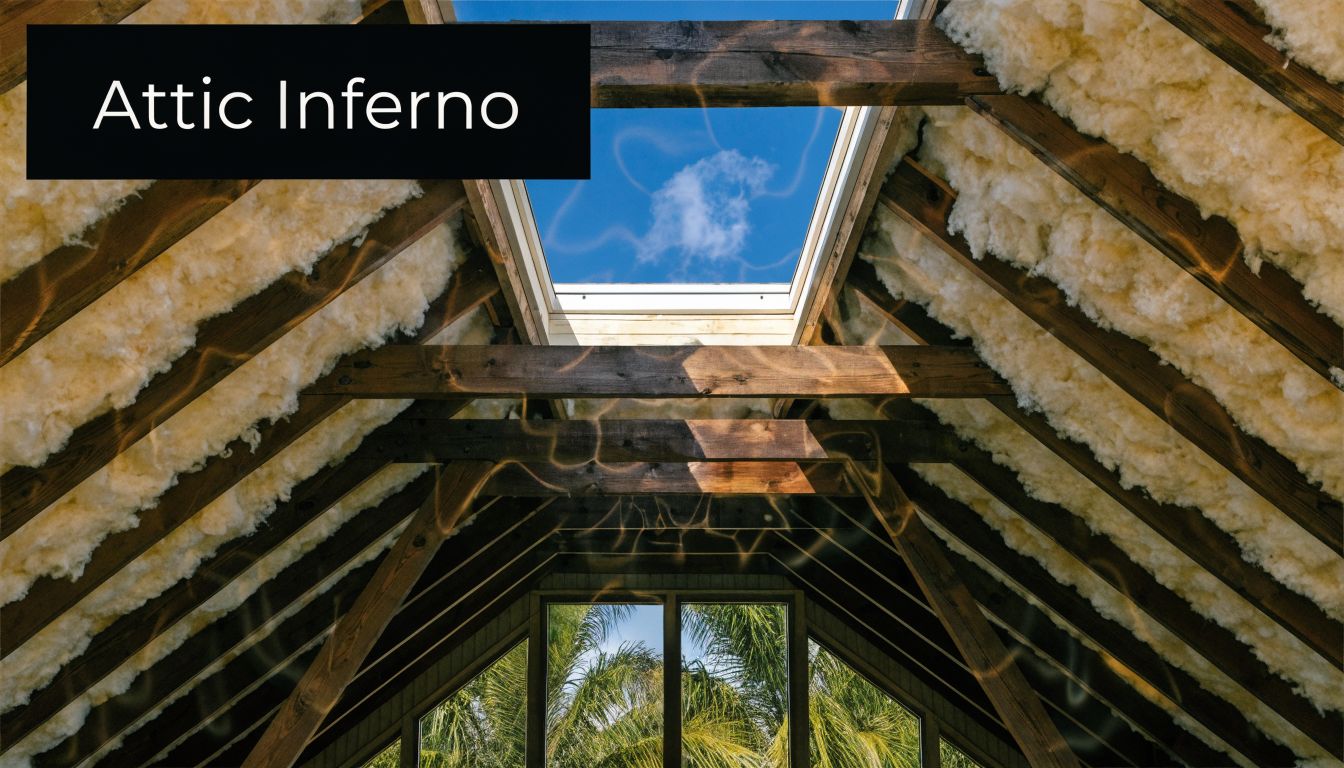
We usually see two main pathways.
The first is radiant heat from the roof deck. Roofing materials soak up solar energy all day, then release that heat into the attic cavity. If the attic floor insulation is thin, uneven, or bypassed by gaps, that heat reaches the ceiling drywall faster than homeowners expect.
The second is air movement. Recessed lights, bath fan housings, wiring holes, plumbing penetrations, top plates, and attic hatches all allow hot, humid attic air to interact with conditioned space. In South Florida, that moisture load matters as much as temperature. Fiberglass can slow heat transfer, but it does not stop air leakage, and it does very little to control humid air moving through the assembly.
That is why some attics look adequately insulated and still perform poorly.
Practical rule: If the attic is hot, humid, and leaky, adding more fluffy insulation rarely fixes the whole problem.
The same principle shows up in detached shops and steel structures, often with even faster heat buildup under the roof. If you're comparing assemblies, this guide on how to insulate a metal building for Southern climates is a useful reference.
A careful attic inspection tells you more than a product brochure will. Start early in the morning, use a stable light, and stay on the framing members.
Look for these conditions:
For a closer look at how hot these spaces get in local conditions, see this guide on summer attic temperatures in Florida homes.
A clean attic can still be a problem attic. We find plenty of spaces with no obvious stains or damage, but they are still pulling conditioned air out of the house and bringing humid air into the building enclosure.
We also see homeowners focus on attic temperature alone. In South Florida, the better question is how the attic handles heat plus moisture. That is one reason traditional floor insulation alone often falls short here. If the system does not air seal and control moisture, the attic keeps working like a summer heat engine above your ceiling.
Do not inspect during peak afternoon heat. Do not step between joists. Do not disturb insulation around electrical components unless you know what is underneath.
A South Florida attic usually gets treated in the wrong order. A homeowner feels the bedrooms getting warmer, sees a high summer power bill, and gets pitched a fan, more blown-in insulation, or a radiant barrier. Those upgrades can help in the right assembly, but they do not fix the first problem. In our climate, the first problem is uncontrolled air movement carrying heat and moisture into places they should not be.
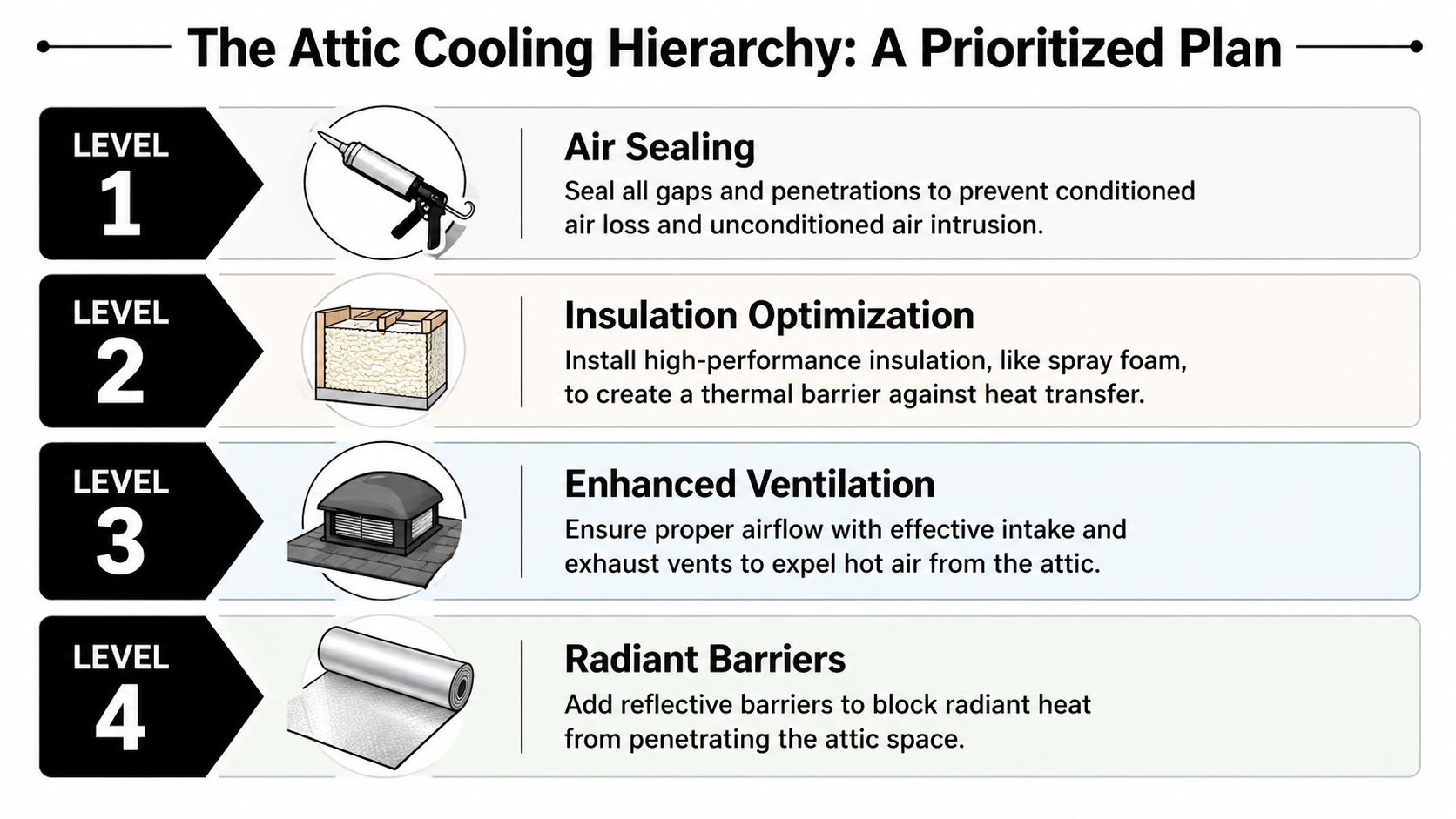
Air sealing sits at the top of the list because it affects everything below it. If ceiling penetrations, chases, and access points are left open, the house loses conditioned air into the attic and pulls humid attic air toward the living space. That is why a hot attic in South Florida is not just a temperature problem. It is a heat-plus-humidity problem.
This is also where traditional insulation-only upgrades often fall short. Fiberglass and loose-fill can slow heat flow, but they do not stop air movement on their own. If the assembly leaks, adding more R-value over the top does not solve the underlying moisture load.
Once the assembly is sealed, insulation can do its actual job. It reduces heat transfer through the ceiling plane or roofline instead of trying to compensate for leaks it was never designed to stop.
The right target depends on the type of attic you have. A vented attic usually focuses on the attic floor. An unvented or conditioned attic shifts the control layer to the roof deck. If you are comparing levels, this attic insulation R-value calculator is a useful starting point, but in South Florida we still weigh moisture behavior along with R-value. A material that performs well in a dry climate may disappoint here if humid air can move through it.
Ventilation still matters in a vented attic. It helps clear built-up heat from the roof deck area and supports shingle and sheathing performance. But ventilation should support a sealed and insulated assembly, not compensate for one that leaks.
We see this mistake often. Someone adds a powered fan to an attic with bypasses in the ceiling plane, and the fan starts pulling more indoor air into the attic. The attic may feel more active, but the house can become less efficient and more humid. Good airflow only works when the house and attic are properly separated first.
| Priority | Main goal | What happens if skipped |
|---|---|---|
| Air sealing | Limit hot, humid air movement | Insulation loses effectiveness and moisture risk rises |
| Insulation | Slow heat transfer | Ceiling surfaces heat up faster and AC runs longer |
| Ventilation | Manage heat buildup in vented attics | Roof area stays hotter and airflow becomes uneven |
| Radiant control | Cut roof-driven radiant gain | Solar load keeps pushing attic temperatures higher |
Radiant barriers can help in our market, especially under dark roofing with strong afternoon sun. They reduce one part of the load, which is radiant heat coming off the roof assembly. They do not air seal the attic. They do not correct moisture migration. They do not fix duct leakage or open chases.
That trade-off matters. A homeowner can spend money on reflective products and still have an attic that pulls humid air through the structure every day. We treat radiant control as a finishing move after the assembly is controlling air and heat in the right order.
For most South Florida homes, the plan looks like this:
That order protects the budget because each upgrade supports the next one. It also helps homeowners avoid paying premium prices for the wrong fix. If you are budgeting the work, this breakdown of attic insulation cost gives a useful price reference, but the main value comes from choosing the right sequence for a hot, humid attic instead of stacking products and hoping they work together.
Walk into a South Florida attic in August and you can usually tell within minutes why the house struggles. The insulation may look adequate from the hatch, but the attic still feels damp, the ductwork sweats, and the rooms below never seem to settle down in the afternoon. In this climate, insulation has to do more than slow heat. It has to control humid air.
Traditional fiberglass and blown insulation still fit some vented attic designs, especially when the attic floor is tightly sealed and the ducts are not up there fighting the heat. We install those systems in the right conditions. But many South Florida homes are not ideal assemblies. They have recessed lights, plumbing penetrations, open chases, leaky duct boots, and years of service work that left the attic floor full of bypasses. Fiber insulation does not fix that by itself.
Fiberglass works best when air movement is already under control. That is the part homeowners rarely get told. In a hot, humid region, moving air carries moisture, and moisture changes how the whole attic behaves.
Once humid air keeps cycling through the assembly, performance becomes less predictable. We see batts compressed by service work, gaps around wiring and can lights, dirty insulation that shows clear air tracks, and attic floors that were never sealed before more material was added. On paper, the R-value can look fine. In the field, the house still feels sticky and the AC runs too long.
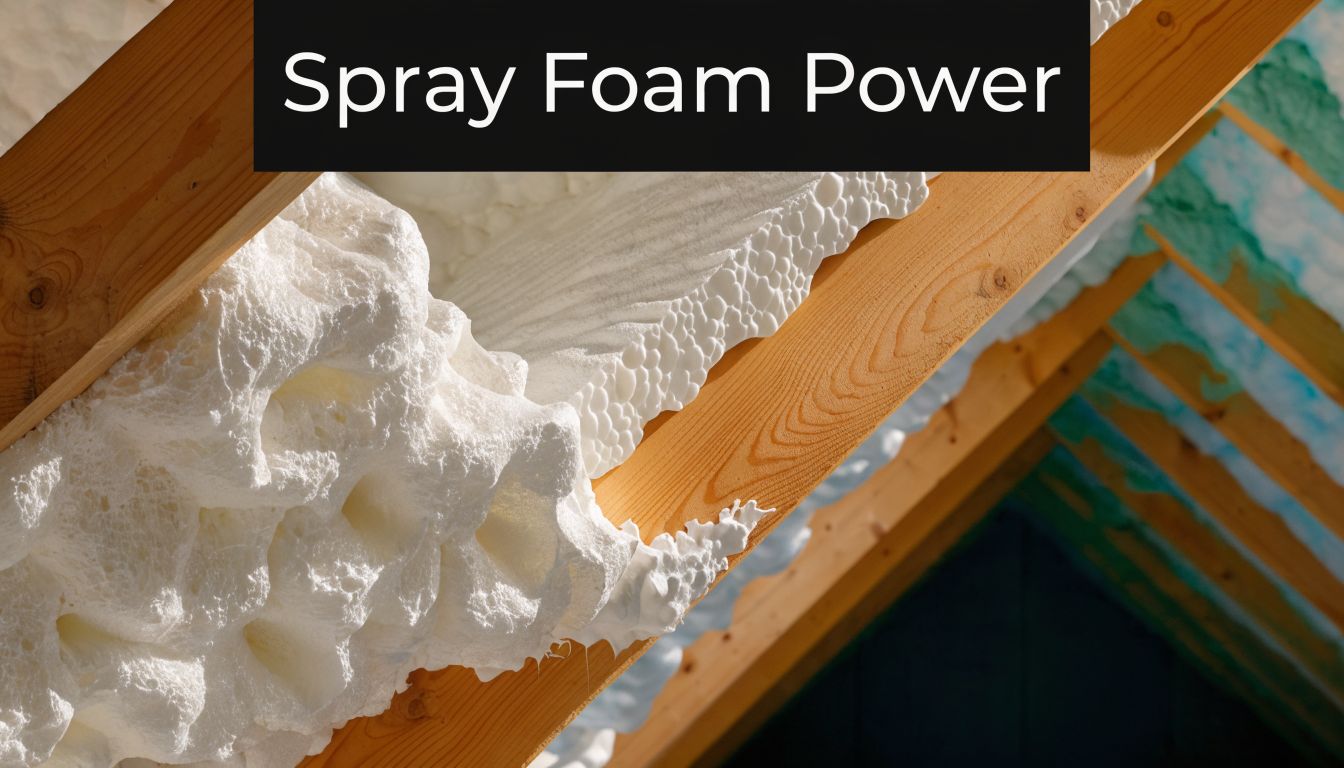
That is why spray foam gets so much attention in South Florida. It combines insulation and air sealing in one application, which addresses a common failure point in older homes and in roofline conversions.
Open-cell and closed-cell spray foam should not be treated as interchangeable. They solve different problems and carry different risks in a humid coastal climate.
| Type | Best known for | Trade-off |
|---|---|---|
| Open-cell spray foam | Air sealing and sound control | More vapor permeable |
| Closed-cell spray foam | Air sealing, higher R-value per inch, moisture resistance | Higher material cost |
Open-cell foam expands aggressively and can fill irregular cavities well. It is often chosen for interior sound control and for assemblies where drying potential has been carefully considered.
Closed-cell foam is denser and gives more thermal resistance per inch. It also adds a stronger moisture barrier than open-cell or fiber products. That matters at the roof deck in South Florida, where high outdoor humidity, wind-driven rain exposure, and long cooling seasons put more stress on the assembly.
For many attic projects in this market, closed-cell spray foam is the safer answer because it solves multiple problems at once. It limits air leakage. It slows heat flow. It helps control moisture movement.
That combination is why we recommend it so often for unvented roofline applications, low-slope sections, older homes with hidden leakage paths, and houses where comfort complaints come with musty attic conditions.
The practical advantages are straightforward:
If you want to compare material thickness before choosing a system, an insulation R-value calculator for attic planning is a useful starting point.
Open-cell foam still has valid uses. We use it in some interior applications and in assemblies where the drying path, vapor profile, and HVAC design have been thought through carefully. It can also be a budget-friendly way to get air sealing where moisture exposure is lower.
The limitation is simple. Open-cell is more forgiving on price than closed-cell, but it is less protective against moisture drive. In South Florida, that difference matters more than it does in a drier climate.
A homeowner asking how to keep an attic cool in summer is usually also asking how to keep the house from feeling damp, how to cut AC runtime, and how to avoid hidden moisture problems. Closed-cell addresses that full set of concerns more reliably.
Spray foam is not a product category where average workmanship produces above-average results. The crew has to control substrate conditions, lift thickness, coverage, and trimming. Miss those details and the job can end up with voids, shrinkage, uneven depth, or poor adhesion.
We treat foam installation as assembly work, not just insulation work. That means checking what the attic is doing before the first pass goes on. Where are the ducts? Is the roof deck dry? Are recessed fixtures rated correctly? Is the attic being converted to an unvented space or are we insulating the attic floor? Those decisions change the spec.
Field insight: Closed-cell foam performs best when the installer is solving for heat, air leakage, and moisture at the same time.
Here is a helpful visual before going deeper into product choice:
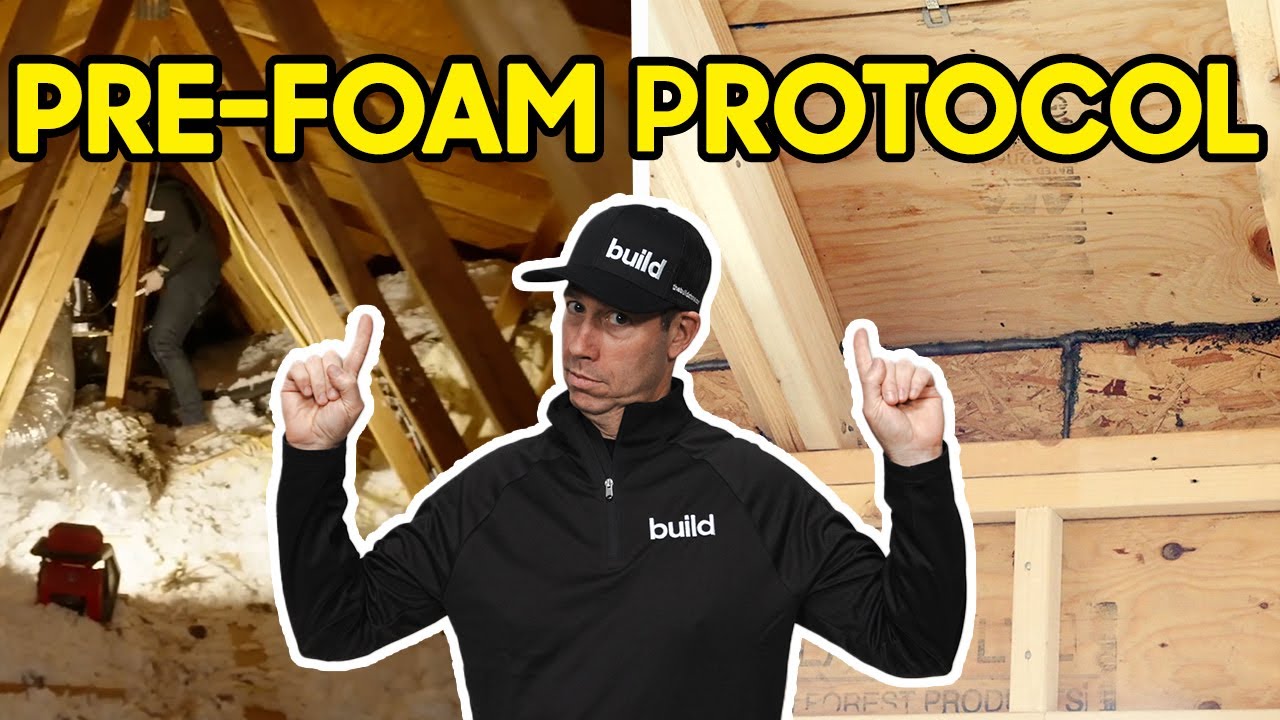
Closed-cell foam costs more upfront than batts, blown insulation, and usually more than open-cell foam. That part is true. The better question is what the homeowner is buying for that added cost.
In South Florida, the premium often buys fewer air leaks, better moisture control, stronger thermal performance in tight roof assemblies, and a more stable result over time. That can make it the better value even when the initial proposal is higher. For a side-by-side budgeting reference, this guide to attic insulation cost helps show how homeowners often compare lower first cost against longer-term performance.
If the attic only gets more fluffy insulation, the house can still pull humid air through the structure every day. If the insulation strategy also controls air and moisture, the attic stops working against the rest of the home.
Once the attic is sealed and insulated correctly, the next gains usually come from roof and ventilation upgrades. These aren't where most homes should start, but they can be powerful when the basics are already handled.
Ventilation matters because heat still enters the attic from the roof. The goal is to move that trapped heat out efficiently without creating pressure problems or leaving dead zones in the attic.
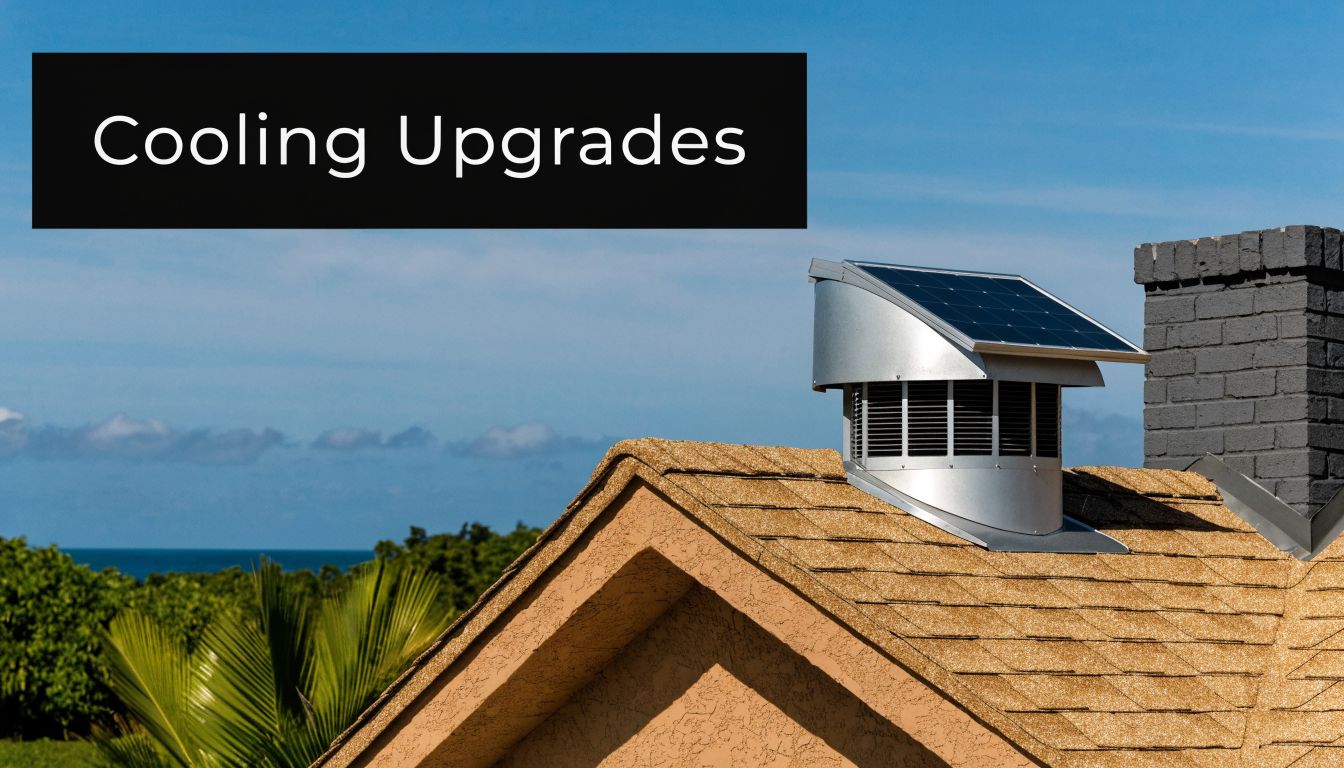
In most vented attics, the cleanest system starts with passive intake and exhaust. Soffit vents bring air in low. Roof or ridge vents let hotter air leave high. That setup uses natural air movement instead of relying entirely on mechanical equipment.
According to Attic Air's guidance on summer ventilation, strategic attic ventilation can reduce cooling costs by up to 50% when the system is well designed. The same source notes that unventilated or under-ventilated attics can reach 140 degrees or higher, which explains why ventilation becomes so important once the envelope is under control.
Powered attic fans and solar attic fans can improve air movement, especially in stubborn hot zones or roof geometries that don't vent evenly. Modern fans with thermostatic control are useful because they respond automatically instead of depending on someone to switch them on.
But fans aren't magic. If intake is weak, the fan may struggle. If the attic floor is still leaky, the fan can pull more conditioned air from the house below. That's why fan performance depends on assembly quality.
A quick comparison:
Ventilation works best when intake and exhaust are balanced. Too much of one side creates a weak system, not a better one.
If you want a practical overview of options before choosing hardware, this guide to types of attic ventilation for Florida homes is a solid place to compare layouts.
If you're replacing the roof or building new, roofing material and color deserve more attention than they usually get. A darker roof absorbs more solar energy. A lighter roof or a roof system designed for solar reflectance starts lowering attic heat before insulation and ventilation even go to work.
This matters most on homes with broad roof exposures and limited shade. In coastal communities, a roof upgrade can become part of the cooling plan instead of just a weatherproofing expense.
A few problems show up repeatedly in the field:
Roof and vent upgrades work. They just work best when they're added to a disciplined attic assembly, not used as a shortcut around one.
A South Florida attic can fool homeowners on budget. The cheap fix often looks attractive first. Then the house stays humid, the AC keeps grinding, and the next contractor gets paid to undo the first round of work.
Cost only makes sense after the attic is diagnosed correctly. We price these projects based on attic access, roof geometry, existing insulation, duct location, moisture history, and whether the attic should stay vented or be converted to an unvented assembly. Sealing an attic hatch and adding weatherstripping is one scope. Spraying closed-cell foam along the roof deck to control both air leakage and moisture is a very different scope with a different payoff.
In South Florida, return on investment is not just a utility-bill question. Comfort, humidity control, duct performance, and avoiding moisture damage matter just as much. Traditional insulation approaches can look affordable on paper, but they often disappoint in our climate if humid air is still moving through the assembly.
The best payback usually comes from fixing the failure point that is driving heat and moisture into the house.
If attic air is leaking into the living space, air sealing usually belongs near the top of the list. If ductwork is running through a superheated attic, reducing attic heat and stopping humid air movement can improve system performance. If the attic assembly keeps pulling in moisture, closed-cell spray foam often earns its cost by solving multiple problems at once instead of addressing only temperature.
Radiant barriers can help in the right house. They work best as a supporting upgrade, not the entire strategy. We do not recommend budgeting around a single product claim. We recommend building the scope around how the attic is performing.
Ask for pricing by scope, not one lump sum for “cooling the attic.” That makes it easier to see what solves the problem and what is just an add-on.
| Project scope | Best for | Hire out or DIY |
|---|---|---|
| Basic attic inspection and hatch weatherstripping | Early diagnosis, obvious air leakage at access points | DIY if safe |
| Air sealing around visible penetrations | Limited leakage in accessible areas | DIY or pro |
| Adding batt or blown insulation | Flat attic floors with no active moisture issues | Often pro, sometimes DIY |
| Closed-cell spray foam at roof deck or other complex areas | Hot, humid, moisture-sensitive assemblies | Pro |
| Ventilation redesign or powered fan changes | Attics with imbalance, short-circuiting, or reroof coordination | Pro |
For contractors and property managers pricing larger work, consistency matters. Exayard HVAC estimating software can help organize insulation, ventilation, and mechanical line items across multiple properties.
Some attic work is still reasonable for a careful homeowner.
DIY work stops being a smart money decision once the job involves spray foam chemistry, electrical hazards, roof penetrations, hidden moisture, or long periods in extreme attic heat.
Bring in a pro if any of these conditions are present:
One bad attic decision can stay expensive for years.
Good spending fixes the assembly. Bad spending stacks products on top of unresolved air leakage and moisture problems.
In South Florida, the trade-off is straightforward. A lower-cost insulation upgrade may help for a while, but it can still leave the house exposed to humid air movement. Closed-cell spray foam costs more upfront, yet it gives you insulation, air sealing, and moisture resistance in one system. In many homes here, that is the difference between an attic that is merely insulated and an attic that is under control.
The most expensive attic project is the one that has to be corrected after the first installation failed.