A South Florida summer starts the same way. The AC runs all day, the house never quite feels dry, and the power bill lands with more force than expected.
A lot of owners respond by shopping for a new thermostat, better windows, or even solar. Some of those upgrades help. Some are worth doing later. But in this climate, the biggest problems start deeper in the house. Hot attic air, humid outdoor air leaking through gaps, ducts sweating in hostile spaces, and insulation that slows heat but does not control air movement.
That is why energy efficient home upgrades in Florida need a different order than the lists you see in national articles. The right sequence is less about chasing gadgets and more about building a cool, dry, controlled shell first.
At 6 p.m., the thermostat reads 74, but the house still feels damp, a back bedroom runs warm, and the AC has barely stopped all day. That is a familiar South Florida complaint, and it usually points to the same root problem. The house is taking on heat and moisture faster than the system can remove them.
In this climate, energy efficiency starts with control. Control where air leaks in. Control where attic heat builds up. Control how moisture moves through the house and around the duct system. Homeowners often look first at windows, gadgets, or panel upgrades, but the best results usually come from tightening the enclosure and fixing the hidden weak points that keep forcing the AC to play catch-up.
That order matters in Jupiter, West Palm Beach, Boca, and across the coast. South Florida homes deal with long cooling seasons, high dew points, strong sun, and frequent wind-driven rain. A house can have decent insulation on paper and still perform poorly if humid outdoor air is slipping in through recessed lights, attic accesses, duct connections, plumbing penetrations, or wall chases.
Some lower-cost improvements still help, especially around solar exposure. Exterior shading, better screens, and reducing heat gain at openings can support the larger enclosure work. If you want one practical example, these energy efficient screen solutions are worth reviewing because they can cut direct sun and reduce the heat pushing against adjacent living areas.
In South Florida, an efficient home is a home that stays cool, stays dry, and makes the air conditioner's job easier.
A Florida home should work like a Thermos. The goal is straightforward. Keep conditioned air inside and keep heat and moisture outside.
That sounds obvious, but many houses do the opposite. They leak from the attic, around can lights, through duct runs, at wall penetrations, and around old access points. Once that happens, the AC is not only cooling the house. It is also fighting a steady stream of outdoor humidity.
In dry climates, energy conversations often focus on temperature alone. In South Florida, humidity changes everything.
A house can technically reach the thermostat setting and still feel uncomfortable if moisture stays elevated. Occupants lower the thermostat to compensate. The AC runs longer. Parts wear faster. Some rooms feel sticky while others get too cold.
Three forces drive the problem:
Many owners want to jump straight to visible upgrades. New condenser. New windows. Solar array. Smarter controls.
Those can all be useful, but the order matters. If the shell leaks, every downstream upgrade performs worse than it should. A strong mechanical system installed in a weak envelope ends up oversized, inefficient in practice, or unable to maintain balanced comfort.
Recent NREL analysis found that in climates like South Florida's, combining electrification with exterior insulation or infiltration reduction delivers the greatest emissions reductions, which supports the case for prioritizing the envelope before high-tech systems (combining electrification with insulation or infiltration reduction).
That principle shows up every day in field conditions. When the attic is vented, brutally hot, and connected to the house through dozens of little bypasses, your cooling equipment inherits a losing battle.
For many Florida homes, the attic is the first place to investigate. If you want a useful reference on that topic, this guide to https://airtightsprayfoaminsulation.com/attic-insulation-in-florida/ explains why attic conditions shape the performance of the rest of the house.
A high-efficiency system installed in a leaky house is still serving a leaky house. Fix the shell first, then let the equipment work as designed.
A national upgrade list might rank windows high because they are visible and easy to market. In South Florida, I would put more attention on the spaces people do not see. Attic penetrations. Duct locations. Garage separation walls. Cantilevered floors. Mechanical closets. Rim areas. Roof deck conditions.
Homes lose control in these overlooked areas.
The best energy efficient home upgrades here do not just reduce heat flow. They also manage air movement and moisture migration. That combination is what creates stable indoor comfort instead of a temporary dip in the utility bill followed by moldy smells and callbacks.
Most owners do not need more options. They need the right sequence.
When upgrades happen out of order, money gets wasted. A common example is replacing the AC because the house feels uncomfortable, then discovering later that attic leakage and weak insulation were the primary reasons the old system struggled. Another is replacing windows while ignoring duct leakage, which leaves the largest comfort problem untouched.
The better approach is a layered priority system.
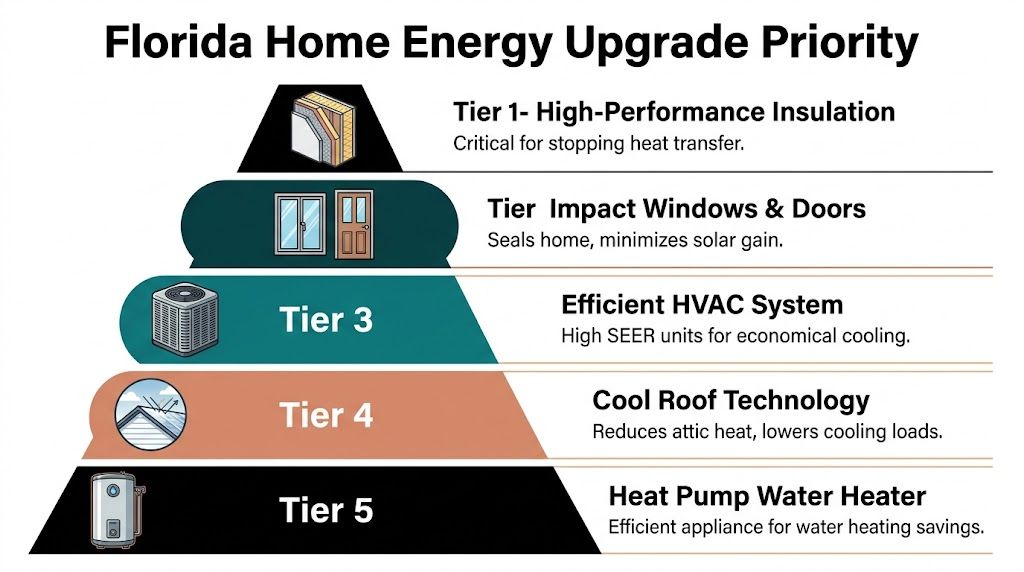
This is the foundation because it changes how the entire house behaves.
In Florida, insulation alone is not enough if air can still move freely around it. You want the enclosure to slow heat transfer and reduce uncontrolled infiltration. That includes attics, knee walls, wall penetrations, garage interfaces, and any area where humid air can enter the conditioned space.
This tier delivers the biggest comfort improvement because it attacks the root cause. Rooms stay more even. Indoor air feels drier. The AC no longer chases a moving target.
After the shell improves, evaluate the cooling system as a complete assembly.
That means:
A new system can be worth the investment. It is just far more effective after the envelope stops fighting it.
This tier matters, but it is oversold as a first move.
If your windows are failing, poorly sealed, or taking intense western sun, improvements can help. The same goes for doors with damaged weatherstripping or visible daylight around the frame. Exterior shading strategies can also reduce some direct load.
But I would still treat these as secondary to the enclosure and mechanical fundamentals in most South Florida homes.
One practical upgrade people overlook is air movement inside the house. Ceiling fans do not replace AC, but they can support comfort and let occupants feel better at a given thermostat setting. If you want a practical overview, this guide on energy efficiency and cost savings of ceiling fans is useful context for where fans fit and where they do not.
A roof absorbs relentless sun. That makes attic conditions critical.
What matters here depends on the house design. Some homes benefit most from improving attic floor insulation and air sealing while preserving a vented attic. Others perform better by bringing the attic into a more controlled condition through roof deck insulation. Roof color, roof material, and ventilation details also affect attic temperatures and HVAC stress.
One-size-fits-all advice fails in these situations. The right answer depends on duct location, roof geometry, moisture behavior, and renovation plans.
Efficient appliances and lighting are worth doing when old equipment reaches replacement age. They reduce consumption and are straightforward.
They just do not solve the comfort problems most Florida owners complain about. If your house feels muggy, no refrigerator upgrade will fix it. If your bedrooms are uneven, LED lamps will not address pressure imbalance or attic leakage.
Spend money where the building loses control first. In South Florida, that means the envelope before the accessories.
If I were ranking upgrades for a typical occupied South Florida house, the order would look like this:
That order is what makes energy efficient home upgrades deliver practical benefits instead of only looking good on a contractor proposal.
Walk into a South Florida house at 3 p.m. in August and the complaint is usually not just heat. It is a cold thermostat reading paired with sticky air, hot back bedrooms, and an AC system that runs too long. Insulation affects all of that, but only if it is chosen and installed with air movement and moisture in mind.
In this climate, insulation is part of a control layer strategy. Thermal resistance matters. Air control often matters more. If humid attic air can reach the house through can lights, top plates, chase openings, or kneewalls, insulation depth alone will not deliver the comfort people expect.
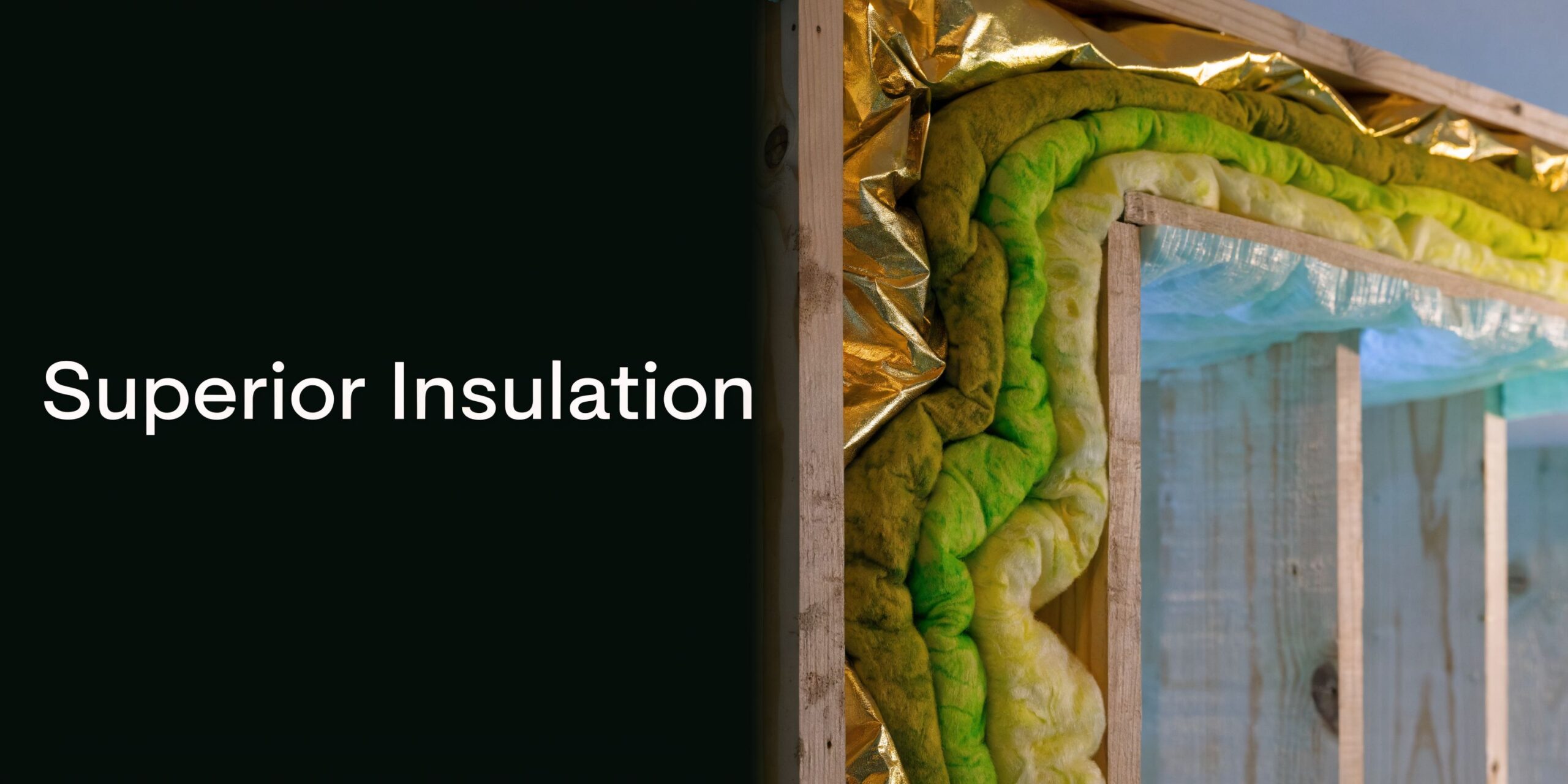
Good insulation slows heat flow. Good insulation installed in the right assembly also helps keep humid outdoor air out of the conditioned space and keeps interior surfaces from drifting toward dew point conditions where condensation becomes more likely.
That is why code-minimum insulation can still leave a house uncomfortable. I see this often in older homes with decent attic insulation on paper but open bypasses everywhere. The attic is effectively connected to the house, so the AC is trying to control conditions in places it was never meant to control.
The EPA notes that insulation improvements paired with air sealing can reduce heating and cooling waste meaningfully, which matches what shows up in real Florida homes after leakage paths are addressed first.
Material choice should follow the assembly, not the sales pitch. Attic floor, roof deck, block wall fur-out, garage ceiling, and addition tie-in details all call for different approaches.
| Insulation type | Where it works well | Main limitation in South Florida |
|---|---|---|
| Fiberglass batts | Standard wall cavities, some attic floors | Does not stop air leakage on its own |
| Blown-in insulation | Attic floors and topping up existing depth | Performs poorly if attic bypasses stay open |
| Spray foam | Roof decks, walls, tricky penetrations, irregular cavities | Higher upfront cost, installation quality matters a lot |
Fiberglass can perform well in walls that are detailed correctly. It is affordable and widely available. The catch is workmanship. Gaps, compression, missing backing, and misalignment with the air barrier all reduce real performance.
Blown-in attic insulation is often a sensible upgrade in vented attics, especially where the basic strategy is to keep the thermal boundary at the ceiling plane. It is usually more cost-effective than spray foam. It still needs proper prep. If soffits, top-plate penetrations, bath fan housings, and attic hatches are left leaky, added depth will not fix the underlying problem.
Spray foam earns its cost in the right places. It is useful where geometry is irregular, ducts are in hostile attic conditions, or bringing the roofline into the conditioned boundary solves a larger comfort and moisture problem. Homeowners comparing attic approaches can review attic insulation options for hot climates before deciding whether a vented attic or an insulated roof deck fits the house better.
Spray foam selection should be based on assembly behavior, drying potential, thickness limits, and budget.
Neither one fixes bad design. If a roof leaks, if recessed fixtures are not rated for contact, or if the house has combustion safety or ventilation problems, those issues need to be corrected before foam goes in. Otherwise the project gets expensive without addressing the core failure point.
This walkthrough gives a useful visual of how high-performance insulation is applied in real assemblies:
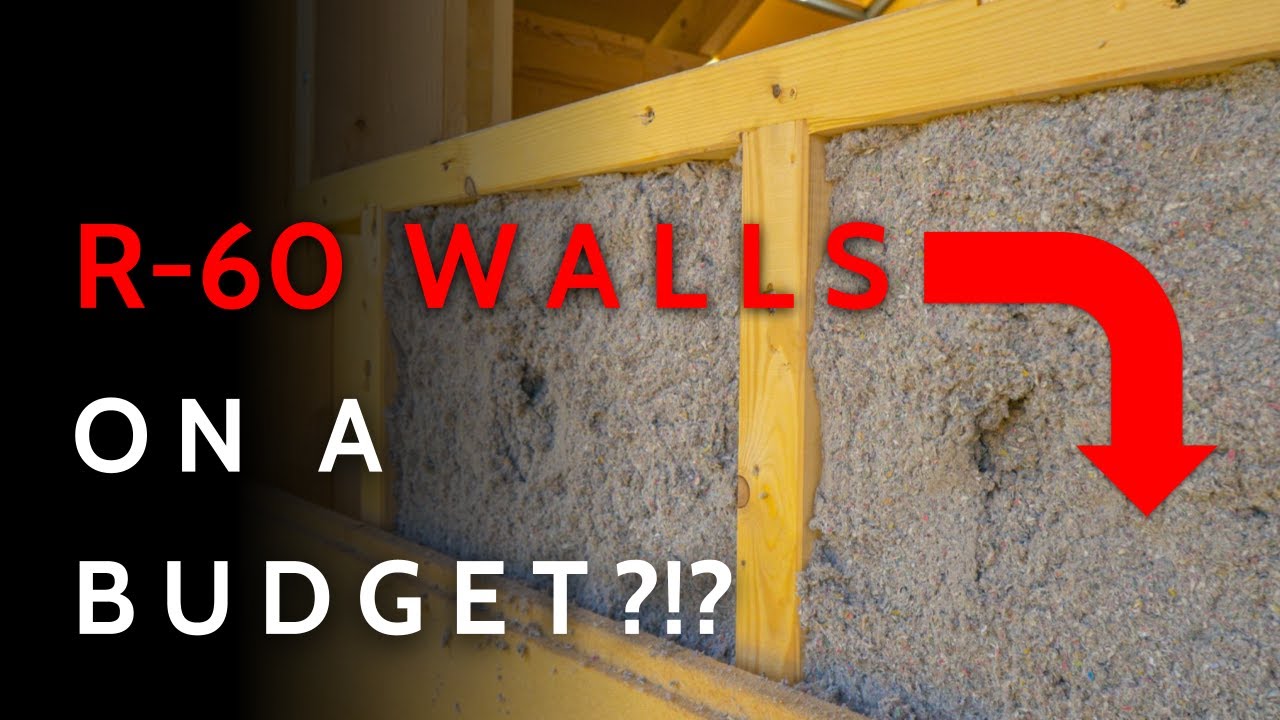
The best returns usually show up in a few repeat problem areas.
The best insulation job is continuous, aligned with the air barrier, and appropriate for the way that assembly handles moisture. In South Florida, that is the difference between a house that has insulation and a house that feels dry, even, and easier to cool.
The financial side matters because good upgrades are capital projects, not impulse buys. Owners want to know what to do first, what can wait, and whether a project will change monthly operating costs enough to justify the spend.
The first rule is simple. Price the house you have, not the house you wish you had. A compact single-story home with accessible attic space is a different project from a complicated multi-level house with difficult roof geometry, recessed lighting everywhere, and ducts buried in hostile conditions.
Insulation and air sealing costs move based on access, material choice, prep work, and how many problem areas need correction. HVAC pricing shifts with equipment selection, duct modifications, controls, and electrical scope. Window and door projects depend heavily on opening sizes, product line, installation complexity, and code requirements.
That is why broad online numbers can mislead people. The better approach is to compare proposals by scope, not by headline total.
Ask contractors to separate these items clearly:
The Inflation Reduction Act's Energy Efficient Home Improvement Credit covers up to 30% of costs for qualifying projects, with an annual cap of $1,200 for insulation and up to $2,000 for electric heat pumps (Energy Efficient Home Improvement Credit).
For many homeowners, that means the best strategy is not doing everything at once. It is planning the work in phases so credits line up with replacement timing, budget, and actual house needs.
If you are reviewing utility and rebate options tied to insulation work, this page on https://airtightsprayfoaminsulation.com/fpl-rebates-insulation/ is a practical place to start.
Precise dollar figures vary too much by house and scope to state universally. The table below is intentionally qualitative so owners can frame decisions without relying on fake certainty.
A homeowner can handle some basic tasks well. Weatherstripping doors, sealing obvious trim gaps, adding door sweeps, and managing shading are reasonable DIY jobs.
Other work should stay with qualified professionals:
A bad energy upgrade is expensive twice. You pay once for the work, then again to undo it.
Good projects rarely happen in one sweep. Most owners tackle them in stages based on budget, renovation timing, or a problem that has become impossible to ignore.
The smartest plan is the one that fits your house and your current decision window.
If you are living in the house now and want fast improvement without opening every wall, focus on the items that reduce obvious losses and improve system performance quickly.
Start with:
This plan works well for owners who need better comfort first and a bigger capital project later.
If you are already remodeling a kitchen, replacing a roof, or opening ceilings, that is the time to address hidden building performance issues.

During larger work, consider this sequence:
The best renovation results come from one building strategy, not from a stack of unrelated upgrades.
For builders and contractors, Florida efficiency starts before drywall.
The most important decisions happen early:
A new build gives you the chance to avoid the mistakes retrofit crews spend years correcting. It is easier to build a tight, dry, manageable shell from day one than to chase leaks after finishes are installed.
Multifamily and rental properties need a different lens. Tenants report symptoms, not causes. “The back bedroom is hot.” “The AC never shuts off.” “There is a musty smell near the closet.”
For managers, the best phased strategy is typically:
That approach improves consistency and avoids random one-off fixes that solve a complaint in one unit while leaving the root issue untouched elsewhere.
An efficient house still needs upkeep. Materials age, seals loosen, filters clog, and roof issues can undo good insulation work if nobody catches them early.
Use this list at least annually, and more often during heavy cooling season:
A lot of owners assume the job is done once insulation or HVAC work is complete. It is not. A roof leak above a great insulation job can undermine the benefit. A neglected drain line can create moisture problems that get misdiagnosed as “bad insulation.” A torn attic access gasket can reintroduce a leakage path that affects the entire hallway below.
The fix is not complicated. Pay attention to the house as a system. Small maintenance actions preserve the value of larger upgrades.
Often, yes. Metal buildings can heat up quickly and are prone to condensation problems when warm, humid air meets cooler metal surfaces. The right insulation strategy can improve temperature stability and help control moisture. The key is matching the product and thickness to the building use, occupancy pattern, and ventilation plan.
Not necessarily. Some homes benefit more from air sealing, attic work, and duct corrections than from whole-house window replacement. If windows are failing, poorly sealed, or exposed to punishing afternoon sun, targeted replacement may make sense. But windows should be judged as one part of the shell, not as the automatic first move.
Generally yes, but approval requirements vary. Exterior changes such as doors, visible glass, roofing materials, and shading devices often need review. Interior upgrades like attic insulation, duct sealing, and many mechanical improvements are typically easier from an approval standpoint. Get the rules in writing before ordering products.
Efficiency work and resilience work overlap more than people realize. Better-sealed assemblies, improved roof and attic planning, upgraded openings, and moisture-aware materials can all help a home recover more cleanly after storm exposure. The biggest advantage is not lower energy use alone. It is reduced vulnerability to post-storm humidity intrusion, musty interiors, and prolonged comfort problems.
In most South Florida homes, no. Producing more energy while the house still leaks is not the best starting point. Tightening the shell first lowers the load that every later system has to serve. That creates a more rational path for future equipment and renewable upgrades.
Doing visible upgrades before diagnosing the house. Owners buy the product they have heard the most about instead of solving the most important failure. In Florida, the hidden issues are the expensive ones. Air leakage, moisture movement, duct losses, and attic conditions deserve attention before trendier purchases.
If your South Florida home, rental property, workshop, or commercial space feels hot, humid, or expensive to cool, Airtight Spray Foam Insulation can help you evaluate the problem at the building-shell level. Their team serves Jupiter, Palm Beach Gardens, West Palm Beach, Wellington, Stuart, and nearby areas with spray foam solutions for attics, walls, garages, metal buildings, and new construction.