If your AC seems to run all afternoon, your upstairs rooms never quite settle down, and your summer electric bill makes you wince, the problem may not be your air conditioner at all. In South Florida, the attic is often where comfort is won or lost.
I see homeowners focus on the thermostat, the outdoor unit, or the age of the system. Those things matter. But when the attic is absorbing brutal roof heat and humid outside air is slipping through gaps, your HVAC system is fighting a problem it was never meant to solve by itself.
That is why choosing the best attic insulation for hot climates is not solely about adding more material. In Jupiter, Palm Beach Gardens, West Palm Beach, Wellington, and Stuart, the right insulation has to handle heat, air movement, and moisture at the same time. If it only handles one of those, the house may still feel sticky, uneven, and expensive to cool.
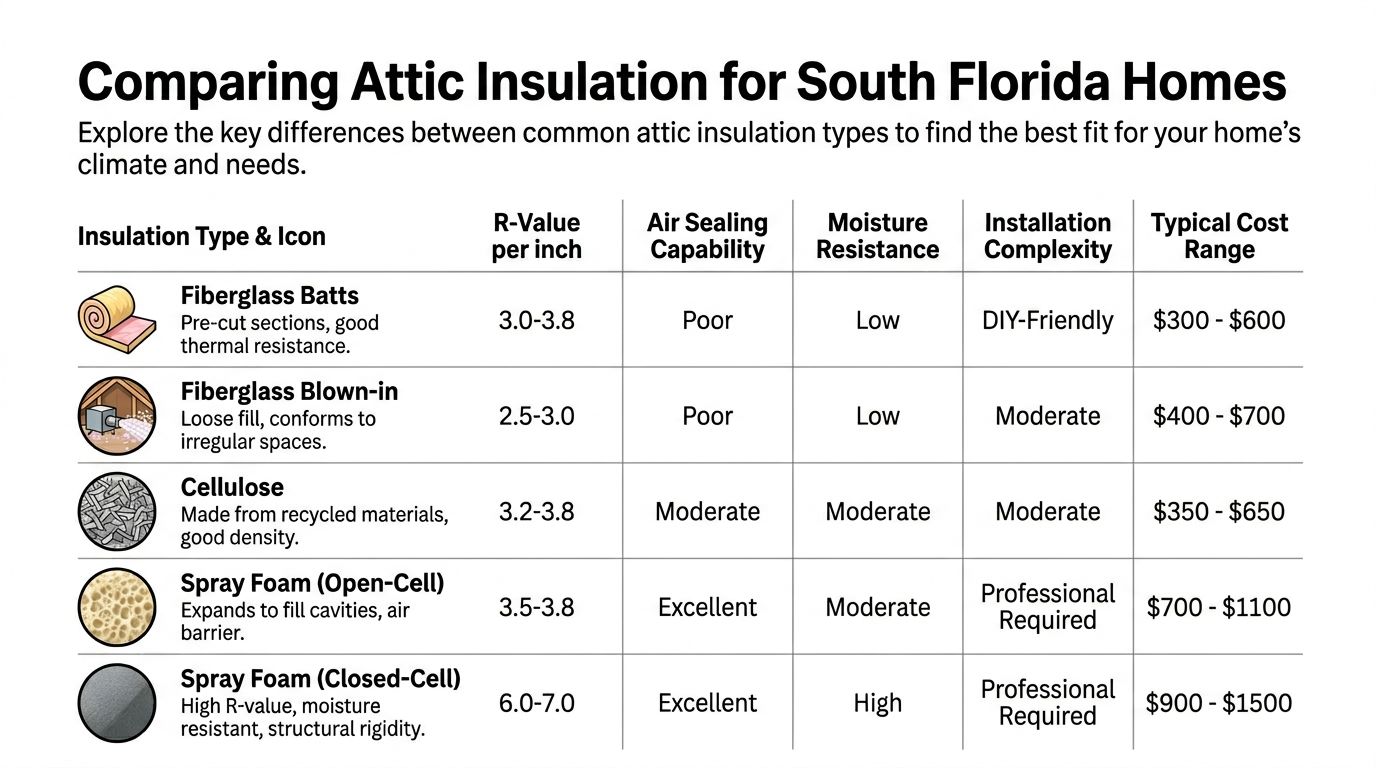
| Insulation type | R-value per inch | Air sealing | Moisture control | Best fit in hot humid attics |
|---|---|---|---|---|
| Fiberglass batts | Around R-4.3 per inch (bcpinc.us) | Poor | Limited | Budget installs where air sealing is handled separately |
| Fiberglass blown-in | R-3.1 to R-3.8 per inch (bcpinc.us) | Poor | Limited | Coverage over open attic floors, but weak against humid air movement |
| Open-cell spray foam | R-3.5 to R-4.0 per inch (arizonaroofers.com) | Strong | Vapor permeable | Situations where air sealing matters but moisture design must be handled carefully |
| Closed-cell spray foam | R-6 to R-7 per inch (arizonaroofers.com) | Excellent | High | Strong choice for South Florida attics where heat and humidity both matter |
A common South Florida call goes like this. The AC is running, the thermostat is set low, but the house still feels off. One bedroom is warm by late afternoon. The hallway feels muggy. The indoor unit seems fine, but comfort never lasts.
That points to the attic.
In this climate, attics can turn into a heat reservoir over your ceiling. The heat does not stay politely above the drywall. It pushes downward, warms ceiling surfaces, and keeps feeding your cooling load long after the sun has been beating on the roof.
Homeowners do not say, “My attic insulation is failing.” They say:
That pattern tells me to look above the ceiling before blaming the equipment.
In hot climates, insulation is not about keeping winter heat in. Its main job is to slow roof-driven heat from entering the living space and to reduce the pathways that let humid attic air affect the rooms below.
When the attic is poorly insulated or badly air sealed, your HVAC system has to cool the house while also dealing with heat gain from above. If attic leakage is part of the problem, homeowners benefit from both insulation work and good system oversight. For readers trying to understand the HVAC side of that equation, this overview of expert HVAC management is a useful companion.
In South Florida, an uncomfortable home is often a building-envelope problem first and an equipment problem second.
A lot of homes have enough tonnage on paper. What they do not have is an attic assembly that protects that cooling investment. Once the attic becomes part of the problem, the AC works longer, dehumidification gets harder, and comfort becomes inconsistent.
That is why the best attic insulation for hot climates has to do more than sit on the attic floor. It has to help control the conditions above your ceiling before those conditions take over your house.
Generic insulation advice says one thing. Get the highest R-value you can afford.
That sounds sensible, but in South Florida it is incomplete. R-value matters. It alone does not solve the whole problem when humid air is moving through the attic assembly.
A material can have a respectable R-value and still leave the house exposed to air leakage. That is the gap in most insulation advice for Florida homes. The issue is not only heat flow through material. It is also humid outside air getting into places it should not.
The underexplored trade-off: High R-value alone does not protect an attic if the insulation does not stop air movement. In poorly sealed homes, air infiltration accounts for 25-40% of cooling costs according to rubcorp.com.
A homeowner hears that an attic should have a high R-value. So they add more fiberglass or blown-in insulation across the attic floor. On paper, that sounds like progress.
In practice, two things can happen:
That is why some homes feel damp or develop staining and mold concerns even after “more insulation” was added.
In a dry climate, an insulation discussion can stay focused on thermal resistance longer. In a hot humid climate, you have to treat air sealing and moisture control as equal priorities.
Fiberglass and blown products can have a place. I am not saying they never belong in a house. I am saying they are often asked to solve a South Florida problem they were not designed to solve by themselves.
If insulation does not control air movement, the rated R-value on the label will not match the performance you feel in the house.
This is another reason generic advice misses the mark. Attics have penetrations, wiring paths, framing transitions, top plates, duct runs, hatch openings, and awkward corners. Every one of those details creates an opportunity for heat and humid air to bypass insulation.
That is why the best attic insulation for hot climates is not solely the product with the tallest number. It is the system that performs in the messy conditions of an actual attic.
Instead of asking, “What R-value should I install?” ask these questions:
Those questions lead to better decisions in South Florida than a basic R-value comparison.
A South Florida attic can punish the wrong insulation choice. I have seen plenty of homes with plenty of R-value on paper and still have hot bedrooms, long AC run times, and moisture problems around ducts and ceiling penetrations.
The right comparison is not just which product insulates the most. It is which product still performs after months of heat, humidity, duct sweat risk, and air leakage through an actual attic.
In this climate, I judge attic insulation by four job-site questions:
The Department of Energy recommends attic insulation levels in the R-30 to R-49 range for hot climates, but that target only tells part of the story. In South Florida, the better question is whether the system also controls humid air leakage. If it does not, homeowners often pay for more insulation and still feel uneven temperatures inside the house.
| Type | Thermal resistance | Air sealing | Moisture behavior | Durability |
|---|---|---|---|---|
| Fiberglass batts | Decent per inch | Weak | Does not stop humid air movement | Can leave gaps if poorly fit |
| Fiberglass blown-in | Good coverage on open floors | Weak | Less effective where moisture and leakage matter | Can shift or settle |
| Cellulose | Dense fill in some assemblies | Better coverage than batts, but not an air barrier | Needs careful moisture consideration | Depends heavily on conditions |
| Open-cell spray foam | Moderate per inch | Strong | Air seals well, but vapor design matters | Stable when properly installed |
| Closed-cell spray foam | High per inch | Excellent | Strong moisture resistance | Long-lasting and rigid |
For homeowners weighing loose-fill against foam, this comparison of foam versus cellulose insulation helps clarify where each option fits.
Fiberglass batts are inexpensive and familiar. They can work on an attic floor if the installation is clean, the cavities are straightforward, and the air sealing has already been handled.
That last part is where many Florida attics fall short.
Blown-in fiberglass usually covers an open attic floor more evenly than batts. It fills around irregular framing better and can be a reasonable lower-cost option in the right house.
It still is not an air barrier. If the attic floor has leaks at top plates, can lights, duct boots, plumbing penetrations, or the attic hatch, blown-in fiberglass will cover those areas without fixing them. That is why some homes show decent insulation depth and still struggle with high humidity and rooms that never cool down properly.
Cellulose is denser than loose fiberglass, so it can do a better job blanketing an attic floor and reducing some air movement within the insulation layer itself. In some assemblies, that helps.
In South Florida, I treat cellulose as a product that needs careful design, not a default upgrade. If the attic has moisture sources, duct leakage, or bypasses from the living space below, cellulose can end up in a system that is working harder than it should. The material is not the problem by itself. The problem is using it in an attic that still leaks humid air.
Open-cell spray foam changes the performance of an attic because it insulates and air seals at the same time. That can produce a bigger comfort improvement than just adding more loose-fill on the attic floor.
It has trade-offs. Open-cell foam is vapor permeable, so the roof assembly and moisture plan have to be right. In some homes, that is acceptable. In others, especially where moisture control is the top concern, I look harder at closed-cell options.
Closed-cell spray foam is the material I consider first when a homeowner wants to address heat gain, air leakage, and moisture exposure together. It gives high R-value per inch, creates an air seal, and adds moisture resistance in one application.
That matters in South Florida because attic problems rarely show up one at a time. The house is dealing with solar heat, humid outdoor air, cold duct surfaces, and long cooling seasons. A product that only adds R-value solves one piece of that problem. Closed-cell foam addresses more of the assembly at once, which is why the upfront price often buys better long-term value.
It also helps where space is tight and every inch counts.
Here is the practical summary.
Homeowners usually do not call back because the R-value was too low on paper. They call because the house still feels hot, the AC keeps running, or moisture starts showing up where it should not.
Walk into a South Florida attic in August and the problem is obvious. The air up there is brutal, the ductwork is baking, and the AC below is trying to cool a house sitting under a heat-soaked roof.
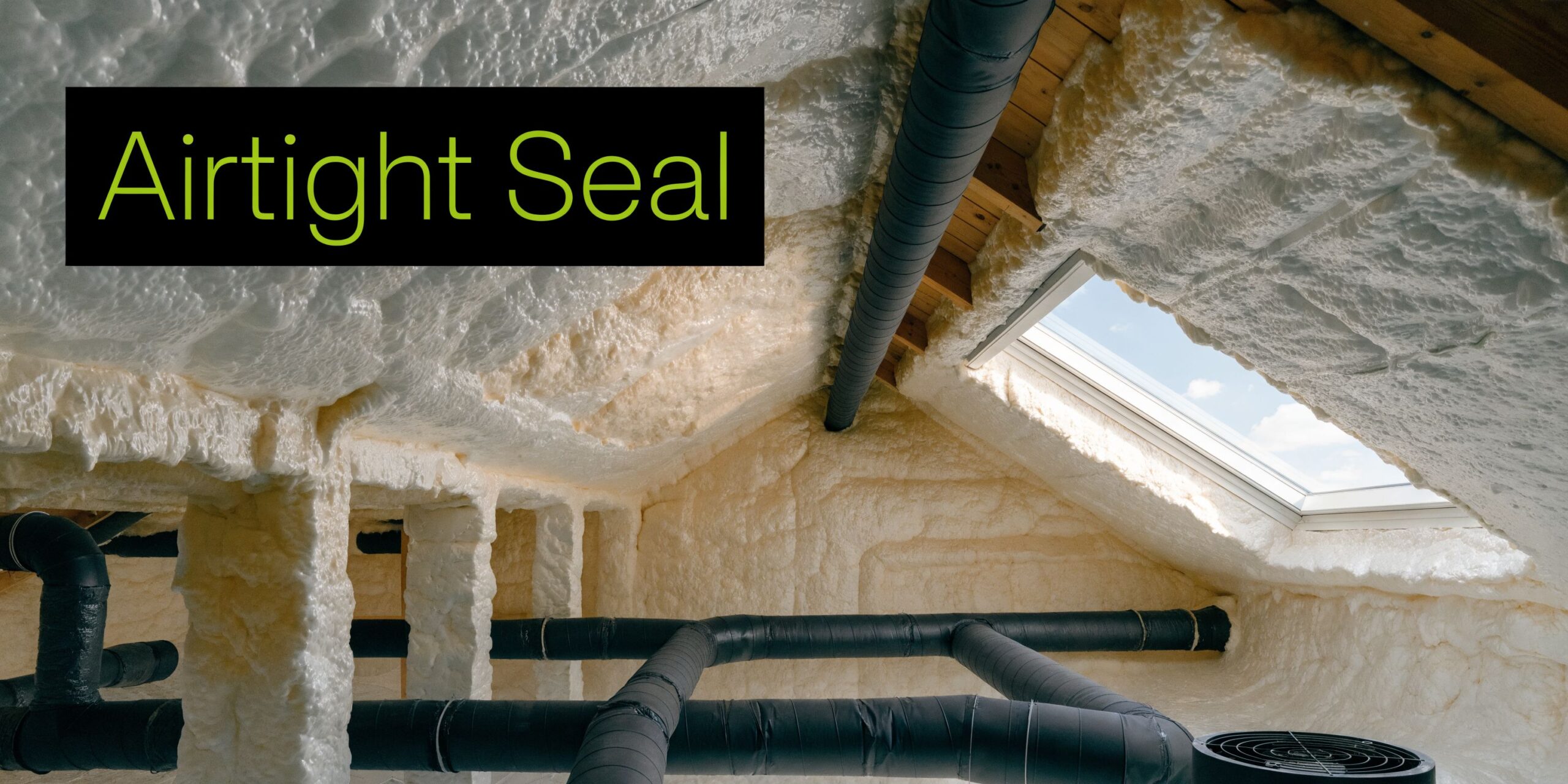
The fundamental upgrade is changing the boundary of the house.
With batt or blown insulation on the attic floor, the attic stays outside the conditioned envelope. In South Florida, that means extreme attic heat, humid air around ductwork, and mechanical equipment working in one of the worst places in the home. Spray foam changes that setup by insulating along the underside of the roof deck, so the attic is no longer a superheated buffer zone above your ceiling.
That shift changes performance in a way more R-value alone cannot.
Closed-cell spray foam earns its reputation because it handles three problems at once. It insulates, it seals air leaks, and it slows moisture movement. In a humid climate, that combination matters more than chasing the highest advertised R-value on paper.
That is the part generic insulation guides usually miss. In South Florida, comfort problems often start with hot attic air leaking into the house, humid air finding cold surfaces, and duct losses from equipment sitting in extreme conditions. A material that only resists heat flow leaves too much of the problem untouched.
Closed-cell foam also gives strong thermal performance per inch, which helps in tight assemblies where space is limited. If you want a plain-language explanation of the material and installation approach, this overview of how does spray foam insulation work lays it out clearly.
Open-cell spray foam has a place. It air seals well and can be a good fit in the right assembly.
Closed-cell is the stronger choice when the attic needs more control over both heat and moisture. It is denser, more rigid, and better suited for homes where rooflines, duct locations, and indoor humidity levels leave less room for error. In my experience, that is a common situation in South Florida.
Here is a quick walkthrough of what that looks like in practice.
A properly foamed roofline usually changes how the house feels within days. Upstairs rooms hold temperature better. The AC runs under less strain. Humidity becomes easier to manage because the system is no longer fighting attic air infiltration and overheated ductwork at the same time.
That is why spray foam is the gold standard here. It treats the attic as part of the building system, not just a place to pile insulation.
Homeowners who want to reduce your cooling costs usually focus on utility bills first. The bigger win is often fewer comfort complaints, lower moisture risk, and less wear on the HVAC system over time.
Airtight Spray Foam Insulation installs open-cell and closed-cell foam in South Florida attics, roofs, walls, garages, metal buildings, and new construction where air leakage and humidity are a concern.
In a hot humid climate, the attic system that lasts is the one that controls heat, air movement, and moisture together.
Homeowners pause when they price spray foam. That is reasonable. The upfront number is higher than fiberglass.
But insulation should be judged the same way you would judge a roof, windows, or an AC system. Not by the cheapest quote alone. Judge it by cost of ownership.
Cheap insulation can be expensive if it leaves the house uncomfortable, allows moisture trouble to develop, or keeps your cooling system working harder than it should.
The financial case for spray foam gets stronger in humid climates because the material is doing several jobs at once. It insulates, seals air leaks, and helps reduce moisture-related problems.
According to atticareusa.com, air leakage can drive 25-40% of cooling costs, and spray foam’s durability and moisture resistance can prevent the degradation and mold issues that often affect fiberglass over a 25+ year lifespan.
The payoff is not solely one line on a utility bill. It shows up in several places:
The exact savings in any one house depend on the home, the attic design, existing leakage, and how the work is installed. But the decision should be framed around what the house will cost you over time, not just what the installer charges on day one.
Even when a contractor cannot put an exact number on future HVAC life, the logic is straightforward. A system that runs harder and longer sees more strain. A system protected from attic heat and leakage has an easier job.
That does not mean insulation replaces HVAC maintenance. It means insulation supports it. Homeowners trying to connect those dots can review practical ways to reduce your cooling costs as part of a larger home-efficiency plan.
The cheapest attic insulation quote can become the most expensive option if it fails to control humidity and leaves the AC carrying the full load.
Do not ask, “What does this insulation cost?”
Ask:
That is how homeowners make better decisions in hot humid climates.
Even the right product can fail if the installation is sloppy. That is especially true with attic insulation, where details decide whether the work performs or disappoints.
Start with experience in the exact type of insulation you are considering. A contractor who occasionally installs insulation is not the same as a contractor who regularly handles attic assemblies in South Florida conditions.
Look for:
A useful reference point is this page on spray foam insulation contractors, which outlines what qualified installation should look like.
Do not settle for a one-number quote. Ask the contractor to explain the assembly.
Some questions should be direct:
A few warning signs show up:
A trustworthy insulation contractor explains the building science in plain English and welcomes questions about moisture, air sealing, and installation steps.
A good estimate should tell you what material is being used, where it will go, what preparation is required, and what the finished condition should be. It should also explain how the contractor will verify coverage and deal with cleanup.
That level of detail protects you. It also tells you whether the contractor understands attics as systems, not solely as empty spaces that need more insulation.
It depends on the condition of the existing material and the insulation strategy being used. If old insulation is dirty, damaged, damp, or contributing to odor and air quality concerns, many contractors will recommend removing it. If the new plan changes the attic boundary to the roofline, the role of the old insulation may also need to be reevaluated.
The right answer comes from inspecting the attic, not guessing from the hallway.
A sealed attic works differently from a traditionally vented attic. The design approach changes when insulation is installed at the roof deck instead of on the attic floor.
What matters is that the system is designed intentionally. This is not a place for half-vented, half-sealed improvisation. The contractor should explain how the attic will perform after installation and how moisture is being managed.
Yes. The exact assembly depends on how the space is used, whether it is conditioned, and how much moisture control it needs. Garages, workshops, and metal buildings benefit from insulation systems that do more than add R-value, especially when heat gain and condensation are concerns.
The product may be similar, but the design should match the building.
Project length depends on attic size, access, prep work, and whether old material has to be removed first. Small attics can move quickly. Larger or more complex projects take longer.
A good contractor will give you a realistic schedule, not a rushed promise.
Not always. Closed-cell is a strong option for many South Florida attics because of its high R-value per inch, air sealing, and moisture resistance. But every house has its own details.
The right recommendation depends on roof design, budget, project scope, and what problem you are trying to solve.
Sometimes it fixes most of them. Sometimes it reveals that the home also has duct leakage, equipment sizing issues, or airflow problems.
Insulation should be treated as part of the whole comfort system. If the attic is the main source of heat and humidity load, fixing it can make a major difference. But good contractors do not promise that one upgrade solves every comfort complaint in every house.
If your home in Jupiter, Palm Beach Gardens, West Palm Beach, Wellington, or Stuart feels like the AC is always working harder than it should, Airtight Spray Foam Insulation can help you evaluate the attic as a heat, air, and moisture problem, then recommend the right spray foam approach for the way your home is built.