Your thermostat keeps cycling. One bedroom feels clammy, another feels warm, and the house never seems to settle down. In South Florida, that usually gets blamed on the air conditioner, the insulation, or the age of the windows.
Sometimes those are part of the problem. But a lot of uncomfortable homes have a simpler issue hiding behind drywall, trim, attic access panels, plumbing penetrations, and framing joints. Air is leaking in and out where it shouldn't.
That's what makes air sealing worth understanding. If you've been wondering what is air sealing, the short answer is this: it's the process of closing the gaps and cracks in your home's envelope so conditioned indoor air stays where it belongs, and hot, humid outdoor air stays out.
Most homeowners start with insulation because that's the part they can see on a sales estimate. More insulation sounds like more protection. The problem is that insulation and air sealing do different jobs.
Insulation slows heat transfer. Air sealing stops air movement.
That distinction matters more than people think. Up to 30% of energy loss in typical homes stems from unsealed air leaks, not poor insulation, according to Rogers Insulation's explanation of air sealing vs. insulation. If those leaks stay open, the home can feel drafty, the HVAC system can run harder than it should, and moisture can keep finding its way indoors.
A leaky home can have decent insulation and still perform badly. I see this most often in attics and wall transitions. Homeowners add insulation, expect the house to feel tighter, and then wonder why the back bedrooms still feel sticky in the afternoon.
The reason is simple. If air can move around or through the assembly, it keeps carrying heat and humidity with it. The insulation hasn't failed. It's just being asked to solve the wrong problem.
A house with open air leaks behaves like a cooler with the lid cracked open. You can add more material inside it, but the opening still controls the result.
Common signs usually show up before anyone says the words air sealing:
If you're also looking at broader energy-saving tips for homeowners, air sealing belongs near the top of the list because it addresses the part of the house that many people skip over entirely.
Air sealing is the deliberate process of closing the pathways that let indoor air escape and outdoor air enter through the building envelope. That includes small cracks around framing, wiring, plumbing, duct penetrations, window frames, attic accesses, and the seams where different materials meet.
The easiest way to think about it is a leaky bucket. If the bucket has holes, adding more water doesn't solve the problem. Your home works the same way. If conditioned air is slipping out through dozens of hidden gaps, your cooling system has to keep replacing what the house keeps losing.
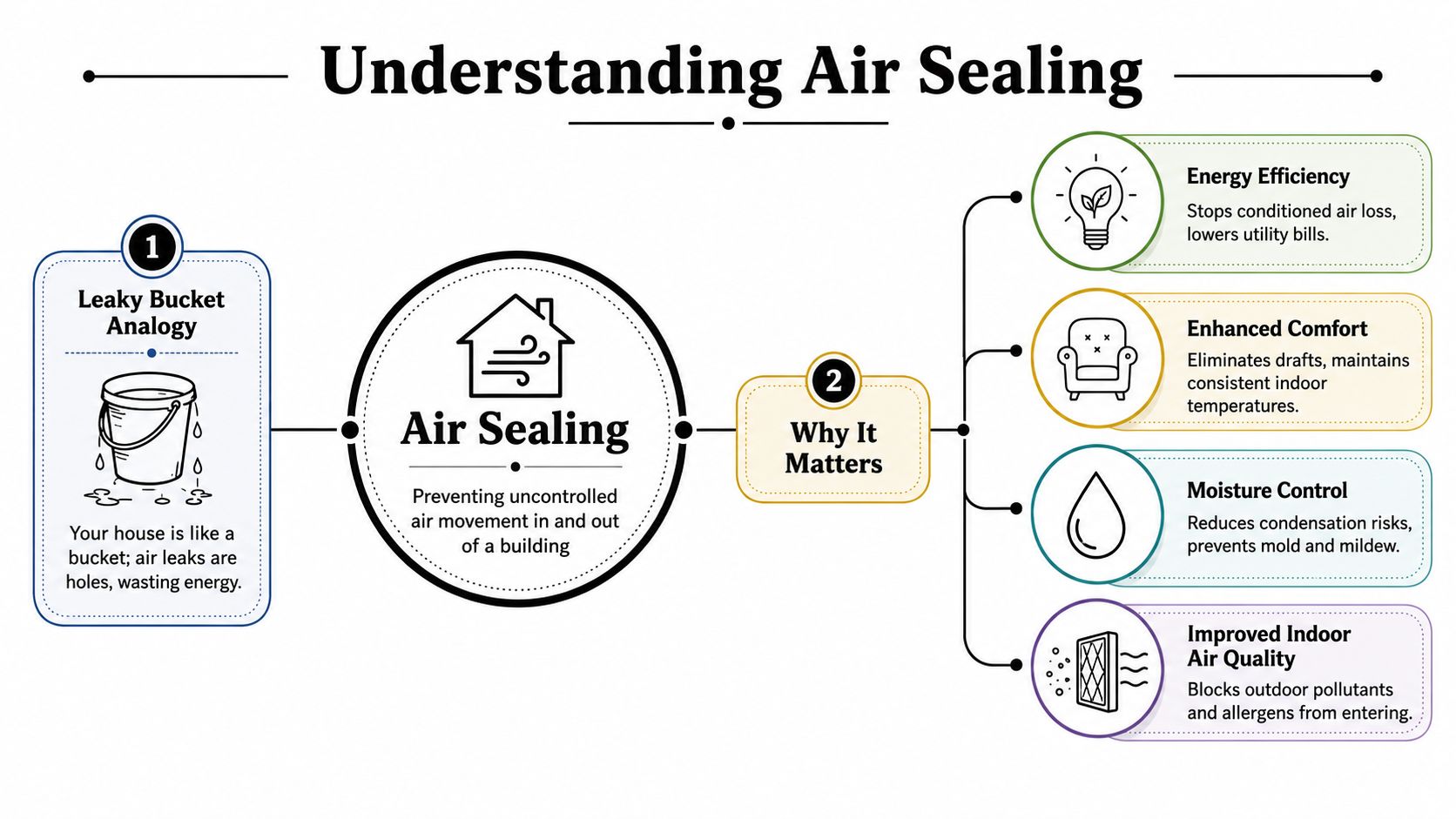
The energy side is the easiest place to start. According to the EPA, homeowners who properly air seal their homes and add insulation in key areas can save an average of 15% on heating and cooling costs, or about 11% of total energy costs annually, as summarized in this EPA-backed air sealing overview.
Comfort shows up just as fast. When crews seal leakage paths, the house usually feels more stable from room to room. You get fewer drafts, less hot-cold variation, and less of that familiar South Florida sticky feeling near ceilings, exterior walls, and attic access points.
Moisture control is a major reason this work matters locally. Humid outdoor air doesn't need a visible opening to enter. It moves through tiny gaps around penetrations and framing joints. Once that air gets into cooler cavities or conditioned rooms, condensation risk goes up.
Sound reduction is the quiet benefit homeowners don't expect. Sealing openings doesn't make a home soundproof, but it does reduce the small air pathways that also carry noise.
Air sealing is not just stuffing fiberglass into a cavity and calling it done. It's not repainting trim lines where cracks are still open behind the finish. It's not guessing where the leaks are and hoping for the best.
A proper process identifies leakage paths, chooses the right material for each opening, and checks whether the work reduced leakage. If you're trying to understand how professionals verify that, a blower door test and what it reveals is the most useful place to start.
Practical rule: If air can move through the assembly, insulation performance drops. Seal the air path first, then treat the thermal layer.
Air leaks rarely announce themselves. A window may rattle, a door sweep may wear out, or you may feel warm air near an attic hatch, but many of the worst leakage points stay hidden behind trim, drywall, and insulation.
The Department of Energy recommends checking areas like electrical outlets, switch plates, door and window frames, baseboards, fireplace dampers, attic hatches, and spots where different materials meet. It also identifies a professional blower door test as the standard way to locate leaks precisely, as described in this air leak inspection guide based on Department of Energy recommendations.
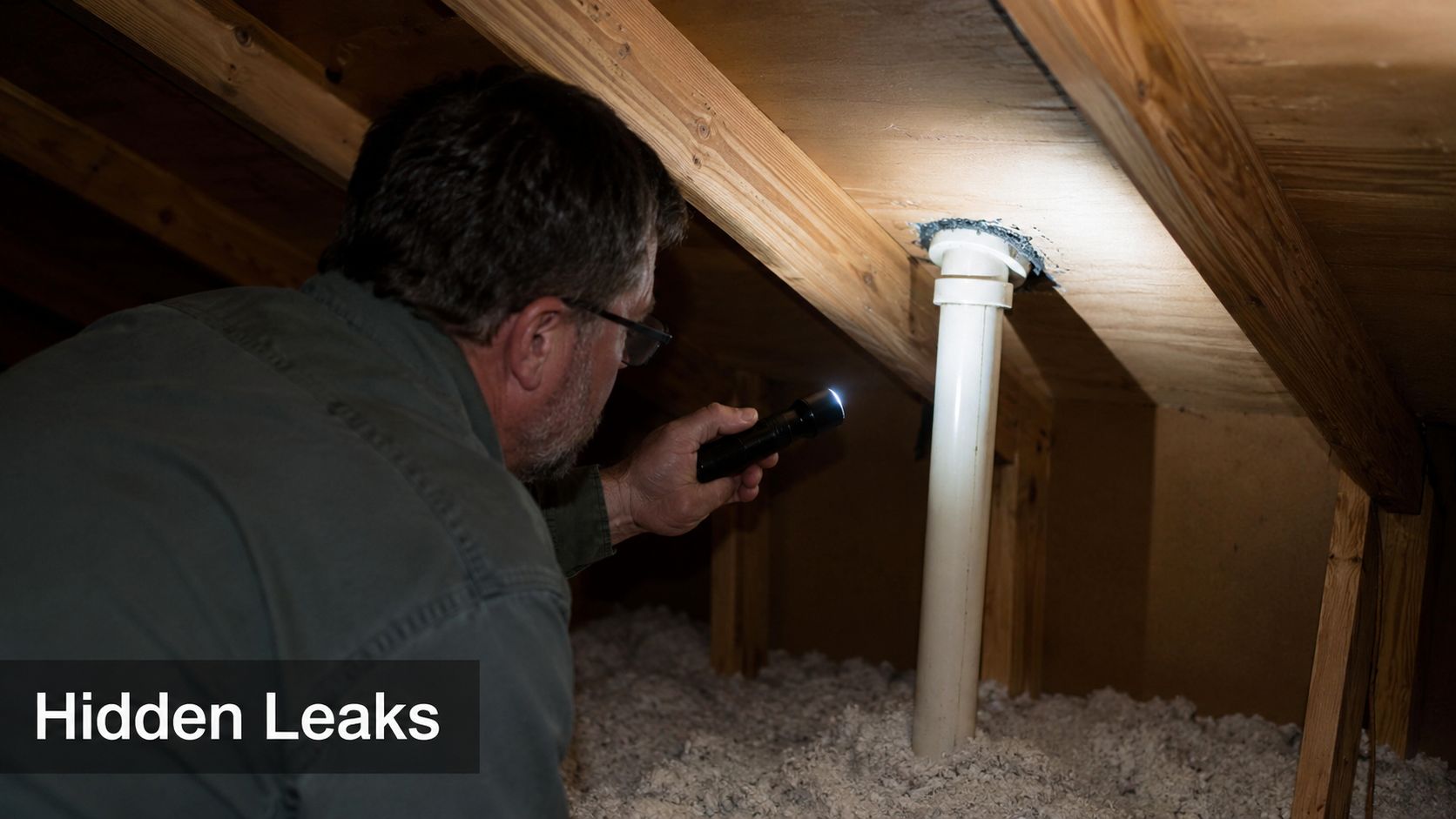
Start in the attic. That's where some of the most important leakage paths live. Recessed lights, bath fan housings, wire penetrations, plumbing stacks, dropped soffits, and the attic access itself can all act like open doors between conditioned space and a superheated attic.
Then move to exterior walls. Outlet boxes and switch plates on those walls may look harmless, but they often connect to cavities that exchange air with the outside or the attic. Under sinks is another common miss. The hole cut for the drain line or supply lines is often much larger than the pipe.
At the floor and wall line, baseboards and flooring transitions can leak too. In homes with garages, the shared wall and any penetrations between house and garage deserve careful attention.
A blower door test puts the house under controlled pressure so leakage becomes measurable instead of theoretical. With the house pressurized or depressurized, crews can trace airflow with smoke and feel where the envelope is failing.
That matters because guessing often misses the biggest leaks. A home may have obvious weatherstripping issues at doors, but the larger problem might be up at the attic plane. Homeowners who want a better sense of where major losses usually occur can review common attic air leak locations and how they're sealed.
If you only seal what you can see from eye level, you usually leave the worst leaks untouched.
Not every gap gets the same treatment. Good air sealing work depends on matching the material to the opening, the location, and the movement of the assembly. Some spots need flexibility. Others need expansion. Some need a more durable approach because the area is exposed to heat, moisture, or service traffic.
For small, stable cracks, caulk is often the right choice. For movable parts like doors and operable windows, weatherstripping and door sweeps are standard. For irregular penetrations around plumbing or wiring, one-part spray foam often does the job better because it expands into uneven voids.
Basic materials can solve real problems when they're used in the right places.
What usually fails is using one material everywhere. Foam isn't ideal for every finished joint. Caulk won't bridge a large open cavity well. Fiberglass stuffed into a crack doesn't stop airflow on its own.
One target stands above the rest. Research summarized by the U.S. Department of Energy indicates that sealing the top plate to attic drywall interface from the attic can reduce ACH50 by up to 1.6 exchanges, making it the single most critical location for leakage mitigation in many homes, as explained in this Department of Energy guide to air sealing in new home construction.
That finding lines up with what experienced crews see in the field. The attic plane is where pressure differences and heat exposure keep exploiting tiny bypasses. If that line stays open, the house keeps exchanging air even when doors and windows are shut.
| Material | Best For | DIY Friendliness | Durability |
|---|---|---|---|
| Caulk | Small cracks at trim, frames, and finish joints | High | Good when the joint is stable |
| Weatherstripping | Door and window operable edges | High | Good, but wears with use |
| Gaskets | Behind outlet and switch plates on exterior walls | High | Good in protected locations |
| Canned spray foam | Plumbing, wiring, and irregular penetrations | Moderate | Strong when applied correctly |
| Open-cell spray foam | Broad air sealing in certain wall and roof assemblies, plus sound control | Low | Long-lasting when properly installed |
| Closed-cell spray foam | Areas that need strong air sealing with added moisture resistance and rigidity | Low | Very durable |
Spray foam deserves its own category because it can both insulate and air seal when used correctly. Open-cell spray foam is often chosen where sound dampening and cavity fill matter. Closed-cell spray foam is denser and is often selected where moisture resistance, structural firmness, and a tougher air barrier are priorities.
That doesn't mean spray foam is always the answer. It means it's often the best answer in assemblies with multiple penetrations, awkward geometry, or persistent leakage pathways that simple patch materials can't handle cleanly.
Some air sealing work is absolutely worth doing yourself. If a door sweep is worn out, a window latch side needs weatherstripping, or an exterior plumbing penetration under a sink is obviously open, a homeowner can often improve those details with basic tools and careful work.
DIY makes the most sense when the leak is visible, accessible, and low risk. It's a solid first move for trim gaps, hatch weatherstripping, outlet gaskets, and simple caulking.
Whole-house air sealing is different. Attics, crawlspaces, roof lines, top plates, garage transitions, and complex framing intersections require more than a tube of caulk and a free afternoon. The work may involve hot attic conditions, hidden bypasses under insulation, combustion safety considerations, and the need to distinguish an air leak from a moisture or ventilation problem.
Professional crews also bring diagnostic equipment. That matters because a house can feel better after minor DIY work while still leaking badly at the attic plane or structural seams.
Homeowners can seal many small leaks. They usually can't diagnose the whole pressure boundary without testing.
Modern codes reflect that reality. The 2021 IECC requires a blower door test to verify that new building units achieve a maximum leakage of 3 ACH50, making measured performance part of the standard rather than an optional extra, according to this summary of 2021 IECC air sealing requirements.
That requirement tells you something important even if you're not building a new home. The industry no longer treats airtightness as guesswork. It expects verification.
A professional job is usually the better path when:
If you're evaluating providers, it helps to compare qualified air sealing contractors near you based on diagnostics, materials, scope, and whether they explain the pressure boundary clearly.
South Florida changes the conversation. In a drier climate, homeowners may notice drafts first. Here, they usually notice humidity, musty odors, and rooms that feel cool but never feel dry.
That's because unwanted air leakage in this region doesn't just carry heat. It carries moisture. When that humid air enters wall cavities, attics, closets, or conditioned rooms, it can push the home toward condensation and mold problems.
The stack effect is one of the least understood reasons homes leak. Warm air rises, and as it moves upward through a house, it pulls air through cracks and bypasses. In South Florida, that dynamic becomes more damaging because the incoming air is moisture-laden.
The top of the house becomes especially important. The available source material notes that the stack effect is especially problematic in humid regions like South Florida, where unsealed leaks allow moisture-laden air to enter and raise condensation and mold risk. It also notes that sealing the top plate-to-attic drywall interface is highly effective at countering this, based on this discussion of stack effect and top-plate sealing in humid homes.
In South Florida, better air sealing helps on several fronts at once:
Air sealing doesn't make a house hurricane-proof, and it shouldn't be sold that way. But tighter assemblies, better-sealed penetrations, and well-executed spray foam details can support a more durable building envelope. In this climate, that matters. Moisture damage often starts small and stays hidden until trim swells, paint fails, or odors appear.
In South Florida, uncontrolled air leakage is rarely just an energy problem. It's a humidity problem first, and a durability problem right behind it.
If you've been asking what is air sealing, the practical answer is straightforward. It's the work that turns a leaky house into a controlled one. You stop unwanted air movement, reduce hidden moisture entry, improve comfort, and give insulation a chance to do its job.
In South Florida, that work matters even more because comfort and durability are tied directly to humidity control. A house that leaks outdoor air is harder to cool, harder to dry, and harder to protect over time.
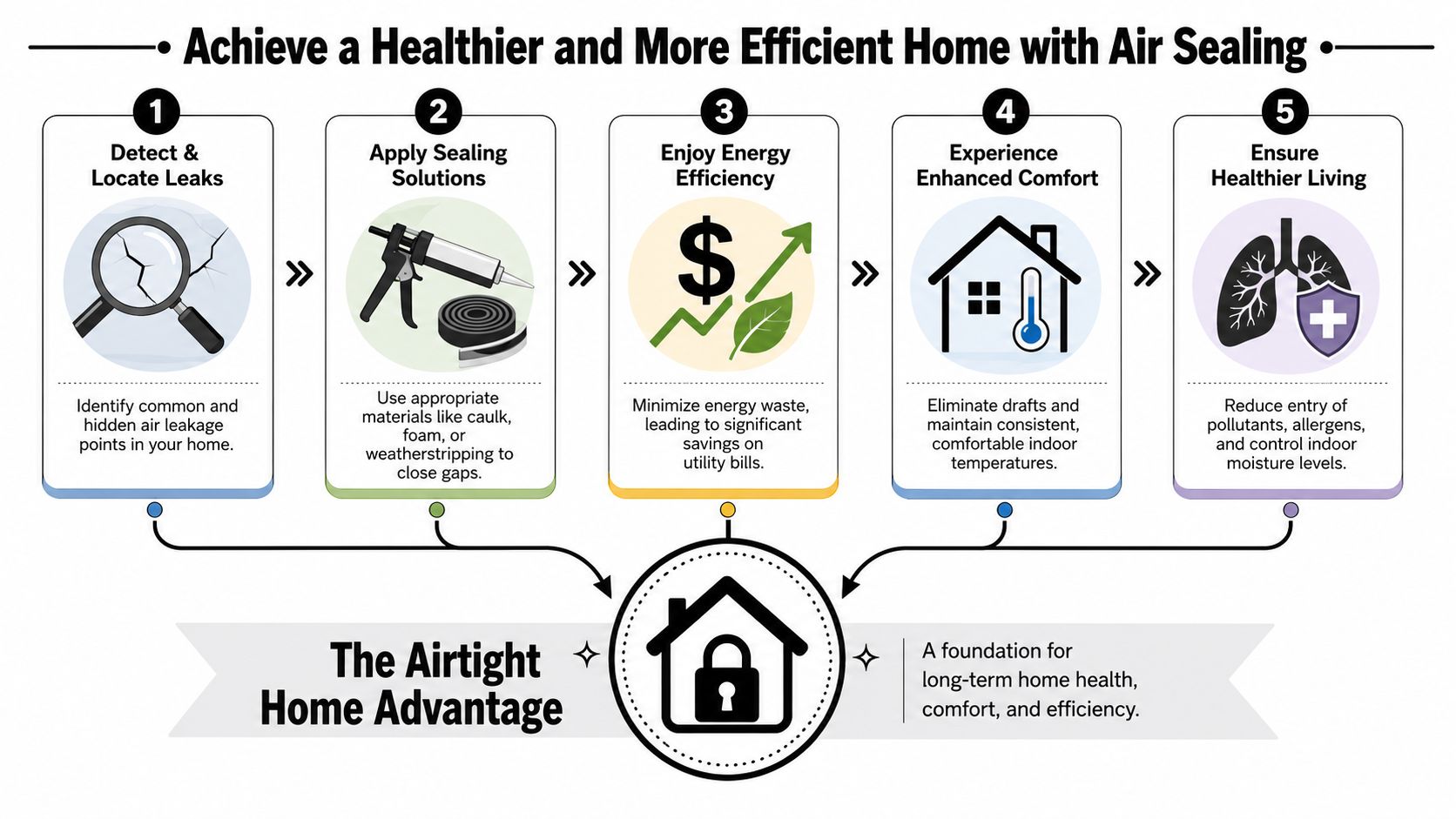
The right contractor doesn't jump straight to product. The process should start with inspection and diagnostics, followed by a clear explanation of where the home is leaking and which materials fit each area.
A strong air sealing plan usually includes:
For homeowners in Jupiter, Palm Beach Gardens, West Palm Beach, Wellington, and Stuart, local climate knowledge makes a big difference. The best results come from crews that understand not just energy efficiency, but South Florida humidity, roof heat, and the hidden leak patterns common in homes here.
Airtight Spray Foam Insulation helps South Florida homeowners seal the leaks that drive up humidity, comfort problems, and energy waste. Their team inspects the home carefully, explains what they find in plain language, recommends the right mix of air sealing and spray foam, and installs it with a detailed, safety-focused process. If you want a quieter, healthier, more efficient home, request a free quote from Airtight Spray Foam Insulation and get a plan built for your property.