Your AC runs hard by noon. One bedroom feels damp no matter how low you set the thermostat. The garage smells musty after a week of afternoon rain. Then you start searching for insulation and get buried in articles that say the same thing: fiberglass is cheap, cellulose is green, mineral wool is fire-resistant, spray foam is expensive.
That advice is too generic for South Florida.
In Jupiter, Palm Beach Gardens, West Palm Beach, Wellington, and Stuart, insulation has to do more than slow heat flow. It has to manage hot, wet air, reduce the chance of condensation inside assemblies, and hold up when pests, salt air, and long cooling seasons put pressure on the whole building shell. That's why homeowners who are comparing spray foam insulation alternatives need to look past product labels and ask a tougher question: what still performs after years of humidity exposure?
The difference matters. A 2025 Building Science Corporation study found that in coastal Florida, cellulose retained 15% more moisture than closed-cell foam after 3 years, leading to a 22% higher incidence of structural mold in attics. Generic eco-marketing rarely deals with that local reality.
If you're sorting bids and trying to separate real building science from sales talk, this homeowner's guide to trusted pros is a useful place to start. It helps you vet who's qualified to work on your house before you compare insulation systems.
Most search results treat insulation like a commodity. Pick an R-value, compare a few prices, install it, and move on. That logic falls apart in South Florida because the insulation layer doesn't work alone. It interacts with the roof deck, ductwork, framing cavities, attic ventilation strategy, and the indoor humidity load created by your AC system.
A lot of product comparisons focus on R-value per inch and skip the two issues that drive callbacks here:
That's where many spray foam insulation alternatives start to separate.
A batt or loose-fill product may insulate well in a lab cavity. In a real South Florida house, it still needs the rest of the enclosure to stop humid air from washing through it. If that air barrier is weak, the insulation doesn't get a fair chance to perform.
Practical rule: In this climate, the best insulation system isn't just the one with a strong R-value. It's the one that controls air and moisture together.
The right choice depends on where the insulation is going. Interior sound wall between bedrooms? One answer. Unvented attic under a dark tile roof? Different answer. Block home with additions and duct runs in the attic? Different again.
That's why the “best alternative” isn't universal. South Florida punishes wishful thinking. If a material needs perfect detailing, separate air sealing, and ideal drying conditions to work well, you need to count those requirements before you call it a bargain.
South Florida doesn't give insulation an easy assignment. Materials installed here face extreme solar load, heavy ambient moisture, and frequent pressure differences between indoors and outdoors as AC systems cycle. A product that performs acceptably in a dry or mixed climate may struggle once it's exposed to long cooling seasons and high outdoor dew points.

Heat alone is manageable. Heat combined with moisture is what causes trouble.
When humid air leaks into an attic, wall cavity, or rim area, the risk isn't just discomfort. That air can hit a cool surface and condense. If you want a deeper explanation of how that process starts inside building assemblies, this piece on understanding dew point is worth reading before you sign a contract.
Three things happen when humid air gets past the enclosure:
| Problem | What it does to insulation | Why it matters in South Florida |
|---|---|---|
| Air leakage | Reduces real-world performance | AC systems have to run longer |
| Moisture accumulation | Can support mold or material decline | Attics stay hot and damp for long periods |
| Condensation at cool surfaces | Damages adjacent components | Roof decks, framing, and duct boots are vulnerable |
A lot of national advice assumes your insulation only needs to resist conductive heat transfer. Here, the assembly also has to limit infiltration and keep moisture from collecting where you can't see it.
Roof systems in this region take a beating. Attics can become severe heat reservoirs, and the insulation below them has to slow that load while the AC tries to maintain stable indoor temperatures. If the material leaves gaps around penetrations, top plates, wiring runs, or irregular framing, the whole assembly starts leaking sensible and latent load into the house.
That's why products that only fill the cavity but don't seal the cavity often disappoint homeowners. On paper, the insulation is present. In practice, the hot air still moves.
South Florida homes also deal with insects, occasional roof leaks, duct sweating, and deferred maintenance. Those aren't side issues. They're part of the insulation decision.
Cellulose and hemp-based products get attention for sustainability, and there are valid reasons to consider them. Cellulose contains 75% to 85% recycled paper or recycled denim mixed with boric acid and borax, and it's available in loose fill, dense pack, and spray varieties. HempWool® is derived entirely from industrial hemp and is promoted as a non-toxic, bio-based option with resistance to mold and insects. Those are meaningful benefits.
But in this climate, the first screening question is still simple: how does the material behave when heat, humidity, and imperfect air control hit it year after year?
Most insulation failures I see in hot-humid buildings don't start with the insulation itself. They start with uncontrolled air.
To properly compare spray foam insulation alternatives, you need a clear benchmark first. Spray foam isn't one product. The two main categories, open-cell and closed-cell, solve different problems and shouldn't be lumped together.
Open-cell foam is lighter and softer. It expands well into irregular cavities and is often chosen where sound reduction matters along with insulation. In performance terms, it sits in the same general thermal range as some fibrous products.
That matters because it shows why foam isn't only about R-value. A material can have similar thermal resistance per inch and still perform differently once air leakage enters the picture.
Closed-cell foam is the heavy hitter in tight spaces and high-demand assemblies. According to Rmax's comparison of mineral wool vs spray foam, closed-cell spray foam delivers R-6 to R-7 per inch, while mineral wool and open-cell spray foam are in the R-3 to R-4 per inch range. That higher thermal density matters in wall cavities, rooflines, and retrofits where thickness is limited.
More important in South Florida, closed-cell foam functions as more than insulation. It creates an air seal and helps control moisture movement when installed correctly. That's why builders often use it in unvented attic assemblies, on roof decks, in metal buildings, and in locations where humid air intrusion would otherwise undermine the whole system.
The benchmark isn't “foam is always best everywhere.” The benchmark is this: spray foam combines several jobs into one installed layer.
That combination is why many alternatives need extra steps to compete.
If you have plenty of space, low humidity exposure, and excellent air sealing elsewhere, alternatives can make sense. If you need one layer to do multiple jobs, spray foam usually sets the standard.
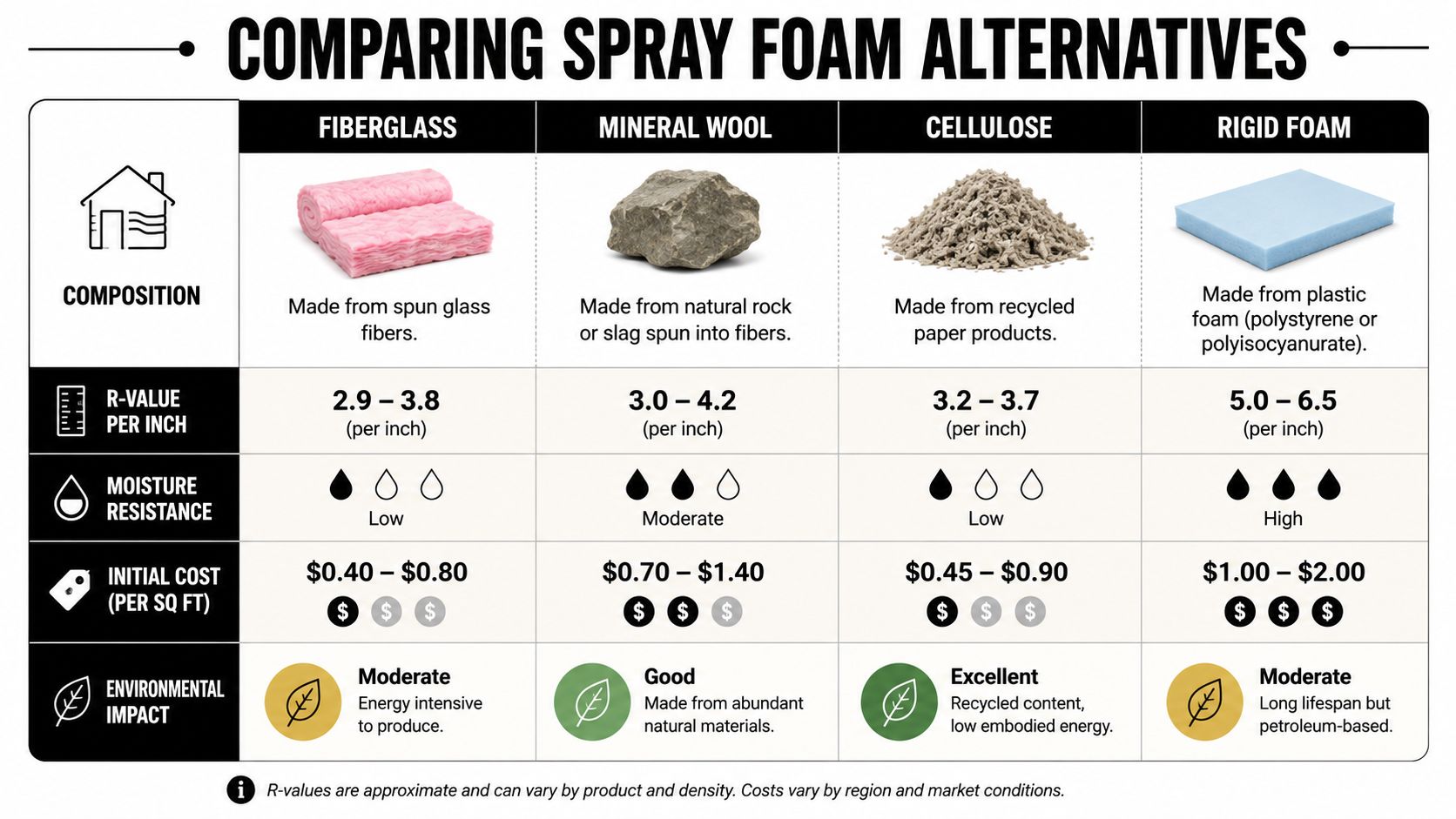
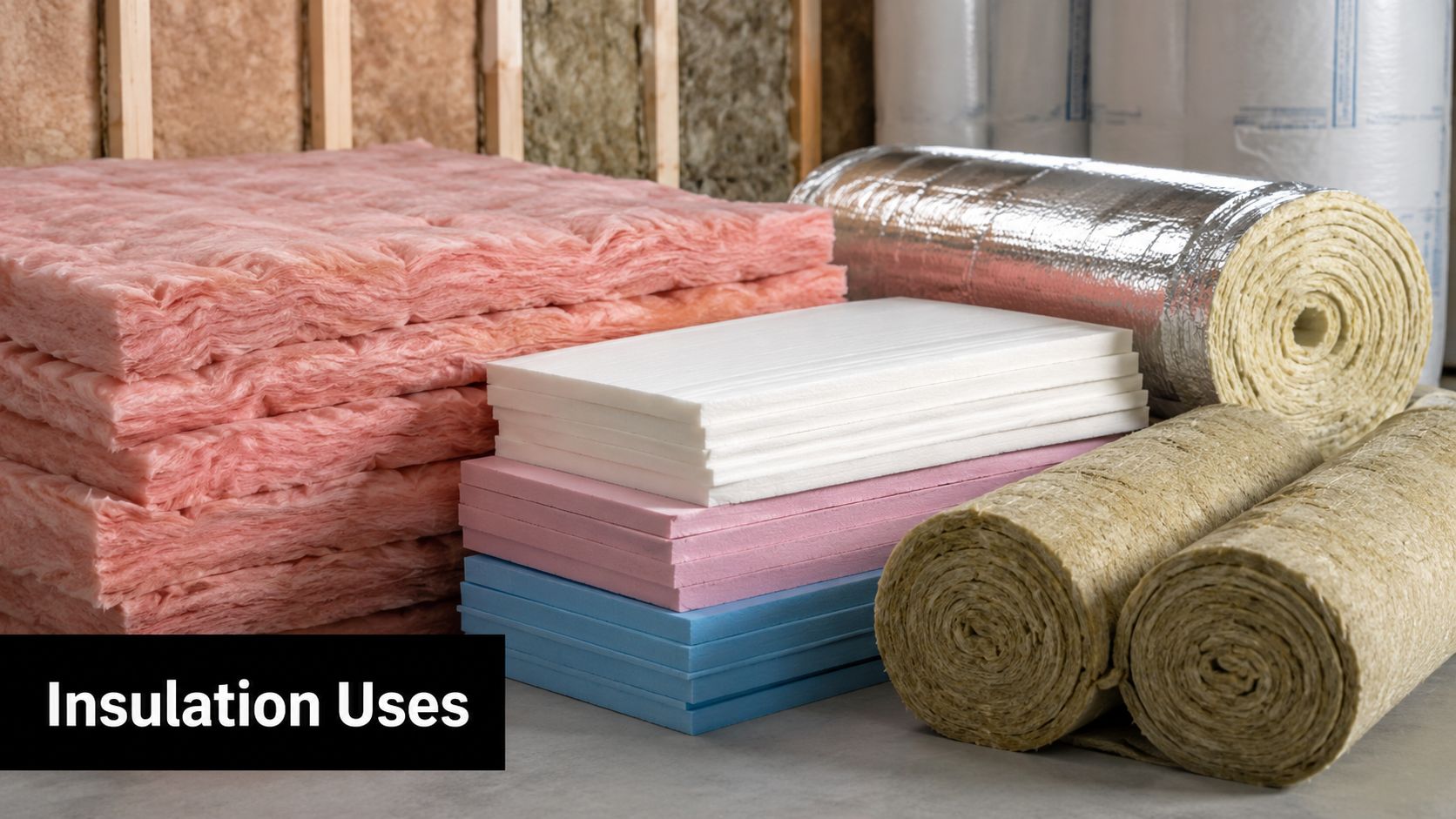
The best way to compare spray foam insulation alternatives is to stop asking which product is “good” in the abstract and ask which one matches the assembly. Every insulation type has a lane. Problems start when people force one into an application it wasn't built to handle.
| Insulation type | Thermal profile | Air sealing ability | Moisture behavior | Best fit |
|---|---|---|---|---|
| Fiberglass batts or blown-in | Similar to open-cell foam in listed R-value per inch | Weak on its own | Porous, needs air control strategy | Budget-conscious standard cavities |
| Cellulose | Solid cavity coverage, especially dense pack | Needs separate air sealing | Can manage moisture, but climate matters | Some walls and attics where sustainability is a major goal |
| Mineral wool | Comparable to open-cell foam by inch | Not an inherent air barrier | Handles heat well, valued for fire and sound control | Interior partitions, targeted assemblies |
| Rigid foam board | Depends on board type and detailing | Can be strong when seams are handled well | Good when integrated carefully | Exterior continuous insulation, specific retrofit work |
| Closed-cell spray foam | Highest thermal density in the verified comparison set | Strong integrated seal | Strong moisture-control role | Unvented attics, limited-depth cavities, demanding humid environments |
Fiberglass remains common because it's familiar and accessible. The problem is not that fiberglass can't insulate. The problem is that it doesn't provide an air barrier.
In the verified benchmark data, fiberglass batts and open-cell spray foam both fall in the R-3 to R-4 per inch range, but spray foam creates a continuous seal that reduces air leakage by up to 90% compared to traditional batt insulation in field benchmark results from the referenced video comparison. In a humid climate, that gap in air control is often more important than the listed R-value.
Fiberglass makes the most sense when the assembly already has meticulous air sealing, the cavities are regular, and the budget is driving the decision. It makes less sense when the attic floor is full of penetrations, the framing is uneven, or the house already struggles with comfort imbalance.
Cellulose deserves more respect than it gets in some contractor circles. It uses high recycled content, offers multiple installation methods, and contains boric acid and borax that help with mold and insect resistance. If you want a primer on composition and installation forms, this overview of what is in cellulose insulation is a good technical reference.
Its advantage is coverage. Dense-pack cellulose can fit around obstructions better than batt products, and its recycled content appeals to homeowners who want lower-petroleum materials.
Its risk in coastal Florida is long-term moisture exposure. The verified data point from Building Science Corporation is the one I would pay attention to most for this market. In coastal Florida conditions, cellulose retained more moisture than closed-cell foam over time and showed a higher incidence of structural mold in attics. That doesn't make cellulose useless. It means homeowners should stop treating “green” as a synonym for “best for every climate.”
Mineral wool is the alternative I recommend most often when the goal isn't maximum thermal density. It's useful where fire resistance and acoustic isolation matter more than squeezing the most performance into a limited cavity. The trade-off is straightforward: it doesn't bring the same integrated air-sealing function as closed-cell foam.
That makes mineral wool strong in interior walls, mechanical room separations, and projects where non-toxic composition matters to the owner. It's weaker as a one-material answer for leaky rooflines and humid enclosures unless the rest of the air control layer is done exceptionally well.
Rigid boards can perform very well in the right assembly, especially as exterior continuous insulation or in specific retrofit strategies. But they aren't forgiving. Seams, transitions, fastener penetrations, edge conditions, and substrate continuity all matter.
If the installer leaves gaps or handles joints casually, the board may insulate while the assembly still leaks air. That's a common theme across many spray foam insulation alternatives. They can work. They just ask more from design and labor.
Good insulation products fail all the time because the assembly around them wasn't finished with the same care the brochure assumes.
The cheapest line item on a proposal often turns into the more expensive building decision. That happens when owners compare insulation by material price alone and ignore the cost of getting equivalent air control.
Fiberglass, cellulose, and mineral wool usually don't arrive as complete air-sealing systems. To approach the performance of foam, crews often need to add sealants, membranes, tapes, or separate air-sealing services. That adds labor, coordination, and another chance for quality drift between trades.
A useful way to think about insulation cost is total installed performance cost. That means asking what it takes for the assembly to control heat and humid air once the job is complete, not what one bag, batt, or board costs in isolation.
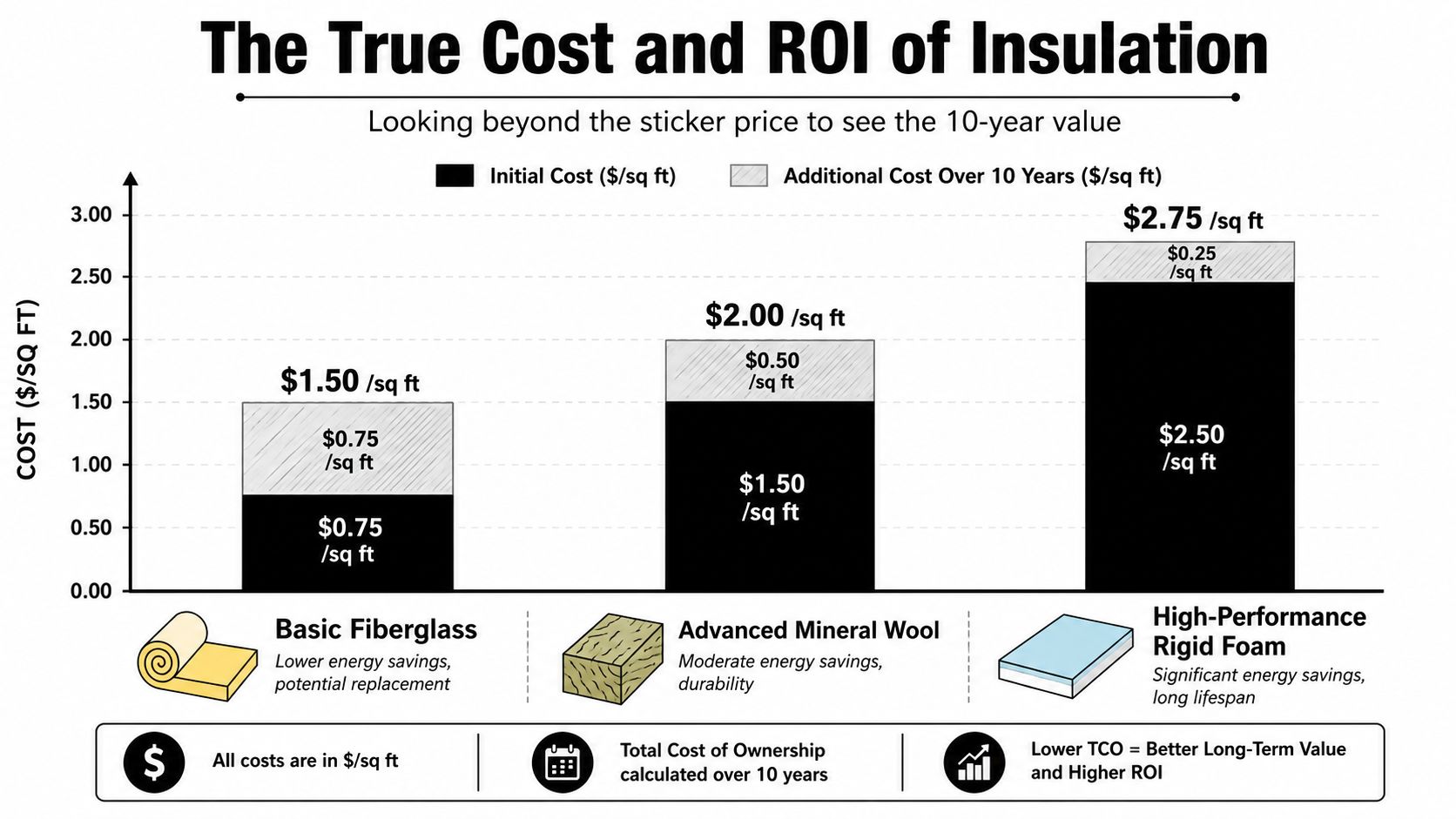
The strongest verified data point on cost in this topic is simple and important. A 2025 analysis by the National Institute of Building Sciences found that cellulose plus AeroBarrier exceeded spray foam by 18% in total installed cost in new construction projects in warm climates when professional air-sealing labor was added. That undercuts the standard claim that alternatives are always the budget option.
For homeowners comparing bids, this means you should ask whether the proposal includes all required air-sealing work or assumes someone else will handle it later. For builders, it means the “less expensive” insulation package may only look cheaper because the air barrier scope is spread across multiple trades.
Use three filters when you review a quote:
A lower quote can still be the wrong buy if it leaves the house drafty, humid, or vulnerable to hidden moisture problems. In South Florida, ROI isn't just utility savings. It's also fewer comfort complaints, less risk inside the assembly, and less dependence on perfect field conditions.
There isn't one winner for every building. The right recommendation changes with the structure, the mechanical design, and the owner's priorities.
For a South Florida home with ductwork in the attic, limited cavity depth, and ongoing humidity complaints, closed-cell spray foam is often the cleanest solution. It brings high thermal performance per inch and integrated air control where the enclosure is under the most stress.
That doesn't mean every attic needs closed-cell foam. But when the roofline is complex, penetrations are numerous, and the owner wants to bring the attic into a more controlled envelope, alternatives usually require more layers and more execution risk.
Mineral wool is one of the best non-foam choices for interior partitions. If a homeowner wants to quiet a home office, media room, nursery, or bedroom wall, mineral wool is often the better fit than using premium foam where acoustic control is the main goal.
The trade-off is unchanged from the technical comparison: mineral wool and open-cell spray foam are both in the R-3 to R-4 per inch range, while closed-cell spray foam reaches R-6 to R-7 per inch in the verified comparison data. Mineral wool earns its place when sound control and fire performance matter more than thermal density.
Rigid foam board can be excellent on the exterior side of an assembly, especially when designers want continuous insulation and careful control of thermal bridging. In those situations, a board product may be exactly the right answer.
Skylight shafts, curb transitions, and roof penetrations deserve especially careful insulation detailing. For readers comparing envelope strategies around roof openings, Vivid Skylights' insulation advice gives a useful outside perspective on how insulation choices interact with those tricky areas.
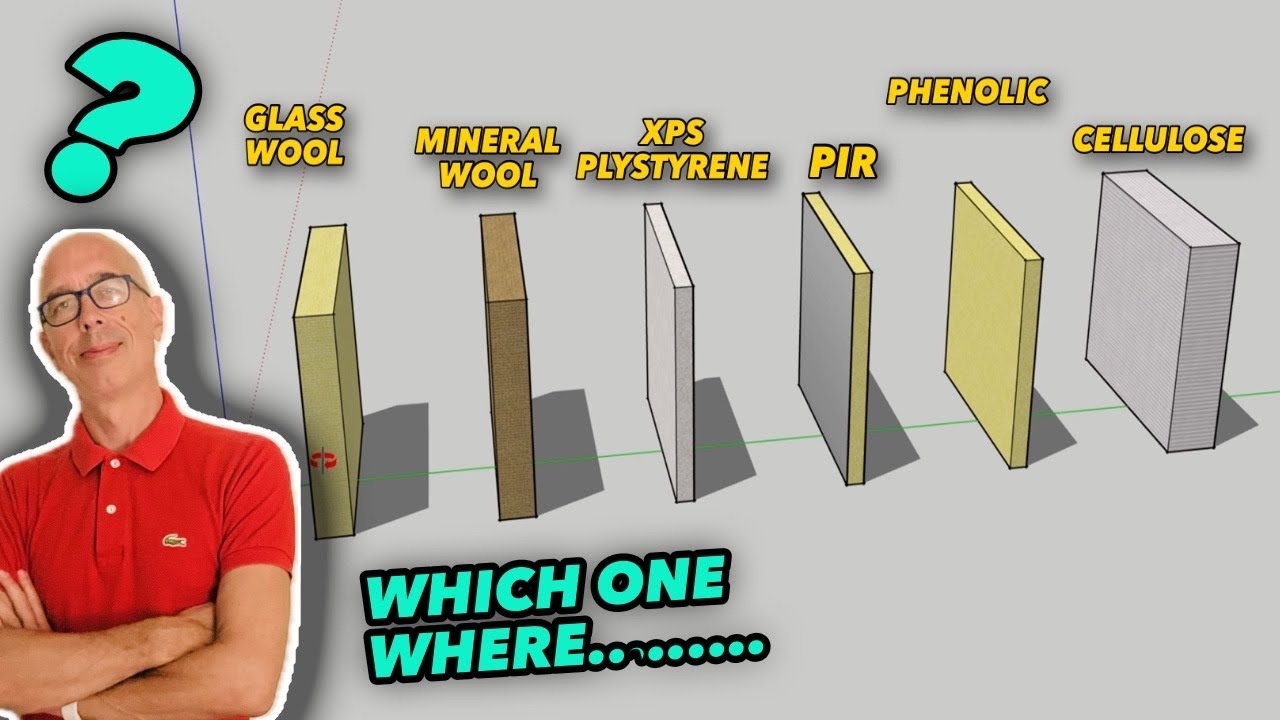
Here's a practical video that helps visualize how different insulation materials are used in real applications.
Metal buildings in Stuart or Wellington create their own insulation challenges. They heat up fast, cool down fast, and condense readily if humid air meets cooler surfaces. In those projects, I'm cautious about recommending fluffy insulation products unless the air and vapor control layers are extremely well thought out.
For warehouses, workshops, detached garages, and commercial shells, the “best” insulation depends on whether the owner is conditioning the space full time, intermittently, or not at all. Foam often wins when the shell needs one product that can conform to irregular framing or metal geometry. Alternatives can still work, but they need disciplined detailing and realistic expectations.
If you're a homeowner, don't ask only, “What insulation do you use?” Ask what controls air leakage, what happens at penetrations and transitions, and how the installer is accounting for South Florida humidity. If the bid is dramatically cheaper, ask what parts of the air-sealing scope are missing.
If you're a builder or GC, treat insulation as part of the enclosure system, not a stand-alone trade. A product that needs a second crew to complete the air barrier can still be a good choice, but only if that scope is explicit and enforced in the field.
A few practical checkpoints help:
The right answer usually isn't the cheapest material and it isn't the trendiest eco label. It's the insulation system that fits your building, your moisture load, and the way South Florida behaves.
If you want a site-specific recommendation instead of a generic product pitch, Airtight Spray Foam Insulation can evaluate your attic, walls, roofline, or commercial space and help you choose the insulation approach that makes sense for your building, budget, and humidity conditions.