If you're reading this in South Florida, there's a good chance the upstairs feels sticky, one room never cools evenly, or the AC seems to run longer than it should. A lot of homeowners assume the fix is simple: add more insulation and move on.
Sometimes that works. Often, it doesn't.
In our climate, attic performance isn't just about how much insulation sits on the attic floor. It's about air leakage, moisture movement, duct conditions, attic ventilation, and whether the contractor understands how those pieces interact in a hot, humid house. A bad insulation job can leave you with the same comfort problems, plus trapped moisture, musty smells, or ruined existing material.
That matters because this isn't a tiny corner of the home improvement world. The U.S. insulation contractors industry includes 28,814 businesses and generated an estimated $13.6 billion in revenue in 2025/2026, according to IBISWorld's insulation contractors industry profile. In a market that large, quality varies a lot. Homeowners who know what to look for usually make better hiring decisions.
Before you call attic insulation contractors, spend a few minutes looking at the attic yourself. You're not trying to diagnose everything like a pro. You're trying to spot obvious issues so the conversation starts with your home's actual conditions, not a canned sales pitch.
In South Florida, the attic often tells the story fast. You may see dark staining around roof penetrations, duct condensation, compressed insulation near service paths, or air gaps around wiring and recessed lights. Those details change the scope of work.
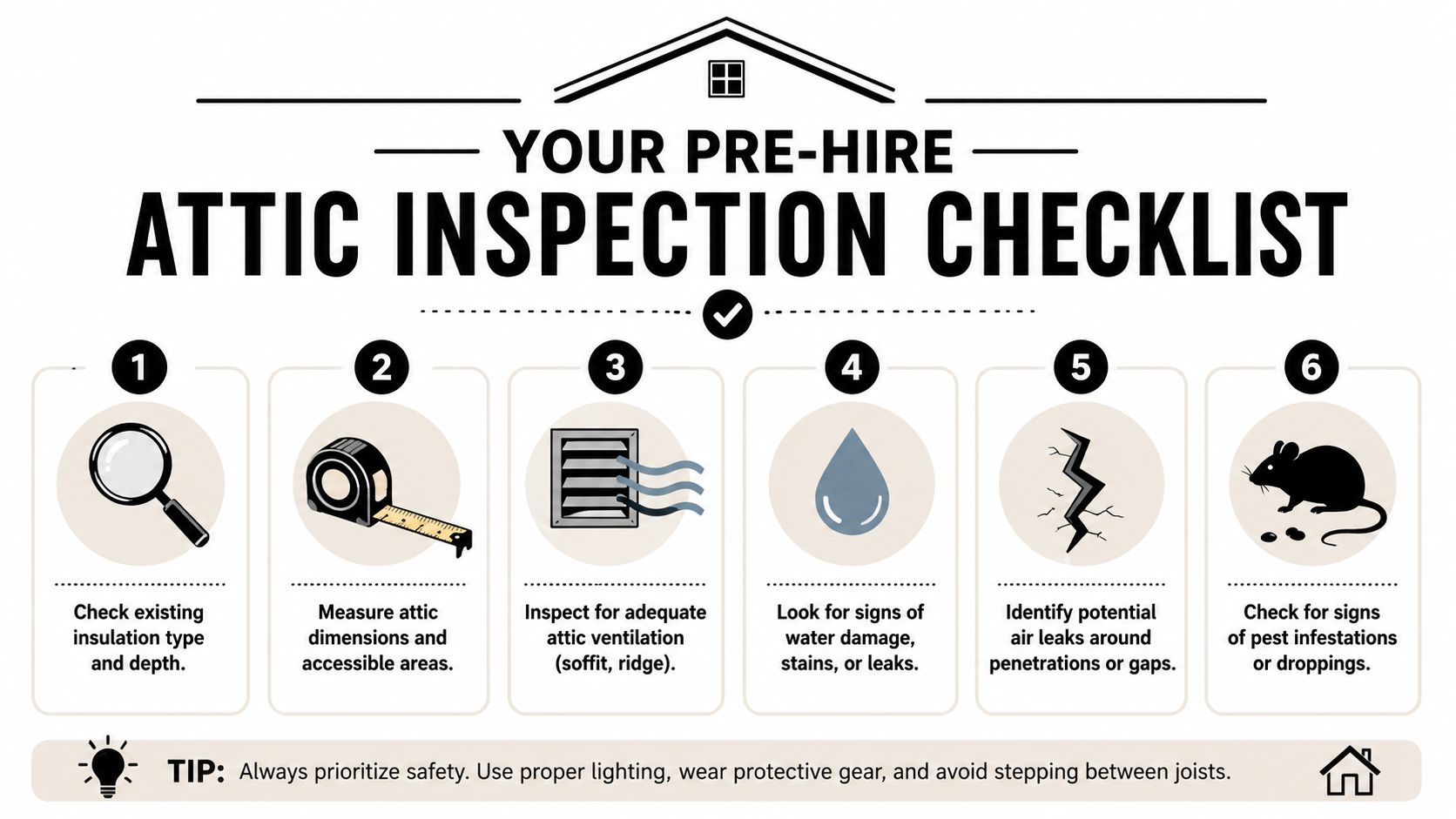
Take a flashlight, wear closed-toe shoes, and only step where there's framing or a proper walkway. If the attic is tight, dirty, or you don't feel steady up there, stop and let a contractor inspect it.
Use this checklist:
Practical rule: If the attic smells musty, shows staining, or has damaged ductwork, don't let anyone skip straight to "blow more insulation on top."
Contractors price and plan based partly on how accessible the attic is. Measure the rough attic footprint if you can, and note tight access openings, low-clearance areas, mechanical equipment, or stored items that will affect labor.
If the attic has contaminated or flattened insulation, ask whether removal is part of the plan. In many homes, professional attic insulation vacuum removal is the cleanest way to expose leaks, rodent damage, and hidden moisture issues before reinstalling.
A lot of national articles focus on winter roof problems. That's useful for understanding roof systems in general, and a guide on protecting your home from ice dams shows how insulation, air leakage, and ventilation affect each other. South Florida doesn't deal with ice dams, but the bigger lesson still applies: roof and attic systems work as a whole, not as isolated parts.
Walk the soffit areas if visible. Check whether vents appear blocked by insulation, old debris, or careless previous work. If a contractor never asks about ventilation paths, that should raise a flag.
The right insulation in South Florida isn't just the material with the highest label appeal. It has to handle heat, moisture, air movement, and real-world attic conditions. That's why the same product can perform well in one home and disappoint in another.
Fiberglass, cellulose, and spray foam all have a place. The question is where each one makes sense, and where it creates avoidable problems.
| Material | Moisture Resistance | Air Sealing Ability | R-Value per Inch | Best Use Case in FL |
|---|---|---|---|---|
| Fiberglass batts | Fair when dry, poor when exposed to humid air movement or leaks | Low on its own | Varies by product | Open attic floors with good prep, low complexity, and solid air sealing done first |
| Blown-in cellulose | Moderate, but performance depends on keeping bulk water and persistent moisture out | Better coverage than batts, but not a true air seal | Varies by product | Attic floors needing uniform coverage around irregular framing |
| Open-cell spray foam | Good for air sealing, but vapor behavior must match the assembly | High | Varies by product | Roof decks and complex areas where air leakage is the main problem |
| Closed-cell spray foam | Strong moisture resistance and strong air sealing in one material | Very high | Varies by product | Areas needing both compact insulation and a tighter moisture barrier |
Fiberglass is common because it's familiar and usually straightforward to install. On a simple attic floor, with proper air sealing underneath and no moisture issues above, it can improve comfort.
The problem shows up when crews treat it like a cure-all. Fiberglass doesn't stop moving air. If humid attic air or conditioned indoor air leaks through penetrations, the insulation's real-world performance drops. In older South Florida homes, that happens all the time around top plates, bath fans, chases, and hatch openings.
It also gets compromised easily by foot traffic, storage, and sloppy duct service work.
Blown-in cellulose can blanket uneven attic floors better than batts. It settles around wiring and framing more completely, which helps reduce skipped areas.
Still, cellulose is not magic. If a crew blows over active leaks, rodent contamination, or blocked soffits, you've just hidden the problem. In humid climates, hiding problems is expensive. It delays the repair and makes future diagnosis harder.
Homeowners dealing with heavy contamination or pest damage sometimes end up combining cleanup with insulation replacement. If you're comparing restoration paths, a piece on reclaiming your home's attic space gives a good outside look at why attic cleanup often comes before fresh material.
Spray polyurethane foam changes the conversation because it insulates and air seals at the same time. In a climate where humid air finds every gap it can, that matters.
On complex rooflines, around difficult penetrations, or in homes with persistent comfort imbalances, spray foam often solves problems that loose-fill and batts only cover up. Open-cell and closed-cell are not interchangeable, though. The right choice depends on the roof assembly, drying potential, and whether moisture control or compact high-performance coverage is the bigger priority.
A contractor who only talks about R-value is giving you half the answer. In South Florida, moisture behavior matters just as much as the insulation label.
One local option homeowners compare is Airtight Spray Foam Insulation attic services. The relevant point isn't branding. It's that spray foam systems, when specified and installed correctly, can create the continuous seal that hot-humid homes often need around roof decks and hard-to-treat leakage points.
The material matters. The installer matters more.
A skilled crew sees an attic as a system. A weak crew sees square footage. That's the gap that separates a lasting fix from a nice-looking invoice and the same old humidity problem.
The labor side of this trade is still growing. The U.S. Bureau of Labor Statistics projects overall employment of insulation workers will grow 4% from 2024 to 2034, with about 5,700 openings per year on average, and lists a $48,680 median annual wage in May 2024 for insulation workers in floors, ceilings, and walls in its occupational outlook for insulation workers. That's a useful reminder that insulation installation is skilled work, not random labor with a blower machine.
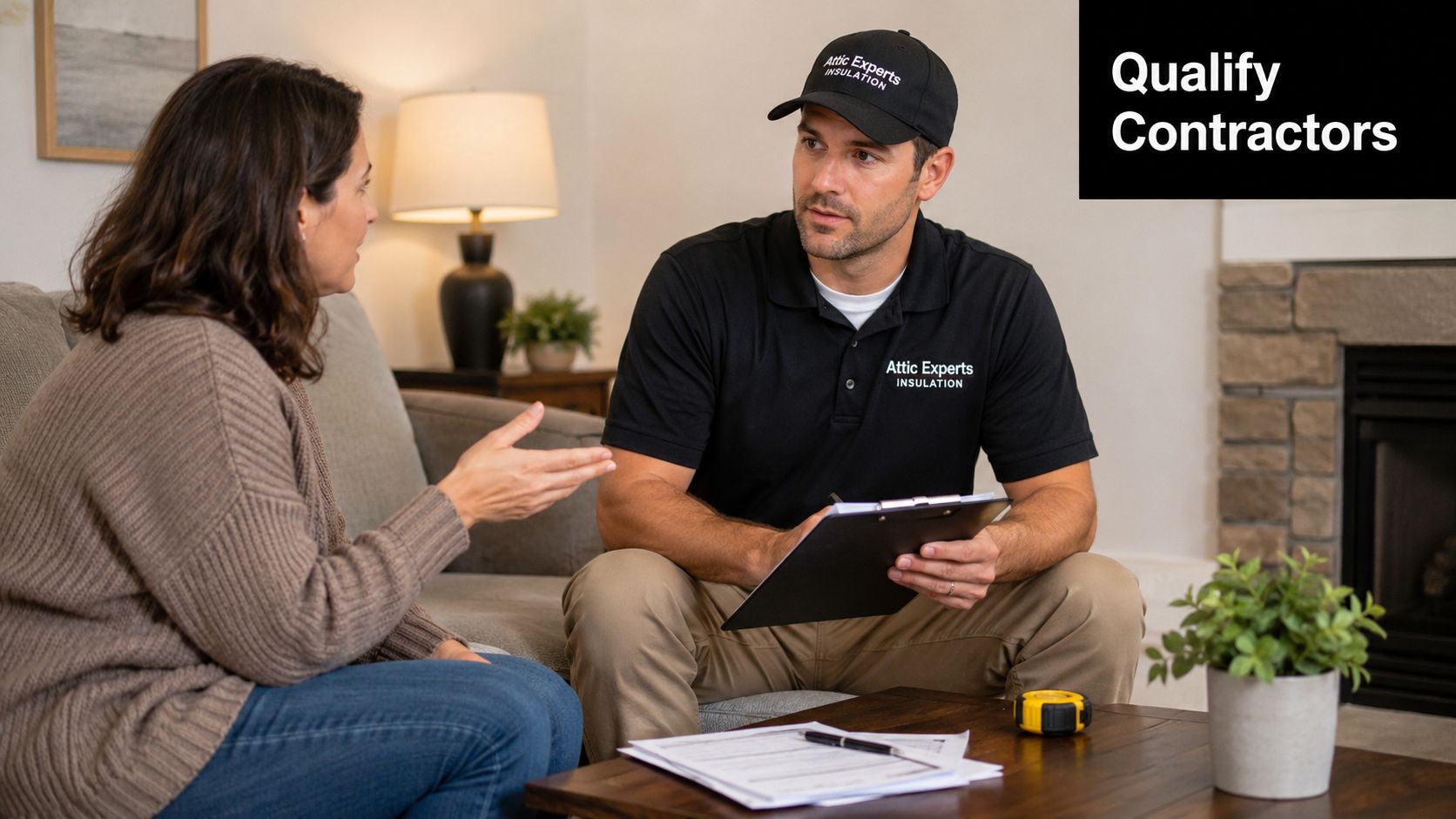
Ask every bidder the same core questions. Then listen closely to how they answer.
Don't accept verbal reassurance. Ask for documentation.
You want current proof of general liability coverage, workers' compensation, and whatever licensing applies to the work they perform in your area. If spray foam is part of the proposal, ask who is installing it, not just who sold it. A polished estimator and an untrained installer are a bad combination.
If you're comparing local companies, it helps to review providers that focus specifically on this trade, not just general handyman work. A directory-style page for home insulation contractors near you can help you frame what specialized service should look like.
If a contractor can't explain moisture management in plain language, don't trust them to handle it correctly in your attic.
A professional estimate shouldn't read like a receipt. It should describe the job with enough detail that another contractor could understand the intended scope.
Look for these items:
Video can help you recognize what a more professional consultation and process should feel like before you sign anything.

A good contractor doesn't promise a miracle in one sentence. They talk through trade-offs.
They might tell you that adding insulation alone won't solve a sweating duct trunk. They might say the attic hatch needs weatherstripping and sealing before loose-fill goes down. They might recommend fixing a bath fan that dumps moist air into the attic before any new material is installed.
That kind of answer is slower. It's also the answer that usually saves homeowners from paying twice.
Most homeowners ask the wrong first question. They ask, "What's the price per square foot?" The better question is, "What work has to happen for this attic to perform correctly?"
Two attics of the same size can have very different project costs. One is clean, dry, and easy to access. The other has matted insulation, air leaks at every penetration, tight access, duct issues, and blocked ventilation. Same footprint. Completely different job.
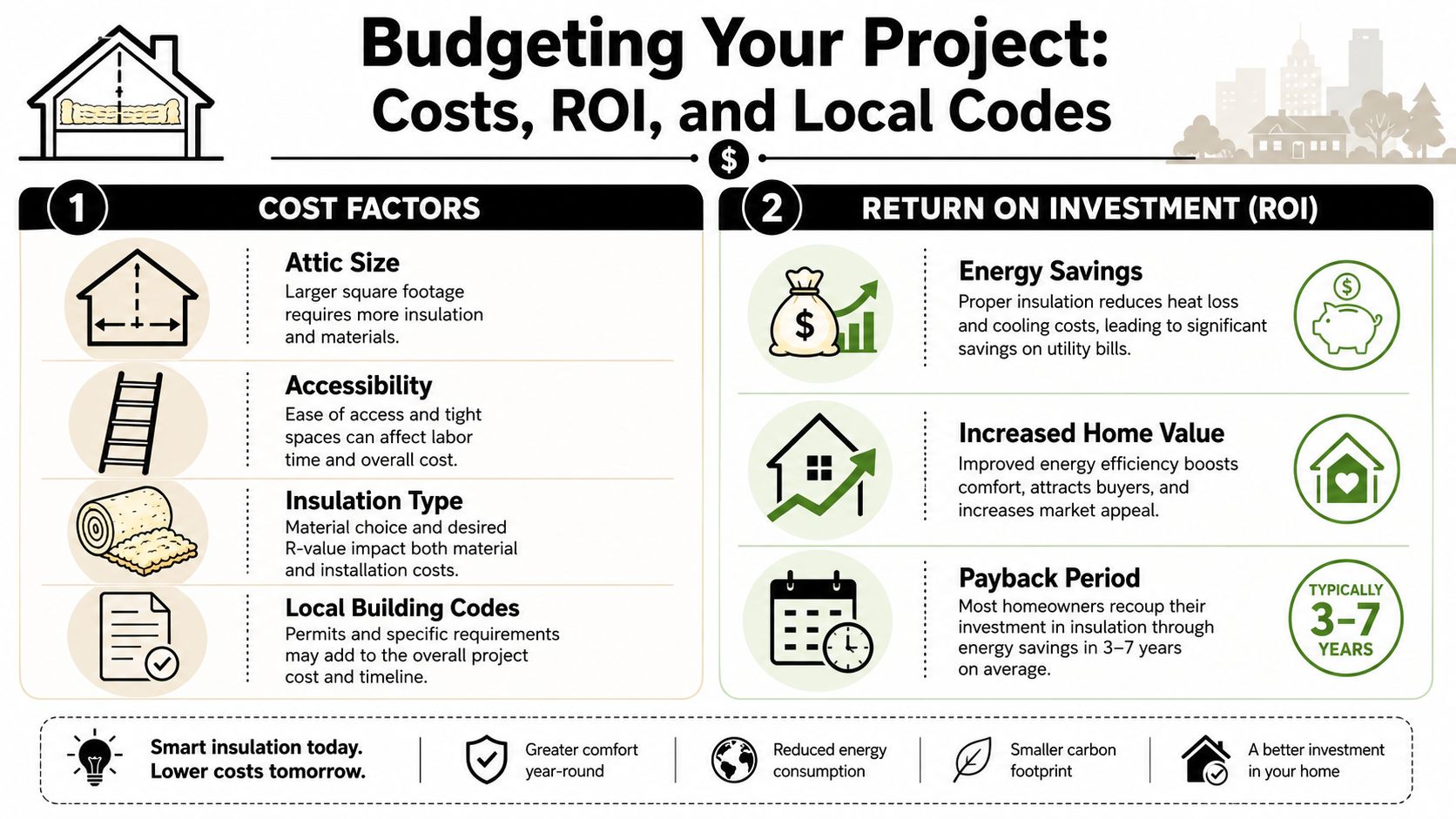
Several line items shape the final number:
If you want a local pricing baseline before requesting bids, attic insulation cost guidance for South Florida projects is a useful starting point. Treat any online figure as a planning tool, not a guaranteed quote.
A cheap job can be expensive if it leaves the underlying problem untouched.
Energy performance improves most when contractors deal with leakage first and insulation second. That's why contractor content tied to Energy Star guidance notes homeowners can save up to $200 per year by combining air sealing with added insulation, as summarized in this attic insulation discussion referencing Energy Star guidance. The practical takeaway is simple: piling on more material over leaky penetrations often disappoints.
In South Florida, the return also shows up in comfort and equipment strain. Homes usually feel more even. The AC doesn't have to fight as hard against heat gain and humid infiltration. Buyers notice that too when a house feels consistent instead of clammy.
Spending less upfront can backfire if the contractor skips removal, ignores leaks, or buries a moisture problem under new material.
A serious contractor should know how insulation choices interact with ventilation details, ignition or thermal barrier requirements where applicable, and any permit expectations tied to the scope of work. Homeowners don't need to memorize code language, but they do need to ask whether the contractor is accounting for it.
National pricing articles often miss the mark; climate and code context matter. A piece about protecting homes from Texas weather with insulation is a decent reminder that regional weather drives different insulation decisions. South Florida has its own version of that problem. Humidity changes what "good enough" looks like.
A compliant job protects resale value, reduces the odds of failed inspections later, and lowers the risk that you'll have to reopen the attic to correct avoidable mistakes.
Most attic insulation jobs are less mysterious once you know the rhythm. The crew should arrive with a clear scope, protect the work areas, confirm access, and review any last-minute findings before they start. If that short pre-job conversation doesn't happen, ask for it.
The house may get noisy. You can expect ladders, hoses, vacuums, cutting tools, and plenty of attic traffic. Spray foam jobs add another layer of setup because the crew has to manage equipment, material handling, and safe work practices carefully.
A professional crew doesn't march through your house and head straight into the attic. They should protect floors, establish a route in and out, and isolate the work area as much as the house allows.
If removal is part of the scope, that often comes first. This stage is dusty and mechanical. It's also where hidden issues show up, such as old nesting, disconnected ducts, staining around penetrations, or gaps that were buried under loose-fill.
This is the point where a good crew starts to separate itself.
If the project includes air sealing, the crew should address hatch edges, visible penetrations, and agreed leakage sites before the final insulation layer goes in. If ventilation paths need protection near the eaves, that should happen before insulation gets pushed into those areas. If spray foam is being applied, the installer should work methodically, not rush through uneven lifts just to finish faster.
The pace can feel disruptive for a day, but the sequence should make sense. Prep first. Corrections next. Insulation after that.
Don't let the project end at cleanup.
Walk the job with the contractor. Ask them to show you what was removed, what was sealed, where new material was installed, and whether they found anything outside the original scope. Look at the attic hatch. Look at the duct areas. Look at soffit-adjacent zones if accessible. The attic doesn't need to be pretty. It does need to look deliberate.
You should also get a plain explanation of warranty coverage, cure or re-entry guidance if spray foam was used, and any maintenance notes that matter later. Good contractors don't disappear when the hoses come down. They close the loop.
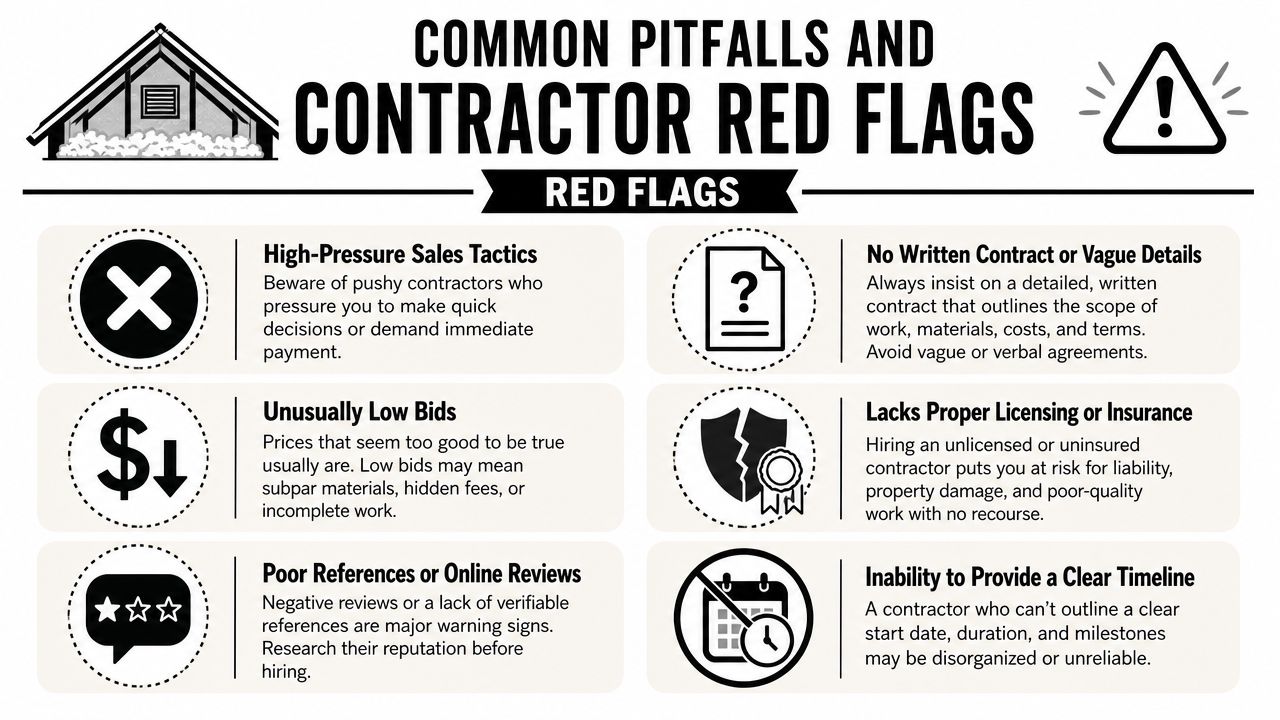
The contractor you want isn't the one who talks fastest. It's the one who notices the problems other bidders missed.
A good attic job should reduce heat gain, control air leakage, and avoid creating new moisture problems. If a contractor can't explain how they'll do that in your specific house, keep looking.
If you want a South Florida attic evaluated with moisture, air sealing, and insulation working together, Airtight Spray Foam Insulation can help you review the attic conditions, compare insulation options, and get a written plan that fits the way your home is actually built.