You step outside in South Florida, check the thermostat, and see a temperature that doesn't look outrageous. Then the air hits you. Your shirt sticks. The windows look hazy. The house smells a little musty by afternoon, even though the AC has been running.
That mismatch confuses a lot of people. One day at the same outdoor temperature feels manageable. Another feels heavy and wet. The difference is usually dew point.
For homeowners and contractors, understanding dew point isn't just weather trivia. It explains why some homes fight mildew all summer, why vents sweat, why garages stay damp, and why energy bills climb even when the thermostat setting never changes. It also explains why some common advice about “just open the windows” or “watch the humidity percentage” often backfires in an air-conditioned Florida house.
By late afternoon in South Florida, the thermostat may read a number that looks reasonable, but the house tells a different story. The air near the front door feels damp. Tile picks up that slight slickness. The AC keeps running, yet the place still feels muggy and tired.
That feeling comes from moisture load, not just heat.
Two days can hit the same outdoor temperature and feel nothing alike indoors. On the harder day, the air is holding more moisture, so your body has a tougher time cooling itself and your house has a tougher time staying dry and comfortable.
In South Florida, that difference shows up fast. A high-moisture day makes rooms feel heavier, AC cycles run longer, and cold surfaces become more likely to sweat. The thermometer only tells part of the story. The moisture in the air often explains the rest.
For building performance, that distinction matters. I see homeowners focus on temperature because it is the number on the wall, but moisture is usually what drives the complaints: musty odor, clammy bedrooms, hazy glass, and supply vents that start forming condensation.
Closed windows do not seal out Florida moisture. Outside air finds its way in through worn weatherstripping, attic penetrations, recessed lights, duct leaks, wall openings, garage connections, and other small gaps that add up over time. Once that humid air gets into an air-conditioned house, it starts interacting with cooler materials and equipment surfaces.
That is where comfort problems become building problems.
Practical rule: If the house feels sticky with the thermostat set low, focus on moisture entry before blaming the AC alone.
This is also why generic advice can miss the mark. Running the system colder may lower the temperature, but it does not fix the pathways that keep feeding damp air into the house. A better starting point is learning how to reduce humidity in house conditions by limiting air leakage and controlling where that moisture can settle.
Walk into a South Florida house at 74°F and it can still feel wrong. The thermostat says one thing, your skin says another, and the house starts showing stress in the usual places. That disconnect is why dew point matters more than most homeowners realize.
Set a glass of iced tea outside in Jupiter or West Palm Beach and water forms on the outside within minutes. The glass is cold enough to pull moisture out of the surrounding air.
That is dew point in practical terms. Dew point is the temperature at which air can no longer hold its water vapor, so that moisture starts condensing into liquid.
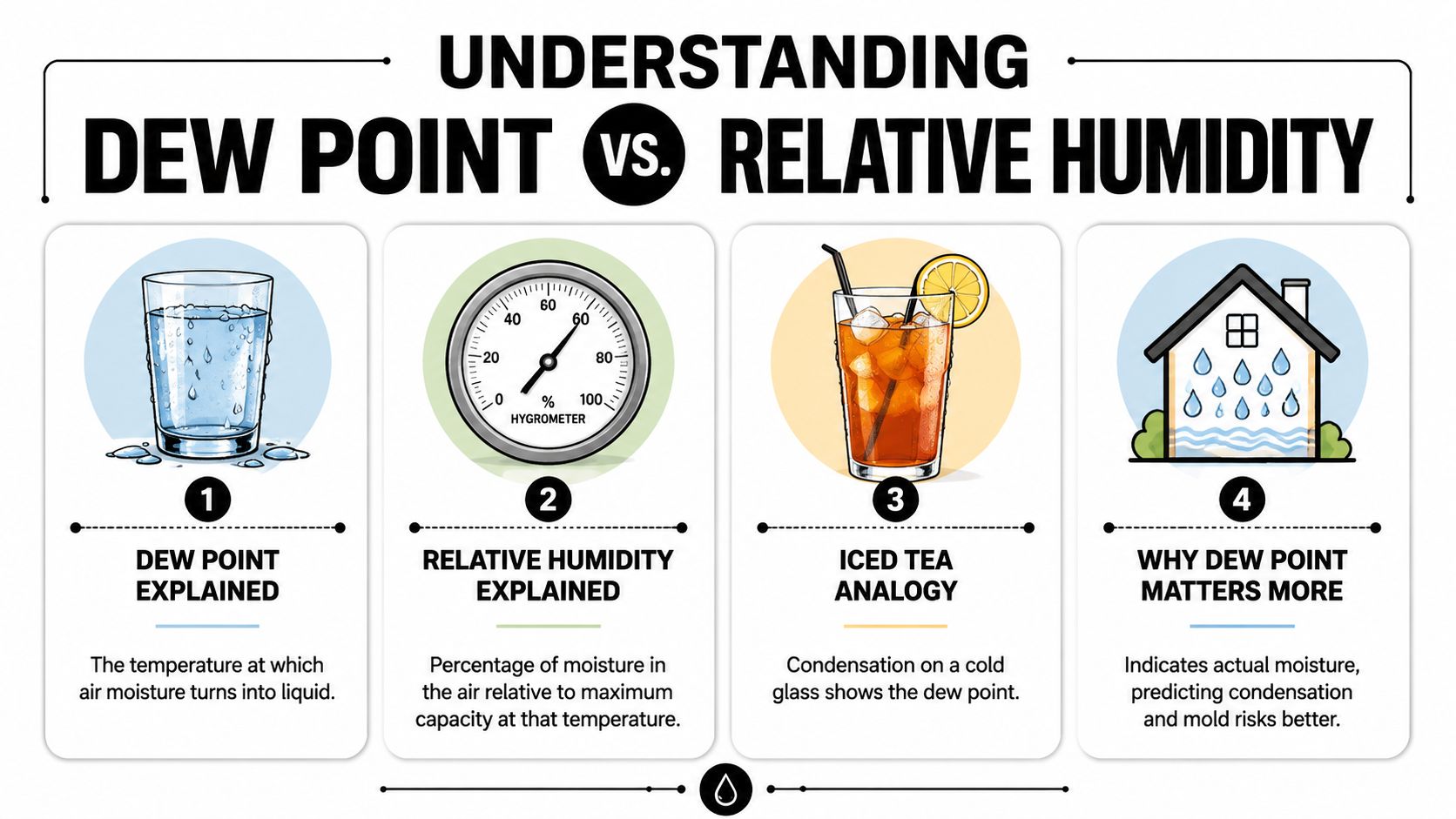
In houses, the cold glass might be a supply register, a duct boot, a window frame, a chilled pipe, or the ceiling around an AC leak path. If the air touching that surface has a higher dew point than the surface temperature, moisture forms. Homeowners who see condensation forming on ceilings around vents and cold spots are usually dealing with that exact condition.
Relative humidity is a percentage tied to air temperature at that moment. Raise the temperature and the RH can drop, even if the amount of moisture in the air stays about the same. Lower the temperature and the RH rises.
That makes RH useful for a weather app, but less reliable for diagnosing a building.
Dew point tracks the moisture load more directly. For comfort, mold risk, and condensation potential, that usually gives the cleaner read.
| Metric | What it tells you | Where it falls short |
|---|---|---|
| Relative humidity | How close the air is to saturation at its current temperature | The number shifts as temperature shifts, even when moisture content changes very little |
| Dew point | The temperature where that air starts condensing water | It does not tell the whole story by itself, but it gives a much better signal for moisture risk |
I see this confusion all the time during inspections. A homeowner checks outdoor RH and indoor RH, sees similar percentages, and assumes the moisture conditions are similar too. They are not. Ninety percent RH in cool morning air and ninety percent RH in hot afternoon air create very different moisture loads.
South Florida puts buildings under constant moisture pressure. Dew point tells you how much water vapor is riding along with that air before it hits your house, your ducts, or your wall cavities.
That is why forecasters and building scientists both pay attention to it. As noted earlier, dew points in the 50s feel comfortable, the 60s feel humid, and once you get above 70°F, people usually describe the air as oppressive. Those comfort ranges also line up with what contractors see in the field. Higher dew point days tend to bring more clammy interiors, longer AC run times, and more sweating on cold surfaces.
For anyone who has dealt with enclosed humid spaces, the same physics show up outside residential work too. This advice on container moisture control explains the same basic principle from a different angle. Moist air plus a cool surface equals trouble.
Rely on RH alone and it is easy to make the wrong call. Opening windows because the percentage looks acceptable can bring in air with a high dew point. Dropping the thermostat can make rooms feel cooler while pushing more surfaces toward condensation. Blaming the AC unit alone can miss the actual problem, which is often humid air leaking through the building shell.
For South Florida homes, dew point is the number that connects comfort complaints to building performance. It helps explain why a house can feel sticky at a low thermostat setting, why mold shows up in one room first, and why insulation plus air sealing usually solve more than a colder AC setting ever will.
Condensation isn't mysterious. It follows a rule. When a surface is colder than the dew point of the surrounding air, moisture forms on that surface.
That sounds simple, but inside buildings it creates expensive problems because many of those surfaces are hidden.
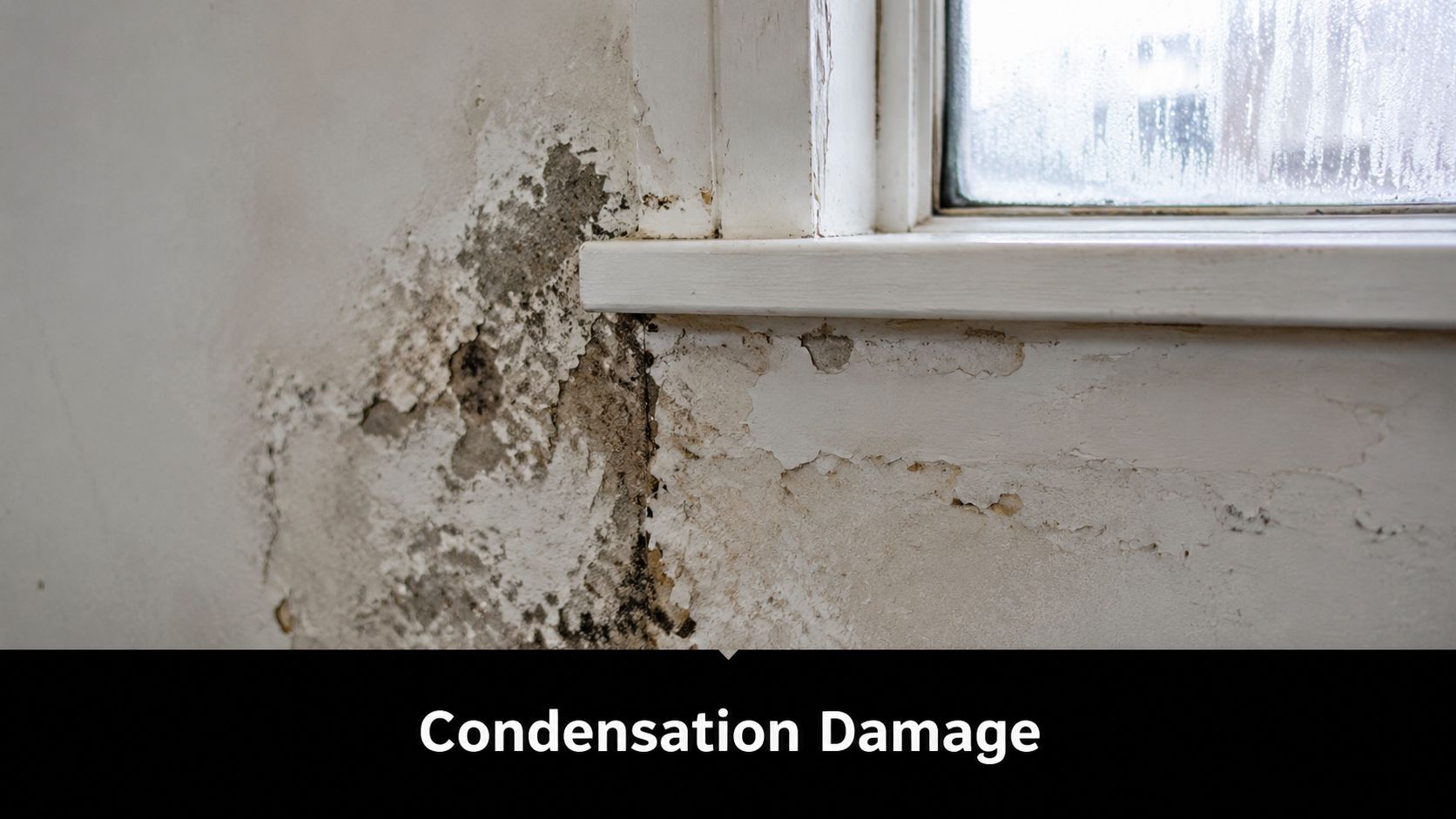
The obvious places are familiar:
Those are visible warnings. The hidden version is what causes bigger trouble.
Moisture often forms in places the homeowner never sees until paint blisters or a mildew smell becomes persistent. Warm humid air slips into cavities and reaches cooler materials inside the assembly. That can happen at:
A lot of condensation complaints that show up as “my ceiling is sweating” are really building-envelope failures. The moisture source is air leakage. The symptom appears on the coolest available surface. If that sounds familiar, it helps to review common causes of condensation on ceilings.
This isn't only a house problem. Shipping containers, storage units, workshops, and metal buildings all deal with the same moisture law. That's why practical guidance on advice on container moisture control is useful even for homeowners. Different structure, same failure mode. Humid air meets a cooler surface, and liquid water appears.
Field note: If you keep wiping moisture off a surface without fixing the air path or surface temperature, you're treating evidence, not the cause.
Many moisture failures happen while occupants focus on room humidity readings and ignore surface temperatures. But condensation doesn't care what a wall thermostat says. It cares whether a specific material, at a specific spot, is below the dew point of the nearby air.
That's why contractors who solve these problems well don't just ask, “What's the humidity?” They ask:
When you answer those three questions, the moisture path usually becomes obvious.
In South Florida, dew point isn't an occasional nuisance. It's a constant pressure on the building.
The outdoor air often carries enough moisture that every weakness in the envelope matters more. A tiny leak around a top plate, a recessed fixture, a duct penetration, or a poorly sealed return can feed an ongoing moisture problem because the air entering the house isn't just warm. It's wet.

Air conditioning lowers temperature, but in Florida homes the harder battle is often latent load. In plain terms, the system isn't just cooling air. It's trying to pull water out of that air too.
Long-term climate data adds context here. Atmospheric moisture has been rising, with dew points increasing by about 0.9°F per 100 years in the United States, and in warm humid markets, dew point is often a better predictor of summer cooling load than temperature alone, as summarized in the dew point climate overview.
For South Florida, that matters because the house feels the moisture load first. The AC unit has to deal with it second.
A house under constant moisture pressure starts showing a pattern:
This is why homeowners sometimes say, “The AC works, but the house still feels damp.” They're usually right. Temperature may be controlled. Moisture often isn't.
In a drier climate, minor leakage can go unnoticed for a long time. In South Florida, the same defect becomes a moisture conveyor belt. The climate exploits every shortcut in installation quality.
A leaky building in a humid climate doesn't fail all at once. It fails one damp surface at a time.
Contractors see this clearly in vented attics connected to conditioned ceilings, garage walls that were never detailed tightly, and metal buildings with insulation that slows heat but doesn't stop moist air movement. The result is the same. Moist outdoor air keeps finding cooled surfaces.
That's why dew point is the enemy. It drives comfort complaints, mold risk, and cooling demand all at once.
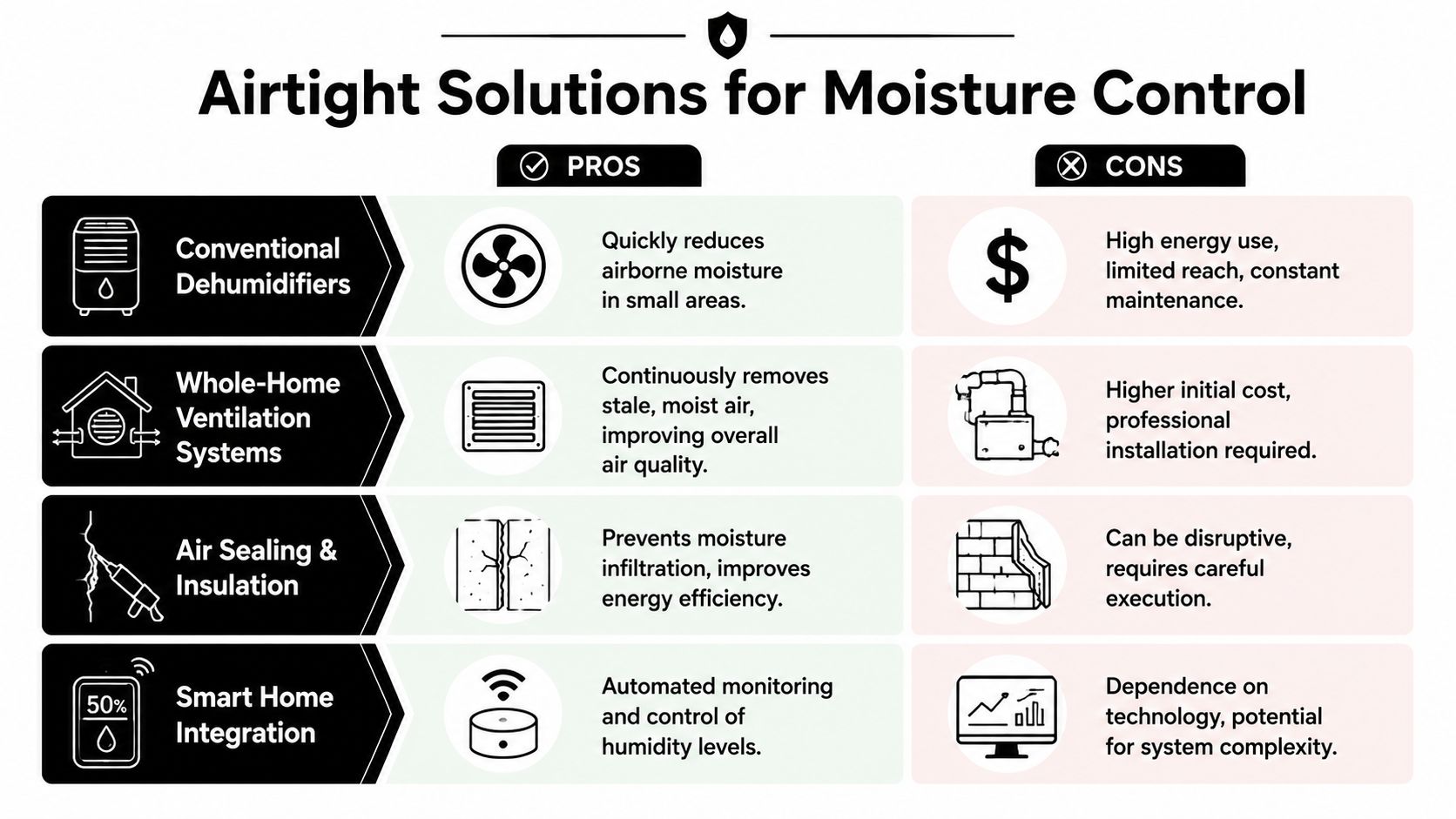
A lot of moisture advice focuses on symptoms. Run a dehumidifier. Crack a window. Keep the thermostat lower. Those steps can help in certain conditions, but they don't all solve the same problem.
The right fix depends on whether you're removing moisture already inside the house, or preventing new moisture from entering in the first place.
The fastest tools are usually operational:
Those are practical moves. They can improve conditions. But they don't stop humid outdoor air from infiltrating the building shell.
One of the most common mistakes in Florida is opening the house because the outdoor air “feels fresh” or because the relative humidity number seems acceptable. SensorPush makes the key point clearly. When deciding whether ventilation will lower humidity, you should compare indoor and outdoor dew points, not RH. If the outside dew point is higher than the inside dew point, opening windows will add moisture to the home, even if outdoor RH looks lower. That guidance appears in SensorPush's article on why ventilation decisions should use dew point instead of relative humidity.
That changes how smart homeowners ventilate. The question isn't “What's the RH outside?” The question is “Is the outdoor air drier in terms of moisture content?”
Better rule for Florida: Ventilate based on dew point comparison, not on a humidity percentage that shifts with temperature.
Moisture moves with air. That's the principle many fixes miss.
If humid outdoor air can't leak into the house easily, it has far fewer opportunities to reach cold surfaces and condense. That's why proper air sealing is often the most important long-term move for Florida homes. It reduces the transport mechanism itself.
The weak points are predictable:
For homeowners trying to understand where the hidden moisture path begins, one of the most important areas is overhead leakage. This guide on how to seal attic air leaks connects directly to the dew point problem because the attic is often the main route by which hot humid air reaches cool interior surfaces.
A short demonstration can help visualize why airtightness matters in practice.
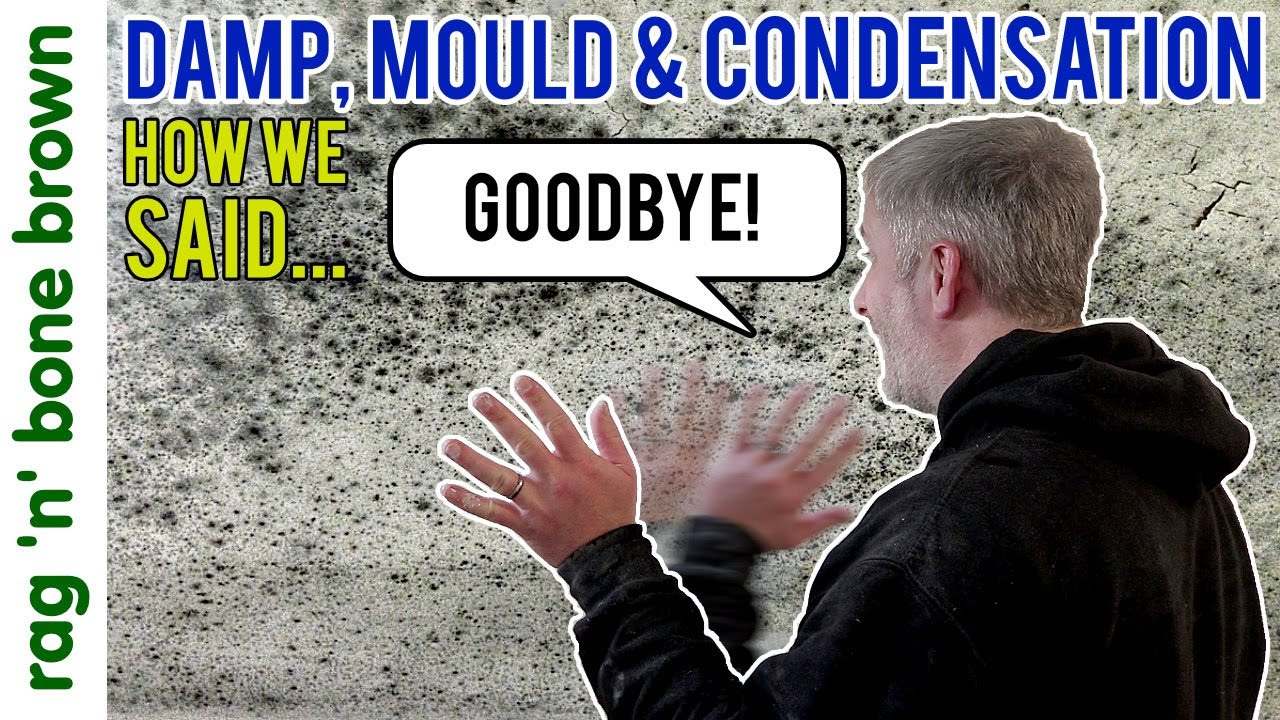
If you insulate without controlling infiltration, humid air can still travel through gaps and hit cooler surfaces inside the assembly. If you air seal without enough thermal control, surfaces may still get cold enough in problem spots. The best-performing assemblies handle both.
That's why a well-executed insulated, airtight envelope usually outperforms piecemeal moisture fixes. It doesn't just dry the symptom. It disrupts the pathway that creates the symptom.
Contractors and property managers who work in South Florida long enough learn that dew point problems rarely show up as a single-variable issue. Temperature, air movement, pressure, and surface conditions interact. If you diagnose only one of them, you miss the failure.
Dew point is pressure-dependent, and that matters in tightly sealed homes, commercial spaces, and buildings where HVAC operation changes interior pressure relationships. Condensation risk isn't just about RH. It's about the relationship between air moisture, air pressure, and the temperature of surfaces within the assembly, as explained by Process Sensing in its discussion of how pressure affects dew point measurement and condensation behavior.
Negative pressure can pull humid outdoor air into wall and ceiling assemblies. Positive pressure can push interior air toward cooler surfaces elsewhere in the enclosure. Either way, pressure determines the direction of moisture travel.
Connected sensors are useful when they answer a specific building question. Place them where the structure is likely to cross dew point first:
Track dew point and temperature together. A humidity number by itself rarely tells the whole story.
Professionals also need to think clearly about material behavior. Closed-cell spray foam can function as a strong control layer that limits both air movement and moisture movement. That can be the right choice where you need tight control over humid air reaching cold surfaces. Open-cell assemblies allow more drying potential in some designs, but they need correct detailing and climate-aware placement.
The point isn't to declare one product universally better. It's to match the assembly to the moisture exposure, pressure conditions, and drying path. In South Florida, that decision has real consequences for rooflines, metal buildings, attics, and wall systems.
Good dew point control starts before the first symptom. It starts with where air is allowed to move, where surfaces stay cold, and how the assembly dries when it gets wet.
If your home, building, or project keeps dealing with humidity, musty odors, condensation, or uneven comfort, Airtight Spray Foam Insulation can help you address the problem at the building-envelope level. Their team serves South Florida with spray foam solutions for attics, walls, garages, metal buildings, and new construction, focusing on the air sealing and insulation details that make dew point control possible.