
You're probably here because a gap you already caulked didn't stay sealed. Maybe it's around a window that faces hard afternoon sun. Maybe it's where stucco meets a frame, or where different materials meet and keep opening up again. In South Florida, that happens all the time. Heat, humidity, rain, and constant expansion and contraction expose weak joint work fast.
A lot of homeowners think the fix is better caulk. A lot of contractors think the same thing when they're moving quickly. But a durable seal usually depends on what sits behind the sealant, not just the bead you see from the outside. That hidden piece is often the difference between a joint that flexes and a joint that fails.
A sealed home isn't just a home with caulk smeared into every crack. A proper seal needs joint design. That matters in South Florida, where humid air finds every weakness and where sealants take a beating from UV, rain, and movement.
The common failure goes like this. A window perimeter gets recaulked. It looks clean for a few months. Then the bead starts to split, pull away, or harden in spots. Often, the problem isn't the sealant itself. It's that the joint was never set up to let the sealant move correctly.
Backer rod is what makes that movement possible. It sits inside the gap before sealant goes on top. That gives the sealant a controlled shape and a firm backing so it can stretch and compress instead of tearing itself apart.
If you're trying to understand why one air-sealing job lasts and another doesn't, it helps to start with the basics of air sealing in the building envelope. Leaks usually happen at transitions, edges, and joints, not out in the middle of a wall.
Sealant works best when it bonds where it should, and only where it should. If a joint is too deep, too wide, dirty, or badly shaped, the bead can't do its job.
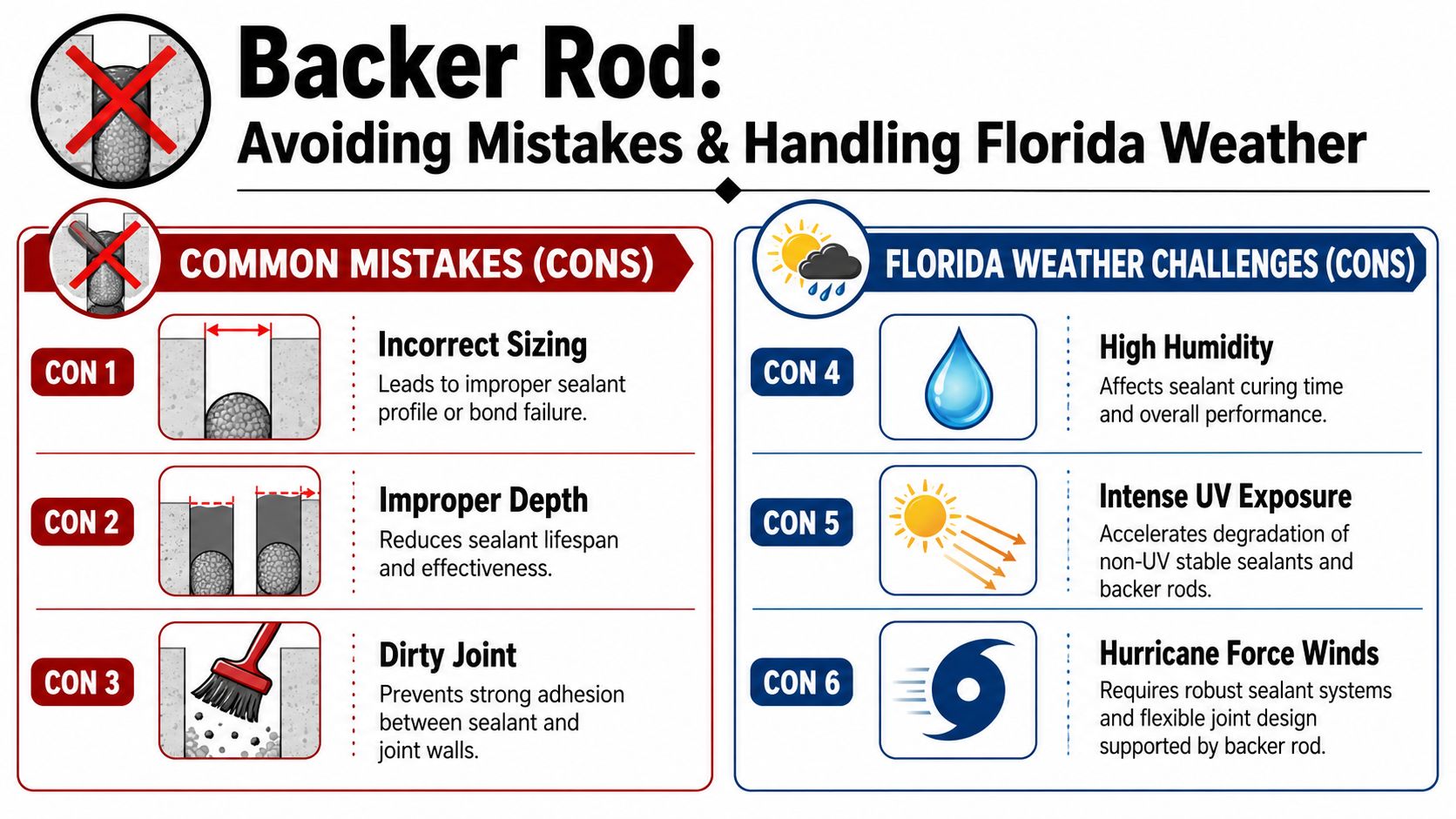
Three things usually go wrong:
Practical rule: If the joint has to move, the sealant needs support and shape, not just more material.
In dry climates, a sloppy sealant joint may limp along for a while. In South Florida, moisture pressure exposes mistakes earlier. Humid air gets pulled through small openings. Conditioned air leaks out. Surfaces around those leaks can stay damp enough to create bigger comfort and moisture problems.
That's why backer rod isn't some small accessory from the caulk aisle. It's part of the system that helps a home stay tighter, drier, and more stable.
Open cell foam backer rod is a compressible polyurethane foam rope that gets pressed into a joint before sealant goes on. Its job is to control the depth and shape of the sealant bead so the joint performs the way it should over time.
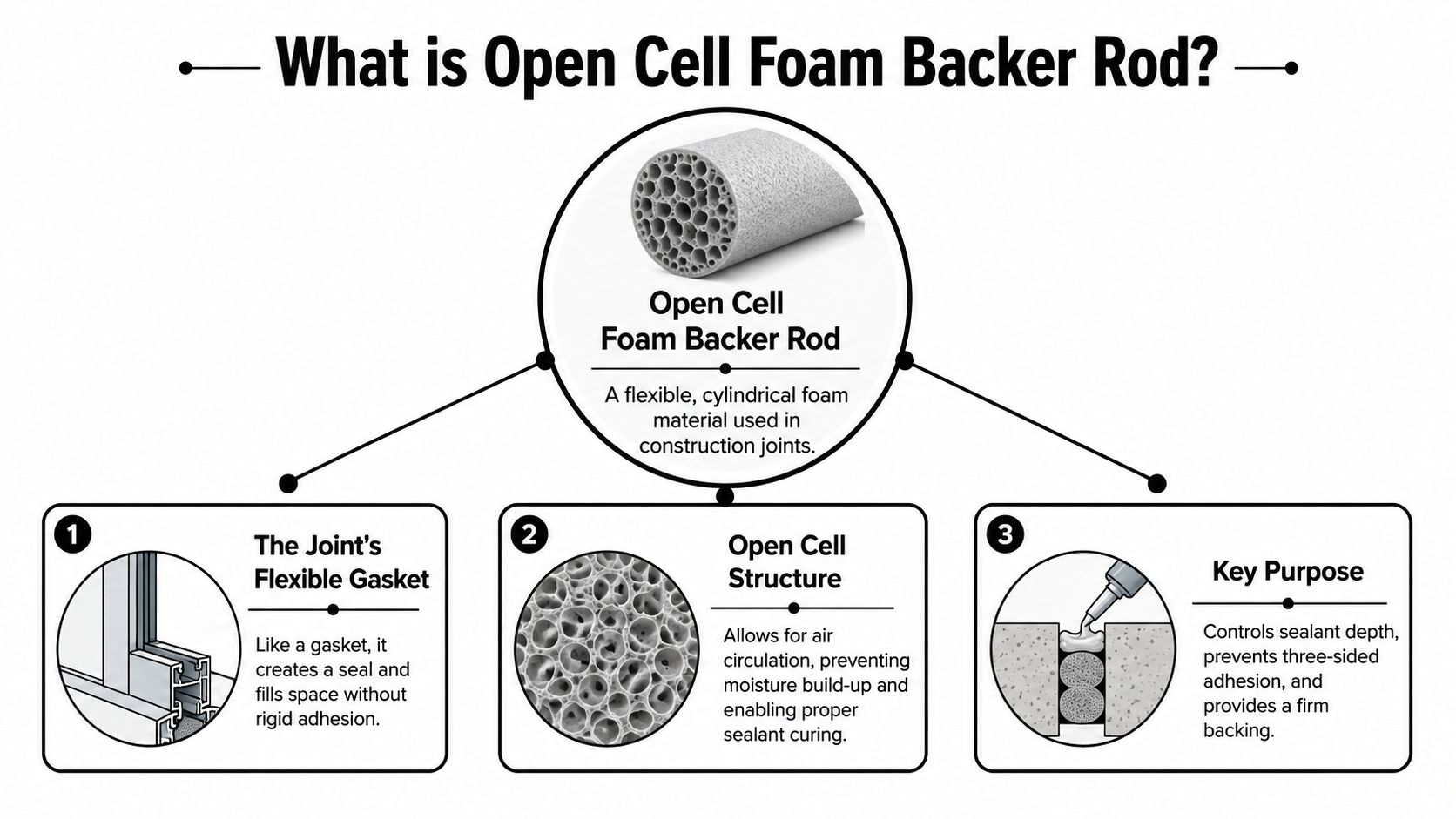
“Open cell” refers to the foam structure. The cells are interconnected rather than sealed off, which makes the material softer and more forgiving than closed cell rod. On real projects, that matters because joints are rarely uniform. Masonry openings drift. Stucco edges chip. Window and door perimeters can widen and tighten from one foot to the next.
A more compressible rod handles those irregular gaps well. It can be tucked into uneven joints without fighting the installer or distorting the surrounding materials.
Open cell backer rod is commonly used where a joint needs support behind the sealant but the gap is inconsistent.
In South Florida, the phrase “open cell” makes some owners nervous because they assume it means the rod will act like a sponge and create a moisture problem. In the wrong application, material choice absolutely matters. But in a properly designed sealant joint, open cell backer rod is there to support sealant performance, not to serve as exposed insulation or a water management layer.
That distinction gets missed all the time.
In many sealant applications, the open structure helps moisture vapor and air reach the underside of the sealant during curing. That can be useful with certain sealants that need proper exposure to cure evenly through the bead, especially in a humid climate where cure conditions can change fast between sun, shade, and afternoon rain.
Open cell foam backer rod gives the sealant a consistent base to sit over. It helps keep the bead from getting too deep, and it conforms well when the joint walls are not perfectly straight.
I usually describe it to homeowners as the part you never see but the sealant depends on. If the joint is uneven and the installer skips the rod, the crew often tries to solve the problem with more caulk. That usually creates a heavier bead, a slower cure, and a joint that does not move as cleanly as it should.
For contractors, the practical advantage is simple. Open cell rod is easier to use in rough, varying gaps where a stiffer product may be harder to seat at a consistent depth.
Open cell backer rod is a good fit for irregular joints and applications where easy compression helps with placement. It stays flexible, supports the sealant bead, and works well where joint movement is expected.
It does not belong in every joint. Some exterior conditions call for closed cell rod or a different joint design entirely. The right choice depends on the joint size, exposure, sealant type, and how much water the assembly is expected to handle.
Open cell foam backer rod supports sealant performance by controlling bead depth, accommodating uneven joints, and helping the sealant cure and move the way the assembly requires.
A South Florida window joint can look fine on install day and still fail early if the sealant grabs the wrong surfaces. I see that around frames, slab joints, and exterior transitions after a stretch of heat, rain, and daily expansion. The problem is often hidden under the bead.
A backer rod's main job is to act as a bond breaker. That means the sealant bonds to the two sides of the joint and stays free at the bottom. Once sealant sticks to the back of the joint too, movement gets restricted and the bead is far more likely to split, tear, or pull away as the assembly cycles through heat and moisture.
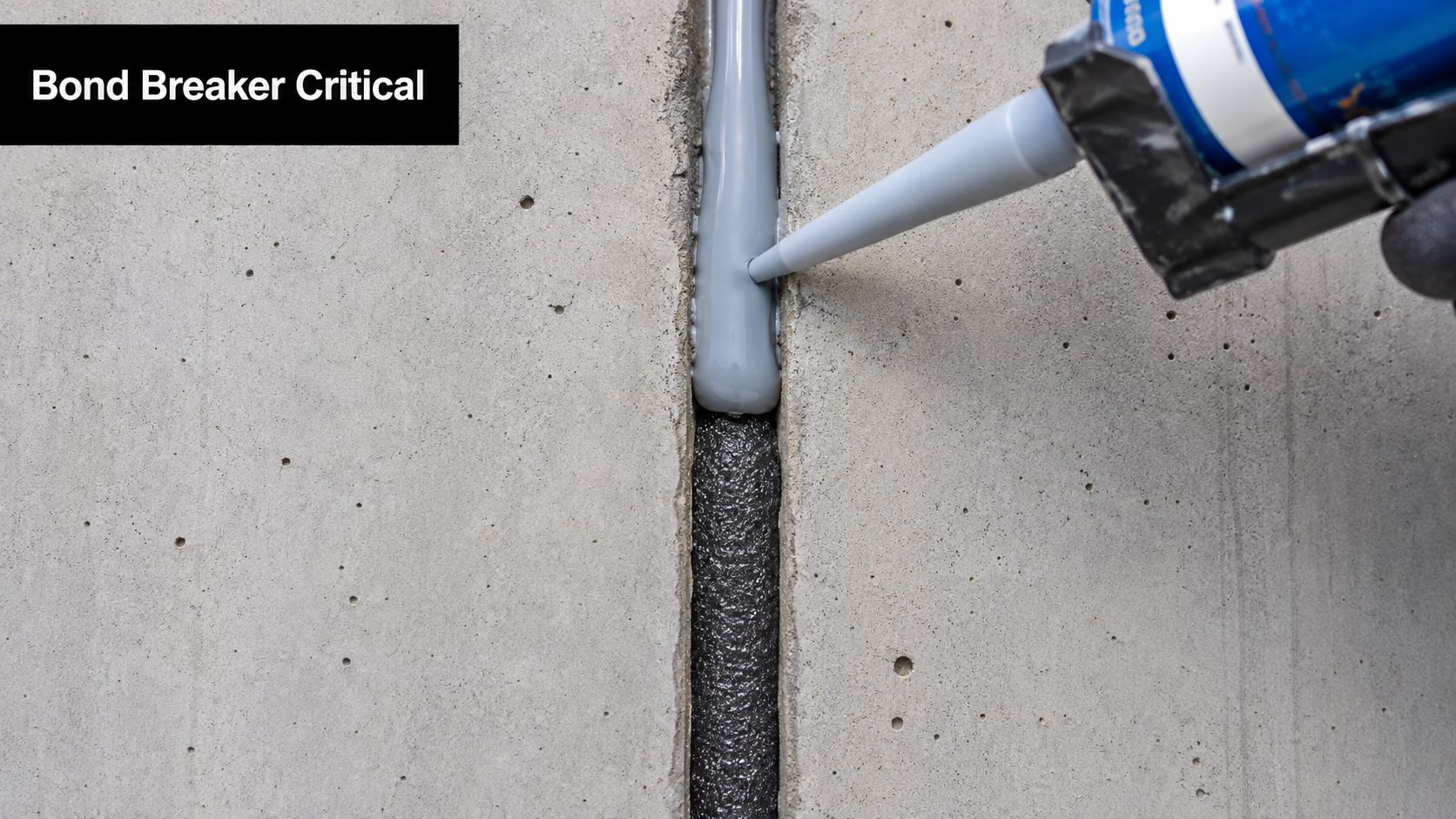
Three-sided adhesion creates a restrained joint. The sealant is trying to stretch, but the bottom bond holds it in place. Instead of moving like a flexible membrane between two sides, it gets pinned at three points.
That usually leads to a poor stress pattern in the bead. The sealant cannot thin and recover the way it should, so movement gets concentrated where failure starts first, often at the edge of the bond line.
This is also where people misunderstand open cell backer rod in humid climates. Some assume the rod is there to block water by itself. It is not. Its job in this joint is to support sealant performance by setting depth and preventing that third bond. In South Florida, where materials move hard and sealants cure under muggy, shifting conditions, that function matters as much as the sealant you choose.
Florida joints rarely stay still. Aluminum expands fast in direct sun. Masonry stores moisture and heat. Concrete moves with temperature swings and seasonal wetting. If the bead is locked to three surfaces, the joint starts with a built-in weakness.
A properly installed backer rod helps in three practical ways:
For homeowners, the simple version is this. More caulk does not make a better joint. A correctly sized joint with the right bond line does.
For contractors comparing materials, the same broad difference between permeability and resistance shows up in open-cell vs closed-cell foam applications, but joint design is its own discipline. Here, the backer rod is part of the movement strategy, not just filler stuffed into a gap.
Bond-breaker problems are common at:
The visible bead gets the attention. The bond line decides whether that bead lasts.
The confusion between open-cell and closed-cell backer rod causes a lot of bad material choices. One isn't universally better. Each solves a different problem.
| Feature | Open Cell Backer Rod | Closed Cell Backer Rod |
|---|---|---|
| Structure | Open-cell polyurethane foam | Closed-cell foam |
| Air movement | Air permeable | Restricts moisture diffusion through the rod |
| Compression behavior | Highly compressible and flexible | Firmer |
| Best use | Joints needing flexibility and even sealant cure | Areas where water resistance is a bigger priority |
| Ponding water areas | Not recommended | Better suited than open cell in those conditions |
| Sealant function | Supports bonding strategy in the joint | Often chosen where less permeability is preferred |
The easiest way to think about it is this. Open cell is for movement and curing performance. Closed cell is for moisture resistance where the joint conditions demand it.
If you're already comparing insulation materials, the same broad idea of breathability versus resistance shows up in open-cell and closed-cell foam applications, but backer rod selection is more specific. Here, the decision comes down to how the joint behaves and whether water can sit in that area.
Use open cell foam backer rod when the joint needs a material that compresses easily, follows irregular surfaces, and helps sealant cure more evenly. It's a strong fit for vertical joints, window and door perimeters, glazing details, and places where you want the sealant system to stay flexible.
It also works well where installers need a forgiving rod that won't fight them in uneven joints.
Closed-cell rod is the safer choice in areas where water may pond or sit for extended periods. That's the key trade-off. Open cell is permeable by design, so if the joint is horizontal and likely to hold water, it's the wrong material.
That doesn't make open cell inferior. It means the installer has to match the rod to the joint.
A South Florida joint can look fine at noon and fail by August. The usual cause is not the tube of sealant. It is bad sizing, poor prep, or a rod shoved in at random depth. Backer rod controls the shape and behavior of the sealant joint. If that part is wrong, the whole assembly is working uphill from day one.
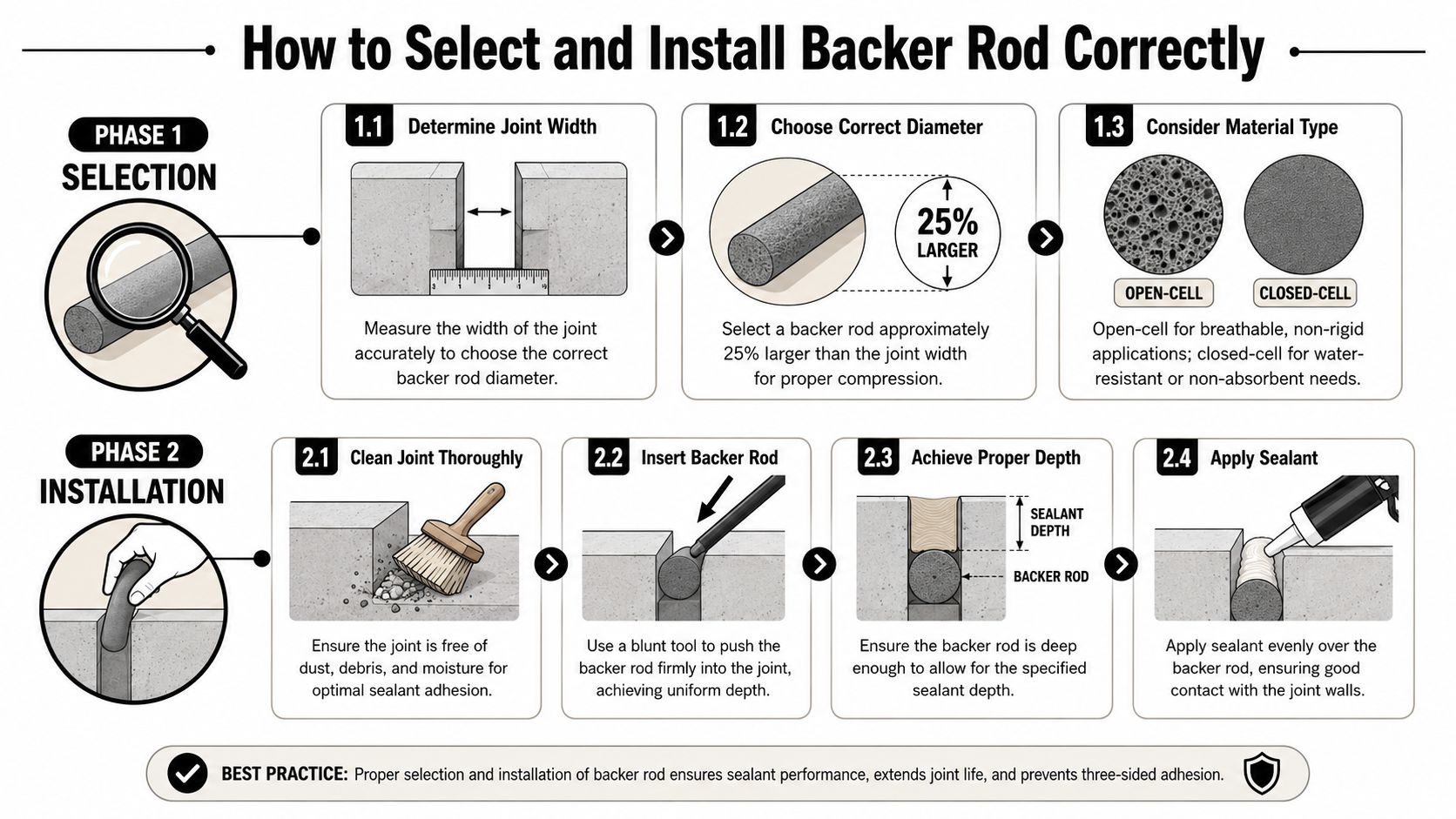
Measure the gap in several places. Florida construction rarely gives you a perfectly uniform joint, especially around windows, sliders, block walls, and retrofits. If the width changes, size for the actual field condition, not the cleanest spot.
The rod should fit under compression so it stays put and supports a consistent bead. A loose rod drops, twists, or floats while you tool the sealant. One that is forced in too tightly can deform the joint or make depth control sloppy.
A simple field sequence works well:
Measure the joint width at multiple points
Check the narrow spots and the wide spots.
Choose a rod slightly larger than the joint
The goal is a snug friction fit, not excessive force.
Confirm the joint exposure before you commit
Open cell works well where the sealant needs support, movement, and proper curing. If that joint can hold standing water, stop and choose a different backing strategy.
Many jobs encounter issues because installers focus on the visible bead, neglecting the surfaces the sealant bonds to.
Joint walls need to be clean and sound. Old caulk residue, dust, paint chalking, loose mortar, and damp film all interfere with adhesion. In South Florida, humidity adds another layer of confusion. Humid air is normal. Wet substrates are a different problem. If you need a quick reference on that distinction, this guide on whether insulation can get wet and what moisture actually means in a building assembly helps frame it well.
Before you insert the rod:
I replace any section that gets torn, punctured, or stretched thin during installation. A damaged rod stops doing its job, even if the sealant bead looks fine at the surface.
Backer rod is not there just to fill space. It sets sealant depth and helps the bead stretch the way it is supposed to. In practice, the sealant bead should usually be wider than it is deep, and the depth should stay uniform across the run. Random depth leads to random performance. Thin sections split early. Thick sections cure poorly and waste material.
Set the rod with a blunt tool so it sits evenly. A rounded insertion tool or roller works better than a screwdriver or anything with a sharp edge. The rod should be compressed into place, not stabbed into the joint.
A quick visual walkthrough helps if you haven't done this before:
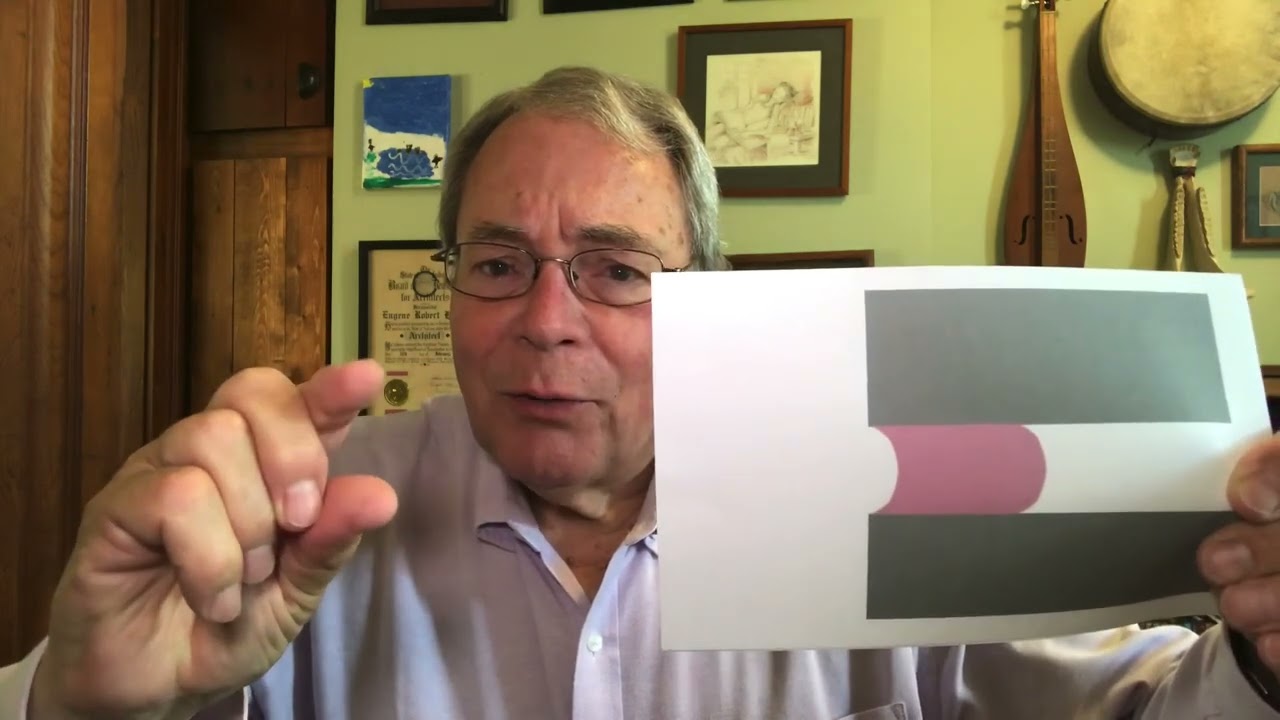
Once the rod is seated, apply the sealant so it bonds to the joint walls and bridges cleanly over the rod. That bond line matters more than a fat bead. The goal is a controlled hourglass-shaped joint profile that can move without tearing loose.
These habits separate a durable install from a callback:
On real jobs, careful installation beats expensive material every time. Open cell foam backer rod is forgiving, but it still needs to be sized, seated, and sealed with intent.
A South Florida joint can look fine at 8 a.m. and start failing by the next wet season if the material choice ignored heat, rain, and constant humidity. That is where open cell foam backer rod gets misunderstood.
A lot of homeowners hear "open cell" and assume the rod behaves like a sponge trapped behind the sealant. In real assemblies, the question is not whether the foam can take on moisture under extreme exposure. The critical question is whether the joint design lets water sit there, and whether the sealant can still do its job.
In humid Florida conditions, those are two different problems.
Open cell backer rod does not belong in every joint, but it also is not automatically a moisture disaster. Problems usually come from using it where water can collect, not from normal exposure to humid air. A vertical window joint, an exterior trim gap under proper flashing, and a horizontal slab joint all see moisture very differently.
That distinction matters in South Florida because high humidity gets blamed for failures that started with ponding water, poor joint layout, or the wrong sealant. If you are already dealing with damp wall cavities or wet insulation, read more about what happens when insulation gets wet because wet materials behind the joint can change the whole repair approach.
Open cell rod is often a reasonable choice in joints that shed water and need reliable sealant performance. It is a poor choice in joints that stay wet or allow water to sit on top of the sealant for long periods.
Use that filter first:
I see this mistake on exterior renovations all the time. Someone treats every gap like a simple caulk line, stuffs in whatever rod is on the truck, and expects the sealant to make up for the design. It will not.
South Florida is hard on sealant joints. UV, heat, wind-driven rain, and daily humidity swings put constant stress on the bond line. A backer rod that is slightly loose, torn during insertion, or placed in the wrong type of joint can shorten the life of the whole seal.
The common failures are predictable:
Contractors who understand building envelopes in this climate look at the joint first, not just the gap width.
If a joint is already showing staining, soft drywall, musty odor, or repeated sealant failure, do not assume the backer rod is the main problem. In many Florida homes, the larger issue is uncontrolled humid air, rain intrusion, or a window and wall transition that was never detailed correctly in the first place. A good Florida homeowner's mold prevention guide can help you spot when a small joint problem is really part of a larger moisture issue.
Backer rod is part of sealant performance. It is not a cure for bad drainage, missing flashing, or wet substrates.
That is the mistake to avoid in Florida.
Some backer rod work is reasonable for a careful DIY homeowner. Re-caulking a single interior window joint or sealing a small, accessible trim gap can be manageable if the joint is simple and you understand the basics.
Larger projects are different.
Call a professional when the work involves the building envelope, multiple material transitions, recurring leaks, visible joint failure around windows and doors, attic or crawlspace air sealing, or any project tied to broader insulation upgrades. Those jobs aren't just about making a bead look neat. They affect moisture movement, comfort, and long-term durability.
A professional should also be involved when:
South Florida is unforgiving. If a joint fails, humid air gets in fast. Moisture can move behind finishes. Conditioned air leaks out. Small installation errors can become bigger building-envelope problems.
That's why larger sealing projects shouldn't be treated like cosmetic caulking. They need the right materials, proper sequencing, and someone who understands how insulation, sealants, and moisture control work together.
If you need expert help with air sealing, spray foam, or joint-related moisture issues in Jupiter, Palm Beach Gardens, West Palm Beach, Wellington, Stuart, or nearby South Florida communities, Airtight Spray Foam Insulation can help. Christian Cates and his team bring over 25 years of hands-on experience to projects where details matter. Reach out for a free consultation and get the job done right the first time.