A lot of South Florida homeowners ask the same question right after a roof leak, a wind-driven rainstorm, or a stubborn HVAC condensation problem. Can insulation get wet and still do its job? The short answer is yes, insulation can get wet. The harder truth is that once it does, what happens next depends on the material, the water source, and how fast you deal with it.
In this climate, moisture problems don't always show up as dramatic flooding. Sometimes it's a ceiling stain after an afternoon storm in Jupiter. Sometimes it's a muggy room that never feels right in West Palm Beach. Sometimes it's attic insulation that looks fine from a distance but has already lost performance. In South Florida, heat, humidity, salt air, and storm season all work together. If your insulation can't handle moisture, your house pays for it in comfort, durability, and indoor air quality.
You see a damp ring on the ceiling after a heavy rain. The AC is running, but the house still feels sticky. That's usually where the actual problem starts. In South Florida, wet insulation is rarely an isolated issue. It often points to a roof leak, a flashing failure, duct sweating, condensation, or humid air getting into places it shouldn't.
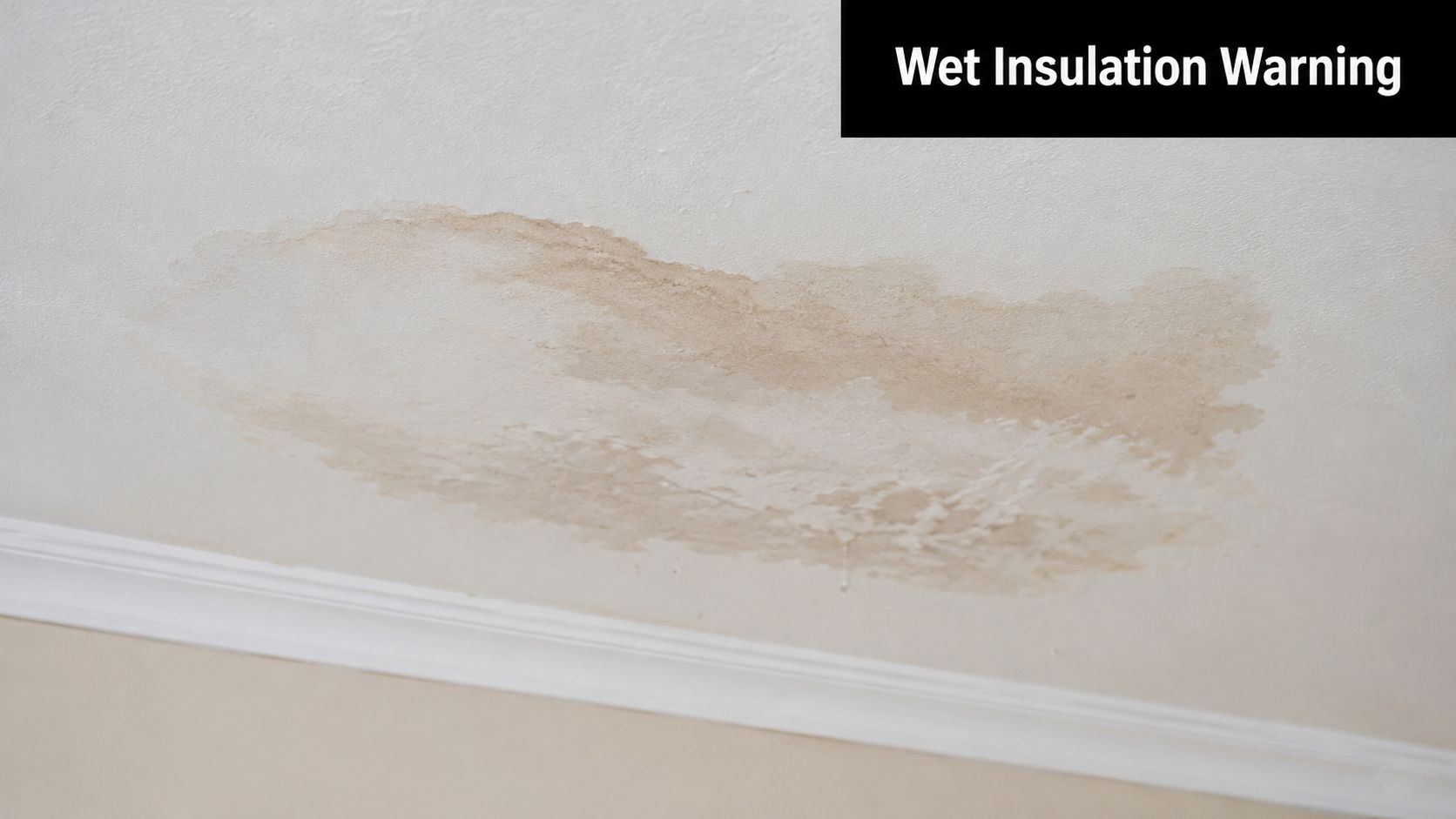
Insulation works because it traps air. When water gets into that material, it replaces those air pockets and changes how heat moves through the assembly. One industry explanation reports that just 4% moisture infiltration by volume can cut insulation effectiveness by 71% because water conducts heat far better than air, which is why even a small leak can create a large performance drop in attics, walls, and roofs (Syneffex moisture and insulation facts).
That matters more in Florida than in a milder climate. Your insulation isn't just standing between you and a cold winter night. It's part of the system that helps your house resist constant exterior heat and humidity for most of the year. Once that layer gets wet, rooms heat up faster, cooling equipment works harder, and comfort becomes uneven.
Practical rule: If insulation got wet, treat it as a building performance problem first, not a cosmetic issue.
The local pattern is familiar. Afternoon thunderstorms, tropical weather, older roof penetrations, and vented attics under extreme humidity all create opportunities for moisture intrusion. A small roof leak can wet insulation long before drywall shows obvious damage. In coastal areas, the problem often lingers because humid conditions slow drying.
Wet insulation also affects more than comfort. It can leave surrounding framing, drywall, and sheathing exposed to long-term moisture. That's when repairs start spreading from one trade to another. Roofing, insulation, drywall, paint, and sometimes remediation all end up involved.
Insurance questions often come up at the same time. If you're sorting out whether damage from a storm event may be covered, this guide on water damage from rain insurance gives homeowners useful context on how rain-related claims are commonly evaluated.
Not all insulation fails the same way. That's where a lot of bad decisions start. Homeowners hear “wet insulation” and assume every material should either always be saved or always be thrown out. In the field, that's not how it works. The material tells you a lot about what's realistic.
Industry guidance is clear that moisture tolerance depends heavily on insulation type, with closed-cell spray foam described as highly moisture-resistant, while open-cell foam and fiberglass are more likely to retain moisture when exposed, often leading to removal and replacement after heavy saturation (USA Insulation guidance on wet insulation).
Here's the practical comparison.
| Moisture Performance of Common Insulation Types | Water Absorption | Drying Potential | Mold Risk When Wet |
|---|---|---|---|
| Fiberglass batts | Can hold water between fibers | Sometimes dries if only lightly wet and not compressed | Elevated if moisture lingers in surrounding materials |
| Cellulose | Tends to absorb and hold moisture | Poor after significant wetting | High because it stays damp and clumps |
| Open-cell spray foam | More likely to retain moisture | Can dry, but drying path matters | Depends on exposure and surrounding materials |
| Closed-cell spray foam | Strong moisture resistance | Better moisture tolerance than fibrous products | Lower risk from the insulation itself when incidental moisture occurs |
Fiberglass batts are common, affordable, and familiar. Dry fiberglass can perform fine. Wet fiberglass is a different story. It can slump, compress, and hold moisture against wood and drywall. If it dries completely and returns to full thickness, it may still be usable in some situations. If it mats down or stays damp in a hot attic, performance and durability both suffer.
Cellulose is usually less forgiving. Once soaked, it tends to clump, settle, and lose the structure that made it useful in the first place. In a South Florida attic, that's a problem because drying conditions inside the assembly aren't always ideal, especially after repeated humidity exposure or a slow leak.
If you're weighing material choices for a roof assembly, it also helps to understand the larger roof system. This overview of improving roof energy efficiency is useful for seeing how insulation strategy fits into roof performance instead of acting as a stand-alone product.
People often lump all spray foam together. That's a mistake.
Open-cell spray foam expands well and does a strong job air sealing, but it's more vapor open and more likely to retain moisture when bulk water gets in. It's not a waterproof material. In the right assembly, it performs well. In the wrong wet environment, it can complicate drying.
Closed-cell spray foam is the one I look at differently for South Florida buildings. Its structure is far more resistant to moisture intrusion, and it keeps doing more than one job at once. It insulates, air seals, and helps limit moisture movement through the assembly.
For homeowners comparing foam to loose-fill options, this page on foam versus cellulose insulation gives a useful side-by-side view of how those systems differ in real residential applications.
Wet insulation doesn't fail only by losing R-value. It also fails when the assembly can't dry.
Wet insulation often hides well. You usually don't find it by looking straight at it. You find it because the house starts behaving differently.
The first clues are often visible. A stain on the ceiling below an attic. Paint that starts bubbling near an exterior wall. A musty smell in a bedroom that sits under a roof valley. Those are common South Florida calls, especially after strong summer storms.
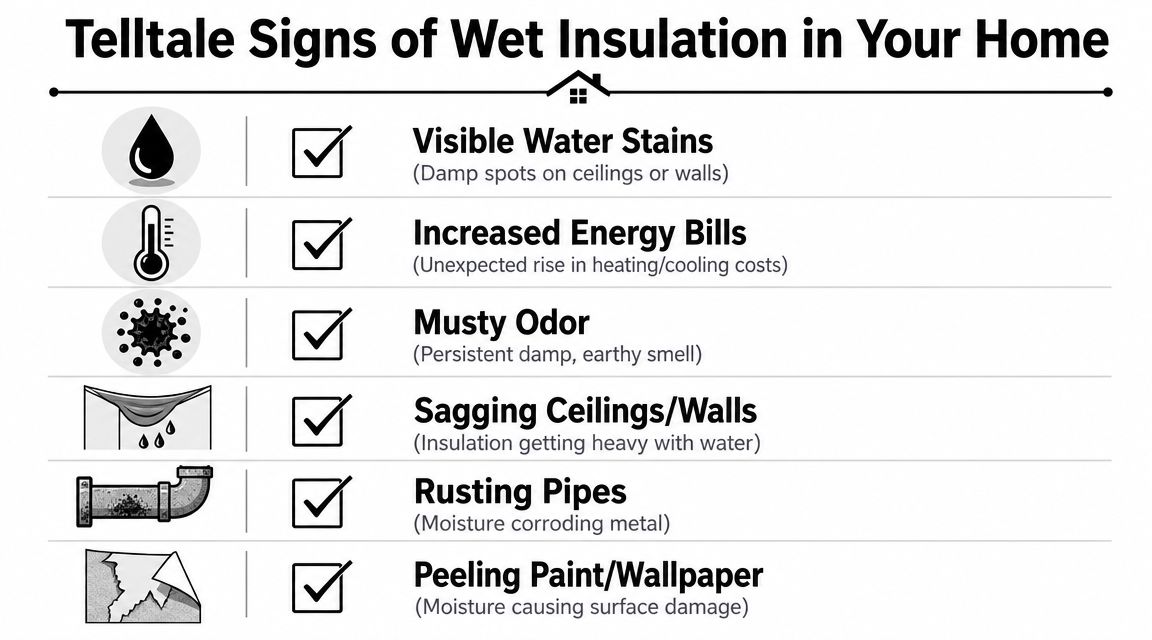
Use this checklist if you suspect hidden moisture above a ceiling or inside a wall cavity:
A lot of homeowners expect dripping water. Many wet insulation problems don't look like that. The insulation may just stop helping.
Watch for these subtler patterns:
A short walkthrough can help you spot common warning signs before opening walls or ceilings.
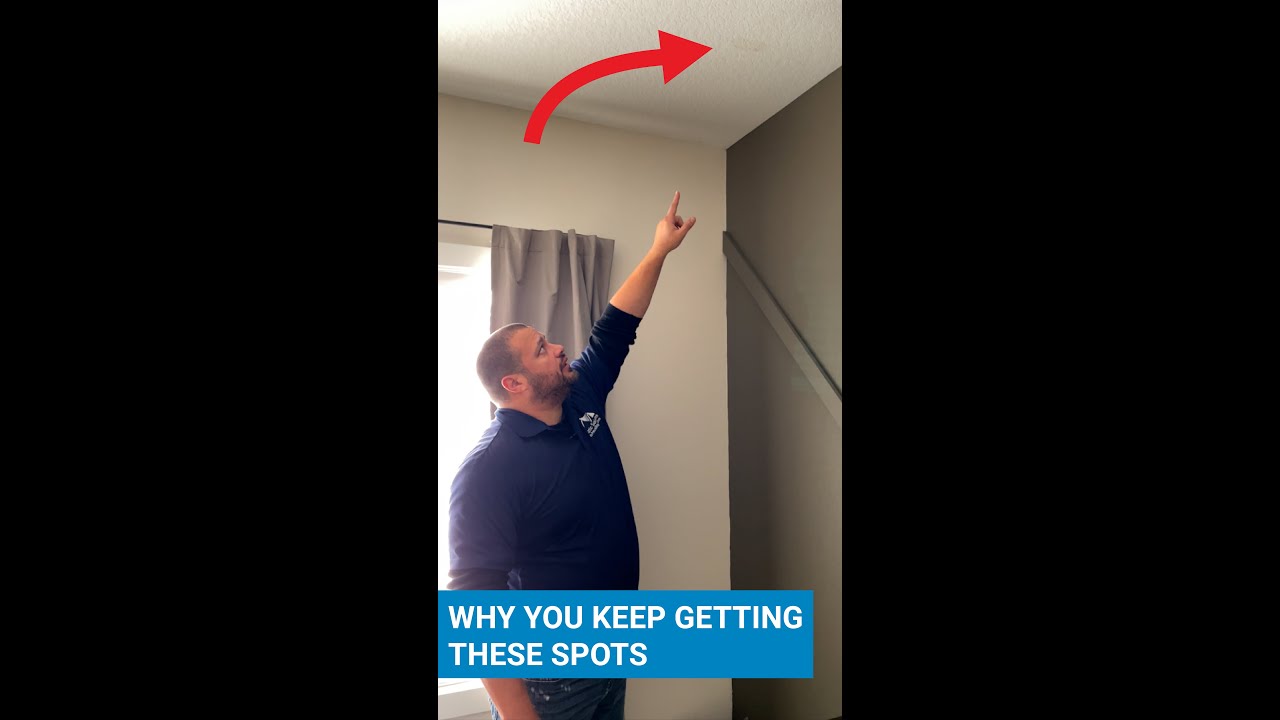
If moisture has been present long enough for microbial growth behind drywall, the insulation issue becomes part of a larger remediation problem. Homeowners dealing with hidden wall contamination may find this guide to Restore Heroes hidden mold removal helpful for understanding what proper access and cleanup usually involve.
This is the question that matters after you confirm a leak or moisture event. The answer isn't automatic. A contractor should judge it based on material type, what kind of water got in, and whether the insulation still holds its original shape and thickness after drying.
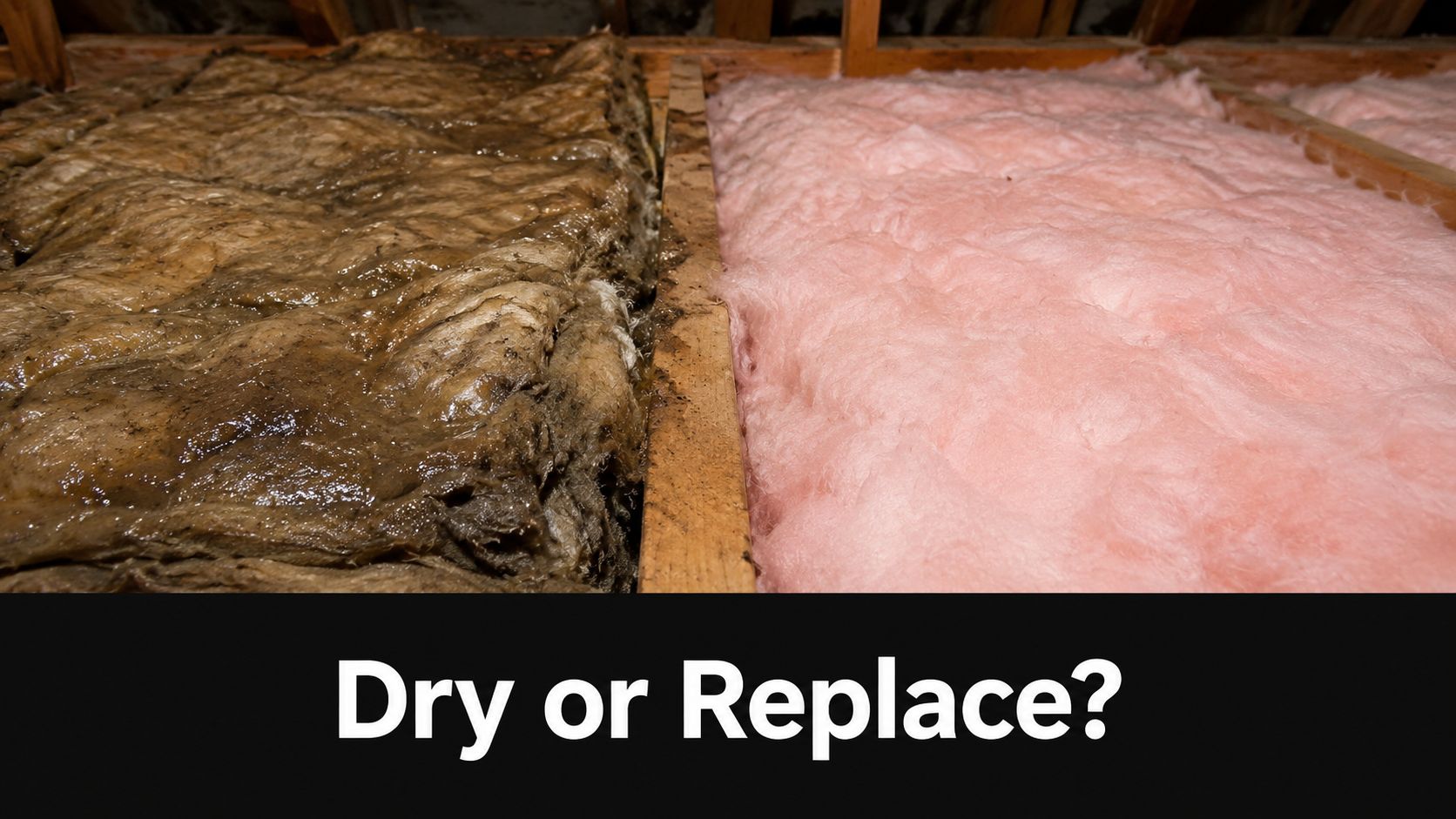
Industry guidance cited in a technical bulletin explains that fiberglass insulation exposed to clean water can often be dried and reused if it returns to its original thickness, and the same bulletin notes FEMA guidance supporting reuse of wet fiberglass batts or rolls in many circumstances. That same guidance also states that cellulose typically clumps and loses structure, while insulation contaminated by dirty water generally requires full replacement (Silvercote technical bulletin on wet insulation and mold potential).
That's the right framework. If a clean water event was caught early and the fiberglass isn't crushed, torn, or dirty, drying can be reasonable. If the batt dries fully and recovers its full loft, there's a path to reuse.
Replacement makes more sense when any of these conditions are present:
If you have to open the cavity anyway, that's the right time to assess everything around the insulation, not just the insulation itself.
Here's the sequence that usually works:
If the wet material needs to come out, this page on insulation removal and replacement outlines what that process typically involves before a new system goes back in.
In South Florida, prevention beats remediation every time. Once water gets into a traditional fibrous system, you're no longer just talking about insulation. You're talking about drying time, access, possible hidden damage, and whether the cavity can return to a stable condition.
That's why I look at insulation here as a moisture-control decision, not just an R-value purchase. A material that slows heat flow but still allows humid air to move freely into cavities leaves a lot of risk on the table.
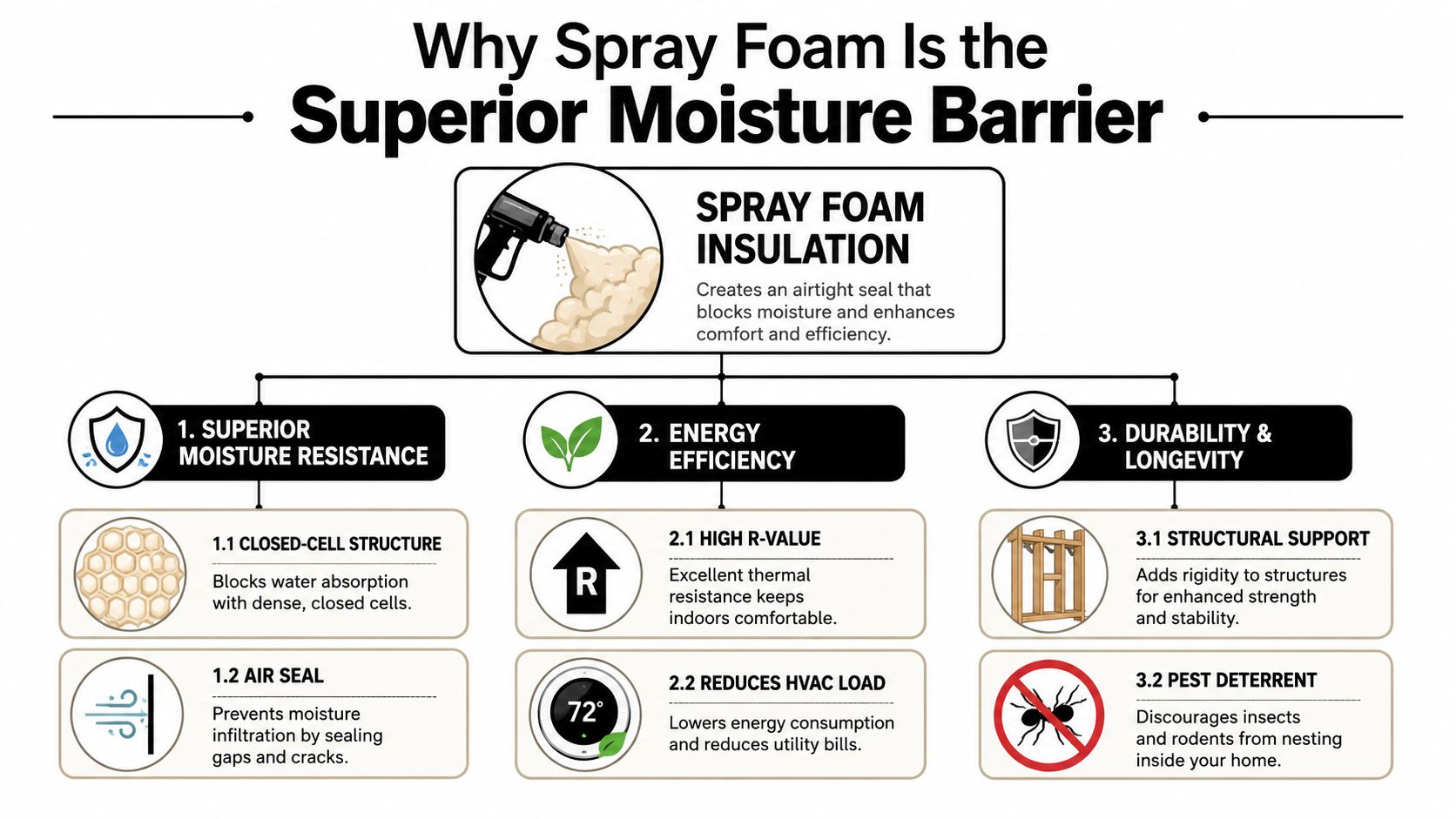
Closed-cell spray foam stands apart because it handles multiple jobs at once:
That combination matters in attics, walls, crawl spaces, and roof assemblies where humid outdoor air constantly tries to enter. With fibrous insulation, the material may insulate while dry, but it doesn't seal all the little pathways where air and moisture travel. Closed-cell foam closes those gaps.
South Florida buildings deal with repeated wetting stress. Wind-driven rain, high dew points, and long cooling seasons all push moisture into assemblies. A moisture-resistant insulation layer helps, but what really changes the outcome is reducing air movement through cracks, joints, and penetrations.
Open-cell foam still has a role in some assemblies, especially where air sealing is the main objective and the design accounts for drying. But where moisture resistance is the bigger concern, closed-cell usually makes more sense.
For homeowners looking specifically at this moisture-control angle, this page on closed-cell spray foam insulation waterproof performance explains how the material functions in wet-prone areas.
Closed-cell spray foam usually isn't chosen because it's the cheapest line item. It's chosen because it reduces several recurring problems at once. In the right application, it can help limit humid air intrusion, preserve insulation performance, and reduce the odds that a minor water event turns into a major cavity repair.
A local contractor like Airtight Spray Foam Insulation typically installs these systems in attics, walls, garages, and metal buildings where humidity control matters as much as temperature control.
The strongest insulation system for South Florida is the one that still performs when the weather stops cooperating.
If you've been asking whether insulation can get wet, the better question is what kind of insulation your home can afford to trust in this climate. South Florida homes need more than a basic thermal layer. They need a system that handles humidity, discourages hidden moisture buildup, and doesn't fall apart the first time a leak shows up.
The big takeaway is simple. Wet insulation isn't one problem. It can be an energy problem, an indoor air quality problem, a comfort problem, or a building durability problem. Sometimes it's all four. The right response depends on the material, the water source, and how quickly the issue is found.
If you suspect moisture in an attic, wall, or ceiling cavity, act in this order:
A healthier home comes from controlling both heat and moisture. That's why insulation choices in Florida should be made with storm season, attic humidity, and long cooling cycles in mind. Good moisture management protects comfort, helps preserve finishes and framing, and lowers the chances of recurring cleanup.
If your home in Jupiter, Palm Beach Gardens, West Palm Beach, Wellington, or Stuart has signs of wet insulation, don't wait for the next storm to confirm it. Catching it early gives you more repair options and fewer surprises.
If you need help evaluating wet insulation, planning replacement, or upgrading to a more moisture-resistant assembly, Airtight Spray Foam Insulation can inspect the problem areas and recommend a practical path forward for your South Florida home or building.