Most homeowners will pay $3,500 to $7,000 for a typical spray foam attic project, while broader attic jobs in existing homes often run $5,900 to $12,000 depending on foam type, attic size, and labor conditions. That's the baseline, not the final number, and in South Florida the actual cost often shifts because humidity, unvented-attic code details, and prep work on older homes change both the scope and the risk.
If you're in Jupiter, Palm Beach Gardens, West Palm Beach, Wellington, or Stuart, you're probably looking into this because the house never quite feels dry enough, the upstairs stays hotter than the rest of the home, or the AC seems to run all day. That's usually when homeowners start comparing insulation options and realize the online price guides don't line up with local quotes.
The problem isn't that the national articles are completely wrong. It's that they flatten the job into a square-foot number and skip the parts that drive the invoice in South Florida. Attic shape, roofline complexity, moisture strategy, old insulation removal, and whether you're converting the attic into an unvented space all matter.
Spray foam can solve the right problems when it's matched to the house. It can also become an expensive mistake when someone prices it like a dry-climate job and ignores how Florida homes handle heat and moisture.
A homeowner in South Florida might read a national pricing article in the evening, feel ready to budget for the job, then get a quote the next day that comes in higher than expected. That gap usually isn't price gouging. It's the difference between a generic average and a real attic.
One of the big misses in national guides is regional cost inflation. Some widely cited national averages land around $1,284 to $3,741, but markets such as Los Angeles and Michigan can run 30 to 50 percent above those averages because of labor rates and permitting, according to regional spray foam cost analysis. If that happens in those markets, it should be no surprise that South Florida homeowners also need a local lens instead of a national one.
South Florida attics don't just get hot. They stay humid for long stretches, and that changes what works.
A simple vented attic with easy access and a clean roof deck is one kind of project. An older house with messy existing insulation, tight access, low clearances, storage platforms, or ductwork spread across the attic is a different job entirely. The material may be the same, but the labor and prep are not.
Most online price guides treat attics like empty boxes. Real attics have obstructions, old insulation, duct runs, and moisture concerns that have to be addressed before the first pass of foam goes up.
Two homes with similar square footage can produce very different proposals. A contractor may have to account for:
That's why smart homeowners don't ask only, “What's your price per square foot?” They ask what the quote includes, what type of attic system is being created, and whether the contractor is pricing for Florida conditions instead of a generic average.
Material choice drives a big part of attic spray foam cost, but in South Florida it also affects how the attic handles moisture, roof deck temperatures, and code compliance if the plan is an unvented attic.
Open-cell and closed-cell both air seal. The price difference comes from density, yield, and what each product does once it is in place.
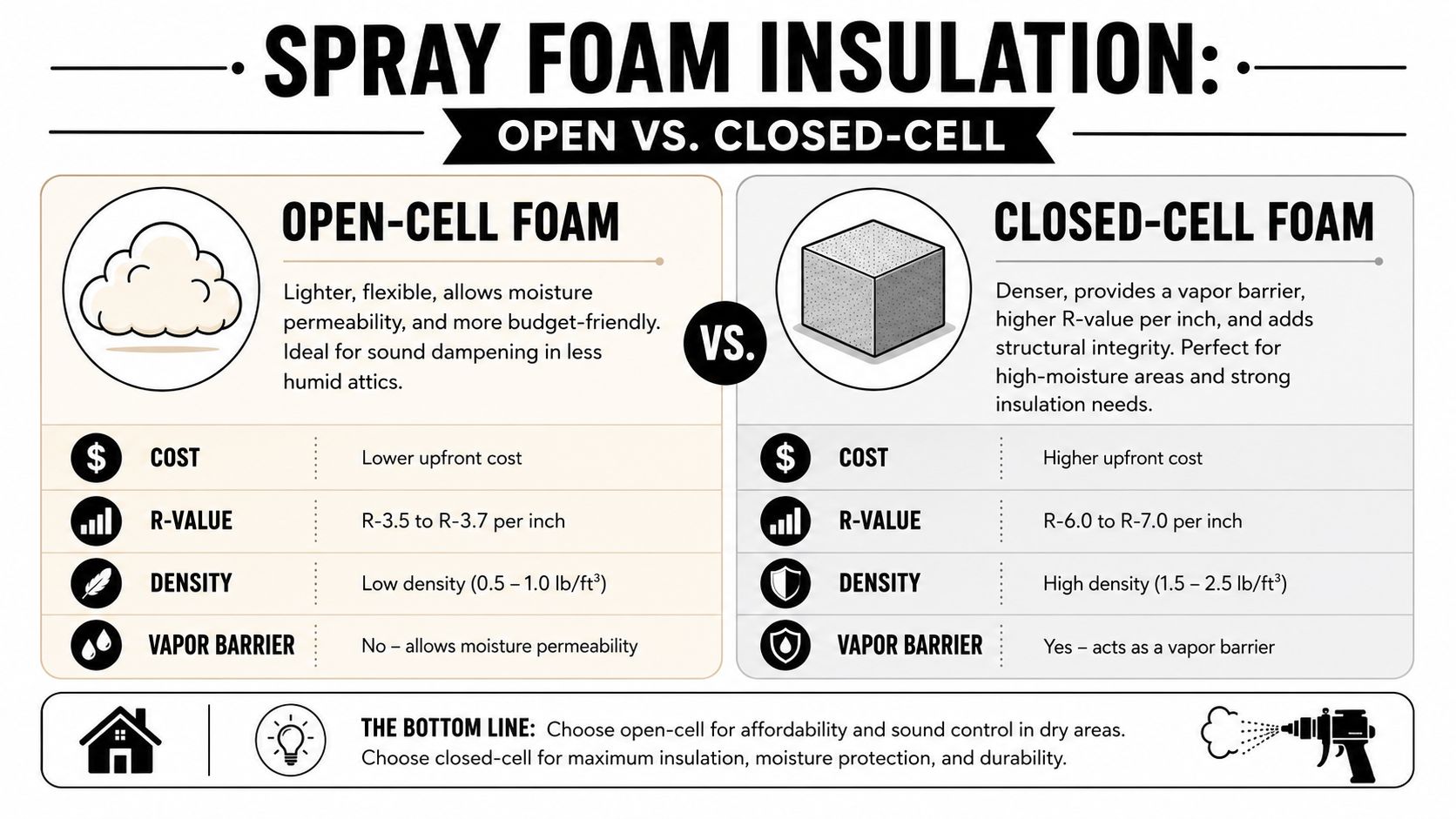
Open-cell is usually the lower-cost option per square foot. It expands fast, fills irregular framing well, and can be a good fit when the attic assembly is designed for it.
It remains vapor permeable, which matters in our climate. In a South Florida attic, that can be either acceptable or a problem, depending on the roof assembly, indoor humidity control, and whether the contractor is building a properly detailed unvented attic. Lower material cost does not automatically make it the better value.
Open-cell often makes sense for homeowners who want strong air sealing at a lower upfront cost and have an attic design that supports that choice.
Closed-cell costs more because it is denser and uses more material per inch. It also gives you a higher R-value in less thickness and adds stronger resistance to moisture movement. The U.S. Department of Energy notes that closed-cell spray foam has a higher R-value per inch than open-cell foam, which is one reason it gets specified where space is limited or extra moisture control is needed in the building assembly, as explained in the Department of Energy's insulation guide.
In South Florida, I see closed-cell priced more often for rooflines where homeowners want tighter control over humid attic air, limited rafter depth, or a more compact assembly. That higher price can be justified. It depends on the house.
Spray foam is commonly discussed by square foot, but contractors price it by volume applied across that area. In the trade, that is measured in board feet. One board foot equals 12 inches by 12 inches by 1 inch thick.
That detail matters more than homeowners expect.
A quote for 1,500 square feet of attic roof deck at one thickness can be far apart from another quote for the same 1,500 square feet at a thicker application. If one contractor prices open-cell at a code-appropriate depth for the assembly and another prices a thinner pass, the lower number on paper does not mean you are comparing equal work.
Open-cell usually lowers the upfront number. Closed-cell usually raises it. The primary cost consideration is whether the foam type fits the roof assembly and the moisture conditions inside the house.
That is especially true here. South Florida homes deal with long cooling seasons, high outdoor humidity, and older roof structures that were not always built with a sealed attic plan in mind. Foam choice affects more than insulation value. It affects how safely and effectively that attic will perform after the job is done.
If you want a more detailed side-by-side on performance and use cases, this guide to open-cell vs closed-cell spray foam breaks down the differences.
| Foam type | Typical cost position | Best known for |
|---|---|---|
| Open-cell | Lower upfront cost | Air sealing, expansion, and lower initial price |
| Closed-cell | Higher upfront cost | Higher R-value per inch and stronger moisture resistance |
A good quote explains which foam is being used, how thick it will be applied, and why that assembly makes sense for a South Florida attic. Without those details, the price alone does not tell you much.
A homeowner sees one attic number on the proposal. The contractor sees a sequence of tasks that can either go smoothly or turn into a slow, messy job.
Spray foam itself is only part of the bill. The total price also reflects access, prep, protection of the house, removal work, and the time it takes to spray the attic safely and evenly. In South Florida, older homes often add another layer of labor because attics are tighter, dirtier, and full of past repairs.
Foam sticks best to clean, dry surfaces. If the roof deck is dusty, stained, or blocked by old insulation, the crew has to deal with that before spraying starts.
That prep can include:
The U.S. Department of Energy notes that air sealing and insulation upgrades often require addressing existing conditions first, not just adding new material, in its guidance on insulation and air sealing attics.
Two attics with the same square footage can price very differently.
A clean attic with open access is straightforward. A low-slope attic with tight corners, mechanical runs, recessed areas, and patched framing takes more time per square foot. Crews move slower, hose placement gets harder, and getting even coverage becomes more labor-intensive.
South Florida homes regularly bring those complications. Older rooflines, added ductwork, electrical updates, and mixed framing from past renovations all affect how long the job takes.
The price is not based on square footage alone. It is based on how much time and setup that square footage requires.
A useful quote is specific. It should show what the crew is doing, not just give you a lump sum and a foam type.
Before comparing bids, check for these details:
If those items are vague, the lower bid can become the more expensive job after change orders, cleanup charges, or added prep work show up. A clear proposal usually saves money because it reduces surprises.
South Florida rewards good building science and punishes shortcuts. That's especially true in attics.
A generic recommendation might tell you to spray the underside of the roof deck, seal everything up, and enjoy lower cooling costs. That can work. It can also create moisture trouble if the attic becomes unvented without being handled correctly.

In a humid climate, moisture control isn't a side issue. It's part of the insulation decision.
Closed-cell often makes more sense in South Florida attics because moisture resistance is a serious performance factor, not just a nice extra. Open-cell can still have a place, but it should never be chosen just because the initial price is lower. The attic assembly has to be considered as a whole.
That's where national pricing articles often fail homeowners. They compare material costs but skip what happens after vents are sealed and the attic stops behaving like a vented attic.
According to GreenBuildingAdvisor's discussion of spray foam in unconditioned attics, sealing attic vents with spray foam creates an unvented attic, and that can lead to moisture accumulation and sheathing rot if the attic isn't properly conditioned. That same guidance notes that code requires HVAC equipment to be within the new thermal envelope, a detail many cost guides miss.
That point matters in South Florida because many homes already have ducts and air handlers in the attic. If you're changing the attic from vented to unvented, the insulation strategy and mechanical layout need to agree with each other.
Sealing the vents is not just an insulation choice. It's a building-system change.
Many local homes have had years of humid attic air moving through them. The result can be dusty roof decking, patchwork insulation, storage platforms, previous repair work, and hard-to-reach areas around framing.
That prep affects cost because the crew may need extra time before spraying starts. It also affects what product makes sense. An attic with moisture concerns and uneven conditions usually needs a more careful approach than an online calculator can account for.
Here's the practical takeaway:
In South Florida, performance and durability come from matching the foam to the climate and the attic assembly. That's what keeps a “good price” from turning into an expensive correction later.
A South Florida homeowner with a 1,200 square foot house often assumes the attic foam price will track the home's square footage. It usually does not. If the plan is to spray the roof deck and create an unvented attic, the actual spray area is larger because of roof slopes, hips, valleys, gable ends, and knee-wall transitions.
That is why sample math works best as a budgeting tool, not a quote.
For a mid-size attic, open-cell foam often prices lower than closed-cell because the material cost is lower and the assembly usually requires less foam per inch to reach the target design. Closed-cell generally costs more, but it can make sense in specific areas where added rigidity, lower vapor permeability, or space limits matter. In South Florida, that choice is rarely just about the cheapest number. It is about what problem the attic needs to solve.
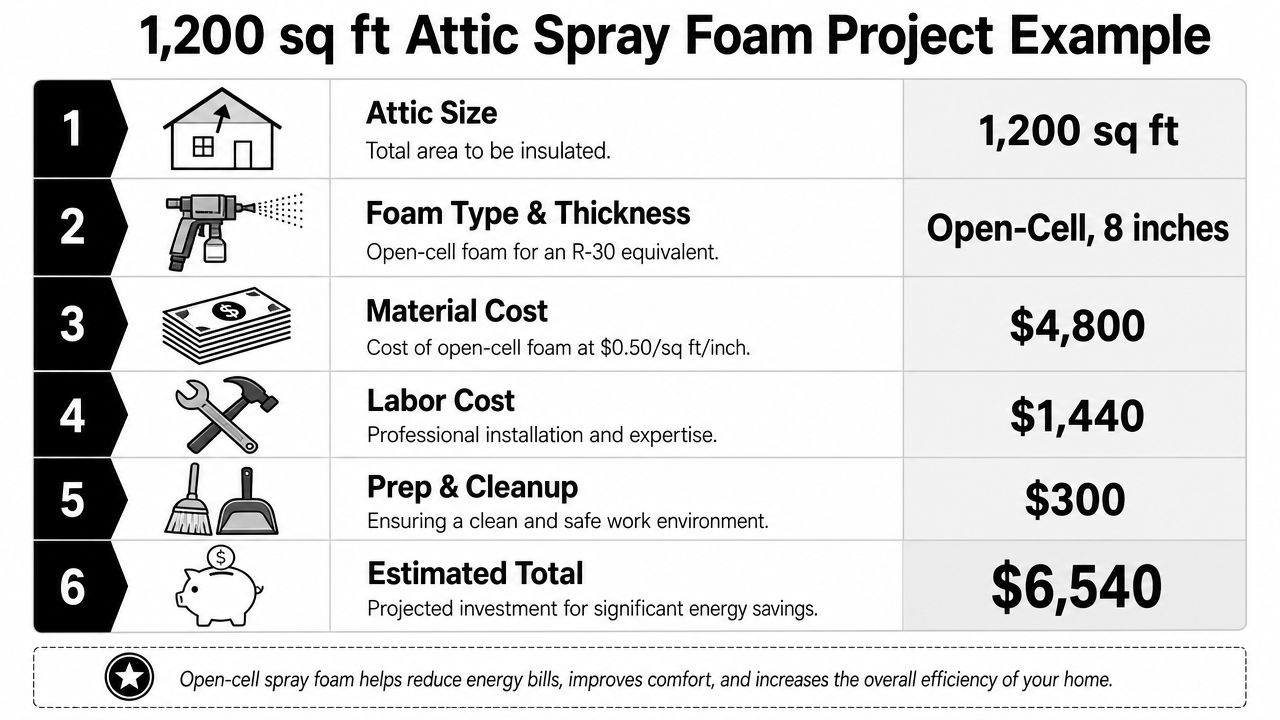
Use a range like this for early planning:
| Project type | Typical total range |
|---|---|
| Open-cell attic project | About $3,500 to $5,000 |
| Closed-cell attic project | About $4,500 to $7,000 |
| Larger or more complex attic projects | Often around $6,000 or more |
Here is how that plays out in real life. A relatively straightforward attic with good access, limited existing insulation to remove, and simple roof geometry may stay near the lower half of the range. An older South Florida home with tight access, multiple roof transitions, dusty decking, stored items, or repair areas will move up fast.
The material is only part of the bill.
A quote usually changes based on field conditions, not just foam type. The biggest cost drivers are usually:
South Florida homes also bring another layer of cost judgment. If the attic has humidity issues, past leaks, or signs of condensation, the low bid is often low because someone skipped prep, skipped diagnosis, or assumed the house can be treated like a dry-climate project.
If one contractor prices open-cell and another prices closed-cell, do not compare those numbers as if they are the same job. Compare the scope. Ask what surfaces are being sprayed, what thickness is included, whether prep and cleanup are included, and whether the quote assumes a vented or unvented attic assembly.
A good estimate should explain the house-specific reasons behind the number. It should also tell you whether the work may qualify for the federal home energy efficiency tax credit, because that can improve the net cost.
A South Florida attic can punish a cooling system all day. If the ductwork and air handler sit up there, spray foam can cut that stress and make the house feel more stable from morning through evening.
When the job is designed correctly, the return shows up in more than one place. Utility use can drop. Rooms often hold temperature better. Humid outdoor air has fewer paths into the house, which matters in this region because comfort problems are often tied to moisture as much as heat.
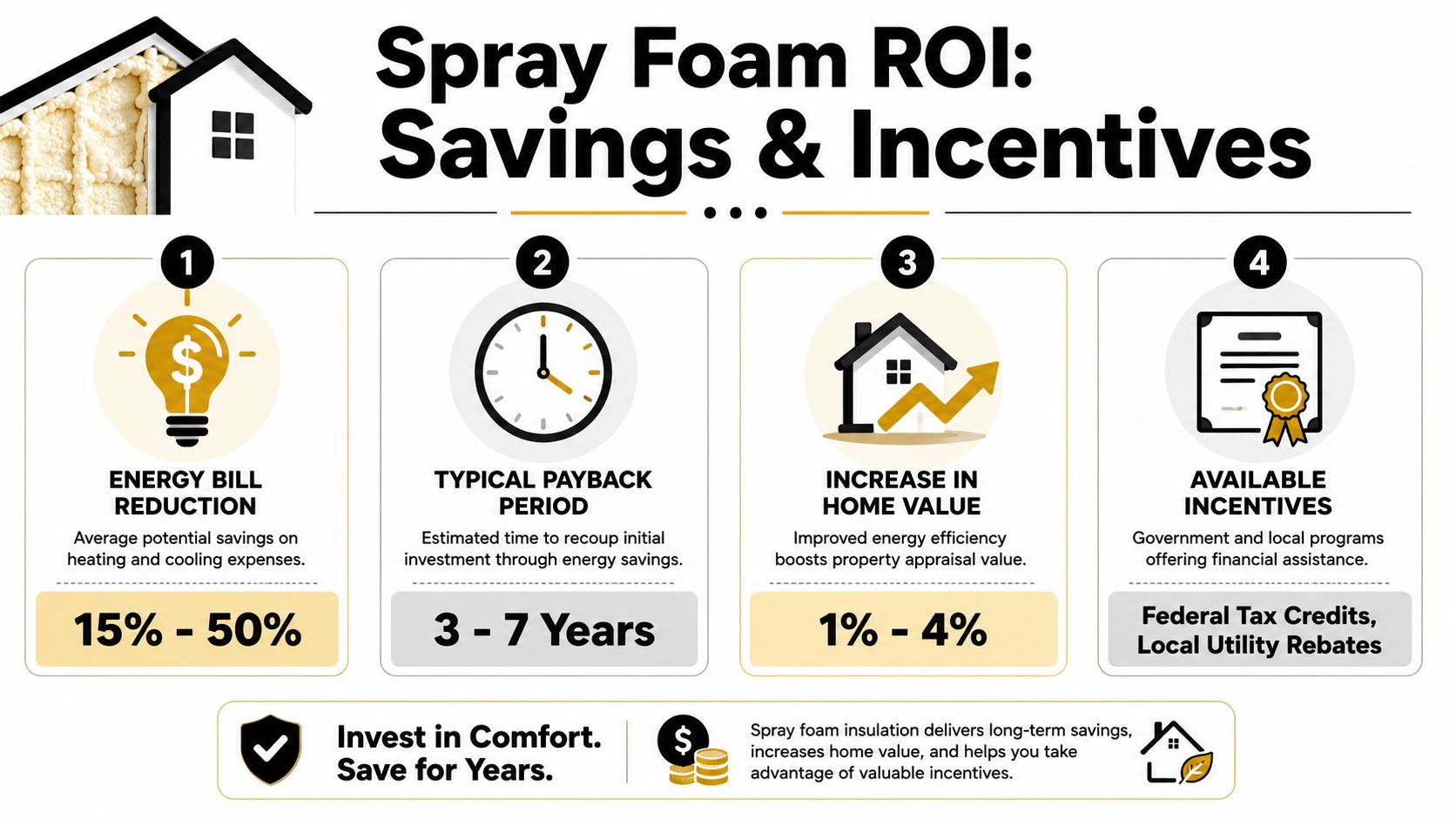
The biggest financial gain usually comes from air sealing, not just added R-value. In South Florida, that matters most in homes with attic ductwork, inconsistent room temperatures, and long cooling runtimes caused by hot, damp attic conditions.
That is also why spray foam is not always a stand-alone answer. If comfort complaints are tied to dirty ducts, weak airflow, filtration problems, or equipment issues, insulation helps but does not fix the whole system. If that sounds familiar, this guide on HVAC service for cleaner air is a useful companion resource.
Financial incentives can improve the math, but they should be treated as a bonus, not the reason to do the job. Rebate availability depends on the utility, the product, and how the project is documented. Tax credits also change over time, so homeowners should verify what applies before counting it into the budget.
ROI is different in a 1970s Palm Beach County home with leaky ducts than in a newer house with decent insulation but poor humidity control. Homes with attic HVAC equipment, obvious air leakage, or comfort problems in upstairs rooms usually have more to gain. Homes that already have a tight thermal envelope may still benefit, but the payback is often driven more by comfort, moisture control, and AC runtime than by a dramatic bill reduction.
That distinction matters. National articles often frame spray foam as a simple energy-savings purchase. In South Florida, many homeowners buy it because the attic is part of a moisture and comfort problem that fiberglass alone has not solved.
If you're reviewing incentives, check the current rules for the home energy efficiency tax credit for insulation upgrades. That can reduce the net project cost if your installation qualifies.
Some homeowners also compare insulation work with other ways to lower cooling costs, including thermostat changes, duct repairs, and equipment upgrades that can reduce your Florida electric bill. That is a smart comparison. Spray foam tends to deliver the best value when the attic is a clear source of heat gain, air leakage, or humidity trouble.
After you've looked at the numbers, it helps to hear a plain-language explanation of what spray foam changes in the house.
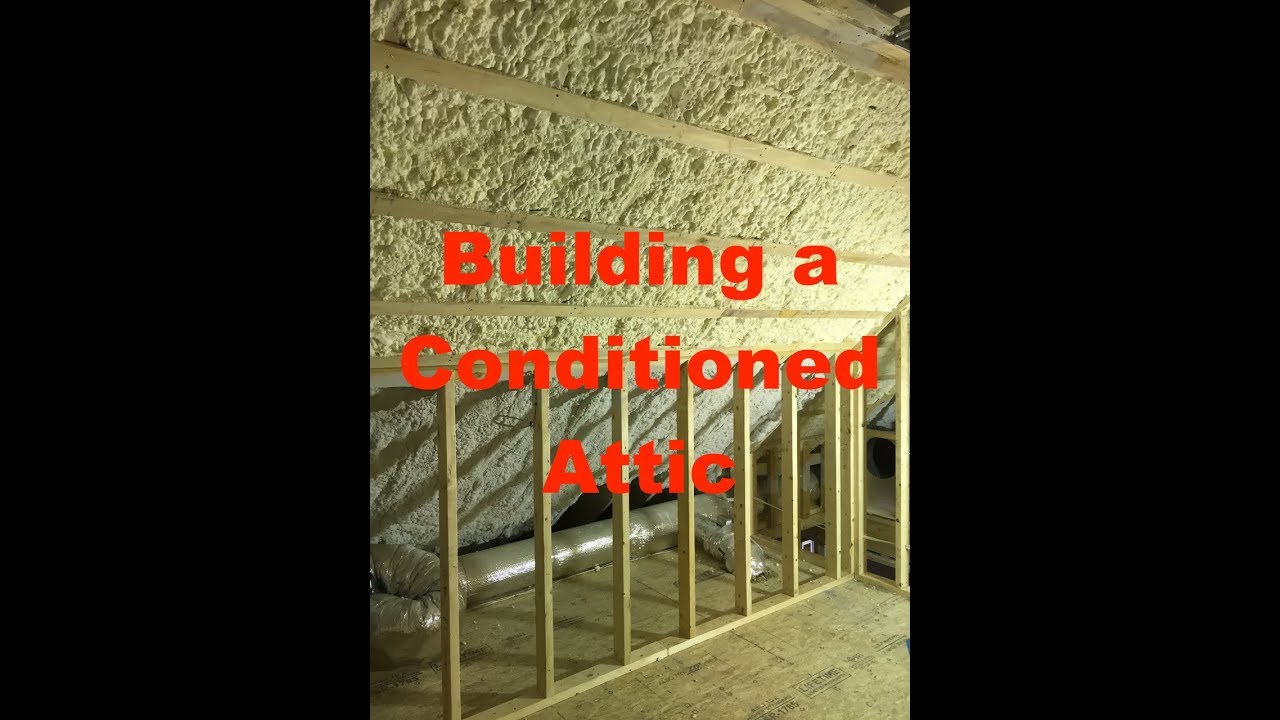
Better attic insulation changes how hard your cooling system has to work and how the rooms feel throughout the day.
A reliable quote starts with an on-site inspection. It can't be done well from square footage alone.
The contractor needs to see the attic access, roofline, existing insulation, duct layout, obstructions, and signs of moisture trouble. If someone gives you a firm number without looking at those conditions, you should question how complete that estimate really is.
Use this checklist when reviewing proposals:
If you're comparing local installers, this directory of attic insulation contractors is a useful starting point for vetting experience and scope.
Is spray foam safe for my family after installation?
Once the material is fully cured, modern spray foam is generally inert. The key is proper installation, proper curing time, and following the contractor's re-entry guidance.
How long does a typical attic installation take?
Many attic jobs are completed in 1 to 2 days when prep and cleanup are included, based on the attic installation timeline described in the earlier research background. The actual schedule depends on access, removal work, and attic complexity.
Will spray foam damage my roof?
Not when the assembly is designed correctly and the foam is installed properly. In many cases, closed-cell is chosen partly because it adds rigidity and handles moisture more aggressively than open-cell. Problems usually come from bad design decisions, not from the material itself.
The most common quoting mistake is comparing totals without comparing scope. Two bids may look close, but one may exclude removal, cleanup, or the work needed to handle an unvented attic correctly.
A good proposal should read like a work plan, not just a price.
If you want a quote that accounts for South Florida humidity, attic ventilation strategy, and the necessary prep your home needs, Airtight Spray Foam Insulation can help. Their team serves homeowners and builders across South Florida with attic, roof, wall, and commercial spray foam solutions designed for local conditions, not generic national averages.