If you're shopping for spray foam insulation for sale in South Florida, you're probably already dealing with the same problems I hear about all the time. The AC runs all afternoon, some rooms still feel sticky, and the garage or attic turns into an oven by noon. Even homes that look solid from the outside can leak hot, wet air through the roofline, wall penetrations, duct chases, and rim areas.
That matters more here than in a milder climate. South Florida homes don't just battle heat. They fight humidity, salt air, wind-driven rain, and long cooling seasons. Old fiberglass or poorly installed batt insulation often slows heat transfer, but it doesn't stop air movement well enough. When humid air keeps sneaking in, comfort drops fast.
Spray foam solves a different problem than traditional insulation. It insulates, but primarily, it seals. That's why so many homeowners start looking into it after one too many high electric bills or one too many rooms that never feel right.
The material isn't a niche product anymore. The global spray foam insulation market was valued at USD 2.09 billion in 2025 and is projected to reach USD 2.88 billion by 2033, with a 4.10% CAGR. People are adopting it because it answers real building-performance problems, not because it's trendy.
A common South Florida scenario goes like this. The house cools down at night, then by late morning the upstairs feels muggy again. The AC isn't broken. The problem is usually the building envelope. Hot attic air, humid outside air, and tiny leakage points keep working against the system.
That's where spray foam changes the conversation. Instead of asking only, “How much insulation do I have?” the better question is, “Where is my house leaking air?” Spray foam is often the answer when a homeowner has already tried cheaper fixes and still can't get consistent comfort.
Those looking for spray foam insulation for sale are usually not just buying foam. They're trying to solve one or more of these problems:
South Florida homeowners also want to know whether the upgrade may qualify for incentives. If you're exploring the financial side, it's worth reviewing this page on the home energy efficiency credit.
Practical rule: If your house feels humid even when the thermostat says it's cool enough, the issue often isn't just temperature. It's uncontrolled air movement.
Buying spray foam isn't like picking up a roll of batt insulation at a supply house. The product choice, the location, and the installer matter together. In this climate, the wrong foam in the wrong assembly can create headaches. The right foam, installed the right way, can make the house feel tighter, drier, and easier to cool.
That's why the smartest buyers in South Florida focus less on flashy sales language and more on where the foam is going, how it will be installed, and what problem it's solving.
Spray foam starts as two liquid components that mix at the spray gun. Once they hit the surface, they react, expand, and cure into insulation. The easiest way to think about it is rising bread dough, except this material is engineered to fill cracks, edges, seams, and irregular cavities that traditional insulation often leaves exposed.
That expanding action is what makes it different. Fiberglass batts can insulate when they're perfectly fitted, dry, and undisturbed. In real houses, especially older South Florida homes, framing isn't always perfect and penetrations are everywhere. Wiring, plumbing, can lights, top plates, and duct pathways create leakage points.
Most homeowners start by asking about R-value. That matters, but in our climate the bigger win is often air sealing. Spray foam can create a more continuous barrier against unwanted air movement, which helps control both heat and humidity.
Here's the plain-English version:
When hot, damp outdoor air can't move as freely into the home, your HVAC system has a better chance of keeping indoor conditions stable.
Traditional materials still have their place, but they don't do the same job.
| Material | Good at | Weak spot |
|---|---|---|
| Fiberglass batts | Slowing heat transfer | Leaves gaps and doesn't air seal well |
| Blown insulation | Covering open attic floors | Can miss leakage pathways unless air sealing is handled separately |
| Spray foam | Insulating and sealing at once | Requires trained installation and careful product selection |
In South Florida, a house can have “enough insulation” on paper and still feel uncomfortable because humid air is getting around it.
Spray foam is commonly used in areas where leaks are hard to control with other materials:
The core idea is simple. Spray foam doesn't just sit there. It adheres, expands, and seals, which is why it performs differently from insulation products that only fill space.
The most important buying decision is usually open-cell or closed-cell. Both are spray foam. They do not behave the same.
Open-cell is more like a dense sponge. It expands well, fills space nicely, and can help with sound control. Closed-cell is more like a rigid cooler wall. It's denser, more resistant to moisture movement, and better suited for demanding assemblies.
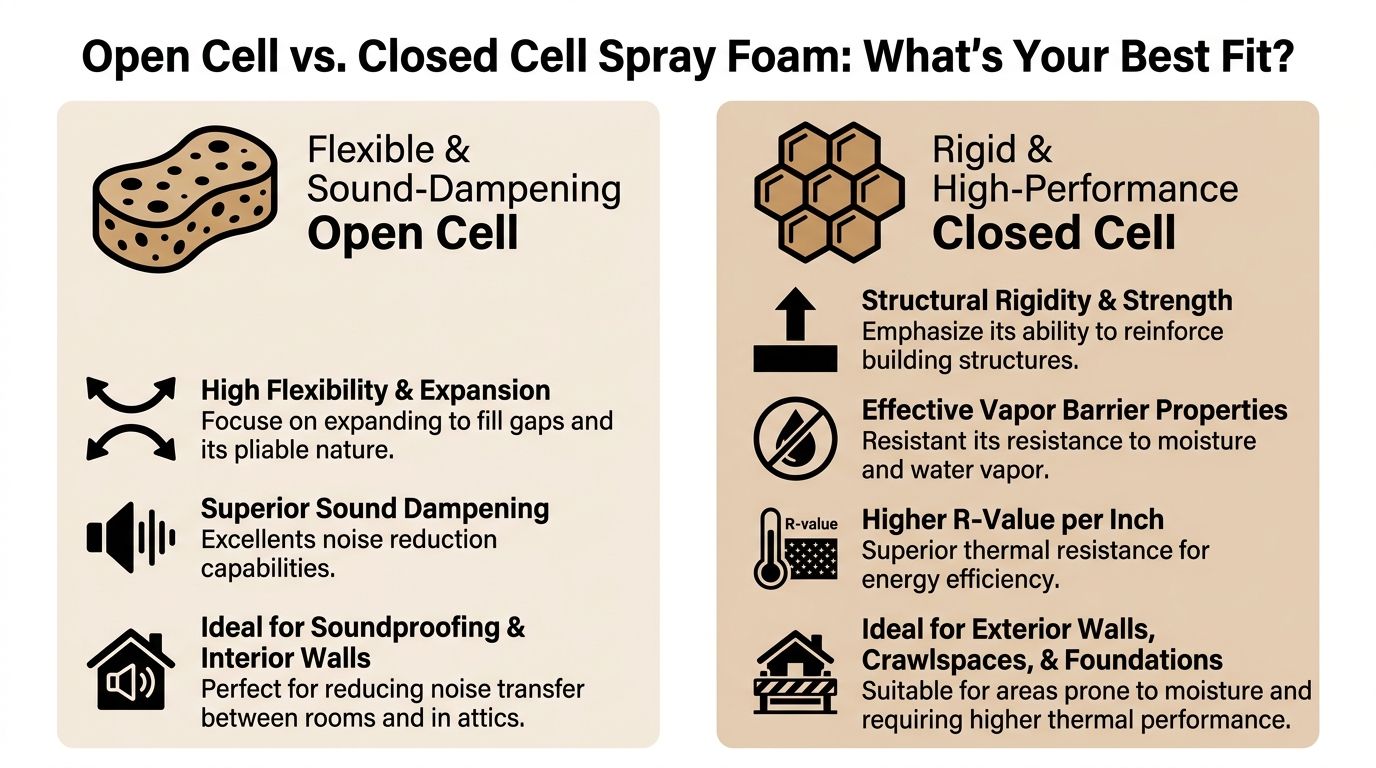
For South Florida, closed-cell spray foam is often the better fit in areas exposed to heat and humidity pressure. It provides an R-value of 6.0 to 7.0 per inch, and its tightly packed cells create a vapor semi-impermeable barrier that helps prevent condensation within wall assemblies. That matters when outside conditions are hot and wet for much of the year.
If you want a deeper explanation of how that product behaves, this overview of what closed-cell spray foam is is useful.
| Feature | Open-cell foam | Closed-cell foam |
|---|---|---|
| Texture | Softer, more flexible | Dense, rigid |
| Moisture behavior | More vapor-open | More resistant to vapor movement |
| Sound control | Strong choice for interior sound dampening | Less about sound, more about performance and protection |
| Best fit | Interior walls and some lower-demand cavities | Rooflines, exterior walls, crawl spaces, areas with moisture concerns |
The simple rule is this. If the area is mostly about noise control, open-cell can make sense. If the area is about humidity, durability, and tighter thermal performance, closed-cell is usually the safer choice.
For a South Florida house, these are the practical recommendations I'd give a neighbor:
Don't pick foam by price alone. Pick it by assembly. A cheaper product in the wrong location can cost more to fix later.
What doesn't work is treating every project the same. Some contractors push one foam for every job because it simplifies sales. That's not how building performance works in South Florida. Rooflines, block homes, framed additions, garages, and metal buildings all behave differently.
Another mistake is assuming open-cell and closed-cell are interchangeable because both “look like foam.” They aren't. One is better for certain interior uses. The other is usually better when the building needs stronger resistance to moisture movement and a more rigid insulated layer.
South Florida puts a house under pressure from all sides. The sun loads the roof hard. Afternoon humidity hangs in the air. Storm season tests every weak point in the envelope. That's why insulation here has to do more than just slow heat. It has to help control air, moisture, and durability.
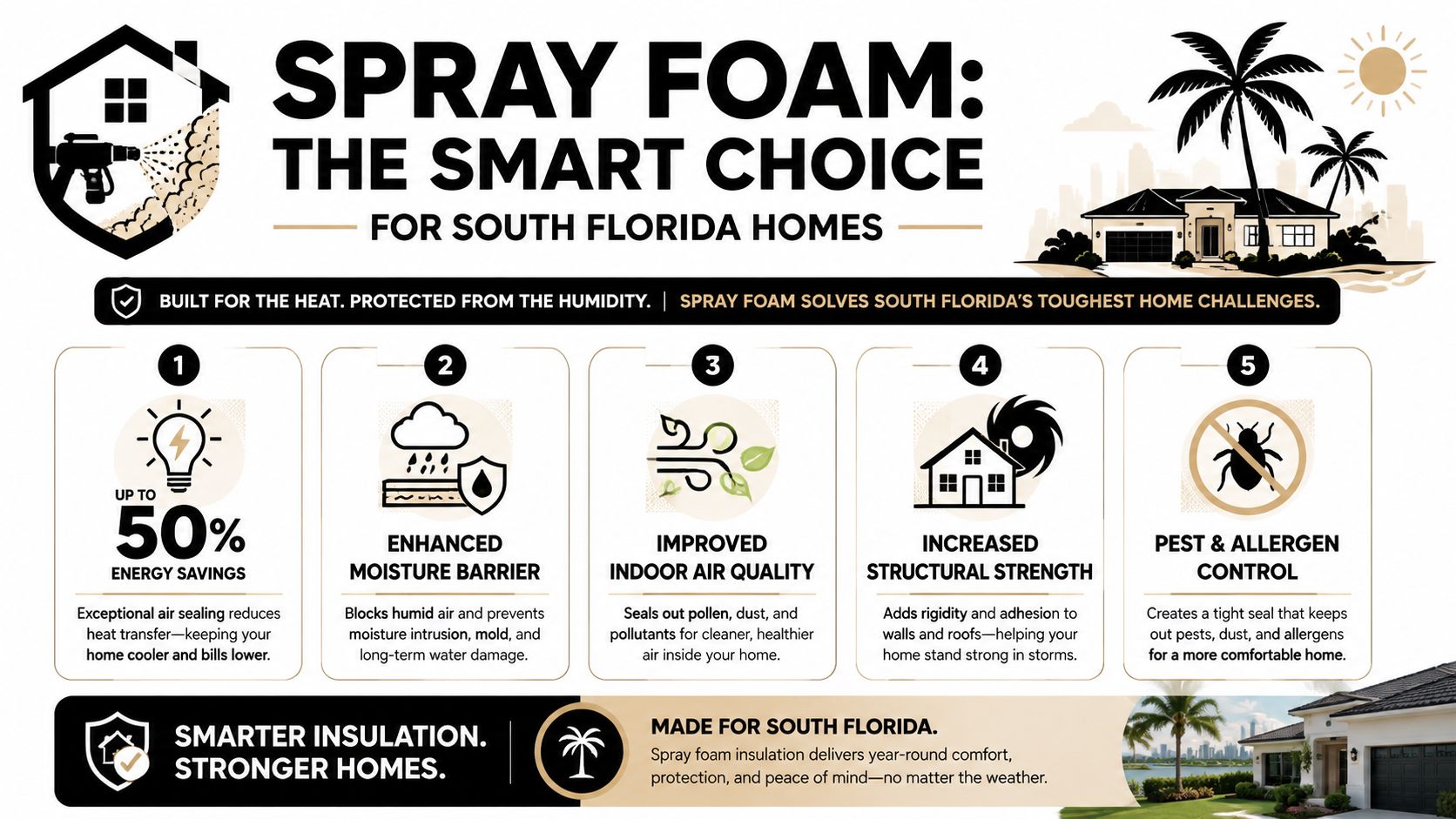
One reason spray foam shows up so often in roof work is that the roofs segment accounted for 42.80% of spray foam market revenue in 2025, while closed-cell foam commanded 57.60% of the market. That lines up with what matters in our region. Roofs take the brunt of solar heat, and critical applications tend to favor the more durable foam type.
In South Florida, comfort problems usually come from a combination of these issues:
Spray foam helps because it tackles these issues together. It doesn't just add resistance to heat flow. It also helps tighten the building envelope where many homes leak the most.
Closed-cell foam has another practical advantage in this region. Because it's rigid, homeowners often like it in assemblies where added toughness and tighter adhesion are part of the goal. It isn't a substitute for proper roofing, framing, or code compliance, but it can be part of a stronger overall system.
Noise is another underrated benefit. South Florida homes deal with thunder, wind, traffic, lawn equipment, and dense neighborhood spacing. Foam insulation can help calm down interior spaces, especially in bonus rooms, offices, and bedrooms.
A South Florida insulation choice should answer three questions. How does it handle heat, how does it handle moisture, and how does it behave when the weather gets nasty?
The first signs are usually practical, not dramatic. Rooms hold temperature longer. The AC cycles more predictably. The house smells less musty. The upstairs feels less like a separate climate zone.
That's why spray foam fits this market so well. It's built for houses that need more control, not just more insulation.
Most homeowners feel better about the purchase once they understand how the job goes. A professional spray foam project is not just “show up and spray.” The quality comes from planning, prep, application control, and inspection.
To make the process easier to follow, here's the typical job flow.
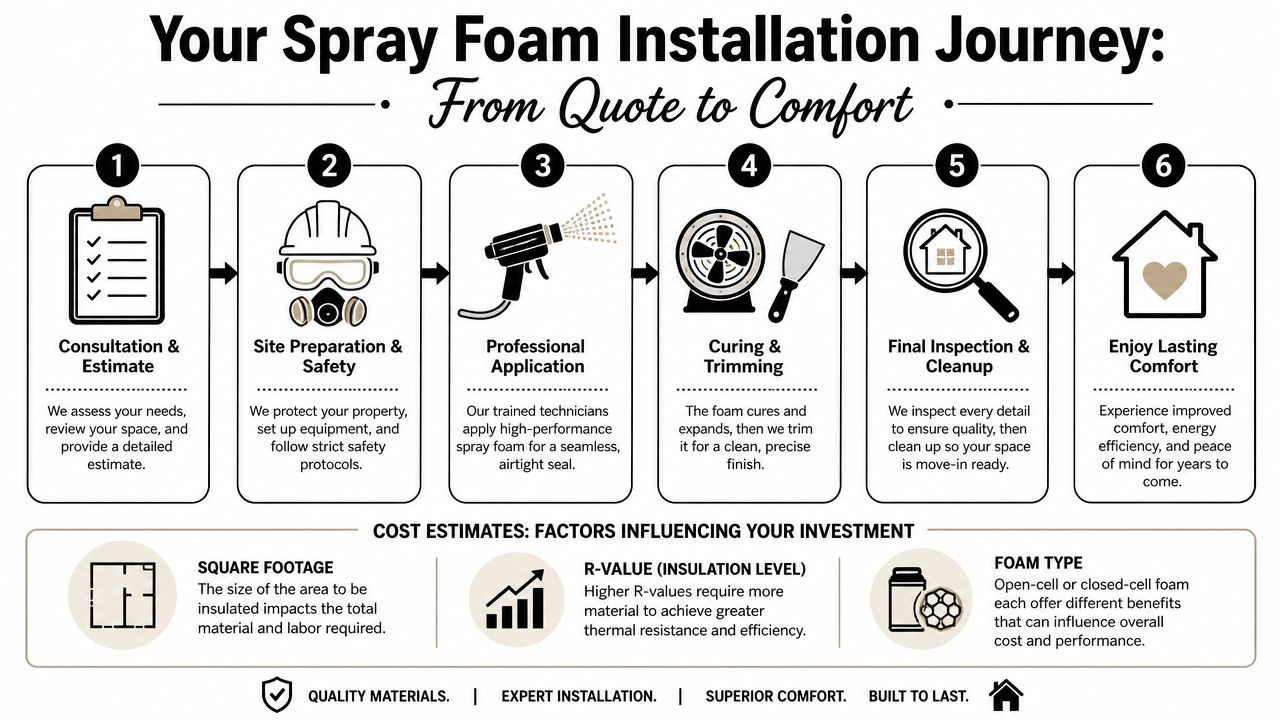
Initial visit and quote
The contractor looks at the space, the assembly type, access, existing insulation, moisture concerns, and what you're trying to fix. A good quote should match the foam type to the actual building condition, not just the square footage.
Site preparation
The crew protects surfaces, manages access, and sets up ventilation and safety controls. If old material needs removal or the area needs cleanup first, that gets handled before foam goes in.
Before moving further, many homeowners like to review a dedicated page about spray foam insulation installation cost so they understand what affects the estimate.
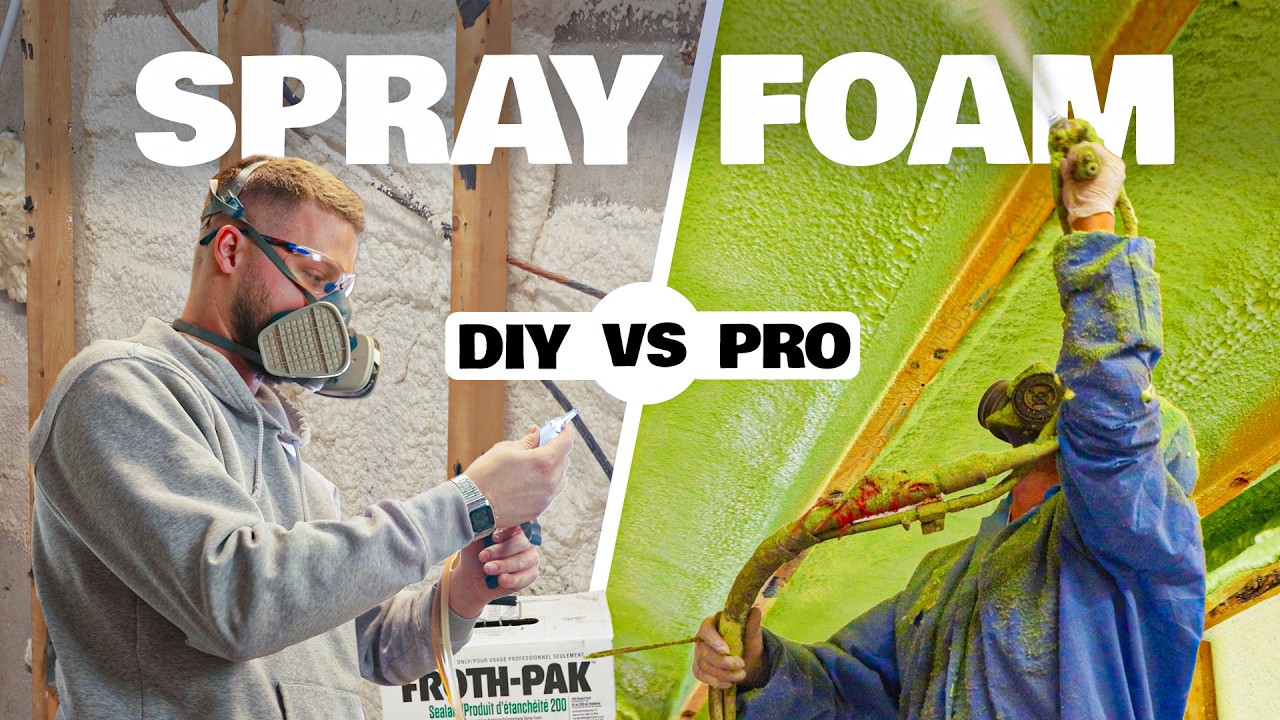
Here's a quick visual look at the process in action.
Curing and trimming
After application, the foam cures. Some areas may need trimming so wallboard or finishes sit properly. This is also when the crew checks for consistency and touch-up needs.
Cleanup and walkthrough
A solid contractor doesn't leave you guessing. You should get a final review of the work area, what was insulated, and any next steps tied to drywall or follow-on trades.
Spray foam pricing is commonly based on board feet. That means an area measuring one foot by one foot at one inch thick. So if a wall section is larger or the design calls for more thickness, the board-foot total goes up.
The final estimate usually depends on:
Field advice: Cheap spray foam bids often leave out prep, cleanup, or proper job controls. Compare scope, not just price.
If you're searching for spray foam insulation for sale, the key takeaway is this. There isn't a one-size-fits-all number that means much without seeing the space. A fair quote should explain where the foam goes, which type is being used, what prep is included, and how the crew will verify the job.
That clarity usually tells you more about the contractor than the price tag alone.
The contractor matters as much as the foam. A good material installed poorly can still create odor issues, uneven coverage, moisture problems, or warranty fights later. When homeowners compare bids, I always recommend treating safety, warranty, and insurance compatibility as one package.
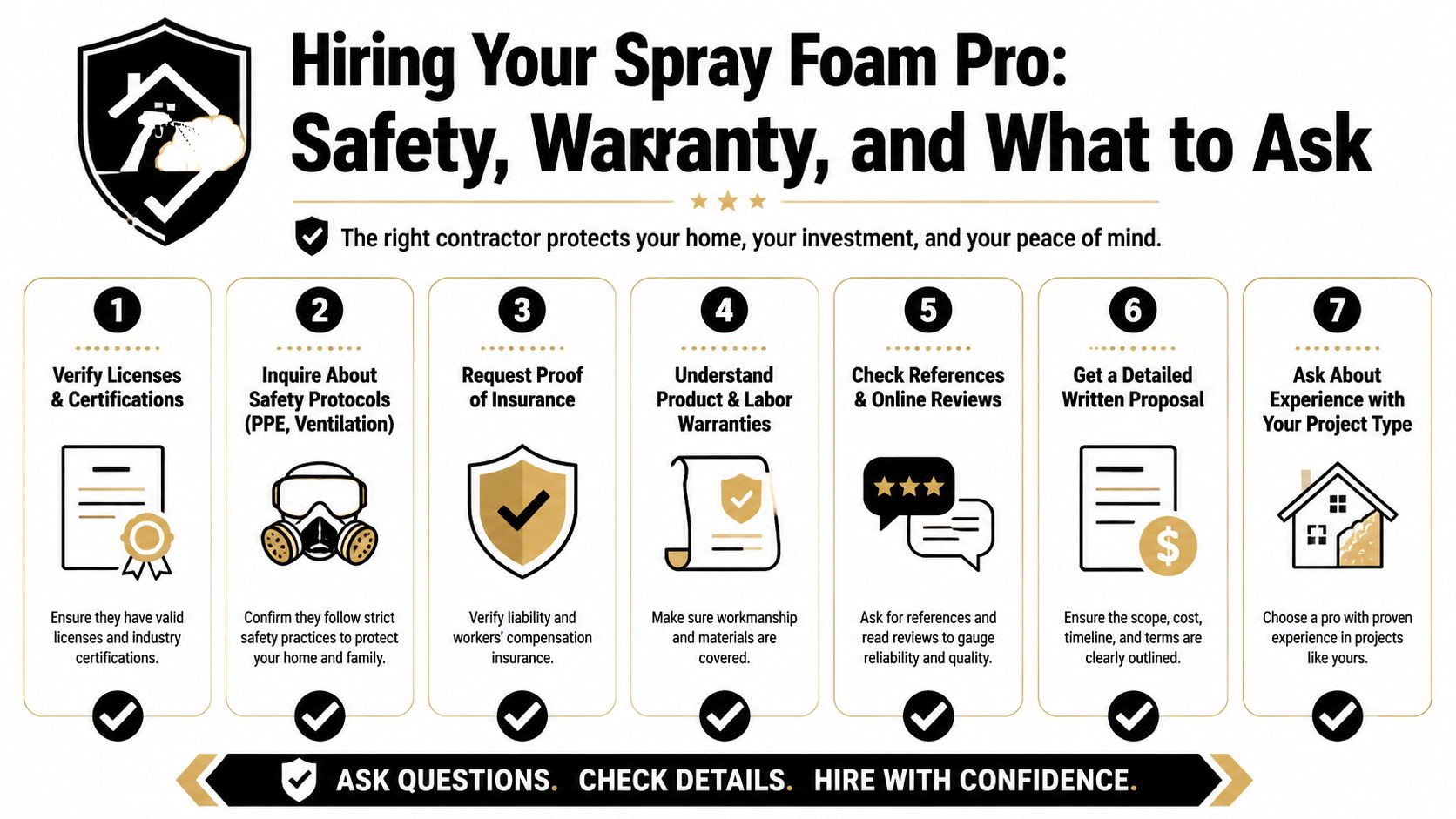
Use this checklist before you sign anything:
A lot of homeowners also compare insulation contractors the same way they go about finding trustworthy HVAC services. That's smart. Both trades affect comfort, efficiency, and indoor conditions, and both reward careful vetting over fast decision-making.
One of the least discussed parts of this purchase is also one of the most important. A critical issue often ignored is that improper spray foam installation can lead to voided insurance policies and mortgage refusals because trapped moisture can cause structural decay, making it essential to verify compatibility with providers before purchase.
That means homeowners should ask two direct questions before moving ahead:
Those questions matter most when spray foam is being applied at the roofline.
During installation, the chemicals and the process need to be handled properly. This is not a casual DIY product for large-scale application. Occupants may need to stay out of the work area or out of the home for a period recommended by the installer and manufacturer. The crew should be using proper protective gear and following product-specific application rules.
If a contractor rushes past safety questions or gets vague about ventilation, keep looking.
The best contractor isn't the one with the smoothest sales pitch. It's the one who answers uncomfortable questions clearly and puts the answers in writing.
For a whole attic, roof deck, crawl space, or wall system, I wouldn't recommend it. Professional spray foam installation depends on correct equipment, chemical handling, surface prep, ventilation, and application technique. Small canned foam for tiny gaps is one thing. Full insulation work is another category entirely.
When it's installed correctly and protected as part of a proper wall or roof assembly, spray foam is generally considered a long-term insulation product. It doesn't settle the way loose-fill products can, and it doesn't sag out of place like poorly fitted batts sometimes do.
The honest answer is nuanced. It's a manufactured chemical product, so it shouldn't be sold as some magical green cure-all. But many homeowners still consider it a positive upgrade because reducing uncontrolled air leakage can help the house operate more efficiently over time.
In many cases, yes, at least for the work period and the initial curing window recommended for that product and jobsite. Ask for that guidance in writing before the job starts so there's no confusion.
Look for specifics. You want a written scope, clear safety language, proof of insurance, warranty details, and straightforward answers about moisture risks and post-job documentation. The same logic shows up in other home-service industries that rely on trust and repeatability. If you're curious how strong companies communicate that credibility online, this resource on data-driven marketing for home services offers a useful outside view.
If you're shopping for spray foam insulation for sale in South Florida, keep the decision simple. Buy the foam type that fits the assembly. Hire the contractor who explains the risks candidly. Make sure the job addresses heat, humidity, and real local building conditions.
If you want expert help from a South Florida team that understands how heat, moisture, and storm conditions affect real homes, contact Airtight Spray Foam Insulation. They serve homeowners, builders, and property managers across Jupiter, Palm Beach Gardens, West Palm Beach, Wellington, and Stuart with personalized recommendations, professional installation, and a clear step-by-step process from estimate to final walkthrough.