The homeowner usually calls after months of the same pattern. The AC runs all day in Jupiter or Wellington, the back bedrooms never feel quite right, and by late afternoon the house has that damp, slightly stale feel that tells you the air inside isn't under control. Sometimes the complaint starts with comfort. Sometimes it starts with a musty smell near the hallway ceiling or a hot room over the garage.
In Palm Beach County, insulation choices live or die on moisture management. A material can look good on a spec sheet and still be the wrong fit for a roofline, a wall assembly, or a garage conversion if it doesn't handle heat, humidity, and occasional water intrusion the right way. That's why open cell expanding foam gets so much attention here. It can be a very useful tool, but only when it's matched to the building correctly.
I've seen plenty of homes where the problem wasn't just lack of insulation. It was moving air. Hot attic air slipping through gaps. Humid outdoor air finding its way into wall cavities. Rooms cut off from the rest of the house because the envelope was never sealed as one system. That's where spray foam changes the conversation. Instead of only slowing heat, it helps control the air movement that carries heat and moisture with it.
If you're also improving outdoor living areas, details at the exterior matter too. Homeowners thinking about shade, rooflines, and how covered outdoor spaces connect back to the house often get ideas from a guide for Boca Raton patios, because patio design can affect how heat and rain exposure interact with the home envelope.
A good starting point is understanding the broader benefits of spray foam insulation. Then the decision itself becomes more specific. Is open-cell the right material for your attic, interior walls, or roof deck in South Florida, or does the moisture risk push the job toward another approach?
A house in South Florida can feel fine at breakfast and uncomfortable by midafternoon. The sun loads the roof. Humidity builds outside. The AC keeps cycling, but one side of the home still feels sticky while another feels overcooled. That's the kind of uneven comfort that sends people looking for “more insulation,” when what they often need is better air control.
The first signs are practical, not technical.
Open cell expanding foam can help in those situations because it expands into irregular cavities and seals areas that batt insulation often leaves exposed. In a climate like Palm Beach County, that matters. Humid air doesn't need a big opening. It only needs a path.
Practical rule: In South Florida, comfort problems usually start with air leakage and moisture movement before they show up as a simple R-value problem.
People often ask whether open-cell foam is “good enough.” That's not the right question. The better question is whether it belongs in the specific part of the building you're insulating.
South Florida homes deal with heavy cooling demand, long humid seasons, wind-driven rain, and the occasional leak that doesn't get found right away. That means insulation has to do more than resist heat. It has to work inside an assembly that can handle moisture safely. Open-cell foam can be a smart choice in the right dry, above-grade locations. It can also be the wrong material in assemblies that are likely to stay wet.
That trade-off is what this topic really comes down to. Not hype. Not generic “energy efficiency” language. Just what works in Palm Beach Gardens, West Palm Beach, Stuart, and similar coastal conditions.
Open cell expanding foam is a low-density spray polyurethane insulation. Its typical density is about 0.5 lb/ft³, and its thermal performance is roughly R-3.5 to R-3.8 per inch, according to Lamothe Insulation's explanation of open-cell spray foam. In standard wall cavities, that means a full 2×4 cavity can land around R-13, and a full 2×6 cavity can reach about R-20 in that same source.
The easiest way to picture open-cell foam is to think of a sponge or a fresh loaf of bread. Inside the material are tiny connected pockets. That open structure is why the cured foam feels softer than closed-cell foam and why it does a nice job with sound control.
It's also why the material expands so aggressively during installation. The liquid components react and swell into cracks, corners, and odd framing spaces that are hard to insulate well with cut-and-fit products. In older homes and complicated roof framing, that expansion is one of its biggest strengths.
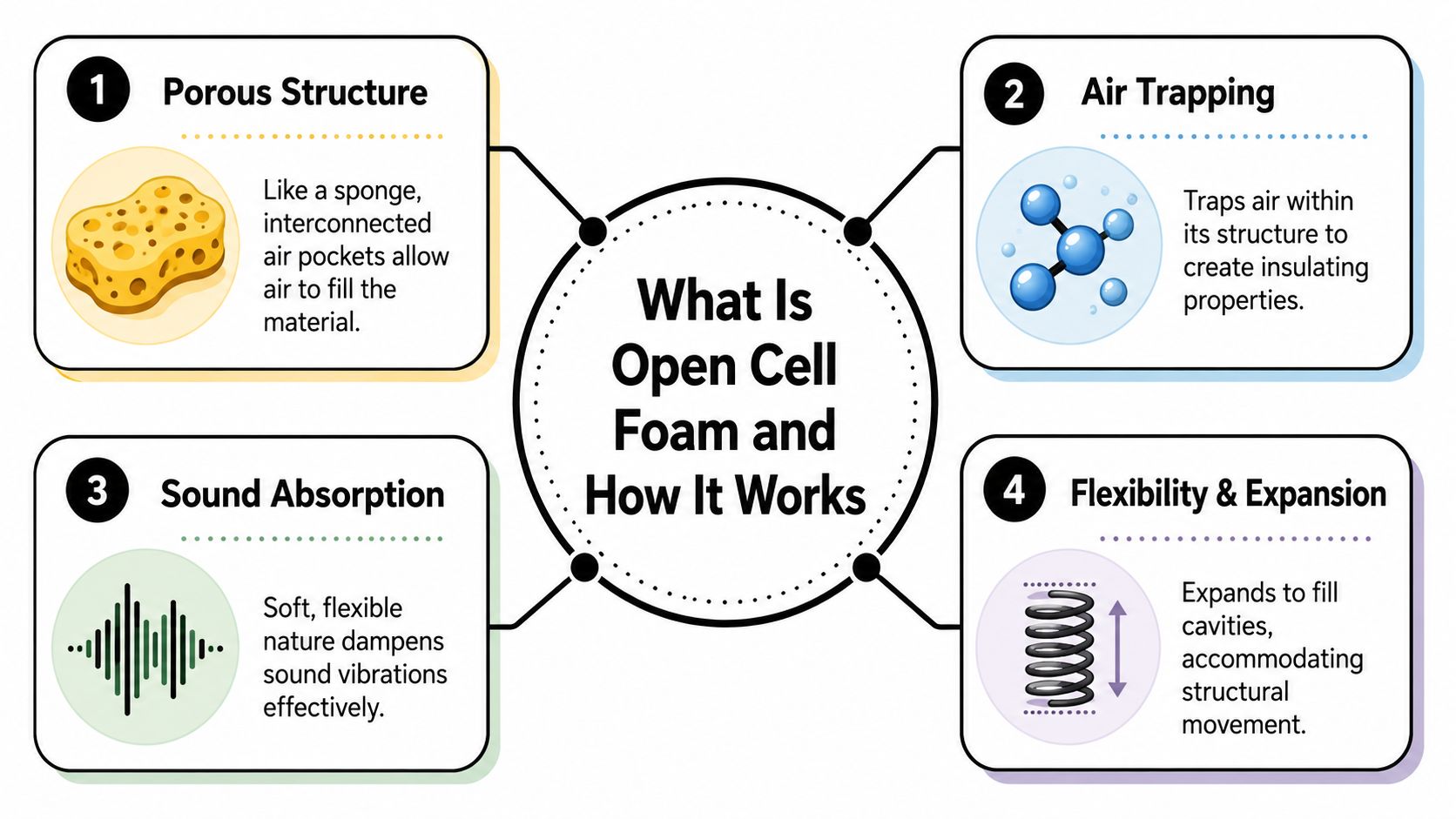
Open-cell foam wasn't developed just to add insulation value. Modern spray foam systems were designed to deal with air leakage in irregular building cavities. Open-cell foam can expand to more than 100 times its liquid volume, and it's commonly installed in a single pass of about 3 inches in standard wall cavities, as noted by Tiger Foam's open-cell versus closed-cell overview.
That expansion changes how the assembly performs:
Open-cell foam works a little like pouring pancake batter into a waffle iron. It spreads into the shape it's given, then cures in place and locks that shape in.
Because it's light and expansive, open-cell foam is commonly used in interior wall cavities, conditioned attics, and roof decks where the assembly is designed to manage moisture well. It's especially useful when the goal is to create one continuous insulated layer instead of relying on pieces of insulation that have to be cut around every obstacle.
That said, the same cell structure that makes it flexible also leaves it more vapor-open. In South Florida, that's never a small footnote. It's the main design question.
Open-cell and closed-cell spray foam both seal gaps, but they don't behave the same once moisture enters the discussion. In South Florida, that difference matters more than brand preferences or installer talking points.
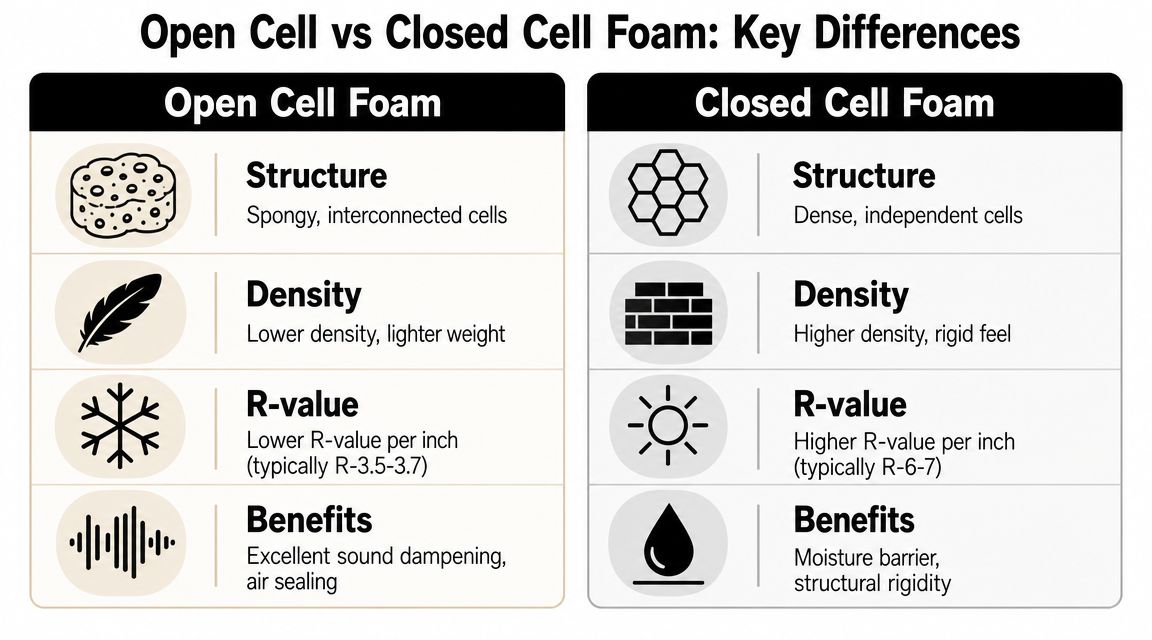
Open-cell foam stays softer and more flexible because its cells are intentionally left open. That improves acoustical damping, but it also leaves the material much more vapor-open. It is not, by itself, a vapor barrier, and in humid climates it often needs an additional vapor retarder strategy, as explained by Sprayman's comparison of open-cell and closed-cell foam.
Closed-cell foam is the denser, more rigid option. It's the one you look at when moisture resistance is the first priority or when you need more performance in less thickness.
For a broader side-by-side review of assemblies and use cases, this open-cell vs closed-cell insulation comparison is useful.
| Decision point | Open-cell foam | Closed-cell foam |
|---|---|---|
| Feel after cure | Soft, flexible | Dense, rigid |
| Sound control | Better fit for acoustical damping | Less effective for that purpose |
| Vapor behavior | Vapor-open | Much more resistant to vapor movement |
| Cavity filling | Expands aggressively into irregular spaces | Expands less and feels tighter, denser |
| Best fit in South Florida | Dry above-grade assemblies that benefit from air sealing and sound control | Moisture-sensitive areas or limited-depth assemblies |
A lot of homeowners want one answer applicable to the whole property. That's rarely how this works. The right foam depends on where it's going.
Use open-cell when the cavity is dry, above grade, and benefits from expansion and sound absorption. Interior partition walls are a good example. So are many attic and roof deck applications, but only if the full assembly has been thought through with humidity in mind.
Use closed-cell when the location could see persistent dampness, condensation risk, or direct water exposure. That includes areas where you can't afford to let water hang around unseen.
If the assembly needs to resist moisture first and insulate second, open-cell usually isn't the first material I reach for.
The mistake isn't choosing open-cell. The mistake is choosing it for every job because it sprays fast and fills a cavity nicely. A foam that performs well in an interior bedroom wall may be a poor choice in a flood-prone or repeatedly damp area.
In Palm Beach County, the moisture question should always come before the price question.
Open cell expanding foam makes the most sense when you use it where its strengths line up with the building's needs. In South Florida, that means looking at drying potential, leak risk, and whether the assembly is above grade and protected.
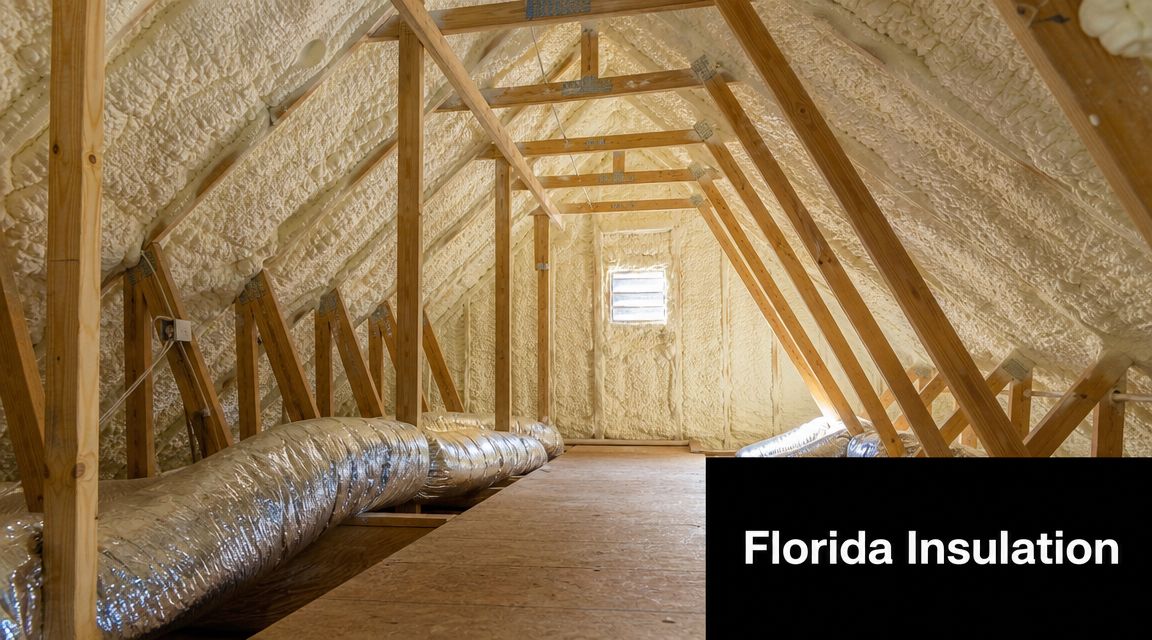
One of the most common uses is along the underside of the roof deck to bring the attic closer to the home's conditioned space. That can help when ductwork and air handlers sit in the attic, which is common across Palm Beach County. Instead of letting that equipment bake in a vented attic, the insulation follows the roofline.
This can work well, but only if the roof assembly is dry, the substrate is suitable, and the building has a sound humidity-control plan. Open-cell's permeability can allow assemblies to dry, which can be helpful after minor moisture events. It does not mean the foam blocks moisture.
This is one of the clearest wins for open-cell foam. Shared bedroom walls, home offices, media rooms, and walls between living space and a garage often benefit from the foam's softer, sound-dampening character. You're not asking it to serve as a moisture barrier there. You're using it for air sealing and acoustical comfort.
That's a better fit than forcing it into a wet location where the material is being asked to do something it wasn't designed to do.
Open-cell can also make sense in certain wall and ceiling cavities where framing is irregular and full cavity fill matters. South Florida homes often have awkward transitions, soffits, dropped ceilings, and retrofits that don't leave ideal access. The expansion assists in such cases.
In many homes, the value of open-cell foam isn't just the insulation layer. It's the way it seals the hard-to-reach gaps around that layer.
This is the part too many generic articles gloss over. Vapor permeability can help assemblies dry, but it also means open-cell foam is not a moisture barrier and is generally a poor choice for flood-prone, below-grade, or repeatedly damp locations, as noted by Barrier South's breakdown of open-cell and closed-cell spray foam. That concern is especially relevant in South Florida, where humidity and storm risk make moisture durability more important than headline R-value.
If a crawl space, wall base, or utility area has a realistic chance of taking on water, open-cell is asking for trouble. If a roof has a history of leaks, that issue should be solved before anyone sprays foam under it. Foam isn't a repair for a water entry problem.
A short video can help show how these assemblies are approached in the field:
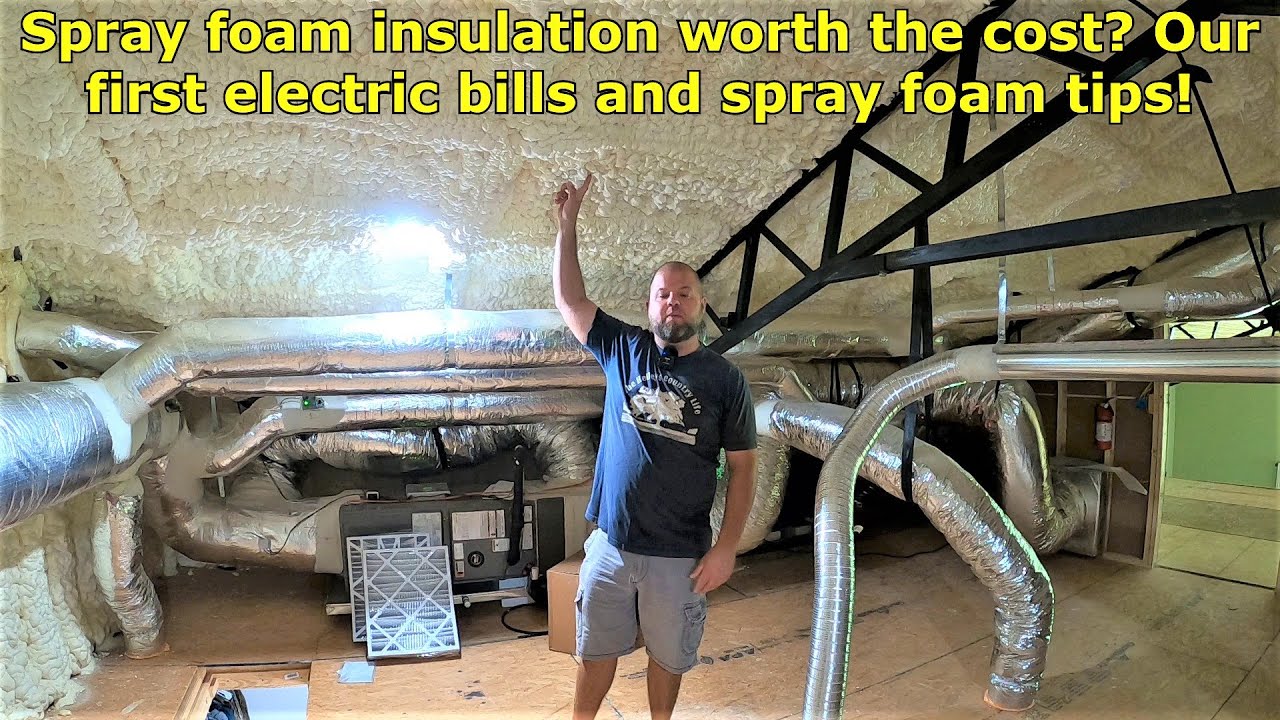
A South Florida attic in August can punish a sloppy foam job fast. If the crew sprays over damp surfaces, misses depth in the roofline, or leaves voids around framing, the house may still feel muggy even after the insulation bill is paid.
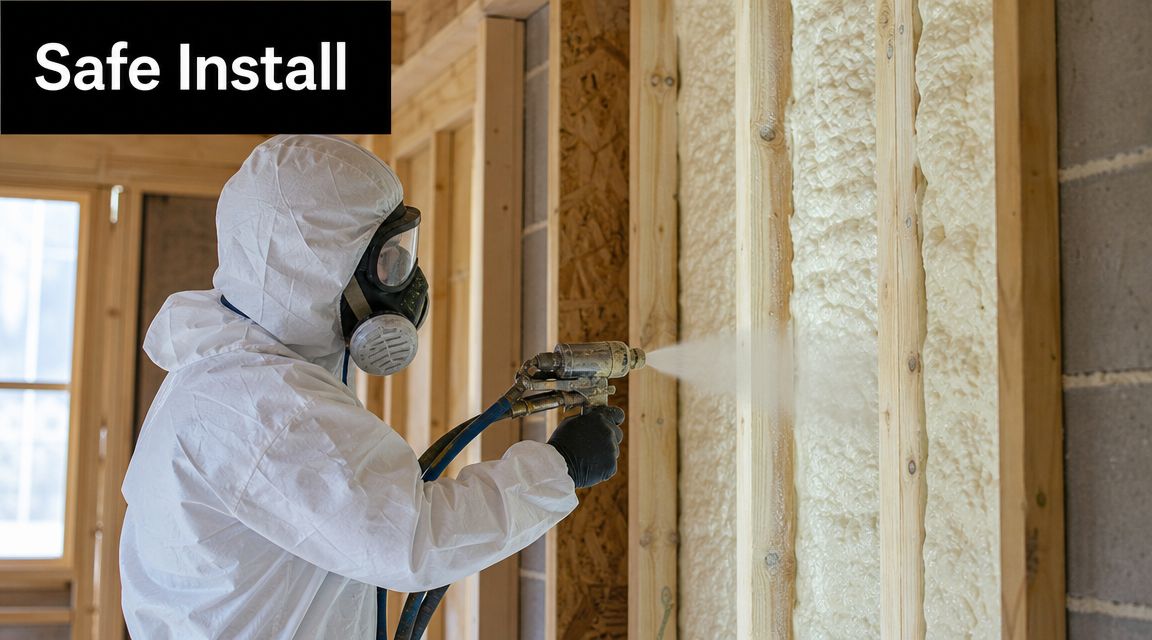
Open-cell spray foam is a professional installation material. The chemical ratio has to be right, the substrate has to be dry enough, and the installer has to read the attic conditions instead of spraying by habit. In Palm Beach County, that matters because the primary problem is rarely insulation alone. It is moisture load, long cooling seasons, and attics that stay hot and damp for much of the year.
A good crew starts by checking whether the assembly is a fit for open-cell in the first place. If there is active roof leakage, staining from past moisture, or a space that regularly sees damp conditions, those issues need to be addressed before foam enters the conversation.
Then the site gets prepared. Windows, equipment, finished surfaces, and any components that should not be foamed are protected. Recessed fixtures, wiring runs, and service access points get reviewed so the foam does not create problems for the next trade.
Ventilation and containment come next. During spraying, the work area has to be controlled so fumes and overspray stay where they belong.
Application depth is where many estimates look similar on paper but perform very differently in the field. Open-cell spray foam qualifies as an air barrier at 3.75 inches or greater, according to Gaco's open-cell foam product data sheet. In practical terms, a thin or uneven pass can leave the house with the price of foam and the performance of a patch job.
After spraying, the foam gets trimmed where needed and inspected for voids, pull-away, and missed pockets. In roofline work, those weak spots matter. Humid outside air moves through the smallest openings, much like water finding a crack in tile grout.
Installers wear full protective gear for a reason. Occupants and pets should be out of the work area during application and curing, and homeowners should review the practical side of spray foam insulation off-gassing and re-occupancy timing before the job is scheduled.
Closed-cell foam reaches air-barrier performance at a thinner depth, and Gaco also lists it as an air-and-vapor barrier at 1.5 inches or greater. That does not make closed-cell the automatic winner. It does show why product choice and thickness need to match the assembly, especially in a humid climate where drying potential and vapor movement matter.
The material cannot cover for poor temperature control, bad surface prep, or weak spraying technique.
Price changes from one project to the next because labor conditions change. Square footage matters, but access, target depth, masking time, trimming, and correction work often matter just as much.
A clean, open attic with simple framing is usually faster and more predictable to spray. A tight roof deck with ducts, low clearance, electrical obstructions, and moisture-related prep work takes more time and more care. In South Florida, that prep can be the difference between foam that performs and foam that traps a problem in place.
For homeowners comparing bids, the better questions are practical ones:
A contractor such as Airtight Spray Foam Insulation can install open-cell or closed-cell systems in attics, walls, garages, and similar assemblies, but the recommendation matters more than the product label. In Palm Beach County, the right call depends on how that part of the house handles humidity, drying, and the chance of future water intrusion.
A Palm Beach County attic can feel fine on a dry morning and turn into a humidity problem after one afternoon storm, one small roof leak, or one AC issue. That is why the right foam choice here starts with moisture behavior, not a product label.
Open cell expanding foam makes sense in the parts of a South Florida home that stay dry, need strong air sealing, and benefit from sound control. It fits many interior walls and plenty of attic assemblies. The assembly still has to be able to handle inward vapor drive, seasonal humidity, and the possibility that water shows up where it was not supposed to.
Open-cell is usually a good fit when these conditions are true:
A different material deserves a closer look in spaces that are flood-prone, below grade, regularly damp, or exposed to a real chance of bulk water. In this climate, durability usually comes down to one question. If this area gets wet, how easy will it be to detect, dry, and repair?
That question matters more than many homeowners expect.
Open-cell foam does a very good job of filling odd cavities and cutting air movement when it is installed correctly. In South Florida, that can help with uneven room temperatures and humidity drifting in from vented, leaky, or poorly separated spaces. But open-cell is not the safe default for every assembly. Its lower density and vapor openness can be an advantage or a liability depending on where it is used.
If you are deciding between open-cell and closed-cell, start with the building, not the brochure. Ask where the assembly can dry, what happens if rainwater or humid air gets in, and whether the priority is quieter rooms, lower air leakage, or added resistance to moisture. Once those answers are clear, the foam choice usually gets clearer too.
Airtight Spray Foam Insulation can evaluate an attic, wall, garage, or commercial area and recommend open-cell or closed-cell based on how that part of the property handles humidity, drying, and future water exposure. A useful quote should explain the assembly, the target thickness, and why that material fits the job. Price alone does not answer the hard part.