If you're reading this because your house was just sprayed, or because you're trying to decide whether spray foam is worth the risk, your concern is reasonable. “Off gassing” sounds ominous. Homeowners usually hear the term right after someone tells them to leave the house, keep pets out, and wait before turning life back to normal.
That doesn't mean spray foam insulation is a bad product in itself. It means it's a chemically reactive product that has to be installed correctly, cured correctly, and ventilated correctly. When that happens, it can perform extremely well. In fact, when it's properly installed and fully cured, spray foam insulation can reduce energy loss by up to 50% in some homes, according to the U.S. Department of Energy data summarized by Berkeley Analytical. When the chemistry or application temperature is wrong, the EPA has determined the foam may fail to cure properly and continue off gassing hazardous fumes.
In South Florida, this topic deserves even more attention. Heat, humidity, tight attics, and low natural air exchange can turn a routine install into a more sensitive indoor air quality job if the crew isn't disciplined. Good results come from process, not luck.
The easiest way to understand spray foam insulation off gassing is to think about baking. You start with ingredients that aren't stable on their own. Once they combine, heat and chemistry change them into something new. During that change, you smell it. Spray foam works in a similar way, except instead of cake batter turning solid in an oven, liquid components react on the jobsite and expand into insulation.
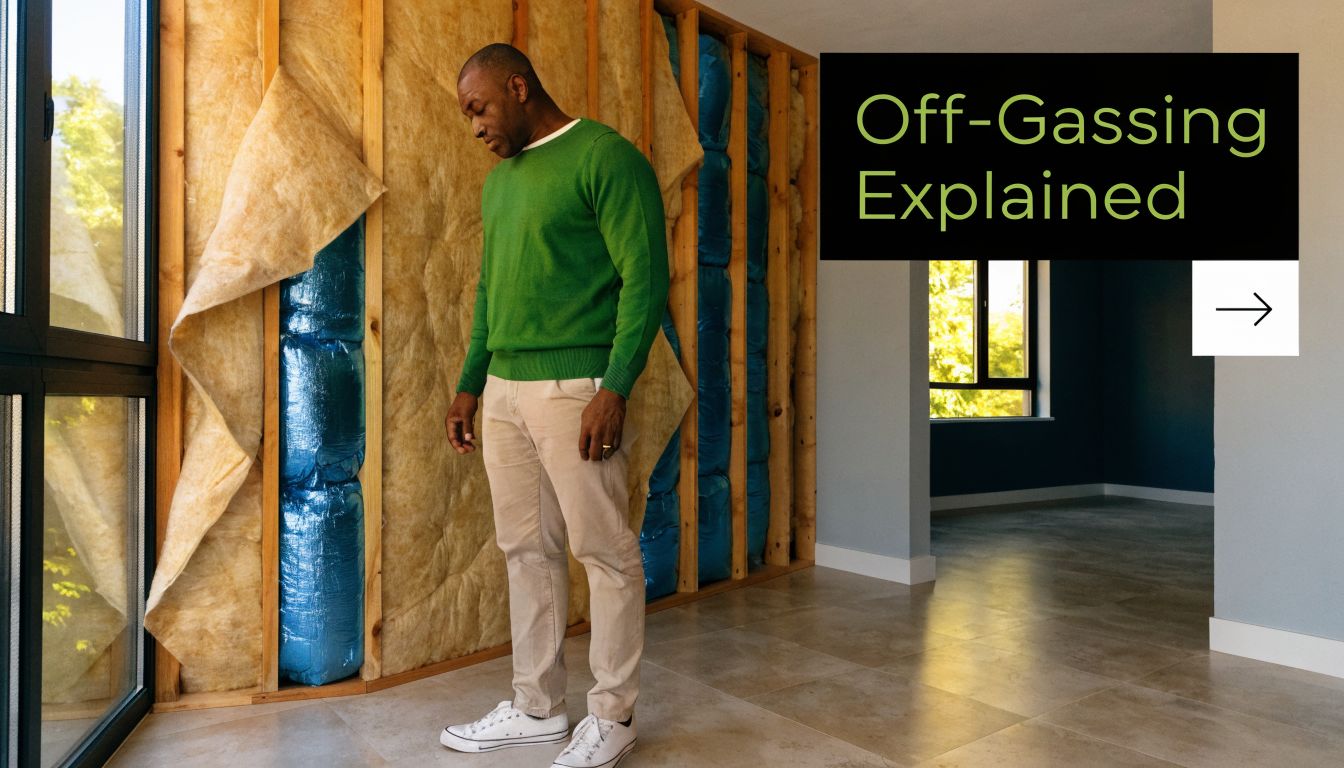
During curing, the foam can release volatile organic compounds, commonly called VOCs. VOCs are chemicals that become vapors at room temperature. Spray foam isn't the only material that does this. Fresh paint, adhesives, flooring, cabinets, and new furniture can all release VOCs during and after installation.
That's why the right question isn't, “Does spray foam off gas?” It does. The better question is, “Is the off gassing being managed properly?”
A professional installation treats off gassing as a predictable part of the curing cycle. That means controlling temperature, moisture, mixing, ventilation, occupancy, and product selection. It also means not pretending every house is the same.
Practical rule: Off gassing is a process to manage, not a detail to ignore.
A sharp chemical odor right after installation doesn't automatically mean something went wrong. Fresh foam often has a noticeable smell during cure. The concern starts when odors linger, the installation was rushed, the house wasn't ventilated well, or occupants were allowed back too soon.
Three facts matter most:
Homeowners don't need a chemistry degree to handle this well. They need a contractor who respects the chemistry and a clear re-entry plan before the first hose comes off the truck.
Not all spray foam behaves the same. Homeowners often compare open-cell and closed-cell by R-value, rigidity, or moisture behavior. For off gassing, the more important difference is how each foam is formulated and how it cures.
Open-cell foam is typically water-blown. Closed-cell foam is denser and uses different blowing agents. That difference affects how quickly emissions peak and how long they can linger.
Open-cell foam usually reaches its peak off gassing faster. Closed-cell foam often has a longer emissions tail, especially in spaces that are hot, enclosed, or poorly ventilated. According to this overview of spray foam off gassing duration, open-cell SPF generally stabilizes within 24-48 hours, while closed-cell SPF may require 48-72 hours of forced ventilation before a room is safe for re-entry.
That doesn't make one “safe” and the other “unsafe.” It means the job plan should match the foam type.
| Characteristic | Open-Cell Foam | Closed-Cell Foam |
|---|---|---|
| Off-gassing profile | Usually peaks and settles faster | Often has a longer tail |
| Typical re-entry expectation | Often shorter | Often longer |
| Blowing approach | Typically water-based | Different blowing agents, denser structure |
| Texture after cure | Softer, more flexible | Harder, more rigid |
| Best fit | Interior assemblies where permeability can help | Areas needing rigidity, higher R-value, or moisture resistance |
For a broader material comparison, this guide on closed-cell vs open-cell spray foam is a useful companion when you're weighing performance against indoor air concerns.
What works is matching the foam to the assembly, then adjusting the vacancy and ventilation plan to that choice. What doesn't work is treating all foam products like they cure on the same schedule.
A few practical examples:
Closed-cell can be the right product. It just can't be treated like a casual install.
If a contractor answers your off gassing questions with “it's all the same,” that's a warning sign.
Most homeowner fear around spray foam centers on one thing. “Can this make my family sick?” The honest answer is that improperly handled spray foam can create real exposure concerns, especially during installation and curing. The answer is not to panic. It's to separate normal curing from preventable mistakes.
The biggest issues tend to come from uncured or poorly cured foam, rushed re-occupancy, or weak ventilation. Spray foam can improve airtightness, but that benefit has a trade-off. As noted in the EPA material archived here on potential chemical exposures from spray polyurethane foam, tighter buildings can concentrate residual VOCs if ventilation isn't planned, and higher temperatures typical in Florida attics can temporarily increase emission rates even after the initial curing period.
That's why a foam job isn't just an insulation job. It's also an indoor air quality job.
Common complaints after a bad installation are usually respiratory irritation, eye irritation, headaches, strong lingering odor, and a feeling that the air in the house just isn't right. Those complaints deserve attention, especially if they persist.
Many homes in this region have hot attics, ductwork in unconditioned spaces, and humidity that doesn't give installers much room for error. If the installer tightens the building envelope but doesn't plan for air exchange, occupants may notice more than odor. They may notice stale air, trapped pollutants, or moisture-related discomfort.
If you're already trying to sort out whether symptoms are related to insulation, moisture, or hidden biological growth, this Salus Natural Medicine mold toxicity guide can help you distinguish between common mold-related concerns and broader indoor environmental symptoms. It's not a substitute for diagnosis, but it's a useful reference when the house has multiple air quality issues at once.
Low-emission products can help, but they don't eliminate the need for process control. Homeowners comparing materials should review low-VOC spray foam insulation options with the same scrutiny they'd apply to any other building product. Ask what “low VOC” means for that specific product, what the re-entry guidance is, and how the installer documents ventilation and cure time.
A South Florida spray foam job can go sideways before the first pass of foam hits the roof deck. The house is hot, the attic is hotter, and humidity leaves very little margin for sloppy prep. Homeowners do not need to know the chemistry in detail, but they do need to confirm that the installer has a clear plan for heat, moisture, ventilation, and occupancy.
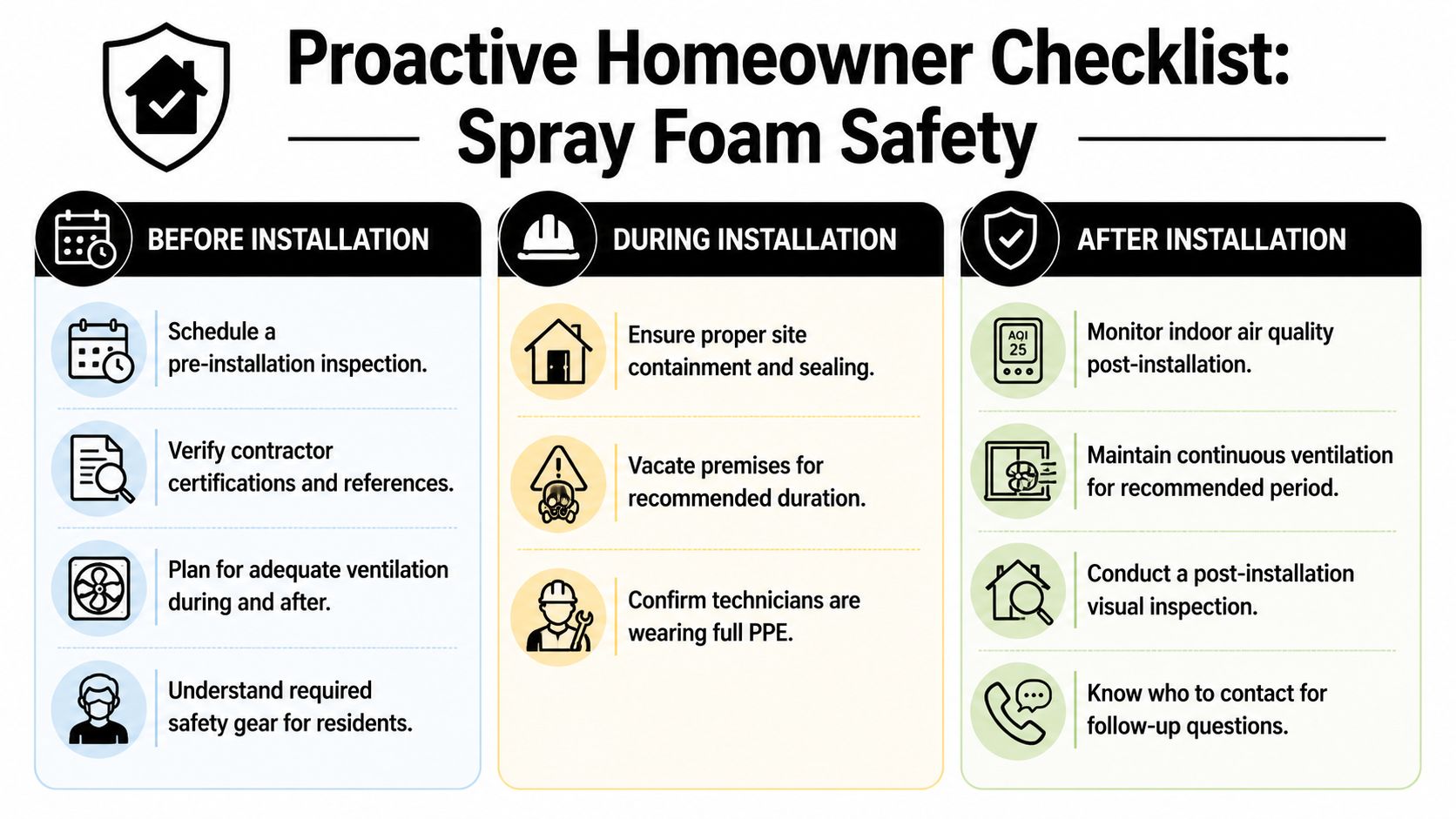
Price matters. Process matters more.
If you want a broader view of odor, ventilation, and other household contaminants, this guide to understanding indoor air quality issues is a useful reference before installation day.
Occupants should be out of the work area completely. That includes pets, children, and anyone with asthma, chemical sensitivity, or existing respiratory issues.
Watch the setup, not the spray itself.
One direct rule applies here. If the jobsite feels improvised, it probably is.
Foam can look finished before the house is ready for normal occupancy. Respect the re-entry guidance the installer gave you, and get clarification in writing if conditions changed during the job.
Then inspect what was done.
The homeowners who handle this best are usually the ones who slow the job down just enough to get clear answers before work starts. That is not being difficult. That is how you protect the house.
Generic spray foam advice often falls short in South Florida because the environment is different. Attics get hotter. Humidity stays high. Roof decks, garages, metal buildings, and service spaces can trap heat for long periods. Those conditions change how a job should be approached.
Spray foam chemistry depends on conditions. In this region, excess moisture in the air or on the substrate can interfere with curing. Heat can also push emissions harder, especially in roof and attic assemblies that stay hot well beyond normal daylight hours.
Open-cell and closed-cell each bring trade-offs in humid climates. Open-cell is often favored where vapor permeability helps avoid trapping moisture. Closed-cell brings higher rigidity and can be a strong choice in the right assembly, but it can also create more concern about lingering odor and trapped conditions if the roof system, ventilation strategy, and substrate prep aren't handled carefully.
A local contractor shouldn't just arrive and spray by habit. The crew should adjust to the building and the weather.
That means paying attention to:
In South Florida, I'd be especially cautious with any installer who gives the same recommendation for a coastal attic, a warehouse, and a block home garage. Those spaces hold heat and moisture differently, and the foam strategy should reflect that.
South Florida doesn't forgive sloppy spray foam work. Heat and humidity expose every shortcut.
A homeowner in Jupiter or West Palm Beach doesn't need more fear. They need region-specific judgment. That's the difference between a job that cures cleanly and one that becomes an indoor air quality problem.
A South Florida homeowner usually calls me after hearing the same promise from two or three bidders. “It's safe, we spray all the time, and the smell will be gone fast.” In this climate, that answer is not good enough. Heat, humidity, and hot attics put more pressure on the installation, so the crew you hire matters as much as the foam itself.

A qualified installer should sound methodical. They should ask about your roof type, whether the attic is vented or sealed, how the house is occupied, and how they plan to control fresh air during curing. If they skip those questions and jump straight to price, they are treating your home like a generic spray job.
Ask these directly, then listen for specific answers.
Good answers include details. The contractor should name the product, explain where it is being sprayed, describe how they check substrate and ambient conditions, and give a clear occupancy window instead of telling you to “see how it smells.”
South Florida adds another layer. An installer should be ready to explain how they handle a superheated attic in August, a coastal home with high outdoor moisture, or a block house that stays damp after rain. Crews who use the same script in Miami, Jupiter, and Fort Myers usually miss the details that affect cure quality.
You want to hear process, not sales talk. A solid contractor explains the prep, the spray sequence, the ventilation setup, the cleanup, and the follow-up if odor lingers longer than expected. They should also be honest about uncertainty. No experienced installer should promise zero odor or immediate re-occupancy on every job.
Federal guidance has long taken a cautious position on spray polyurethane foam exposure during application and curing. The practical takeaway for homeowners is simple. Hire the contractor who respects that caution and plans around it.
I trust the installer who says, “If conditions are wrong, we stop,” more than the one who says, “We spray every day, don't worry.” In South Florida, that discipline protects your indoor air, your schedule, and your budget. A bad foam job is expensive to remove, and the cheapest bid gets expensive fast when the house still smells weeks later.
Usually, a normal curing odor fades after the foam has fully cured and the area has been ventilated properly. If a strong chemical smell hangs on much longer than the installer prepared you for, don't assume it's harmless. Ask for a follow-up inspection.
Paint is not a fix for uncured or improperly installed foam. It may cover the appearance, but it doesn't correct bad chemistry, trapped odor, or a curing problem underneath. If the foam is defective, the solution is diagnosis first, not cosmetic cover-up.
No. Low-VOC products can improve the emission profile, but “low” doesn't mean “none.” They still need proper installation, cure time, and ventilation. Homeowners should treat them as a lower-emission option, not a free pass.
Trust that instinct. Ask the contractor back. If the answers are vague or dismissive, get an independent evaluation from a qualified indoor air quality or building professional. A good contractor won't be offended by careful follow-up when your family's health is involved.
If you want spray foam done with a real safety process, not guesswork, Airtight Spray Foam Insulation serves homeowners and builders across South Florida with experienced installation, clear re-entry guidance, and product recommendations appropriate for local heat and humidity. If you're weighing open-cell vs closed-cell, dealing with odor concerns, or planning a new project, reach out for a quote and get straight answers before the job starts.