If you've opened your attic in July in Jupiter, Palm Beach Gardens, or Wellington, you know the feeling. The air hits your face like a dryer vent, the ductwork feels baked, and the ceiling below that attic has to fight heat all afternoon. That’s usually when roof radiant barriers come up. They sound simple, and in the right situation, they can help.
But South Florida is where simple roofing answers get people in trouble.
A roof radiant barrier can reflect a lot of heat before it reaches the attic floor. It can also be installed in a way that does almost nothing. Worse, in a hot, humid climate, the wrong assembly can trap moisture where you don’t want it, right against roof sheathing. That’s the part many homeowners never hear until stains, mold odor, or wood decay show up later.
A roof radiant barrier is a reflective material, usually aluminum-faced, installed so it faces an air space under the roof. Its job is to bounce radiant heat away instead of letting that heat radiate down into the attic.
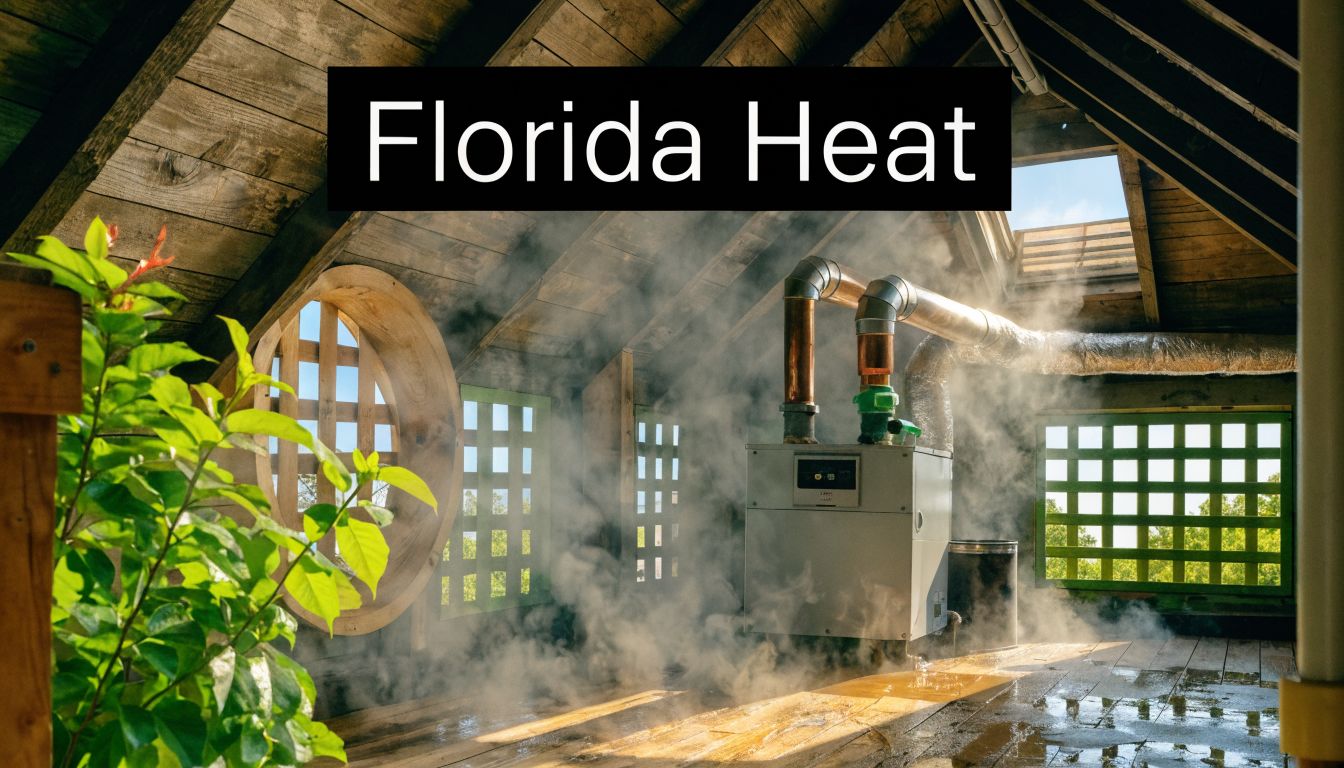
In Florida, that matters because attics take a beating. The roof gets hammered by sun for hours, then that heat radiates downward toward insulation, ducts, and ceiling drywall. A radiant barrier tries to interrupt that one part of the heat path.
Homeowners usually start asking about roof radiant barriers after noticing one of these:
Contractors also see them during new construction because radiant barrier roof sheathing is easy to spec. On paper, it looks like an obvious upgrade.
In South Florida, the question isn’t just “Will it reflect heat?” It’s “What happens to heat, air, and moisture after you install it?”
That’s where local climate changes the conversation. Florida homes don’t just deal with solar load. They deal with wind-driven rain, high outdoor humidity, and attic assemblies that need to dry properly. Even products marketed for roof protection, coatings, or thick paint for sealing roofs have to be judged by how they interact with the whole roof system, not just by one promised benefit.
Ventilation also shapes how well any attic strategy works. If you’re comparing options, it helps to understand the different types of attic ventilation before deciding where a radiant barrier belongs and where it doesn’t.
Most attic confusion starts with one basic issue. People use the word “insulation” to mean every product that slows heat. Roof radiant barriers don’t work like fiberglass, cellulose, or foam. They work by reflection.
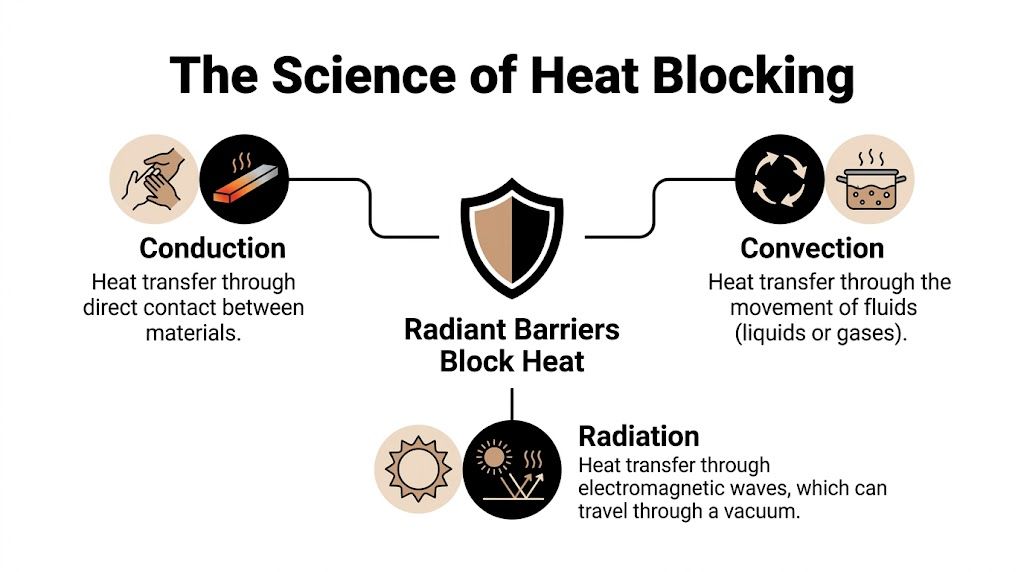
Heat gets into your house in three different ways:
Conduction
This is heat moving through solid material. Touch a hot metal pan handle and you feel conduction immediately.
Convection
This is heat carried by moving air. A hair dryer blowing hot air at your hand is a good example.
Radiation
This is heat moving in waves. The sun warming your skin is radiation. You don’t have to touch anything for it to happen.
A radiant barrier only targets the third one.
That distinction matters. If your attic has duct leakage, air bypasses, recessed light penetrations, or thin insulation, a reflective foil won’t solve those problems because those problems involve air movement and conductive heat flow. A roof radiant barrier can reduce one kind of heat transfer very well, but it is not a full thermal system by itself.
Two material properties matter here.
According to the buyer’s guide from RadiantGUARD, products classified as radiant barriers must reflect 90% or more of radiant heat and have an emissivity of 10% or less, and their performance depends entirely on maintaining at least a 1.5-inch air gap between the barrier and the roof decking. Without that gap, the barrier provides zero thermal benefit because heat moves through direct contact instead of radiation (radiant barrier air gap requirement).
This is the installation mistake that ruins many jobs.
Think of a space blanket. It only works when it faces air. If you glue it tight to another material, you lose the reflective effect and heat moves through the layers by contact. A roof radiant barrier works the same way.
Practical rule: If the foil is pressed directly against roof decking with no air space, it’s not functioning as a radiant barrier.
That’s why installers typically staple foil to the underside of rafters, not tight against the deck. The shiny face needs to look into an air space. If it doesn’t, you paid for reflective material and got conductive transfer instead.
It’s not a magic R-value blanket. It’s not an air seal. It’s not a moisture management plan. And it’s not a substitute for fixing bad duct layout or missing insulation.
Use roof radiant barriers for what they are. They are a targeted tool for reducing radiant heat from a hot roof assembly into the attic. Used that way, they make sense. Used as a cure-all, they disappoint.
A South Florida attic in August can feel like a parked car with the windows up. In that setting, a radiant barrier can help. It can also create problems if the assembly is wrong.
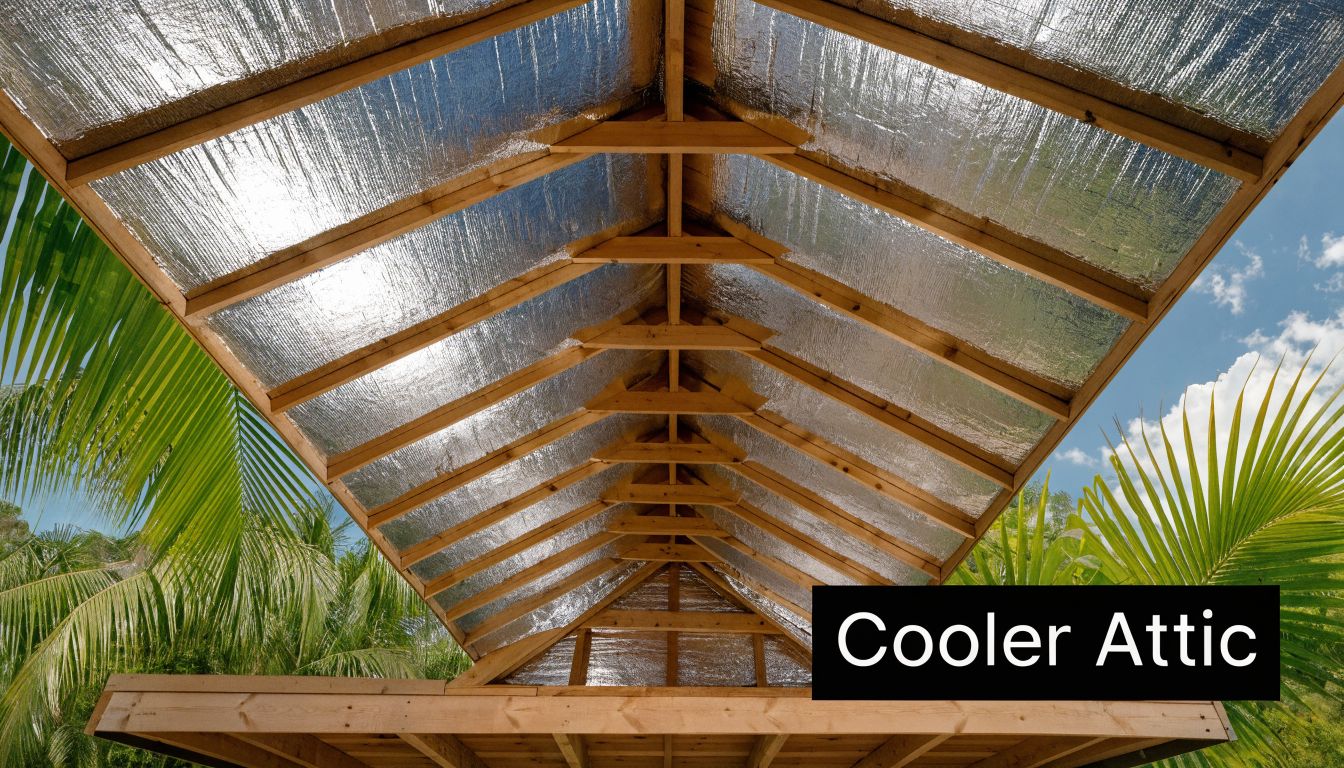
Radiant barriers do their best work in vented attics with strong sun exposure, a clear air space, and attic ductwork that is baking all day. In those homes, reducing the roof-to-attic radiant load can lower attic temperatures and take some strain off ducts, air handlers, and ceiling insulation. I see the biggest payoff in older homes with marginal attic insulation, homes with mechanical equipment in the attic, and detached garages or metal buildings that get hammered by solar gain.
That benefit is real, but it is narrow. A radiant barrier helps with one part of the heat problem. It does not stop air leakage, and it does not add the kind of full thermal control you get from insulation that is installed and detailed well. Homeowners comparing options should also review this guide to the best attic insulation for hot climates before assuming reflective foil is the best fit.
Florida changes the conversation because heat is only half the job. Moisture control matters just as much.
A foil layer under the roof deck can slow drying toward the attic. If humid outdoor air, interior air leakage, or a small roof leak adds moisture to the assembly, that drying limitation can become a durability issue. Wood roof sheathing does not care that the attic is a little cooler if it stays damp long enough to support mold, staining, or decay.
This is the part many sales pitches skip. In South Florida, a radiant barrier can improve heat performance and still be the wrong choice for the roof assembly.
Performance is not uniform from house to house. A well-insulated attic often sees less noticeable benefit because the ceiling assembly is already doing more of the work. Complex rooflines can also reduce the neat, predictable performance shown in simplified diagrams.
A few other drawbacks show up on real jobs:
Cost is another trade-off. Radiant barriers usually have a lower entry cost than foam, which is why they get attention, but lower first cost is not the same as better value. If the house also needs air sealing, better insulation, or moisture control work, the cheaper option can turn into the incomplete option. Anyone weighing upgrades against spray foam insulation cost should compare total scope, not just the line item for foil.
Radiant barriers make sense in the right attic. They are most useful as a targeted heat-control layer in a vented assembly that can still dry safely.
They make less sense when they are sold as a cure for every attic problem. In South Florida, that is where projects go sideways. If a product reflects heat but leaves the house with the same air leakage, the same humidity issues, and a weaker drying path at the roof deck, the homeowner did not get a complete solution.
This isn’t really a fight between two products. It’s a question of what problem you’re trying to solve.
A roof radiant barrier addresses radiant heat. Spray foam addresses conductive heat flow, air leakage, and part of the moisture profile, depending on the foam type and assembly. In Florida, that difference is huge.
A radiant barrier is a reflective surface. Closed-cell spray foam is insulation plus air sealing, and it also resists vapor movement as part of the assembly. Those are different jobs.
The construction research in the provided material notes that perforated radiant barriers have a vapor permeability of 6.3 perms and are designed to reduce condensation risk, while closed-cell spray foam acts as its own vapor barrier and adds high R-value and air sealing, creating a more complete thermal and moisture envelope solution (radiant barrier and spray foam moisture comparison).
| Feature | Radiant Barrier | Spray Foam Insulation |
|---|---|---|
| Primary job | Reflects radiant heat | Insulates and seals air leaks |
| Best location | Facing an attic air space under the roof | Applied to roof deck, walls, or other building assemblies |
| Air sealing | No | Yes |
| R-value function | Not the reason it works | Core part of how it works |
| Moisture role | Depends heavily on product type and assembly drying potential | Closed-cell foam adds vapor resistance and air control |
| Performance risk | Loses function without air gap | Requires correct thickness and proper installation |
| Best fit | Hot attics where radiant load is the main target | Homes and buildings needing a full thermal envelope upgrade |
| Common mistake | Installing it tight to the deck or in a poor drying assembly | Treating it as a DIY product or applying it without assembly planning |
If your attic problem is mostly roof radiation in a vented assembly, a roof radiant barrier can help. If your problem includes humid attic air, duct losses, comfort imbalance, and moisture sensitivity, spray foam is usually the more complete answer.
That’s why homeowners often start by asking what spray foam insulation cost looks like compared with foil products. The better comparison is value, not sticker price. One product reflects heat. The other can change how the whole attic boundary performs.
A radiant barrier can improve an attic. A well-designed foam system can redefine it.
For hot-climate homes, especially when comfort issues keep returning, it helps to review what performs best in our region’s attic assemblies, including options for the best attic insulation for hot climates.
A radiant barrier earns its keep at installation, or it does very little.

In South Florida, I see the same mistake over and over. The foil gets sold as a heat fix, then installed with too little attention to airflow, roof drying, or attic use. The result is a shiny product that looks technical and delivers much less than the owner expected.
Retrofits usually involve stapling foil sheets to the underside of rafters or trusses, with the reflective face aimed at an open air space. New construction and reroof projects often use radiant barrier roof sheathing, where the reflective surface is factory-applied to the roof deck panel.
Either method can perform well in the right assembly. Either one can also disappoint if the details are sloppy.
The field rules are straightforward:
Radiant barriers can reduce attic heat gain and help lower cooling demand, especially in homes with ductwork running through a hot vented attic. The improvement is usually more noticeable in houses with strong sun exposure, modest attic insulation, and mechanical systems that are already fighting high attic temperatures.
The range is wide. A well-installed barrier in the right attic can help. A poorly installed one, or one added to an attic with bigger problems like duct leakage or air leakage into the house, often produces a weaker return than the sales pitch suggests.
That is why ROI claims need context. Lower attic temperature does not automatically translate into major whole-house savings, and it does not solve humidity control.
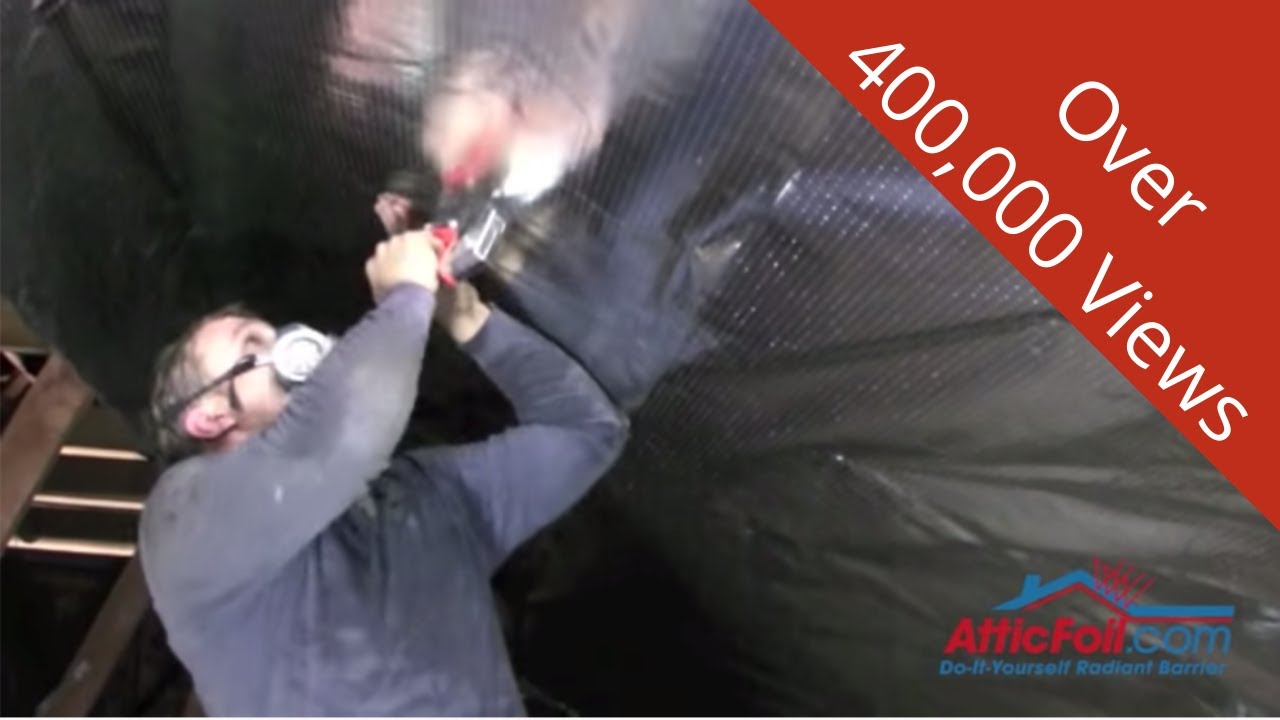
This short video shows the kind of installation conditions that affect outcome in the field.
Start with the house, not the foil.
A radiant barrier usually has the best payback when the attic is vented, the HVAC ducts are in that attic, and the main problem is radiant heat coming off a hot roof deck. It tends to be less impressive when the attic already has good insulation levels, tight ducts, and decent overall air control.
A few questions sort this out quickly:
That last question matters. Radiant barriers address radiant heat. Spray foam changes air movement and insulation performance at the same time, which is why the upfront price is higher and the assembly consequences are bigger, both good and bad. In South Florida, that trade-off needs to be evaluated carefully, especially where the roof deck needs to retain safe drying ability.
If you are reviewing options during a reroof, it helps to compare foil products with other roof-layer strategies, including assemblies that use rigid insulation above the roof deck as part of a broader thermal plan.
The right answer depends on who owns the risk after installation. That’s why the same roof radiant barrier can look sensible on one project and questionable on the next.
If you own a house in Jupiter, Wellington, or Palm Beach Gardens, don’t start by buying foil. Start by identifying the actual problem.
If the attic is roasting but the house is also humid, unevenly cooled, or dusty, there may be more than radiant heat going on. Air leakage, duct leakage, and moisture movement often matter just as much. A contractor should look at the whole attic assembly, not just the roof surface.
A few homeowner rules help:
In new construction, radiant barrier roof sheathing can be a reasonable baseline upgrade in the right vented attic design. It’s easy to specify and familiar to trades. But it shouldn’t be treated as a substitute for proper insulation, duct planning, and moisture control.
On higher-performance builds, many contractors get better long-term control from assemblies that address more than radiation alone. If the project goal is comfort, humidity control, and a tighter building envelope, evaluate the full attic system instead of adding components one by one.
Builders get in trouble when they optimize one heat-transfer mechanism and ignore drying, leakage, and serviceability.
This group often sees the clearest benefit from reflective systems because metal roofs and large roof spans can drive brutal solar gain. At the same time, these buildings are also notorious for condensation headaches.
The ORNL paper in the source material reports annual savings of $50 to $150 per household in hot climates and notes that benefits are highly sensitive to duct leakage and existing insulation. It also states that benefits are most pronounced in homes with leaky ducts in the attic or in structures like metal buildings, and that gains diminish as insulation levels rise (ORNL savings and application context).
That’s a useful benchmark, but managers should read the fine print in practical terms. If the building also struggles with condensation, occupant comfort, or uncontrolled air movement, reflective foil alone may leave major issues untouched.
Use roof radiant barriers when the project has a clear radiant-heat problem and the assembly can still manage moisture safely. Be cautious when humidity, roof drying, and air leakage are already weak points.
In South Florida, the best decision usually comes from looking at the roof as a system, not a product.
Yes, they can. Florida’s strong sun and hot attics create the kind of radiant load these products are designed to address. The key is proper installation and realistic expectations.
No. A radiant barrier is not a replacement for conventional insulation. It reflects radiant heat, but it doesn’t take over the full job of resisting conductive heat flow through the building assembly.
They can if they’re installed in a way that interferes with drying in a humid roof assembly. That risk deserves real analysis in South Florida, especially under roof decks with limited drying paths.
The available material indicates roof temperatures can rise somewhat, but the larger concern in our climate is usually moisture management inside the assembly, not immediate shingle damage. Roof design and manufacturer requirements should still be checked before installation.
Sometimes. They tend to make more sense when the attic is very hot, ducts are in the attic, and the insulation level isn’t already high. In older homes, though, air leakage and duct issues are often just as important.
Losing the required air gap. If the reflective material is installed without the needed air space, it won’t function as intended as a radiant barrier.
If you're weighing roof radiant barriers against a more complete attic upgrade, Airtight Spray Foam Insulation can help you evaluate the assembly the right way. Their team works across South Florida and focuses on solutions that address heat, air leakage, and humidity together, so you can choose an attic strategy that performs safely in our climate.