You open a wall in South Florida and find damp insulation, dark staining on the framing, and that stale smell the AC never seems to clear out. In a lot of homes, the problem started with a choice that looked minor at install time. Faced batt or unfaced batt.
Across Jupiter, West Palm Beach, Wellington, Stuart, and nearby coastal areas, that choice affects more than indoor temperature. It affects how an assembly handles humidity, whether it can dry in the right direction, and how hard the cooling system has to work through a long wet season. In this climate, insulation has to do more than slow heat flow. It has to fit a moisture strategy that works in real conditions.
Generic insulation advice often misses that point. South Florida walls and roof assemblies deal with high outdoor humidity, frequent rain, intense sun, and periods of reverse vapor drive that can push moisture inward after the exterior gets wet and heats up. A batt with facing can help in one assembly and create a drying problem in another. An unfaced batt can be the safer call in one location and leave a gap in moisture control somewhere else.
That is why faced versus unfaced is not a box-store question here. It is an assembly question.
| Insulation type | Main feature | Best fit | Main risk | Cost range |
|---|---|---|---|---|
| Faced insulation | Built-in vapor retarder, usually kraft paper or foil | Assemblies that need limited vapor control and are designed to dry the right way | Moisture can get trapped if the wall or ceiling already has another low-perm layer | Varies by product, thickness, and installer |
| Unfaced insulation | No facing, no built-in vapor retarder | Interior partitions, sound control, attic top-offs, and assemblies that already have a separate vapor-control plan | Can leave the assembly exposed if moisture control depends on more than insulation alone | Varies by product, thickness, and installer |
| Spray foam systems | Insulation plus air sealing, with closed-cell also providing vapor control in many assemblies | High-humidity walls, rooflines, garages, metal buildings, and areas where air leakage drives condensation risk | The wrong foam type or thickness can limit drying and create its own moisture issues | Varies by project and assembly |
In practical terms, batt insulation still has a place. It is affordable, familiar, and works fine in the right assembly. But in many South Florida applications, the bigger problem is uncontrolled air movement carrying moisture into walls, roof decks, and mechanical spaces. That is where spray foam often outperforms batts because it handles insulation and air sealing together, which is often the difference between a dry assembly and a recurring callback.
A homeowner in South Florida often starts with a normal question. Should I use faced batts or unfaced batts in my walls or attic?
That sounds simple until the weather gets involved. The coast gives you year-round humidity, hard sun, warm rain, and salt air. Those conditions change how walls and roofs handle vapor.

A lot of insulation articles are written for temperate or cold climates. That is exactly the gap noted by Rmax in its discussion of faced vs. unfaced insulation in warm-humid climates, which points out that vapor drives can reverse seasonally and inward vapor loads rise quickly when sun heats wet cladding.
That matters in South Florida because the old “paper side toward the warm-in-winter side” rule does not answer every summer condition. When rain wets the outside of a wall and the sun bakes that wall, moisture can get pushed inward. If the assembly cannot dry, the insulation becomes part of the problem instead of the fix.
Many homeowners shop insulation by R-value first. R-value matters, but in this climate it is only part of the story.
What causes trouble on many Florida jobs is this combination:
In South Florida, insulation faced or unfaced is rarely just a material choice. It is an assembly choice.
If you are insulating a coastal home, a renovation, a garage conversion, a warehouse, or a metal building, the question is not only “Which batt should I buy?” The better question is “How will this wall or roof control vapor, stop air leakage, and still dry when it needs to?”
That is where faced and unfaced batts start to separate, and where spray foam often enters the conversation for good reason.
At the product level, faced and unfaced batt insulation are easy to tell apart.
Faced insulation is a batt with an attached vapor retarder, usually kraft paper and sometimes foil. Unfaced insulation is the same basic thermal batt without that added layer.
Faced insulation is like a raincoat over a sweater. The insulation slows heat flow. The facing helps control vapor movement.
Unfaced insulation is just the sweater. It still insulates, but it does not add vapor control.
That difference is the whole ballgame. The thermal material may be similar, but the wall assembly behaves differently depending on whether that facing is present.
Fiberglass batts became widely used in the 1950s, and faced versions with kraft paper were introduced in the 1960s. They became standard in many exterior wall applications, and that approach was codified in U.S. building codes in the 1990s to prevent up to 90% of vapor diffusion, as described in Nealon Insulation's history and application overview.
That history explains why so many contractors still reach for faced batts first. It was the default answer for a long time.
Here is the practical baseline:
If you are comparing batt products by thermal resistance, this breakdown of the R-value of fiberglass insulation batts helps explain why similar-looking batts can still behave very differently once moisture enters the assembly.
The paper facing is not decoration. It changes how the whole wall deals with vapor.
That is why “insulation faced or unfaced” should never be answered by shelf price alone.
The cleanest way to compare these products is by job function. Not marketing copy. Not label language. Actual field performance.

On paper, faced and unfaced batts can offer similar R-values per inch. In the field, that changes when moisture gets into the assembly.
Properly installed faced insulation can show 15-25% superior thermal performance compared to unfaced insulation in exterior walls because the integrated vapor retarder limits condensation-related efficiency loss, according to Solar Tech Online's review of thermal imaging studies.
That does not mean faced is automatically better everywhere. It means vapor control protects thermal performance when the assembly needs that vapor control.
This is the major difference.
Faced insulation includes a built-in vapor retarder. Unfaced insulation does not. In a wall that is vulnerable to condensation, that facing can help preserve the cavity and the insulation itself.
But there is a flip side. If you install faced batts in an assembly that already has another vapor-retarding layer, you can trap moisture between them. That is a common failure pattern.
Use one vapor-control strategy on purpose. Do not stack moisture-trapping layers by accident.
Neither batt solves air leakage well on its own.
Batts slow conductive heat transfer. They do not reliably stop moving air through gaps at top plates, bottom plates, wiring holes, plumbing penetrations, and rough openings. If outside air can move around the insulation, the assembly underperforms.
This is why many “the insulation is there, so why is the room still uncomfortable?” complaints lead back to air sealing, not just insulation thickness.
Unfaced batts often make more sense in interior partitions because there is no facing to get in the way, and they are useful where the goal is to soften room-to-room noise.
For bedrooms, offices, media walls, and multifamily partitions, unfaced batts are often the simpler and cleaner call.
A good installer cares about more than whether the batt fits between studs.
Watch for these field issues:
Faced insulation is less forgiving because orientation matters. Unfaced is easier to friction-fit, trim, and layer. That does not make it better. It makes it different.
South Florida changes the insulation conversation because drying potential matters almost as much as insulation value.
A wall in this region does not only deal with indoor moisture trying to move outward. It also deals with exterior moisture pushing inward during hot, wet weather. That is the piece many national guides miss.

When rain wets cladding and the sun heats that surface, vapor pressure can drive moisture toward the cooled interior. In an air-conditioned house, that inward drive can be strong enough to challenge simple “always use faced” advice.
If the wall has low-perm layers in the wrong places, moisture can get trapped. Wet insulation, wet drywall backing, and damp framing are the usual result.
That is why the question is not only whether a batt has facing. The key question is whether the full assembly can dry.
This shows up all the time in retrofits and mixed assemblies.
Examples include:
The problem is not the batt itself. The problem is the redundant vapor control.
A useful primer on this issue is this overview of vapour barrier and insulation, especially for understanding when a wall needs drying ability more than another vapor retarder.
In warm-humid assemblies, a wall that cannot dry is often a bigger risk than a wall with less vapor resistance.
In South Florida, batt insulation decisions should follow the assembly, not habit.
A few practical rules help:
This is also where spray foam starts to make more sense. When air leakage is a major part of the moisture problem, a batt-only system can leave too many pathways open. In this climate, solving vapor without solving air movement is often incomplete.
Hybrid systems can work well, but only when each layer has a clear job.
A lot of problems happen when someone mixes batt insulation and spray foam without thinking through air control, vapor control, and drying potential. On the jobsite, that usually looks like “more layers must be better.” They are not, if the layers fight each other.

A common reason to combine systems is to use spray foam for air sealing and use batt insulation to fill the rest of the cavity economically.
That can be a smart move in certain walls, floors, and rooflines. But the batt portion should usually be chosen to complement the foam, not duplicate what the foam already does.
Open-cell spray foam and closed-cell spray foam play different roles.
That difference matters when you add batts. If closed-cell foam already provides the vapor-control layer, adding faced batts can create the very moisture trap you were trying to avoid.
For a practical side-by-side look at assembly choices, this guide on spray foam vs batt insulation is useful because it frames the decision around real building performance rather than product labels.
The biggest hybrid mistake is simple. Someone installs faced batt insulation next to a foam layer that already acts as vapor control.
Now the cavity has too much resistance in the wrong places. If moisture gets in, drying becomes slow or impossible.
If the foam is already handling vapor control, the batt layer should usually not bring another vapor retarder into the cavity.
Another common mistake is assuming batts can make up for poor foam coverage or skipped air sealing. They cannot. A batt can fill space. It cannot patch a leaky assembly.
A quick visual helps clarify how these systems are supposed to work together:
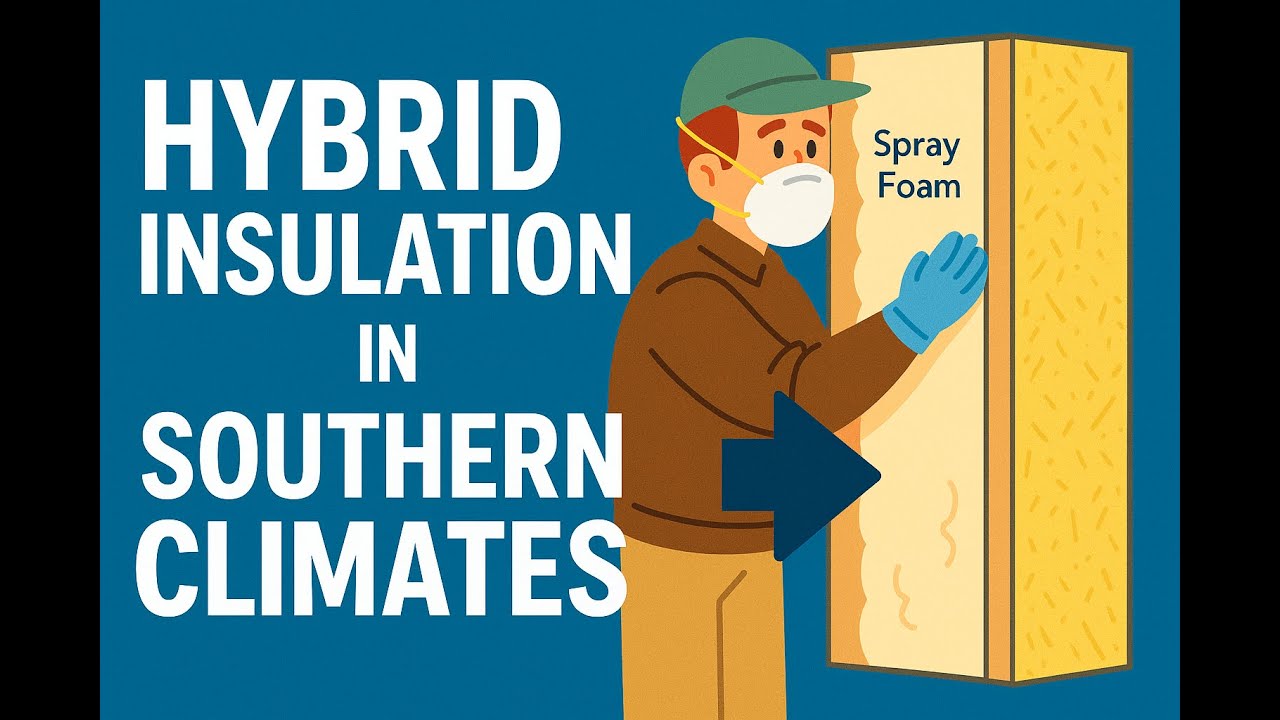
In many South Florida walls, roofs, garages, and metal buildings, closed-cell spray foam solves the two biggest batt weaknesses at once:
That is why the insulation faced or unfaced debate often fades once the assembly moves to a properly designed closed-cell foam approach. You are no longer asking a batt to do jobs it was never great at doing.
A condo owner in Broward opens an exterior wall after a small leak and sees damp kraft facing pressed against a cavity that never had a good drying path. That is a common South Florida problem. The right insulation choice depends less on labels and more on where moisture will move during our long cooling season, especially when outside humidity drives inward and indoor air is kept cold.
Price matters, but this decision usually turns on risk, not a small material difference. Faced batts can make sense in the right assembly. In the wrong one, they can slow drying and turn a minor moisture issue into a repair job.
Retrofit work needs caution because older homes rarely match the textbook assembly printed on the insulation package.
If you are adding insulation over existing attic insulation, unfaced batts are often the safer pick. They add R-value without introducing another vapor-retarding layer on top of one that may already be there. If you are opening exterior walls in an older South Florida home, inspect the wall first. Stucco, block, interior finishes, previous patchwork, and even foil products can change how that cavity dries.
Batt insulation usually fits well in these retrofit jobs:
If the house has cold rooms, musty odors, or humidity showing up near exterior walls, batts may not solve the actual problem. Air leakage and inward moisture drive are often part of the complaint. In those cases, spray foam deserves a hard look because it addresses more than cavity fill.
New construction gives builders one advantage. The whole assembly can be planned before drywall hides the mistakes.
Use unfaced batts freely in standard interior partitions where the job is sound control or basic thermal separation. For exterior walls and roof assemblies, the better question is how the assembly will manage humid outdoor air, solar heating, and drying potential over time. South Florida homes often run with cool interior temperatures for most of the year, so reverse vapor drive is not a theory here. It shows up after rain and sun load, especially on reservoir claddings and masonry assemblies.
Before choosing faced batts in new construction, ask:
That checklist is more useful than asking whether faced or unfaced is generally "better."
Rental properties expose weak insulation choices fast. Tenants set thermostats low, leave doors open, skip exhaust fans, and report comfort problems only after moisture staining or odors show up.
Use unfaced batts in interior partitions where sound control is the goal and drying is not complicated. Be careful with exterior walls, garage-adjacent rooms, and top-floor units under hot rooflines. Those are the places where South Florida humidity, tenant behavior, and inconsistent maintenance put batt systems under the most stress.
For managed properties, the better assembly is usually the one that tolerates real-life use with fewer failure points. Spray foam often earns its keep there because it is less dependent on perfect facing orientation, separate air sealing, and ideal tenant habits.
Metal buildings need a different approach because condensation risk is high and temperature swings are fast.
Batts can work in a fully detailed metal building system, but the detailing has to be right. Seams, purlins, fasteners, and transitions all matter. Faced products are sometimes specified for these assemblies, but paper-faced or vinyl-faced batt systems still leave more room for installation error and hidden condensation paths.
For these structures, spray foam often outperforms traditional batts because it adheres directly to the metal, helps control humid air contact at the surface, and reduces the chance of condensation forming behind a loose layer.
Choose unfaced batt insulation when:
Choose faced batt insulation when:
Choose spray foam, especially closed-cell, when:
If you remember one thing, remember this: in South Florida, the insulation faced or unfaced decision is really a moisture-management decision.
Faced insulation has a place. Unfaced insulation has a place too. Both can work when the assembly is designed around them. Both can also fail when they are installed by habit instead of by building science.
Do not start with “Which one is better?”
Start with these:
That last question matters because many South Florida comfort and moisture issues are not caused by low insulation alone. They come from humid air getting where it should not go.
If the project is an interior partition, an attic top-off, or a simple dry application, batt insulation can be exactly the right tool.
If the project involves exterior walls, roof decks, garages, metal structures, or coastal humidity exposure, the safer long-term answer is often a system that controls heat, air, and moisture together. That is where closed-cell spray foam stands out. It removes many of the guesswork problems that come with choosing, orienting, and layering faced and unfaced batts.
The more complicated the moisture conditions, the less forgiving batt insulation becomes.
When in doubt, do not guess from a big-box shelf label. Have the assembly evaluated. A correct recommendation depends on the wall, roof, or building type in front of you, not on a one-size-fits-all rule.
If you want a clear recommendation for your home, renovation, new build, garage, attic, or metal building, talk with Airtight Spray Foam Insulation. Their South Florida team understands how humidity, solar exposure, and coastal conditions change insulation decisions, and they can help you choose the right system for long-term comfort, moisture control, and energy performance.