We’ve all felt it. That oppressive, stagnant heat that gets trapped in your attic is more than just a nuisance—it’s a major drain on your wallet, especially for homeowners here in Jupiter and West Palm Beach. An energy-efficient attic fan often seems like the go-to solution for tackling this problem. The idea is to vent all that superheated air and give your AC system a break.
But does it really work as advertised in our humid climate? Let's take a closer look.

Your attic is basically a giant oven sitting right on top of your house. On a typical South Florida summer day, the temperature up there can easily hit 150°F or even higher. That extreme heat doesn't just hang out; it radiates straight down into your living space.
This puts your air conditioner into overdrive. It has to run longer and work much harder just to keep your home comfortable, which means bigger energy bills and more wear and tear on your expensive equipment. Finding smart ways to reduce electricity bills is crucial, and it starts with understanding the source of the problem.
At first glance, installing an attic fan makes perfect sense. You have a hot attic, so you install a powerful fan to suck the hot air out and pull cooler, fresh air in. Simple, right? In theory, this should lower the attic temperature and ease the load on your AC.
The problem is, this logic has a huge blind spot, especially here in South Florida.
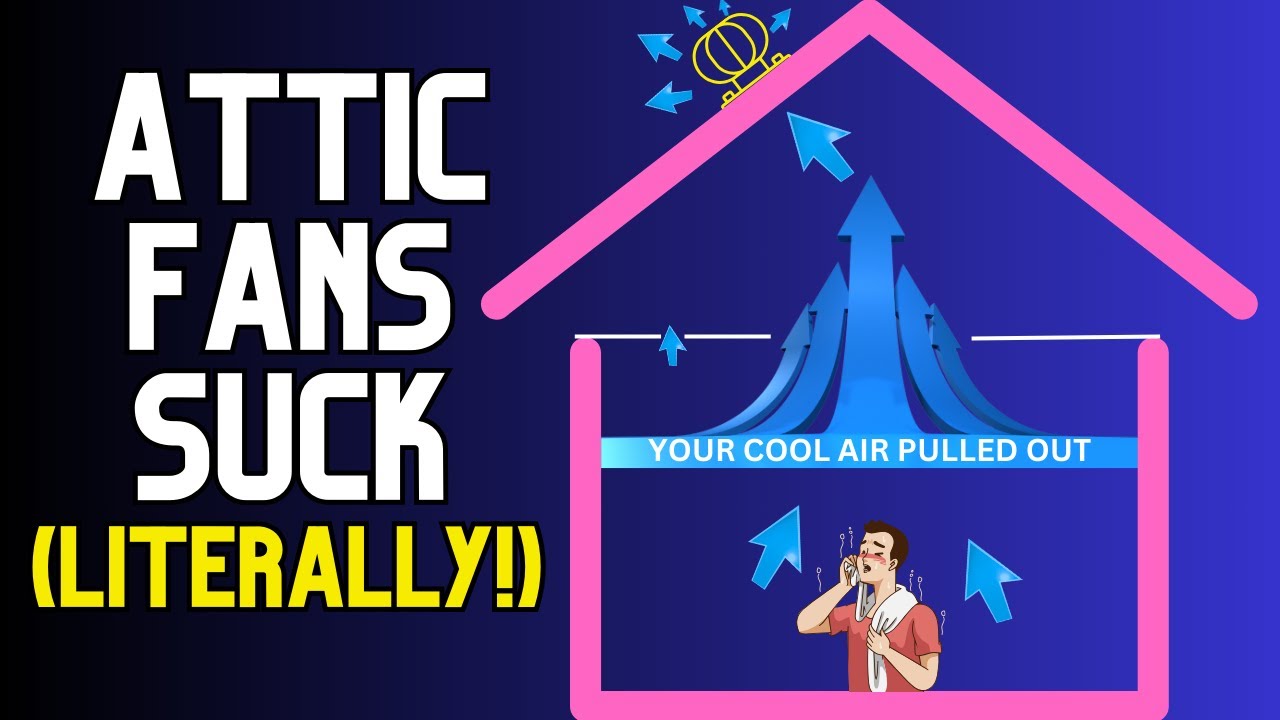
An attic fan’s success hinges entirely on how airtight your house is. If your home has the usual small air leaks around fixtures, outlets, or recessed lighting, that fan can create negative pressure. Instead of just pulling in outside air, it starts pulling your cool, conditioned air right out of your living space and into the attic. You’re literally paying to cool air just to have it sucked out through the roof.
The issue isn't just about hot air; it's about how your entire home functions as a system. A quick fix that only addresses one symptom can often create new, more complicated problems down the road.
To make a smart decision, you need to understand the full story. We’re going to cover:
Armed with this knowledge, you can move beyond temporary patches and find a solution that delivers real, lasting energy savings and comfort. We'll show you why just moving air around isn't enough, and why properly sealing your attic is the key to truly conquering the Florida heat.
We’ve all felt it. That oppressive wave of heat when you open the attic hatch on a summer afternoon. During the day, the sun pounds on your roof, turning your attic into a sealed-off oven where temperatures can easily soar to 150°F.
This pocket of superheated air doesn't just stay put. It radiates heat straight down through your ceiling, forcing your AC to run constantly just to keep your living space comfortable. An attic fan tackles this problem head-on.
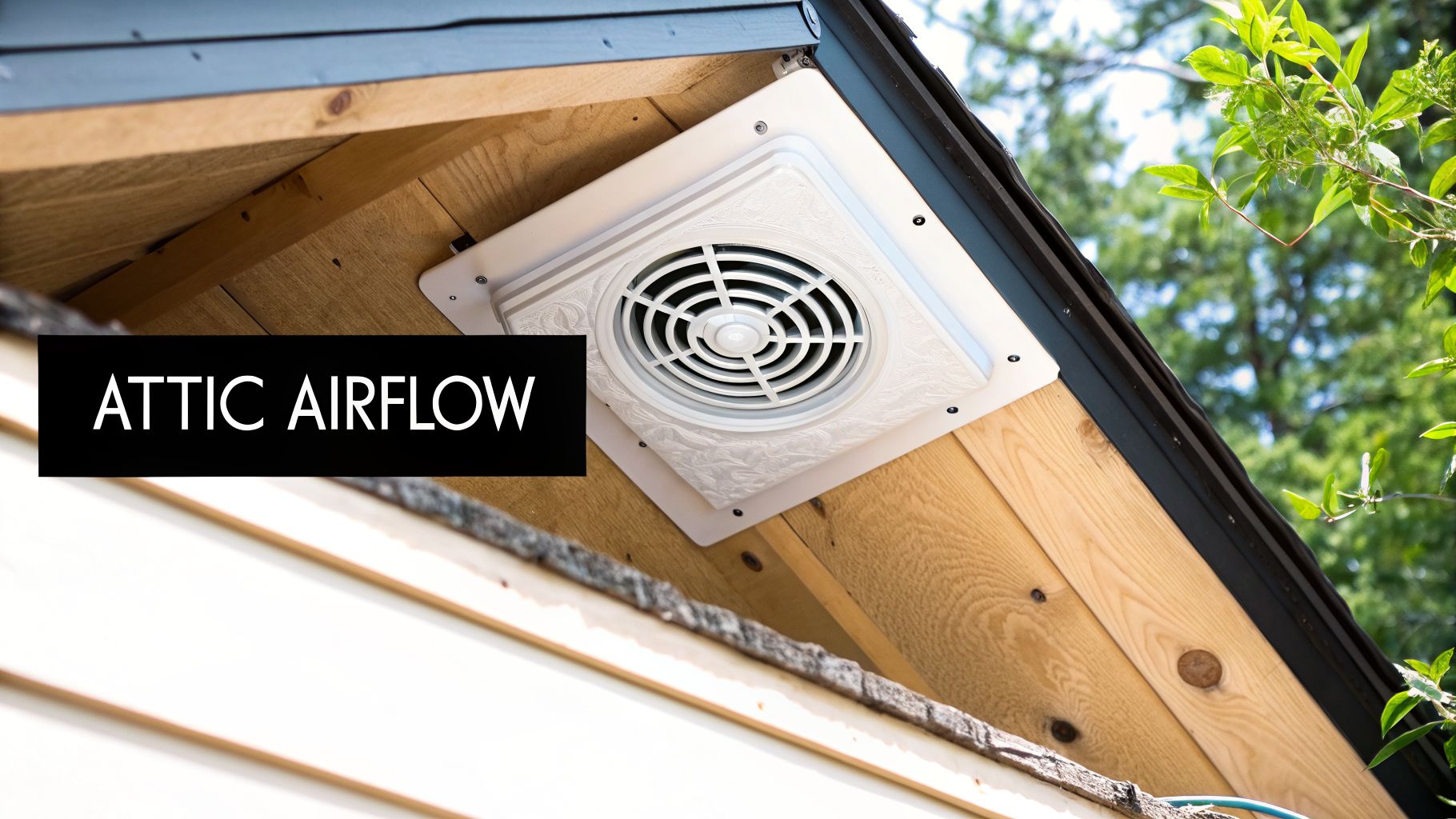
Think of it as a powerful exhaust fan for your entire house. It actively pulls that stagnant, scorching air out of the attic and vents it outside. This creates a slight negative pressure that draws cooler, fresher air in through your existing soffit or gable vents. It’s a simple but effective cycle of ventilation.
Now, not all attic fans are built the same. The term "energy-efficient" really separates the newer, smarter models from the old-school, power-guzzling fans of the past. The efficiency boost comes from two key upgrades.
A basic electric fan is just a switch—it’s either on or off, drawing power the entire time. An energy-efficient attic fan is smarter than that. It’s designed to run only when absolutely necessary, thanks to a couple of simple but critical components.
This kind of intelligent operation is what makes them "efficient"—they only work when they provide a real benefit. If you want to dig deeper into how this fits into a broader strategy, our guide on the types of attic ventilation is a great next step.
The peak of attic fan technology is the solar-powered model. These units are completely self-sufficient, running off a dedicated solar panel that converts sunlight directly into power. They operate entirely off-grid, meaning they cost you absolutely nothing to run.
And the best part? They work hardest when the sun is at its brightest—exactly when your attic is turning into a furnace.
Solar attic fans are a simple and environmentally friendly solution that can protect your home and even save you money. This sleek and efficient attic vent is powered entirely by free solar energy and is compact, quiet, and powerful!
This isn't just theory. The Florida Solar Energy Center ran a study and found that in our climate, solar attic fans can cut air conditioning costs by up to 6% and lower indoor temperatures by as much as 6°C (that's about 10°F). In a real-world test, that added up to 460 kWh in energy savings over just one summer. You can see the numbers for yourself in the solar attic fan savings research.
Whether you go with a smart electric model or a fully solar-powered one, the goal is the same: manage your attic’s temperature without running up your FPL bill. But as we'll see, its true effectiveness in Florida hinges on a lot more than just the fan itself.
For anyone living in Jupiter, West Palm Beach, or really anywhere in South Florida, installing an energy-efficient attic fan sounds like a no-brainer. On paper, the logic is sound, and the promised benefits are tempting.
After all, actively pulling super-heated air—which can easily top 150°F—out of the attic should reduce the heat radiating into your home. This could lighten the load on your AC, potentially trimming your energy bills and saving your HVAC unit from some serious wear and tear. Plus, that intense heat is brutal on your roofing materials. An attic fan might just help your shingles and decking last longer. It seems like an obvious win.
Here’s the catch, and for our climate, it’s a big one. The "con" side isn't a small trade-off; it’s a major risk that can cause more harm than good. The whole issue boils down to a concept we deal with all the time in building science: negative pressure.
An attic fan is essentially a big exhaust fan. It pulls air out of your attic, and that air has to be replaced. Ideally, it draws in "makeup" air from outside through your soffit or gable vents. But what happens if the fan can't pull enough air through those vents? This is where everything goes sideways.
Most homes, even well-built ones, aren’t perfectly sealed between the attic and the living space. You have tiny gaps around light fixtures, plumbing pipes, the attic hatch, and interior walls. When the fan can't get enough air from outside, it creates a powerful vacuum and takes the path of least resistance—sucking air straight from your house.
That means the fan starts actively pulling the cool, conditioned air you just paid for right out of your rooms and dumping it outside. It's the equivalent of running your air conditioner with a window wide open, completely wiping out any potential energy savings and often driving your bills higher.
In South Florida, wasting cooled air is only half the problem. When the fan pulls conditioned air out of your home, new air has to get in from somewhere. That replacement air is pulled from the outdoors, bringing all of our notorious humidity with it.
This triggers a cascade of moisture-related disasters. As that humid air gets pulled through your wall cavities, it meets cooler, air-conditioned surfaces and condenses. You’ve just created a perfect hidden environment for mold and mildew. This rots your home's structure, ruins your insulation, and tanks your indoor air quality. If you want a deeper dive into this fight, you can learn more about how to reduce humidity in a house.
The table below really puts the pros and cons in perspective for our unique climate.
In a humid environment, what seems like a simple cooling solution can introduce complex moisture problems. Here’s how the benefits and risks stack up.
| Factor | Potential Pros | Potential Cons (Especially in Humid Climates) |
|---|---|---|
| Cooling | Reduces attic temperature, potentially lowering AC load. | Can suck conditioned air from living spaces, increasing AC load. |
| Energy Savings | May lower electricity bills if the attic is perfectly isolated. | Often increases energy costs due to negative pressure. |
| Humidity Control | Vents some moisture that builds up in the attic. | Pulls humid outdoor air into the attic and wall cavities. |
| Air Quality | Can improve attic air circulation. | Can introduce mold and mildew due to condensation issues. |
| Roof Lifespan | May protect roofing materials from extreme heat damage. | Moisture damage from condensation can degrade roof decking. |
Ultimately, the potential for an attic fan to backfire in South Florida is extremely high.
For an energy-efficient attic fan to work correctly here, your ceiling plane would need to be flawlessly air-sealed—something we almost never see in practice. Without that perfect seal, the fan is far more likely to cause expensive moisture problems than to solve your cooling issues. It’s a high-risk gamble that reinforces why a simple ventilation strategy often fails, pushing us toward better solutions that tackle air leakage at the source.
If you’ve weighed the pros and cons and are still sold on an attic fan, let me be clear: getting the selection and installation right isn't just important—it’s everything. I’ve seen firsthand how a poorly chosen or installed fan becomes a one-way ticket to energy waste and serious moisture damage. Success truly comes down to a few details you simply can't afford to get wrong.
Your first decision is whether to go with a solar-powered model or a hardwired electric one. A solar energy efficient attic fan is a popular choice because it runs for free, powered entirely by the sun. It does its best work when the sun is beating down the hardest, which makes a lot of sense. On the other hand, electric models connect to your home’s power but usually come with more sophisticated smart controls.
The push for these greener options is really shaping the market. The global attic and exhaust fans market was valued at USD 1,450.75 million in 2024 and is expected to hit USD 2,600.90 million by 2032. That’s a huge jump, and it shows a real demand for solutions that cut down on energy bills and our environmental footprint. You can dig deeper into these trends and what's driving them in the full research on attic fan market growth.
Next, you have to size the fan for your specific attic. This is all about Cubic Feet per Minute (CFM), which is just a measure of how much air the fan moves. If the fan is too small, it won’t make a dent. If it’s too big, it can create a dangerously strong negative pressure that pulls air from places you don't want it to.
Here’s a quick rule of thumb to get a baseline CFM:
This formula gives you a starting point, but nothing beats a professional assessment to dial in the exact number based on your roof pitch and local climate.
It doesn’t matter if you pick a solar or electric model—your fan absolutely must have smart controls. Without them, you’ve just got a dumb motor running whenever it feels like it, either burning energy or, worse, causing damage.
Think of your attic ventilation system like a breathing organism. The attic fan exhales hot, stale air. But to do that, it must be able to inhale an equal amount of cool, fresh air. If it can't inhale, it can't exhale.
This brings us to the single most critical—and most frequently botched—part of any attic fan installation: adequate intake ventilation. The fan itself is only half the system. The other half is the network of passive vents, usually soffit vents under the eaves, that allow makeup air to flow in.
The total open area of these intake vents is called the Net Free Vent Area (NFVA). If your NFVA is too small, the fan gets starved for air. It will then create a powerful vacuum and take the path of least resistance—sucking the cool, conditioned air right out of your living space through gaps and cracks. This is the exact problem we've been warning about.
As a rule, you need at least 1 square foot of NFVA for every 150 CFM of fan power. Failing to meet this ratio is the number one reason attic fans fail and cause the expensive problems I get called to fix. Before you even think about buying a fan, have a pro inspect your attic to measure your current intake ventilation. If you don't have enough, you either need to add more vents or walk away from the idea of an attic fan altogether.
We’ve talked a lot about managing attic heat with tools like an energy-efficient attic fan. This entire approach—ventilation—is really about damage control. It's a strategy for dealing with a problem that’s already taken hold.
But what if you could stop the problem at the source? What if you could prevent your attic from ever becoming a 150-degree oven in the first place?
This is exactly where modern building science gives us a definitive, far better solution: converting your attic from a vented space into a sealed, semi-conditioned part of your home. Instead of just pushing hot air around, you make it so the hot air never builds up at all.
The key to this whole strategy is rethinking your home's thermal boundary. In a typical house, the thermal boundary is the floor of your attic. That's where all the insulation is piled. Heat blasts through your roof, cooks the attic space, and that insulation on the floor is the only thing trying to slow the heat from seeping down into your living room.
With a sealed attic, you move that boundary from the floor all the way up to the roofline.
By applying spray foam insulation directly to the underside of the roof deck, you create a complete, airtight barrier. This stops solar heat gain dead in its tracks. The sun’s radiant energy never even gets a chance to heat your attic air, making fans and vents totally unnecessary.
Your attic is no longer an oven sitting on top of your house. It becomes a temperate buffer zone, with a temperature much, much closer to the rest of your home. You're not just treating the symptom (hot air); you're curing the disease (uncontrolled heat transfer).
Creating an airtight, unvented attic isn't a small tweak; it's a fundamental upgrade to how your home performs, delivering benefits that a simple fan could never touch. The impact on your energy bills is immediate and powerful.
Because you’ve cut off the main source of heat gain, your air conditioner isn't fighting a losing battle against a superheated ceiling anymore. This leads to very real, very predictable energy savings, often in the ballpark of 20-30% or more on your cooling costs. Our team provides comprehensive services for insulation attic installation to help you achieve these results.
Here’s a quick rundown of the advantages:
Ventilation strategies have their place, but in our relentlessly humid climate, they're always a bit of a gamble. As we've covered, an attic fan that isn't perfectly balanced can end up sucking your expensive, cool air right out of the house or, worse, pulling moist air into your attic.
A sealed attic system takes that gamble completely off the table. There’s no balancing act, no worrying about negative pressure. It’s a closed system that delivers consistent, reliable performance day in and day out.
Even though solar attic fans are a big step up for ventilation, their market growth just proves that people are desperate for smarter energy solutions. The global market for these fans shot up from USD 1,631 million in 2020 to USD 2,024.9 million by 2025 and is projected to hit USD 3,626.3 million by 2035. This trend just underscores that homeowners are actively hunting for ways to cut energy costs.
You can dive into the complete forecast and learn more about solar attic fan market trends on futuremarketinsights.com. But the takeaway is clear: while fans are a step in the right direction, sealing the attic is the destination.
Ultimately, it comes down to choosing between managing a problem and solving it for good. For homeowners, contractors, and property managers in South Florida who demand the highest level of efficiency, comfort, and moisture control, creating an airtight, unvented attic is the gold-standard solution.
When it comes to cooling down your attic, it's easy to get lost in all the options. But after years in this business, I can tell you the right decision always comes down to one thing: fixing the root problem, not just patching up the symptoms. An energy-efficient attic fan might look like a quick and simple solution, but here in South Florida's humidity, it's a gamble I wouldn't take on my own home.
Think about it. In a perfectly sealed, perfectly vented attic—a true rarity around here—a fan might give you a tiny bit of help. But in the real world, for a typical home with the usual small air leaks, that fan becomes a real liability. It creates negative pressure, acting like a vacuum that sucks your expensive, air-conditioned air straight up into the attic while pulling hot, moist air into your living space. It’s a recipe for skyrocketing power bills and potential mold growth.
So, what’s the right move? The single most effective step you can take is to get a professional home energy assessment. A certified technician with the right diagnostic tools can show you exactly where your home is bleeding cool air and letting in heat. You get a clear, data-driven roadmap to a solution that actually solves the problem for good.
This decision tree helps visualize the thought process we use to guide homeowners to the right solution.
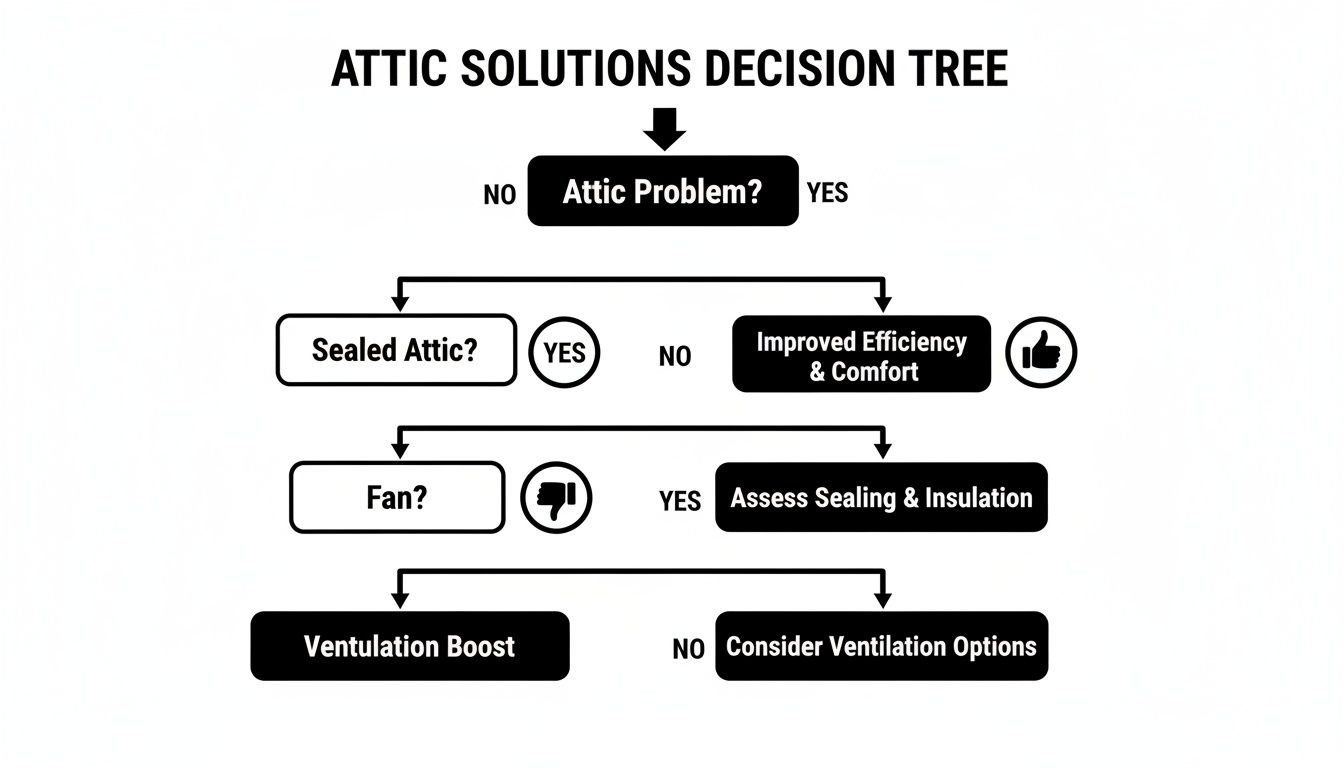
As you can see, the path quickly forks away from a fan-based approach once you factor in the reality of an unsealed attic, which is what most of us have.
For homeowners in Jupiter, West Palm Beach, and right across South Florida who want real long-term performance, comfort, and predictable savings, the verdict is clear: air sealing and applying spray foam insulation is the superior investment.
This strategy doesn't just manage attic heat; it stops it cold before it even gets in. Of course, a smart cooling strategy looks at the whole picture, which includes keeping your system in top shape. Following a complete guide to HVAC maintenance is a critical piece of the puzzle.
Instead of chasing a temporary fix that could cause more harm than good, invest in a permanent one. A professionally sealed and insulated attic will fundamentally change your home's comfort and efficiency—and you’ll feel the difference for years to come.
Even after breaking down the science, a few questions always pop up when homeowners are weighing their options. We get these calls all the time, so let's clear up some of the most common myths and concerns about tackling a hot attic in South Florida.
No. You absolutely cannot. It’s a classic case of two systems fighting each other, and your house always loses.
An energy-efficient attic fan is built for a vented attic. Its entire job is to pull fresh air in from your soffit vents and push the superheated air out. On the other hand, spray foam insulation creates a sealed, unvented attic. There's no air to pull from, and nowhere for it to go.
Putting a powerful fan in a sealed attic is a recipe for disaster. It creates intense pressure problems, and can even backdraft dangerous exhaust fumes from your water heater or furnace right back into your living space. You have to pick one path: venting or sealing. For our climate, sealing is the only one that truly works.
This is the number one question we hear, and the honest answer is almost always: nothing. In many cases, it will actually cost you money.
Industry claims of big savings are based on lab conditions or homes in dry climates with perfect air-sealing—something that’s practically nonexistent here. For the typical Florida home, that fan creates negative pressure.
What does that mean? It means the fan starts sucking the expensive, cool, conditioned air right out of your house through gaps and cracks, pulling it into the attic to be shot outside. You're literally paying to air-condition the neighborhood. The fan ends up increasing your energy bills and making your humidity problems worse.
From a running-cost perspective, it seems like a no-brainer. A solar fan runs on the sun's energy, so it doesn't add a dime to your FPL bill.
But here's the catch: it still has the exact same fatal flaw as its electric cousin. It doesn't matter if the power is free—the fan can still create negative pressure, suck conditioned air from your home, and invite humid air inside. The potential for doing more harm than good is identical.
Because spray foam solves the actual problem instead of just putting a band-aid on a symptom. It doesn't just shuffle hot air around; it creates a complete thermal barrier at the roofline, stopping heat from getting into your attic in the first place.
This is a proactive approach, not a reactive one. The result is predictable, significant energy savings, often cutting cooling costs by 20-30% or more. Just as importantly, it forms a powerful moisture barrier, which is non-negotiable for preventing mold and rot in South Florida. You get a more comfortable home, cleaner air, and a much, much higher return on your investment.
Ready to stop gambling with temporary fixes and solve your attic heat problem for good? The expert team at Airtight Spray Foam Insulation specializes in creating high-performance, sealed attic systems designed for the unique challenges of the South Florida climate.
Request your free, no-obligation quote today at airtightsprayfoaminsulation.com and discover how our Airtight Comfort System can transform your home's efficiency and comfort.