If your upstairs feels sticky by midafternoon, your AC runs all day, and you still notice that faint musty smell when you open the attic hatch, you’re dealing with more than a lack of insulation. In South Florida, the core problem is usually heat plus humid air movement. That combination gets into wall cavities, attic slopes, garage ceilings, and around every little penetration the builder never fully sealed.
That’s why homeowners asking about spray foam insulation icynene are usually asking the right question, even if they don’t realize it yet. They’re not just looking for a higher R-value. They’re trying to stop wet outside air from sneaking into the house, condensing on cooler surfaces, and making the HVAC system fight a losing battle.
In this climate, the best insulation conversation always starts with moisture. Not marketing. Not buzzwords. Moisture, air movement, and where the building needs to dry.
You see it all the time in South Florida. A house has decent attic insulation on paper, but the rooms still feel clammy, the AC cycles too long, and the attic side of the ceiling carries that damp smell after a stretch of hot weather. In those cases, the problem is usually uncontrolled air movement, and that is where open-cell Icynene changed the conversation.
Icynene is one of the product names that helped make spray foam a mainstream option in the U.S. It became known for open-cell foam that expands quickly, fills uneven cavities, and seals the small gaps fiberglass leaves behind. Applied properly, it reaches around wiring, framing joints, and other hard-to-insulate areas because the foam grows in place as it cures according to Compass Foam.

Fiberglass slows heat transfer. It does not stop humid air from slipping through the assembly. In South Florida, that difference matters more than many homeowners realize.
Open-cell Icynene is installed as a spray-applied foam that expands and bonds within the cavity, so the insulation layer also reduces air leakage. That matters in our climate because moisture problems often start with tiny air paths at top plates, soffit lines, can lights, plumbing penetrations, and framing seams. Cut those pathways down, and you reduce the amount of wet outside air reaching cooler surfaces inside the house.
Open-cell foam also stays vapor permeable, which is an important part of why it can work well here. In the right assembly, that permeability allows the area to dry instead of trapping incidental moisture where it can feed mold or start wood rot. That is a practical distinction homeowners should understand before choosing energy-efficient insulation. High performance in South Florida is not only about R-value. It is about air control and managed drying.
I’ve found that homeowners get the best results when they stop comparing foam by brand name alone and start looking at how the material behaves inside their specific roofline, wall, or garage ceiling. If you want a technical overview of how spray foam insulation works, that primer is useful.
Open-cell Icynene keeps coming up for real houses here for a few practical reasons:
That last part matters. Open-cell foam is not the right answer for every assembly, and good installers do not pretend otherwise.
A homeowner in South Florida usually calls after seeing one of two problems. The upstairs stays hot even with the AC running, or the house feels cool but still damp. In both cases, the foam choice needs to match the assembly and the way that part of the house handles moisture.
Open-cell and closed-cell spray foam both outperform fiberglass at stopping uncontrolled air movement. The key distinction is in vapor behavior, drying potential, density, and how much R-value you get in limited space. In our climate, that matters more than a simple “higher R-value is better” pitch.
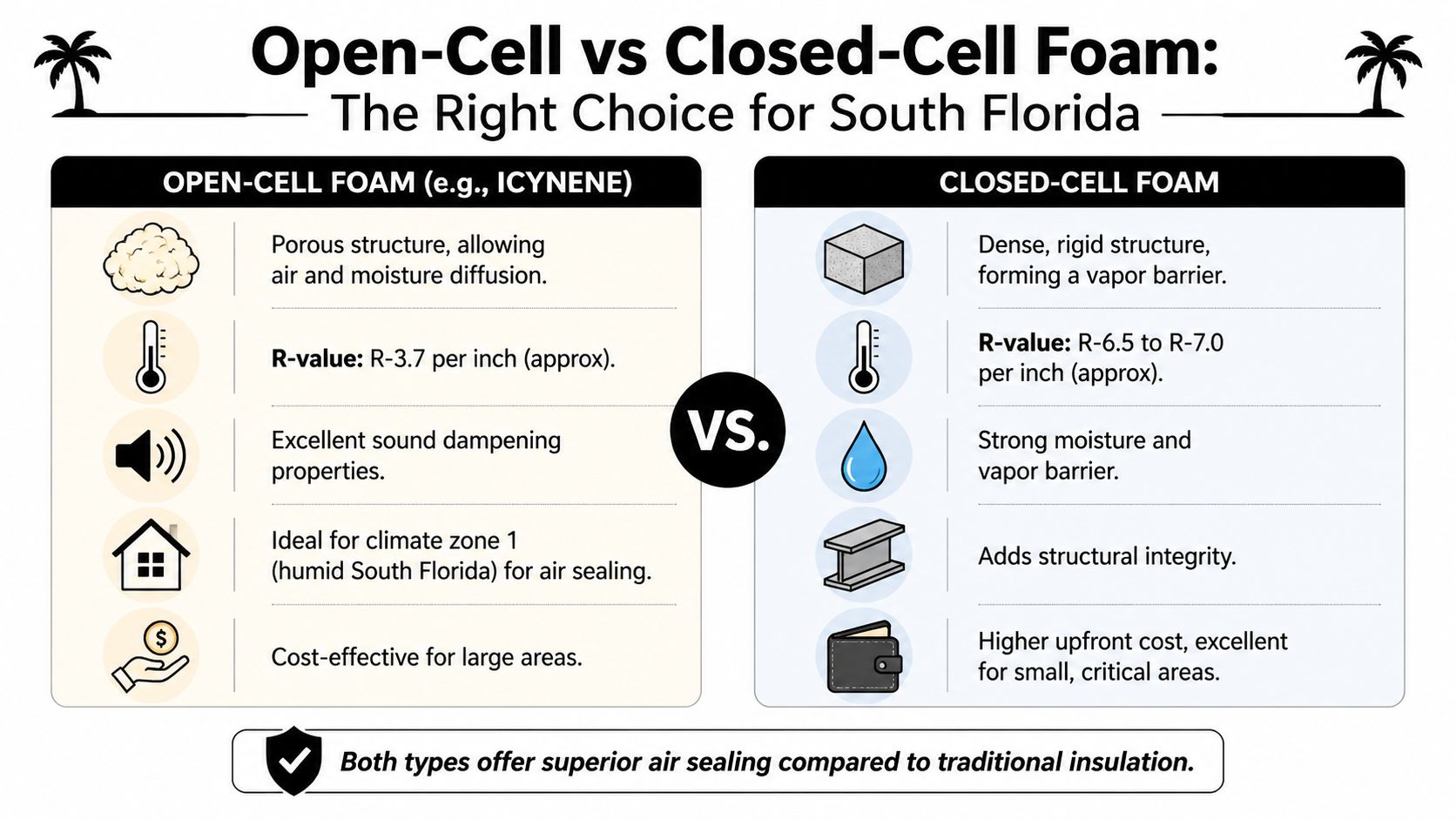
Open-cell Icynene is usually the better fit where the assembly needs to dry and where full cavity fill helps performance. It expands aggressively into irregular framing, seals gaps well, and stays vapor permeable. That last point matters in South Florida. Rooflines and wall cavities do not always stay perfectly dry year-round, so a material that can air seal without heavily restricting drying can be the safer choice in many wood-framed assemblies.
It also works well for sound control and large attic roofline applications where there is enough depth to hit the target thickness.
Closed-cell foam is the right call when the assembly needs more R-value in less thickness, more resistance to moisture movement, or a harder, denser insulation layer. I use it more selectively. It makes sense on metal buildings, certain masonry or mixed-material assemblies, rim areas, and roof or wall sections where space is tight and moisture control needs to be stricter.
The trade-off is simple. Closed-cell gives you more R per inch and lower vapor permeability, but it also reduces the assembly’s ability to dry. If the surrounding materials and indoor-outdoor moisture conditions are not considered carefully, that can create trouble instead of solving it.
In South Florida, the first question is not which foam is best. The first question is where the moisture can go after the job is done.
| Attribute | Open-Cell Foam (Icynene) | Closed-Cell Foam | Fiberglass Batts |
|---|---|---|---|
| Air sealing | Excellent when properly installed | Excellent when properly installed | Poor at stopping air movement |
| R-value per inch | Lower than closed-cell, but often sufficient where cavity depth is available | Higher per inch, useful where space is limited | Can drop in real-world performance when air moves through gaps |
| Vapor behavior | Vapor permeable, supports drying in the right assembly | More vapor resistant, slows moisture movement | Does not stop humid air leakage |
| Texture | Soft and flexible | Dense and rigid | Soft batt material |
| Best-fit uses | Attic rooflines, interior wall cavities, sound control, larger framed cavities | Tight assemblies, metal buildings, selective high-moisture or limited-space areas | Budget installs where separate air sealing is done well |
| Structural contribution | Minimal | Can add rigidity | None worth counting on |
| Cost profile | Usually lower across larger areas | Usually higher upfront | Lowest upfront cost |
For a typical South Florida house with a vented attic that is punishing the rooms below, open-cell often makes more sense at the roofline because it air seals and still allows inward drying. That is a practical advantage in a humid region where seasonal moisture loading is real. For tighter areas, shallow cavities, or assemblies with metal and higher condensation risk, closed-cell often earns the added cost.
Homeowners comparing the two side by side can get more detail from this guide on closed-cell vs open-cell spray foam insulation.
This also lines up with broader advice in a guide to Florida weatherproofing. Houses here need materials that handle wind-driven rain, heat, and humidity together, not in isolation.
A few mistakes keep showing up on South Florida jobs:
Good insulation work is assembly-specific. That is why the right answer in South Florida is often a mix of materials, not blind loyalty to one foam type.
At 3 p.m. in August, a South Florida house can read 74 degrees inside and still feel sticky. That usually is not an insulation thickness problem. It is an air leakage problem.
South Florida homes fight heat and moisture at the same time. Outdoor air finds its way in around top plates, can lights, attic hatches, duct boots, plumbing penetrations, window rough openings, and framing transitions. Every bit of that humid air adds work for the AC system. It has to lower the temperature and pull out the moisture, which is why a house can feel cool on the thermostat and damp in the room.
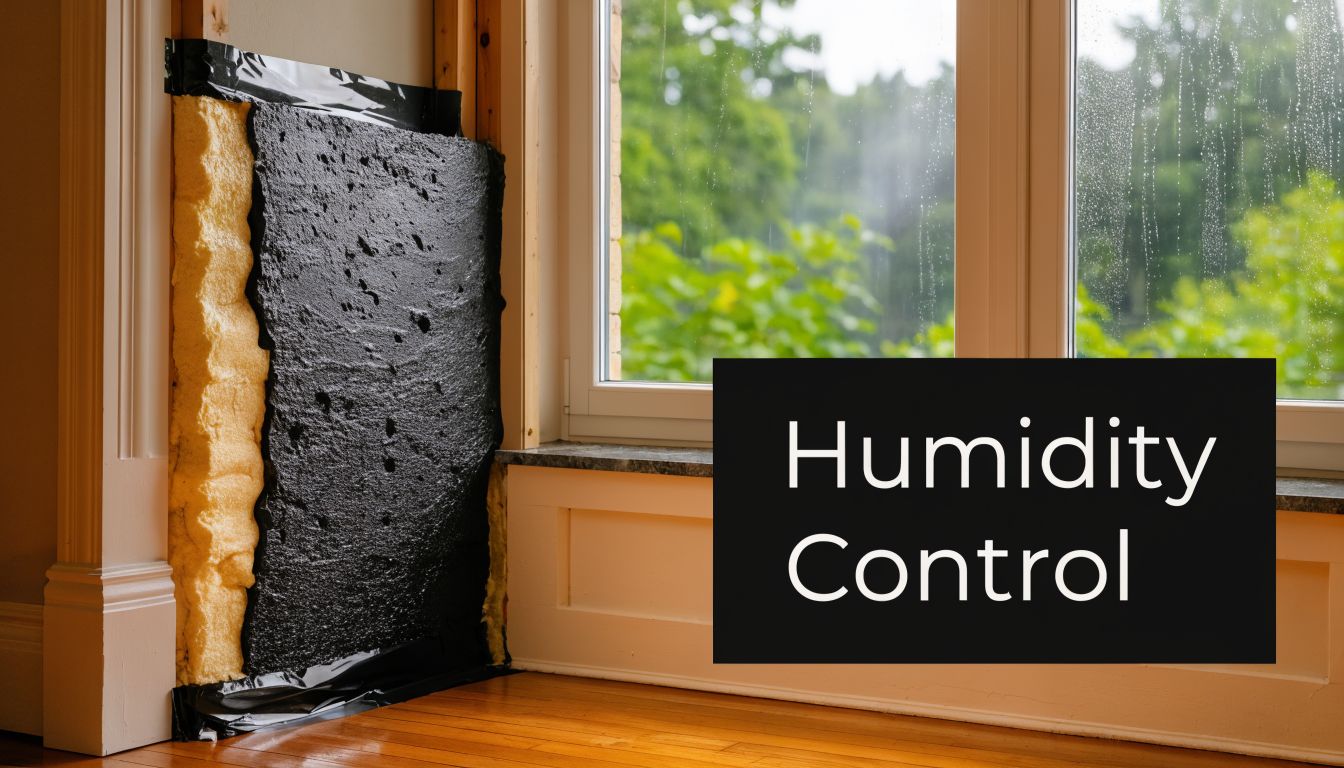
R-value still matters. It just does not tell the whole story in our climate.
Fiberglass can insulate a cavity and still allow humid air to move through or around the assembly if the details are loose. Open-cell Icynene changes that by expanding into cracks, joints, and irregular framing areas that are hard to seal with batt insulation alone. The result is lower uncontrolled air movement, which is often the bigger problem in South Florida homes.
That difference shows up most in houses with comfort complaints that never quite go away. One bedroom stays muggy. The hall near the attic access smells stale. The room under the garage ceiling always feels warmer than the rest of the house. Those are classic signs that outside air is getting into the envelope and bringing moisture with it.
In South Florida, mold problems often begin subtly. Humid air leaks into a cooler assembly, hits a surface that has dropped below the dew point, and moisture begins to collect. It may not drip. It may not stain a ceiling right away. But over time it can feed mold growth on dust, paper facing, wood, and other materials inside the assembly.
Open-cell Icynene helps here in two ways. It cuts down the air leakage that carries moisture into the assembly, and it remains vapor permeable, which gives the assembly some drying ability if moisture does get in. That combination matters in a humid region where homes need to control moisture, not trap it blindly.
I have seen plenty of houses where the first clue was not visible damage. It was a musty smell in a closet, a persistent damp feeling in a back bedroom, or supply vents sweating more than they should.
Field reality: If the roof is sound and the house still feels clammy, I look for hidden air pathways before I blame the AC equipment or insulation depth.
For a broader homeowner checklist, this guide to Florida weatherproofing is a solid companion read because it puts insulation in the context of the whole house shell.
The best results usually come from the places where hot, wet air has the easiest path indoors and the greatest effect on comfort.
A short visual helps if you want to see the air-sealing concept in action:
Homeowners rarely describe the result in building-science terms. They describe it in lived experience.
Those comfort changes are usually the first sign that the house is taking on less humid outside air. In South Florida, that is often the difference between a house that only looks conditioned and one that feels dry and comfortable.
Most homeowners are fine with the idea of spray foam until they picture the actual work day. That’s where clear process matters. A good installation should feel organized, controlled, and predictable.
The project starts with a walkthrough and scope review. That means identifying the assembly, checking access, confirming whether the job is an attic, walls, roof deck, garage, or a mix of spaces, and deciding whether open-cell or closed-cell is the right fit.
Prep is where experienced crews separate themselves. Floors get protected. Sensitive areas get masked. Windows, equipment, and finished surfaces near the work zone get covered. Ventilation planning happens before the gun ever comes out.
A proper crew also pays attention to substrate condition. If surfaces are dirty, damp, or not ready to receive foam, that needs to be handled first.
Once spraying starts, the house gets louder for a while. You’ll hear equipment cycling, hose movement, and the spray pass itself. The foam goes on as a liquid mix, then expands into place in seconds.
The installer watches the rise, the adhesion, and the fill pattern constantly. Good work isn’t just “spray until the cavity looks full.” It’s a controlled application with attention to thickness, coverage, and trimming where needed.
Good foam work looks boring from the outside. That’s a compliment. Clean masking, steady passes, no scorched material, no sloppy overspray, and no guessing.
Here’s what a homeowner can expect in plain terms:
Arrival and site protection
The crew walks the job, confirms the plan, and protects surrounding finishes.
Ventilation setup
Air movement and work-zone control are established before application begins.
Spray application
The foam is installed in the designated areas, with the crew checking expansion and consistency as they go.
Trimming and cleanup
Excess material is cut back where needed so the assembly finishes properly.
Final walkthrough
The completed areas are reviewed, and the homeowner gets guidance on next steps and re-entry timing.
Some jobs move quickly. Others don’t, for good reason. The timeline depends on access, whether old insulation must be removed first, how much masking is required, the complexity of the framing, and whether the crew is spraying open-cell or closed-cell.
An attic with easy access is one kind of day. A finished home with tight working conditions, multiple zones, and careful protection needs is another.
What matters is not speed by itself. What matters is getting the right foam, in the right place, at the right depth, on the right substrate.
Spray foam usually costs more upfront than fiberglass. That part is true. The mistake is stopping the conversation there.
In South Florida, insulation isn’t just about buying R-value. You’re paying for air sealing, moisture control, comfort stability, and lower HVAC strain. Those benefits show up over time, and they matter more here than they do in drier climates.

Contractors typically price spray foam by coverage and depth, often discussed in board feet. But homeowners should focus less on the unit language and more on the actual cost drivers:
The return on spray foam in this market usually comes from several places at once, not just one line item on the power bill.
First, the home leaks less humid air. That means the cooling system has a better chance of keeping temperature and indoor feel under control. Second, rooms that were hard to condition often become more usable. Third, buyers increasingly understand the value of a tighter house, especially in hot, damp regions.
The best ROI case for spray foam isn’t “cheapest insulation.” It’s “fewer comfort problems, less moisture migration, and a house that performs the way it should.”
A smart way to evaluate cost is to ask what problem you’re trying to solve.
If your attic is brutal, your second floor never settles down, and your AC seems to run endlessly, then basic batt replacement may still leave the underlying issue untouched. If the problem is humid infiltration, the added cost of foam is tied to a different level of performance.
For homeowners comparing options, this guide on open-cell foam insulation cost helps frame what affects pricing.
Spray foam can also create value in ways people don’t calculate right away:
The cheapest bid often leaves out prep, safety discipline, cleanup quality, or proper assembly design. In this part of Florida, those details are not extras. They’re the job.
Spray foam is safe to discuss openly. That means talking about the cure process, the re-entry question, and what long-term performance depends on.
Some manufacturers say re-occupancy may be possible in as little as 2 hours with enough ventilation, but independent safety experts and OSHA-aligned guidance often recommend a more conservative 24-hour period, especially in humid climates where ventilation can be less effective as discussed in this Icynene safety review.
That more cautious approach makes sense. During application, the foam is reacting and curing. You want that process complete and the work area thoroughly ventilated before people move back in.
If a contractor treats re-entry like an inconvenience instead of a safety protocol, that’s a red flag.
Most of the bad stories homeowners hear about spray foam trace back to poor installation. Wrong temperature. Bad mixing. Wet substrate. Rushed passes. Incomplete prep. Those are workmanship problems.
Properly installed foam should adhere well, cure correctly, and remain stable as part of the building assembly. It isn’t something that should require regular maintenance once it’s in place and protected as the assembly requires.
A foam product is only as good as the conditions it’s sprayed in. Material choice matters. Installation discipline matters more.
South Florida is hard on buildings. Heat, humidity, salt air near the coast, and storm cycles expose weak assemblies fast. That’s why long-term performance is less about hype and more about fit.
Open-cell works best where drying potential matters. Closed-cell works best where stronger moisture resistance and rigidity are needed. Neither one fixes roof leaks, window failures, or bulk water intrusion. Foam supports a good building envelope. It doesn’t replace one.
Ask practical questions, not generic ones:
Those answers tell you more than a brochure ever will.
A common South Florida call goes like this. The upstairs feels muggy by midafternoon, one bedroom runs hot, and the air handler never seems to catch up. In many of those homes, the attic is pulling humid outside air into the house through gaps, cracks, and leaky penetrations.
Icynene can be a very good attic solution when the roof is in good shape and the foam type fits the assembly. Open-cell is often the better choice along the interior roofline when the assembly needs drying potential. Closed-cell makes more sense where space is tight or added moisture resistance is needed.
Icynene is not a mold treatment, and any contractor selling it that way is overselling the product.
What it does well is cut uncontrolled air leakage. In South Florida, that matters because humid air carries moisture into cavities, around ducts, and onto cooler surfaces where condensation can start. Reduce that air movement and you reduce one of the main conditions that feeds mold growth.
Open-cell is not automatically risky in South Florida. The deciding factor is whether the assembly needs to dry or needs stronger vapor control.
That distinction matters here more than homeowners are often told. In many roofline applications, open-cell gives you strong air sealing while still allowing inward drying. That can be a smart fit in our climate, provided the roof assembly is sound and the design does not trap moisture from another source.
Higher R-value per inch has value, especially in tight spaces.
It still does not make closed-cell the default answer. Closed-cell is useful where you need more thermal performance in less thickness, stronger vapor resistance, or added structural stiffness. Open-cell often wins where sound control, coverage, and drying potential matter more. Good foam selection starts with the assembly and the moisture conditions, not a brochure headline.
Often, yes.
Homeowners usually describe it as the house feeling more stable. Less clammy. Less of that sticky indoor feel after a summer rain. That improvement usually comes from better air sealing, because the HVAC system is no longer fighting the same level of humid air leakage through the building shell.
Yes. Open-cell foam is often used where sound reduction matters, including interior partitions, rooms under the roof deck, and homes near busy roads.
It will not make a house silent, but it can noticeably soften airborne sound compared with a loosely insulated cavity.
Usually, yes. Retrofit work is common, but access drives the plan.
An open attic is straightforward. Finished walls are more selective. Existing insulation, wiring, recessed lights, duct layout, and signs of past moisture all need to be checked before anyone starts spraying. In older South Florida homes, the right scope is rarely “foam everything.” It is usually “foam the areas that will improve comfort and moisture control.”
Start with an inspection that looks at how the house handles heat and moisture. That means the attic, the roof condition, duct leakage, major air bypasses, and any history of musty smells, condensation, or uneven rooms.
If your home in Jupiter, Palm Beach Gardens, West Palm Beach, Wellington, Stuart, or the surrounding South Florida area feels humid, uneven, or expensive to cool, Airtight Spray Foam Insulation can help you figure out what’s going on. Their team specializes in open-cell and closed-cell spray foam for attics, walls, roofs, garages, metal buildings, and new construction, with a strong focus on the moisture and air-sealing demands of this climate. If you want a clear recommendation, careful installation, and a process built around comfort and long-term performance, request a free quote and get expert guidance on the right foam for your property.