Your AC has been running since mid-morning. The upstairs feels warmer than the thermostat says it should. By the end of the month, the electric bill lands with the same bad surprise it did last summer.
That pattern is common in South Florida because your house isn't dealing with one kind of heat. It's dealing with several at once. Some heat moves through materials. Some rides on moving air. Some arrives as radiant energy from a roof that has been baking in the sun all day.
A lot of homeowners think insulation is one thing with one job. It isn't. Different products solve different heat problems. Spray foam is excellent at air sealing and resisting heat flow through the building assembly. A radiant barrier is different. It acts more like a reflective shield aimed at the sun-driven heat that pounds attics and roof systems in hot climates.
If you've been looking at attic upgrades, venting, or ways to lower cooling demand, you've seen products and opinions pointing in different directions. That's normal. South Florida homes need a combination of strategies, not a single magic fix. Some homeowners also look at options like a solar-powered attic vent while trying to tame attic heat, but venting and radiant control are not the same thing.
A South Florida home fights heat the way a cooler full of ice fights a summer beach day. It can hold up for a while, but once heat starts getting in from several directions, the load builds fast.
The roof usually takes the worst hit. Sun beats down on shingles, tile, or metal for hours. That roof gets hot, and the attic below starts acting like an oven. Even if your living space is conditioned, the rooms under the attic often feel the effect first.
Most homeowners notice the symptoms before they understand the cause:
A radiant barrier matters because it addresses one specific part of that battle. It doesn't replace every other form of insulation. It targets radiant heat, which is a major driver of attic heat gain in sunny climates.
South Florida homes don't just need more insulation. They need the right insulation strategy for the type of heat they're facing.
The useful question isn't "Is a radiant barrier good?" The better question is, "What problem is it solving in my house?"
If your biggest issue is sun-driven attic heat, a radiant barrier may help. If your bigger issue is outside air leaking through gaps, duct boots, top plates, or knee walls, air sealing may deliver more value. In many homes, both issues exist at the same time.
If you want a clear answer to what is a radiant barrier, start with the three ways heat moves. Once those are easy to picture, the product makes sense.

Think of a metal spoon left in hot coffee. The handle gets hot because heat travels through the spoon itself.
In a house, conduction happens when a hot roof deck transfers heat into the materials below it. Insulation slows that transfer. Spray foam is good at resisting this kind of heat flow because it adds thermal resistance where it's installed.
Convection is heat carried by moving air. If you've ever opened the door of a hot car and felt the wave of trapped air roll out, you've felt convection.
Homes deal with this when attic air leaks into living space or when outdoor air sneaks in through cracks and gaps. Spray foam shines here because it can seal air leaks while also insulating.
Radiation is the easiest one to recognize in daily life. Stand near a campfire without touching it, and you still feel heat on your face. That's radiant heat.
Your roof does something similar. The sun heats the roof surface. That hot surface then radiates heat toward the attic space and the materials inside it.
A radiant barrier is a reflective material, usually aluminum foil laminated to another substrate, designed to reduce radiant heat transfer. ASTM C1313 requires a radiant barrier to have at least 90% reflectivity and emissivity of 0.10 or less, according to the RadiantGUARD radiant barrier buyer's guide.
Its job isn't to act like thick fluffy insulation. Its job is to reflect radiant energy before that heat loads up the attic.
Here is the key concept that trips people up:
That difference is why people get confused when they compare them. They aren't doing the same work.
Radiant barriers work because they have low emissivity, typically 0.03 to 0.05, and reflect 95% to 97% of thermal radiation, as summarized in these radiant barrier facts. In attics with standard R-19 insulation, they can reduce summer ceiling heat flow by an average of 30% in warm climates, which shows how specifically they target radiant heat.
A simple analogy helps. Shade doesn't cool the sun. It reduces how much of the sun's energy reaches you. A radiant barrier does something similar inside the building assembly.
Practical rule: If you're asking what is a radiant barrier, the simplest answer is this. It's a reflective layer that reduces radiant heat, not a replacement for proper insulation and air sealing.
A radiant barrier earns its keep in South Florida by reducing the heat load created by a sun-baked roof. That sounds technical, but the results are easy to understand. A cooler attic usually means your living space below it has less heat pressing down all day.

The most direct benefit is reduced cooling energy in the right conditions. The U.S. Department of Energy says radiant barriers can reduce cooling costs by 5% to 10% in sunny regions, and Florida experiments have shown up to 40% reduction in summer roof heat gain, according to Grand View Research's radiant barrier market overview.
That doesn't mean every house gets the same result. It means the product can make a difference when radiant heat is a large part of the problem.
If your home has a hot attic over bedrooms, a bonus room, or ductwork, reducing roof-driven heat gain can be meaningful. Homeowners comparing options often also look into the best attic insulation for hot climates because the best result often comes from matching the product to the attic design.
Cooling cost is one part of the story. Comfort is the other.
When the attic stays cooler, the ceiling below it usually absorbs less heat. That can make rooms feel steadier, especially in late afternoon when roofs have had hours to collect solar heat.
Signs that comfort may improve include:
An air conditioner doesn't just cool the air. It has to keep removing heat that keeps trying to enter the house.
If less heat builds up overhead, the system may not have to work as hard during peak afternoon conditions. That's especially relevant in South Florida, where long cooling seasons put heavy wear on equipment.
A quick visual helps explain the idea:
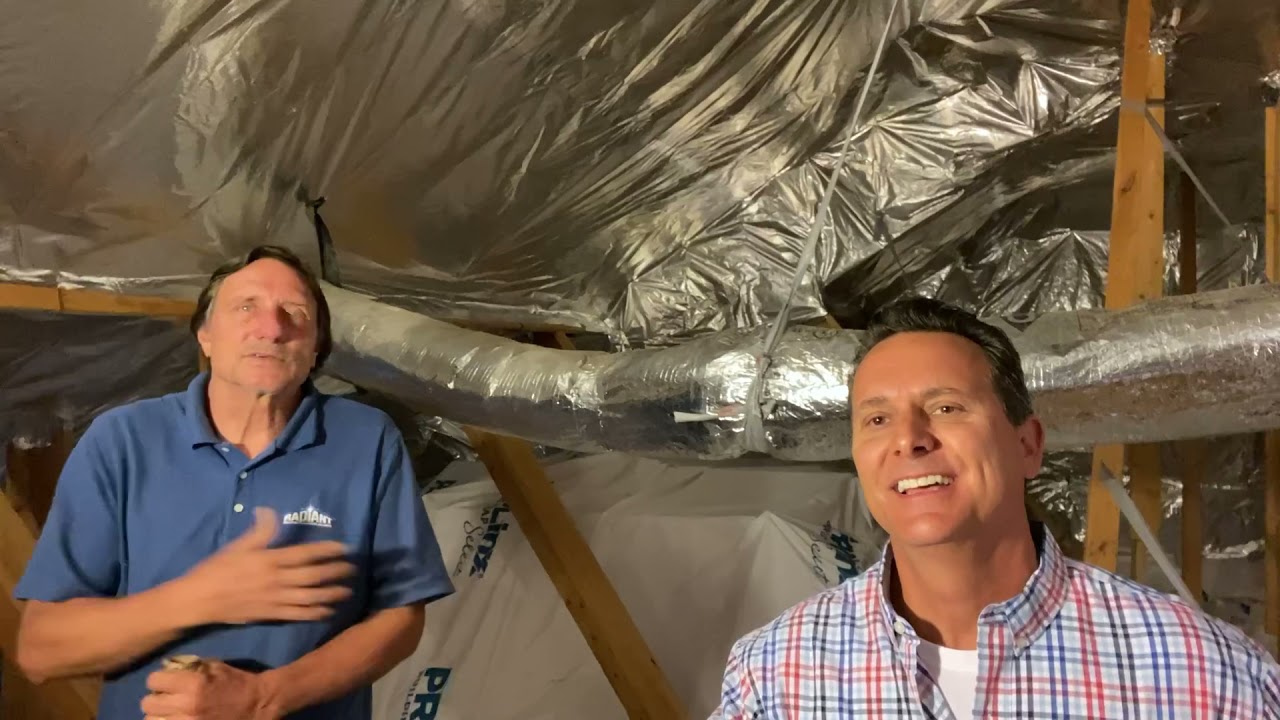
Radiant barriers make the most sense where solar gain is intense and persistent. That's why they show up often in attics, roof decks, and some metal building applications in hot climates.
They are not miracle products. They are focused tools. Used in the right place, they reduce a specific kind of heat that standard insulation doesn't directly address.
A radiant barrier doesn't cool your house by itself. It lowers the amount of roof-driven heat your AC has to fight.
Walk into two South Florida attics in August and you can see why product choice matters. In one, the roof deck is radiating heat into a vented attic like the inside of a broiler. In the other, spray foam has turned the attic into part of the conditioned envelope, so the rules change.
The phrase "radiant barrier" covers several different products, and that causes plenty of confusion. Some are true foil barriers designed to face an air space. Some are roof sheathing panels with a low-emissivity surface already attached. Some are bubble products whose marketing often blurs the line between radiant control and bulk insulation.

Foil roll products are the version many homeowners picture first. They are flexible reflective sheets, often aluminum foil laminated to a backing, and installers usually staple them to the underside of rafters in vented attics.
That placement makes sense in retrofit work because the foil can face the open attic air, which is what allows it to reflect radiant heat. A foil sheet pressed tight against another material loses most of that benefit, much like a mirror covered with a blanket stops behaving like a mirror.
Radiant barrier roof sheathing has the reflective layer bonded to the roof deck at the factory. Builders often choose it for new construction because the location is consistent and the installation is simpler to inspect.
In South Florida, this approach can pair well with some roof assemblies, but only if the assembly still includes the air space the radiant surface needs. That detail matters when spray foam is part of the plan. If foam is sprayed directly against the reflective face, the radiant barrier function drops sharply because the foil is no longer facing air.
Foil-faced bubble products are where homeowners often get mixed messages. The foil can act as a radiant barrier if it faces an air space. The bubble core does not magically turn the product into high-R insulation.
Installers and homeowners get into trouble when these products are sandwiched tightly between solid layers and expected to perform like thick insulation. In that configuration, the foil's reflective role is greatly reduced.
A radiant barrier works best when the shiny, low-emissivity surface faces open air. Without that gap, heat moves more readily by direct contact, and the foil cannot interrupt radiant transfer in the way the product is designed to do.
Brand matters less than setup.
A good installer looks closely at:
In Florida homes with vented attics, installers often mount radiant barrier material along the rafters rather than across the attic floor. That usually puts the reflective surface closer to the source of the radiant heat and avoids covering floor insulation, wiring paths, and service areas with a foil layer that can collect dust over time.
Attic floor installations can still work in some cases, but they are less forgiving. Dust buildup can reduce reflectivity. Service technicians may tear or disturb the material. Storage boards, loose items, and foot traffic can also interfere with performance.
Homeowners often ask which product is better. The more useful question is which heat path is causing the problem.
Spray foam handles air leakage and slows conductive heat flow. A radiant barrier reduces radiant heat transfer across an air space. Those are different jobs, and South Florida homes often need both to be considered together.
A simple way to sort it out is this. If your attic is vented and the roof deck is baking all day, a radiant barrier can reduce the heat being thrown into the attic space. If your attic is leaky and humid air is slipping into the house through chases, top plates, and penetrations, spray foam or another air-sealing strategy may address the larger defect first.
The combination can be smart in a vented attic where the radiant barrier is installed at the rafters and spray foam is used selectively at bypasses, ducts, rim areas, or other leakage points. In that setup, each material keeps doing its own job.
The combination often fails when the design blurs those jobs. Spray foam applied directly against a reflective surface removes the air gap the foil needs. Adding multiple low-perm layers in the wrong order can also create a moisture trap, which is a real concern under South Florida's long cooling season and high outdoor humidity.
That is why assembly design matters more than product labels. A radiant barrier is not a substitute for air sealing. Spray foam is not a substitute for a functioning radiant air space.
If you are comparing foam kits before hiring out the full assembly design, Conservation Mart's Tiger Foam vs. Froth Pak vs. Handifoam Expert Review is a useful starting point for understanding how different spray foam products fit different jobs.
In South Florida, the best installation method is the one that controls radiant heat, air leakage, and moisture without letting one layer cancel out another.
It is easy to focus on the foil roll price and miss the bigger cost question. In South Florida, the true measure of success is whether the assembly lowers attic heat without creating a moisture or air leakage problem that cancels out the benefit.
A radiant barrier can pay off in the right house. It can also become an expensive distraction if the attic is leaking humid air, the ducts are poorly located, or the foil is installed where it cannot face an air space.

A radiant barrier works like a sunshade for radiant heat. It helps most when your roof deck gets hot and that heat is radiating into the attic air and onto ducts, insulation, and framing below. If your main problem is humid outdoor air slipping into the attic and house through gaps, the first dollars often go farther when you seal major attic air leaks before adding reflective products.
That is where South Florida homeowners can get tripped up. A radiant barrier addresses radiation. Spray foam addresses air movement and, depending on the product and location, adds insulation. Those jobs can complement each other, but they are not interchangeable.
Return on investment is partly about the power bill, but homeowners usually feel the result in other ways first. A bonus room may stop overheating in late afternoon. The AC may run under less strain during peak sun hours. Ducts in the attic may operate in a less punishing environment.
There is also a defensive side to ROI. Avoiding a bad assembly matters. If a contractor installs foil where it loses the air space it needs, or combines it with spray foam in a way that traps moisture, you can spend money and get a weaker roof system instead of a better one.
If you are still sorting out whether high bills come from attic heat, duct losses, air leakage, or equipment issues, start with understanding why your electric bill is so high. That kind of whole-house check keeps you from blaming every comfort problem on radiant heat.
The installation method matters as much as the material.
In a vented attic, foil installed along the underside of the rafters can make sense because it faces an open air space and intercepts radiant heat before it bears down on the attic floor and ductwork. In a roof assembly that uses spray foam at the roofline, the question gets more technical. If the foam is applied directly against a reflective surface, the foil loses the air gap that allows it to function as a radiant barrier. At that point, you may be paying for reflectivity that the assembly cannot use.
That does not mean spray foam and radiant barriers should never appear in the same project. It means the sequence and location have to be designed with care. In many South Florida homes, selective spray foam at leakage sites plus a properly detailed radiant barrier in a vented attic is a stronger pairing than stacking layers together without a clear purpose.
Many homeowners see foil and assume it is a simple weekend project. Attics in South Florida are not forgiving workspaces, and small installation errors matter here.
Common DIY mistakes include:
Professional installation earns its keep when the contractor understands building science, not just product placement. Ask how the installer will preserve the air space, how the assembly will dry, and whether any planned spray foam changes the way the radiant barrier performs.
A radiant barrier is more likely to be worth the cost when several conditions line up:
If those boxes are not checked, spend the next dollar on the weakness that is doing the most damage first. In South Florida, that often means fixing air leakage and moisture management before adding another layer to the attic.
A radiant barrier is useful, but it isn't a cure-all. The bigger goal in South Florida is controlling heat, air, and moisture together.
That means you want a home that slows conductive heat flow, limits radiant heat gain where appropriate, and blocks uncontrolled humid air movement. If one of those layers is missing, the house can still feel uncomfortable even after an upgrade.
In practical terms, the most efficient homes usually combine strategies instead of leaning on a single product claim. Roof design, attic type, duct location, insulation type, air leakage paths, and indoor humidity all shape the right answer.
If you're still trying to diagnose the root problem, this guide on understanding why your electric bill is so high can help you think through where energy loss often starts. In many homes, one of the first fixes is to seal attic air leaks before adding more layers to the assembly.
A radiant barrier can be a strong supporting player. It rarely works best as the whole strategy.
A good evaluation looks at the house you have, not a generic internet answer. Some homes need spray foam first. Some benefit from a hybrid roof assembly. Some may get better value from air sealing and duct improvements before any reflective product goes in.
That whole-house mindset is what keeps an efficiency upgrade from becoming a moisture problem later.
In South Florida, winter performance usually isn't the main concern. A radiant barrier's main value here is reducing solar-driven attic heat during cooling season. In cooler periods, its impact is generally secondary compared with air leakage control and insulation quality.
It can be installed in some attic-floor applications, but that doesn't automatically make it the best choice. The bigger issue is whether the reflective surface still faces an air space and whether the location makes sense for your attic layout. In many Florida homes, installers prefer a roof or rafter application because it intercepts heat earlier.
Yes, it can. A reflective surface works best when it stays clean enough to reflect radiant energy effectively. That is one reason product location matters. A dusty horizontal surface can lose some of the benefit that makes a radiant barrier attractive in the first place.
Yes, but the assembly has to be designed carefully. In high-humidity climates, improper installation, such as sandwiching a radiant barrier directly against spray foam without an air gap, can convert radiant heat transfer into conduction and potentially trap moisture. That risk has been estimated at 15% to 25% of retrofits due to install errors, according to the radiant barrier overview on Wikipedia.
Not always. In a well-sealed, high-performing attic assembly, the extra gain from a radiant barrier may be small. The right answer depends on your roof design, attic configuration, and where the remaining heat load is coming from.
If you want a clear recommendation for your home or building, Airtight Spray Foam Insulation can assess the full picture, including attic heat, air leakage, humidity, and roof assembly design. Christian Cates brings more than 25 years of hands-on experience across South Florida, and the team can help you decide whether spray foam, a radiant barrier, or a hybrid approach makes the most sense for long-term comfort and efficiency. Request a free estimate to get a practical plan suited to your property.