When it comes to insulation, not all materials are created equal. Closed-cell spray foam insulation packs a serious punch, offering a powerful R-value of R-6 to R-7 per inch. This makes it one of the most effective thermal insulators you can get.
Think of it this way: that high rating means you get maximum heat resistance in a minimal amount of space, delivering incredible performance for your home.
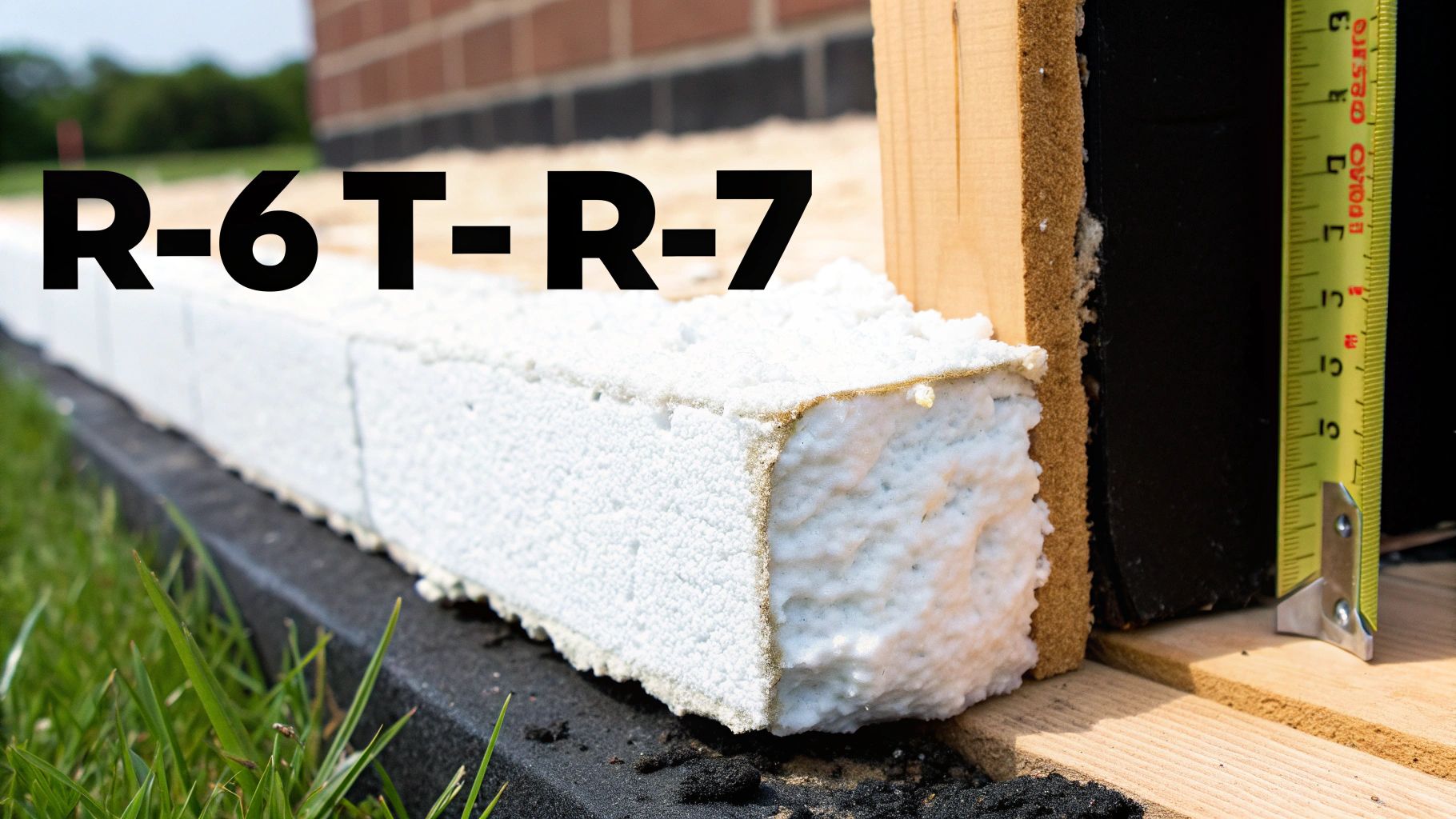
R-value is essentially a thermal shield for your home. The higher that number, the stronger the shield is at blocking heat from getting in or escaping out. The "per inch" metric is really what makes closed-cell spray foam a game-changer, especially down here in South Florida where every degree of heat resistance truly matters.
Closed-cell foam consistently delivers an R-value of R-6.5 to R-7 per inch. That absolutely blows traditional options like fiberglass or cellulose (which hover around R-3.2 to R-3.8 per inch) out of the water.
This superior thermal resistance is a massive advantage in South Florida. For homes in Jupiter, Palm Beach Gardens, West Palm Beach, Wellington, and Stuart, it means a powerful defense against our scorching summers and relentless humidity, which keeps air conditioners from running non-stop.
That high R-value isn't just a number on a spec sheet—it translates directly into real-world benefits that you can feel. Its dense, rigid structure creates an almost impenetrable barrier against the elements.
Here’s a quick summary of what makes it so effective:
| Metric | Typical Value or Rating |
|---|---|
| R-Value per Inch | R-6.5 – R-7.0 |
| Air Permeability | Creates a near-perfect air seal |
| Vapor Permeability | Rated as a Class II vapor retarder |
| Structural Impact | Adds significant racking strength to walls |
This combination of features is why closed-cell foam is more than just insulation; it's a comprehensive upgrade to your home's building envelope.
By providing a superior R-value, an air seal, and a moisture barrier in a single application, closed cell foam offers a multi-layered defense system for your home that other insulation types simply cannot match.
For a more detailed comparison of different insulation materials, check out our guide on the R-value of spray foam insulation. This powerful combination of features makes it the definitive solution for homeowners seeking ultimate comfort, energy efficiency, and long-term protection.
When you're talking insulation, the total R-value is just part of the story. The real game-changer, the metric that truly shows you what the material is capable of, is the closed-cell spray foam R-value per inch.
Think of it like this: you're packing a suitcase for a long trip. You can stuff it full of bulky sweaters, or you can pack a few high-tech, thin layers that keep you just as warm. Closed-cell foam is like that high-tech gear—it delivers incredible performance without taking up a ton of space.
This is absolutely critical when you're up against the physical limits of a house. Most homes, especially here in South Florida, are built with standard 2×4 wall studs. But here’s the kicker: that wall cavity isn't actually four inches deep. It's only 3.5 inches. That non-negotiable depth puts a hard cap on how much fluffy, traditional insulation you can cram in there.
In that 3.5-inch space, you can only really fit enough fiberglass to get you to about R-13. Sure, it might pass a basic code inspection, but "basic" doesn't cut it when you're battling our relentless heat and humidity. This is exactly where the high R-value per inch of closed-cell foam becomes your secret weapon.
With that same 3.5 inches, we can install closed-cell spray foam and hit an R-value between R-21 and R-24. That's a massive leap—nearly double the thermal protection in the exact same footprint. You’re not just insulating a wall; you're transforming it from a thermal weak spot into a formidable shield against the Florida sun.
This ability to pack a powerful punch in a small space is what makes closed-cell foam the smartest choice for both brand-new homes and older ones needing an upgrade. You don't have to build thicker walls to get top-tier insulation; you just need to install smarter insulation.
So, how does it pull this off? It's all in the foam's microscopic structure. Closed-cell foam is made of millions of tiny, sealed pockets, each filled with a special gas that’s fantastic at blocking heat. These cells are squished together so tightly that they create a dense, rigid barrier that heat simply struggles to get through. It’s not just trapping air like fiberglass; it's creating a solid, highly effective thermal break.
This isn't just a number on a spec sheet. That superior performance translates into real, tangible benefits you'll notice from day one. When you maximize the R-value in your walls and attic, you create an indoor environment that’s not just comfortable, but consistently so.
Here’s what you can expect:
At the end of the day, focusing on R-value per inch is about making the absolute most of the home you have. It turns your building's very structure into a high-performance shield that boosts comfort and saves you money.
When you're looking at insulation, it’s easy to get lost in the weeds comparing different materials. But it’s more helpful to think of insulation as a complete system for protecting your home. While plenty of products can fill a wall cavity, only closed-cell spray foam delivers a truly comprehensive, high-performance solution in a single shot.
It’s the unique combination of thermal resistance, moisture control, and structural integrity that really puts it in a league of its own, especially compared to the traditional stuff. Let's break down how it really compares to the competition. Materials like fiberglass and cellulose have been around for ages, but they just can't keep up in the demanding, humid climate we have here in South Florida.
The real difference becomes crystal clear when you line these materials up and compare the metrics that actually matter: R-value, moisture handling, and air sealing. Closed-cell foam consistently laps the field, creating a much tougher and more reliable building envelope. This is why you see such a direct impact on your energy bills and even the lifespan of your HVAC system.
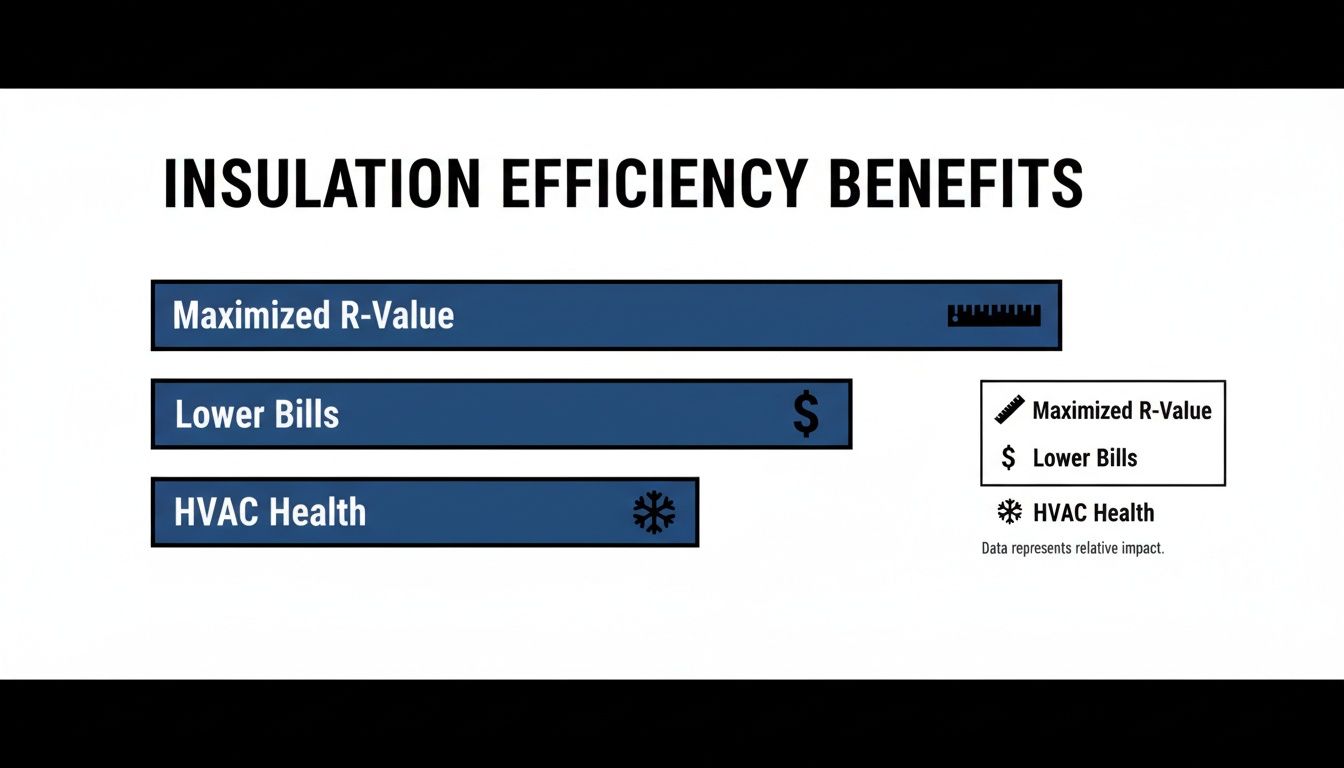
As the chart shows, a superior closed cell insulation r value per inch is the starting point for some serious energy savings and a more comfortable home.
This table gives you a quick, at-a-glance look at how the most common insulation materials perform in the areas that count.
| Insulation Type | R-Value Per Inch | Moisture Barrier | Air Seal | Structural Support |
|---|---|---|---|---|
| Closed Cell Foam | R-6.0 – R-7.0 | Excellent | Excellent | Yes |
| Open Cell Foam | R-3.5 – R-3.8 | Poor | Good | No |
| Fiberglass Batts | R-3.1 – R-4.3 | Poor | Poor | No |
| Blown-In Cellulose | R-3.2 – R-3.8 | Poor | Fair | No |
As you can see, while other materials offer some level of thermal resistance, they completely lack the multi-functional benefits you get with closed-cell foam. To get deeper into the specifics, check out our guide comparing open cell vs. closed cell insulation.
For any of us living in South Florida, the biggest weakness of fiberglass and cellulose is how they handle moisture. It’s their Achilles' heel. The moment those materials get damp—which is practically a guarantee in our humid attics or after a big storm—their R-value completely tanks.
They become useless, waterlogged sponges holding moisture right up against your home’s wood framing. It's the perfect recipe for mold, mildew, and rot.
Closed-cell foam is a completely different animal. Its rigid, waterproof structure isn’t just moisture-resistant; it’s a true vapor barrier. It doesn't just put up with moisture, it actively blocks and repels it, meaning its high R-value stays locked in for decades.
This is why closed-cell foam, with its R-6.0 to R-7.0 per inch rating, is the gold standard. In fact, research shows that walls with just 3.5 inches of spray foam can hit an R-20+ rating, slash air leakage by a staggering 75%, and cut HVAC loads by up to 40% in humid climates like ours.
Closed-cell foam isn't just another option; it's a genuine upgrade. It transforms your walls and attic from passive, vulnerable spaces into an active, protective shield that makes your home more durable, healthy, and efficient.
That's why we see it as a much smarter long-term investment. You aren't just buying insulation; you're buying peace of mind from moisture damage, sky-high energy bills, and the endless battle against air leaks.
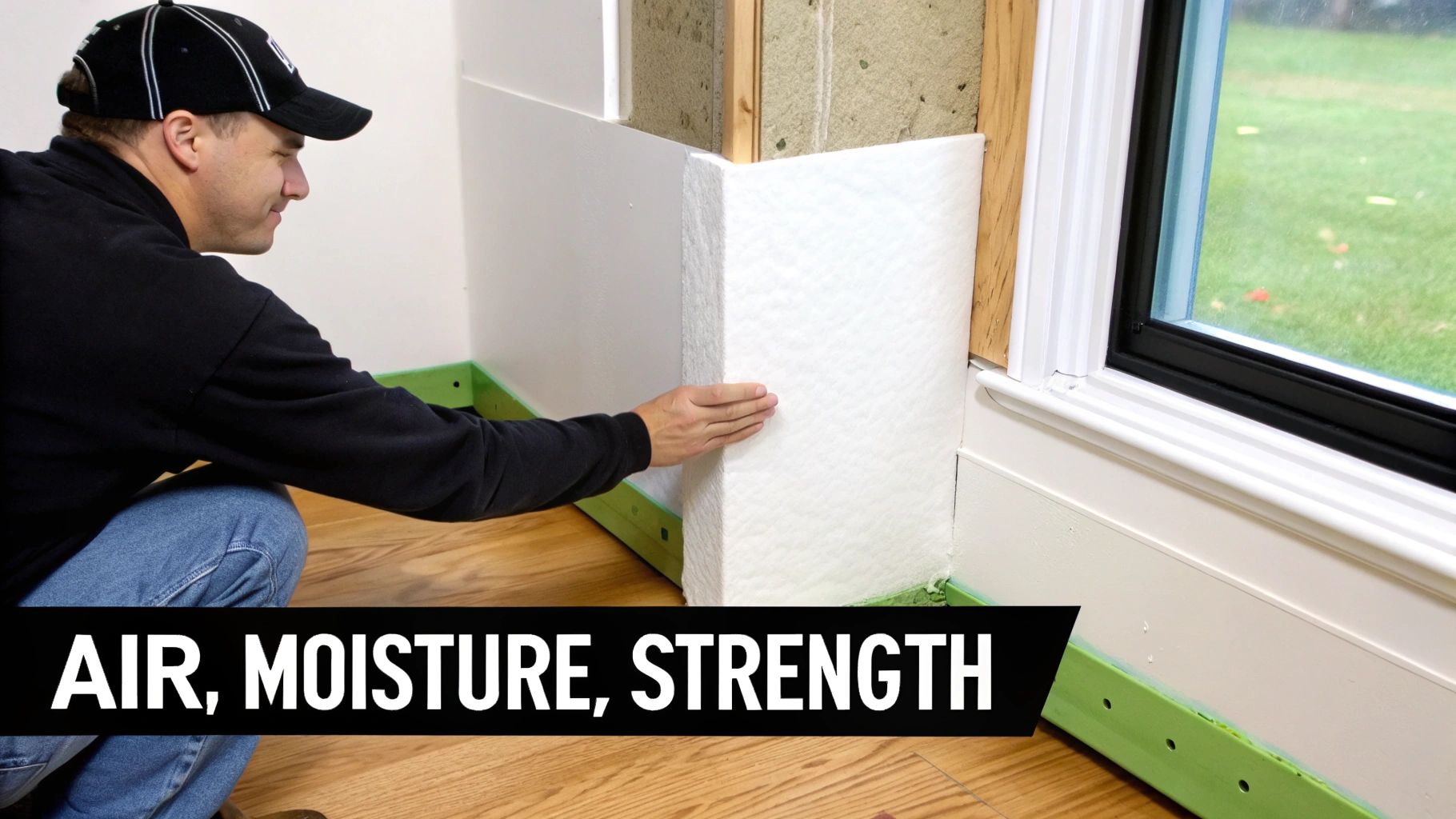
While the impressive closed cell insulation R value per inch gets all the headlines, that number only tells a fraction of the story. The real magic of this material is in the powerful secondary benefits it delivers, solving some of the biggest headaches we face as South Florida homeowners.
Think of it as a complete upgrade for your entire building envelope, all in a single application. Closed-cell foam isn’t just an insulator; it’s an all-in-one air barrier, moisture blocker, and structural reinforcement. These “hidden” strengths are what truly set it apart from old-school insulation and make it the smartest play for our demanding climate.
Imagine your home is a boat. Even a tiny, pinhole leak can lead to big problems down the road. It's the exact same concept with air leaks in your walls and attic. Those gaps let humid, super-heated outside air pour in, forcing your AC to work overtime just to keep up.
Closed-cell foam expands as it's applied, filling every last crack, crevice, and seam to create a solid, airtight seal. This monolithic barrier stops air infiltration dead in its tracks. In fact, studies show that homes insulated with spray foam use 23% less energy for heating and cooling compared to homes with traditional fiberglass. (If you're curious about different climates, this spray foam insulation thickness guide from Southland Insulators has some good info for Virginia homes.)
This isn't just a minor tweak—it's a game-changer that leads directly to lower energy bills and a much more comfortable, stable indoor temperature all year long.
Here in South Florida, humidity is the enemy. It relentlessly seeps into building materials, creating a five-star resort for mold, mildew, and wood rot. Fiberglass and cellulose insulation only make things worse; they act like sponges, soaking up moisture until they’re useless.
Closed-cell foam, on the other hand, is completely different. It’s a non-absorbent, waterproof material. Its dense, plastic-like structure has an extremely low vapor permeance, which is a technical way of saying it actively repels water and humid air.
This quality makes it a formidable defense against moisture-related damage. By blocking water vapor from getting into your walls and attic, closed-cell foam protects your home’s structural integrity and contributes to much healthier indoor air quality.
As if blocking heat and moisture wasn't enough, closed-cell spray foam also delivers a surprising structural boost. When the foam cures, it becomes incredibly rigid and dense. It essentially acts like a high-strength adhesive, bonding the sheathing, studs, and other parts of your wall assembly together.
This reinforcement drastically increases the racking strength of your walls, making the entire structure more resilient against high winds. For anyone living in a hurricane-prone area like South Florida, that added durability provides priceless peace of mind. It’s a unique advantage that no other type of insulation can claim to offer, effectively turning your walls into a stronger line of defense.
Knowing that closed-cell foam packs a punch with its high R-value is one thing, but how does that translate to your actual home? Let's turn the numbers into a real-world plan for insulating against South Florida's relentless heat and humidity.
It all starts with our local building codes. South Florida is in IECC Climate Zone 1, which means there are specific R-value targets for different parts of a home. These aren't just suggestions—they're the minimum requirements to build an energy-efficient and comfortable house in our climate.
The R-value you need depends entirely on where you're putting the insulation. For new homes or major renovations around here, these are the numbers you'll see time and again:
These values represent the total insulating power required. Now, let's see how closed-cell foam's high R-value per inch makes hitting these targets surprisingly easy.
This is where the magic happens. With its powerful R-6.5 per inch average, figuring out the foam thickness you need is simple math: just divide the target R-value by 6.5.
Take that R-38 attic requirement. To get there with closed-cell foam, you'd need about 5.8 inches. To put that in perspective, getting the same R-38 with traditional fiberglass would mean piling it on 10 to 12 inches thick. That extra headroom you save in the attic can be a game-changer.
The real benefit here is efficiency. Closed-cell foam lets you meet—or easily exceed—code requirements without sacrificing precious space or dealing with the performance issues of bulkier, less effective materials.
Even better, think about a standard 2×4 wall. The cavity is only 3.5 inches deep. Filling that space with closed-cell foam gives you a whopping R-22.7, blowing past the R-13 code minimum.
To get a truly accurate picture of your home's needs and find every hidden spot where energy is leaking out, nothing beats a thorough home energy audit. It gives you a precise roadmap for your property, ensuring every dollar you invest in insulation delivers maximum comfort and savings. It’s a data-driven approach that helps you make a smart, informed decision for your home's future.
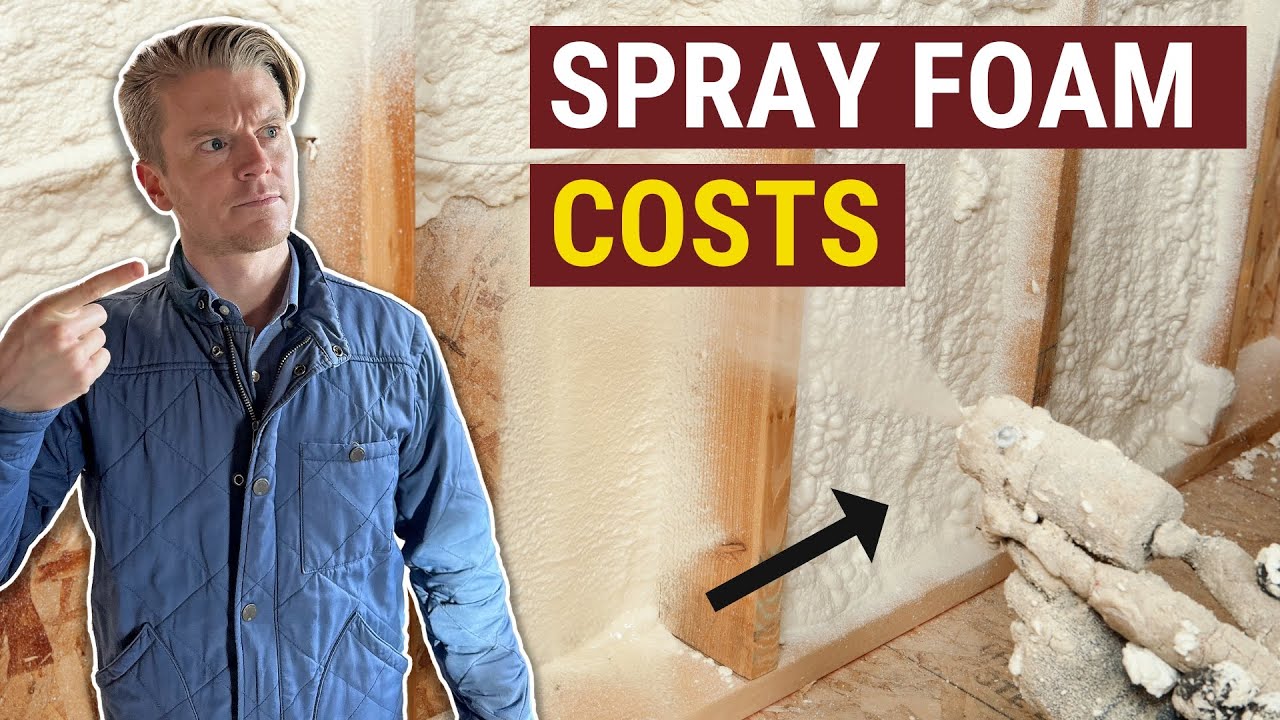
Knowing the science behind the closed cell insulation r value per inch is one thing. Actually getting that performance in your own home? That comes down to one thing and one thing only: a flawless, professional installation.
This is where the rubber meets the road.
Closed-cell spray foam offers a trifecta of benefits perfect for our humid South Florida climate—serious thermal resistance, a powerful moisture barrier, and even added structural muscle. But you only get those perks if the material is applied correctly. We're talking about the right thickness, perfect coverage, and a truly seamless building envelope. Achieving that level of quality in the construction industry is a craft.
An expert installer doesn't just point and shoot foam. They're constantly managing temperature, pressure, and the chemical mix ratios to make sure the foam cures into that solid, monolithic barrier your home needs to fight off heat and humidity.
Ultimately, there’s no substitute for bringing in certified, experienced professionals. It's the only way to ensure your investment truly pays off in lower energy bills, a more comfortable home, and peace of mind for years to come. To see how we prove it, you can learn more about what a blower door test is and how it validates a truly airtight installation.
Even with all the facts laid out, it's natural to have a few final questions before you pull the trigger on a big home improvement project. Let's tackle some of the most common ones we get from homeowners just like you.
In a word, absolutely. Look, I get it—the upfront ticket for closed-cell foam is higher than old-school stuff like fiberglass. But you have to look past the initial price and see the bigger picture. In a climate like South Florida's, the day-in, day-out savings on your cooling bills are massive. Most of our clients see a return on their investment in just a few years.
But honestly, the energy savings are only half the story. The real game-changer is its ability to shut down moisture and humidity. That’s not just a feature; it's an insurance policy against mold, mildew, and wood rot—the kind of expensive, nightmarish problems that plague Florida homes. It’s a one-and-done upgrade that won't sag, settle, or fall apart.
Don't think of it as just an insulation expense. It’s a permanent upgrade to your home. You're investing in lower FPL bills, cleaner indoor air, and a stronger, more resilient structure that can actually handle our brutal heat and humidity.
You bet. Retrofitting existing homes is one of the most common jobs we do. It's especially effective in places we can get to easily, like attics and crawl spaces. If you're planning a remodel where the walls are opened up anyway, that's the perfect time to do it. Just upgrading those key spots can make a night-and-day difference in your home's comfort and efficiency.
Now, getting it into finished walls without tearing them down is trickier, but it’s not impossible. A real pro can look at your home and map out the best way to get it done with the least amount of fuss, making sure you get all the benefits no matter how old your house is.
Nope, and this is maybe its biggest superpower. That high closed cell insulation R value per inch is locked in for good. The foam cures into a rigid, solid plastic that doesn't compress, shift, or break down over the decades.
All the insulating gas that gives it its power is trapped inside millions of tiny, sealed-off cells. That thermal performance is permanent. It's not like fiberglass that turns into a useless, soggy mat if it gets wet, losing R-value along the way. Closed-cell foam performs just as well on year 20 as it does on day one, giving you predictable, consistent energy savings for the life of your home.
Ready to stop fighting with your thermostat and see what real comfort feels like? The crew at Airtight Spray Foam Insulation has been doing this for years, and we know how to do it right for South Florida homes. Request your free, no-obligation estimate today and let us show you the Airtight Comfort System.