If you're in South Florida, you may be dealing with a house that never feels fully dry. The AC runs. The windows fog at times. A closet smells musty. Paint near an exterior wall looks tired sooner than it should. You fix obvious leaks, but the damp feeling keeps coming back.
That usually means you're not just fighting water. You're fighting water vapor.
In this climate, moisture doesn't need a roof leak to cause trouble. Humid outdoor air keeps pressing against walls, attic assemblies, crawlspaces, and slab edges. Once that moisture moves into the building envelope, it can cut insulation performance, feed mold, and push your cooling system to work harder than it should. Good moisture control starts before the drywall goes up. It starts with choosing the right vapor barrier materials, putting them in the right place, and knowing when a separate membrane helps versus when it causes problems.
A lot of homeowners blame the AC first. That's understandable. If the house feels clammy, the air conditioner seems like the obvious suspect.
But in South Florida, the building envelope often plays a bigger role than people think.

Moisture problems rarely announce themselves with a puddle. More often, they show up as:
That last one gets overlooked. Wet materials don't help your home hold a steady indoor temperature. Your AC ends up conditioning a space that's constantly being challenged by humidity.
For a broader look at how houses manage humidity from roof to slab, this guide on overall moisture control gives useful context beyond just wall assemblies.
Think of your house like a cooler. If the lid doesn't seal well, warm humid air keeps getting in. A building works the same way. Walls, ceilings, and floors aren't supposed to invite outside moisture into conditioned space.
That matters even more when insulation is involved. A good overview of how moisture and insulation work together is in this resource on https://airtightsprayfoaminsulation.com/moisture-barrier-insulation/.
Practical rule: If a house feels damp without an obvious leak, look for vapor movement and air leakage before you assume the AC is undersized.
People sometimes say a house needs to "breathe." That's one of those phrases that causes expensive repairs. Assemblies need to dry when appropriate, but uncontrolled humid air moving through the envelope isn't healthy breathing. It's leakage. In South Florida, that leakage usually helps outdoor moisture win.
Most of the confusion around vapor barrier materials starts with one issue. People treat all moisture movement like it's the same thing.
It isn't.
Water vapor moves because conditions on one side of an assembly differ from the other. In South Florida, the outside air is often hot and loaded with humidity while the inside is cooler and drier. That difference pushes vapor inward.
A simple way to think about it is a soda can. Shake it, crack it, and pressure looks for a path out. Moisture behaves the same way. If one side of a wall has more vapor pressure, that moisture tries to move through materials, seams, and tiny gaps.
In everyday conversation, people say "vapor barrier" for almost everything. In practice, most materials are really vapor retarders. They slow vapor down. They don't stop it absolutely.
The code sorts these materials by permeability, measured in perms. The International Residential Code classifies them this way: Class I is 0.1 perms or less, Class II is more than 0.1 and up to 1.0 perms, and Class III is more than 1.0 and up to 10 perms according to the U.S. Department of Energy's guidance on vapor barriers or vapor retarders.
Perms are just a way to measure how easily water vapor passes through a material.
It's like rain gear:
Here are the classes in plain language:
| Class | Perm range | What it means | Common examples |
|---|---|---|---|
| Class I | 0.1 or less | Very resistant to vapor flow | Polyethylene sheet, sheet metal, rubber membranes |
| Class II | More than 0.1 to 1.0 | Strong vapor retarder | Extruded polystyrene, some foam-based materials |
| Class III | More than 1.0 to 10 | Moderate vapor transmission | More vapor-open interior finishes and assemblies |
A few numbers matter a lot in the field. 6-mil polyethylene can rate as low as 0.06 perm, which puts it in Class I. That's highly vapor-resistant. It can be useful in the right assembly and the wrong choice in the wrong one.
For homeowners comparing insulation strategies, this page on https://airtightsprayfoaminsulation.com/vapour-barrier-and-insulation/ helps connect those perm classes to real assemblies.
A low perm rating isn't automatically better. It only means the material is more resistant to vapor diffusion. Whether that's good or bad depends on climate, wall design, and where the layer sits.
If you know the class, you can ask better questions.
You can ask whether the wall needs to dry inward. You can ask whether the installer is creating a vapor trap. You can ask whether the chosen material controls vapor only, or also handles air leakage. Those are the questions that keep a simple material choice from turning into a hidden mold problem.
Walk onto a jobsite and you'll hear the same materials come up again and again. Poly sheeting. Kraft facings. Foil products. Peel-and-stick membranes. Liquid-applied coatings. Spray foam.
They don't all do the same job. That's where many bad decisions begin.
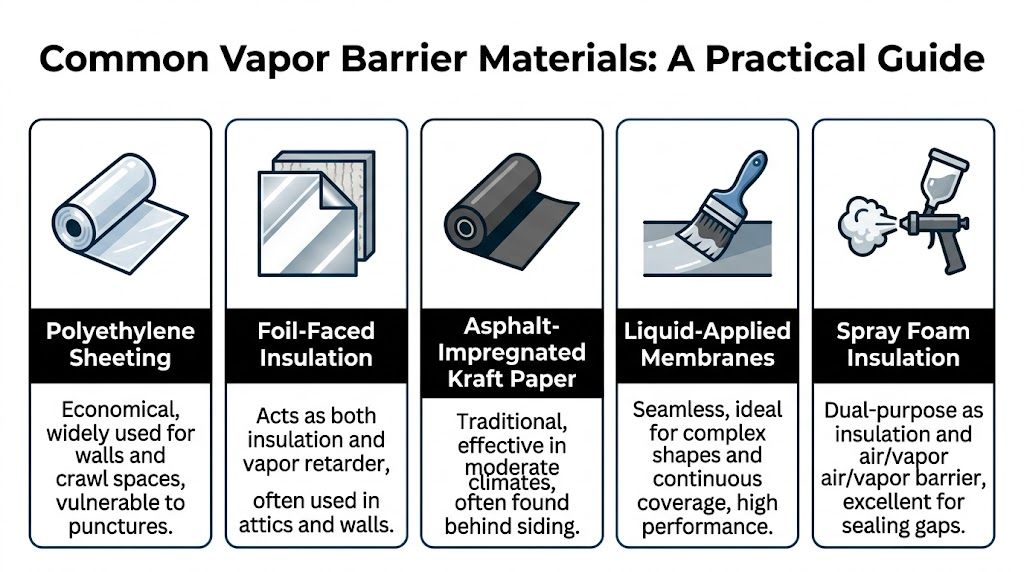
Polyethylene sheeting is the old standby. Builders know it, it's widely available, and it's inexpensive. With a rating as low as 0.06 perm for 6-mil polyethylene, it's a true Class I vapor retarder. The problem is durability and placement. It tears easily, gets punctured by other trades, and in a hot-humid climate it can become the wrong layer in the wrong spot.
Foil-faced products can work well where radiant control and low vapor permeability are both useful. Aluminum foil is extremely resistant to vapor transmission. These products can make sense in specific assemblies, but they demand careful detailing at seams and penetrations.
Bitumen-coated kraft facings and similar facer materials sit in a more moderate range. They can slow vapor without fully locking up a wall. In some assemblies that's useful. In others, they're too inconsistent because facings are often discontinuous once boxes, wires, and framing interruptions show up.
Self-adhered membranes are a big step up when continuity matters. Some self-adhering vapor barrier membranes with SBS rubber and asphalt blends are rated at less than 0.03 perms and do a better job around penetrations and transitions because they seal tightly and self-seal better than loose sheet goods. On tricky geometry, these are often more dependable than trying to tape flimsy plastic perfectly.
Liquid-applied membranes shine on surfaces with a lot of corners, irregular shapes, or hard-to-seal transitions. Instead of fighting wrinkles and laps, the installer creates a continuous coated layer. Execution still matters, but the approach solves many of the failures that sheet goods create.
| Material | Typical vapor behavior | Practical strengths | Practical drawbacks | Best-fit uses |
|---|---|---|---|---|
| 6-mil polyethylene | Very low perm, Class I | Low cost, familiar, strong vapor resistance | Punctures easily, easy to misplace in hot-humid walls | Select interior uses in climate-appropriate assemblies, some crawlspace and under-slab conditions |
| Foil-faced insulation | Very vapor resistant | Can combine insulation facing with vapor control | Needs careful seam treatment, not forgiving around penetrations | Specialty wall, roof, and radiant-control applications |
| Asphalt or kraft-faced products | Moderate vapor control | Familiar in conventional insulation systems | Often discontinuous in the field | Limited assembly-specific applications |
| Self-adhered membranes | Low perm options available | Excellent adhesion, better continuity, strong detailing around openings | Surface prep matters, higher material cost | Penetrations, transitions, walls, roofs |
| Liquid-applied membranes | Depends on formulation | Seamless coverage on complex shapes | Installation quality and thickness control matter | Irregular substrates, retrofit detailing |
Some vapor barrier materials work best as part of a stack, not as a single layer. A good example is a composite assembly that pairs cross-woven polyethylene skins for moisture protection with high-density foam for insulation and a reflective aluminum layer for radiant heat control, as described in this technical data on multi-layer composite vapor barrier construction.
The best material on paper can still lose to an average material installed with better continuity.
That's why I don't judge a vapor control plan by the product label alone. I look at where it goes, what sits next to it, how the wall dries, and which trade is likely to punch holes in it later.
A lot of bad advice comes from copying details from cold climates and dropping them into South Florida houses.
That's how walls get trapped wet.
For decades, builders were taught to put interior polyethylene vapor barriers in walls as a default move. That approach came from cold-climate thinking. It assumed moisture was mostly trying to move from the inside of the house outward.
Building science later corrected that mistake. The historical push for interior polyethylene in all climates was a major misstep, and later practice shifted toward prioritizing air barriers instead, as explained in Building Science Corporation's discussion of forty years of air barriers.
In South Florida, the dominant seasonal pressure often goes the other way. The hotter, wetter exterior pushes moisture inward toward the cooler, air-conditioned interior.
If you place a low-perm sheet on the interior side of a wall in this climate, you can create a trap.
Here's the pattern:
That's how you end up with mold behind finishes that still look normal from the room side.
A lot of broader efficiency advice is useful for local projects, especially when you tie envelope upgrades together. This overview of Smart Energy Efficient Home Upgrades for South Florida Homes helps homeowners think beyond one isolated fix.
In this climate, "more barrier" isn't the same as "better protection."
That single misunderstanding causes a lot of expensive repairs. If you stop moisture from drying in both directions, the wall doesn't care that the original intention was good.
This is the question most homeowners and plenty of contractors need answered.
If you're using spray foam, do you still need separate vapor barrier materials?
Often, the answer is no. Sometimes, the answer is it depends on which foam you're using and where it's being installed.
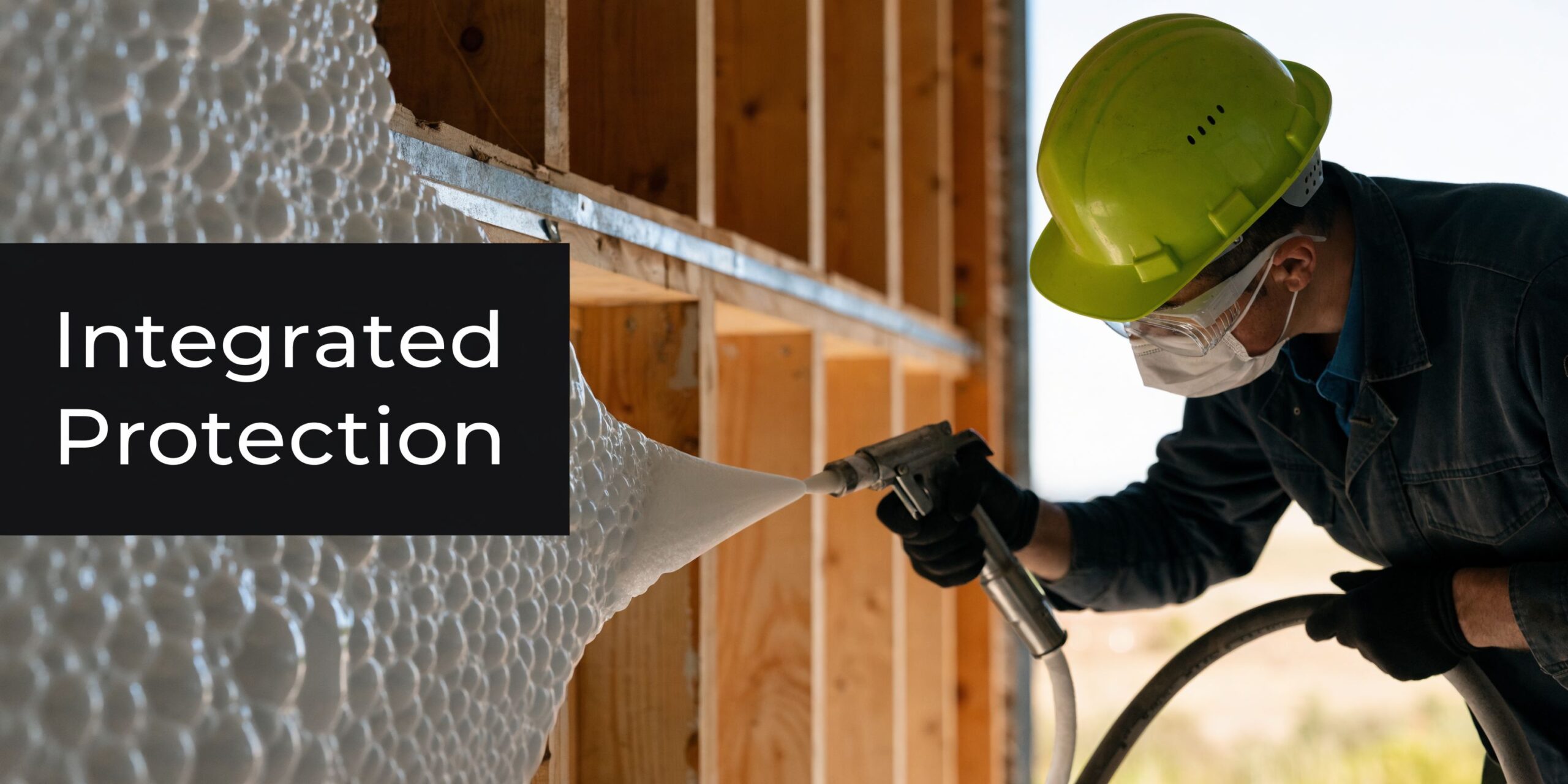
Closed-cell spray foam isn't just insulation. In many assemblies, it also acts as an air barrier and a vapor retarder.
That matters because the biggest online guidance gap is exactly this interaction. Standard vapor barrier advice often ignores the fact that closed-cell spray foam has inherent vapor-retarding properties, which can make a separate polyethylene sheet redundant or even harmful in a hot-humid climate like South Florida, as noted in this discussion of spray foam and traditional vapor barriers.
In plain language, closed-cell foam can already be doing the moisture-control work people think the extra plastic sheet will do.
For applications where water resistance and low permeability matter, this overview of https://airtightsprayfoaminsulation.com/closed-cell-spray-foam-insulation-waterproof/ helps explain why contractors use it in demanding assemblies.
When someone installs closed-cell foam and then adds a polyethylene sheet on the wrong side just to be safe, they can create what many of us call a moisture sandwich.
Moisture gets between two low-perm layers and has nowhere useful to go.
That doesn't mean extra material always ruins an assembly. It means every layer needs a reason to be there. If one product already gives you air sealing, insulation, and vapor control, adding another impermeable layer without a climate-specific reason can make the assembly less forgiving.
Open-cell spray foam shouldn't be lumped together with closed-cell. It behaves differently.
Open-cell foam is more vapor-open. That can be helpful when the assembly needs drying potential. It can also mean the foam alone isn't the right vapor control strategy in some locations. The decision depends on wall orientation, roof design, cladding, and whether the assembly benefits from inward drying.
That's why "spray foam" by itself isn't a complete answer. The foam type matters.
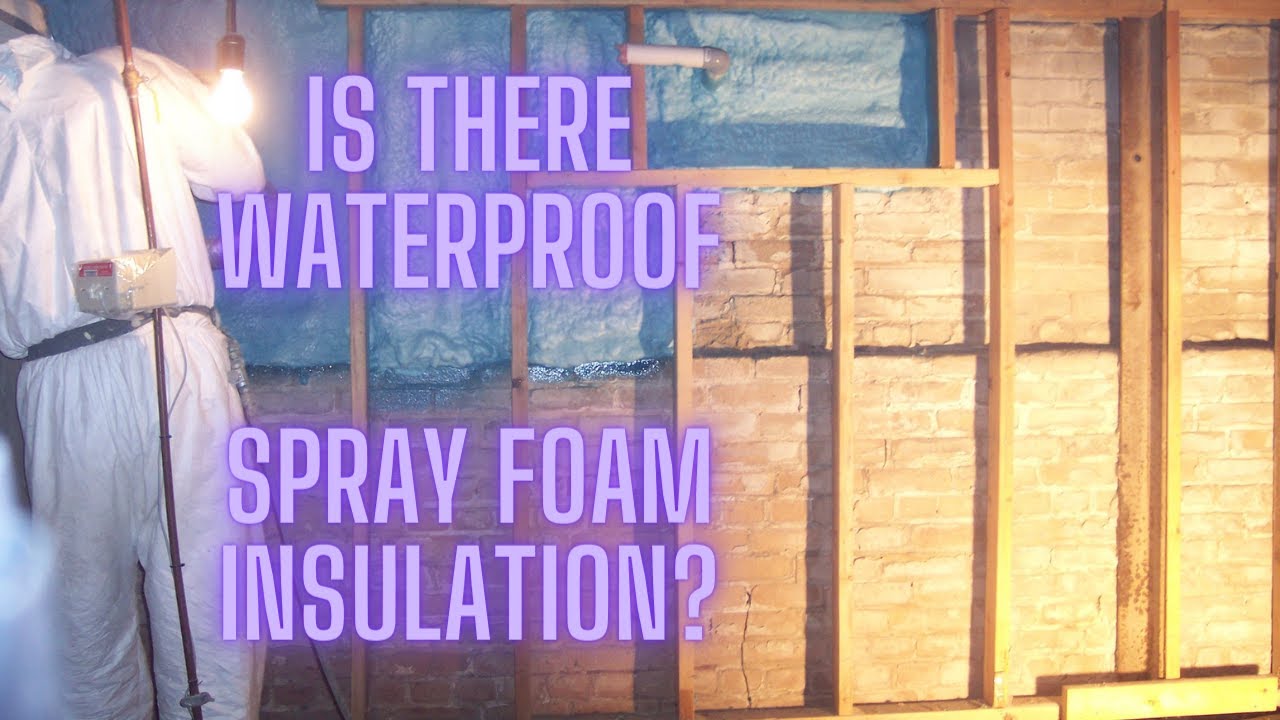
Here is a helpful visual overview of how spray foam is installed in the field:
Use this as a field mindset, not as a substitute for assembly design:
If a material already handles insulation, air control, and vapor control, adding plastic out of habit can create the exact problem you're trying to prevent.
Good products fail every day because somebody treated continuity like a minor detail.
A vapor retarder system is only as good as its weakest opening. One unsealed pipe penetration can do more damage than people expect. One sloppy window transition can turn a strong wall assembly into a moisture entry point.
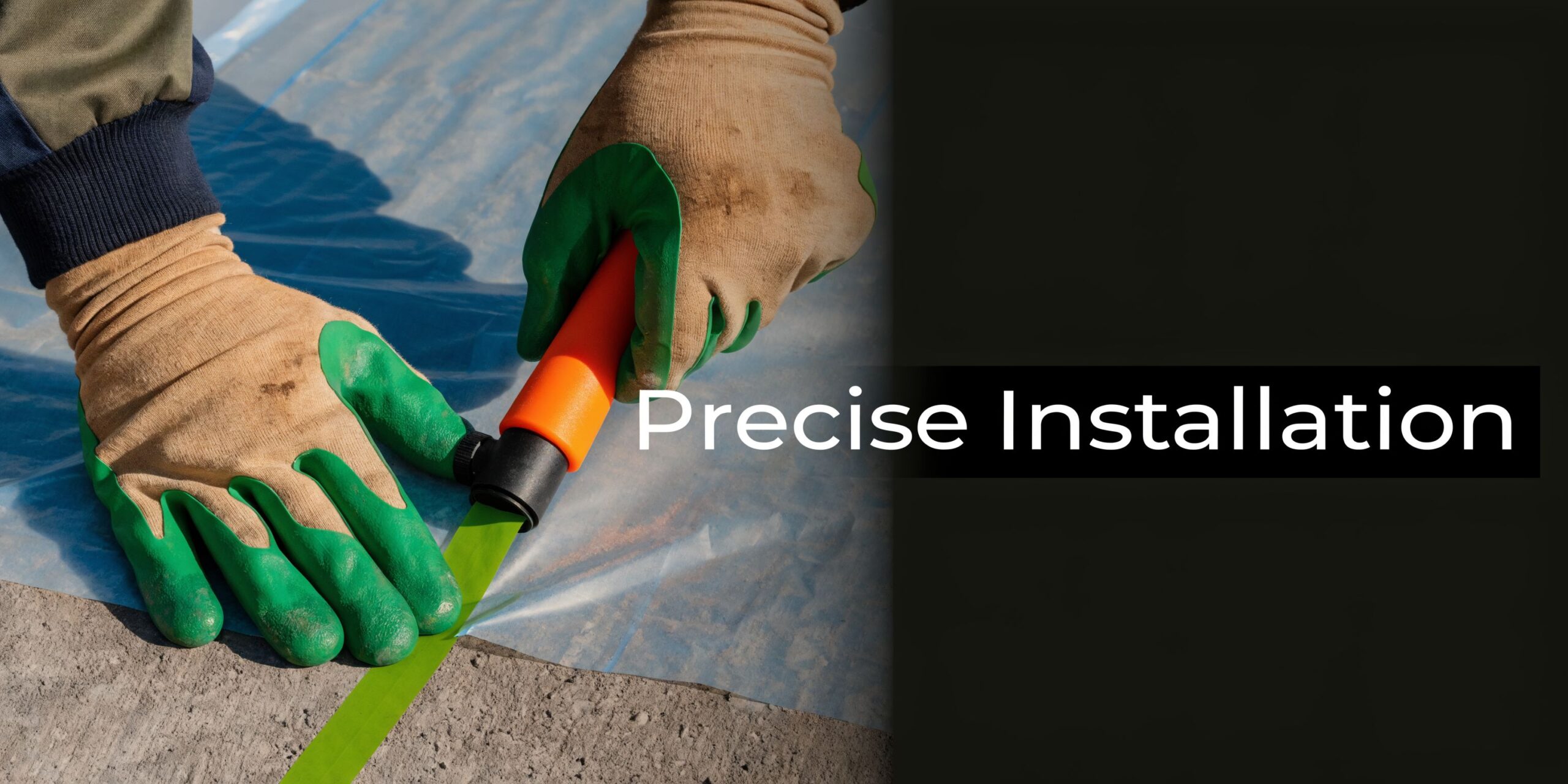
I've seen the same failure points over and over:
A membrane isn't magic. If air and vapor can bypass it at the edges, the center of the sheet doesn't save you.
A reliable installation usually follows a few simple rules:
Keep the layer continuous
The control layer has to connect across the whole assembly. Wall to ceiling. Wall to slab. Window to sheathing. If continuity breaks, performance breaks with it.
Lap materials the right way
Think roof shingles. Overlaps should direct incidental moisture in a way that doesn't invite it behind the layer.
Use tapes and sealants that belong with the system
Cheap tape is one of the worst false economies in construction. Compatibility matters. Adhesion matters. Surface prep matters.
Seal every penetration deliberately
Pipes, wires, vents, and fasteners are where rushed jobs show up months later.
| Area | What to look for |
|---|---|
| Seams | Fully adhered, not just overlapped |
| Corners | No fishmouths, gaps, or wrinkles pulling open |
| Penetrations | Gaskets, sealant, or membrane patches fitted tightly |
| Transitions | Clean tie-ins between different materials |
| After other trades | No tears or punctures left exposed |
A clean-looking install isn't enough. Check the corners, penetrations, and transitions. That's where the real work is.
If a crew can't explain how the vapor layer connects from one assembly to the next, that's a red flag. Moisture control isn't about covering large flat areas. It's about solving the awkward spots.
South Florida homes don't get a pass on moisture. They get tested harder.
That means the right answer usually isn't just "add a vapor barrier." The right answer is to choose vapor barrier materials based on perm rating, placement, drying potential, and how the insulation system works with them. In many assemblies, especially those using closed-cell spray foam, the smarter move is integration rather than layering products out of habit.
The market reflects how important that has become. The global vapor barriers market was valued at USD 16.5 billion in 2025 and is projected to reach USD 27.1 billion by 2035, driven by demand for energy efficiency and moisture control, with polymer-based materials leading adoption according to this report on the global vapor barriers market.
For homeowners and contractors here, the takeaway is simpler than the industry jargon makes it sound:
Get those pieces right and the payoff is tangible. Rooms feel drier. The AC doesn't fight the house all day. Materials last longer. The building gets more durable, not just more insulated.
Airtight Spray Foam Insulation helps South Florida homeowners, builders, and property managers choose the right moisture-control strategy for each assembly, not just the most familiar product. If you need guidance on closed-cell or open-cell applications for attics, roofs, walls, garages, metal buildings, or new construction, contact Airtight Spray Foam Insulation for a free quote and a site-specific recommendation.