You hear it at night first. A faint scratch behind the drywall. A quick scuttle over the garage ceiling. Sometimes it's under the sink cabinet where the plumbing comes through the wall, and sometimes it's up in the attic where the house goes quiet and the pests get busy.
In South Florida, that sound usually means one thing. Something found a gap, and our climate makes those gaps matter more. Heat, humidity, salty air near the coast, and constant pressure from insects and rodents all test the weak spots around pipe penetrations, AC line sets, attic openings, and garage transitions.
A mouse foam sealant can be a smart first move for small DIY sealing jobs. It's useful when you've identified a specific entry point and the surrounding material is sound. But the way you use it matters, and in places like Jupiter, Palm Beach Gardens, West Palm Beach, Wellington, and Stuart, moisture changes the job. If the opening stays damp, if the gap is too large, or if the problem is spread through the attic and wall system, one can of foam won't solve it.
The usual pattern is simple. A homeowner notices droppings in the garage, hears movement in the attic after dark, or finds that the cabinet under the kitchen sink smells musty and looks disturbed. Then they start looking for a fast fix and end up in the hardware aisle staring at cans of expanding foam.
That instinct makes sense. A pest-blocking foam is one of the few DIY materials that can fill irregular gaps around penetrations, wiring, and small cracks without opening up the wall. For a minor access point, that's often where the work should start.
But South Florida homes don't behave like homes in drier climates.
Concrete block walls, stucco cracks, line penetrations for HVAC equipment, and hot attic spaces all create sealing details that need more care than a quick spray-and-walk-away approach. In this region, moisture is usually part of the story. If a pipe penetration under a sink has an active leak, or if humid air is moving through an attic chase, the foam may still fill the gap, but the underlying condition keeps attracting pests.
Practical rule: Use mouse foam sealant to block access, not to ignore the reason pests liked that spot in the first place.
Another issue is scale. A single hole behind the dishwasher is a good DIY target. A whole attic with open framing joints, disconnected soffit pathways, and multiple utility penetrations is a building-envelope problem. That calls for a broader plan than canned foam can deliver.
The best DIY wins tend to happen in places like:
That's the right use case for mouse foam sealant. It's not glamorous, but sealing obvious access points is often the fastest way to stop repeat entry while you figure out whether the issue is isolated or systemic.
You hear scratching over the garage ceiling after a humid night, then find a gap around the AC line set outside by morning. That is a common South Florida pattern. Rodents and insects use the same weak spots that moisture and air leakage already exposed.
The National Pest Management Association reports that 37% of homeowners have seen a rodent in their home in the past year. Sealing entry points is one of the few steps that helps for the long term, but only if you find the full route instead of the first visible hole.
Start with the house perimeter. Move slowly and stay low at first, because many entry points sit near slab edges, wall penetrations, and service lines where installers cut oversized openings years ago. In South Florida, those openings often change over time. Caulk shrinks, stucco separates at trim, and condensation around line penetrations keeps materials from holding up as long as they would in a drier climate.
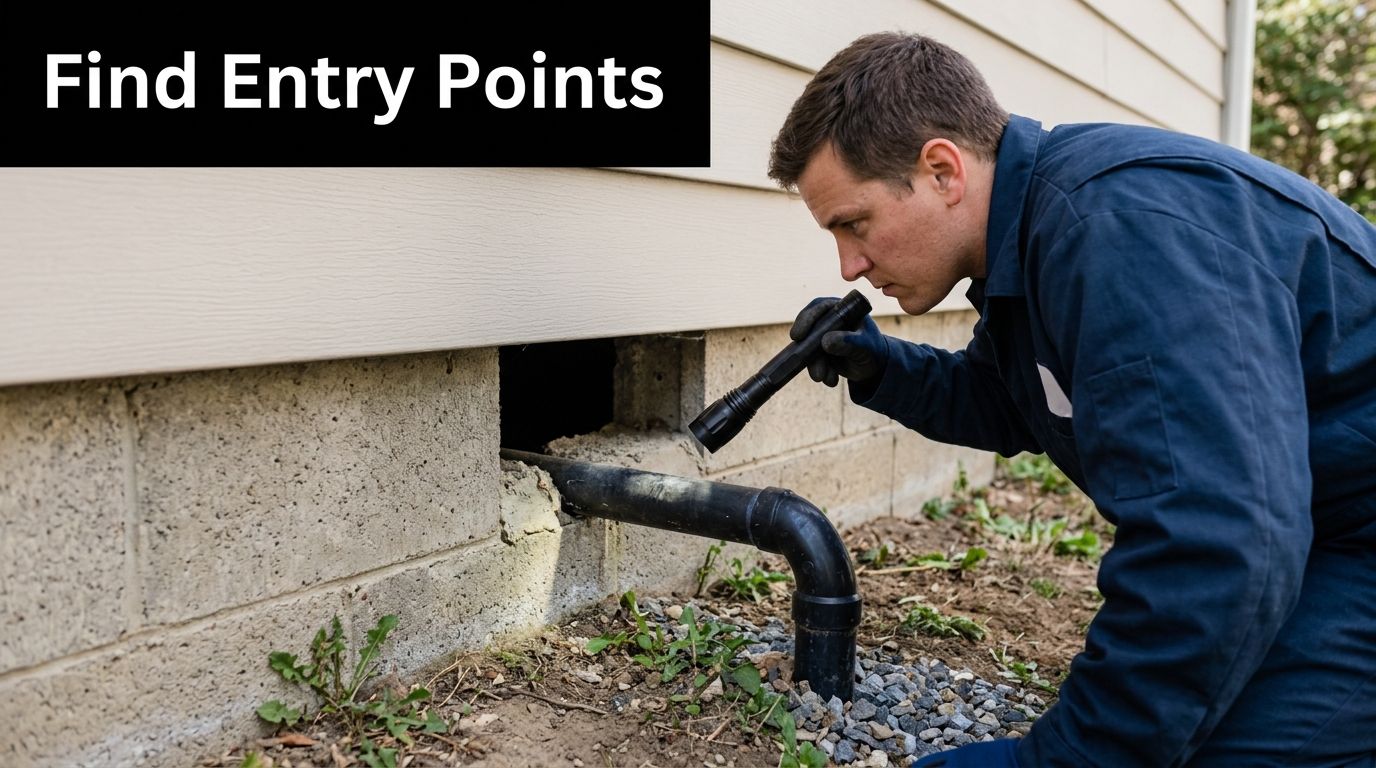
Check these areas first:
If you have heard activity above the ceiling, also inspect your attic's roofing and insulation so you are not treating a wall penetration while missing an entry path at the roofline.
Attics and garages need a different inspection approach. In the attic, use a flashlight and look for disturbed insulation, droppings, rub marks on framing, and dark smudges near top plates, vent stacks, bath fan housings, and chase openings. In the garage, pull items away from the wall before you inspect. A gap you can seal in ten minutes is easy to miss when it sits behind bins, paint cans, or lawn equipment.
Recurring attic noise usually means the problem is larger than one can of foam. If signs point to repeat access from above, this guide on attic rodent control helps explain when spot sealing works and when the attic needs a broader exclusion plan.
Look for droppings, nesting material, greasy rub marks, and moisture at the same time. In this climate, a damp penetration often attracts pests and shortens the life of a DIY repair.
Make a simple map before you seal anything. Use your phone and note the location, gap size, whether the area is dry, and whether you can reach it safely. That keeps you from sealing the obvious hole under a sink while missing the larger opening on the same wall cavity.
| Location | Condition | DIY candidate |
|---|---|---|
| Under kitchen sink drain | Dry, visible, small gap | Yes |
| AC line set at exterior wall | Visible, irregular opening | Usually yes if dry |
| Attic utility chase | Hard to access, multiple openings | Maybe |
| Garage corner at slab | Visible but active moisture | Fix moisture first |
Not all foam in a can does the same job. Some products are made for general gap filling and draft reduction. Others are specifically labeled for pest blocking. If rodents are part of the problem, that distinction matters.
Products like DAP Mouse Shield Pest Block Foam Sealant are positioned as interior-use pest blockers for gaps and cracks in garages, attics, crawl spaces, basements, under sinks, and around pipe or electrical penetrations. The product sheet also says it is treated to block mice, birds, bats, squirrels, ants, roaches, and spiders, and the listing reflects a 12 oz format suited to small- to medium-scale sealing rather than structural insulation work, according to DAP's product data sheet.
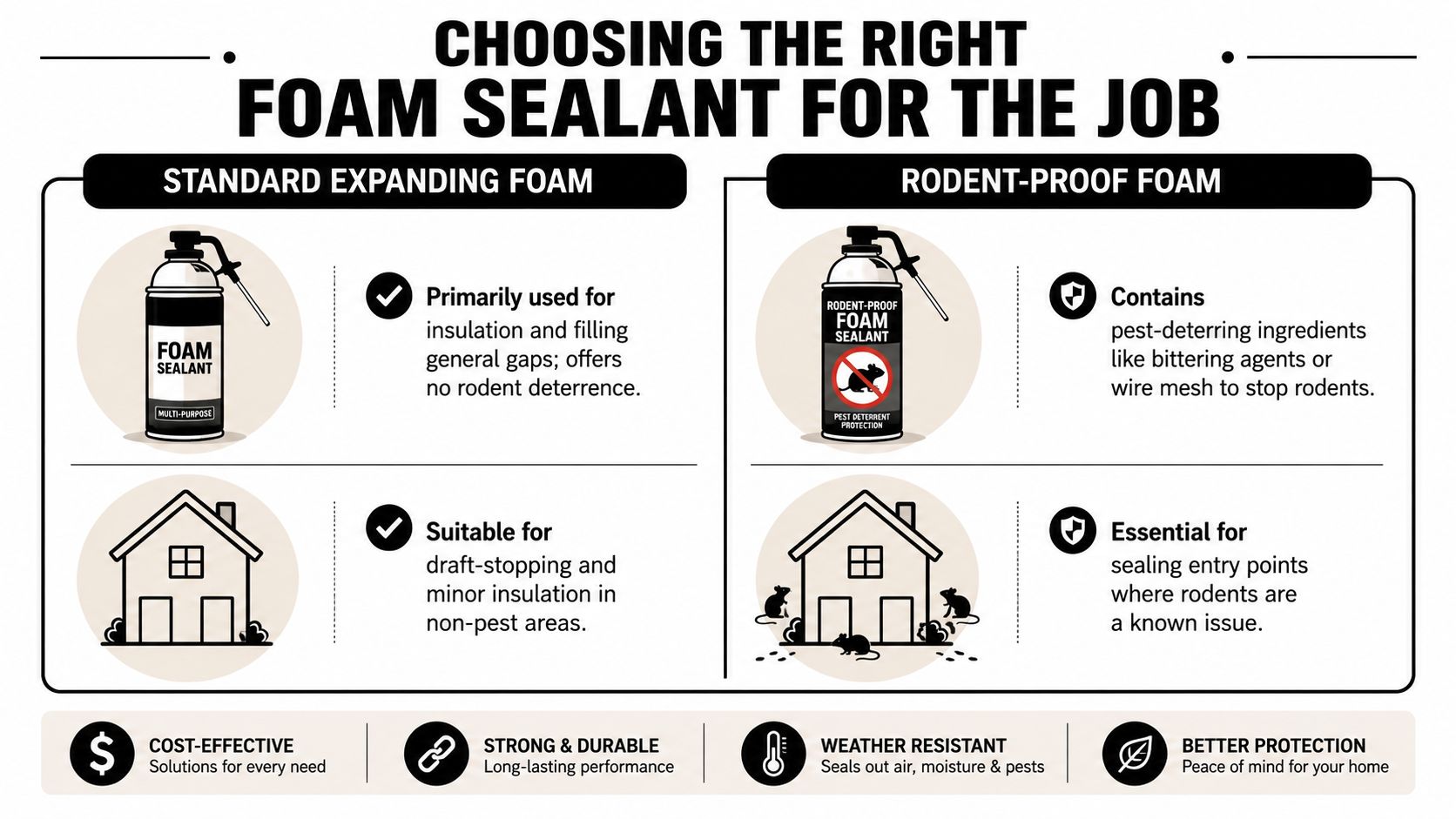
The easiest way to choose is to match the product to the risk.
| Foam type | Best use | Main limitation |
|---|---|---|
| Standard expanding foam | General draft stopping and non-pest gap filling | Not intended as a rodent deterrent |
| Pest-blocking canned foam | Small entry points in known pest areas | Better for spot sealing than whole-house air sealing |
| Professional closed-cell spray foam | Larger envelope sealing and durable air barrier work | Not a casual DIY product |
For the homeowner doing a small repair, a pest-labeled canned foam makes more sense than a basic filler if the opening is around plumbing, attic penetrations, or garage utility entries.
Regarding foam choice, practical considerations often outweigh marketing language. In dry indoor conditions, many products perform acceptably. In South Florida, the location of the gap matters just as much as the can label. A penetration near plumbing, a wall tied to exterior humidity, or an area near HVAC equipment needs better judgment.
Closed-cell products generally make more sense when you need a denser, more moisture-resistant seal in problem areas. For homeowners trying to understand that difference before buying materials, this overview of canned spray foam and closed-cell options gives a useful starting point.
If the gap is dry, limited, and easy to reach, canned pest-blocking foam is often enough. If the assembly is humid, repeatedly wet, or full of multiple leakage paths, you're outside simple DIY territory.
People often buy the cheapest can and use it everywhere. That's how you end up with messy overflow at one opening and an under-sealed void at the next. Foam works best when the product type matches the location, the gap size, and the reason you're sealing in the first place.
A neat foam job starts before the trigger is pulled. In South Florida, the usual failure points are damp surfaces, dirty penetrations, and gaps that are larger or deeper than they looked at first glance. Homeowners also get in trouble by filling the opening flush on the first pass, then dealing with overflow once the foam expands.
Clear out loose dust, old insulation fibers, nesting debris, and anything oily or crumbly around the penetration. The surface does not need to look new, but the foam does need solid material to grab onto. If the area is wet from a leak, condensation, or recent cleaning, wait until it dries and fix the moisture source first. In our climate, trapped moisture is one of the fastest ways to turn a simple patch into a short-lived repair.
Wear gloves and eye protection. Keep rags nearby. If the opening is under a sink, inside a cabinet, or near finished trim, mask off the visible surfaces first because cured foam is far harder to clean than wet foam.
For wider gaps, build a backing material into the opening before spraying. Steel wool is commonly used for pest exclusion in mixed-material openings, then the foam is applied around it to lock the area closed. Foam alone is not a chew-proof structural filler, which is why homeowners should understand whether mice can chew through spray foam before treating every opening the same way.
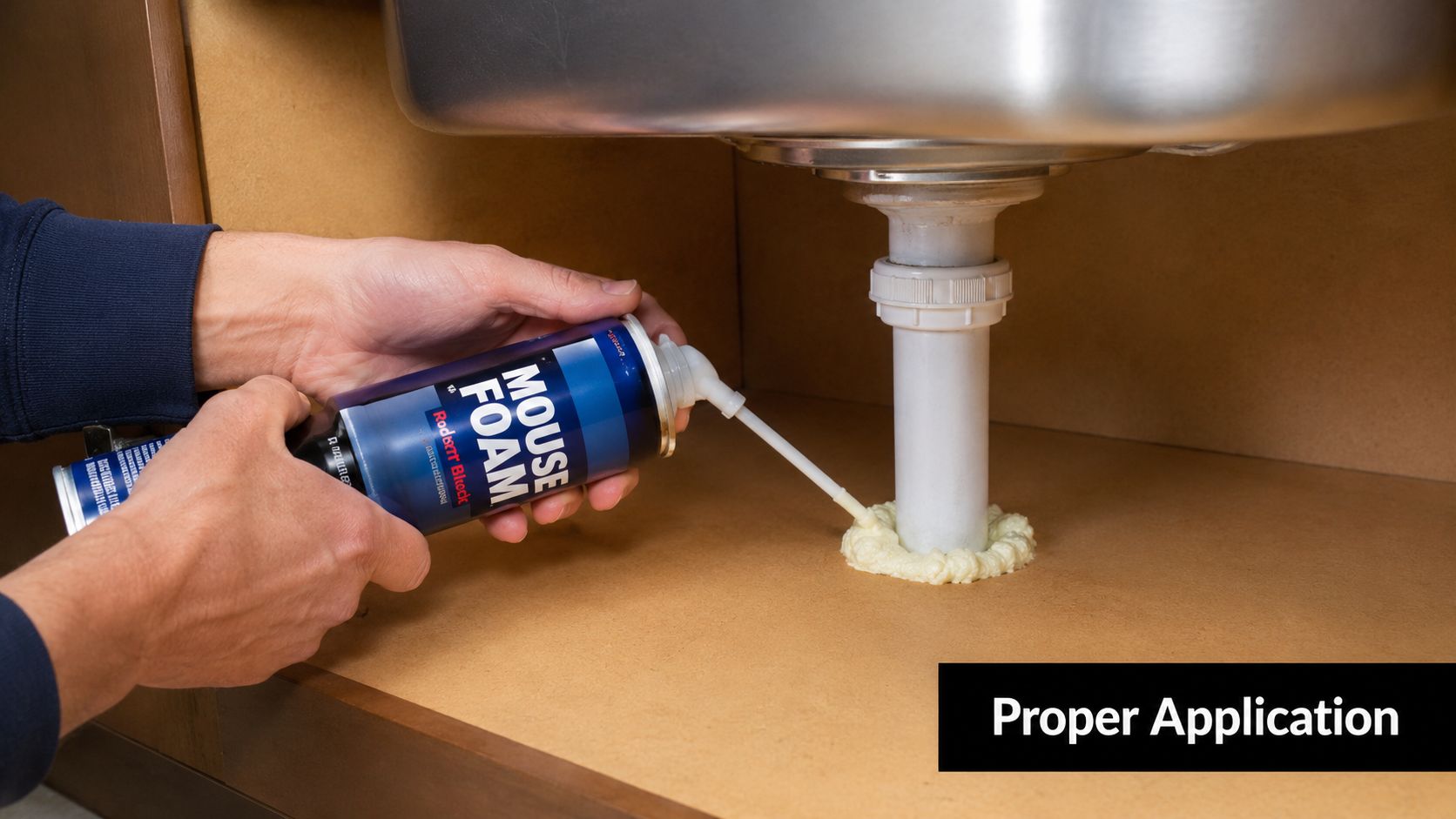
Place the applicator tip deep into the gap and fill from the back toward the surface. That method reduces hidden voids and gives better control than coating the face of the opening first.
The following habits make a significant difference:
Product cure time and expansion rate vary by brand, temperature, and humidity, so follow the can instructions instead of guessing. Technical guidance from Touch 'n Foam's product specification sheet is a good reminder that pest-blocking foams expand after application, which is why restraint on the first pass usually gives a cleaner result.
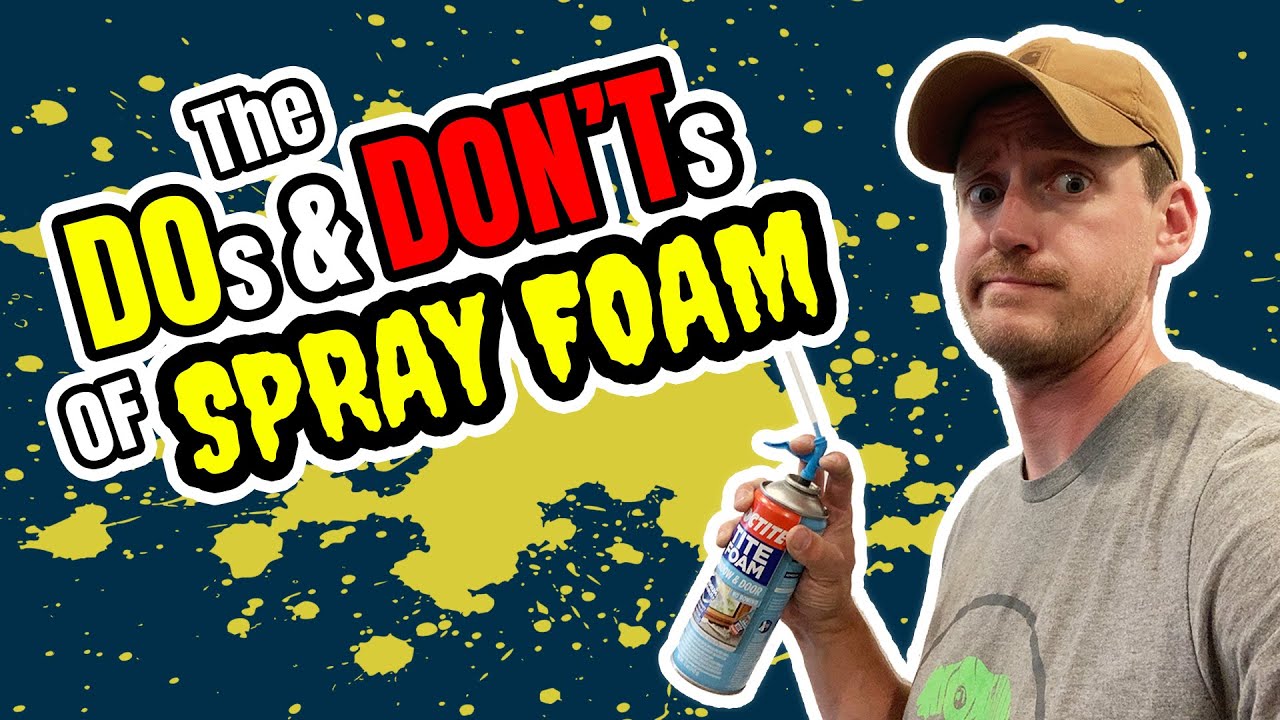
Here's a quick visual walkthrough of the basic application process:
South Florida humidity changes the pace of the job. A surface can feel dry and still hold enough moisture to affect adhesion, especially around plumbing penetrations, garage slab edges, air handler lines, and sink cabinets that stay muggy most of the day.
Do not judge the repair by the skin on the surface.
Check that the foam bridged the full depth of the gap and bonded to stable material on all sides. In tight utility spaces, I recommend coming back after cure with a flashlight and a pick or screwdriver to make sure there is no hollow pocket behind the visible seal.
Trim only what needs trimming. If the patch sits where it can be bumped, scraped, or exposed to regular wear, protect it with an appropriate cover or finish layer. The goal is a durable block at the true entry point, not a foam bead that only looks finished from the front.
Mouse foam sealant works well within its lane. The problem starts when homeowners expect it to solve issues it was never meant to solve.
In warm, humid climates, placement matters a lot. Independent guidance notes that using pest-blocking foam in damp basements or near HVAC systems can compromise durability, and it doesn't replace the need to address moisture and food sources that attract pests in the first place, as discussed in this review of pest-block foam performance.
Foam is a barrier product, not a cleanup plan and not a moisture-control strategy. If rodents are entering because an attic stays damp, a garage is cluttered with food sources, or condensate issues are keeping cavities wet, sealing the hole is only one piece of the job.
Common failure points include:
South Florida homes often need a layered approach. That can mean improving sanitation, correcting leaks, tightening attic bypasses, screening vents, or reinforcing openings with metal mesh before sealing. It can also mean choosing denser materials in assemblies where a soft patch won't hold up.
If you're trying to decide how much resistance foam really offers, this discussion of whether mice chew through spray foam is helpful because it keeps expectations realistic.
A sealed hole stops being useful the moment another nearby gap stays open, wet, or easy to exploit.
That's the part many DIY guides skip. They focus on the can, not the building. In this climate, the building always wins that argument.
There's a clear line between a smart DIY repair and a house that needs professional-grade sealing. If you've got one or two obvious penetrations under a sink or in the garage, a mouse foam sealant is a reasonable weekend project. If rodents keep returning after you've sealed the visible holes, the underlying problem is usually broader.
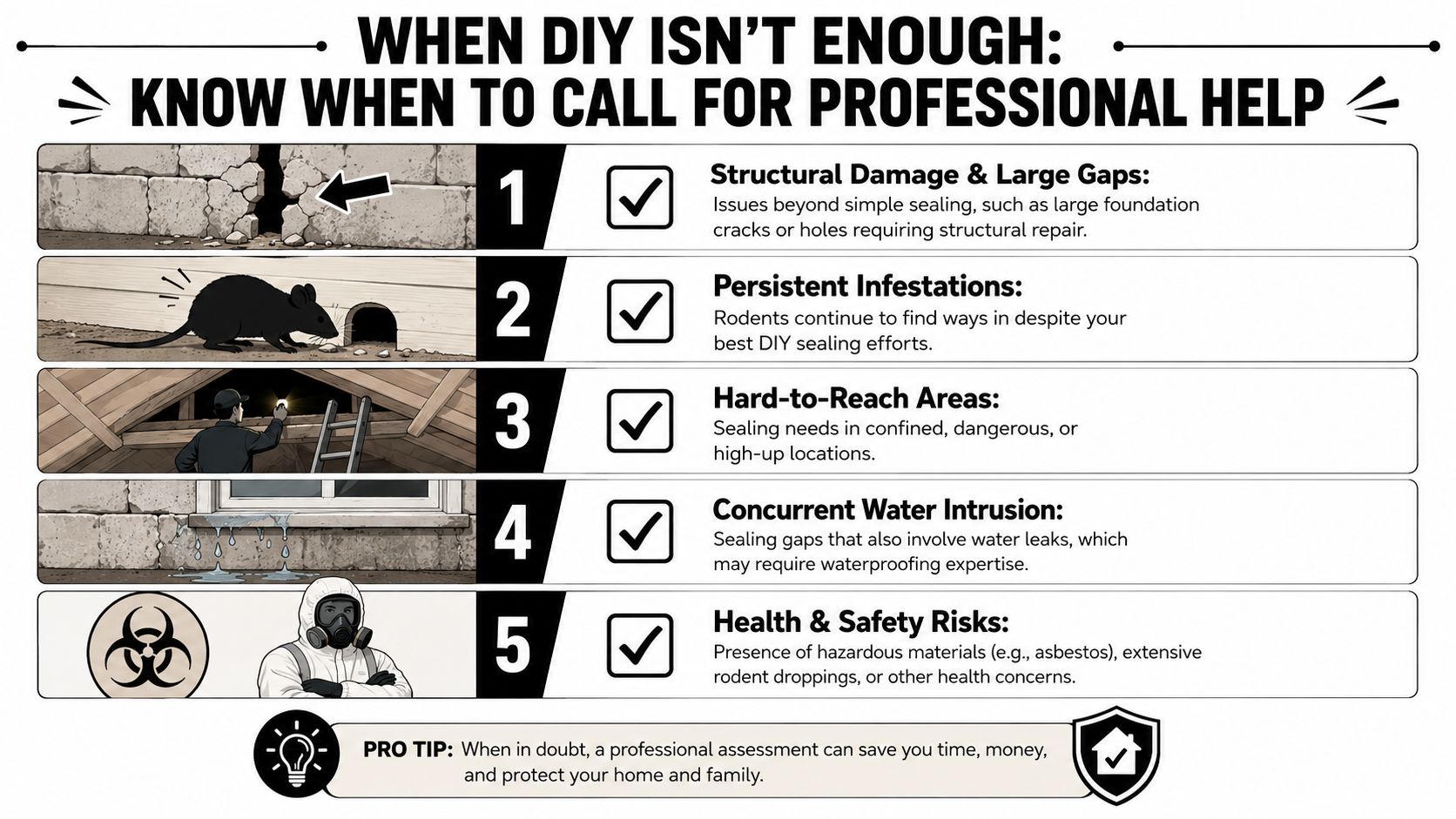
Call for help when you're dealing with conditions like these:
For broader background on non-foam prevention habits, this homeowners' guide to rodent issues is a useful companion resource.
When the issue is bigger than a spot repair, a whole-envelope approach makes more sense. In those cases, Airtight Spray Foam Insulation is one option for South Florida property owners who need larger-scale sealing with closed-cell or open-cell spray foam in attics, walls, garages, and other building assemblies where a can product isn't enough.
If you've found a few small entry points, start there and seal them correctly. If the signs point to widespread attic leakage, repeated rodent activity, or moisture-related failure, contact Airtight Spray Foam Insulation for a professional evaluation of the problem areas and the right sealing approach for your South Florida home.