Your AC has been running since breakfast. By midafternoon, the house is cool enough, but it still feels sticky near the back door, damp around the laundry room, and warmer upstairs than it should. In South Florida, that combination usually points to the same problem. Conditioned air is leaking out, humid air is leaking in, and the HVAC system is stuck fighting a battle it can't fully win.
A lot of homeowners in Palm Beach Gardens, Wellington, and West Palm Beach start by looking at the thermostat or the air conditioner itself. Sometimes that's the issue. Just as often, the problem is smaller and easier to miss. Gaps around doors, windows, attic hatches, and wall penetrations let outside air move in and out all day.
That's where closed cell foam weather stripping earns its keep. It's one of the simplest DIY upgrades you can make, and in the right places it works well. It won't solve every comfort problem in the house, but it can tighten up the openings you use every day and cut down on drafts, moisture intrusion, and that heavy indoor feel that never seems to leave.
In this part of Florida, comfort problems don't always feel dramatic. They feel persistent. The bedroom near the garage never seems to match the temperature of the rest of the house. The front door frame feels slightly warm when you stand next to it. The AC keeps cycling, but indoor air still feels damp after sunset.
That's the pattern I hear from homeowners all the time. They're not dealing with one obvious hole in the house. They're dealing with dozens of little leakage points that add up.
Many homeowners notice air leakage in places they touch every day:
For many homes, closed cell foam weather stripping is a smart first move because it's accessible and fast to install. If your problem is a worn door seal, a loose attic hatch, or a draft around a window sash, this material can make a noticeable difference right away.
Small leaks don't stay small in a humid climate. Every opening invites heat and moisture in, not just air.
Some homes also have attic conditions working against them. If the attic is trapping heat, the ceiling plane stays under pressure and the house gets harder to keep comfortable. If you're evaluating ventilation at the same time, a resource on licensed electrical attic fan installation can help you understand that side of the equation.
Humidity control matters just as much as temperature control. If the house feels cool but clammy, sealing leakage points is often part of the fix. Homeowners who want to understand the bigger picture can also review practical causes of indoor moisture in this guide on how to reduce humidity in house.
Closed cell foam works because of its structure. The easiest way to picture it is this. Open-cell foam is more like a sponge. Closed-cell foam is more like a wall of tiny sealed balloons. Those sealed cells make a real difference when you're trying to stop air and moisture from moving through a material.
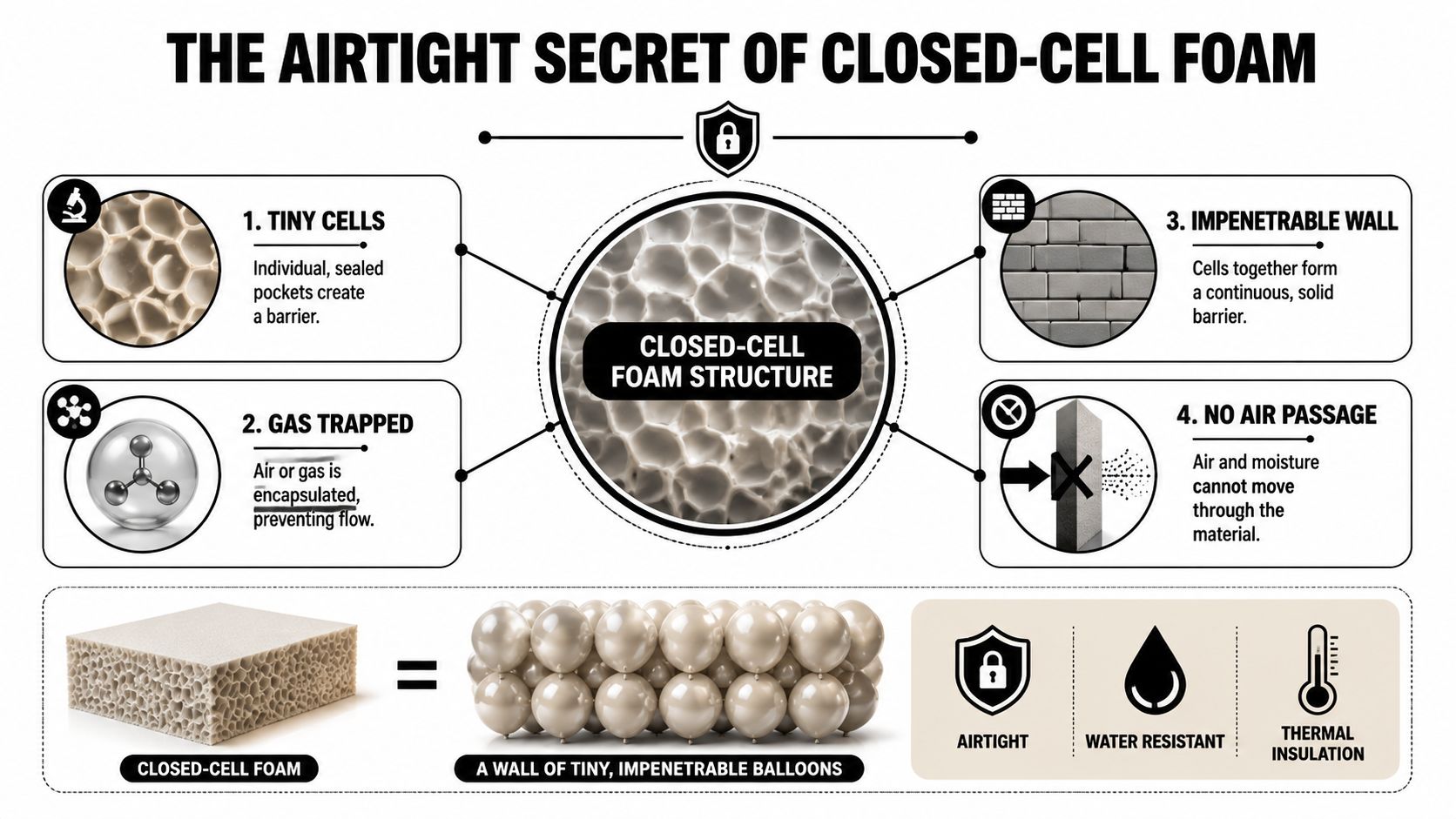
When each cell is sealed off, the material becomes denser and less permeable. That gives closed cell foam weather stripping two advantages that matter in South Florida:
That second point is what separates it from cheaper materials that may stop a light draft but don't do much when humid outdoor air is pushing against the house for months at a time.
A related product category, closed-cell spray foam, shows why this structure is so useful in building envelopes. In comparative testing, it maintained up to 83% of its labeled R-value in cold conditions, while loose-fill fiberglass retained 46%. The same testing also found closed-cell spray foam was 100 times less air permeable than cellulose and acted as a vapor retarder at about 2 inches thick according to the energy performance study on closed-cell foam. Weather stripping isn't insulation in the same way, but it benefits from the same closed-cell principle: dense material resists air and moisture flow better than open, fibrous, or sponge-like products.
At a practical level, foam tape compresses when the door or window closes. If it's the right size, it fills the uneven space without crushing flat immediately. That's what creates the seal.
Here's what works well:
What doesn't work well is trying to force foam tape to solve a framing problem. If a door is badly out of alignment or a threshold is damaged, the tape won't overcome that. It may hide the symptom for a while, but the seal won't last.
Practical rule: Weather stripping should complete a properly closing assembly, not compensate for a broken one.
Not every weatherstripping material performs the same in coastal Florida. The right choice depends on the opening, how much sun hits it, how often it gets used, and whether moisture is part of the problem. Homeowners often buy the first roll hanging near the hardware aisle, then wonder why it peels, flattens out, or gets dirty and loose.
Closed cell foam weather stripping is a solid option, but it isn't the answer for every location.
Closed-cell foam is good at sealing narrow gaps and dealing with moisture. It's especially useful where you want a compressible seal that still acts like a barrier.
Open-cell foam is softer and more porous. It may feel similar in the package, but it doesn't resist moisture the same way. In South Florida, that's a big drawback around exterior openings.
Vinyl V-strip often lasts longer in moving window and door assemblies. If you've got a well-built opening that opens and closes frequently, vinyl can be the better long-term choice.
Felt is usually the least suitable option for this climate. It can be easy to install, but it doesn't hold up well where humidity and repeated use are constant.
| Material | Moisture Resistance | Durability (Sun/Heat) | Best Use Case |
|---|---|---|---|
| Closed-cell foam | High | Moderate to good | Narrow gaps at doors, windows, attic hatches, AC units |
| Open-cell foam | Low | Lower | Temporary interior draft control only |
| Vinyl V-strip | Good | Good | Frequently used windows and doors with consistent margins |
| Felt | Low | Low | Short-term interior use where moisture is not a concern |
Closed-cell foam tapes are commonly made from 100% PVC sponge foam with pressure-sensitive peel-and-stick acrylic adhesive, and they're designed to seal narrow gaps from 3/16-inch down to 1/16-inch according to this overview of closed-cell foam tapes. That range is exactly why they work so well on attic hatches, door stops, and many window frames.
Closed cell foam gives you a better moisture barrier than open-cell material. That's the main reason I recommend it for South Florida over generic foam strips. The trade-off is longevity in high-friction locations. If a door gets slammed all day or a window rubs hard against the seal, some vinyl products may outlast foam.
If you're replacing weather stripping because the opening itself is old, it's worth looking at the assembly as a whole. In some homes, the better long-term move is upgrading the window rather than just replacing the seal. If that's where your project is headed, Equity Building Materials, Inc. window solutions are a useful example of the type of window upgrade homeowners often evaluate alongside air-sealing work.
Good material installed badly won't perform. Most failures come from three things. The wrong size, a dirty surface, or poor placement.
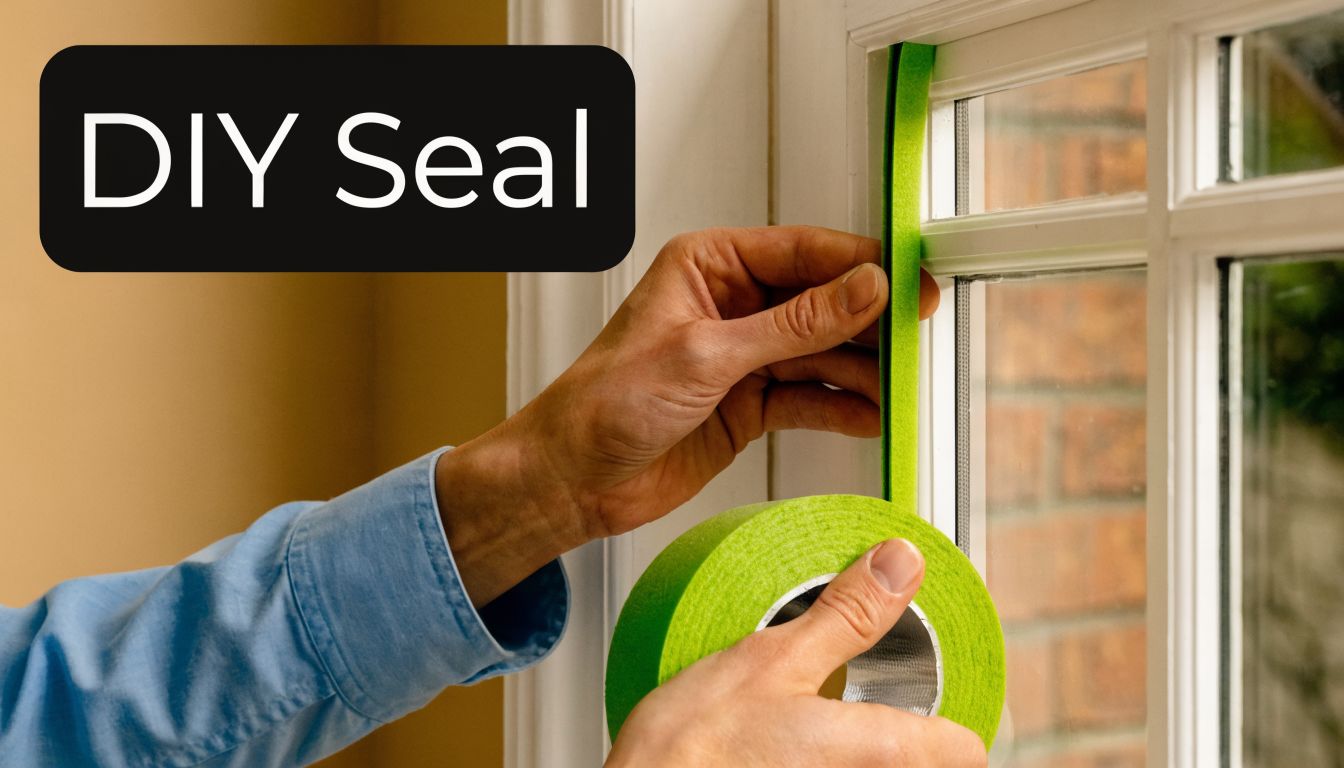
Closed-cell foam tapes are typically made from 100% PVC sponge foam with a pressure-sensitive acrylic adhesive, and they're designed for gaps from 3/16-inch down to 1/16-inch in this product guide on closed-cell foam tapes. That means the first job is measuring the gap accurately. If the gap is wider than the tape can handle, don't stack strips and hope for the best.
Check the opening first
Open and close the door or window slowly. If it binds, drags, or sits crooked in the frame, correct that first. Weather stripping can seal a gap. It can't fix misalignment.
Clean the contact surface well
In South Florida, dust, salt residue, old adhesive, and humidity all interfere with bonding. Wipe the frame clean and let it dry fully before applying peel-and-stick foam.
Measure each side separately
Older openings are rarely perfectly square. Measure the header, latch side, hinge side, and sill area independently.
Test placement before peeling
Hold the strip in place and close the door gently. You want compression, not crushing. On many door frames, placing the strip on the stop where the door meets it gives the best seal.
If the door has to be slammed after installation, the foam is too thick or in the wrong spot.
The adhesive matters as much as the foam. PVC foam tape uses a pressure-sensitive acrylic adhesive, so surface prep isn't optional. Apply it when the frame is dry, and press it firmly along the full run instead of touching it lightly and moving on.
For attic hatches and utility doors, focus on continuity. One small break in the seal can let humid air move through all day. If you're tightening up multiple leakage points and suspect larger air leaks in the home, this overview of air sealing contractors near me is a useful next step.
This video gives a helpful visual of weatherstripping technique and placement:
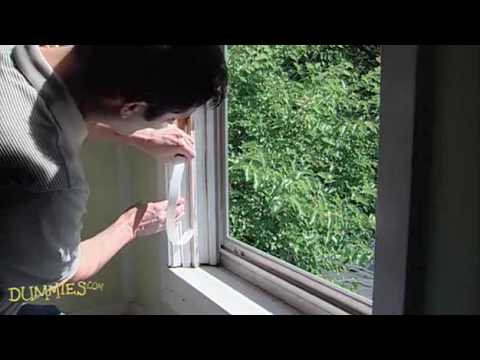
DIY installation usually goes well on:
It usually goes poorly when homeowners try to seal rotten trim, warped doors, or frames with major movement. In those cases, the material fails because the assembly fails.
Humidity changes the standard weatherstripping conversation. In a dry climate, stopping a draft may be the whole goal. In South Florida, you're also trying to control moisture migration before it turns into condensation on cooler indoor surfaces.
That's why closed cell foam weather stripping stands out. Its non-permeable cell structure doesn't just cushion a gap. It helps form a barrier against the moisture-laden air that keeps pressing on the outside of the house.
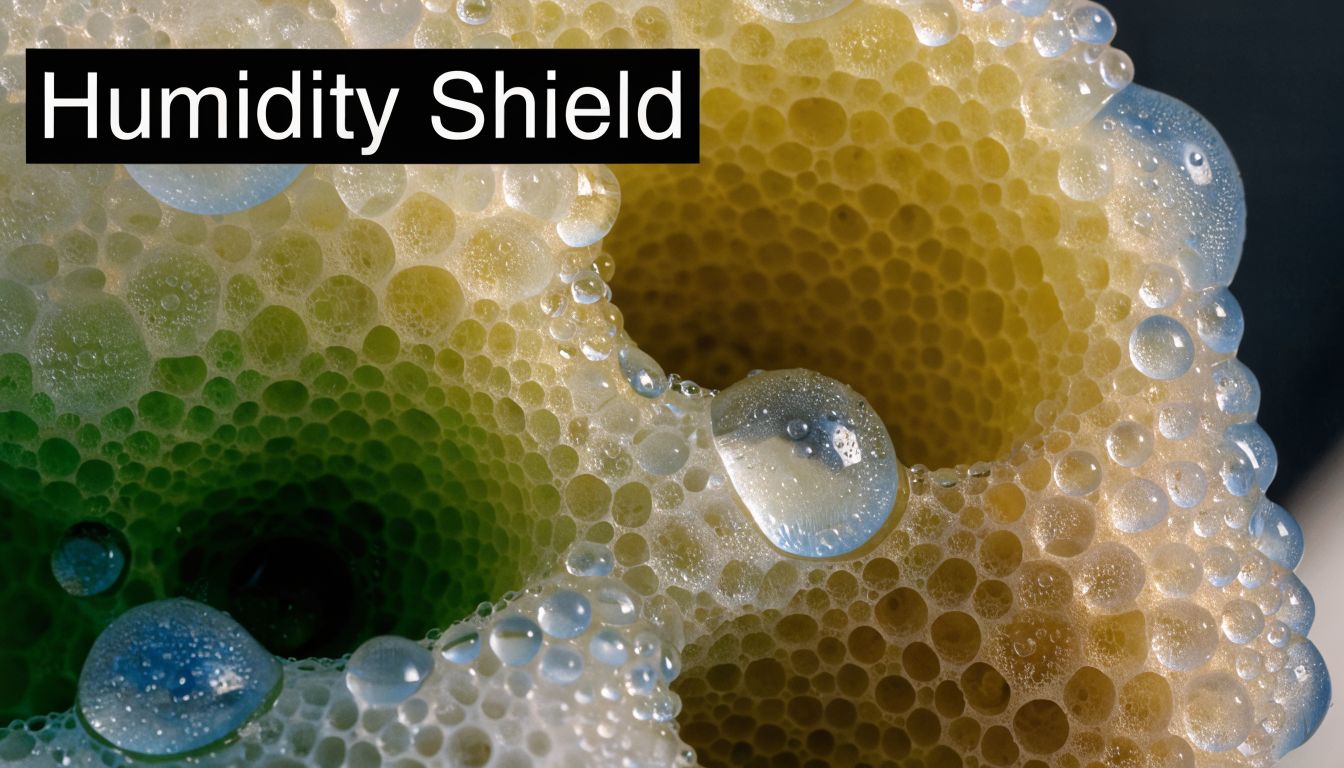
When hot, humid air leaks into a cooler house, it can condense on nearby surfaces. That's when you start seeing damp window sills, musty smells near trim, or mildew around problem areas. The weather stripping itself won't solve a full mold issue, but choosing a material that resists vapor movement is the right starting point.
Closed-cell PVC foam tape has a service temperature range of -40°F to 180°F, can compress up to 50% to fill gaps, and its non-permeable cells form a vapor barrier according to this technical comparison of closed-cell vs open-cell foam tape. That same source notes a goal of reducing HVAC load by 10-15% in retrofits, which is exactly the kind of performance target homeowners are chasing when they tighten up humid homes.
South Florida openings deal with more than one stress at a time:
Closed-cell PVC tape is better suited to those conditions than open-cell products because it stays focused on sealing, not absorbing.
A weatherstrip that lets moisture pass through may stop a light breeze, but it won't help much with the sticky air that drives comfort complaints here.
If you already have visible microbial growth, weather stripping is only part of the repair path. In that case, it helps to understand the cleanup side too, especially for duct-related issues. This guide to removing mold from HVAC systems is a practical reference for what to look for when moisture has moved beyond the window or door frame.
Closed cell foam weather stripping is a good tool. It's just not a complete building envelope strategy by itself. It handles the edges of operable openings. It does not seal the attic floor, wall penetrations, rim areas, or the larger bypasses that often drive the worst comfort problems in Florida homes.
That's why some homeowners replace every door seal in the house and still feel disappointed. The front door feels better, but the master bedroom is still muggy. The attic hatch stops leaking air, but the AC still seems to run longer than it should.
If these sound familiar, the issue may go beyond doors and windows:
In those situations, weather stripping should be seen as one layer of a larger air-sealing plan. The small perimeter leaks still matter. They just aren't the whole story.
The synergy becomes clear in this application. Weather stripping handles movable components. Spray foam handles fixed cavities and hidden leakage paths. One doesn't replace the other. They complement each other.
A homeowner can seal an attic hatch with foam tape and get real value from that. But if the attic itself has major leakage paths, the hatch seal is only protecting one part of the boundary. The same logic applies at a back door. The jamb seal helps, but if outdoor air is moving through wall penetrations, top plates, or roofline connections, comfort problems will continue.
For homeowners comparing smaller fixes to broader insulation work, reviewing how closed foam insulation functions in a full building envelope can help clarify when a house needs more than surface-level sealing.
The best results usually come from treating the house as a system. Seal the operable gaps yourself. Bring in professional air sealing when the bigger leaks show up.
A tighter, drier, more stable home usually isn't the result of one product. It's the result of putting the right material in the right place.
If your home still feels humid, uneven, or expensive to cool after you've handled the obvious gaps, it may be time for a full evaluation. Airtight Spray Foam Insulation helps South Florida homeowners seal larger leakage paths in attics, walls, garages, and other problem areas with professional spray foam solutions built for this climate.