
Your AC has been running since breakfast, the back bedrooms still feel warmer than the front of the house, and by midafternoon the ceiling seems to radiate heat right into the room. That's a normal South Florida complaint. It's also a sign that the boundary between your living space and the attic isn't doing its job.
In a lot of homes across Jupiter, Palm Beach Gardens, West Palm Beach, Wellington, and Stuart, the attic acts like a hostile zone sitting directly over conditioned rooms. Heat builds fast. Humidity finds weak points. Fiberglass alone often slows heat flow, but it doesn't reliably stop moving air. In this climate, moving air carries moisture, and moisture is where small insulation mistakes become mold problems.
That's why a spray foam attic floor strategy gets serious attention here. When it's designed correctly, it creates a tighter ceiling plane and separates the house from the vented attic above. If you're trying to make sense of envelope upgrades in Florida construction more broadly, this guide to steel home energy savings is also useful because it shows how much building material and climate change the insulation conversation.
A common South Florida pattern looks like this. The thermostat says one thing, but the house feels different from room to room. The hallway is tolerable. The guest room is stuffy. The primary bedroom under the attic feels like it never quite cools off.
That usually sends homeowners to the AC first. They look at the handler, the ducts, the thermostat, or the age of the system. Sometimes that's the issue. But many times the bigger problem is above the ceiling, where hot attic air and indoor air leakage are fighting each other all day.
South Florida is unforgiving to shortcuts. A vented attic gets brutally hot, and the humidity load outside is high for much of the year. If the ceiling plane has gaps around wiring, top plates, can lights, bath fans, or other penetrations, the house and attic are no longer properly separated.
That matters for comfort, but it matters even more for moisture control.
In this climate, an attic problem usually shows up as a comfort complaint first and a moisture problem second.
Fibrous insulation alone often leaves the air barrier incomplete. It can sit in place and still allow air movement through cracks and penetrations below. In a drier climate, that's bad enough. In South Florida, it can feed condensation risk and musty attic conditions.
A spray foam attic floor approach is targeted. Instead of trying to turn the attic into conditioned space, the goal is to keep the attic vented and put a tighter, more reliable barrier directly over the rooms you live in.
That choice makes sense when:
In South Florida, that distinction is everything. You want to control what enters the living space. You do not want to trap heat and moisture in a vented attic by misunderstanding where the airtight layer belongs.
Think of the attic floor as the lid on your house. The rooms below are the conditioned interior. The attic above is outside the thermal boundary. A spray foam attic floor system works when that lid is continuous, sealed, and correctly tied together across the entire ceiling plane.
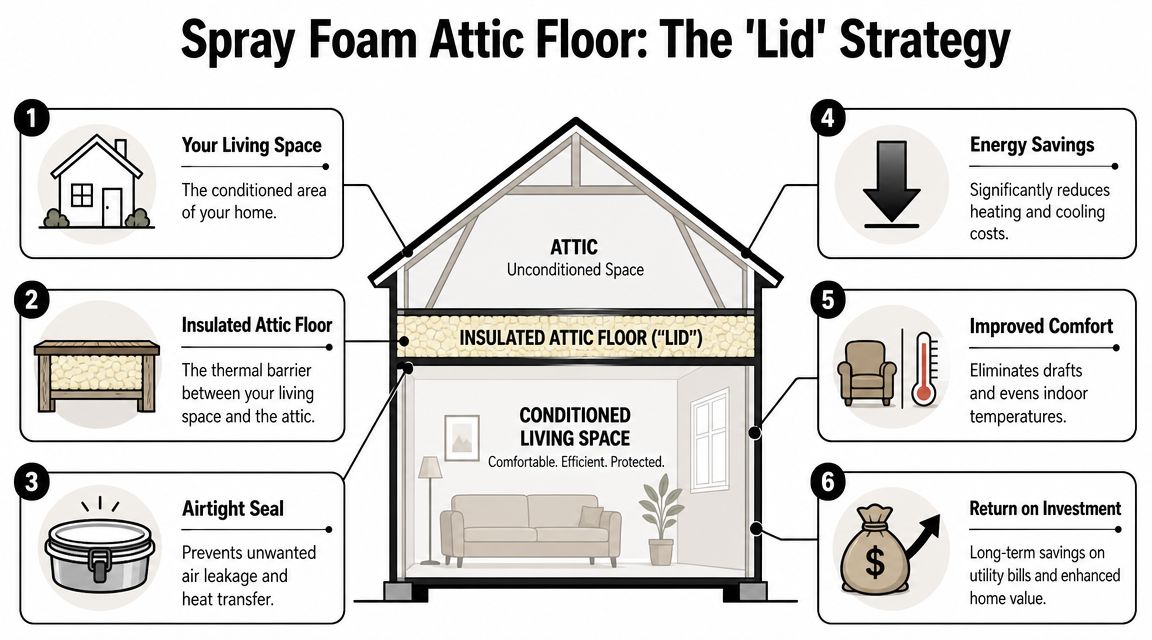
Spray foam on the attic floor is not just there for insulation value. Its biggest job is often air control. It seals the irregular spots that make attics leak into the home and homes leak into the attic.
That includes areas around:
Once that air barrier is established, additional insulation above it can handle the bulk thermal load if needed. That's one reason this method can outperform a simple “add more fluffy insulation” approach in older Florida homes.
Homeowners often confuse two very different systems.
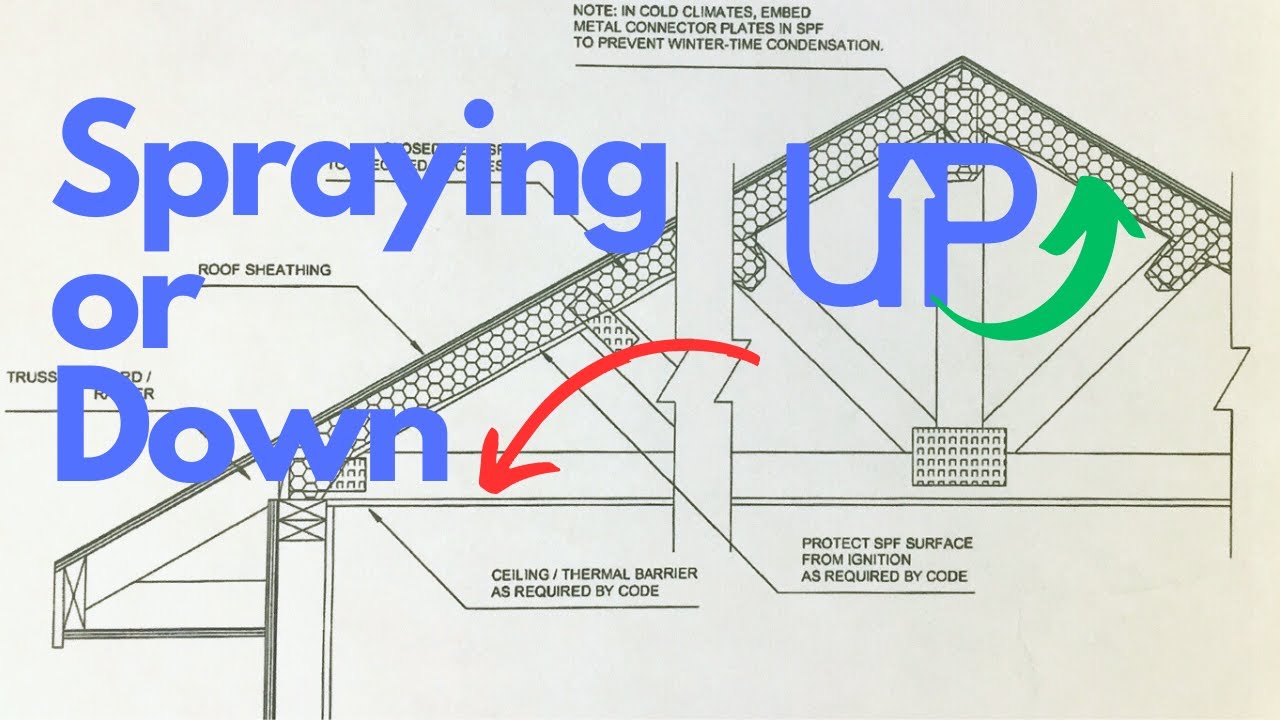
One approach sprays the underside of the roof deck and turns the attic into part of the conditioned building envelope. The other sprays the attic floor and keeps the attic as a vented, unconditioned buffer space.
Those are not interchangeable decisions. They affect ventilation, HVAC strategy, and moisture behavior differently.
If you work on metal structures or detached utility buildings, the priorities can shift again. This overview of effective insulation for metal buildings is useful because metal construction changes condensation risk and surface temperature behavior.
Practical rule: If the attic stays vented, the air seal belongs at the ceiling plane, not at the vents.
A spray foam attic floor setup usually makes the most sense when the home has a traditional vented attic and the goal is to protect the living space below. In that case, the attic remains hot and vented by design. The success of the system depends on how well the installer creates that uninterrupted lid over the house.
That's why layout matters. Every dropped soffit, every chase, every junction box, and every awkward framing intersection has to be treated as part of one continuous boundary. Miss one section, and hot humid attic air will use it.
Step into a South Florida attic in August and the difference between open-cell and closed-cell stops being a product brochure debate. It becomes a moisture management decision with real consequences for ceiling drywall, wood framing, and indoor comfort below.
On a vented attic floor in this region, I treat foam selection as a durability question first and an R-value question second. Heat is constant here. Humidity is the primary threat. The foam has to air seal the ceiling plane while holding up in an attic that spends much of the year hot, damp, and hard on building materials.
Open-cell and closed-cell foam do different jobs.
Open-cell foam is lighter, softer, and more vapor-permeable. Closed-cell foam is denser, more resistant to vapor movement, and better suited to a vented attic floor where humid conditions are part of normal operation. In South Florida, that difference matters because the attic above the insulation is not a mild space. It is a hot, humid buffer zone, and the material below it needs to tolerate that setup.
Guidance on attic applications reflects the same basic concern. Open-cell foam allows more vapor movement. Closed-cell foam gives you more protection against that movement on an attic floor assembly. For a region where moisture drives many of the failures, that is usually the deciding factor, as outlined in this residential attic application guide.
| Characteristic | Open-Cell Foam | Closed-Cell Foam |
|---|---|---|
| Moisture behavior | More vapor-permeable | More resistant to vapor movement |
| Texture | Softer, lighter | Denser, more rigid |
| Expansion during install | Expands more aggressively | Expands less, easier to place with control |
| Sound control | Often better for sound absorption | Usually chosen more for air sealing and moisture resistance |
| Attic floor fit in South Florida | Calls for tighter moisture planning | Usually the safer choice for a vented attic floor |
On an attic floor, control matters as much as coverage. South Florida attics are full of wiring penetrations, top plates, chases, dropped soffits, and odd framing transitions. Closed-cell foam is easier to place tightly at those details without the same tendency to over-expand and create uneven surfaces.
That matters in the field. If the installer cannot keep the foam layer consistent at all those interruptions, the air seal gets weaker. A weak air seal at the ceiling plane lets attic heat and moisture find the easiest path into the house.
Closed-cell also gives you a little more forgiveness in a punishing climate. I still would not call any foam foolproof, but closed-cell is usually the better match for a vented South Florida attic floor because it combines air sealing with better resistance to vapor movement.
If you want a broader product comparison before deciding, this breakdown of open-cell vs closed-cell spray foam insulation covers the differences in more detail.
For most vented attic floors in South Florida, closed-cell is the material I would trust first unless the project conditions point clearly in another direction.
Open-cell is not automatically wrong. It is just less forgiving in this assembly.
Problems show up when someone uses open-cell on the attic floor and treats it like any other climate. In South Florida, that can leave the ceiling assembly more exposed to moisture movement than many homeowners realize. If the attic has persistent humidity, disconnected bath fans, duct leakage, or signs of past condensation, open-cell raises the risk profile.
I see the same mistakes over and over:
Those are installation and design errors, but material choice makes them either more forgiving or less forgiving. On a vented attic floor in this climate, closed-cell usually gives the assembly a better chance of staying dry and performing the way the homeowner expects.
A lot of homeowners hear “airtight” and assume the attic itself should be sealed up. That's not how a vented attic floor system works.
If you insulate at the attic floor, you are intentionally keeping the attic outside the conditioned part of the house. That means ventilation still matters. In fact, it becomes part of the assembly doing its own job while the spray foam handles a different one.
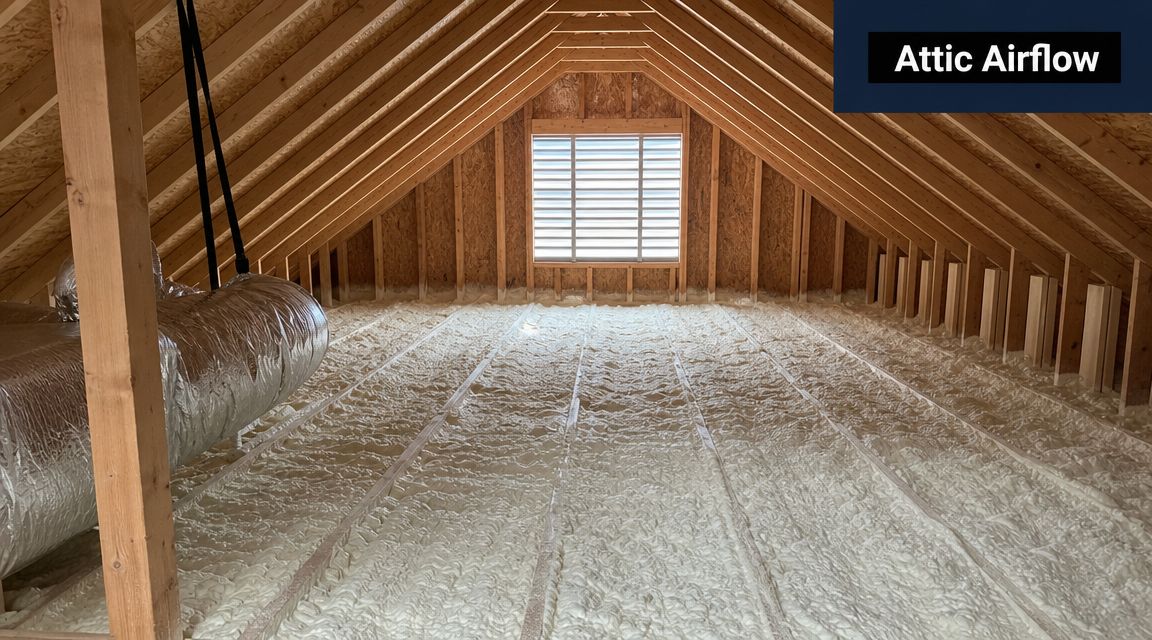
A vented attic uses soffit vents, ridge vents, gable vents, or a combination of them to move out heat and incidental moisture that enter the attic space. The attic still gets hot in South Florida, but ventilation helps it behave like a buffer zone rather than a sealed oven.
That setup only works if the ventilation paths remain open and the ceiling plane below is tight.
If you need a primer on the vent layouts contractors evaluate, this overview of types of attic ventilation lays out the common systems clearly.
Some people insulate the floor, then block vents, patch over openings, or otherwise treat the attic like it should now be enclosed. That usually backfires. Heat accumulates. Moisture lingers longer. Roof framing and sheathing spend more time under stress.
The attic should breathe. The house below it should not breathe into the attic.
That distinction solves a lot of confusion.
When the assembly is working correctly, the attic may still be harsh. That's expected. The improvement shows up downstairs. Rooms feel steadier. Ceilings feel less oppressive. The AC doesn't seem like it's constantly chasing heat from above.
A good spray foam attic floor job doesn't make the attic comfortable. It makes the house more comfortable while letting the vented attic remain what it is.
By 2 p.m. in a South Florida attic, the deck overhead is radiating heat, the air is wet, and every missed gap in the ceiling plane becomes a path for humid attic air to work down into the house. That is why attic floor spray foam is a precision job. A clean-looking pass of foam is not enough. The work has to stay bonded, continuous, and correctly placed around every interruption in a hostile attic environment.
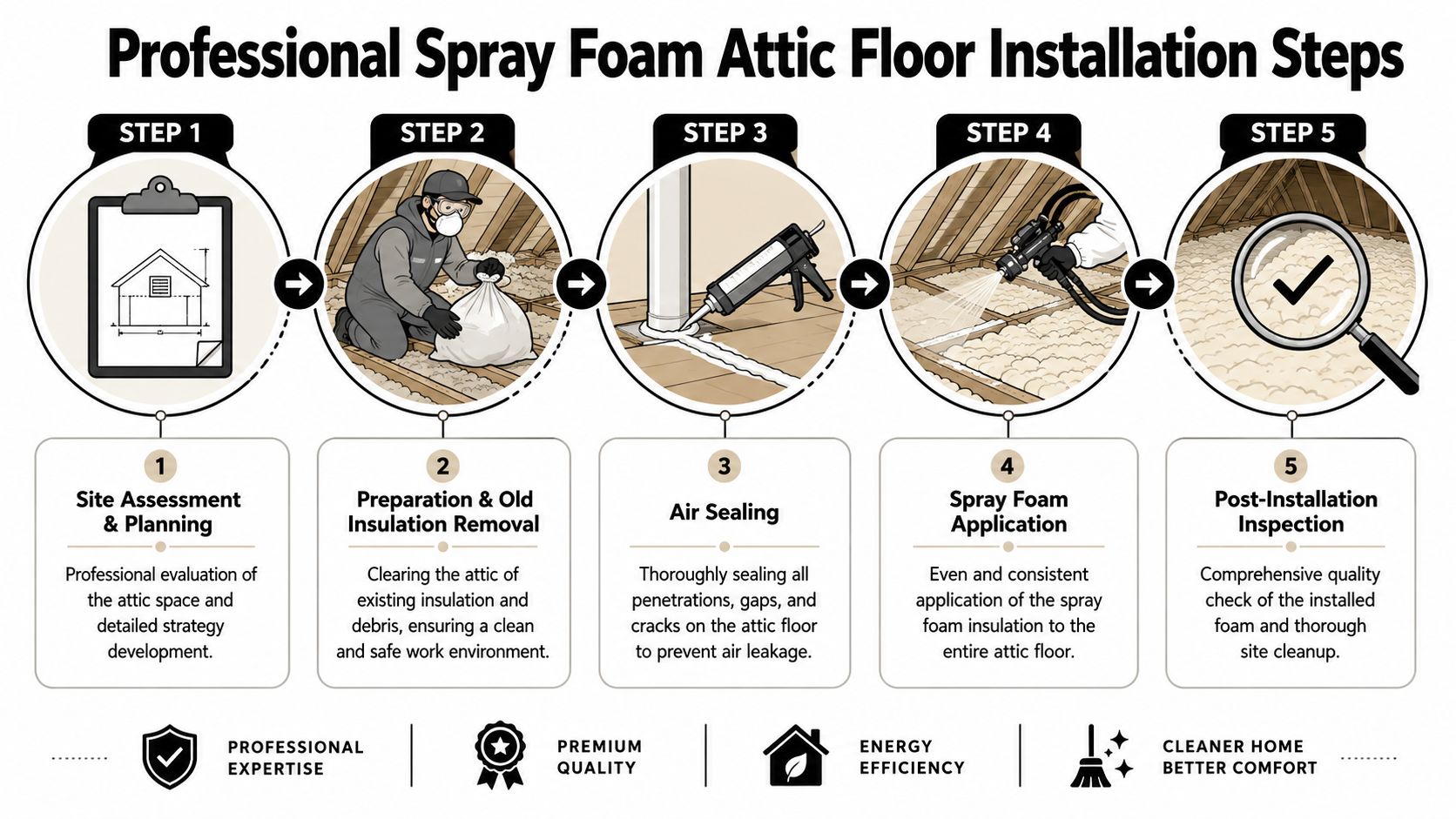
The actual job starts before the spray gun comes out.
A competent crew inspects the attic floor as an air barrier project, not just an insulation project. That means finding the weak points that matter in older South Florida homes: plumbing and wiring penetrations, open top plates, soffit chases, bath fan terminations, pull-down stairs, recessed fixtures, kneewall transitions, and platform areas that break continuity. If the attic has old insulation, the crew has to determine whether it can stay in place, needs to be pulled back for access, or needs to be removed because it is hiding leakage, staining, rodent activity, or microbial growth.
Substrate condition matters too. Dusty surfaces, damp wood, and dirty ceiling areas can interfere with adhesion and foam quality. In this climate, that step is not paperwork. It affects whether the foam holds and performs.
For existing attic floors, the standard approach is to use spray foam first as the air-control layer, then add other insulation above it when the assembly needs more total R-value. The point of that first foam layer is continuity and air sealing. Coverage alone does not solve the problem.
Attic floors are irregular. South Florida attics make them worse because crews are often working in high heat with low visibility, tight access, and framing clutter. Good installers adjust for those conditions instead of rushing through them.
They have to keep the foam continuous around:
Thin spots, skipped edges, and overbuilt mounds all create problems. A thin area can leak air. An over-applied area can interfere with later insulation or access. Closed-cell foam is often selected on attic floors because it gives installers tighter control in these detail areas and adds a moisture-resistant layer where humid air is trying to find a path downward.
Here's a look at the work sequence homeowners usually don't see clearly before a project starts.
Spray foam kits make this look easier than it is. They do not show what happens when material temperature is off, the substrate is too hot, the mix is wrong, or the installer misses the transition at a soffit chase above a bathroom ceiling.
The failure points are predictable:
I have seen houses where the foam looked acceptable from the hatch and still failed at the exact places that mattered most. The room below stayed uncomfortable because the leakage path at the top plate or chase was never sealed correctly.
If you're screening installers, look for spray foam insulation contractors with real attic-floor experience, not a general crew adding foam to its service list. The best crews can explain prep, substrate limits, fixture clearances, re-entry timing, and how they handle the moisture risks that are common in South Florida attics.
A good attic floor install is measured by the leaks it closes and the problem areas it addresses.
The last phase should be deliberate. The crew should inspect for continuity, confirm the foam thickness is consistent where it needs to be, trim back problem areas, and verify that access points and service paths still work. If more insulation is going above the foam, that next layer should not crush details or leave key transitions exposed.
Homeowners should also get plain instructions on cure time, re-entry, attic access, and any areas that must stay visible for future service.
That final walkthrough separates a durable attic floor system from an expensive coating of foam.
Homeowners always ask the cost question early, and that makes sense. A spray foam attic floor project is not a casual purchase. It's a building-envelope upgrade. The right way to judge it in South Florida is by looking beyond the invoice.
In a climate where the cooling season feels constant, attic improvements affect comfort quickly. You're not waiting through long mild seasons to notice whether the project mattered. If the house had major attic leakage before, people usually notice the difference in how the ceilings feel and how hard the AC works.
That doesn't mean every house gets the same result. Return depends on the existing insulation, duct leakage, attic configuration, and how leaky the ceiling plane was before the work. But in South Florida, the pressure on the envelope is strong enough that good air sealing rarely goes unnoticed.
A lot of people make the mistake of evaluating spray foam only against the price of adding more fiberglass. That comparison misses the main advantage. Fiberglass is bulk insulation. Spray foam at the attic floor is an air-sealing strategy first.
Not every home is a good fit for the exact same scope. A contractor should look at:
| Decision factor | Why it matters in South Florida |
|---|---|
| Attic use | If the attic is only for occasional access, floor insulation often makes more sense than bringing the whole attic inside the envelope |
| Mechanical equipment location | Equipment in the attic can change whether floor insulation is the smartest strategy |
| Moisture history | Any sign of staining, microbial growth, or recurring dampness changes how carefully the assembly has to be designed |
| Existing insulation condition | Dirty, compressed, or disturbed insulation can complicate retrofits |
The best return usually comes from solving the right building problem, not from choosing the cheapest material line on the estimate.
If you're comparing bids, look closely at scope. Ask what will be removed, what will be sealed, what foam type will be used, how transitions are handled, and whether the proposal includes any insulation above the foam layer where needed. That tells you more than a bare price ever will.
A spray foam attic floor can be a smart move in South Florida, but only if the assembly, material, and installer all line up. Homeowners get into trouble when they buy the product before they've defined the problem.
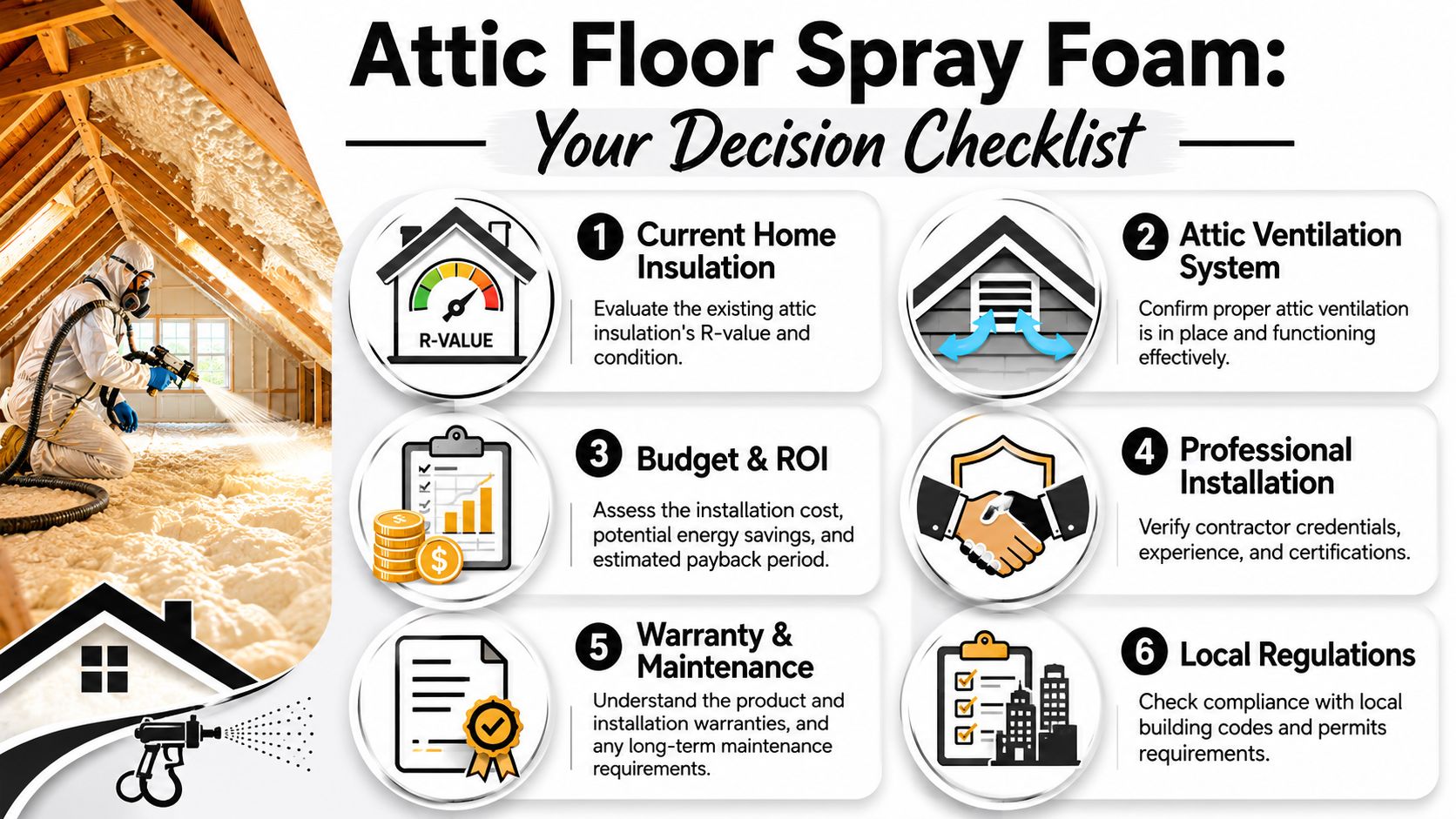
Use this checklist before approving a proposal:
The biggest mistakes are predictable. Homeowners choose by price alone, assume all spray foam is interchangeable, or hire crews that don't treat the attic floor as a system.
Watch for proposals that are thin on detail. If the estimate doesn't explain foam type, prep, ventilation considerations, and how the ceiling plane will be made continuous, it's not enough.
Maintenance after a proper install is usually minimal. What you do want is occasional attic review after storms, roof work, or electrical and mechanical service. Any trade that works in the attic can disturb the assembly.
If you want a professional opinion on whether a spray foam attic floor is the right move for your home, Airtight Spray Foam Insulation serves South Florida with experienced attic evaluations, clear recommendations, and installation work built for the heat and humidity this region throws at a house.