Blog
A Guide: insulation fiberglass vs foam for South Florida homeowners


When you're trying to decide between insulation—fiberglass vs. foam—it boils down to one critical difference: fiberglass resists heat flow, while spray foam stops both heat flow and air leakage. In a place like South Florida, that distinction changes everything. Our relentless humidity means that an airtight seal isn't just a bonus; it's essential for moisture control and real-world energy efficiency.
The Ultimate Insulation Showdown for South Florida Homes
Choosing the right insulation for your home in Jupiter or West Palm Beach isn't just a simple upgrade. It's a long-term investment in your comfort, your home's structural health, and your monthly energy bills. We're in a constant battle with high heat and crushing humidity, and that requires a solution that does more than just hit a target R-value on a label.
For decades, traditional fiberglass was the go-to, mostly because it was cheap. But its limitations become painfully obvious in our demanding climate.
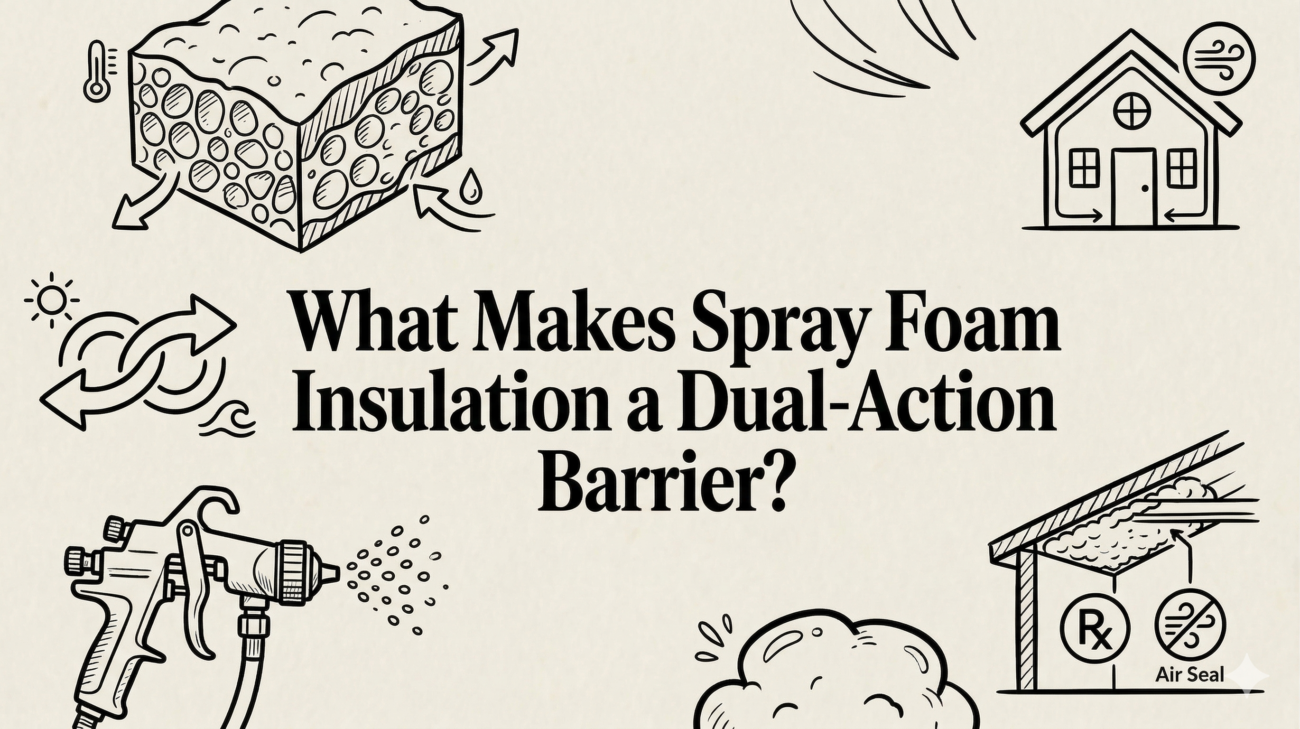
Spray foam insulation, on the other hand, is engineered from the ground up to create a complete air and moisture barrier. It doesn't just slow down heat transfer; it expands to seal every last crack, gap, and crevice where your expensive conditioned air escapes and humid, unfiltered air pushes its way in. This creates a truly stable and efficient building envelope.
This chart gives you a quick visual of the two main categories.

As you can see, the fundamental difference is in the application. One is a pre-cut roll that's stuffed into place, and the other is a liquid that expands to create a custom fit. That's the key to how effectively each one can actually seal your home from the outside elements.
To get a clearer picture, let's put them head-to-head. The table below cuts right to the chase, summarizing the most critical differences between fiberglass and the two types of spray foam, specifically for our humid climate. If you want to dive deeper, you can explore the full range of benefits of spray foam insulation in our detailed guide.
Quick Comparison Fiberglass vs Spray Foam for South Florida
This table gives you an at-a-glance summary of how these materials stack up where it matters most for homeowners in our area.
| Feature | Fiberglass Batts | Open-Cell Spray Foam | Closed-Cell Spray Foam |
|---|---|---|---|
| Air Sealing | Poor. Air slips right through the gaps and seams. | Excellent. Creates a solid, effective air barrier. | Superior. Forms a monolithic, completely airtight seal. |
| Moisture Control | Vulnerable. Soaks up moisture, loses R-value, and can host mold. | Good. Resists liquid water but lets water vapor pass through. | Superior. Acts as a true vapor barrier, blocking moisture entirely. |
| R-Value/Inch | R-3.1 to R-4.3 | R-3.5 to R-3.8 | R-6.0 to R-7.0 |
| Durability | Fair. Prone to sagging, settling, and degrading over time. | Excellent. Stays rigid, maintaining its shape and performance. | Superior. Adds structural strength and is incredibly durable. |
When you look at the comparison, it becomes clear that while fiberglass has a low upfront cost, its vulnerabilities to air leakage and moisture make it a poor long-term fit for South Florida. Both open-cell and closed-cell spray foam offer a massive leap in performance, with closed-cell providing the absolute best protection against our region's unique climate challenges.
Unpacking the Real Performance Metrics
When you're comparing fiberglass and foam insulation, you have to look beyond the marketing buzzwords. True performance isn't just a number on the packaging; it's about how the material actually functions inside your home, day in and day out, to control comfort, block out the elements, and ultimately, lower your energy bills.
The real story lies in the details—metrics like R-value, air sealing, and long-term stability. This is where the differences between the old-school pink stuff and modern spray foam become crystal clear.

These core stats determine how an insulation material will hold up in your attic or walls, especially under the relentless pressure of South Florida’s heat and humidity. One product might seem adequate on paper, but if it can't handle our environmental reality, its performance will quickly disappoint.
The Truth About R-Value
Everyone talks about R-value, which is simply a measure of how well a material resists heat flow. A bigger number is better. But the "per-inch" rating that you see advertised tells only a fraction of the story.
Fiberglass batts generally come in at an R-value of R-3.1 to R-4.3 per inch. That’s decent, but closed-cell spray foam blows it out of the water with a powerful R-6.0 to R-7.0 per inch. This means you can get far more insulating power in the same space—a massive advantage in wall cavities or attics where every inch counts. For a closer look, you can check out our deep dive into the R-value of spray foam insulation.
Here's the kicker: the lab-tested R-value of fiberglass assumes a perfect world. It requires a flawless installation with zero gaps, no compression, and absolutely no air movement. In a real home, that’s just not going to happen. The moment air starts moving through it, the effective R-value of fiberglass takes a nosedive.
Key Insight: Up to 40% of a home's energy loss can be chalked up to air leakage. Fiberglass does nothing to stop this air movement, while spray foam creates an impenetrable air barrier that locks in its high R-value.
Beyond Resistance: Creating a True Air Barrier
This brings us to the single biggest performance difference: air sealing. Fiberglass is designed to be permeable. Air moves right through it, carrying heat and moisture along for the ride.
Spray foam is a completely different animal. It’s applied as a liquid that expands to fill every single crack, crevice, and odd-shaped corner before hardening into a solid, seamless seal. It bonds directly to the wood studs, sheathing, and around plumbing, creating a truly monolithic barrier.
- Fiberglass: Prone to "convective looping," where air constantly circulates within and around the batts, transferring heat.
- Spray Foam: Stops convection in its tracks, creating a genuinely airtight building envelope.
This is what makes spray foam so incredibly effective. It's not just insulating; it's creating a complete, airtight shield between your conditioned living space and the outside world.
Long-Term Performance and Stability
Finally, you need insulation that lasts. Over time, fiberglass succumbs to gravity and moisture. It sags in wall cavities, gets compressed in attics, and leaves huge gaps where your home is left completely unprotected. If it gets wet—a constant risk in Florida—it loses most of its insulating power and becomes a perfect home for mold.
Closed-cell spray foam, however, is a rigid, inert material. It doesn't settle, sag, or break down. It actually adds structural strength to your walls and roof deck. This incredible stability means the performance you invest in today is the same performance you'll be getting decades from now.
This superior, long-lasting performance is why the market is shifting. While fiberglass is still seen as a budget option, the demand for high-performance foams is growing much faster. According to industry analysis, spray foam seals air leaks up to 24 times better than its traditional counterparts—a game-changing fact that smart homeowners and builders are catching on to. You can dig into these trends in this fiberglass insulation market report from Stratview Research.
Winning the Battle Against Florida's Humidity
In South Florida, the heat is only half the story. The real fight for your home's comfort and structural integrity is against our relentless, year-round humidity. How you manage this constant moisture isn't just a small detail—it's the single most important factor when choosing your insulation.
The way a material handles water vapor dictates its long-term performance, its ability to stop mold in its tracks, and ultimately, its real-world value. When it comes to the fiberglass vs. spray foam debate, the difference is night and day. One absorbs moisture, and the other aggressively repels it. That single distinction changes everything for a home here in South Florida.
Traditional fiberglass insulation is porous by design. It's essentially spun glass fibers full of tiny air pockets. While that structure is decent at trapping air to slow down heat, it also acts just like a sponge for airborne moisture. When humid air inevitably makes its way through your walls or attic, the fiberglass soaks up that water vapor.
This creates two massive problems right away:
- Performance Tanks: Wet insulation doesn't insulate. Period. As fiberglass gets saturated with moisture, its R-value plummets, leaving your home exposed.
- Mold and Mildew: A damp batt of fiberglass, trapped inside a dark, warm wall cavity, is the perfect five-star resort for mold and mildew. This can wreck your air quality and lead to serious wood rot.
The Superior Defense of Closed-Cell Spray Foam
Now, let's look at closed-cell spray foam. It’s engineered from the ground up to be non-porous. Its chemical makeup creates millions of tiny, sealed plastic cells. These cells are filled with a gas that stops both heat and moisture from getting through. Once it’s sprayed, it cures into a solid, rigid barrier that's completely impermeable to water vapor.
This isn’t just a nice feature—for our climate, it's a game-changer. Closed-cell foam effectively gives you high-performance insulation and a built-in vapor barrier in one shot. It stops humid air from ever touching your home’s structure, which means condensation can't even begin to form. To really dive into this, check out our guide on how a vapor barrier and insulation work together.
Real-World Impact: Closed-cell spray foam is so good at blocking moisture that FEMA actually classifies it as a flood-resistant insulation material. That means it can get submerged, dry out, and still perform without needing to be replaced.
A Palm Beach Gardens Attic Scenario
Let’s make this real. Picture a standard unvented attic in Palm Beach Gardens on a blazing August afternoon. The sun is hammering the roof, heating your shingles to over 150°F. Meanwhile, your AC is blasting away inside to keep your living room at a cool 75°F.
With Fiberglass Insulation: That hot, soupy outdoor air finds its way into the attic. When it hits the cooler surface of your air-conditioned ceiling drywall, it reaches its dew point. Condensation starts forming on the wood trusses and the back of the drywall, feeding mold and slowly rotting your roof deck from the inside. The fiberglass just gets damper, heavier, and more useless by the day.
With Closed-Cell Spray Foam: The foam is sprayed directly onto the underside of the roof deck, creating a monolithic, airtight, and watertight seal. The intense heat from the roof is stopped dead before it even gets into the attic. More importantly, that humid outdoor air is completely blocked out. The attic becomes a semi-conditioned space with dramatically lower humidity, giving condensation zero chance to form. Your roof structure stays dry, strong, and protected.
You can find more local insulation insights for Florida homeowners from other pros in the area, and the consensus is always the same: stopping moisture intrusion is everything.
For any home in South Florida, choosing insulation that also acts as a powerful moisture barrier isn't an upgrade—it's an absolute necessity for the long-term health and efficiency of your home. Closed-cell spray foam delivers that definitive protection, making it the hands-down winner in the fight against our humidity.
Comparing Installation and Lifetime Value
The conversation around fiberglass versus foam insulation often kicks off with the upfront price, but that's a shortsighted view. It completely misses the two factors that really determine the value of your investment: how it's installed and what it truly costs you over the life of your home. One is a seemingly simple DIY job fraught with hidden problems, while the other is a professional application designed to deliver predictable, long-term returns.
The initial price tag is just the first chapter. The real story unfolds in your monthly energy bills, the material's durability, and the costly repairs you get to avoid down the road.

The Installation Reality
On the surface, installing fiberglass batts looks easy. You just measure, cut, and stuff them between the studs. But anyone who’s actually done it knows the reality is far more tedious—and much less effective—than it appears. The work is messy, requiring full protective gear unless you enjoy the feeling of thousands of tiny, itchy fibers in your skin.
More importantly, getting a perfect fit is a fool's errand. Every single electrical box, plumbing pipe, and odd-shaped corner creates a gap. These little unsealed gaps might not look like much, but they add up, creating thermal bridges that gut the insulation's R-value and bleed your conditioned air right out of the house.
Spray foam installation, on the other hand, is a different world entirely and is only done by certified pros. We spray a two-part liquid polymer that expands on contact, filling every single crack and crevice to create a solid, seamless air barrier. There’s no cutting, no fitting, and no waste.
Key Difference: Fiberglass installation is a game of approximation, always leaving gaps that compromise performance. Spray foam is a precise, custom application that creates a perfect seal every time, locking in maximum efficiency.
Unpacking the True Cost Over Time
Fiberglass definitely has a lower upfront material cost, and that's its main selling point. But that advantage evaporates quickly when you look at the bigger financial picture. Those initial savings are often eaten up by higher long-term expenses, making spray foam a much smarter financial move over the decades you’ll own your home.
Fiberglass may hold the largest volume share in the U.S. because it's cheap, but spray foam dominates the high-performance market—the only market that matters in a demanding climate like ours. For homeowners in Palm Beach Gardens or Stuart, fiberglass’s tendency to settle 20-30% over time can torpedo its effective R-value. In contrast, Airtight’s closed-cell spray foam creates a permanent seal with an R-6.5+ value and even adds structural integrity to your walls. This difference is why builders we work with note that a professional foam job can be up to 40% faster than messing with itchy batts. You can dig deeper into these market dynamics in the Freedonia Group’s industry study on insulation.
To put it in perspective, let's look at how the numbers play out over 15 years for a typical South Florida home.
Cost and ROI Analysis Over a 15-Year Period
The following table breaks down the real-world financial implications of choosing between these two materials.
| Financial Metric | Fiberglass Insulation | Closed-Cell Spray Foam |
|---|---|---|
| Initial Investment | Low. The upfront material costs are significantly less. | High. Requires a larger initial investment for professional application and materials. |
| Monthly Energy Savings | Moderate. It helps, but air leaks will always compromise its effectiveness. | Maximum. The airtight seal can cut heating and cooling costs by a massive 30-50%. |
| Moisture-Related Risk | High. It can absorb moisture, leading to costly mold remediation and wood rot. | Minimal. It forms a true vapor barrier, actively preventing moisture damage. |
| Lifespan & Durability | 10-25 years. It's prone to sagging, settling, and losing performance over time. | 80+ years. It's a rigid, durable material that maintains its R-value for the life of the home. |
| Total 15-Year ROI | Positive. It pays for itself but leaves a ton of potential savings on the table. | Superior. The higher initial cost is recovered much faster through huge energy savings and avoided repairs. |
The conclusion is pretty clear. The initial sticker shock of spray foam is misleading. Once you factor in the massive, sustained energy savings and the elimination of risks like moisture damage and performance loss, closed-cell spray foam delivers a far greater return on investment. It's simply the smarter financial decision for any homeowner focused on long-term value.
Choosing the Right Insulation for Key Areas of Your Home
Understanding the theory behind fiberglass and spray foam is a good start, but what really matters is knowing where to put them for the biggest impact. The needs of your attic are completely different from your interior walls or a detached workshop.
An attic has to fight off brutal solar heat. Interior walls need to quiet things down. A metal building faces a constant battle with condensation. The real skill is matching the right insulation to the unique demands of each space. This is how you move from just insulating your home to truly optimizing its comfort, efficiency, and long-term health. It’s about creating a smart, area-by-area plan that works.
Insulating Your Attic and Roof Deck
Here in South Florida, the attic is ground zero in the war against heat. On a typical sunny afternoon, your roof can easily hit 150°F, and all that heat radiates straight down into your living space. This is where your insulation choice matters most.
Fiberglass: The old-school method is to lay fiberglass batts on the attic floor. This leaves the attic itself unconditioned and vented, which is a huge problem. All your HVAC ductwork, which usually runs through the attic, is now sitting in an oven. This forces your AC to work overtime just to deliver cool air. It also does nothing to stop our humid air from pouring in, creating a perfect setup for moisture problems.
Spray Foam (Closed-Cell): This is, without a doubt, the right way to insulate a Florida attic. We apply closed-cell spray foam directly to the underside of the roof deck itself. This seals the attic, creating an unvented, semi-conditioned space with two game-changing benefits:
- It stops heat at the source. The radiant heat from the blazing sun is blocked before it can even get into your attic. The whole space stays dramatically cooler.
- It creates a waterproof barrier. The airtight seal prevents humid outdoor air from getting in, protecting your roof's structure from the condensation, rot, and mold that plague so many homes here.
The Verdict for Attics: For any home in South Florida, closed-cell spray foam on the roof deck is the only choice that makes sense. It’s an air, vapor, and thermal barrier in one shot, completely changing your home's energy performance from the top down.
Best Insulation for Interior and Exterior Walls
Walls have their own set of rules. Exterior walls need a bulletproof thermal and air barrier. Interior walls are all about sound control. Getting this right affects not just your energy bills, but how peaceful your home feels.
Exterior Walls
The mission for exterior walls is to create a perfect seal against air leaks and heat.
- Fiberglass Batts: While it's a common material, fiberglass is a really poor performer in walls. It’s almost impossible to perfectly cut batts to fit around every electrical box, wire, and pipe. This leaves dozens of small gaps that let air flow right through, undermining the wall’s entire insulating power.
- Closed-Cell Spray Foam: This is the ideal solution. When we spray it into the wall cavity, it expands to fill every single crack and crevice, bonding directly to the studs and sheathing. Not only does this give you a high R-value, but it also adds a significant amount of structural strength to the wall—a real plus during hurricane season.
Interior Walls
For the walls between rooms—say, separating a home office from a living room—the main goal is usually peace and quiet.
- Open-Cell Spray Foam: This is where open-cell foam really shines. Its soft, spongy texture is incredible at absorbing sound waves. It’s fantastic for deadening airborne noise, making it the go-to choice for creating quiet, private spaces inside your home.
- Fiberglass: Fiberglass provides some sound dampening, but it’s nowhere near as effective as open-cell foam. Because it doesn't create that complete airtight seal, sound can easily find a path through all the little gaps.
Tackling Metal Buildings and Workshops
Metal buildings are a unique challenge. Steel is a great conductor, meaning these buildings get incredibly hot in the summer. They’re also famous for "sweating." When our warm, humid air hits the cooler interior metal panels, condensation forms instantly, dripping on everything below and causing rust.
Fiberglass: Putting fiberglass in a metal building is asking for trouble. It’s a guarantee that the batts will soak up condensation, get heavy, and pull away from the walls. You’ll be left with zero R-value and a perfect breeding ground for mold and mildew.
Closed-Cell Spray Foam: This is the only real, long-term fix for a metal building. When sprayed directly onto the metal panels, it solves three problems at once:
- It bonds permanently to the metal, creating a seamless, airtight barrier.
- Its high R-value stops heat from transferring through the conductive steel.
- It acts as a complete vapor barrier, preventing condensation by making sure warm, moist air never touches the cool metal surface in the first place.
By strategically choosing the right insulation for each part of your property, you build a complete performance system that works.
So, What's the Smart Choice for Your South Florida Property?

When you're comparing insulation—fiberglass vs. foam—it’s not just about hitting a certain R-value. It's about choosing the right line of defense for your property here in South Florida. After breaking down the real-world performance, moisture handling, and long-term value, one solution clearly stands out for our unique climate. Spray foam insulation provides a complete, integrated system that older, traditional materials just can't replicate.
Sure, fiberglass gives you some basic thermal resistance. But its effectiveness is fundamentally shot through with holes—literally. It’s completely vulnerable to air leakage and can become a soggy mess in high humidity. In a place where moisture is a constant battle, that's a massive liability. It might be an okay insulator in some bone-dry climate, but it’s a deeply flawed choice for the realities we face in Jupiter, West Palm Beach, and Stuart.
The Decisive Advantages of Spray Foam
Spray foam, especially the closed-cell version, was practically engineered to solve the problems that plague fiberglass. It delivers a powerful trifecta of benefits that every building in our area desperately needs.
- A Superior Thermal Barrier: With an R-value clocking in at up to R-7 per inch, it provides unmatched insulating power to shut down that intense Florida solar heat.
- An Integrated Air Seal: It doesn’t just sit in a stud cavity; it expands to fill every single crack, gap, and crevice, creating one solid air barrier. This is what stops energy loss in its tracks and keeps your indoor temperature stable.
- A Powerful Moisture Defense: Closed-cell foam is a true vapor barrier. It doesn't just resist moisture; it actively repels it, preventing the mold, mildew, and structural rot that can destroy a home from the inside out.
These aren't just separate features on a spec sheet. They work together, creating a truly high-performance building envelope. But here's the critical part: the material itself is only half the equation.
The ultimate performance of spray foam insulation is 100% tied to the quality of the installation. A flawless application from a team that knows what they're doing is non-negotiable if you want a truly airtight seal and the full return on your investment.
This is where real expertise makes all the difference. At Airtight Spray Foam Insulation, our certified technicians ensure every job is done with precision, completely tailored to your home’s specific layout and needs. We don’t just install insulation; we transform your home into a more comfortable, efficient, and protected space.
Stop settling for insulation that can’t handle the Florida climate. It’s time to protect your investment and improve your daily comfort with a solution that's actually built to last.
Take the next step. Contact our team for a professional consultation. We’ll provide a free, no-obligation quote and a straightforward plan to solve your insulation problems for good.
Your Top Insulation Questions Answered
When you're looking at insulation options, especially comparing fiberglass to spray foam, a few key questions always come up. Homeowners want to know about safety, logistics, and the real-world value of the investment. Let's clear the air on some of the most common concerns we hear from folks here in South Florida.
Is Spray Foam Insulation Safe for My Family?
Yes, it absolutely is. Once our team has professionally installed the spray foam and it has fully cured, the material becomes completely inert and stable—it’s just part of your home's structure.
Our certified installers at Airtight follow a strict playbook for safety and ventilation during the application itself. After a brief curing window, which is usually around 24 hours, the foam is finished off-gassing. From that point on, it actually works to improve your indoor air quality by creating a solid air barrier that keeps outdoor dust, pollen, and other junk from getting inside.
Can Spray Foam Be Installed in an Existing Home?
Absolutely. While it's a no-brainer for new construction, retrofitting existing homes with spray foam is one of the most common and impactful projects we do.
- In Attics: This is where you get the most bang for your buck. We apply the foam directly to the underside of the roof deck, creating a sealed attic. The whole process is done with minimal disruption to your daily life.
- In Existing Walls: For enclosed wall cavities, our crew can use a technique sometimes called "drill and fill" or injection foam. This lets us insulate those hard-to-reach spaces without having to tear down your drywall.
The best way to figure out the right approach is to have a professional take a look. We can map out a plan that makes sense for your specific home.
Our Takeaway: Don't assume it's too late for an older home. Retrofitting with spray foam is one of the single most effective ways to bring modern energy efficiency and moisture control to an existing house, and it's often a much cleaner process than people think.
How Does Spray Foam Affect My Home's Resale Value?
Upgrading to a high-performance material like spray foam is a major selling point and can definitely boost your home's resale value. When potential buyers see spray foam, it tells them two things: the home is well-maintained, and they're going to enjoy lower energy bills and better comfort from day one.
Here in the competitive South Florida real estate market, anything that offers superior moisture protection and makes the home more resilient is a huge plus. Documenting the upgrade helps your home stand out, showing it’s a smarter, more durable, and more efficient investment for the next owner.
Ready to transform your home's comfort and efficiency with a solution designed for the Florida climate? The team at Airtight Spray Foam Insulation is here to provide a professional, no-nonsense plan to protect your property. Request your free, no-obligation quote today and discover the difference a truly sealed home can make.