Blog
Cost Spray Foam vs Fiberglass A Complete Homeowner’s Guide


When you're weighing the cost of spray foam vs fiberglass insulation, it’s easy to see why so many people get stuck. On paper, fiberglass always looks like the cheaper option upfront. But that's just the sticker price.
The real cost of insulation isn't just what you pay the installer. It’s what you pay on your FPL bill month after month, the potential cost of moisture damage down the road, and the simple value of a comfortable, healthy home. The decision really boils down to this: are you looking for the lowest initial investment, or do you want a high-performance solution that pays you back over time?
Understanding the True Cost of Home Insulation

Choosing the right insulation for your property means looking beyond the price per square foot. While fiberglass insulation offers an attractive, low-cost entry point for builders and homeowners trying to keep a project on budget, that initial savings can be a mirage, especially in a relentless climate like ours in South Florida.
Where the real evaluation begins is in performance. Spray foam insulation, though a bigger line item on the initial invoice, creates a superior air and moisture barrier that fiberglass just can’t replicate. This is a game-changer for your home's energy efficiency, indoor air quality, and even its structural integrity.
Initial Cost vs. Lifetime Value
At its core, the "cost spray foam vs fiberglass" debate is all about short-term savings versus long-term gains. Fiberglass is the conventional, budget-friendly material that gets the job done and meets basic building codes. Spray foam, on the other hand, is a modern, high-performance system engineered to create an airtight seal.
Key Takeaway: An insulation's true value is measured by its ability to slash monthly energy bills, prevent costly moisture damage, and make your home more comfortable. The upfront price is only one part of the financial equation.
This distinction is critical. Investing in spray foam often translates directly into significant reductions in heating and cooling costs—a benefit that compounds year after year.
A Quick Comparison
To get a handle on the fundamental differences, let's break it down. Each insulation type brings a distinct set of pros and cons to the table, which will influence which one makes the most sense for your project.
| Feature | Fiberglass Insulation | Spray Foam Insulation |
|---|---|---|
| Upfront Cost | Lower initial investment | Higher initial investment |
| Air Sealing | Does not create an air barrier | Forms an effective air barrier |
| Moisture Control | Can trap moisture, risking mold | Resists moisture (closed-cell) |
| Long-Term Value | Basic performance, potential replacement | High energy savings, durable |
Going beyond just material costs, a true understanding of insulation's value comes from its long-term impact on your home. For a deeper look into the strategies for boosting your home's thermal performance, learn about how to improve home insulation for lasting comfort. This guide will help set the stage for our detailed analysis of costs, performance, and the real return on your investment.
The Upfront Cost: A Tale of Two Investments
When you start comparing quotes for spray foam versus fiberglass, the first thing you'll notice is the price. The initial installation cost is where these two materials diverge the most, and frankly, it's what drives the decision for a lot of homeowners.
Fiberglass always comes in with a lower price tag. It’s the go-to for budget-conscious projects, and there's no denying its appeal when you're just looking at the bottom line. But that lower cost reflects a much simpler material and a straightforward installation. You're buying insulation.
With spray foam, you’re investing in something more. Its higher upfront cost is a direct reflection of its advanced chemical makeup, the specialized, high-tech equipment needed to apply it, and the certified technicians required to do the job right. This isn't just about insulation; it's a complete air and moisture barrier system for your home.
Breaking Down the Numbers Per Square Foot
The clearest way to see the difference is by looking at the cost per square foot, which rolls materials and professional labor into one figure. And the gap is significant.
You can expect fiberglass insulation to run you between $0.30 and $0.70 per square foot for a professional job. It’s the undisputed budget king. On the other hand, open-cell spray foam typically lands between $0.44 and $1.50 per square foot, while the high-performance closed-cell foam goes from $1.50 to $3.00 per square foot. You can get a deeper dive into these figures in our guide to spray foam insulation costs.
When you apply those numbers to a whole-house project, the difference becomes even more stark. Insulating a typical 2,000-square-foot home here in South Florida with fiberglass in the walls and attic might set you back $4,000 to $6,000. To do the same job with spray foam? You're looking at a range of $15,000 to $20,000—often three to four times the cost. Industry pros at VB Insulation have noted this cost multiplier as a key consideration for homeowners.
What’s Really Driving Your Final Quote?
The price on your estimate is shaped by more than just the material itself. Getting a handle on these variables helps you understand why that spray foam quote is what it is and why it's an investment in quality.
- Material Type and Thickness: Closed-cell foam is the premium option, costing more than open-cell because it’s denser and acts as a vapor barrier. The R-value you need also dictates how thick we have to spray, which directly affects the amount of material used and, therefore, the price.
- Labor and Expertise: Let's be honest, a handy person can install fiberglass. It can even be a DIY job. Applying spray foam, however, is a science. It demands certified technicians who have mastered chemical ratios, temperature control, and proper spraying techniques to guarantee both safety and performance. That level of skill is a major part of the cost.
- Site Preparation: A spray foam job requires serious prep. Our crews have to meticulously mask off windows, doors, floors, and anything else that can’t get overspray on it. The work area needs proper ventilation, and all other trades have to clear out while we spray and for a period after. It adds time and complexity to the project schedule.
- Project Accessibility: Spraying a wide-open wall on a new construction site is one thing. Retrofitting a tight, cluttered attic full of ductwork and wiring is another beast entirely. Tough-to-reach spots add labor hours and can drive up the cost for any insulation, but it’s especially true for spray foam where we have to maneuver hoses and equipment into tricky spaces.
Real-World Scenario: A South Florida Attic Retrofit
Let’s put this into a practical context. Imagine you have a 1,200-square-foot attic in Jupiter or West Palm Beach, and you’re tired of your A/C running nonstop to fight the summer heat.
- The Fiberglass Option: The job is pretty straightforward. A crew would come in, remove any old, nasty insulation, and then either lay down new batts or blow in loose-fill. It's fast, with minimal disruption. You’d probably be looking at a cost somewhere in the $1,500 to $3,000 range.
- The Spray Foam Option: This is a much more comprehensive solution. After clearing out the old stuff, our team would meticulously air seal every little crack and gap. Then, we apply spray foam directly to the underside of the roof deck. This completely changes your attic, turning it from a scorching furnace into an unvented, semi-conditioned space that drastically cuts down on heat seeping into your home. This superior approach comes with a higher price tag, likely landing between $7,000 and $12,000.
While the initial check you write for fiberglass is a lot smaller, the spray foam approach offers a powerful, long-term defense against South Florida’s relentless heat and humidity. That’s a crucial difference we’ll get into next.
When you’re comparing insulation, the upfront price tag is just the starting point. The real value is in the performance—how well it keeps your home comfortable and how much it saves you on energy bills over the years. To get a clear picture, we need to look past the initial cost and dig into two key metrics: R-value and air sealing.
Here's a quick look at how the initial costs stack up.

As you can see, fiberglass has a lower barrier to entry. But this chart doesn't tell the whole story. Let's break down the performance that justifies spray foam's higher investment.
The Real Meaning of R-Value
R-value measures how well an insulation material resists heat flow. The higher the number, the better it insulates. In South Florida, where our biggest battle is keeping intense heat out, a high R-value is non-negotiable.
The critical number to look at is the R-value per inch of thickness.
This is where the difference becomes obvious. Closed-cell spray foam delivers a powerful R-6.5 per inch, while open-cell offers around R-3.5 per inch. Fiberglass, on the other hand, typically provides just R-2.2 to R-2.7 per inch.
That performance gap has real-world implications for your walls and attic. To hit a standard R-13 target in a wall cavity, you'll need a much thicker layer of fiberglass. While R-13 fiberglass might cost around $0.48 per square foot installed, achieving that same R-13 with spray foam will be closer to $1.90 per square foot. You're paying more, but you're getting identical thermal resistance in a much thinner, more efficient application.
You can dive deeper into these numbers in our guide to the R-value of spray foam insulation.
To make these distinctions clearer, here’s a side-by-side breakdown.
Insulation Performance and Cost At a Glance
| Insulation Type | R-Value Per Inch | Air Sealing Capability | Moisture Resistance | Average Installed Cost (per sq. ft.) |
|---|---|---|---|---|
| Fiberglass | R-2.2 to R-2.7 | None (Permeable) | Poor (Can hold moisture) | $0.40 – $1.50 |
| Open-Cell Foam | R-3.5 to R-3.8 | Excellent (Airtight) | Good (Permeable to vapor) | $1.00 – $2.50 |
| Closed-Cell Foam | R-6.0 to R-6.5 | Excellent (Airtight) | Excellent (Vapor barrier) | $1.50 – $3.00+ |
This table highlights the trade-offs, but one column in particular—Air Sealing Capability—reveals the true game-changer.
Air Sealing: The Undeniable Advantage of Spray Foam
While R-value is important, it only measures heat transfer through a material. It doesn't account for air movement, and that’s where most of your energy loss happens. This is, without a doubt, the single biggest performance difference between spray foam and fiberglass.
Fiberglass batts, no matter how carefully installed, are not an air barrier. They are fundamentally porous. Air—and all the heat and humidity it carries—will always find a way through the tiny gaps around outlets, pipes, and wood studs. This constant air leakage makes your AC system run harder and longer just to keep up.
Spray foam is a totally different animal.
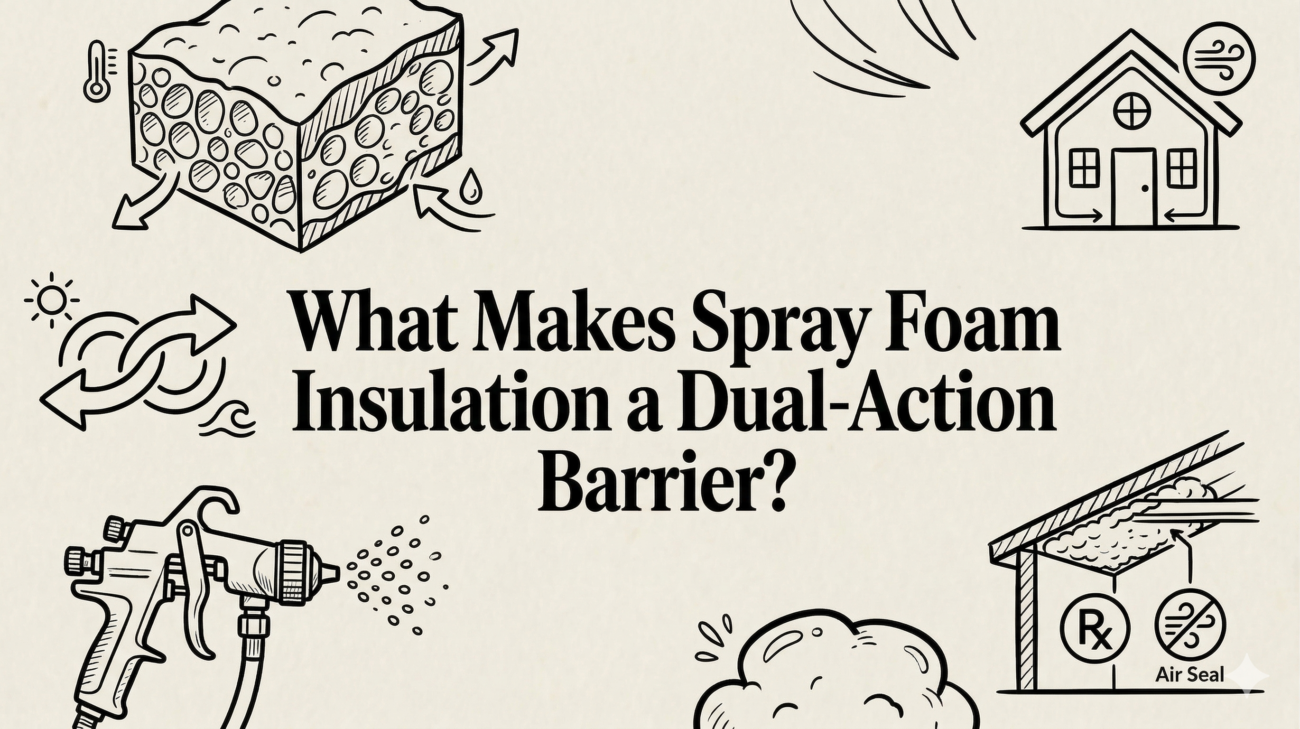
As it’s applied, spray foam expands to fill every single crack, gap, and irregular space in the wall cavity. It cures to form a solid, seamless, and airtight seal that stops air leakage dead in its tracks.
This ability to insulate and air seal in one step is what truly sets spray foam apart. It creates a complete building envelope that fiberglass can't hope to match. By preventing your cool, conditioned air from escaping and blocking hot, humid air from getting in, spray foam drastically cuts the workload on your HVAC system.
For any South Florida property owner, this is where the higher upfront cost starts to make serious financial sense, delivering a powerful return on investment through lower energy bills and unmatched comfort.
Protecting Your Home From Humidity and Mold

Here in South Florida, insulation has to pull double duty. It’s not just about fighting the heat; it’s about winning the relentless war against humidity. When you’re weighing the cost of spray foam vs fiberglass, this is where the real, long-term value of a higher initial investment becomes undeniable.
Your choice of insulation is the front line of defense against moisture—the root cause of mold, mildew, and even structural rot. One of these materials excels in our damp environment, while the other can quickly become a liability.
Fiberglass and the Moisture Problem
Think of fiberglass insulation as a thick, fluffy blanket made of spun glass. By design, it’s permeable, meaning air and moisture can pass right through it. In a climate where the air is constantly heavy with humidity, this is a recipe for trouble.
When that humid air seeps into fiberglass, condensation is inevitable. The insulation gets damp, and once it’s wet, it loses a huge chunk of its R-value, crippling its ability to insulate. Worse, it holds onto that moisture like a sponge, creating the perfect breeding ground for mold and mildew inside your walls and attic.
This trapped moisture kicks off a domino effect of costly problems:
- Reduced Performance: Saturated insulation is dead weight. It doesn't insulate, forcing your AC to work overtime just to keep up.
- Structural Damage: Constant dampness will rot the wood framing of your home from the inside out, compromising its integrity.
- Poor Air Quality: Mold spores don’t stay in the walls. They circulate through your home, triggering allergies and respiratory issues.
Over time, moisture-laden fiberglass batts will sag and pull away from the studs, leaving massive gaps that make them almost completely useless. This eventually leads to a costly tear-out and replacement, adding a hidden lifetime cost to that "cheaper" upfront price.
Closed-Cell Spray Foam: The Vapor Barrier
This is where closed-cell spray foam is a completely different animal. Unlike fiberglass, it's not permeable at all. It acts as a non-permeable vapor barrier, actively blocking moisture from ever getting inside your building envelope.
When we apply closed-cell spray foam, it cures into a rigid, solid barrier made of tiny, sealed-off cells. This dense structure makes it impossible for water vapor to penetrate, effectively locking humidity out of your home. This single characteristic is a game-changer for homes in the South Florida climate.
Because closed-cell spray foam is a true vapor retarder, it protects the structural guts of your home from moisture damage. It doesn't just insulate against heat; it seals against the elements, preventing the conditions that allow mold to grow in the first place.
This dual functionality is a critical factor when you look at the cost of spray foam vs fiberglass. Yes, the upfront expense is higher, but you’re also buying a built-in moisture management system that protects your property value and your family’s health.
An Apples-to-Oranges Comparison
Putting these two materials side-by-side on moisture control shows they aren’t even in the same league. One manages moisture by stopping it cold; the other is susceptible to becoming part of the problem.
Picture a typical wall cavity on a hot, humid summer day. With fiberglass, humid air pushes into the wall, hits the cooler, air-conditioned drywall, and condenses. The fiberglass batt then soaks up this moisture, starting a cycle of decay.
With closed-cell spray foam, that humid air is stopped dead at the exterior sheathing. It never gets a chance to enter the wall cavity, so condensation can't form. Your wood studs and drywall stay bone-dry, and your indoor environment remains healthy and protected. For any homeowner looking for a permanent, worry-free solution in a coastal climate, this difference is everything. The higher cost reflects a far superior, more resilient technology.
Calculating Your Long-Term Return on Investment
The higher upfront cost of spray foam vs fiberglass is clear, but the financial story doesn't end when the installation crew leaves. The true measure of an investment is its return over time. You should think of spray foam insulation not just as an expense, but as a strategic upgrade that actively pays you back by transforming your home’s energy profile.
By creating a nearly perfect air barrier, spray foam drastically reduces the workload on your HVAC system. It's simple: conditioned air stays in, and hot, humid South Florida air stays out. This translates directly into substantial energy savings, often cutting cooling costs by 30-50% in a typical home around here.
Understanding the Payback Period
The "payback period" is just a term for how long it takes for your energy savings to completely cover the initial cost of the upgrade. While fiberglass offers some savings from its R-value, spray foam’s superior air-sealing performance accelerates this payback, turning your investment into pure profit that much sooner.
Think about it this way: if the cost difference between fiberglass and spray foam is $8,000, and the spray foam saves you an average of $100 per month on your FPL bill, your payback period is just over six and a half years. After that point, every dollar saved is money back in your pocket, month after month, for the life of your home.
A critical part of the ROI calculation is that spray foam’s performance doesn't degrade. Fiberglass can sag, compress, and absorb moisture, losing effectiveness over time. Spray foam, on the other hand, maintains its R-value and air-sealing capabilities for decades, ensuring those energy savings remain consistent year after year.
This long-term reliability makes the financial outcome much more predictable. It positions spray foam as a durable asset that adds real, tangible value to your property.
A Practical ROI Scenario
Let's run the numbers on a real-world example for a home in Jupiter, FL.
- Initial Cost Difference: The homeowner opts for closed-cell spray foam in their 1,500 sq. ft. attic instead of fiberglass. The additional upfront cost is $6,000.
- Monthly Energy Savings: Before the upgrade, their summer electric bills were averaging $350/month. After our crew installed the spray foam, the bills dropped to an average of $210/month.
- Annual Savings: That’s a savings of $140 every month, which adds up to a hefty $1,680 per year.
With these numbers, the payback period is a straightforward calculation:
$6,000 (Initial Cost) ÷ $1,680 (Annual Savings) = 3.57 years
In less than four years, the investment has completely paid for itself. For the next 20+ years, that homeowner enjoys over $1,600 in annual savings—not to mention a more comfortable, quieter, and healthier home. To dig deeper into this, our detailed guide explains if spray foam insulation is worth it based on these exact long-term financial benefits.
This kind of return changes the conversation entirely. You’re not just buying a product; you’re making a smart financial move that lowers your monthly expenses and increases your property’s overall market value.
Choosing the Right Insulation for Your Project
So, how do you make the final call in the spray foam vs. fiberglass debate? It really comes down to matching the right material to the right job. There’s no single “best” choice that works for every situation; the smartest solution depends on your project’s specific demands, your budget, and what you expect in terms of long-term performance. A one-size-fits-all recommendation just doesn't cut it.
When you're taking on any home improvement project, you naturally weigh your options. It's like deciding between cabinet refacing vs refinishing; you look at the cost, the process, and the final result to see what makes the most sense for your home. The same logic applies directly to insulation. The key is to match the material’s strengths to the unique challenges of the space you're working on.
When Fiberglass Makes Practical Sense
Despite its performance drawbacks, fiberglass still has its place. It remains a practical option in certain scenarios, mostly because of its low upfront cost. It can be a perfectly sensible choice for specific applications where its weaknesses aren’t a major liability.
Think about using fiberglass for:
- Budget-Constrained Projects: If the initial investment is your absolute top priority, fiberglass gets the job done for a fraction of what spray foam costs.
- Interior Walls: For insulating interior walls just to dampen sound, fiberglass is an economical solution. In this case, air sealing and moisture aren't really part of the equation.
- DIY Projects: For an experienced DIYer looking to insulate a shed or garage, fiberglass batts are accessible and manageable for a weekend project.
But let's be realistic. For most homes in South Florida's demanding climate, those short-term savings often lead to long-term performance trade-offs you can't afford to ignore.
Where Spray Foam Is the Definitive Choice
For any project where long-term performance, serious energy efficiency, and moisture control are the main goals, spray foam—especially closed-cell—is simply the superior investment. It's not just insulation; it's a structural and environmental upgrade for your entire building.
Closed-cell spray foam is the clear winner for applications demanding uncompromising performance. Its ability to air seal, block moisture, and add structural rigidity makes it the gold standard for creating a high-performance building envelope in a humid climate.
This advanced material truly proves its worth in the most critical areas of a home.
Spray foam is the ideal solution for:
- New Construction: Integrating closed-cell spray foam from the ground up creates a flawlessly sealed, highly efficient home. You're locking in maximum energy savings for decades to come.
- Unvented Attics and Roof Decks: Applying spray foam directly to the underside of the roof deck is the most effective way to stop radiant heat from baking your home from the top down.
- Areas Prone to Moisture: For crawl spaces, rim joists, and any spot exposed to our thick humidity, closed-cell foam’s vapor barrier properties are non-negotiable for preventing mold and rot.
- Maximizing Energy Savings: If your primary goal is to slash your monthly FPL bill and see the fastest possible return on your investment, the unmatched R-value and air-sealing power of spray foam is the only way to go.
By carefully weighing your project's needs against the strengths of each material, you can make a confident, informed decision. For most South Florida property owners aiming for lasting comfort and real financial savings, all the evidence points decisively toward spray foam.
Common Questions We Hear About Insulation Costs
When it comes to upgrading insulation, people naturally have questions, especially about the cost of spray foam vs. fiberglass. We get these calls all the time from homeowners across South Florida. Here are some of the most common questions we hear, with straight-up answers from our years of experience.
Is Spray Foam Really Worth the Higher Price?
In a place like South Florida? Absolutely. While you'll see a higher number on the initial quote for spray foam, its real value is in how it performs day in and day out. Spray foam creates a solid air and moisture barrier that fiberglass just can’t replicate.
This airtight seal is what dramatically cuts down your energy use, often leading to 30-50% savings on cooling bills. After just a few years, those savings add up, and the insulation has essentially paid for itself. From that point on, it’s just putting money back in your pocket every month—an investment in efficiency and comfort that pays dividends for decades.
Can I Save a Few Bucks and Install Spray Foam Myself?
That’s a hard no, and for very good reasons. Spray foam isn't like rolling out a batt of fiberglass; it's a chemical process that requires specialized, high-pressure equipment and precise mixing. Getting it right is a science, and professional installation isn’t just a recommendation—it’s critical for safety and performance.
Our certified technicians are trained to handle the chemical ratios and application techniques, ensuring the foam cures perfectly and creates the seamless barrier you’re paying for. A DIY attempt is not only hazardous but almost guarantees a poor-quality seal, completely defeating the purpose of choosing a premium material.
Will I Have to Replace Spray Foam Down the Road Like Fiberglass?
It's extremely unlikely. A big reason people have to replace fiberglass is that it sags, gets compressed, or soaks up moisture from our humid air, which kills its R-value over time. Closed-cell spray foam, on the other hand, is a solid, rigid material that simply doesn’t break down.
Once it's sprayed in place, it holds its shape, its thermal resistance, and its air-sealing power for the life of the building. That longevity is a huge part of its value. You’re not just buying insulation; you're buying a permanent solution and avoiding the cost and headache of redoing the job in ten or fifteen years.
Ready to see how a truly airtight home can cut your FPL bill and transform your comfort? The team at Airtight Spray Foam Insulation is here to give you a professional, no-strings-attached look at your property. Request your free quote today and feel the difference for yourself.