Learn more about our spray foam insulation services in Jupiter, FL and how they help maintain comfort and energy efficiency in South Florida homes.
For homeowners here in South Florida, the answer is almost always a resounding yes—spray foam insulation is a powerful long-term investment. I get it, the upfront cost is higher than old-school options like fiberglass. But it’s an investment that delivers real value that pays you back for years through serious energy savings, a more comfortable home, and cleaner air.

Deciding if spray foam is “worth it” means looking beyond the initial price tag. Think of it as a complete performance upgrade for your home’s entire building envelope, not just another layer of fluff in the attic. Its real value comes from its unique ability to create an almost perfect air seal, which is something traditional insulation just can’t replicate.
This airtight barrier is a game-changer. It stops your expensive conditioned air from leaking out and, just as importantly, prevents that hot, sticky outdoor air from seeping in. The result? A much more stable indoor temperature, which means your HVAC system doesn’t have to work nearly as hard.
To really understand its worth, you have to look at the tangible benefits you’ll see and feel every day:
Spray foam is a one-and-done investment that lasts for the life of your home, often 80 years or more. Compare that to traditional insulation, which can sag, settle, and need replacement after just 15-20 years. With spray foam, you eliminate those future headaches and costs.
To put it simply, the upfront cost leads to a smarter financial outcome in the long run. The table below breaks down exactly why.
This quick overview highlights the key benefits that make spray foam such a valuable upgrade for any homeowner looking to improve their property.
| Key Factor | Impact on Your Home’s Value |
|---|---|
| Superior Energy Efficiency | Significantly lowers monthly utility bills, offering a clear and measurable return on investment. |
| Airtight Seal | Increases comfort, improves air quality, and is your best defense against moisture intrusion. |
| Long-Term Durability | Lasts for decades without sagging or degrading, meaning you avoid future replacement costs. |
| Added Structural Support | Reinforces your home’s structure, which is a powerful selling point in storm-prone areas like ours. |
Ultimately, choosing spray foam isn’t just about insulation; it’s about investing in your home’s efficiency, comfort, and resilience for decades to come.
To really get why spray foam is such a game-changer, you have to understand how different it is from the old way of doing things. Think of traditional insulation like fiberglass batts as a thick wool blanket full of tiny holes. It might slow down heat, but it does almost nothing to stop a draft.
Spray foam is entirely different. It’s less like a blanket and more like a custom-molded, seamless shell for your home. It doesn’t just insulate; it creates a complete air barrier that fundamentally changes how your house performs.
The magic is all in the chemistry. Spray foam starts out as two separate liquids that we heat and pump through a hose. When they mix at the tip of the spray gun, a rapid chemical reaction happens—they expand and harden into a solid foam in just a few seconds.
This expansion is the key. We apply the liquid mixture directly to the underside of your roof deck or into wall cavities, and it expands up to 100 times its original size. As it grows, it flows into every single crack, gap, and odd-shaped corner, sealing them off completely.
This isn’t just about filling the big, obvious gaps. It’s about creating a perfect seal around every pipe, wire, and stud. This is what stops your expensive conditioned air from leaking out and keeps that hot, sticky Florida air from getting in.
You’ll hear contractors talk a lot about R-value, which is just a number that measures how well a material resists heat. A higher R-value is better, but it’s only half the battle.
Here’s the thing: studies show that air leakage can account for up to 40% of a home’s heating and cooling loss. Your fiberglass insulation might have a great R-value printed on the package, but if air can just blow right through and around it, a huge amount of that insulating power is wasted.
This is exactly where spray foam pulls ahead. It gives you both a high R-value and a near-perfect air seal in one shot. By stopping air movement, it makes sure the R-value you paid for is actually working for you. It’s this one-two punch that makes spray foam so incredibly effective.
This integrated approach to sealing and insulating is a core part of what makes the Airtight Comfort System so effective in slashing energy costs and making homes more comfortable. It tackles both sources of energy waste—heat transfer and air leaks—at the same time. The result is a home that stays cooler, feels way less humid, and puts a lot less stress on your AC system.
Deciding to go with spray foam is a great first step. But the next choice is just as critical: should you use open-cell or closed-cell foam? They might sound similar, but they’re engineered for very different jobs, and picking the right one is key to making sure your investment pays off.
Think of open-cell foam like a dense, flexible sponge. Its cells are intentionally left “open,” which creates a soft, lightweight material that expands like crazy when we apply it. This structure makes it an incredible sound dampener, perfect for quieting things down between interior walls or blocking out neighborhood noise.
On the other hand, closed-cell foam is more like a solid, waterproof board. Its cells are completely sealed and packed tightly together, trapping a special gas that boosts its insulating power. This dense, rigid structure gives it incredible strength, a superior thermal barrier, and makes it a nearly impenetrable shield against moisture.
This diagram really shows the core difference between how spray foam works versus older methods that leave all sorts of tiny air gaps for your AC to escape through.
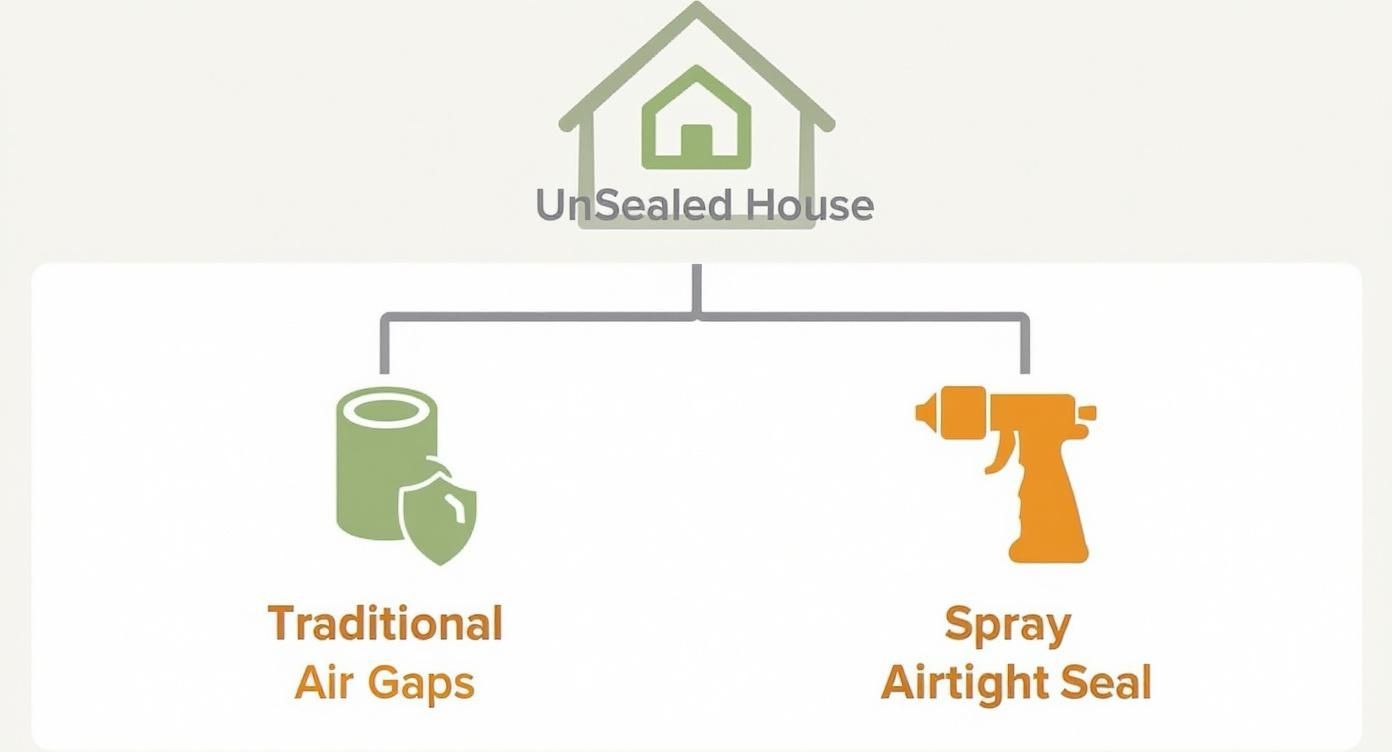
It’s this ability to create a seamless, airtight seal that makes spray foam so effective. It’s a quality that both open-cell and closed-cell foams deliver, but in very different ways.
The physical differences between these two foams dictate where they’ll perform best. Using the wrong type can completely undermine what you’re trying to achieve, whether it’s maximum energy savings, moisture control, or just some peace and quiet. Honestly, the answer to “is spray foam worth it?” often comes down to matching the right foam to the right spot in your house.
Here’s what you need to know:
For our humid South Florida climate, closed-cell foam is almost always the clear winner for attics, crawl spaces, and exterior walls. Its power to create a moisture-proof seal is your best defense against our relentless humidity, preventing mold and mildew while also reinforcing your home against high winds.
Sometimes a simple chart makes the choice easier. Here’s a direct comparison to help you see where each type of spray foam really shines for your home improvement project.
| Feature | Open-Cell Foam | Closed-Cell Foam |
|---|---|---|
| Cost | Less expensive per board foot. | More expensive per board foot. |
| Density | Low-density, light, and flexible. | High-density, rigid, and strong. |
| Moisture Barrier | No, it is vapor-permeable. | Yes, it is an excellent vapor barrier. |
| Sound Dampening | Excellent sound absorption. | Good, but less effective than open-cell. |
| Ideal Applications | Interior walls, home theaters, soundproofing. | Attics, exterior walls, crawl spaces, roofs. |
Now, it’s true that spray foam insulation has a higher upfront cost, and it takes a trained professional with specialized equipment to install it correctly—you can’t just pick it up at the hardware store. But innovations in foam, especially with closed-cell’s powerful R-value and moisture resistance, are making it the go-to solution in demanding climates like ours. You can find more details on the foam insulation market and its growth on market.us.
At the end of the day, putting the right foam in the right place is the secret to getting the comfort, efficiency, and long-term performance you’re paying for.
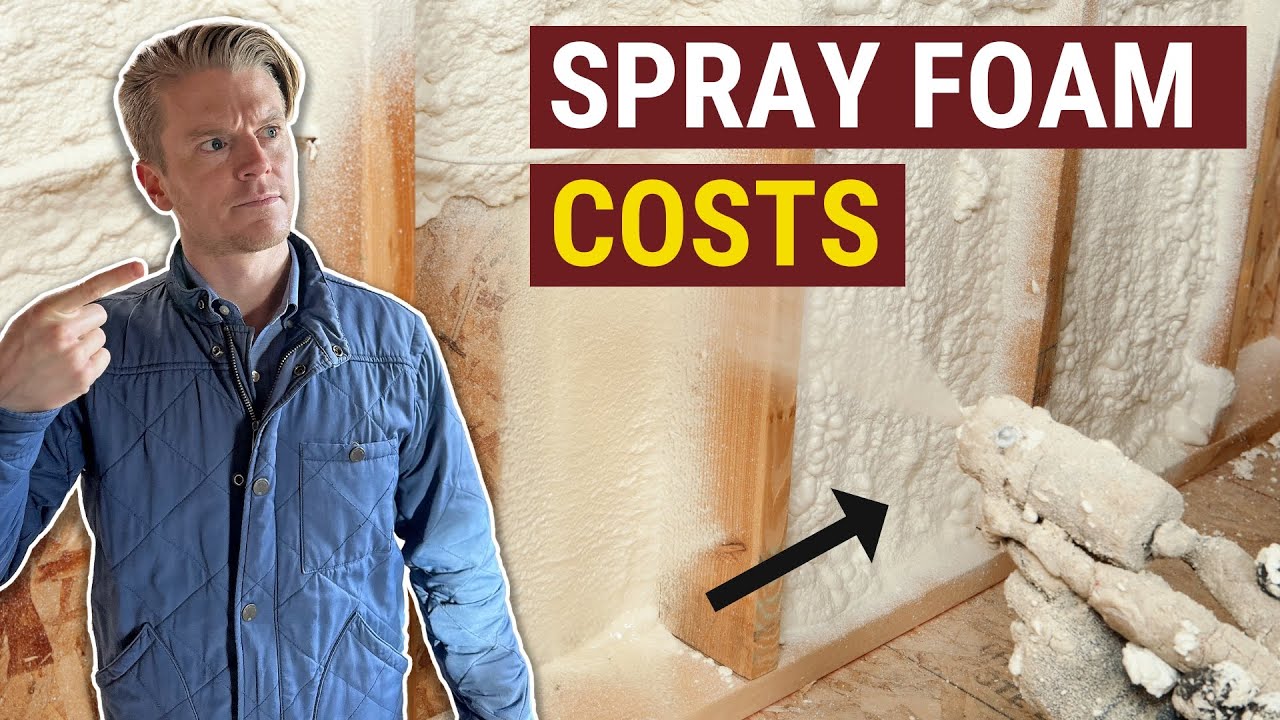
Let’s talk numbers. The upfront cost of spray foam insulation definitely gets your attention when compared to traditional options, but looking at the price tag alone is like judging a book by its cover. It just doesn’t tell the whole story.
To figure out if spray foam is truly worth it for your home, you have to look at the complete financial picture: the initial investment, the long-term savings, and the overall return. Think of it less as a simple expense and more as a strategic investment in your home’s performance and value. The real question isn’t just “how much does it cost?” but “how fast does it pay for itself?”
The cost of a spray foam project is typically measured per board foot—a space that’s one foot long, one foot wide, and one inch thick. The final price tag really hinges on a few key factors.
First, the type of foam you choose makes a big difference. Open-cell foam, being less dense, generally costs less per board foot. On the other hand, closed-cell foam is more expensive because it has a denser, more rigid structure and packs more insulating power (a higher R-value) per inch.
Second, the complexity of the job plays a huge role. Insulating the wide-open stud bays in a new construction home is pretty straightforward. Retrofitting a cramped attic filled with HVAC ducts, wiring, and tight corners? That’s a whole different ballgame. The more intricate the work, the more labor is required, which naturally affects the total cost.
Here’s a general idea of what to expect:
While options like blown-in insulation might seem cheaper at first glance, it’s crucial to compare how they perform over the long haul. You can dive deeper into a detailed comparison of spray foam vs. blown-in insulation to really understand the differences in efficiency and durability.
Now for the best part of the financial equation: the return on investment (ROI). This comes almost entirely from massive energy savings. Because spray foam creates an airtight seal that stops air leakage in its tracks, it can slash your home’s heating and cooling costs—often by up to 40%.
For a typical South Florida homeowner, this can translate into hundreds of dollars in savings on your FPL bill every single year. Most of our clients find that their spray foam investment pays for itself in just 3 to 7 years. After that, the continued savings are pure profit for the life of your home.
This quick payback is becoming more common as energy costs continue to climb and building codes get stricter. It’s no surprise the global spray foam market is growing. The United States is a huge part of this market, driven by new regulations and the simple fact that heating and cooling account for nearly half of all the energy we use in our homes.
Beyond the monthly savings, spray foam adds real, tangible value to your property. Today’s homebuyers are smarter and more energy-conscious than ever before. A home with professionally installed spray foam insulation is a major selling point.
It signals a well-maintained, high-performance home that will be cheaper to run and way more comfortable to live in. This transforms your initial expense into a powerful asset, helping your home sell faster and potentially at a higher price. When you factor in both the energy savings and the increased resale value, the cost becomes a clear and strategic financial move.
Look, no home improvement project is a perfect “silver bullet,” and spray foam insulation is no different. To figure out if it’s truly worth it for your home, you need to take an honest, balanced look at its powerful advantages and its potential drawbacks. A smart decision always comes from weighing both sides of the coin.
This is the full picture—the good and the bad—so you can weigh the huge benefits against the real-world considerations for your property.
The benefits of spray foam are pretty significant, affecting everything from your monthly FPL bill to the structural integrity of your home. Because it goes on as a liquid and expands into a solid, it creates a nearly perfect seal that traditional materials just can’t compete with.
Here are the main upsides:
The long-term performance and durability are where spray foam really pulls ahead. You’re not just insulating for today; you’re locking in your home’s efficiency and comfort for decades, without ever needing to think about maintenance or top-ups.
On top of that, the rigid structure of closed-cell foam actually adds racking strength to your walls and roof deck. This reinforces your home against high winds, which is a massive plus during hurricane season. Its dense nature also provides some serious sound dampening, cutting down on outside noise for a quieter, more peaceful home.
While the benefits are compelling, it’s just as important to understand the potential downsides before you commit. Knowing these factors is key to making a confident decision.
Beyond these points, spray foam has some impressive environmental creds over its long lifespan. One study found that a home with spray foam can reduce CO2 emissions by about 460 kg each year. Over 50 years, it saves 104 times the energy used to produce it in the first place. You can read more about these long-term environmental benefits on greenmatch.co.uk.
Florida’s relentless heat and suffocating humidity aren’t just uncomfortable—they create a set of challenges that standard insulation simply wasn’t built to handle. Answering “is spray foam insulation worth it” here isn’t just about keeping your house cool; it’s about winning the constant battle against moisture intrusion and extreme weather. This is where spray foam, especially the closed-cell variety, truly shines.
Think of your home’s exterior as a ship’s hull. In Florida, that ship is sailing through a sea of thick, humid air 24/7. Traditional insulation like fiberglass is like a net—it might slow things down, but that moisture-laden air will eventually push its way through. This infiltration is what forces your AC to work overtime, not just cooling the air but also pulling gallons of water out of it day after day.
Closed-cell spray foam acts less like a net and more like a solid, non-porous hull for your home. When applied, it creates an impenetrable vapor barrier, completely blocking humid air from seeping into your wall cavities and attic. This is your single most powerful defense against the mold and mildew that thrive in our damp climate.
By sealing the building envelope so effectively, you stop that humid air in its tracks. The result is immediate: a dramatic reduction in the workload for your HVAC system. It can finally focus on maintaining temperature instead of constantly fighting to dehumidify an endless supply of incoming moisture. That translates directly to lower cooling costs and a much more comfortable home.
In Florida, insulation performance is defined by moisture management. A home sealed with closed-cell spray foam fundamentally changes the game by creating an environment where mold simply can’t get the moisture it needs to grow, protecting both your property and your family’s health.
The unique construction of many Florida homes also benefits from this approach. For homeowners looking to maximize their home’s efficiency, understanding the insulation value of concrete block walls is a crucial first step, as sealing these common structures is key to achieving major energy savings.
Beyond blocking heat and moisture, closed-cell spray foam offers a unique benefit that is invaluable in our region: added structural resilience. During application, the foam expands and hardens into a dense, rigid material that adheres tenaciously to every surface it touches.
It essentially glues the studs, sheathing, and drywall together, adding significant racking strength to your walls and roof deck. This reinforcement helps your home resist the powerful uplift and lateral forces generated by hurricane-force winds.
This structural enhancement is something traditional insulation like fiberglass or cellulose simply cannot provide. For Florida homeowners, investing in closed-cell spray foam isn’t just an energy upgrade—it’s a powerful investment in your home’s durability and your family’s peace of mind when storm season arrives.
Even after you’ve weighed all the pros and cons, it’s completely normal to have a few more questions pop up. Deciding to upgrade your home with spray foam is a big deal, and you should feel 100% confident before moving forward.
This is where we tackle the most common things we hear from homeowners just like you. We’ll get straight to the point on everything from the foam’s lifespan to its safety, making sure you have all the facts.
This is one of the best parts about spray foam and a huge reason it offers so much long-term value. Unlike fiberglass or cellulose that can sag, compress, or lose its insulating power over time, spray foam is a different beast entirely. It’s incredibly durable.
Once it’s professionally installed, it holds its shape and R-value for the life of your home. We’re talking 80 years or more, easily. You won’t ever have to think about replacing it. It’s a true one-and-done solution, saving you the future cost and hassle of ripping out and replacing failing insulation every 15 or 20 years.
When you choose spray foam, you’re not just insulating for next summer; you’re locking in your home’s energy efficiency for generations. That kind of reliability is what makes the upfront investment so worthwhile.
Your family’s safety is everything, so this is a really important question. The installation itself is a chemical process that requires our trained pros to use full safety gear. But once the foam is sprayed and fully cured—which usually takes about 24 hours—it becomes a completely inert, stable plastic.
After it cures, spray foam is perfectly safe. It doesn’t release harmful chemicals or “off-gas” into your home’s air. It’s just a solid, rigid material that’s now part of your home’s structure, helping to create a healthier indoor environment by blocking outdoor pollutants and allergens from ever getting in.
You’ll see DIY spray foam kits at the big box stores, but for any project bigger than sealing a small crack, we strongly advise against it. Professional installation is absolutely critical for two reasons: safety and performance.
When it comes down to it, hiring a certified professional is the only way to guarantee the job is done safely, done right, and will deliver the comfort and savings you’re paying for.
Ready to see how the Airtight Comfort System can transform your South Florida home? The team at Airtight Spray Foam Insulation has the experience to make your space quieter, healthier, and more energy efficient. Request a free, no-obligation quote today!