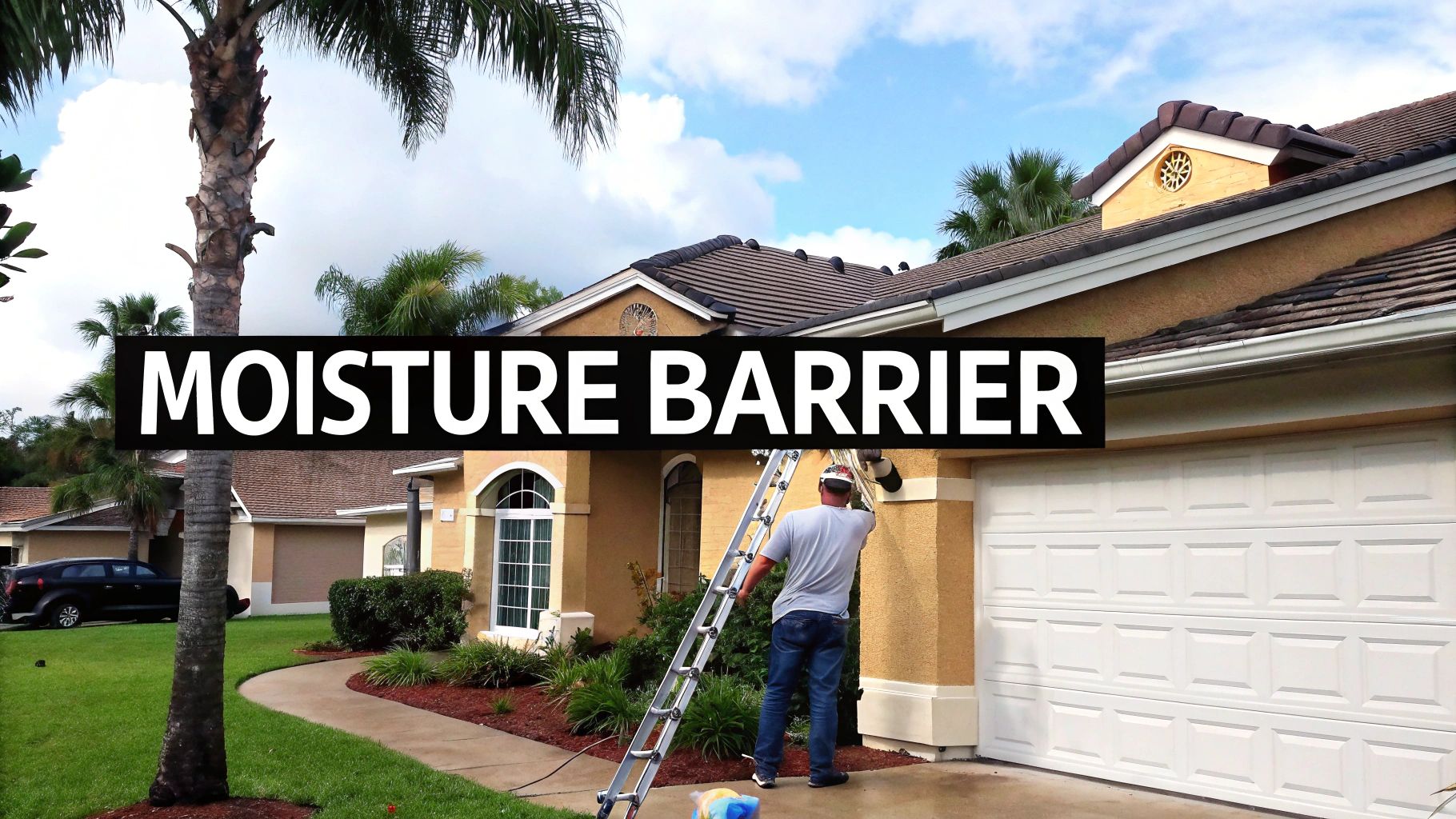
Think of moisture barrier insulation as a high-performance raincoat for your house. It's a complete system designed not just to keep you cool, but to actively block the invisible enemy in Florida's climate: water vapor. This airborne moisture is relentless, always trying to seep into your home's walls and attic, where it can cause mold, rot, and sky-high energy bills.
Living in South Florida is a trade-off. We get the beautiful weather, but we also have to deal with constant, oppressive humidity. This isn't just about feeling sticky—it's a structural battle for your home. Every single day, that warm, humid outdoor air tries to force its way into your cooler, air-conditioned space. It’s basic physics.
When that warm, moist air finally hits a cool surface inside your walls—like drywall chilled by the AC—it condenses. It turns from an invisible gas back into liquid water. This hidden condensation is where a ton of problems start for homeowners from Jupiter to West Palm Beach.
What kind of problems? The kind that can quietly destroy a home from the inside out.
To give you a snapshot of what we're talking about, here's a quick look at how moisture barrier insulation functions in our climate.
| Concept | Primary Benefit | Best Application in Florida |
|---|---|---|
| Water Vapor Control | Prevents hidden moisture from condensing inside walls and attics. | Essential for all exterior walls, unvented attics, and crawl spaces. |
| Air Sealing | Creates an airtight seal, stopping humid air from leaking into the home. | Critical for stopping energy loss and managing indoor humidity levels. |
| Structural Protection | Keeps building materials dry, preventing rot, decay, and mold growth. | Protects wood framing in new construction and retrofits. |
This table shows why we focus so much on moisture control—it’s about protecting your investment from the ground up.
Here’s the thing: traditional insulation, like the pink fiberglass batts you see everywhere, can actually become part of the problem. Over time, it can absorb moisture, sag, and lose its effectiveness. It can even hold that dampness against your home's wood framing.
Modern moisture barrier insulation, especially closed-cell spray foam, takes a completely different approach. It doesn't just slow down heat; it creates a solid, seamless, and water-resistant seal. It's both insulation and a moisture barrier in one shot.
This guide will walk you through exactly what you need to know to protect your property. We'll break down how these systems work, compare the different materials, and show you why spray foam insulation has become the gold standard for creating a healthy, efficient home in our unique climate.
This isn’t just a local trend. Building science has shifted to prioritize moisture management, and the global market for vapor barriers—a key part of these systems—was valued at USD 15.5 billion and is still climbing. This reflects a worldwide need for buildings that can handle moisture, especially in coastal regions like ours. You can learn more about the global vapor barrier market trends and see just how critical this technology has become.
In Florida, insulation isn't just about keeping your home cool. It's about keeping it dry. An effective moisture barrier is the only way to win the long-term fight against humidity, ensuring your home stays safe, comfortable, and efficient for years to come.
When you start digging into moisture control, you’ll hear two terms thrown around a lot: vapor barriers and vapor retarders. They sound almost the same, but the difference is huge—and picking the wrong one for a South Florida home can cause some serious headaches down the road.
The core difference is all about how much moisture they let through.
Think of a true vapor barrier like a sheet of plastic wrap over a bowl. It’s non-porous and stops pretty much all moisture from getting in or out. This is great for some climates, but not always for ours.
A vapor retarder is more like a high-performance jacket made of Gore-Tex. It stops rain from getting in, but it’s breathable enough to let your sweat (water vapor) escape. That ability to "breathe" is absolutely critical in a place as humid as South Florida.
To take the guesswork out of it, building science gives us a handy measurement called a permeance rating, or "perm rating." This number tells us exactly how much water vapor a material will allow to pass through it. The lower the perm rating, the less vapor gets through.
The Department of Energy breaks it down into simple classes based on these perm ratings.
Materials in Class I are considered true vapor barriers. They’re impermeable. Materials in Class II and III are vapor retarders, and they get progressively more "breathable."
This distinction is everything here in Florida. If you install a true vapor barrier (Class I) on the wrong side of your wall, you’re essentially creating a trap. Humid air gets stuck inside the wall, and when the A/C kicks on, that trapped vapor condenses into liquid water. That’s a perfect recipe for rot and mold. You can read more on how a vapor barrier and insulation system is supposed to work together to avoid this.
A common mistake is thinking that stopping all moisture is the goal. In our climate, giving the building materials a chance to dry out is just as important as blocking moisture in the first place. This is why a breathable vapor retarder is almost always the smarter play.
In a hot, humid climate, the moisture is trying to get in from the outside. The name of the game is to stop that humid outdoor air from working its way into your walls and condensing against the cooler, air-conditioned drywall inside.
A well-chosen moisture barrier insulation system, like closed-cell spray foam, functions as a Class II vapor retarder. It strikes the perfect balance for a Florida home:
Getting the difference between a "barrier" and a "retarder" is the first step. It's how you build a home that works with our unique climate, not against it, protecting your investment for years to come.
Think of traditional insulation like fiberglass batts. They work like a net, mostly just slowing down heat and air. Spray foam insulation is completely different. It's an active, aggressive solution that attacks moisture problems at the source, creating a single, seamless barrier that other materials just can't replicate.
The secret is in how it’s applied.
Imagine trying to patch a leaky old wooden boat. You could stuff the gaps with rags—like traditional insulation—which might slow the leaks for a bit, but they’ll eventually get soaked and become useless. The other option? You could pour in a liquid sealant that expands into every last crack and pinhole, hardening into a solid, completely waterproof hull. That's exactly how spray foam works for your home.
It starts as a liquid and expands instantly on contact, sealing every tiny imperfection in your walls or attic. It fills the gaps around pipes, the spaces between studs, and conforms to uneven surfaces, creating a custom-fitted, monolithic layer of protection. There are simply no gaps left for humid air to sneak through.
Now, not all spray foam is created equal. The two main types, open-cell and closed-cell, handle moisture very differently. Understanding the distinction is absolutely critical for South Florida homes.
For homes in Jupiter, West Palm Beach, and Stuart, where humidity is a constant battle, closed-cell spray foam is the clear winner for moisture control. Its rigid, non-absorbent structure acts as a true barrier, protecting your home from the inside out.
The real magic of spray foam lies in its ability to create a perfect seal with no joints or seams—the weakest points in any other insulation system. Batts have gaps between each piece. Rigid boards have seams that need to be taped perfectly. Spray foam has neither.
When installed, it bonds directly to the substrate, creating one continuous, airtight membrane. This is non-negotiable for performance in our climate. For our clients, this means the vapor-retarding properties of closed-cell foam seal off air leakage by up to 90%, creating stable temperatures in new homes, attics, and commercial roofs. When paired with proper building science, this seal also dampens sound and protects building materials for decades—a huge benefit in our hurricane-prone region. It's no wonder that vapor barriers are driving market growth in the construction industry.
This total air seal does more than just stop drafts. It stops the number one method of moisture transport into a building: air movement. By preventing humid, outside air from getting into your wall cavities in the first place, it eliminates the chance for condensation to form. That condensation is the root cause of nearly all moisture-related disasters like mold and wood rot. You can dive deeper in our guide on whether expanding foam is truly watertight and see how it holds up in the real world. This approach ensures your home's structure stays dry and protected for the long haul.
Picking the right moisture barrier insulation isn't a one-size-fits-all decision. It's about knowing your property and what it's up against. The best plan for a sweltering attic in Palm Beach Gardens is going to be different from sealing a damp crawl space in Stuart or mapping out a new build in Wellington. Every job has its own unique challenges, and that means you need the right tool for the job.
In our neck of the woods, where humidity is the number one enemy, closed-cell spray foam is almost always the answer. Its tough, waterproof structure is exactly what you need for areas that take a direct hit from moisture or could use a little extra structural muscle. Think of it as the heavy-duty, go-to solution for the most vulnerable parts of your home.
So, where does that leave open-cell foam? It has its place, but it's a very specific one. It won't block moisture, but its soft, almost spongy texture makes it a fantastic sound dampener. We typically use it for interior walls or between floors where the goal is peace and quiet, not fighting off humidity.
Let's walk through a few real-world examples to see how this plays out on the ground.
Attics and Roof Decks: Your roof is on the front lines, battling Florida’s sun and humidity day in and day out. Applying closed-cell foam directly to the underside of the roof deck seals it off completely, creating what we call an unvented, conditioned attic. This seamless barrier stops hot, humid air in its tracks, preventing condensation from ever forming and giving your HVAC system a much-needed break.
Exterior Walls: Whether it's a brand-new home or an existing one, closed-cell foam is the clear winner for exterior walls. It insulates, acts as a Class II vapor retarder, and actually adds serious structural strength to the wall—a huge plus when you live in a hurricane zone. When you're building from scratch, working with professional custom home building services who understand this is key to getting moisture protection right from day one.
Crawl Spaces and Foundations: These spots are in a constant battle with ground moisture. Closed-cell foam is the only material for the job here. It bonds tight to concrete and block, creating a waterproof seal that won't soak up water, sag over time, or become a breeding ground for mold.
Metal Buildings and Warehouses: We’ve all seen it—the "sweating" that happens on the inside of a metal building. That’s condensation. Spraying closed-cell foam on the interior stops it cold by creating a thermal break. It keeps the warm, humid indoor air from hitting the cooler metal surface, giving you insulation and moisture control in one clean step.
This simple decision tree helps visualize the one key question you need to ask.
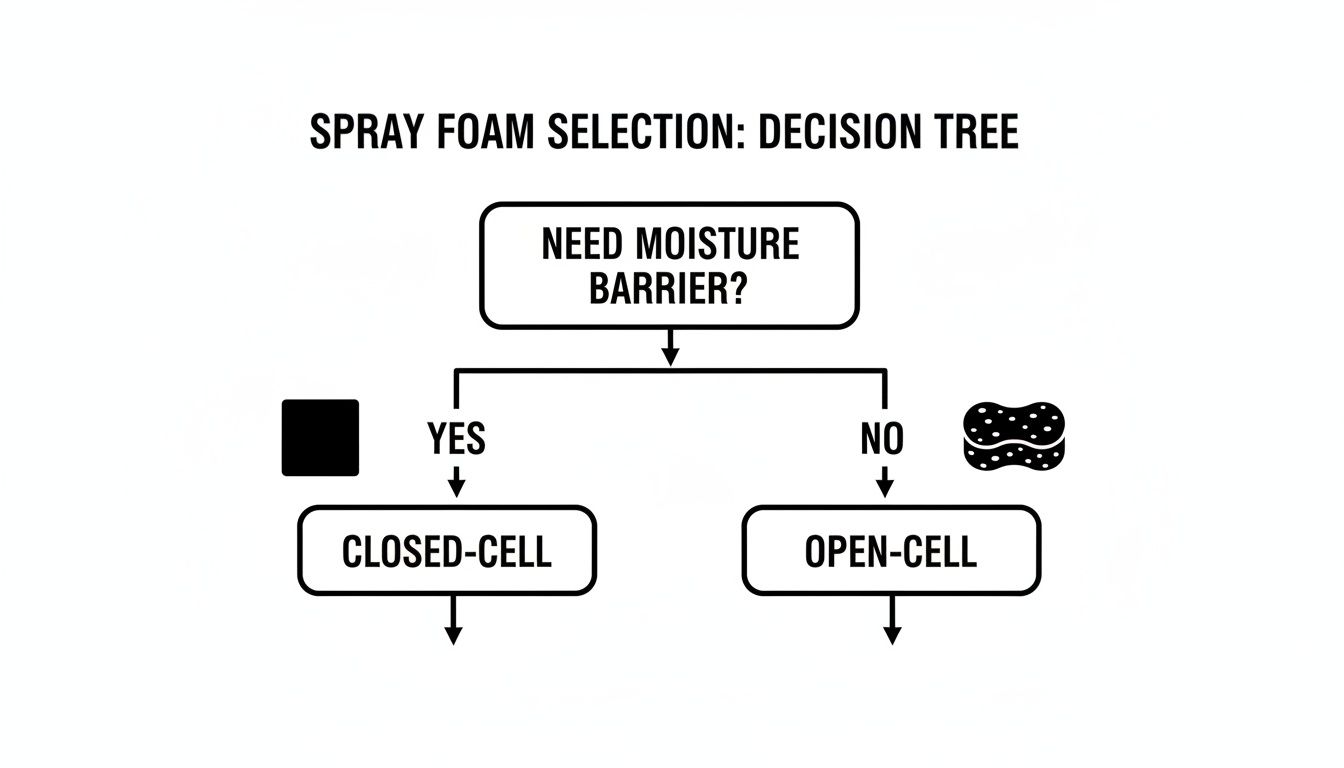
As the chart makes clear, if stopping moisture is your top priority, closed-cell foam is the only way to go.
Understanding the real differences between open-cell and closed-cell is crucial. They both do a fantastic job of sealing up air leaks, but when it comes to moisture and structural integrity, they are worlds apart. One is engineered to block water, the other to muffle sound and let vapor pass through.
To make this choice crystal clear for your project, we've put together a simple side-by-side comparison.
A direct comparison to help you choose the right type of spray foam insulation for your specific needs and application.
| Feature | Open-Cell Spray Foam | Closed-Cell Spray Foam |
|---|---|---|
| Moisture Barrier | No, it's vapor-permeable. | Yes, it's a Class II vapor retarder. |
| Structure | Soft, flexible, sponge-like. | Rigid, dense, and strong. |
| R-Value | ~R-3.5 per inch. | ~R-6.5 to R-7 per inch. |
| Primary Use | Sound dampening (interior walls). | Insulation and moisture control. |
| Application Areas | Interior walls, between floors. | Attics, walls, crawl spaces, roofs. |
| Structural Support | None. | Yes, it adds racking strength. |
| Cost | Less expensive per board foot. | More expensive per board foot. |
The takeaway is pretty straightforward. While open-cell has its niche, it’s just not built for the high-humidity challenges we face every day in South Florida.
Here in South Florida, 9 times out of 10, the right answer is closed-cell spray foam. Its ability to create a true moisture barrier insulation system is what protects homes from the long-term damage caused by our relentless humidity.
In Florida’s relentless humidity, a high-performance moisture barrier isn't just an upgrade—it's a complete game-changer for your home. When done right, the benefits go way beyond simple temperature control. You’re creating a healthier, more efficient, and far more comfortable living space. The real win is stopping hidden moisture in its tracks before it ever becomes a problem.
A properly sealed home takes a massive load off your HVAC system. Think about it: your air conditioner no longer has to wage an endless war against the humidity seeping in from outside. It runs less, works smarter, and that translates directly into lower cooling bills month after month.
But it’s not just about the money. The difference in your indoor air quality is something you can literally feel. By preventing water vapor from sneaking into your wall cavities, you’re starving mold and mildew of the damp, dark environment they need to explode. For families here in South Florida, that means a home with fewer allergens and airborne spores—a safer space for everyone.

This is where things get serious. In a climate like ours, a poorly designed or installed moisture barrier can cause more damage than having none at all. It’s a classic double-edged sword; a mistake in the application can create the exact nightmare you were trying to avoid.
The single biggest danger is accidentally creating a moisture trap. If a vapor barrier with the wrong perm rating—usually one that’s too impermeable—is put on the wrong side of the wall, it can trap humid air inside. When that trapped, muggy air hits a cooler surface, it condenses into liquid water with absolutely nowhere to go.
This trapped moisture is a recipe for disaster:
This is where building science isn't just theory—it's everything. A seasoned installer understands the physics of how moisture moves in South Florida. They know a successful system isn’t about trying to block all moisture, but about managing it intelligently. It's about ensuring your home can breathe where it needs to while staying sealed against bulk water intrusion.
In Florida, the goal is to create an assembly that stops humid exterior air from getting in, while still allowing the structure to dry out if incidental moisture ever occurs. This delicate balance is the difference between a high-performance home and a structural failure waiting to happen.
We're seeing massive growth in projects that pair moisture barriers with spray foam because this combination stops condensation where it starts. This approach preserves up to 50% more energy efficiency in high-humidity zones like South Florida. It’s no surprise that, on a global scale, insulation now drives 40.0% of all vapor barrier demand, a testament to its crucial role in modern building envelopes. You can read more about how vapor barriers are integral to modern construction.
Ultimately, investing in a professional means your moisture barrier system will work with our climate, not against it, protecting your biggest investment for decades.
Throughout this guide, we've unpacked why moisture barrier insulation is non-negotiable for living comfortably in Florida's climate. By now, you know the critical difference between a vapor barrier and a vapor retarder, and you’ve seen why closed-cell spray foam stands out as the most robust, seamless shield against relentless humidity. It’s a solution that actively defends your home from mold, rot, and sky-high cooling bills.
It’s time to put that knowledge to work.
Maybe you're a homeowner in West Palm Beach, fed up with that sticky, swampy feeling indoors. Or perhaps you're a builder in Wellington, striving to deliver top-tier performance on your latest project. The path forward is the same: taking control of your indoor environment starts with getting a professional set of eyes on the problem.
Reclaiming your comfort and protecting your property value isn't complicated. It doesn’t involve guesswork or a pushy sales pitch. It’s about getting a real expert to diagnose your home’s unique vulnerabilities and map out a practical plan that fits your goals and budget.
Our process is built on clarity and trust:
Making a home more efficient is about the whole building envelope. While insulation is key, other upgrades like installing energy-efficient aluminum storm windows also play a big part in managing energy and moisture.
Don't let another humid, expensive summer sneak up on you. Protecting your home from moisture is one of the smartest investments you can make. If you're ready to learn more, our guide on how to reduce humidity in your house offers more strategies to support your new insulation.
Contact Airtight Spray Foam Insulation today for your free, no-obligation quote. Let’s get you on the path to a drier, healthier, and more efficient home.
It’s completely normal to have questions when you’re looking into something as important as your home’s insulation, especially here in South Florida where humidity is a year-round battle. We get these questions all the time, so we’ve put together some straightforward answers to help you feel confident about protecting your property.
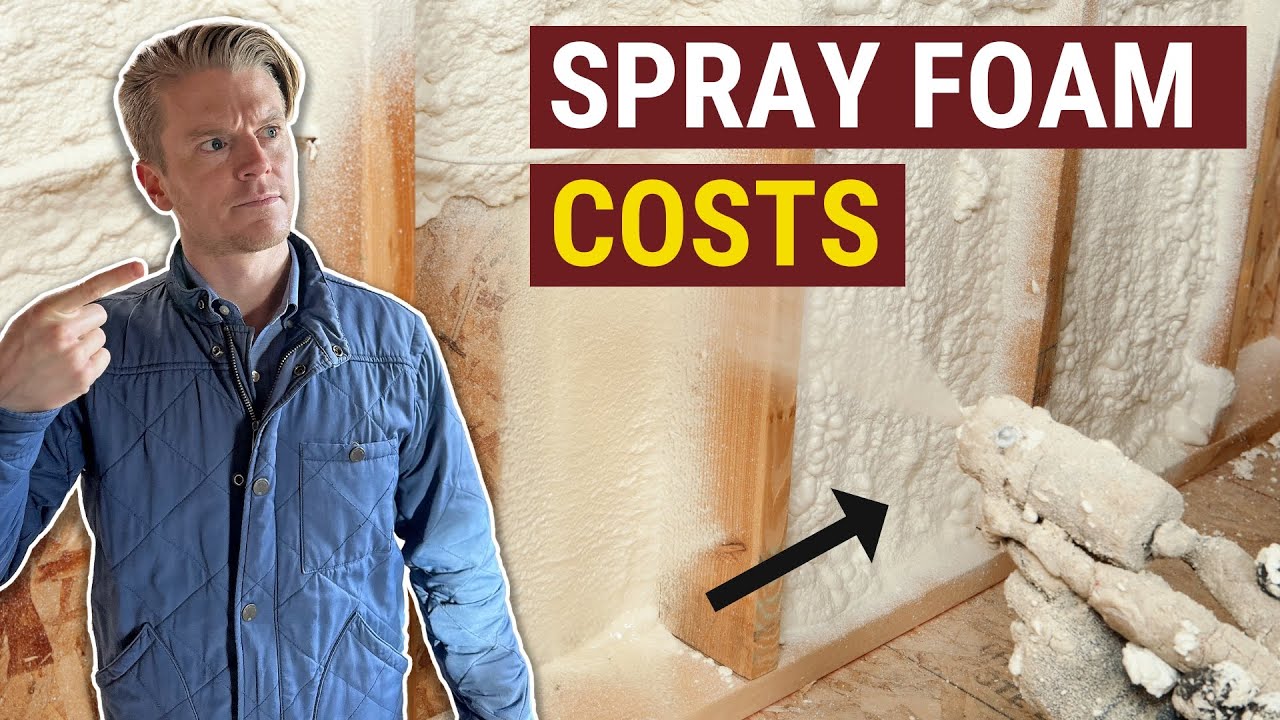
The final price tag always depends on the details—how many square feet we’re covering, which type of foam is best for the job, and how complex the space is. There’s no getting around it: closed-cell spray foam, our best defense against moisture, does cost more upfront than old-school options like fiberglass or even its cousin, open-cell foam.
But it’s crucial to see this as a long-term investment, not just a one-time expense. We’ve seen homeowners in Jupiter, West Palm Beach, and across the region slash their monthly cooling costs by 20-40%. Those savings add up fast, and before you know it, the superior performance has paid for the initial investment. That’s why we always give you a detailed, free quote—we want you to see exactly how the numbers work and what the return on that investment looks like.
You’ll see DIY spray foam kits on the shelves at big box stores, but this is one job that’s truly best left to certified pros. Installing spray foam isn’t just spraying a can; it’s a complex chemical reaction that needs to happen perfectly. We use highly specialized equipment to get the temperatures and ratios just right, all while following strict safety protocols with full personal protective gear.
When it goes wrong, it goes really wrong. An improper mix can mean the foam never cures correctly, leaving you with poor insulation and a lingering chemical smell. Worse, a botched application can fail to create that critical seamless seal, which can actually trap moisture inside your walls—creating the very mold and rot problem you were trying to solve. A professional team ensures the job is done right, done safely, and meets all building codes.
"A professional installation ensures the chemical ratio is perfect and the application is seamless. This isn't just about performance; it's about the long-term health and safety of your home's structure and its occupants."
Yes, absolutely—but it has to be the right kind, used in the right way. In our hot and humid climate, the name of the game is stopping that heavy, moisture-filled air from getting into your attic and condensing on cooler surfaces. This is where closed-cell spray foam is a game-changer.
We apply it directly to the underside of your roof deck, where it does double duty as both a powerful insulator and a highly effective Class II vapor retarder. This approach creates what’s known as an unvented, conditioned attic, completely sealing it off from the brutal outdoor humidity. For a Florida home, this is one of the single most impactful upgrades you can make. It stops moisture dead in its tracks, protects your HVAC system, and prevents mold from ever getting a foothold.
When it’s installed by a professional crew, closed-cell spray foam is a permanent part of your home. It’s not like other materials that will eventually sag, settle, get compressed, or absorb moisture over the years. Once it cures, spray foam becomes a solid, rigid plastic that doesn’t break down or lose its shape.
That means its R-value and moisture-blocking power will be the same on day one as they are decades from now. It’s a true one-and-done solution. You invest in it once, and it protects your home for its entire lifespan without any need for maintenance or replacement.
Ready to make your home a drier, more comfortable, and more energy-efficient place? The team at Airtight Spray Foam Insulation has the hands-on expertise to design and install the perfect moisture barrier system for your South Florida property.