You climb into the attic because something feels off. Maybe the house has one room that never cools down, maybe the electric bill keeps climbing, or maybe you caught a musty smell after a heavy rain. Then you point a flashlight at the attic floor and see a gray, fluffy layer that doesn't look like batts, foam, or bare wood, and you're left wondering what you're looking at.
In South Florida, that question matters more than most homeowners realize. Cellulose insulation is common in older homes and retrofit jobs, and its appearance can tell you a lot about how it's performing, especially when humidity and roof leaks enter the picture. If you can identify it quickly, you can judge whether it still looks healthy, whether it has settled, and whether moisture may already be changing the material.
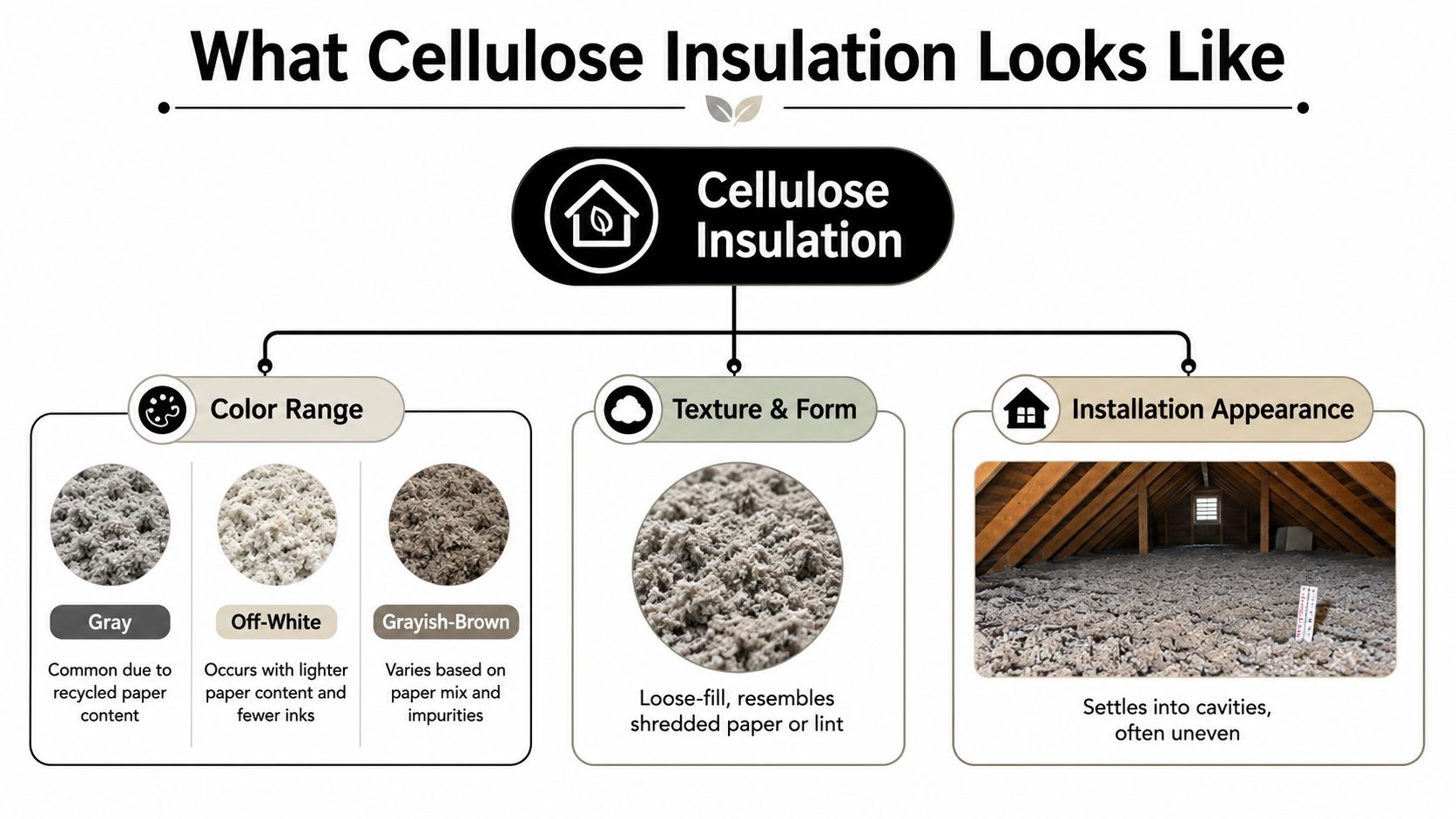
A homeowner in West Palm Beach once described their attic to me as “gray snow with a paper smell.” That is a fair description for cellulose when it is installed and still in decent shape. It usually looks fluffy, loose-fill, and shredded, more like torn newspaper or dryer lint than a solid product, and in many homes it shows up as gray, off-white, or grayish-brown because the recycled paper fibers carry traces of ink and paper residue from the feedstock.
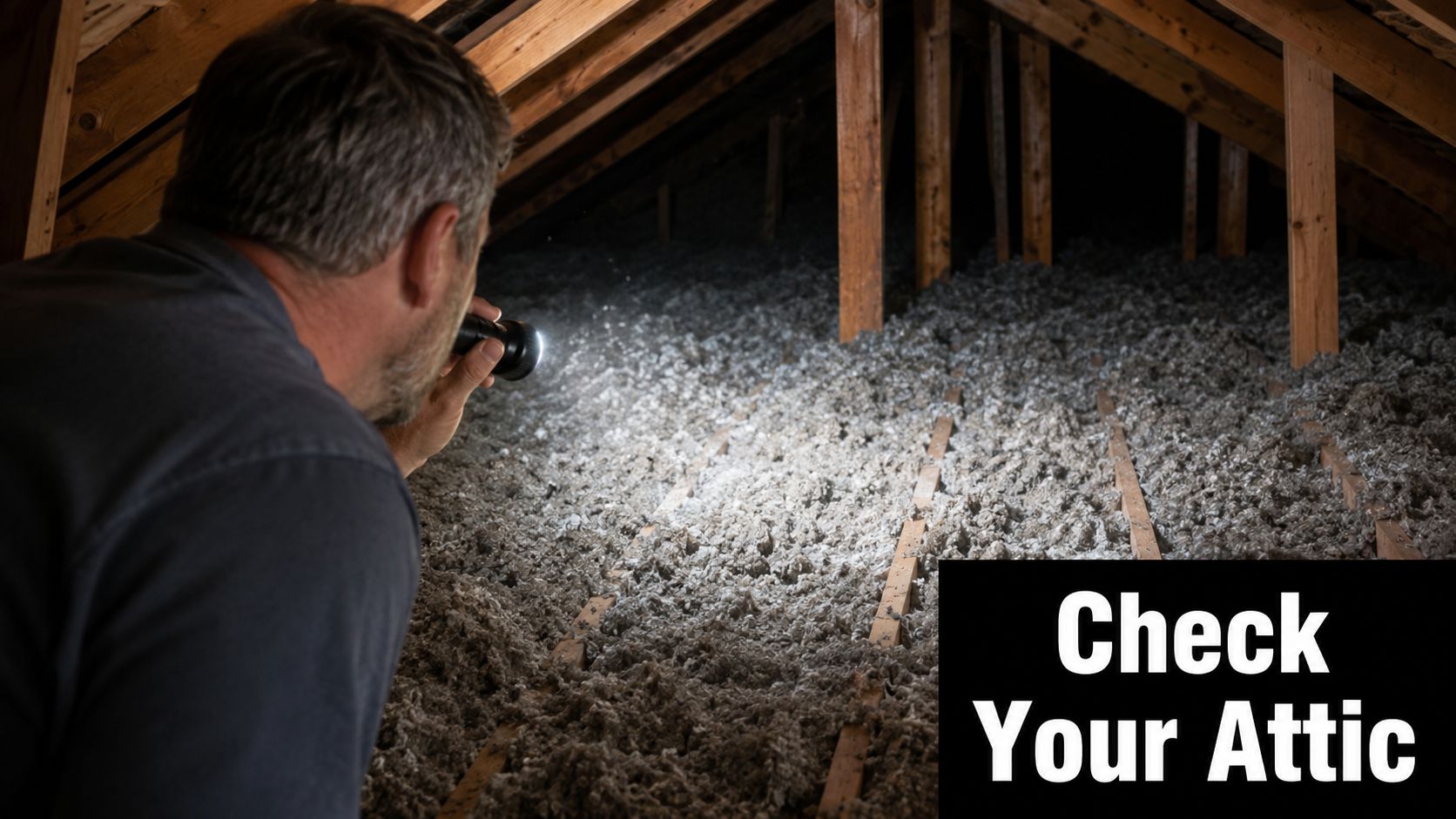
In Florida attics, the confusion usually starts because people see a loose material and assume all loose insulation looks the same. It does not. Cellulose is soft and malleable, while fiberglass has a different fibrous texture, and vermiculite is pebbly and should raise an immediate caution flag if you do not know what you have.
If the material looks like shredded paper, feels soft, and is not rigid or pebbly, you are probably dealing with cellulose rather than foam or vermiculite.
The reason visual ID matters is simple. The type of insulation in the attic affects comfort, moisture behavior, and how much attention the space needs after a leak or after years of settling. If you are cleaning up an attic before an upgrade, our attic cleaning and sanitizing service can also help reset the space before new insulation goes in, especially after contamination or visible debris.
South Florida homes often have one of three broad insulation types up top, cellulose, fiberglass, or spray foam. Cellulose shows up a lot in older homes and retrofit work because it can be blown into place as loose-fill or dense-pack material, which makes it practical when an installer is not opening walls or rebuilding the attic floor. That loose-fill look is why homeowners describe it as a blanket, a drift, or a matted layer instead of a neat product.
When you are standing in the attic, start with the big visual question. Does it look like shredded paper fibers spread across the joists, or does it look like batts, rigid foam, or pebbly granules? That first pass usually narrows the answer fast.
Cellulose has a very specific look once you know what to look for. In an attic, it usually reads as loose, fluffy, and shredded, and homeowners often compare it to ground-up newspaper, dryer lint, or cotton-like fluff. That look comes from recycled paper fibers, then the material is treated for fire resistance before it is installed. If you want a visual reference, see cellulose insulation appearance details.
The color range is usually restrained. In real attics, I expect to see gray, off-white, or grayish-brown more often than anything bright or clean-looking. That tone comes from the recycled paper content, which keeps ink and other residue in the mix, so the product looks like paper because it is paper.
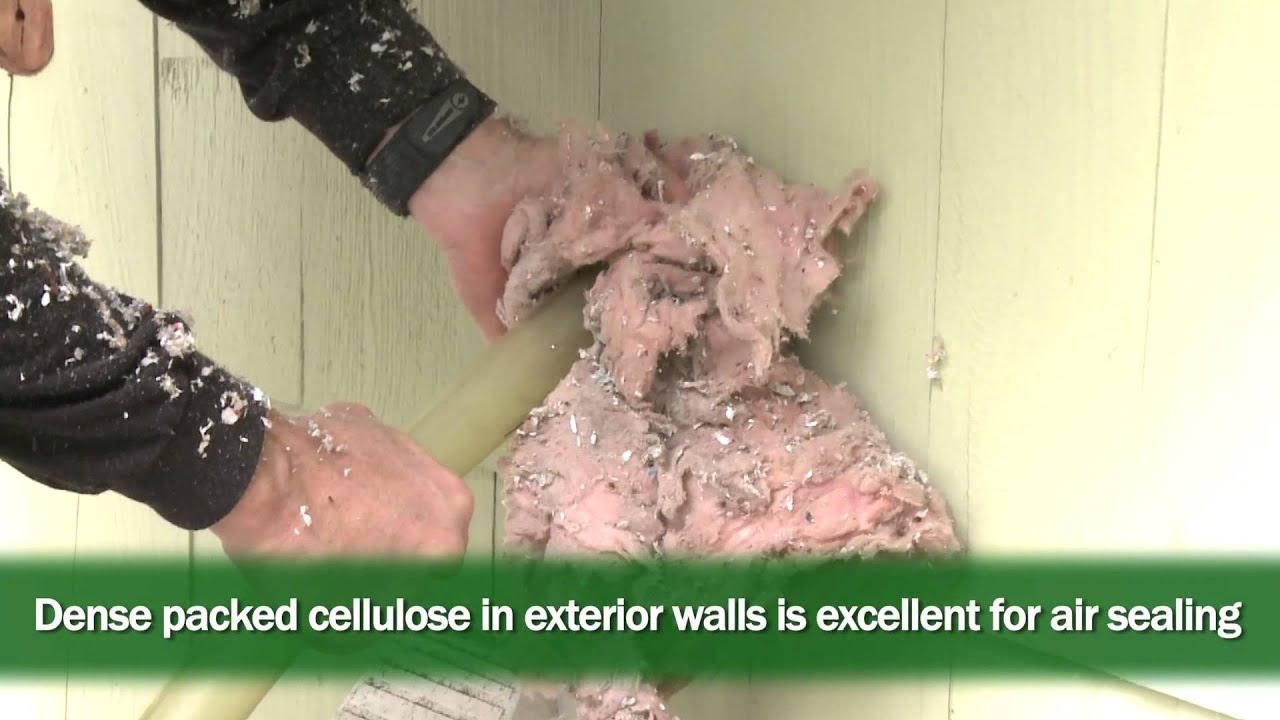
Loose-fill cellulose in open attic spaces tends to look airy and uneven. It spreads across the deck like a thick, fuzzy layer, and when it is newly installed it can look more lifted and voluminous. Dense-pack cellulose in wall cavities usually looks more compacted and slightly clumped, because the installer blows it into a tighter space where it settles into a firmer mass over time.
A healthy-looking cellulose layer should appear reasonably uniform, not patchy or stringy in isolated spots. In a dry attic, the surface often looks soft and wooly, with tiny color variations from recycled print materials. That is normal. What is not normal is a crusted top layer, dark patches, or places where the material no longer looks loose and feathered.
Practical rule: in a dry attic, cellulose should look like a consistent, papery blanket, not a compacted mat or a stained pile.
The visual identity also helps explain why cellulose differs from rigid materials. It does not have the board-like edges of foam, and it does not have the glassy, prickly feel of fiberglass batts. It is meant to be blown in, not installed as a hard shape, so the form should look soft and adaptable rather than fixed. For a deeper product comparison from a contractor's perspective, the spray foam vs blown-in insulation discussion is useful when you are trying to understand why a humid South Florida attic can favor one approach over another.
The quickest way to avoid a misread is to compare the materials side by side. Cellulose looks papery and loose, fiberglass usually looks like spun fibers in pink, yellow, or white, and spray foam is a hardened product that expands into a rigid shape once cured. If you're staring into an attic and trying to identify what you've got, those visual differences matter because each material behaves differently when moisture, heat, and air movement show up.
Cellulose is usually the softest-looking of the three. It has that shredded-paper appearance and tends to settle into a blanket-like surface. Fiberglass often looks lighter in color and more wispy, while spray foam forms a continuous mass that clings to surfaces instead of lying loose on the attic floor.
For a deeper product comparison from a contractor's perspective, the spray foam vs blown-in insulation discussion is useful when you're trying to understand why a humid South Florida attic can favor one approach over another.
| Insulation Type Comparison for South Florida Homes | Cellulose | Fiberglass | Spray Foam |
|---|---|---|---|
| Feature | Loose, shredded, papery look | Fibrous, airy look | Rigid, expanded surface |
| Typical appearance | Gray, off-white, or grayish-brown | Pink, yellow, or white | White, cream, or light green |
| Touch | Soft and malleable | Fibrous and springy | Hard or semi-rigid |
| Installed form | Loose-fill or dense-pack | Batts or loose-fill | Sprayed into place |
| Moisture behavior | Can show settling and staining if damp | Can trap dirt and sag when disturbed | Forms a sealed, continuous layer |
In South Florida, the visual difference isn't just cosmetic. Cellulose that looks evenly loose and dry is one thing. Cellulose that looks compressed, darkened, or lumpy is telling you the attic has had a problem. Fiberglass and spray foam fail in different ways, but cellulose gives you a very readable surface when it starts changing.
Spray foam is visually useful in another way. Because it hardens in place, you can usually tell at a glance whether it has created a continuous surface or whether gaps remain around framing and penetrations. Cellulose, by contrast, asks you to watch for texture shifts, not just presence or absence.
If the attic has mixed materials, don't guess based on one corner. Look at the whole field, the color, and the edge conditions around pipes, trusses, and storage paths. The material that looks most like torn paper is the one you're probably dealing with.
Cellulose does not hold the same look forever. In older attics, it can settle and compress, and consumer and technical guides commonly place its lifespan at 20 to 30 years, though the surface can change sooner as the material packs down learn about cellulose lifespan and settling signs. Once that happens, the insulation may still be there, but the coverage is not as even as it first looked, especially in homes where heat and humidity work on the attic day after day.
The first thing I look for is uneven depth. You may see the insulation sitting lower near the eaves, between joists, or around attic penetrations, while the rest of the field still looks full. The top layer can also lose its soft, airy texture and start looking tighter and more compressed. That does not always mean the material has failed, but it does mean the attic needs a closer look for coverage gaps and air movement.
Moisture changes cellulose quickly because it is paper-based. In a South Florida attic, that usually shows up as darkened patches, clumping, and a heavier, matted texture. If the material looks wet, stained, or stuck together instead of loose and fluffy, a roof leak or a leak around a penetration has probably reached it.
After a storm or plumbing problem, I tell homeowners to find water damage during home inspection before the stain spreads into surrounding materials. Odor matters too. A musty smell, especially after rain, usually means moisture has been hanging around long enough to affect the insulation and sometimes the framing above it.
Practical rule: fluffy, dry cellulose is one thing, but clumping, dark streaks, or a damp feel means the attic needs a closer look right away.
Damp-applied cellulose has its own installation rules. Technical guidance from the University of Massachusetts notes a target moisture content of about 30% by weight at application, with wall cavities typically left open until moisture drops below 25% before they are closed in damp-applied cellulose guidance. That is a clear reminder that moisture control is part of the job with this material, not an afterthought.
If you want a broader check on whether insulation has been exposed to water, the guide on whether insulation can get wet is a useful companion read. In the attic, the question stays simple. Does the material still look dry, loose, and evenly spread, or has it started to darken, sink, and clump?
A homeowner doesn't need to replace cellulose just because it's old or gray. The decision comes down to what it looks like, how it performs, and whether the attic has been exposed to water or persistent humidity. In South Florida, I pay closer attention when the insulation is visibly settled, the home has a history of roof leaks, or rooms below the attic stay uncomfortable even when the system is running.
South Florida puts insulation through a different kind of stress. High humidity and frequent rain raise the odds that a small roof or flashing problem turns into a visible stain in the attic. Because cellulose is paper-based, it gives you a very visible signal when moisture enters the system, but that same composition also means it's less forgiving than a moisture-resistant assembly.
That's where closed-cell spray foam often enters the conversation. It acts as both an insulator and a moisture barrier, which makes it a practical upgrade in coastal attics where sealing, durability, and humidity control matter. Cellulose can still work in some homes, but when the attic keeps getting damp, the material's visual warnings usually show up before the comfort complaints stop.
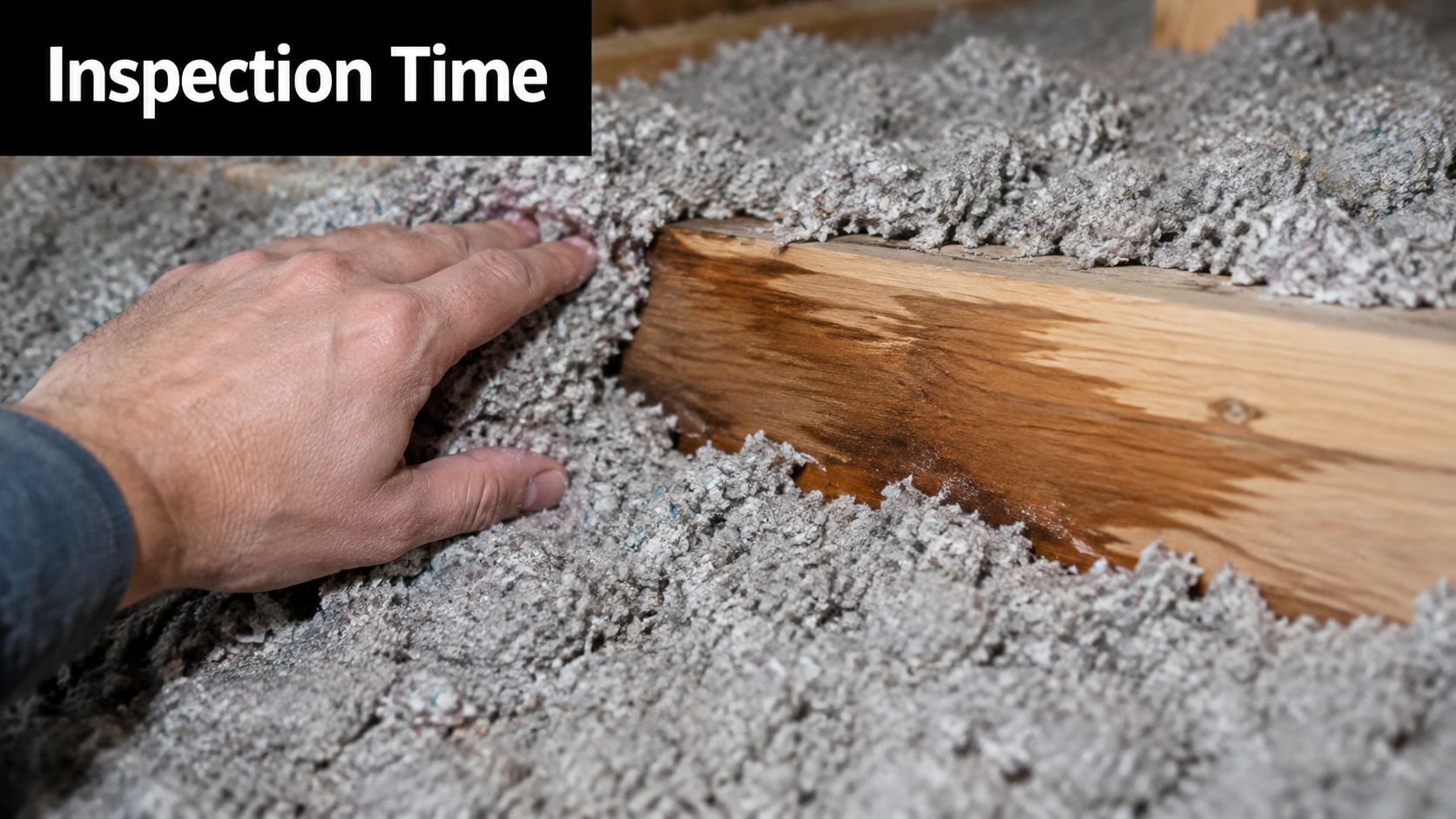
If you're deciding whether a ceiling needs an insulation upgrade or a moisture fix first, an attic inspection should answer that before any work starts. A good contractor will check the roof deck, penetrations, and coverage depth together, because those details tell the full story.
If you've identified cellulose in your attic, the next move is a professional assessment, not a guess from the floor hatch. Ask the contractor to look for settled areas, water staining, and air leaks around penetrations, then have them explain whether the material can stay in place or should be removed. In humid South Florida homes, that inspection matters because a small leak or a few compacted areas can change the attic's performance faster than homeowners expect.
During a proper walkthrough, the contractor should check how the insulation looks near the roof deck, around vents, and along the eaves. If the cellulose is dry and evenly distributed, it may only need topping up or air sealing work. If it's stained, clumped, or holding a musty odor, replacement becomes the more practical path.
Airtight Spray Foam Insulation offers attic assessments and spray foam installation for homes across Jupiter, Palm Beach Gardens, West Palm Beach, Wellington, and Stuart. If you want a tighter attic with better moisture resistance, ask for an evaluation and compare the options before you commit to new material.
If you've found cellulose insulation in your attic and you're not sure whether it's still doing its job, schedule a professional look before the next storm season rolls in. Visit Airtight Spray Foam Insulation to request a free estimate, compare insulation options for your South Florida home, and get a clear plan for removal, replacement, or upgrade.