
Closed-cell spray foam usually starts around $1.00 to $1.50 per board foot, and a 2×4 wall cavity filled to 3.5 inches often lands around $3.50 to $5.25 per square foot. That's the starting point, not the final number, because in South Florida the actual cost depends on thickness, access, prep work, and how much moisture control the building needs.
If you're looking up closed cell foam spray insulation cost, you're likely doing it for a reason. The house feels damp. The garage turns into an oven by noon. The AC runs all day, but certain rooms still feel sticky. Then you plug your square footage into an online calculator and get a number that sounds almost too good to be true.
A lot of the time, it is.
South Florida isn't a forgiving climate for insulation mistakes. Heat is one problem. Humidity is the bigger one. If the assembly needs an insulation product that also helps control air movement and moisture, the price has to be judged against what the material is doing for the building, not just against the lowest number on a national cost chart.
A homeowner in Jupiter punches in attic square footage, picks closed-cell foam, and gets a fast online estimate. Then the site visit happens. The roof deck is hard to reach, the existing insulation is holding moisture, and the assembly needs enough thickness to control humid air before it turns into condensation. The quote goes up because the job changed from a simple square-foot calculation to a building-performance job.
That gap shows up all the time in South Florida.
Generic calculators are built for broad national averages. They usually ask for size and product type, then stop there. In this market, that leaves out the details that drive price: roof geometry, block construction, truss access, existing insulation removal, salt-air exposure, and whether the foam is going into a new open cavity or a finished retrofit.
Closed-cell foam costs more for specific reasons. It is denser, it adds more R-value in less space, and it helps control air and moisture in assemblies that take a beating from heat and humidity. In coastal homes, that extra cost often buys protection against mold risk, sweaty ductwork, and moisture getting trapped where it should not. On some projects, it also adds racking strength that matters when wind loads are part of the conversation.
The insulation spec matters too. Closed-cell foam R-value per inch affects how much thickness a contractor needs to hit the target performance in a tight wall or roof assembly. A generic calculator usually skips that and spits out one number anyway.
A real quote reflects the assembly, the access, and the moisture load. An online calculator usually reflects square footage.
Online tools tend to miss the cost items that separate a clean install from a problem job later:
In West Palm Beach, Stuart, and Palm Beach Gardens, the low online number is rarely the useful number. The useful number is the one tied to how the house is built, how it handles humidity, and how much protection the assembly needs to stay dry and hold up over time.
To make sense of a spray foam quote, start with one term: board foot.
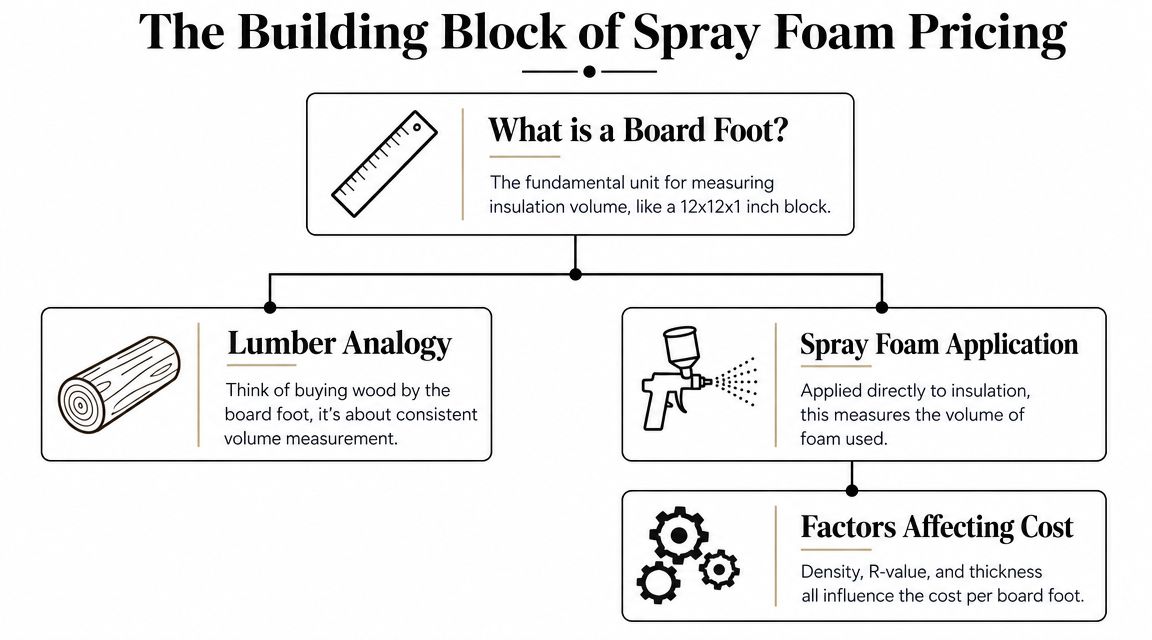
In practical terms, a board foot is one square foot of foam at one inch thick. Contractors use that unit because spray foam cost is tied to material volume, not just floor area or wall area on a plan.
A quick example shows why that matters in South Florida. A homeowner sees two attic or wall quotes for the same 1,000 square feet and assumes they should be close. They usually are not. One proposal may call for 2 inches of closed-cell. Another may call for 3 inches or a full 3.5-inch cavity fill. The square footage stayed the same, but the foam volume changed a lot.
Here is the basic math:
That is why two projects with the same footprint can price very differently. More thickness means more chemical, more passes, and more labor time to install it correctly.
Closed-cell foam is expensive per inch for a reason. It is a denser product, it delivers higher R-value in limited space, and at the right thickness it helps control vapor movement. In South Florida, that matters more than a generic national chart suggests. Humid outdoor air, inward vapor drive, and wind-driven rain put a lot more pressure on the building assembly here than they do in a dry inland market.
So the question is not just, "What does it cost per square foot?" The better question is, "How many board feet am I buying, and what is that thickness doing for this house?"
For example, a 2×4 wall filled to 3.5 inches carries 3.5 board feet of foam per square foot of wall. That is why a closed-cell quote for a full cavity fill lands much higher than a thin flash application. The thicker application buys more than added insulation. It can also improve rigidity and reduce the chance that humid air finds a cool surface inside the assembly and leaves you with condensation or mold trouble later.
Practical rule: If you compare spray foam quotes by square foot alone, you can miss the biggest cost driver in the whole proposal.
Here is the simple version:
| Assembly | Approximate depth | How pricing changes |
|---|---|---|
| 1-inch application | 1 inch | Lower material volume |
| 2×4 wall fill | 3.5 inches | More board feet per square foot |
| Deeper cavity or layered application | More than 3.5 inches | Cost rises with added thickness |
This also explains why closed-cell usually carries a premium over open-cell. You are buying a higher-density material that does more in a thinner profile. If you want the technical side spelled out, this guide on closed-cell insulation R-value per inch helps connect wall depth to real thermal performance.
The same board-foot logic shows up outside standard houses too. On metal buildings and post-frame projects, thickness choices can swing the price fast because condensation control is often part of the insulation strategy, not an afterthought. That is one reason builders working through shop-house or hybrid residential designs often study FHP Contracting's guide to barndominiums early in planning.
Once homeowners understand board foot pricing, the quote stops looking arbitrary. You can see exactly what you are paying for, and whether the added cost is buying moisture control, better use of limited cavity depth, and more storm-ready strength for a South Florida build.
Once the board foot price is clear, the next issue is what pushes the final quote up or down. Homeowners often get surprised at this stage. Material price matters, but the final number is shaped just as much by the conditions on site.
A 2026 contractor pricing guide summarized by TLS Energy Savers lists closed-cell material pricing at $1.15 to $1.75 per board foot and translates installed costs to about $2.30 to $3.50 per square foot at the low end and $6.90 to $10.50 per square foot at the high end, depending on required depth. That spread tells you something important. Closed-cell spray foam cost is not fixed. It moves sharply with thickness, complexity, and local labor conditions.
Larger jobs can spread setup time and mobilization over more square footage. That usually helps the unit cost. But size by itself doesn't guarantee a lower quote.
An open new-build shell is fast to spray. A smaller finished home with difficult attic access can take more labor even if it uses less foam overall. Contractors price what the crew has to do, not just how much area exists on paper.
Prep is one of the biggest hidden cost drivers in retrofit work. If old insulation is dirty, compressed, or holding moisture, it may need to come out before the new system goes in. In South Florida, that issue shows up often in attics and garage transitions where humid air has been moving through the assembly for years.
Common prep items include:
The same product costs more to install in a tight, awkward space. That's not a markup trick. It's labor reality.
A few examples that change the quote fast:
If you're budgeting a workshop, pole barn, or hybrid living space, FHP Contracting's guide to barndominiums is a useful reference because these structures often look simple from the outside but price differently once insulation, condensation control, and framing access are part of the discussion.
South Florida jobs aren't priced the same as generic national averages. Coastal labor markets, scheduling pressures, and local code expectations all influence the final number. The contractor also has to price for safe application, cleanup, and the specific assembly being insulated.
The cheapest quote often assumes the easiest version of your job. If your house isn't easy, that number won't hold.
A transparent quote should reflect the actual work: material thickness, prep, access, masking, cleanup, and where closed-cell is being used because the assembly needs it.
A lot of homeowners ask the right question in the wrong way. They ask, “Which one is cheapest?” The better question is, “Which product fits this part of the building in this climate?”
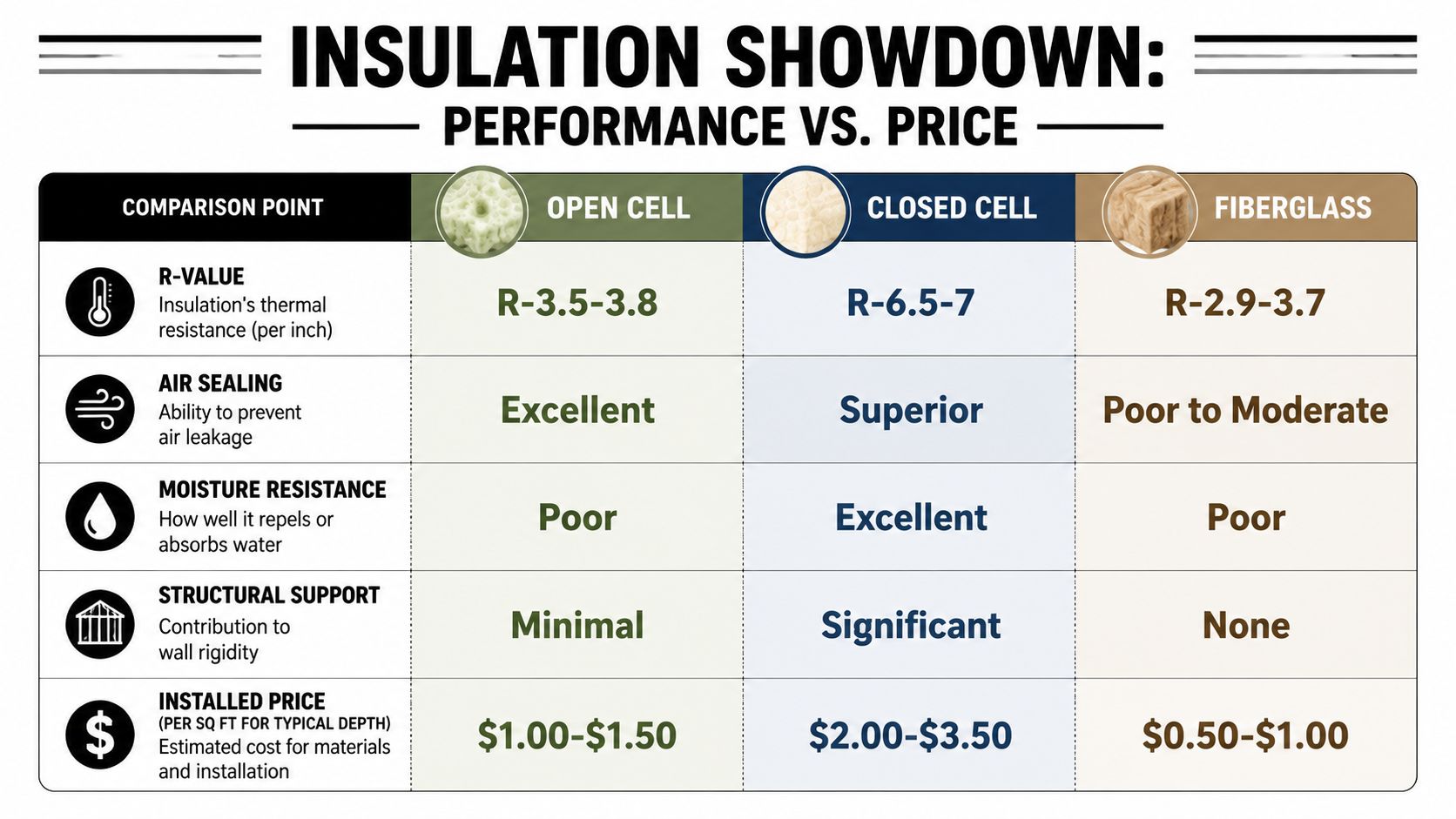
Closed-cell costs more because the material itself is denser. For project planning, Spray Foam Insider's cost analysis notes that a set of 2-lb closed-cell foam can cost roughly $2,000, sold in 55-gallon two-part drums, with about 4,000 square feet of one-inch yield. That puts raw material cost at about $0.50 per square foot-inch before labor.
That number matters because it explains the premium. You're not just paying for “foam.” You're paying for a denser product that gives you a higher R-value per inch and functions as both an air barrier and moisture barrier.
In South Florida, that combination matters in places like:
If you're comparing the two foam types on a budget, this page on open-cell foam insulation cost can help clarify where open-cell can make sense and where closed-cell earns its premium.
Fiberglass usually wins the upfront price conversation. It doesn't win every performance conversation.
Fiberglass can insulate, but it does not air seal the way spray foam does. In humid climates, uncontrolled air movement is a big part of the problem. Warm, wet air finds gaps. Once that air moves through the assembly, you can end up with comfort issues, condensation risk, and more load on the HVAC system.
Closed-cell also brings something fiberglass doesn't. It adds rigidity to the assembly. In a place where buildings deal with wind, moisture, and long cooling seasons, that added toughness can matter.
Here's the practical comparison:
| Material | Upfront cost position | Air sealing | Moisture resistance | Best fit |
|---|---|---|---|---|
| Closed-cell spray foam | Highest | Strong | Strong | Tight spaces, humid areas, demanding assemblies |
| Open-cell spray foam | Mid-range | Strong | Less suited where vapor resistance is needed | Interior applications where drying potential matters |
| Fiberglass | Lowest | Limited unless paired with detailed air sealing | Weaker in humid conditions | Budget-driven projects with good assembly design |
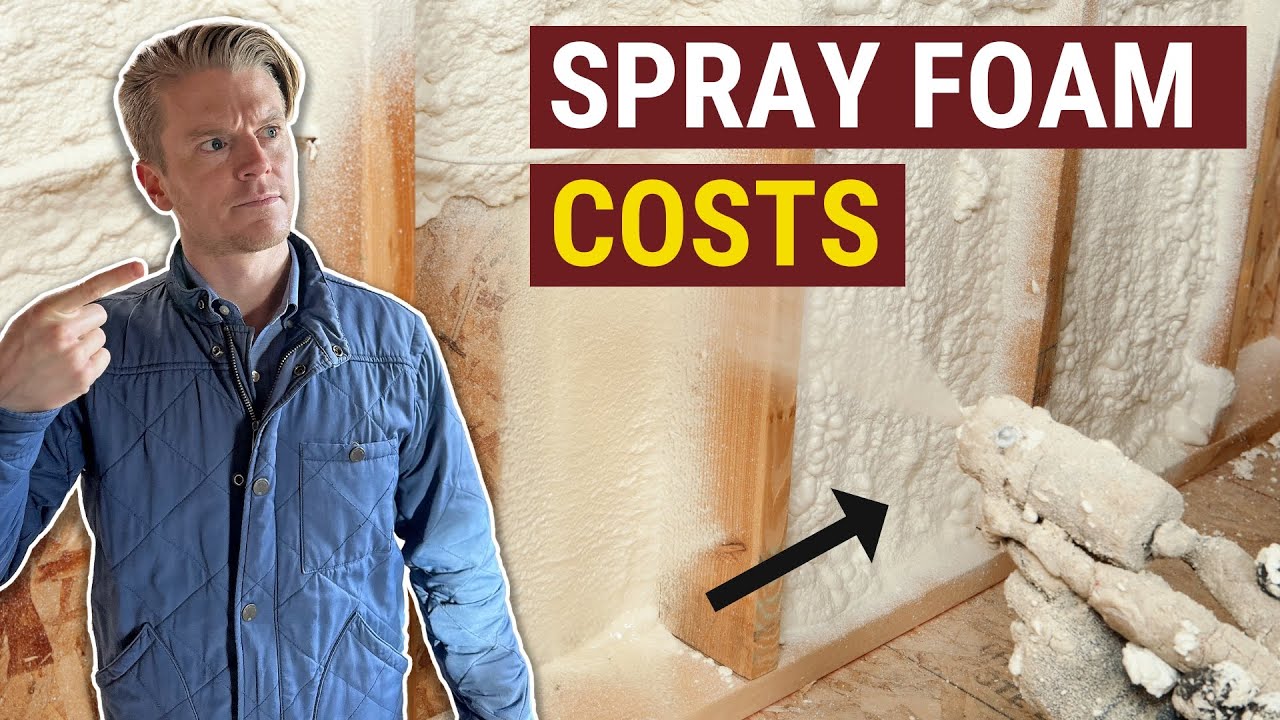
This short video gives a useful visual overview before you decide which system fits your project.
Closed-cell isn't automatically the right answer everywhere. That's one mistake contractors make when they sell one product for every situation.
It is worth the premium when the assembly needs one or more of these:
If the goal is only to hit a basic insulation layer at the cheapest initial price, fiberglass may still be the lower-cost route. If the goal is to control heat, air, and moisture together, closed-cell usually justifies why it costs more.
National averages are useful for orientation, but they don't help much when you're trying to budget a real property in Jupiter or Wellington. The local question is always the same. Is this an easy open application, or a retrofit with labor wrapped around every obstacle?
That difference is why broad averages often miss the mark. Green Attic's 2026 pricing discussion notes that garage projects can range from $3,000 to $8,000 for closed-cell spray foam, and that new-builds and commercial buildings may be 15% to 20% lower than existing residential projects because they involve fewer complications and can qualify for volume discounts.
Below are the kinds of projects that commonly show up in South Florida.
An older home attic often looks simple until the crew gets inside. Trusses restrict movement, old insulation may need removal, ductwork gets in the way, and access paths are tighter than homeowners expect. That kind of job usually prices above a new-build wall package because labor slows down.
This is usually the cleaner pricing scenario. Open wall cavities are easy to reach. There's no demolition, no old insulation removal, and less masking around finished materials. On many new-builds, closed-cell is chosen because cavity space is limited and the builder wants higher performance per inch.
Closed-cell often earns its keep. Metal structures struggle with heat gain and condensation, and they don't forgive insulation shortcuts. The quote may look higher than a basic batt system, but the value is in controlling interior moisture and making the building usable year-round.
| Project Type | Typical Scope | Estimated Cost Range | Key Considerations for South Florida |
|---|---|---|---|
| Existing residential garage or similar retrofit | Finished home, prep and access challenges | $3,000 to $8,000 | Existing conditions, humidity exposure, removal and masking can drive cost |
| New construction wall package | Open cavities in a new home or addition | Qualitatively lower than comparable retrofit work | Easier access, cleaner sequencing, and volume efficiency often reduce cost |
| Commercial or metal building application | Larger open areas with moisture-control needs | Qualitatively lower per unit than many retrofits when access is straightforward | Condensation control and climate management are often major reasons for choosing closed-cell |
In South Florida, retrofit pricing is usually driven by labor and conditions. New construction pricing is usually driven by volume and access.
The point of these examples isn't to force your house into a template. It's to show why a real quote has to be tied to the building type, not just the square footage.
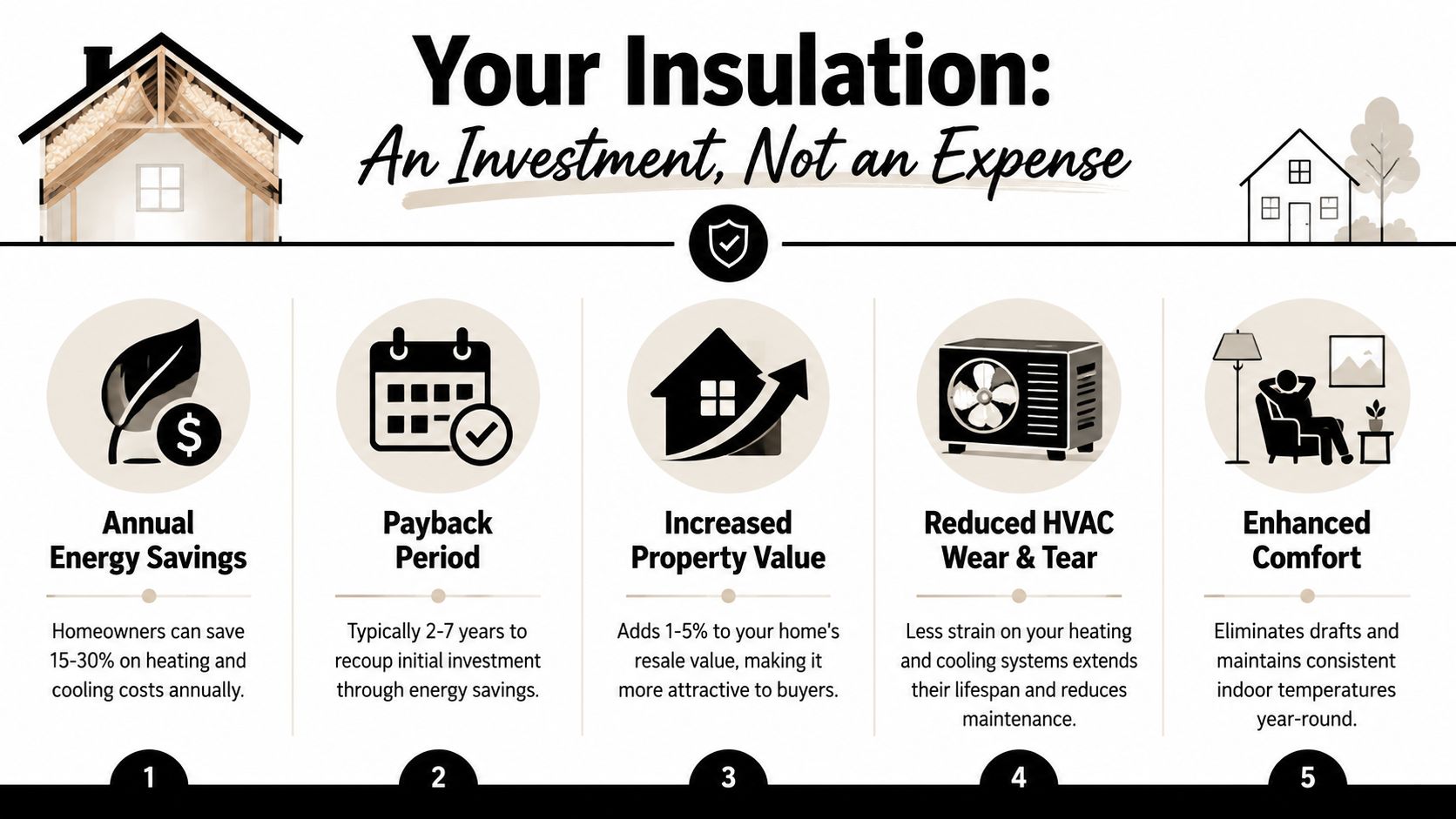
A closed-cell job should be judged like a building upgrade, not like a commodity purchase. If you only compare the invoice total, you miss what the material is replacing or preventing.
The first return is operational. A tighter building envelope can reduce how hard the AC has to work, and it usually improves comfort in the rooms people complain about most. The second return is risk reduction. In South Florida, moisture control isn't cosmetic. Good insulation choices can help avoid the kind of damp, hidden building conditions that lead to cleanup, repairs, and indoor air complaints.
A smart owner also looks at the whole shell. If you're evaluating the roof at the same time, these roofing solutions to lower cooling costs are worth reviewing because insulation and roofing performance affect the same cooling load.
Closed-cell doesn't make sense when it's specified without a reason. If a part of the building doesn't need the density, vapor resistance, or compact thermal performance, then paying the premium may not be the best use of the budget.
Good insulation planning is selective. Use the expensive product where the building benefits from it most.
The most accurate spray foam quote starts with a site visit. No calculator can see a humid attic, a metal building sweating at the roof deck, or a garage wall that's letting outside air into the house.
When you talk to insulation contractors, ask for specifics:
A short quote with one lump-sum number is hard to trust. A useful quote explains the assembly, the prep, and the thickness.
A qualified local pro should be able to speak clearly about humidity, condensation risk, and where closed-cell is warranted. They should also explain when another insulation type is a better fit.
For homeowners comparing options, this page on spray foam insulation installation cost is a helpful reference for what should appear in a detailed estimate. Airtight Spray Foam Insulation is one local option serving South Florida properties, and any contractor you consider should be willing to inspect the space in person before putting a firm number on the job.
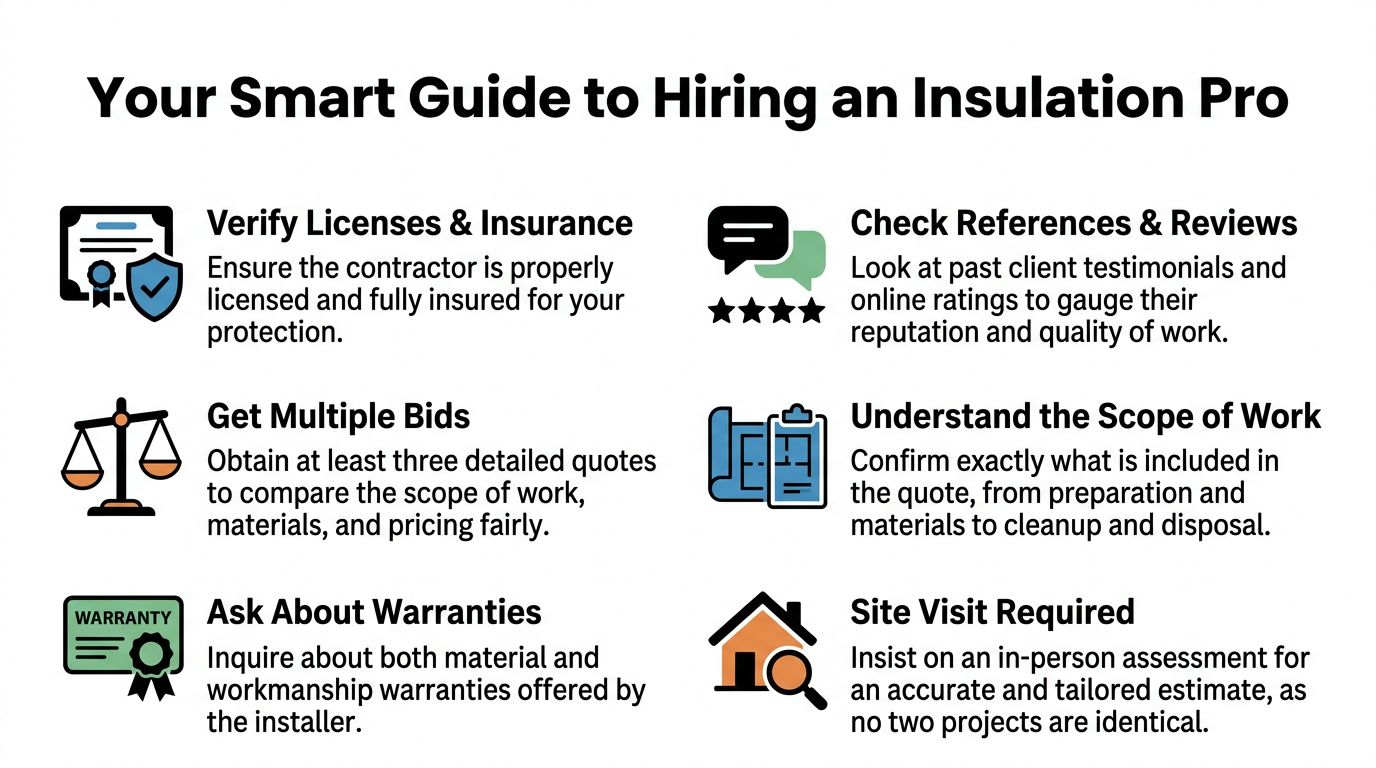
If a contractor gives you a bargain price without walking the property, asking about moisture issues, or measuring actual depth requirements, be careful. Closed-cell foam is too expensive a product to install on assumptions.
If you want pricing that reflects your actual home, garage, metal building, or new construction project, request an on-site estimate from Airtight Spray Foam Insulation. A detailed local quote will show where closed-cell makes sense, what prep the job needs, and what the investment looks like for your South Florida property.