You're probably here because you typed open cell foam sleeping pad into search and got two completely different worlds mixed together. One page talks about camping pads and valves. Another talks about attic insulation and roof decks. Same phrase, very different job.
If your real question is about camping, the short answer is simple. An open cell foam sleeping pad is usually a self-inflating pad built with foam, fabric, and a valve. If your real question is about house insulation, that's a separate material category with different moisture and installation concerns. That confusion is common, and it's worth clearing up before you buy anything.
For campers, this kind of pad sits in the middle ground between a simple foam mat and a fully inflatable air pad. It's designed to give you more comfort than a bare foam sheet, while still feeling more forgiving and stable than many air-only designs. For homeowners, the same words point to a building product, not a sleep product.
Walk into a camping store and the wall of pads can feel weirdly complicated. One pad looks like a yoga mat. Another looks like a tiny air mattress. Another says self-inflating, which sounds like marketing until you learn what's inside.
An open cell foam sleeping pad is usually what the outdoor industry calls a self-inflating sleeping pad. Inside the pad is a flexible open-cell polyurethane foam core. Around that core is an airtight fabric shell. At one end, there's a valve. Open the valve, unroll the pad, and the foam expands and pulls air in on its own, creating the self-inflating effect described in REI's sleeping pad guide.
Think of it as a sponge inside a sealed jacket.
A kitchen sponge has lots of connected spaces inside it. Squeeze it flat, and it wants to spring back. If you trapped that sponge inside airtight fabric and added a valve, opening the valve would let the foam rebound and draw air inward. That's the basic idea.
This puts self-inflating pads in a distinct category:
The appeal is easy to understand once you've slept on one. The foam gives the pad shape and some built-in support, so you're not balancing on a fully air-filled balloon. The trapped air adds loft and insulation. And because the pad partly inflates itself, setup is usually easier than starting from zero with a pure air pad.
Practical rule: If you want a camping pad that feels more mattress-like than a basic foam mat, self-inflating open-cell designs are usually where that comfort jump starts.
There's another reason these pads matter. They became popular because they solved a real comfort problem in outdoor gear. Before this design took off, campers mainly had basic closed-cell foam mats. Self-inflating construction gave people more cushioning and better insulation without turning camp sleep into a full-size bed setup.
The clever part of an open cell foam sleeping pad isn't just that it gets bigger when you open the valve. It's that the same structure helps with both comfort and warmth.
Open-cell foam has a network of connected pockets. When the pad is rolled up and compressed for storage, that foam gets squashed down. Once you unroll it and open the valve, the foam tries to rebound to its original shape. As it expands, it pulls air into the pad.
That basic architecture dates back to a breakthrough between 1971 and 1972, when former Boeing engineers realized that sealing open-cell foam inside airtight fabric with a valve could create a self-inflating, insulated, more comfortable sleep surface than the solid foam mats common at the time, as described in Therm-a-Rest's history of better sleep.
A good mental model is a sponge that's been vacuum-packed. Break the seal, and it starts reclaiming its volume. A sleeping pad does the same thing, just with tougher materials and a valve that lets you fine-tune firmness.
The foam does more than pull in air. It also spreads pressure under your body. If you sleep on your side, your hip and shoulder don't press into a flat, hard surface the same way they would on a thin foam mat. The pad conforms a bit, which usually feels more forgiving.
That's the reason many campers describe self-inflating pads as less fussy than air pads. You still get adjustability, but the foam gives the pad a stable backbone.
R-value is just a way of describing how strongly a pad resists heat flow. In camp terms, it tells you how well the pad slows the ground from pulling warmth out of your body.
If sleeping bags are the blanket above you, the pad is the thermal brake below you.
The foam and the trapped air work together here. Those many little air spaces inside the pad make it harder for heat to move downward into cold ground. That's why sleeping pads matter even when the surface feels only slightly cool. If the ground keeps draining heat all night, comfort disappears fast.
If you've compared insulation materials in buildings before, the concept will feel familiar. A general R-value chart for spray foam insulation can help show the broader idea that higher R-value means stronger resistance to heat flow, even though house insulation and camping pads are separate products.
Your sleeping pad isn't only for cushioning. It's the layer that stops the earth from acting like a giant heat sink under you.
A self-inflating pad doesn't always reach full loft instantly, especially if it's been tightly stored for a long time. The foam can need time to recover. In practice, many campers open the valve, let the pad expand, and then add a bit of breath at the end to dial in firmness.
That small top-off isn't a flaw. It's just how compressible foam behaves after being rolled and strapped down.
You don't choose a sleeping pad by asking which type is best. You choose by asking what trade-off you can live with.
Some campers want warmth and don't care about bulk. Others want the smallest packed size possible. Others just want their hips off the ground. That's why these three pad families all still exist.
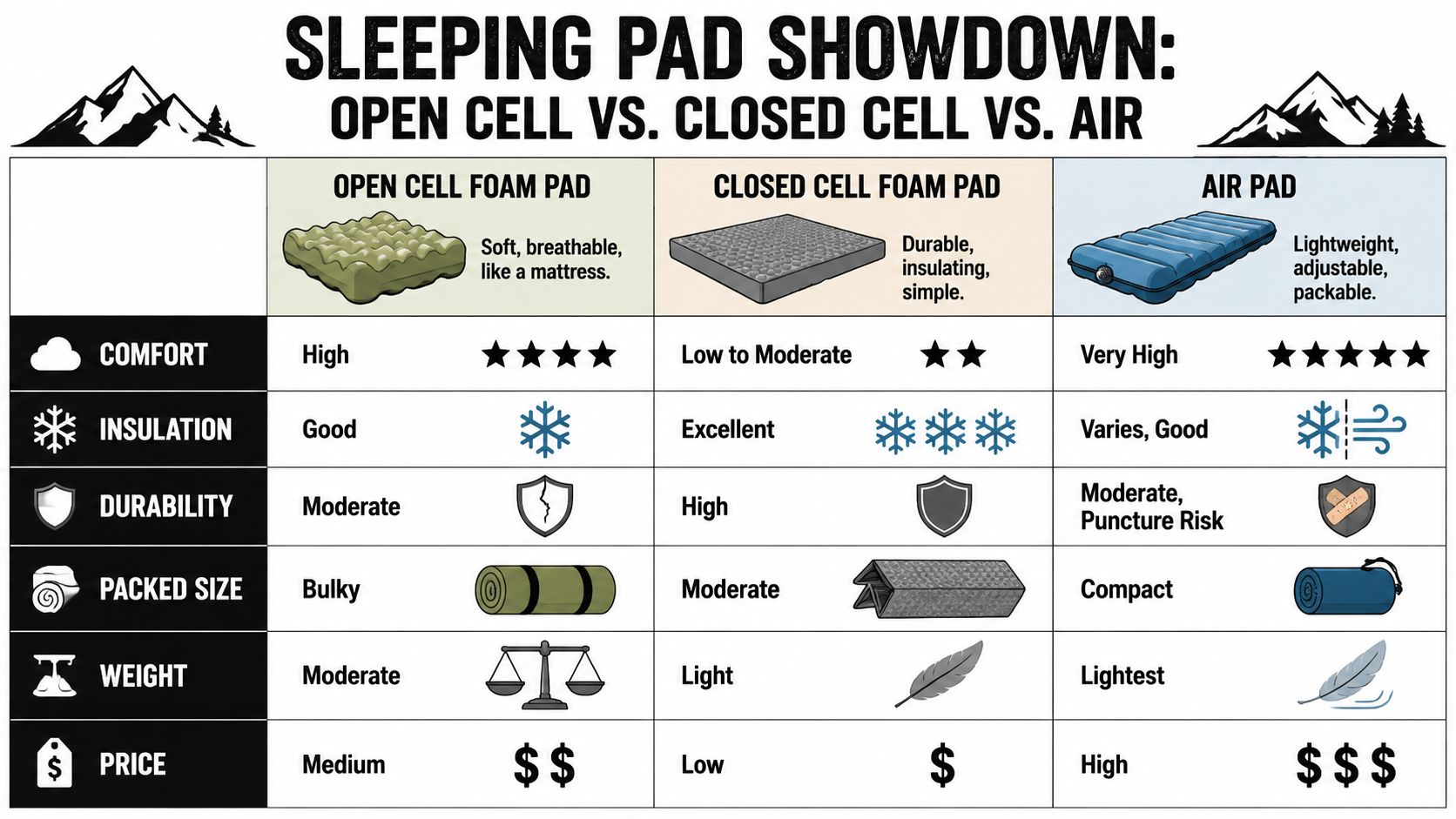
| Feature | Open-Cell Foam (Self-Inflating) | Closed-Cell Foam | Air Pad (Inflatable) |
|---|---|---|---|
| Comfort | Usually more cushioned and conforming | Firm and simple | Often the plushest feel |
| Insulation | Strong warmth potential | Basic to moderate warmth | Varies by design |
| Packed size | Bulkier | Bulky but simple to carry outside a pack | Most compact |
| Durability | Good, but depends on fabric and valve integrity | Excellent for abuse | More vulnerable to punctures |
| Price | Middle ground | Usually the budget option | Often the priciest |
Open-cell pads feel supportive in a specific way. The foam spreads pressure and keeps the surface from feeling bouncy or unstable. That's great for campers who toss around or sleep on their side.
Closed-cell pads are much simpler. They work, but they don't contour much. Air pads can feel luxurious, though some sleepers dislike the floating sensation or the need to tune the pressure carefully.
If your camping setup is trending toward comfort-first rather than ounce-counting, it can also help to look at broader sleep upgrades such as these premium camper mattress upgrades from RVupgrades.com. The useful takeaway is that sleep comfort isn't only about softness. It's about how a surface distributes pressure and keeps you insulated.
The categories separate sharply: self-inflating pads with open-cell foam cores can reach R-values such as 7.5, while a standard closed-cell foam pad example sits at R-1.5, illustrating a large warmth gap in real products, as shown on KingCamp's self-inflating foam pad listing.
That doesn't mean every self-inflating pad is warmer than every closed-cell pad. It means the design has more room to build warmth through thickness and insulated construction.
Air pads vary the most. Some are lightly insulated and meant for mild conditions. Others are built for cold weather. You have to check the actual pad, not just the category.
Closed-cell foam is the easy winner for toughness. It doesn't rely on airtight construction, and it's comfortable being strapped outside a pack, tossed on rough ground, or used as a sit pad around camp.
Open-cell self-inflating pads are more durable than many people expect, but they still depend on the shell and valve working properly. A puncture usually isn't catastrophic if you have a repair kit, but the pad is more system-dependent.
For readers who keep running into the phrase open cell vs closed cell foam in both camping and construction, this overview of open-cell vs closed-cell foam helps frame the bigger material differences. Just remember that a sleeping pad and a building insulation assembly solve different problems.
Closed-cell foam is the wrench you throw in the truck because it always works. Open-cell self-inflating foam is the camp mattress you bring when sleep quality matters more.
Open-cell pads are rarely the smallest option. The foam that makes them comfortable also takes up space, even when compressed. Closed-cell pads are bulky too, though they're often easier to lash on the outside of a pack. Air pads usually win on compactness.
Price tends to follow complexity. Closed-cell foam pads are usually the low-cost entry point. Self-inflating pads sit in the middle. Air pads, especially light insulated ones, often climb higher.
A pad category makes the most sense when you match it to an actual trip. The same sleeping pad that feels perfect at a drive-in campsite can feel annoying after a long climb with a full pack.
This is the natural home of the open cell foam sleeping pad.
You unload your gear, walk a short distance to the tent, and care more about sleeping well than shaving pack weight. In that situation, bulk matters less. Comfort matters more. A self-inflating pad makes sense because it gives you a warmer, more forgiving surface without much setup fuss.
That comfort-first appeal helps explain why the category became so established. Therm-a-Rest's earliest production machine, modeled after a sandwich press, is estimated to have produced about five million sleeping pads over 38 years, a scale reported by Outside's coverage of the Expedition Press retirement. Campers kept buying them because the design hit a useful middle ground between reliability and comfort.
Cold weather changes the math. Once the ground gets cold, your pad becomes part of your insulation system, not just your cushion.
A self-inflating foam pad works well here because it adds structure and warmth. Some campers also layer pads, especially when they want more protection from cold ground or want a backup in case one element underperforms. In practical terms, an open-cell pad incurs its space penalty in such situations.
For a broader gear planning mindset, a solid guide to preparing for a backpacking trip can help you think about how the pad fits with shelter, sleep bag, and pack choices instead of treating it as a standalone purchase.
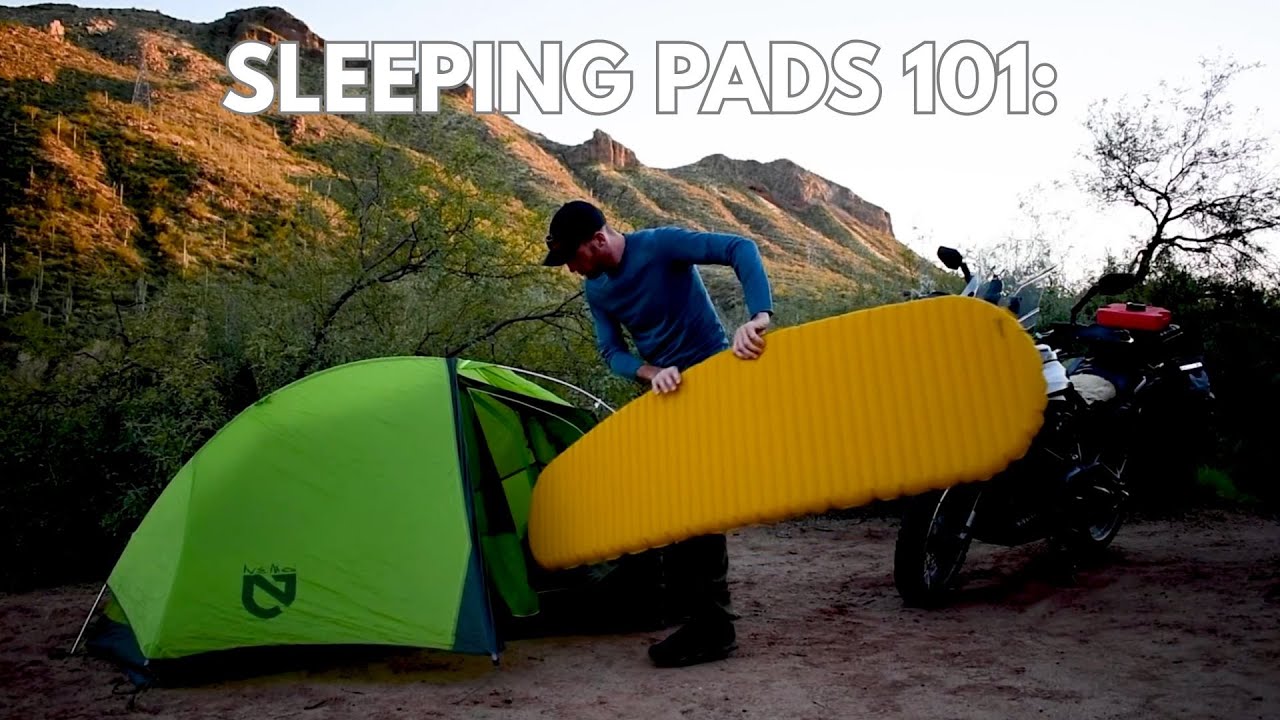
A quick look at one in use helps make the category more tangible:
At this point, the open-cell pad often stops being the best tool.
If you're carrying everything all day, packed volume starts to feel expensive. Many ultralight hikers choose a closed-cell foam pad for simplicity or an air pad for small packed size. They accept the trade-off because their priority isn't plush sleep. It's efficient travel.
Field judgment: If your trip starts with “How far do I have to carry this?” an open-cell self-inflating pad usually drops down the list.
That doesn't make it a bad pad. It makes it the wrong pad for that specific mission.
Buying the right pad is mostly about matching it to your nights outside. Caring for it is about protecting the foam's ability to rebound and the shell's ability to hold air.
Store a self-inflating pad unrolled with the valve open when you can. That helps the foam keep its loft and makes the pad more eager to self-inflate on the next trip.
Use simple habits in the field:
A sleeping pad ages a lot like a couch cushion. Compress it hard for long periods, and it doesn't spring back the same way.
The biggest confusion around this topic isn't camping performance. It's vocabulary. People search one phrase and accidentally bounce between sleeping pads and residential insulation.
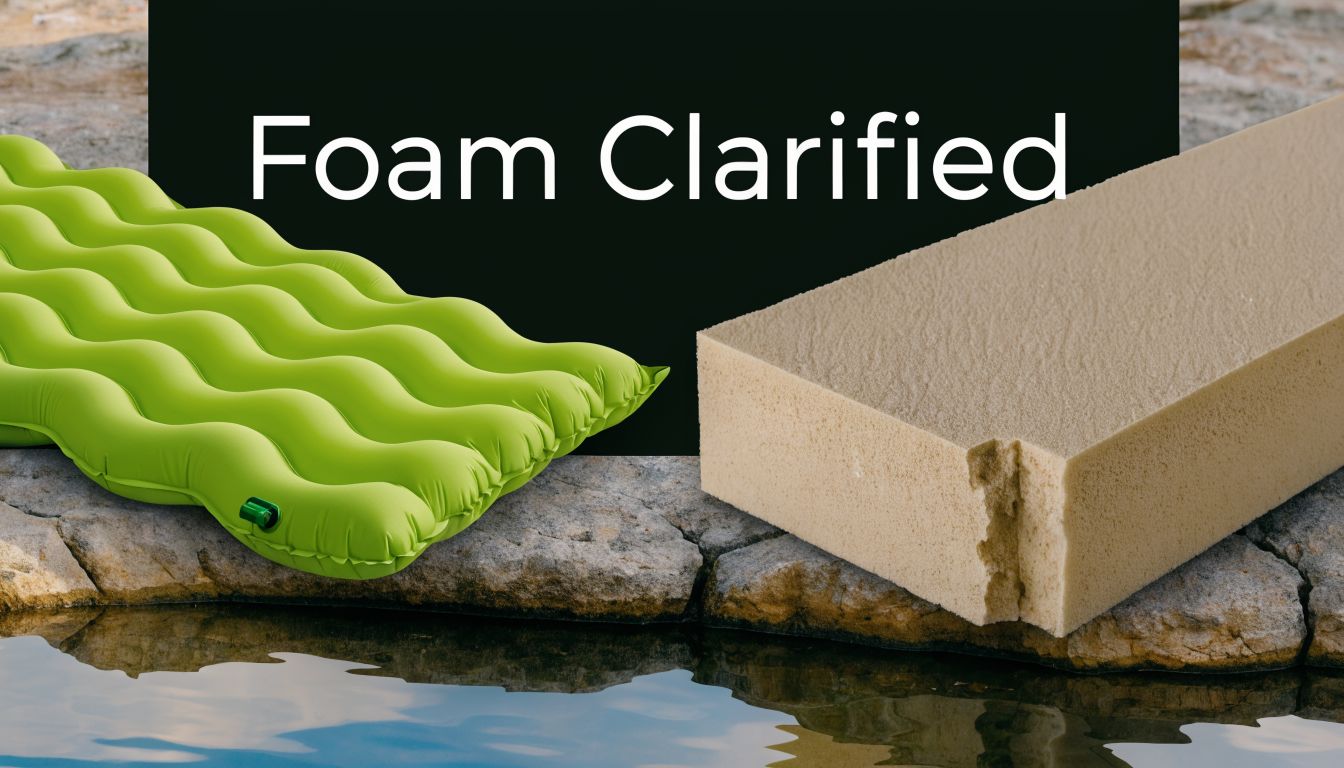
No. They share a material term, but they're not the same product.
A sleeping pad uses open-cell foam as part of a portable comfort system with a fabric shell and valve. Open-cell spray foam for homes is installed into building assemblies like attics, roofs, or walls. Outdoor gear sites often explain open-cell foam in pads but don't address its very different role in houses, a confusion noted in REI's comparison of self-inflating and closed-cell pads.
No, that doesn't mean it's automatically a bad camping material.
In a sleeping pad, the open-cell foam is enclosed inside an airtight shell. Under normal use, you're not exposing raw foam directly to rain or ground water the way you would with a loose foam block. The shell and valve system are part of the design.
In construction, moisture questions are broader. You're dealing with wall assemblies, rooflines, drying potential, humidity, and possible water intrusion over time. That's a building science problem, not a camp comfort problem.
Not always, but in sleeping pads it often contributes to a more cushioned feel.
The open structure lets the foam compress and rebound more easily than a dense closed-cell foam mat. That's why self-inflating pads generally feel more conforming than simple foam mats. Softness, though, also depends on thickness, air volume, and how much extra air you add.
No. The foam helps draw in air, but many pads still benefit from a few finishing breaths to reach the firmness you want.
That's normal. Think of the self-inflating part as doing the heavy lifting, not necessarily the fine tuning.
No. Camping advice won't answer questions about roof decks, attics, flood exposure, vapor movement, or climate-specific moisture risk.
That's where people often get tripped up. A camping article can explain how open-cell foam makes a sleeping pad feel warmer and more comfortable. It can't tell you whether open-cell spray foam belongs in a South Florida attic or wall assembly. Those are separate decisions with separate performance rules.
If your search for “open cell foam” started with a sleeping pad but really led you to questions about attic, wall, or roof insulation in South Florida, Airtight Spray Foam Insulation can help you sort out the difference and choose the right foam system for your property. Their team works with homeowners, builders, and property managers who need practical guidance on open-cell and closed-cell applications in humid, moisture-sensitive environments.