If you're standing in your driveway after another South Florida rainstorm, looking at a humid attic and wondering whether cellulose is a smart insulation choice, the right first question isn't price. It's composition. What is in cellulose insulation, and how does that material behave when it lives above your ceiling through heat, humidity, wind-driven rain, and the occasional roof leak?
That matters more here than it does in a dry climate.
Cellulose has real strengths. It's recycled, it insulates well on paper, and it can do a solid job in the right assembly. But in Jupiter, Palm Beach Gardens, West Palm Beach, Wellington, and Stuart, the material itself tells you a lot about where it works and where it starts to become a risk. Once you understand what it's made of, the trade-offs become much easier to see.
Cellulose is fortified paper fiber. Two ingredients matter. Recycled paper provides the bulk of the material, and chemical treatment makes that fiber usable inside a house.
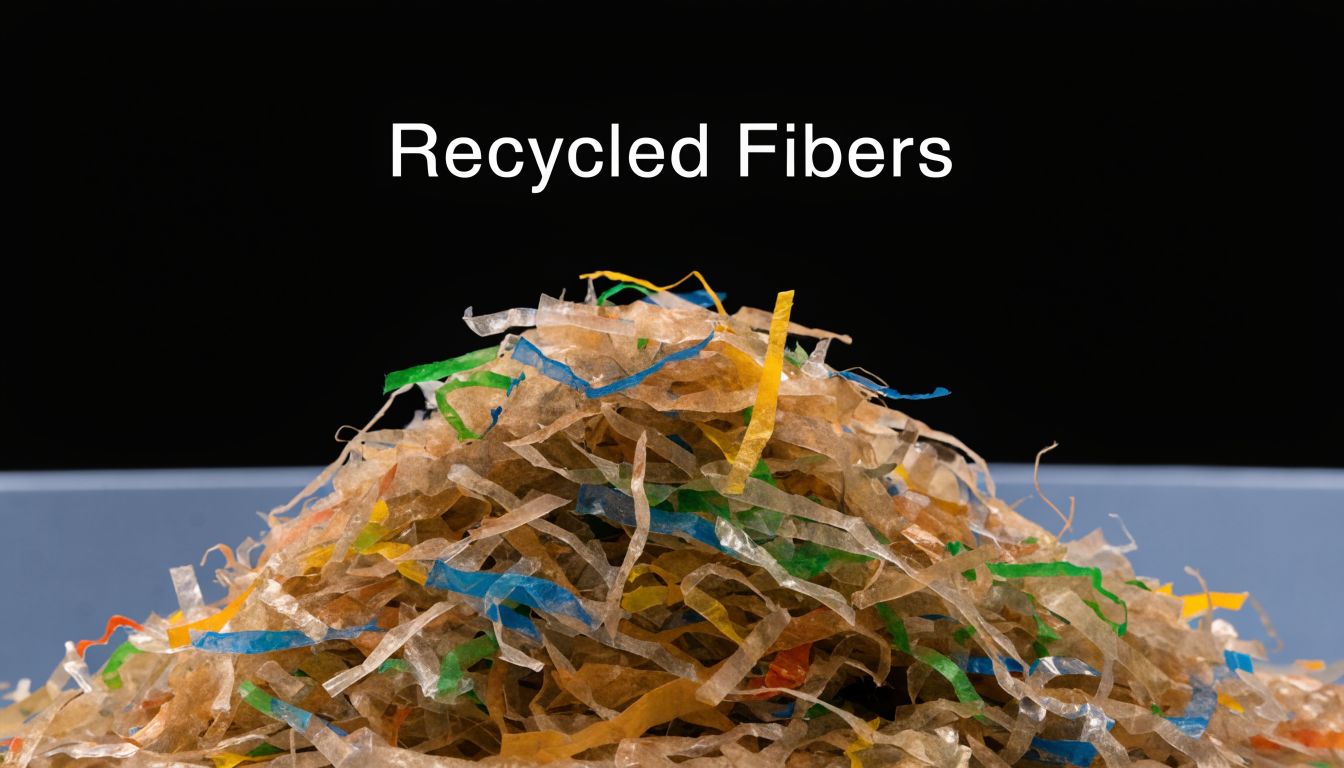
The base is mostly recycled paper, usually newsprint and similar paper stock. That high recycled content is one reason cellulose appeals to homeowners who want a lower-impact material and do not like the idea of adding more petrochemical products to the house.
That paper origin also defines the material's behavior. Cellulose is not a synthetic foam and it is not mineral fiber. It is processed plant fiber, shredded and milled until it can be blown into an attic or packed into a cavity. Up close, it looks exactly like what it is: dusty gray paper fiber with additives mixed in.
In South Florida, that matters more than the marketing usually admits.
Paper fiber can perform well if the assembly stays dry and the installer gets the density right. But paper fiber is still hygroscopic. It can take on moisture from humid air or bulk water exposure, and once that happens, the conversation shifts from R-value and recycled content to drying potential, settling, and whether the surrounding assembly can recover.
Raw paper would be a bad insulation product. It needs treatment to slow flame spread, discourage pests, and reduce the chance of microbial problems under normal service conditions. Manufacturers typically use borate compounds for that job.
Borates are one of the better parts of cellulose. They are effective, familiar to the industry, and a big reason cellulose can meet code requirements as an insulation product instead of remaining just shredded paper.
Still, borate treatment does not make cellulose moisture-proof. That is a point I have to clarify with homeowners all the time. The treatment helps with fire resistance and makes the material less hospitable to pests and growth. It does not change the fact that the base material is absorbent fiber.
This composition gives cellulose both its selling points and its weak spot.
The selling points are straightforward. It uses recycled feedstock, fills irregular spaces fairly well, and can deliver solid thermal performance in the right assembly. The weak spot is just as straightforward. In a hot, humid, storm-prone climate, insulation made from treated paper has less margin for error once moisture gets involved.
That trade-off is easy to miss in generic insulation guides written for drier parts of the country. In Palm Beach County and along the Treasure Coast, I pay close attention to what happens after the first roof leak, the first wind-driven rain event, or a long stretch of high attic humidity. Cellulose can work, but its ingredient list tells you exactly why it is less forgiving than more moisture-resistant options.
A Palm Beach attic can stay hot and damp for months, and that matters long before insulation ever goes in. The way cellulose is processed helps explain where it installs well, where it falls short, and why the margin for error gets smaller in South Florida.
Cellulose starts as recycled paper, but the finished product is made for insulation equipment, not for a recycling bin. Manufacturers sort the paper feedstock, shred it into smaller pieces, and break it down into a more uniform fiber. Fire- and pest-resistant additives are blended in during production, then the material is packaged for either open-blow attic work or higher-pressure wall applications.
Consistency matters here. If the fiber size varies too much, if the additive is not distributed evenly, or if the installer cannot control coverage, the material does not perform the way the bag label suggests.
That is one reason I pay as much attention to the installer as the product.
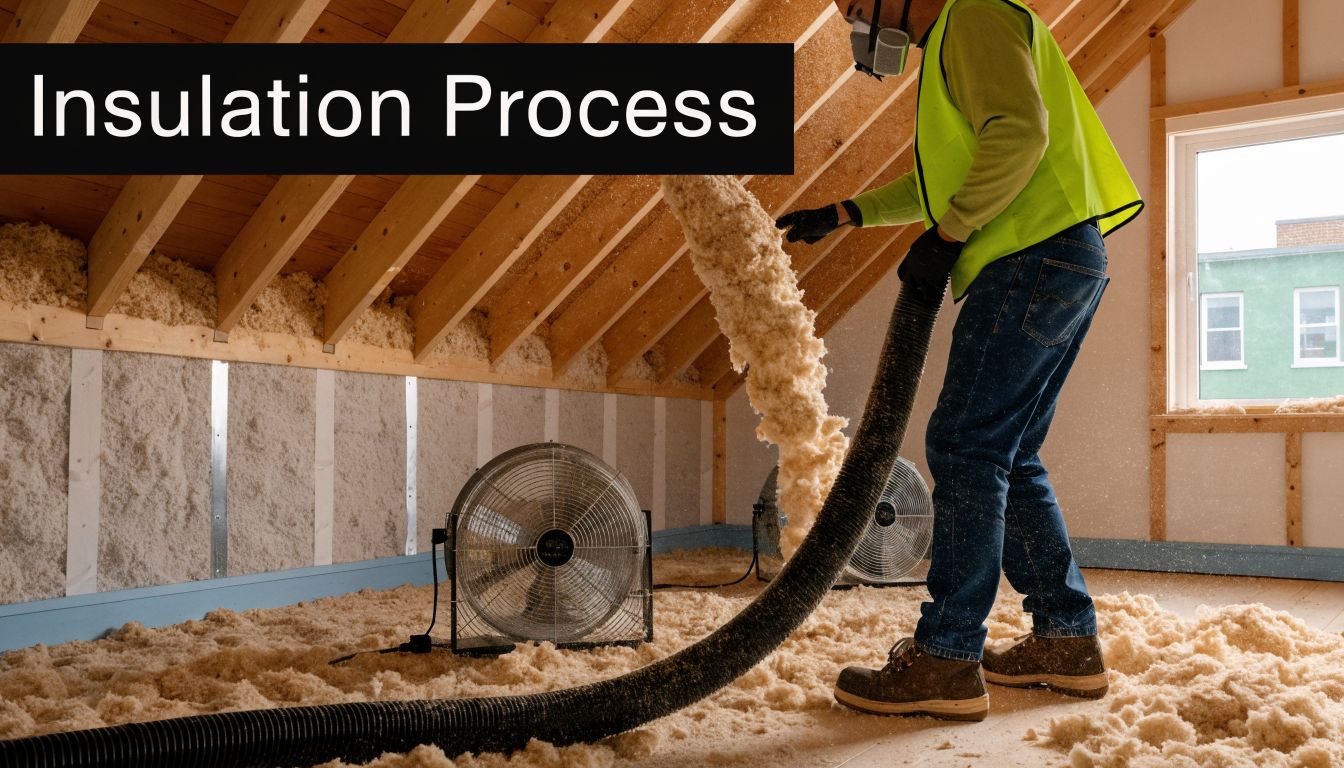
Loose-fill cellulose is the form South Florida homeowners usually see. A crew uses a blower hose to spread it across the attic floor, building depth over existing insulation or covering bare ceiling drywall in older homes.
For open attic floors, it does a decent job of fitting around wiring, truss webs, and other irregularities that make batt insulation hard to install cleanly. It is also a practical retrofit option because the house usually stays intact. No drywall removal. No major tear-out.
The trade-off shows up later. Our attics deal with high humidity, occasional roof leaks, wind-driven rain, and condensation around cold ducts. Loose-fill cellulose can settle, mat, or hold moisture in those conditions, and once that happens, it is not just an R-value discussion. It becomes a durability and inspection problem because wet or compacted fiber is harder to trust after a storm event.
Dense-pack cellulose is installed under pressure so the fibers knit together more tightly inside wall, floor, or sloped ceiling cavities. The goal is better cavity fill and less long-term movement than standard loose-fill. If you want a closer look at how that approach affects thermal performance, this guide on dense-pack cellulose R-value and wall performance explains the method well.
Used in the right assembly, dense-pack can reduce voids and improve coverage around irregular framing. I understand why builders and retrofit contractors consider it. The problem in coastal Florida is that enclosed cavities do not offer much forgiveness. If humid air leaks into the wall, if flashing details are weak, or if bulk water gets in around openings, densely packed paper fiber still reacts like paper fiber.
A quick visual helps if you haven't seen the process in action:
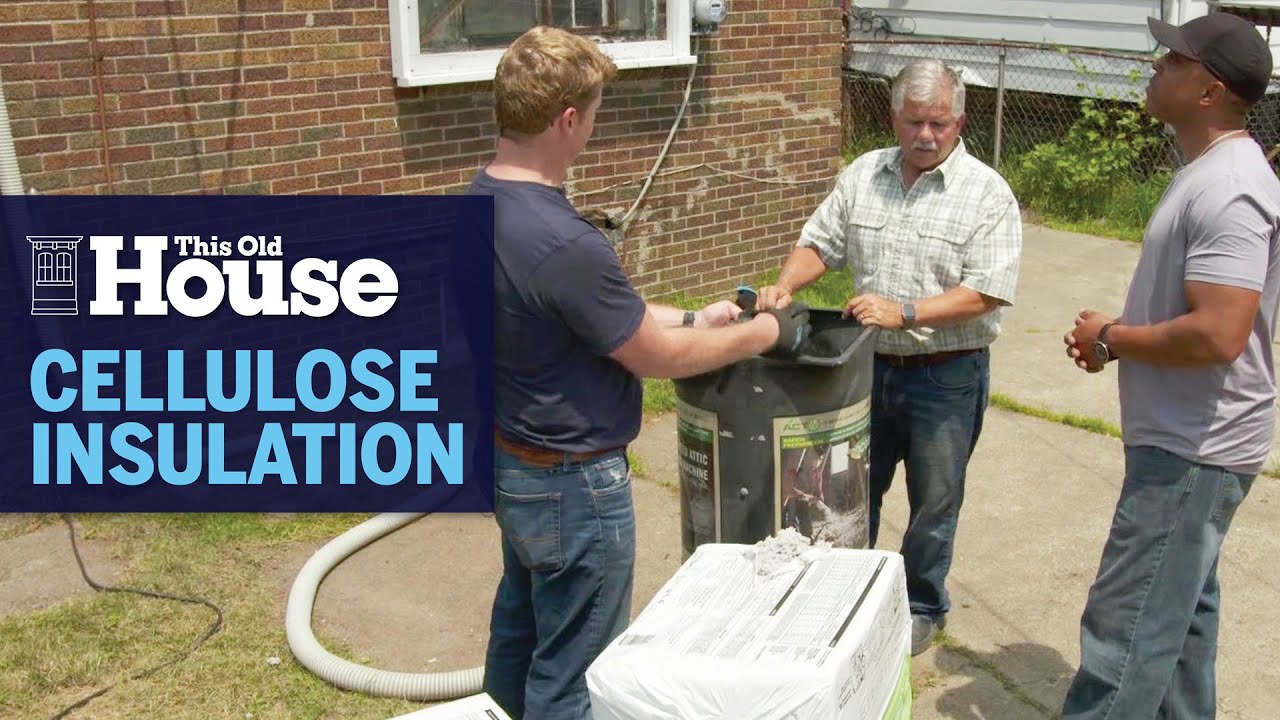
Dense-pack is an installation method, not a fix for moisture risk. Tighter fiber slows settling. It does not make an absorbent material water-resistant.
Cellulose fits some parts of a house better than others.
Installation technique can improve results. It cannot change how the material behaves once moisture enters the assembly.
Walk into a dry, well-detailed home with cellulose in the right assembly, and the material makes a decent first impression. Rooms often sound quieter. Temperature swings can feel more controlled. In those best-case conditions, cellulose does what homeowners expect insulation to do.
Its thermal performance is respectable for a fiber product. Cellulose usually falls around R-3.5 to 3.8 per inch, which keeps it in the conversation for walls and attic floors where depth is limited. If you want the technical side of wall thickness and installation density, this breakdown of dense-pack cellulose R-value and performance covers it well.
Cellulose also tends to fit irregular cavities better than a badly installed batt. That matters in older homes and retrofit work, where framing is rarely perfect. The added density can help with sound control too, especially between rooms or from outside traffic.
Under stable, dry conditions, cellulose has a few clear strengths:
Those benefits are real. They just depend on the assembly staying dry.
Cellulose is hydrophilic. It absorbs moisture and can hold it in the fiber matrix instead of shedding it.
That behavior matters more in South Florida than it does in dry-climate articles. Industry guidance and manufacturer literature have long treated cellulose as a material that can take on moisture, which is one reason its performance depends heavily on drying potential, air sealing, and keeping bulk water out of the assembly. Once the fibers get damp, thermal performance drops, drying slows, and the insulation can settle or mat over time.
The comparison is straightforward. Cellulose absorbs moisture. Closed-cell foam resists it.
This is the part I want local homeowners to take seriously. On paper, cellulose can perform well. In South Florida, the paper case is only part of the job.
Our homes deal with long cooling seasons, outdoor humidity that stays high for much of the year, wind-driven rain, and small air leaks that often go unnoticed until a wall or ceiling is opened up. In that setting, an insulation material that depends on staying dry has a narrower margin for error.
A dry assembly can make cellulose look like a smart, cost-conscious choice. A humid, storm-exposed assembly changes that calculation fast. That is why I only view cellulose as a reasonable option in parts of the home with low moisture risk, good drying potential, and very disciplined enclosure details.
For a South Florida homeowner, the primary decision usually isn't whether cellulose can insulate. It can. The pertinent decision is whether a moisture-absorbing insulation belongs in a climate that tests every weak point in the building envelope.
That's why I frame this as a risk question, not a brochure comparison.
Even with a vapor retarder, moisture can still enter wall cavities around poorly sealed penetrations. For South Florida homes dealing with year-round humidity and salt-air exposure, that makes cellulose's moisture-absorbing nature a serious concern, while closed-cell spray foam resists moisture because of its impermeable cell structure. That concern is laid out in the RMAX discussion of cellulose and moisture risk.
If you've ever opened a wall after a long-term minor leak, you know the difference between materials matters. A fiber insulation can hold moisture in contact with framing and sheathing. A closed-cell foam assembly behaves differently because the insulation itself isn't acting like an absorbent reservoir.
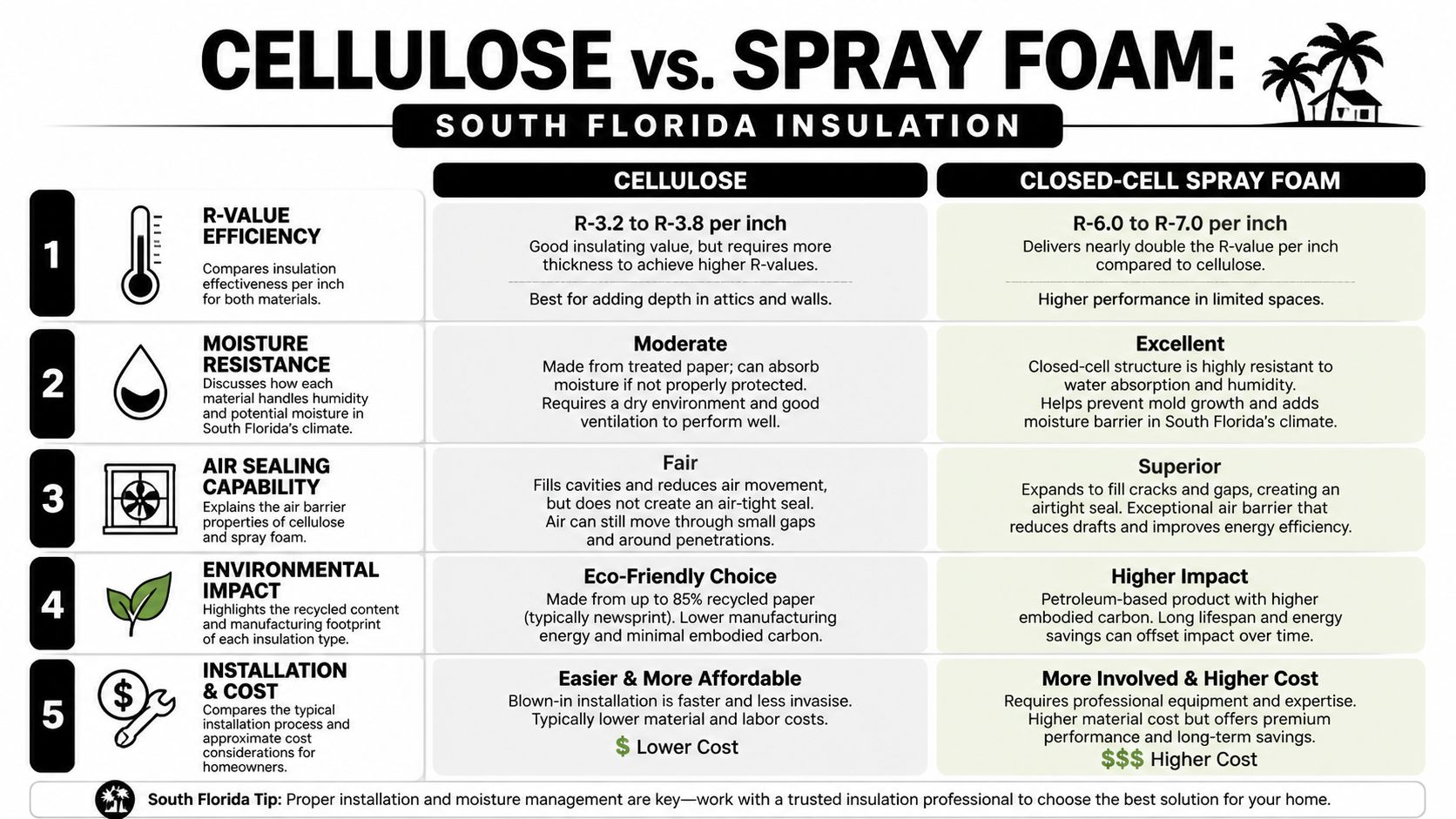
| Feature | Cellulose Insulation | Closed-Cell Spray Foam |
|---|---|---|
| Moisture behavior | Absorbs moisture, which raises risk in humid assemblies | Resists moisture absorption due to impermeable cell structure |
| Air movement | Depends heavily on assembly sealing and installation quality | Provides strong air sealing as part of the installed system |
| Best use case | Dryer assemblies with well-managed moisture | High-humidity, storm-prone assemblies where resilience matters |
| South Florida risk profile | More vulnerable if humid air or water gets into cavities | Better suited to resisting humidity and incidental moisture exposure |
| Long-term outlook | Can become a durability concern if the assembly gets wet | Better choice when the goal is a more robust envelope |
For a broader side-by-side breakdown, this cellulose vs spray foam comparison for homeowners gives a good overview of how the products differ in function, not just material type.
In South Florida, closed-cell spray foam solves problems that cellulose can't solve on its own.
Cellulose can insulate a cavity. It cannot become a moisture-resistant barrier. It cannot stop humid air by itself if the surrounding assembly leaks. It cannot shrug off a storm-related moisture event the way a non-absorbent insulation can.
That's the practical split:
In South Florida, insulation isn't just about R-value. It's about what happens after months of humid air, one bad flashing detail, or a storm that finds the smallest weak spot in the shell.
In dry regions, cellulose can be a reasonable answer. In South Florida, owners usually regret materials that depend on staying perfectly dry.
That doesn't mean every cellulose installation fails. It means the margin for error is smaller than most homeowners realize. And in this climate, the safer long-term move is usually to choose a material that resists water instead of one that needs water kept away from it at all times.
After a humid summer, I get calls from homeowners who thought they were choosing the healthier, greener insulation option, then found dusty attic hatches, musty odors, or wet material after a roof leak. Those concerns are valid in South Florida because safety and environmental impact are tied to how the product holds up once heat, humidity, and storm exposure enter the picture.
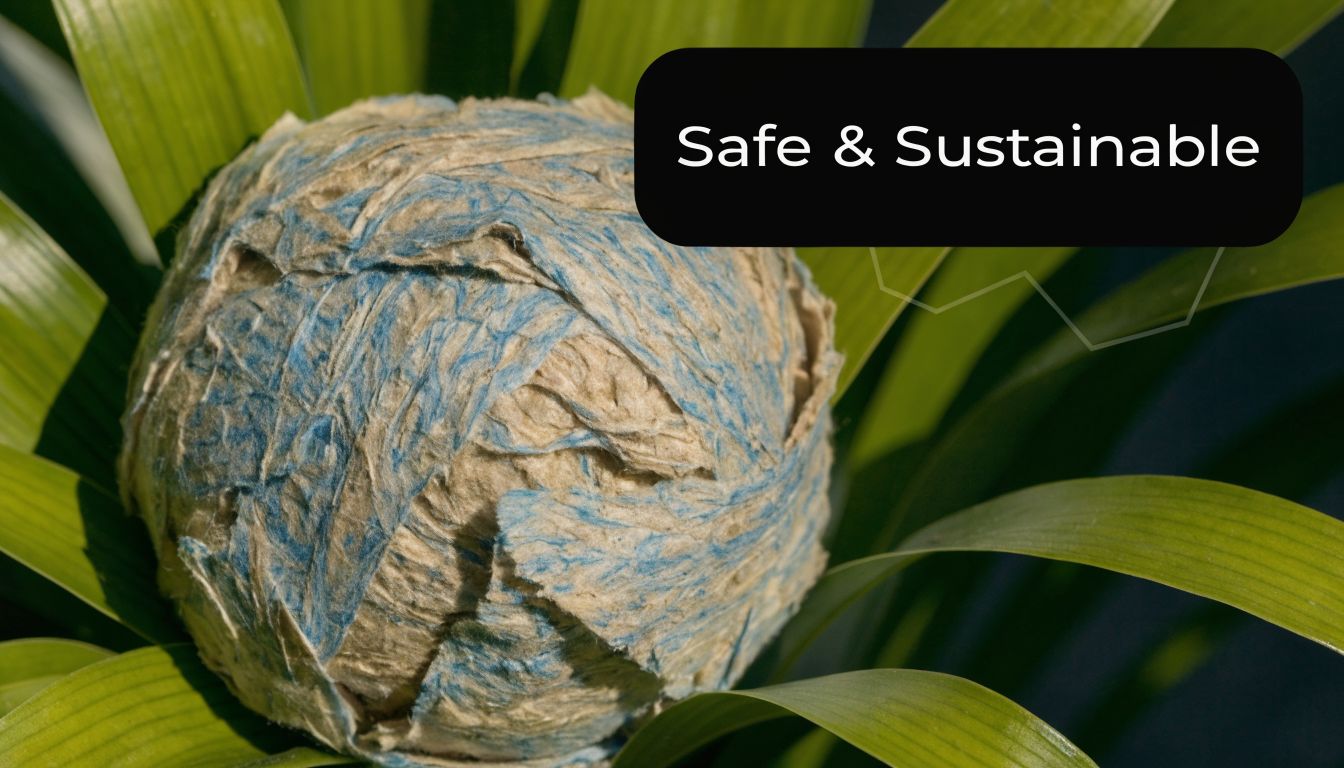
Cellulose is treated with borates, and that treatment gives it fire and pest resistance without turning it into the kind of high-toxicity product some homeowners fear. Still, loose-fill cellulose is dusty during installation, and that dust should be taken seriously.
Good crews contain the work area, wear proper protective gear, and keep fibers out of living spaces. Homeowners should expect cleanup discipline, especially in retrofit jobs where attic access is near occupied rooms. If you're comparing products from a health and safety standpoint, this insulation safety guide for homeowners covers the exposure questions that usually come up before installation.
The recycled paper content is real. That matters to homeowners trying to reduce virgin material use, and it is one of the strongest arguments in cellulose's favor.
I do not dismiss that point. In a dry, well-controlled assembly, cellulose can be a reasonable material choice for someone who puts recycled content high on the priority list.
In South Florida, the environmental discussion cannot stop at recycled content. A material that absorbs moisture, settles, or has to be removed after a leak creates its own waste stream. Tear-out, disposal, drying, and replacement all count.
That is where cellulose starts to lose ground in this climate. If the insulation performs well only while conditions stay dry, then its environmental case weakens once real-world moisture exposure is part of the job.
As discussed directly in Eco Insulation's article on what cellulose insulation is made of, cellulose can be cost-effective upfront, but long-term ownership costs depend on service life and replacement risk. That trade-off matters more in a hot, humid coastal climate than it does in a drier market.
A sustainable insulation product has to last in the assembly where it is installed.
Cellulose deserves credit for recycled content and a lower-impact raw ingredient story. Those are real benefits.
For South Florida homes, I put more weight on what happens after the first leak, the first prolonged humidity load, or the first repair cycle. A more resilient insulation system often produces the better long-term result because it reduces the chance of removal and replacement.
That is also why insulation decisions belong in the bigger enclosure plan. Homeowners building new should coordinate insulation with air sealing, moisture control, and roof and wall detailing through experienced custom home building services, not treat insulation as a standalone product choice.
Cellulose is not a mystery product. It's recycled paper fiber treated with borates so it can function as insulation. In the right building and the right climate, that can be a perfectly reasonable material choice.
South Florida is where the qualifiers start piling up.
Cellulose fits best where the assembly stays dry, the detailing is disciplined, and the owner understands the material's limitations. In some attic applications and in less moisture-stressed climates, it can deliver solid thermal performance and useful sound control.
That's very different from saying it's the best fit for homes exposed to constant humidity, wind-driven rain, seasonal storm damage, and the hidden air leaks that are common in older housing stock.
In this region, insulation should do more than slow heat flow. It should help protect the structure from humid air and moisture intrusion. That's why closed-cell spray foam usually makes more sense for critical assemblies in South Florida.
The better question isn't "Is cellulose good?" It's "Is cellulose good here?" For many homes in this market, the answer is no, not if long-term resilience is the priority.
If you're building from scratch, this decision belongs in the full envelope strategy, not as an afterthought. Homeowners planning a new build can benefit from reviewing experienced custom home building services that treat insulation, moisture management, and structural detailing as one connected system.
For South Florida homes, a water-absorbing insulation is usually an unnecessary gamble. Closed-cell spray foam offers a more resilient approach because it insulates while also helping control air movement and resist moisture.
That doesn't make cellulose a bad product everywhere. It makes it a product that has to be matched carefully to climate and assembly. Here, the climate is demanding enough that most homeowners are better served by choosing the tougher system from the start.
If you're evaluating attic insulation, wall assemblies, a renovation, or a new construction project, get advice based on your actual house and your actual risk exposure. In this part of Florida, that detail work matters.
If you want a climate-appropriate recommendation for your attic, walls, metal building, or new construction project, Airtight Spray Foam Insulation can help. Their team serves South Florida with closed-cell and open-cell spray foam solutions designed for high humidity, air leakage, and long-term durability. Reach out for a free estimate and a professional assessment of the best insulation strategy for your property.