Think of closed-cell spray foam insulation as giving your home a solid, protective shell. It’s like a custom-fit, windproof, and waterproof jacket that’s sprayed on as a liquid and hardens into a rigid, air-tight shield against our South Florida heat, humidity, and moisture.
Often just called closed-cell spray foam, this insulation starts as a two-part liquid polyurethane that we spray directly onto a surface. As it’s applied, it expands in seconds, hardening into a dense, solid foam that seals every single air gap, crack, and crevice. It’s not just insulation—it’s a structural and protective upgrade for your entire building envelope.
Unlike old-school insulation that just slows heat down, closed-cell foam forms a truly impenetrable barrier. The name comes from its unique structure: millions of tiny, completely sealed cells packed tightly together. These cells trap a special gas that makes the foam an incredibly effective insulator.
This technology has become the go-to for savvy homeowners and builders in South Florida, and for a few very good reasons:
The recent surge in closed-cell foam's popularity isn't just a trend; it's a direct answer to the challenges of modern construction. As energy codes get stricter and we focus more on building storm-ready homes, this material has moved to the front of the line.
That demand is clear on a global scale, where the market for closed-cell spray foam was valued at USD 451 million in 2024 and is set to grow even more. This growth is largely pushed by new government regulations demanding better insulation performance in buildings. You can see the full analysis by reading the research on closed-cell spray foam market trends.
In short, closed-cell spray foam delivers a complete protection system for your home. It insulates, air-seals, and adds structural integrity—all in a single application.
From Jupiter down to West Palm Beach, homeowners are making the switch because it solves multiple problems at once. It’s the best answer we have for the constant battle with South Florida’s heat and humidity, it helps fortify our homes against severe weather, and it offers a fantastic return on investment through real energy savings. By creating that perfect, airtight seal, it stops your expensive cool air from leaking out and prevents hot, wet air from getting in. That makes closed-cell foam a smart, long-term investment in your home's comfort, strength, and efficiency.
When you start looking into spray foam, you’ll hear two terms tossed around a lot: closed-cell and open-cell. They might sound similar, but their performance and best uses are worlds apart. Making the right choice is critical for a smart investment, particularly with South Florida’s tough climate.
Let’s clear up the confusion.
Think of open-cell foam like a soft kitchen sponge. It’s light, flexible, and full of tiny, interconnected bubbles. Just like a sponge, it can soak up water. It’s also fantastic at absorbing sound, which makes it a decent option for dampening noise between interior walls.
Now, picture closed-cell foam insulation. It's nothing like a sponge. Instead, imagine a solid, rigid board. Its cells are completely sealed off from each other, like millions of microscopic, air-tight balloons packed together. This dense structure makes it incredibly strong and completely waterproof. It doesn't absorb moisture—it flat-out blocks it.
That basic structural difference creates a massive gap in performance. This isn’t just our opinion; the market data shows a clear preference for the superior protection of closed-cell foam. In fact, while the global market for this material was valued at USD 2.93 billion in 2024, it's projected to more than double to USD 6.83 billion by 2035.
Specifically for spray foam jobs, closed-cell products account for 57.60% of the market revenue because of their powerful insulation value and moisture-blocking strength.
Here’s a quick side-by-side look at how these two materials really stack up.
This table breaks down the key performance features to help you see where each one shines—and where it falls short.
| Feature | Closed-Cell Foam | Open-Cell Foam |
|---|---|---|
| R-Value per Inch | High (R-6 to R-7): Delivers top-tier thermal resistance in less space. | Moderate (R-3.5 to R-4): Needs much more thickness for the same R-value. |
| Moisture Permeability | Very Low (Impermeable): Acts as a true vapor barrier, stopping water and humidity cold. | High (Permeable): Soaks up and holds water like a sponge, creating a risk for mold and rot. |
| Air Barrier | Excellent: Forms a completely airtight seal that eliminates drafts and air leaks. | Good: Slows down airflow but won't create a truly impermeable air seal. |
| Density & Strength | High (Rigid & Dense): Adds serious structural reinforcement to walls and roofs. | Low (Soft & Spongy): Remains flexible and adds no structural support to the building. |
| Sound Dampening | Good: Provides a solid level of sound reduction. | Excellent: The best choice if soundproofing interior rooms is your main goal. |
Ultimately, the choice comes down to what you need the insulation to do. For sound control inside, open-cell works. For all-around protection from the elements, there’s no contest.
Key Takeaway: Closed-cell foam is a true multi-tasker, delivering high R-value, an impenetrable moisture barrier, and added structural strength all in one application. Open-cell foam is mainly a soundproofer with moderate insulating ability and zero moisture protection.
For anyone living in Jupiter, Wellington, or anywhere in Palm Beach County, the choice becomes very simple. Our constant, oppressive humidity, blazing sun, and the threat of hurricane-force winds demand an insulation that can do more than just keep things cool.
The high R-value of R-7 per inch means we can get maximum thermal performance without sacrificing valuable space in attics or walls. But the real game-changer is its closed-cell structure, which creates a powerful vapor barrier. This is non-negotiable in South Florida, where humid air is always trying to force its way inside, leading to mold, rot, and unhealthy indoor air.
These are the core benefits you get when you protect your home with closed-cell foam.
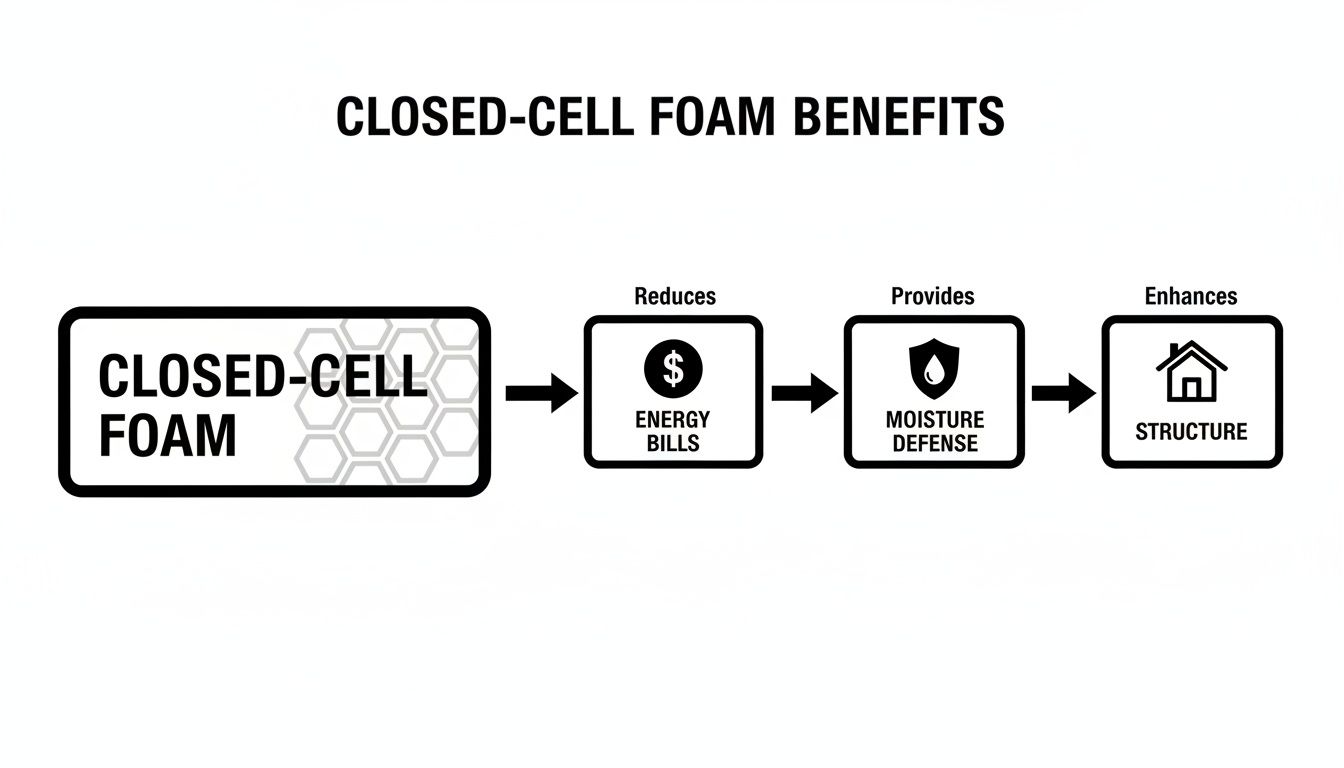
As you can see, it directly lowers your energy bills, provides an unwavering defense against moisture, and physically makes your home stronger.
Finally, let's talk about strength. The dense, rigid nature of closed-cell foam insulation literally glues your home’s frame together. It bonds the studs, joists, and sheathing into a single, solid unit, dramatically increasing the racking strength of your walls and roof. It’s an extra layer of defense against high winds that open-cell foam simply can't provide.
While open-cell has its niche uses, it just isn’t built for the comprehensive protection our homes need in this climate. For a more detailed dive into the technical specs, check out our guide on choosing between closed-cell vs. open-cell spray foam.
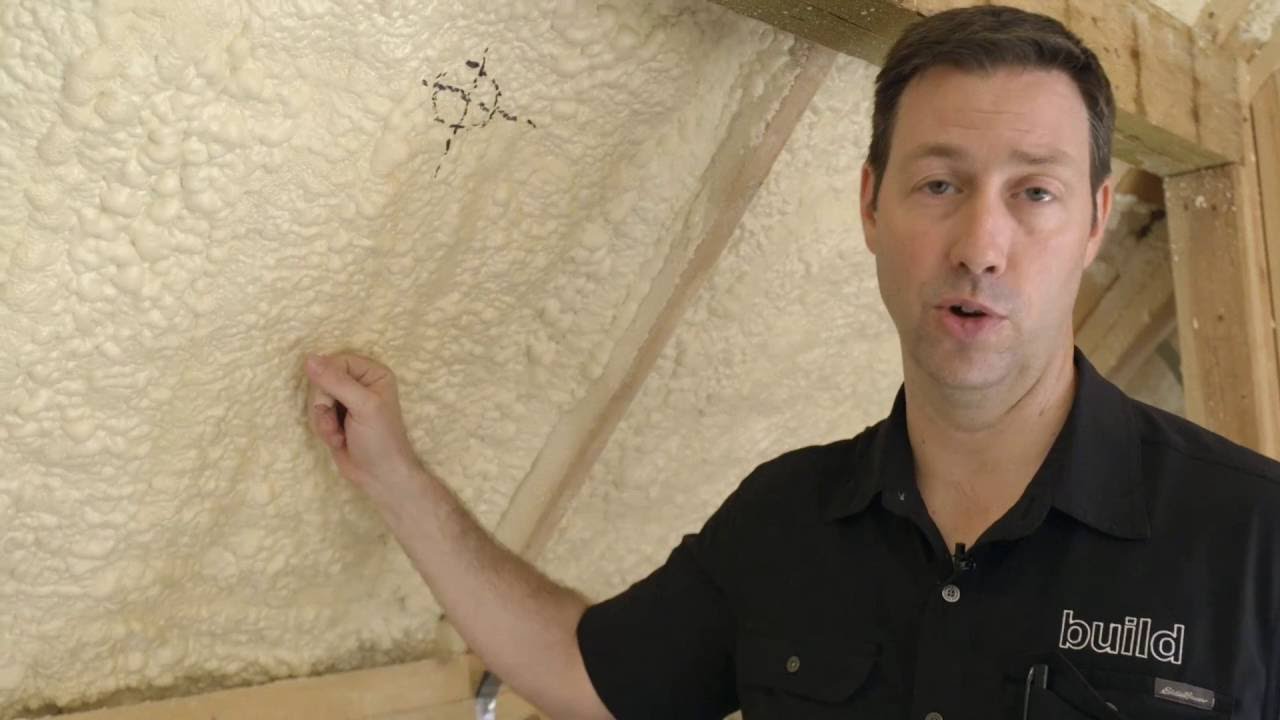
To understand why closed-cell foam is such a game-changer for any building, especially here in South Florida, you have to look at how it works. It's not just about stopping heat. It’s a complete system that defends your home with three core strengths: thermal resistance, moisture control, and structural integrity.
Think of it as a high-tech shield for your house. One part blocks heat, another repels water, and the whole thing reinforces the structure it’s applied to.
The first thing most people ask about insulation is its R-value. Simply put, R-value measures how well a material resists heat flow—the higher the number, the better the insulation. Closed-cell spray foam is a powerhouse, delivering an impressive R-6 to R-7 per inch.
That's a whole lot of insulating power packed into a small space, far more than you'd get from traditional fiberglass or even open-cell foam. So, what’s the secret? It all comes down to the foam's structure. It's made of millions of tiny, rigid cells that are completely sealed off from each other and filled with a specialized insulating gas. This gas is a much poorer conductor of heat than plain air.
This dense, gas-filled structure makes it incredibly tough for heat to punch through. For you, that means getting the high R-value you need without sacrificing valuable space in your walls or attic. We break this down even further when explaining the closed cell insulation R-value per inch.
Beyond just R-value, this is where closed-cell foam truly shines in a humid climate. Its sealed-cell structure makes it impermeable, meaning it blocks both air and water vapor. It doesn't just slow moisture down; it stops it cold, creating a true vapor barrier.
Think of it like the difference between a wool sweater and a good raincoat. Both keep you warm, but only the raincoat will keep you dry in a storm.
Here in South Florida, that sticky, humid air is always trying to push its way into your home. When that warm, moist air finds a cooler surface inside your walls, it condenses. That condensation is a direct path to mold, mildew, and wood rot. Closed-cell foam stops that process dead in its tracks.
This air-sealing quality also gets rid of drafts and stops your expensive, air-conditioned air from leaking out. You end up with a solid, airtight barrier that ensures the air you pay to cool stays inside, and the hot, humid outside air stays out.
The third, and often overlooked, benefit of closed-cell foam is its raw physical strength. When the liquid foam is sprayed, it expands and cures into a dense, rigid solid. It doesn't just fill the space—it fuses to the studs, sheathing, and joists, essentially gluing the whole building assembly together.
This process adds tremendous racking strength to your walls and roof deck, which is a building’s ability to stand up to side-to-side forces. We're talking about the powerful winds we see during hurricane season. In fact, studies have shown that homes with closed-cell foam can be significantly more resilient against wind damage.
It’s a massive advantage. Your insulation becomes an active part of your home’s structural system, not just a passive filler. Understanding how attic insulation impacts your roof is key to appreciating its full value. By combining elite thermal performance, moisture control, and structural reinforcement, closed-cell foam provides a complete defense system for your home.

Understanding the science behind closed-cell spray foam is one thing. Knowing exactly where to use it for the biggest impact on your property is what really counts. Here in South Florida, its unique ability to resist heat, block moisture, and add structural strength makes it the perfect fix for some of the most common—and costly—problems we see in homes and commercial buildings.
This isn’t just about trimming your FPL bill. It's about solving the specific issues that plague buildings from Palm Beach Gardens to Wellington. When you apply closed-cell foam strategically, you turn these weak spots into high-performance parts of your building. Let’s break down where it works best.
In our climate, the traditional vented attic is a massive liability. It’s an open invitation for super-heated, humid air to sit right on top of your ceilings, with temperatures easily soaring past 140°F. This intense heat radiates down into your living space, forcing your AC to run constantly and creating a five-star hotel for mold.
We fix this by applying closed-cell foam directly to the underside of the roof deck. This application creates what’s called an unvented, conditioned attic, completely sealing it off from the brutal outside environment. Your attic essentially becomes part of your home’s air-conditioned envelope.
Metal buildings are notorious for two things: turning into ovens in the summer and "sweating" from condensation. The thin metal panels offer almost zero protection from the Florida sun, and when the hot exterior meets the cooler interior air, moisture condenses and drips everywhere. It's a recipe for rust and damaged goods.
Spraying closed-cell foam directly onto the interior of the metal walls and roof is a game-changer. It bonds tightly to the panels, creating a single, seamless barrier that solves both problems in one shot.
By applying a layer of closed-cell foam, you create a powerful thermal break that stops heat dead in its tracks. You also get an airtight seal that prevents condensation from ever forming. This protects inventory, stops rust, and makes the space comfortable enough to actually work in.
Florida's building codes are only getting stricter, especially when it comes to energy efficiency. For builders and contractors, hitting the targets required by the upcoming 2026 codes can be a real challenge if you're only using old-school insulation.
Closed-cell foam makes compliance straightforward. Its high R-value per inch means you can meet insulation requirements without having to build excessively thick walls. Even better, it acts as your insulator, air barrier, and vapor retarder all in one. This simplifies the construction process and practically guarantees you’ll pass the mandatory blower door tests.
If your home is built on piers or has a crawl space, you’re in a constant battle with the ground underneath. You’re fighting moisture, suffocating humidity, pests, and fluctuating temperatures. This is often where musty smells, buckled hardwood floors, and high indoor humidity originate.
Applying closed-cell spray foam to the underside of the floor is the definitive solution. Its rigid, waterproof structure seals the entire floor assembly from the damp, buggy environment of the crawl space. This stops ground moisture from creeping up, discourages termites and other pests, and helps keep your floors at a stable, comfortable temperature.
This shift toward materials like closed-cell spray foam is part of a larger trend in building science—a move toward creating more durable, efficient structures. The market for flexible closed-cell foam is even projected to grow from US$ 3,020 million in 2025 to US$ 4,849 million by 2032, largely because of its superior performance in humid climates with strict green building codes. You can learn more about these trends by exploring the latest market outlook on closed-cell foam insulation.
When it comes to a major home improvement, two questions always come up first: "How much will this cost me?" and "Is it actually worth it?" With closed-cell spray foam, the conversation isn't just about the price tag; it's about the long-term value you're adding to your home. It’s better to see it as a direct investment in your home's comfort and performance, not just another expense.
The upfront cost for closed-cell foam is definitely higher than what you’d see for traditional materials like fiberglass batts. That's because you’re not just buying insulation; you're paying for a high-performance system and the skilled, technical labor needed to install it perfectly. The final price tag is a direct result of a few key variables on your property.
Every project is different, so the final price will be, too. Here’s a straightforward look at what goes into a professional quote:
It's impossible to give a flat rate, but a professional installation of closed-cell foam typically falls in the $2.50 to $5.00 per board foot range (a board foot is a 12" x 12" area, 1" thick). The only way to get a firm number for your home is with a detailed, on-site estimate.
This is the part that really matters: the payback. The true value of closed-cell spray foam shows up in your monthly bills and overall home comfort. By creating an almost perfect air seal and delivering a powerful R-value, it takes a massive amount of pressure off your HVAC system.
In a climate like ours in South Florida, one of the biggest wins is the ability to keep your house cool in summer without high power bills. When your home finally stops leaking all that expensive cool air and keeps the hot, humid air out, you’ll see the difference on your FPL bill right away.
For many South Florida homeowners, upgrading to closed-cell foam insulation can slash heating and cooling costs by 30% to 50%. That’s not a small chip; it’s a huge reduction in one of your biggest monthly expenses.
With that level of savings, the project starts paying for itself from the moment it’s installed. We often see homeowners recoup the entire upfront cost through energy savings in just 3 to 5 years. After that, it’s just money back in your pocket, month after month, for as long as you own the home.
And it’s not just about savings. This is an upgrade that adds real, measurable value to your property. A home that’s more efficient, structurally stronger, and protected from moisture is a much more attractive asset to future buyers. It's a smart improvement that delivers comfort today and a financial return down the road.
The incredible benefits of closed-cell foam—from its powerful R-value to its ability to block moisture—only come to life with a flawless installation. You can have the best material on the market, but it's only half the equation. The real magic happens when a skilled, experienced installer applies it with precision.
Let me be blunt: this is not a weekend DIY project or a job for a general handyman.
Choosing the right professional is easily the most critical decision you’ll make. A certified installer knows how to calculate the exact right thickness and apply the foam perfectly to create that seamless, airtight seal your home needs.
A true professional won’t give you a one-size-fits-all quote over the phone. They’ll have a clear process that starts with understanding your home’s unique challenges, especially here in South Florida.
Here’s what separates the experts from the rest:
The experience should feel professional from the first call to the final cleanup. It all starts with a thorough on-site consultation where an expert actually inspects your property and listens to your goals. From there, they should give you a detailed, custom plan that explains exactly what they’re going to do and why. Our team explains the full spray foam insulation installation cost with total transparency, so you know exactly where your investment is going.
The installation itself should be methodical, clean, and efficient. A pro crew will take meticulous care to protect your property, contain the work area, and manage ventilation. The job isn’t done until they’ve done a final inspection to guarantee the work meets the highest standards.
When a contractor guarantees their work, it gives you peace of mind that your investment is protected. An expert installer isn't just selling you a product; they’re delivering a permanent upgrade to your home’s comfort, efficiency, and structural health.
Even after learning about all the benefits, it's smart to have a few more questions before you decide. We get it. As installers working with homeowners across South Florida every day, we hear the same great questions time and again.
Here are some straightforward answers to the most common things people ask. We want you to feel completely confident about this investment in your property.
This is one of the best parts about choosing closed-cell foam: it's a lifetime solution. It really is that simple.
Unlike traditional insulation like fiberglass that can sag, get compressed, or break down over the years, closed-cell foam is completely different. Once it’s sprayed and cured, it becomes a solid, rigid part of your building. It doesn't lose its R-value, settle, or degrade over time.
Think of it as a permanent upgrade to your home's structure. It’s built to perform just as well on day one as it will 30 years from now. That incredible durability is what makes the initial investment so worthwhile—you won't be paying to replace it down the road.
When professionally installed, closed-cell spray foam insulation is designed to last for the entire life of your building. It’s a one-and-done investment in your property’s performance and comfort.
The energy savings, moisture protection, and structural strength you get on day one are there to stay for decades. It's a permanent addition, just like your foundation.
Absolutely—as long as it’s installed by a certified professional who follows strict safety rules. Safety is all about managing the installation and curing process correctly.
When we spray foam, two liquid components mix and create a chemical reaction. During this short application period, our crews seal off the work area, use powerful ventilation, and wear full personal protective equipment (PPE). No one else should be in the area.
Once the foam has fully cured, which usually takes about 24 hours, it becomes a completely stable and non-toxic solid. It’s inert, meaning it doesn't off-gas or release any fumes into your home.
Any reputable installer puts this process at the top of their priority list.
I'm going to be direct here: the answer is a definitive no. Installing closed-cell spray foam is a complex science. It demands expensive equipment, extensive hands-on training, and a real understanding of how buildings breathe, especially here in Florida. This is not a weekend warrior project.
Attempting a DIY installation is one of the worst mistakes a homeowner can make. Here’s why:
A failed DIY job doesn't just waste your money—it can cost a fortune to have professionals come in and tear it all out. Trusting a certified expert ensures the job is done right and safely, delivering the performance you're paying for.
Yes, it makes a big difference. While we typically recommend open-cell foam for projects where soundproofing is the number one goal, the dense, rigid structure of closed-cell foam provides significant sound dampening.
Because it creates a solid, airtight seal, it’s extremely effective at blocking airborne noise from the outside. You’ll definitely notice a big reduction in sounds from traffic, lawnmowers, and noisy neighbors. It adds a welcome layer of peace and quiet to your home, making it more serene and comfortable on top of all the energy-saving benefits.
Ready to transform your home with the a comfort system that pays for itself? The team at Airtight Spray Foam Insulation has the expertise to deliver a flawless installation tailored to your South Florida property. Request your free, no-obligation quote today!