Find out how our spray foam insulation services in Jupiter, FL are designed to improve home comfort and manage South Florida’s unique climate conditions.
When you’re trying to decide between blown insulation and spray foam, it really comes down to what you’re trying to achieve with your budget, moisture control, and long-term energy goals. Frankly, spray foam offers superior air sealing and higher R-values, making it the premium choice for anyone serious about efficiency. On the other hand, blown insulation provides a cost-effective way to upgrade existing spaces, especially attics.
For us here in South Florida, making the right call is absolutely critical.
Choosing the right insulation is one of the most important decisions you can make for your home’s comfort and energy bills. It’s not just about stuffing material in your attic; it’s about creating a complete thermal envelope that shields your living space from our relentless heat and humidity. The first step is getting a real handle on the fundamental differences between blown-in and spray foam.
Blown insulation, often called “loose-fill,” is pretty straightforward. It’s made of small particles of either fiberglass or cellulose (which is mostly recycled paper). A machine blows these particles through a hose into an attic or wall cavity, where they settle around obstacles like pipes and wiring. It’s a popular pick because it’s affordable and does a decent job adding R-value to big, open attic floors.
Spray foam insulation is a whole different animal. It’s a two-part chemical that’s applied as a liquid and expands like crazy, turning into a solid foam right before your eyes. This expansion is key—it fills every single crack and crevice, creating a powerful, seamless air barrier that blown insulation just can’t touch on its own.
You’ll hear about two main types:
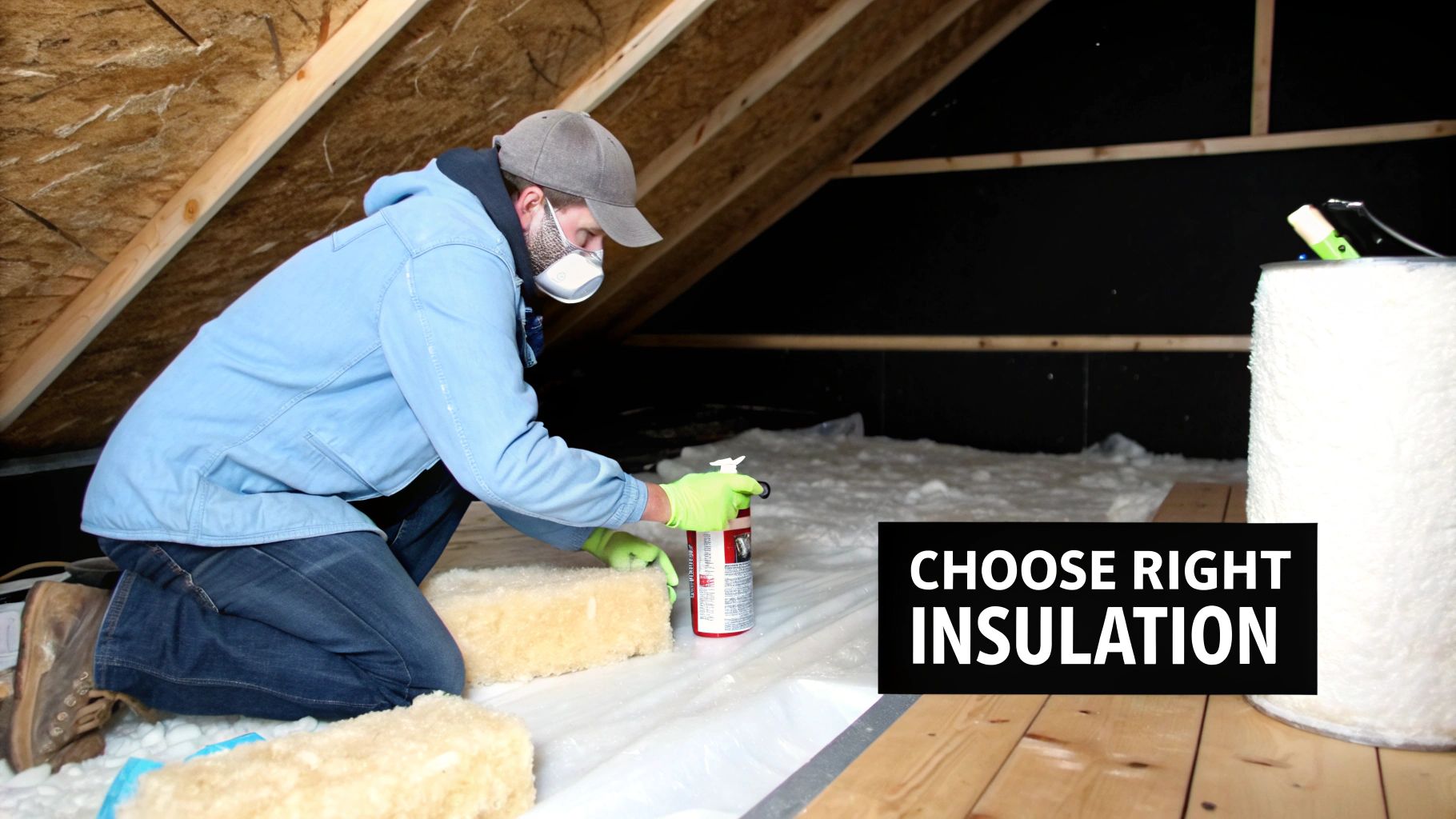
The Bottom Line: The biggest difference is how they work. Blown insulation fills a space to slow down heat transfer. Spray foam seals a space, stopping both heat transfer and air leakage at the same time.
To make things simpler, here’s an at-a-glance summary of the core differences. This table helps you quickly grasp the key trade-offs between these two popular insulation methods.
| Feature | Blown Insulation (Cellulose/Fiberglass) | Spray Foam (Open & Closed-Cell) |
|---|---|---|
| Primary Benefit | Cost-effective coverage | Superior air sealing and high R-value |
| R-Value (Per Inch) | R-2.2 to R-3.8 | R-3.5 (Open-Cell) to R-7.0 (Closed-Cell) |
| Air Sealing | Low (Requires separate sealing) | Excellent (Creates an inherent air barrier) |
| Moisture Resistance | Limited to Moderate | Excellent (Especially closed-cell, which is a vapor retarder) |
| Installation Method | Blown in with a hose | Sprayed as a liquid, then expands |
| Best Use Case | Attic top-ups, empty wall cavities | New construction, unvented attics, moisture-prone areas, metal buildings |
| Typical Lifespan | 15-30 years (can settle) | 50+ years (structurally stable) |
This quick comparison makes it clear: while both materials insulate, they really solve different problems. Your choice hinges on whether your main priority is a budget-friendly thermal boost or you’re ready to invest in a high-performance system that tackles air, heat, and moisture all in one shot.
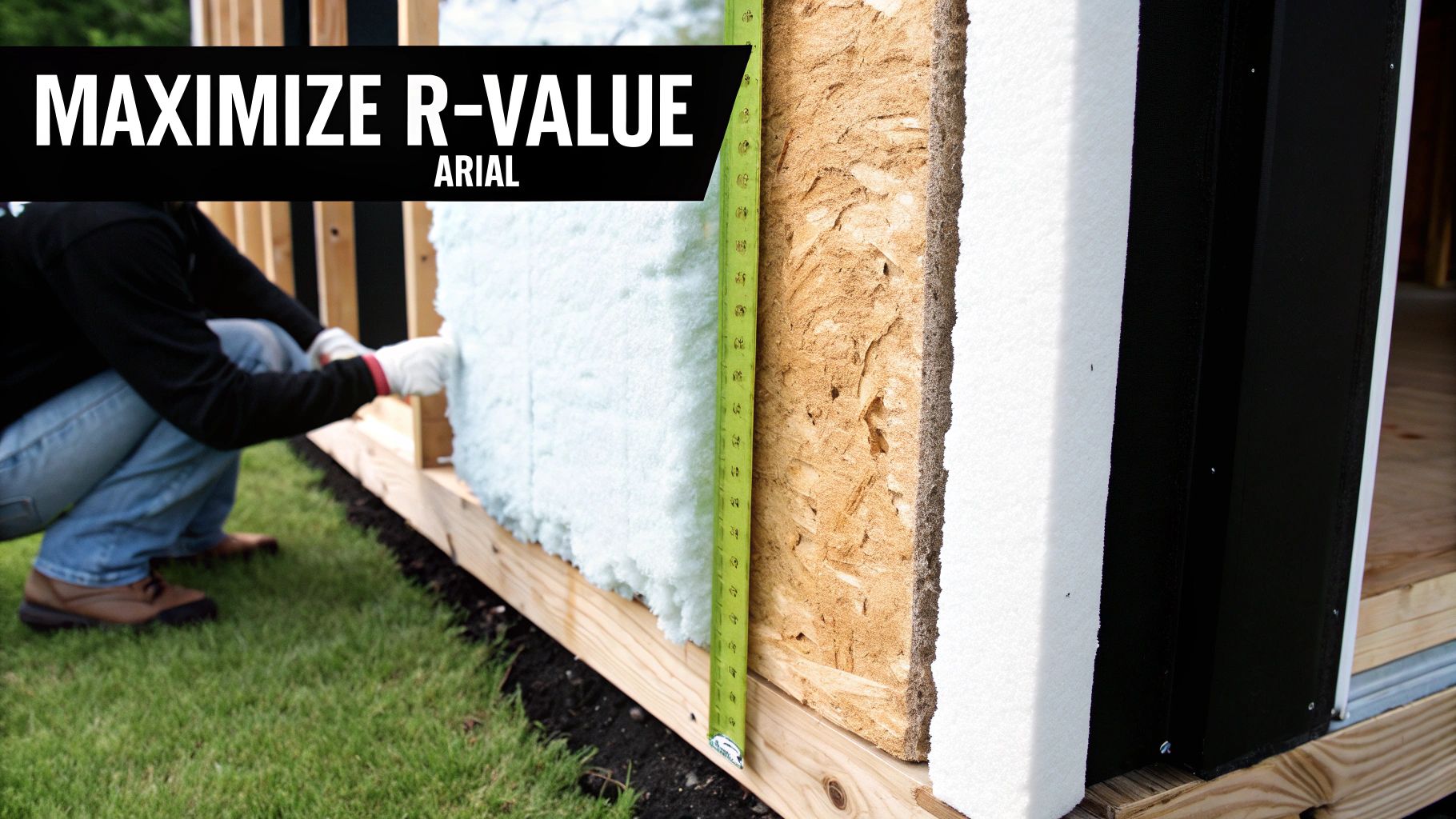
When we talk insulation performance, one number matters most: R-value. It’s simply a measure of how well a material resists heat flow. The higher the R-value, the better the insulation, and this is where blown-in and spray foam go their separate ways. But it’s not just the final number that counts—it’s what you get per inch.
This “R-value per inch” is a total game-changer, especially in construction where every inch of space matters. Think about the standard 2×4 wall cavities in older Florida homes or the shallow rafter bays in a vaulted ceiling. You can only pack so much insulation in there, so you need every single inch to pull its weight.
Let’s be blunt: the thermal resistance these materials offer isn’t even in the same ballpark. Blown-in insulation, whether it’s fiberglass or cellulose, provides a decent but pretty modest R-value for its thickness.
Spray foam, on the other hand, is an absolute powerhouse, especially the closed-cell version. Its dense, rigid structure is engineered from the ground up to stop heat dead in its tracks, and it does it in far less space.
Spray foam delivers a much higher R-value per inch, which is why it took off in high-performance building back in the 1990s. Closed-cell spray foam typically gives you R-6 to R-7 per inch, while open-cell offers around R-3.5 per inch. Compare that to blown-in cellulose at R-3.2 to R-3.8 per inch or blown-in fiberglass, which lags behind at R-2.2 to R-2.7 per inch.
What does that mean in the real world? A 3-inch layer of closed-cell foam can give you the same insulating power as 6 to 9 inches of blown-in fiberglass. For a deeper dive into how these R-values impact performance, check out the insights on sprayworksequipment.com.
The takeaway is simple: to hit an R-30 target in your attic, you might need 10-12 inches of blown-in cellulose. With closed-cell spray foam, you could get there with less than five inches.
In a climate like ours, where the sun is relentless, maximizing the R-value in your roof and walls isn’t just a good idea—it’s essential. The superior performance of spray foam translates directly into real, tangible benefits for homeowners and builders.
Imagine you’re building a new home with a modern, unvented attic. By applying closed-cell spray foam directly to the underside of the roof deck, you can hit a high R-value (like R-38) with just 5-6 inches of material. This creates a conditioned attic space, which keeps your ductwork out of the blistering heat and lets your HVAC system run far more efficiently.
The R-value-per-inch advantage is what truly seals the deal in retrofits or any area with limited depth.
For example, trying to insulate the walls of an existing block home or a metal building is a classic challenge. The cavities might only be a few inches deep. If you fill that space with blown insulation, you might only get an R-value of R-10 to R-13.
But fill that exact same cavity with closed-cell spray foam, and you could hit an R-value of R-21 or more. This often makes spray foam the only practical choice for meeting modern energy codes in shallow spaces without having to rebuild the walls. When you compare blown insulation vs spray foam on thermal performance alone, spray foam’s ability to pack maximum power into minimal space gives it a clear and decisive edge.
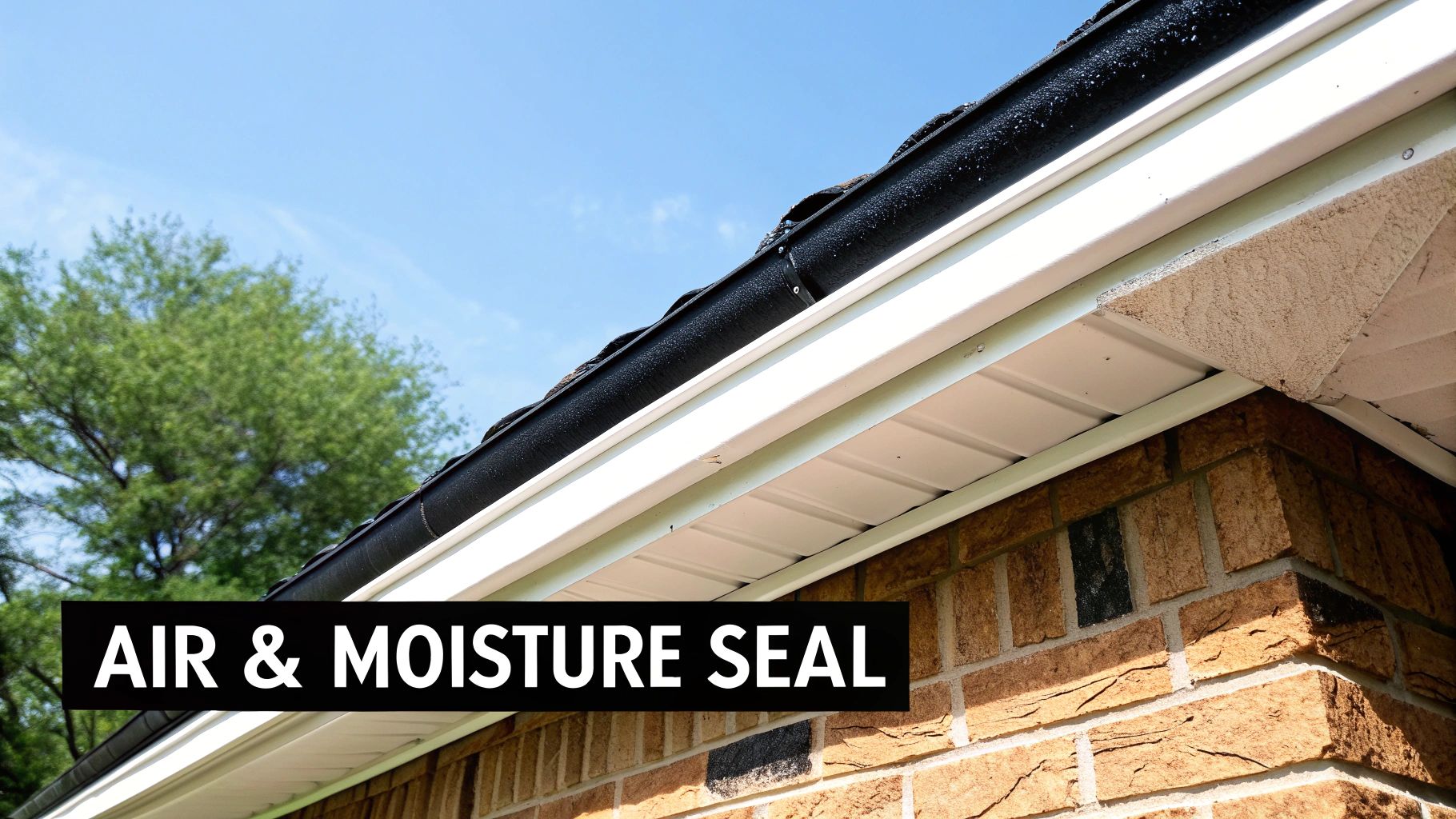
In a climate as humid as South Florida’s, just stopping heat isn’t enough—controlling moisture is the other half of the battle. The main way humid, salty air gets into your home is through tiny leaks and gaps in the structure. This drives up your cooling bills and creates the perfect environment for mold and mildew to thrive.
This is where the real differences between blown insulation and spray foam become crystal clear.
Blown-in insulation does a great job of filling big, open spaces like an attic floor to hit a target R-value. The problem? It doesn’t actually stop air from moving. Think of it like a thick wool sweater: it’s warm, but the wind can still cut right through it. For blown-in insulation to work properly, it needs a completely separate air-sealing step where a contractor meticulously foams and caulks every gap around pipes, wires, and joints.
Spray foam insulation works on a totally different principle. When it’s applied, it goes on as a liquid and expands into a solid, but it does more than just fill the space. It sticks to everything it touches, creating one solid, seamless barrier that seals every crack and crevice along the way.
This built-in ability to both insulate and air seal is a game-changer for moisture control.
The core difference is simple: Blown insulation just resists heat and needs a separate air barrier. Spray foam is both the insulation and the air barrier in one shot, giving you a much stronger defense against air and moisture.
Down here in South Florida, an insulation’s ability to handle our relentless humidity is what determines if it will succeed or fail long-term.
Closed-cell spray foam is a beast against moisture. Its dense structure doesn’t absorb water and acts as a vapor retarder, making it perfect for crawlspaces, metal buildings, and coastal homes where keeping moisture out is non-negotiable.
On the other hand, blown-in cellulose is basically recycled paper. If a roof leak happens or the attic humidity gets out of control, it can absorb and hold that moisture. Even though it’s treated to resist mold, getting soaked can cause it to compact, lose its R-value, and even start to decay. Blown-in fiberglass won’t grow mold since it’s inorganic, but it can trap moisture against the wood framing, leading to rot if the area isn’t properly ventilated.
When you’re comparing blown insulation vs. spray foam for a humid climate, the tough, impermeable nature of closed-cell foam offers a level of protection that loose-fill materials just can’t provide by themselves. Our decades of experience installing all types of spray foam insulation have shown us time and again that it’s the clear winner for preventing the moisture problems we see every day in South Florida.
Let’s move past the initial sticker shock and get into the real lifetime value of your insulation investment. When you put blown-in insulation vs. spray foam side-by-side, the upfront cost is usually the first thing that jumps out, and it’s a big deal. But making a smart decision for your home’s thermal envelope means looking beyond the first invoice.
The real story isn’t just about what you pay on day one. It’s about how that investment holds up over decades of punishing South Florida heat. True value comes from digging into the long-term energy savings, durability, and a few other benefits you might not see right away.
I won’t sugarcoat it: spray foam insulation costs more to install. The materials are more advanced, and the job requires specialized gear and certified pros, which all adds to the price. Blown-in insulation, on the other hand, is a simpler material with a quicker, less technical installation, making it the more budget-friendly choice upfront.
The installed cost for spray foam has always been higher than blown-in, and that fact alone often drives the decision in the mainstream residential market. Industry data shows spray foam typically runs between $1.50 and $4.90 per square foot, depending on whether you choose open-cell or closed-cell, the thickness you need, and local labor rates. At the same time, blown-in cellulose or fiberglass usually lands somewhere between $0.75 and $1.50 per square foot for similar attic coverage. This often makes spray foam two to four times more expensive right out of the gate. For a deeper dive into these numbers, One Nation Exteriors offers a solid cost and performance breakdown.
While blown insulation is cheaper on paper, the conversation flips when we start talking about return on investment (ROI). Spray foam’s higher price is directly connected to its superior performance, which leads to significant, long-term energy savings that can claw back its initial cost over time.
Its ability to create an almost perfect air seal is the game-changer. By stopping air from leaking in and out of your home, spray foam takes a massive load off your HVAC system. In a climate like South Florida where your AC runs nonstop, this means you’ll see immediate and noticeable drops in your monthly FPL bill.
Key Insight: The payback period for spray foam is often much shorter here in our hot, humid climate. The harder your AC has to work, the faster a high-performance insulation system pays for itself.
Blown insulation absolutely improves energy efficiency, but because it can’t stop air leakage on its own, the savings potential just has a lower ceiling.
When we look at the total cost of ownership over two decades, the numbers start telling a different story. The upfront savings of blown-in insulation can be eroded by lower energy savings and the potential need for a top-up, while spray foam’s initial investment is offset by deeper, more consistent savings year after year.
Cost and ROI Comparison Over a 20-Year Lifespan
This table models the total cost of ownership, factoring in installation, estimated annual energy savings, and potential maintenance over two decades for a typical South Florida home.
| Financial Factor | Blown-In Insulation (Cellulose) | Closed-Cell Spray Foam |
|---|---|---|
| Upfront Cost (1,500 sq. ft. attic) | $1,500 – $2,250 | $4,500 – $7,350 |
| Est. Annual Energy Savings | $200 – $400 | $400 – $700+ |
| Potential Maintenance (20 Yrs) | $500 – $750 (for top-up) | $0 |
| Total 20-Year Savings (Net) | $3,250 – $7,500 | $8,000 – $14,000+ |
| Breakeven Point (Est.) | 4 – 8 Years | 7 – 12 Years |
| 20-Year ROI | Strong | Exceptional |
Ultimately, while spray foam takes longer to break even, its superior performance delivers a far greater net financial benefit over the life of your home, making it a powerful long-term asset.
The lifespan of your insulation is another critical piece of the ROI puzzle. Over time, blown-in materials can settle, compress, or get shifted around, creating gaps and weak spots that tank their R-value. This means a slow decline in performance, and you might even need a “top-up” application every 15 to 20 years to keep it effective.
Spray foam, especially the closed-cell kind, is a one-and-done solution.
This incredible durability means the performance you pay for on day one is the same performance you’ll have decades from now, with basically zero maintenance. When you add up the potential cost of re-insulating with blown-in and the structural upgrade you get from closed-cell foam, the long-term case for spray foam becomes rock solid. It stops being an expense and starts looking like a permanent, high-value upgrade to your home.
When you’re comparing blown insulation and spray foam, it’s never about which one is flat-out “better.” It’s about picking the right tool for the job. Each material is engineered to solve different problems, and understanding where they shine is the key to a smart, confident investment.
The right choice really depends on your house, its age, its construction, and what you’re trying to achieve.
This flowchart maps out the decision-making process perfectly. It all starts with one question: is your primary driver the upfront budget or the long-term ROI?
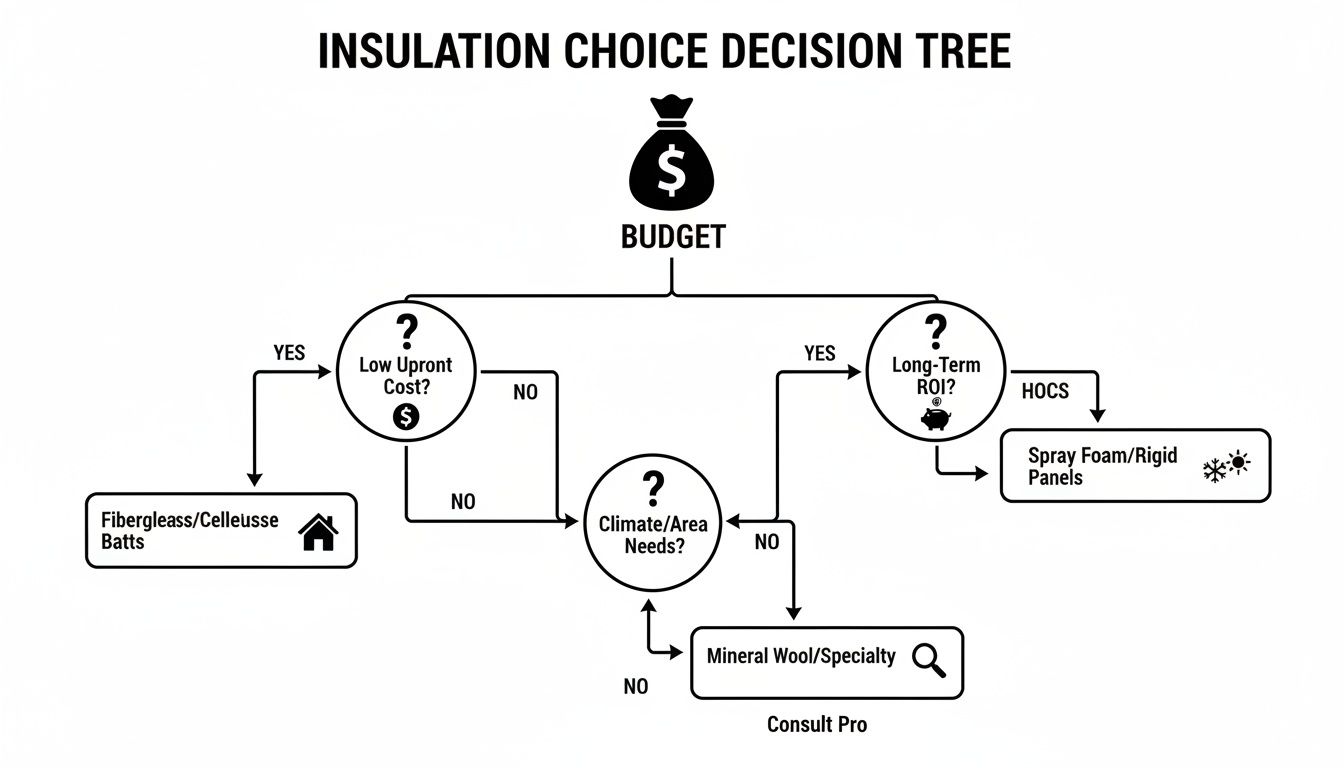
As you can see, projects driven by budget almost always point toward blown-in solutions. But when performance, air sealing, and durability are the priority, the investment in spray foam starts to make a lot more sense.
Blown-in insulation is at its best when budget and simple coverage are the main goals. Its biggest advantages are speed and affordability, making it a fantastic choice for specific retrofit jobs.
We see blown-in insulation work great when:
Think of blown insulation as the pragmatic choice. It’s for improving the thermal performance of existing, easy-to-access spaces where a perfect air seal isn’t the number one goal. It delivers a solid performance boost for a much lower upfront cost.
Spray foam is the high-performance option we bring in for the tougher jobs. It’s for situations where its unique properties solve complex building science challenges that other materials just can’t handle.
This isn’t just an R-value booster; it’s a complete thermal, air, and moisture management system.
Open-cell spray foam is the softer, more flexible version, which makes it perfect for certain indoor applications. Its real superpower is creating a phenomenal air seal while also being an incredible sound absorber.
When the job demands maximum performance, we turn to closed-cell spray foam. It’s the ultimate problem-solver for areas that need serious thermal resistance, moisture control, and structural integrity. Its rigid, dense structure makes it uniquely suited for the toughest jobs in South Florida.
At the end of the day, the blown insulation vs. spray foam decision is a strategic one. Blown insulation offers an affordable, effective upgrade for straightforward jobs. Spray foam, on the other hand, provides a powerful, multi-faceted solution for the critical areas of your home that demand superior, long-lasting performance.
Even after weighing all the pros and cons, homeowners still have a few lingering questions when choosing between blown-in insulation and spray foam. It’s the practical, real-world stuff that often trips people up—things like soundproofing, what to do with existing insulation, and how the choice impacts their home’s future value.
Let’s clear up those final, critical questions. Here are the straight-up answers to the most common concerns we hear from our clients right here in South Florida.
When it comes to hushing unwanted noise, what you’re trying to block matters most. Both blown-in and spray foam insulation can quiet things down, but they tackle different types of sound.
For airborne noises—think conversations, TV sounds, or nearby traffic—the soft, fluffy nature of open-cell spray foam and blown-in cellulose is your best bet. Their porous structure is fantastic at absorbing and deadening sound waves, making them perfect for interior walls between bedrooms, home theaters, or floors separating living areas.
On the flip side, rigid closed-cell spray foam isn’t great at absorbing airborne sounds; its dense structure tends to reflect them. Where it truly shines is in stopping vibrational or impact noise. Because it glues itself directly to the structure, it dampens vibrations like footsteps from upstairs or the rumble of machinery.
Want to go deeper? Our guide on using insulation as a sound barrier breaks down the science behind how different materials dampen sound.
This comes up all the time, especially when you’re looking to upgrade an older home without tearing everything apart. The short answer is a hard “it depends,” because the installation process for each material is completely different.
You can absolutely install new blown-in insulation right on top of most existing attic insulation. We call this “topping up,” and it’s a quick, budget-friendly way to boost your home’s overall R-value.
But first, you have to inspect what’s already there. Before adding anything new, you must check for:
Spray foam is a different story. It absolutely cannot be installed over old insulation. For spray foam to work, it needs to form a chemical bond with a clean, bare surface—like the underside of your roof deck or the exposed wall studs. That means all the old stuff must be completely removed first, which makes it a more involved and costly job for retrofits.
Key Takeaway: Blown-in insulation is great for adding to what you already have in an attic. Spray foam requires a total clean slate, offering a complete reset for your home’s thermal envelope.
It’s smart to be conscious of the materials going into your home. Blown insulation and spray foam each have their own health and environmental story.
Blown-in cellulose really shines as an eco-friendly choice. It’s made from up to 85% recycled paper, keeping a massive amount of waste out of landfills. The material is also treated with non-toxic borates, giving it permanent resistance to fire, mold, and pests without nasty chemicals.
Spray foam’s profile is a bit more complex. The installation is a chemical reaction that creates temporary off-gassing of volatile organic compounds (VOCs). That’s why professional installers wear full protective gear and ventilate the area thoroughly during and right after application. Once it’s fully cured—usually within 24 hours—modern spray foam becomes a stable, inert plastic that’s completely safe and doesn’t off-gas. Plus, the industry has come a long way, with many new formulas using blowing agents with a much lower global warming potential (GWP), making them far better for the environment.
Good insulation isn’t just a hidden feature anymore; it’s a major selling point. It tells potential buyers that your home is well-maintained and energy-efficient. While any insulation upgrade is a plus, your choice can change how people see your property.
A home with professionally installed blown-in insulation checks the box for a modern, comfortable property. It’s a solid, expected feature that helps keep energy bills in check.
A home with spray foam, however, can be marketed as a high-performance upgrade, especially if you have a sealed and conditioned (unvented) attic. The benefits are tangible and impressive: dramatically lower utility bills, incredible comfort, better air quality, and even added structural strength from closed-cell foam. These are compelling features that can justify a higher asking price. Smart buyers recognize that long-term value, making your home a standout in a competitive market and potentially even boosting its appraisal.
Ready to invest in a permanent solution for your South Florida home? At Airtight Spray Foam Insulation, we specialize in creating comfortable, energy-efficient spaces that stand up to our unique climate. Request your free, no-obligation quote today and discover the difference a professional installation can make. Learn more about our services at https://airtightsprayfoaminsulation.com.