Blog
Low VOC Spray Foam Insulation Guide

You know that “new car smell” or the distinct odor from a fresh coat of paint? That’s the scent of Volatile Organic Compounds, or VOCs, being released into the air. Low-VOC spray foam insulation is a game-changer because it’s engineered to release dramatically fewer of these airborne chemicals, making it a healthier choice for your home right from day one.
What Exactly Is Low-VOC Spray Foam?
When you’re building or renovating, every material you choose becomes part of your home’s environment. While traditional insulation does its job, some types can slowly release chemicals into your living space in a process called “off-gassing.” Low-VOC spray foam was created to solve this problem, giving you top-tier insulation performance without sacrificing your indoor air quality.
Think of it like this: old-school materials can be like a leaky faucet, slowly dripping VOCs into your home’s air for weeks, sometimes even months. Low-VOC spray foam is the opposite—it’s like turning the faucet off tight, almost immediately. It’s designed to cure fast and become inert, which means the off-gassing window is incredibly short and the total amount of chemicals released is tiny.
Why VOCs Are a Big Deal in Your Home
Volatile Organic Compounds are basically carbon-based chemicals that turn into gas at room temperature. They’re in thousands of everyday products—cleaners, furniture, adhesives, and paints. While not every VOC is dangerous, high concentrations can create problems, especially in our modern, tightly-sealed Florida homes where fresh air doesn’t circulate as much.
High exposure to VOCs can lead to:
- Short-Term Issues: Things like headaches, dizziness, and irritation in your eyes, nose, and throat.
- Long-Term Problems: They can aggravate conditions like asthma and make allergy sufferers even more sensitive.
This is where the real value of low-VOC spray foam shines. By drastically cutting down the source of these compounds, you’re building a healthier foundation for the air your family breathes every day.
Choosing materials certified for low emissions isn’t just about insulating your attic. It’s a direct investment in your family’s long-term health and well-being. You’re building a true sanctuary, not just a house.
It’s More Than Just a “Green” Buzzword
“Low-VOC” isn’t just marketing fluff; it represents a real leap forward in material science. Manufacturers achieve this by tweaking their chemical formulas, swapping out older, more volatile compounds for newer, more stable ones. These advanced formulas then go through strict third-party testing to earn certifications like GREENGUARD Gold, which confirms they meet tough chemical emission standards.
For us here in South Florida, this is critical. We seal our homes up tight to keep the AC in and the humidity out. That’s great for the power bill, but it can also trap indoor pollutants. By choosing low-VOC spray foam, you ensure that while you’re sealing your home for maximum efficiency, you aren’t accidentally sealing in a source of bad air. It’s the perfect way to get a home that’s cool, energy-efficient, and healthy.
Choosing Between Open Cell and Closed Cell Foam
When you start looking into low VOC spray foam insulation, you’ll quickly find there are two main players: open cell and closed cell. Both do a fantastic job of insulating, but they have very different personalities. Think of them as two specialized tools in a pro’s toolkit—picking the right one for the job is what separates a good insulation job from a great one.
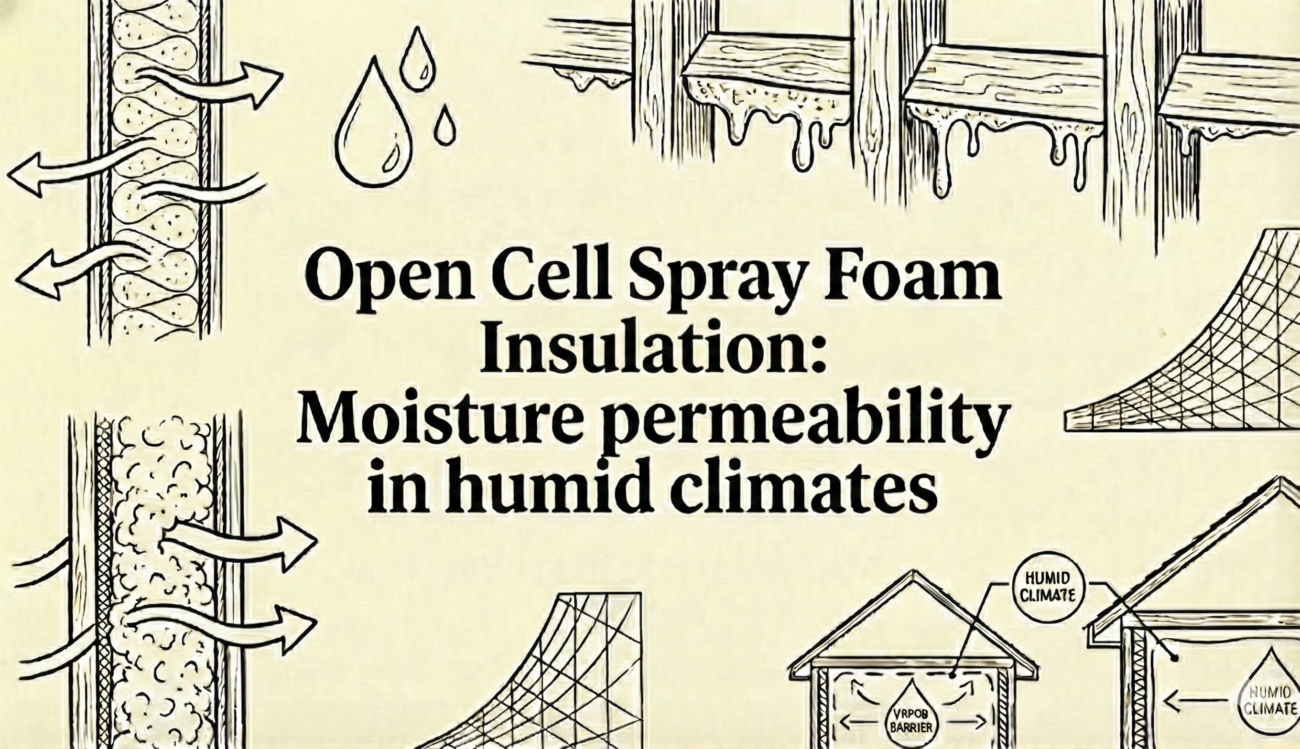
Let’s break it down with a simple analogy. Open-cell foam is a lot like a dense, firm sponge. Its internal structure isn’t totally sealed off, which makes the final product soft, flexible, and able to let vapor pass through. This flexibility allows it to expand and contract with your home’s natural settling, and that spongy texture makes it an amazing sound blocker.
On the flip side, closed-cell foam is more like a solid, rigid shield. Its cells are completely sealed and packed tightly together, forming a dense, tough material. This structure makes it incredibly strong, waterproof, and an unbeatable barrier against both air and moisture.
The whole point of choosing a specific material like low-VOC foam is to create a healthier home from the inside out, which this diagram shows perfectly.
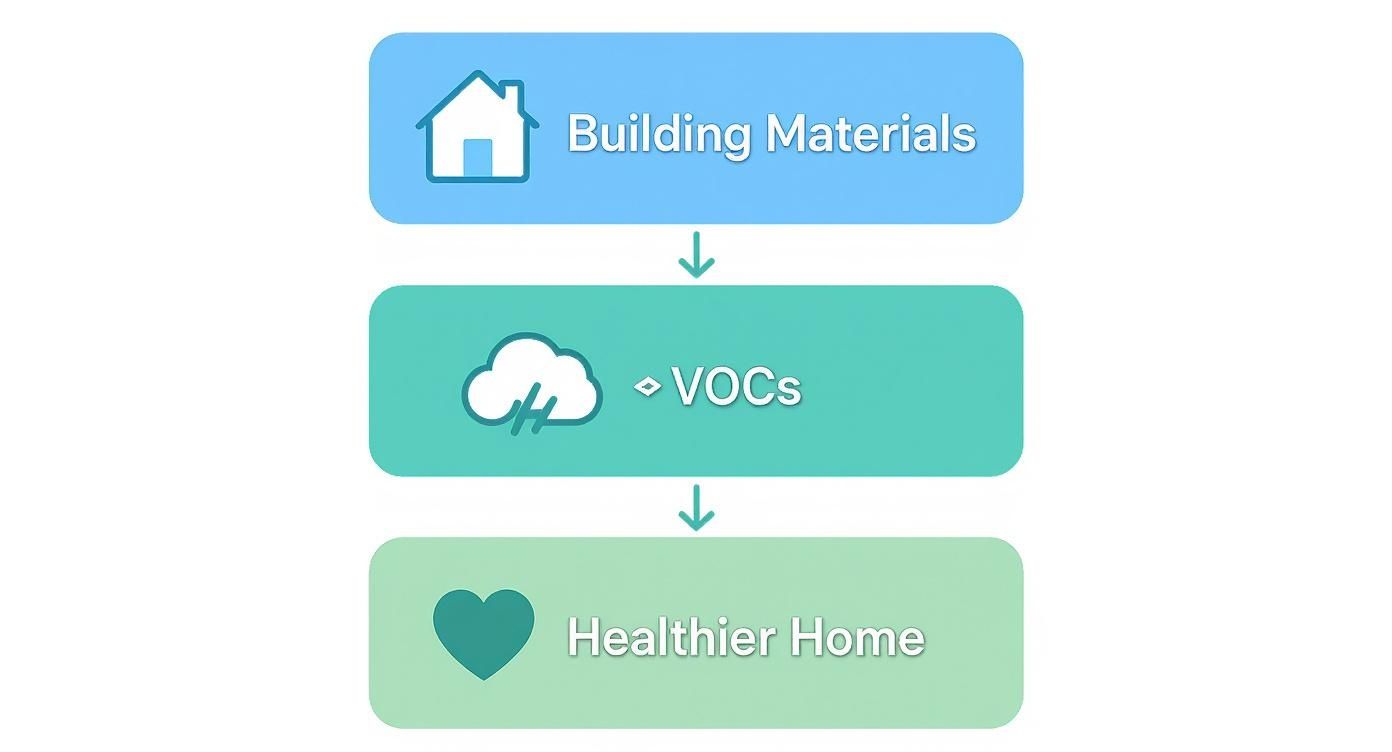
By cutting down on VOCs at the source—the materials you build with—you’re laying the foundation for a much healthier place to live.
The “Sponge”: What Open Cell Foam Does Best
Open-cell foam is the lighter of the two, with a lower density that’s typically around 0.5 pounds per cubic foot. Because of its “spongy” makeup, it doesn’t block vapor. In some climates, this is a good thing, as it lets the building materials breathe and dry out if any moisture sneaks in.
Here’s where open-cell really shines:
- Serious Sound Dampening: Its soft texture is incredible at absorbing sound waves. This makes it a no-brainer for interior walls, home theaters, or between floors to keep the peace and quiet.
- Budget-Friendly Coverage: It usually takes less material to fill a space, which often makes it a more cost-effective choice for projects where a vapor barrier isn’t a top priority.
- The Ultimate Gap Filler: This stuff expands like crazy when applied, worming its way into every tiny crack and crevice. The result is a nearly perfect air seal that stops drafts in their tracks.
But that permeability to moisture means it’s not the right tool for every job, especially in our humid climate. You wouldn’t want it in a damp crawl space or below-grade walls.
The “Shield”: Why Closed Cell Foam Is King in Florida
For anyone living in Jupiter, West Palm Beach, or anywhere in South Florida, closed-cell foam is almost always the smarter, stronger choice for most jobs. Its dense, rigid structure delivers an R-value of around R-6 to R-7 per inch—that’s nearly double the insulating power of open-cell foam.
Closed-cell foam does more than just insulate; it actually strengthens your home. Its rigidity adds significant racking strength to walls and roof decks, helping your home stand up better to the high winds we see during hurricane season.
This powerful one-two punch of high thermal resistance and structural integrity makes it a true workhorse. It acts as your insulator, air barrier, and vapor barrier all in one, which is absolutely critical for fighting off South Florida’s relentless humidity and keeping mold at bay. It’s especially effective in the concrete block construction common in our area, which you can read more about in our guide to the insulation value in concrete block homes.
The great news is that the technology behind these foams keeps getting better. Manufacturers are moving toward more eco-friendly blowing agents with low global warming potential (GWP), like hydrofluoroolefins (HFOs). This commitment to better chemistry means you get top-tier performance without the heavy environmental price tag.
Comparing Low VOC Open Cell and Closed Cell Spray Foam
Choosing between the “sponge” and the “shield” really comes down to what you need the insulation to do and where it’s going. This table breaks down the key differences to help you see which one fits your project.
| Feature | Open-Cell Foam (The ‘Sponge’) | Closed-Cell Foam (The ‘Shield’) |
|---|---|---|
| R-Value per Inch | R-3.5 to R-4 | R-6 to R-7 (Higher thermal resistance) |
| Moisture Barrier | No (Vapor Permeable) | Yes (Vapor Impermeable) |
| Air Barrier | Excellent | Excellent |
| Structural Strength | No, remains flexible | Yes, adds significant rigidity |
| Sound Dampening | Excellent, great for interior walls | Good, but less effective than open-cell |
| Best For | Interior walls, ceilings, soundproofing | Attics, exterior walls, crawl spaces, high-humidity areas |
| Cost | Lower initial cost per board foot | Higher initial cost, but better long-term performance |
For most applications here in South Florida—especially in attics, exterior walls, and crawl spaces—the moisture-blocking power and structural benefits of closed-cell foam make it the clear winner.
Health and Air Quality Benefits for Your Family
While the energy savings are a huge plus, the real reason so many homeowners choose low‑VOC spray foam insulation is for their family’s health. It’s an investment in the air you breathe every day, turning your house into a true safe haven.
Many traditional building materials are known to “off-gas,” releasing Volatile Organic Compounds (VOCs) into your home for weeks or even months. These are the same chemicals often blamed for headaches, dizziness, and that nagging eye and throat irritation. For some family members, the effects are even more serious.
When you opt for a low‑VOC solution, you’re tackling these airborne irritants right at the source. Modern spray foam is designed to cure fast and become chemically inert, which means the off-gassing period is incredibly short and the volume of compounds released is minimal.
Creating a Safer Haven for Sensitive Family Members
If you have young children, elderly parents living with you, or anyone who struggles with allergies or asthma, indoor air quality is not a luxury—it’s a must. Their respiratory systems are far more sensitive to airborne triggers, and a home filled with off-gassing materials can make their conditions flare up constantly.
This is where the benefits of low‑VOC spray foam really hit home.
- Reduced Respiratory Triggers: With far fewer VOCs in the air, there’s less to trigger an asthma attack or allergic reaction. It helps create a more stable, comfortable environment where sensitive individuals can breathe easier.
- Fewer Mystery Ailments: Those persistent, low-grade symptoms like headaches or nausea that are hard to pin down can sometimes be linked directly to poor indoor air. Cutting down the chemical load in your home can lead to a noticeable improvement in overall well-being.
- Peace of Mind for Parents: There’s nothing more reassuring than knowing the materials insulating your home aren’t polluting your indoor air.
Investing in low‑VOC spray foam is one of the most direct ways to protect your family’s health. It stops pollution before it starts, ensuring the air inside your walls is as clean and safe as possible.
This insulation does more than just stop heat and humidity. By creating a powerful air seal, it also helps block outdoor allergens like pollen and dust from sneaking into your home, giving you another layer of air quality control.
The Added Benefit of a Quieter Home
While air quality gets most of the attention, another health benefit of spray foam—especially open-cell foam—is its amazing ability to dampen sound. The same cellular structure that creates an air seal also works to absorb sound waves, cutting down on noise from outside and even from room to room.
This noise reduction helps create a calmer, less stressful home. A quieter house can lead to better sleep, improved focus, and a more peaceful atmosphere for everyone. To see exactly how this works, check out our guide on using insulation as a sound barrier.
Ultimately, choosing low‑VOC spray foam insulation pays you back in both comfort and health. It’s a foundational choice that supports a cleaner, quieter, and safer home for the long haul. By insisting on materials with certified low emissions, you’re making sure your South Florida home is built not just for efficiency, but for the well-being of everyone inside.
How Spray Foam Performs in Florida Heat and Humidity
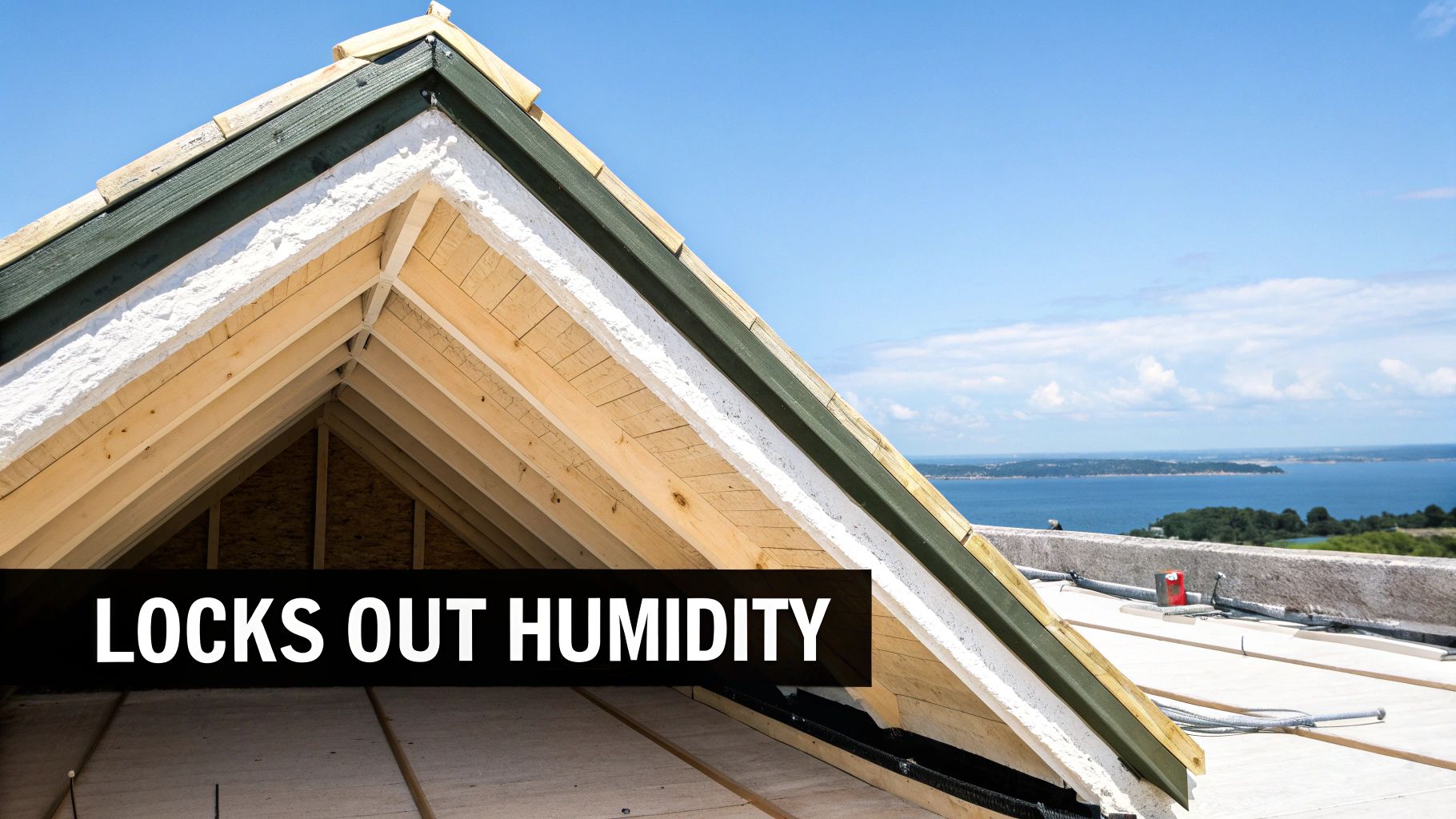
Surviving the relentless heat and oppressive humidity of South Florida demands more than just standard insulation—it requires a high-performance solution. This is where low-VOC spray foam insulation truly shines, acting as both armor against the elements and an air conditioner’s best friend. Its superpower? The ability to create a near-perfect, seamless air seal.
Think of your home like a high-end cooler. Old-school insulation, like fiberglass batts, is like setting the lid on top without latching it. Air still sneaks in and out through all the little gaps. Spray foam, on the other hand, is like locking that cooler down and vacuum-sealing it. It expands to fill every single crack, crevice, and awkward angle, forming one continuous, unbroken barrier.
This airtight seal is a game-changer. It stops hot, soupy air from infiltrating your home and keeps your expensive, conditioned air from escaping. Your HVAC system no longer has to wage a constant, losing battle against the Florida climate. Instead, it runs less often and more efficiently, which means real energy savings month after month.
Mastering Moisture to Prevent Mold
In places like Palm Beach Gardens or Wellington, heat is only half the problem. Humidity is the real enemy. When moisture-laden air seeps into your attic and wall cavities, it’s a recipe for disaster, creating the perfect breeding ground for mold and mildew. This is where the type of insulation you choose becomes absolutely critical.
Closed-cell spray foam, in particular, doubles as a non-permeable vapor barrier. It doesn’t just block air; it blocks water vapor itself.
By stopping humid air in its tracks, closed-cell spray foam effectively eliminates the condensation that fuels mold growth. This proactive moisture management is one of the most important long-term benefits for any Florida property owner.
This is a fundamental difference compared to other materials. You can learn more about how it stacks up against alternatives in our detailed comparison of spray foam vs. blown-in insulation. By managing moisture this effectively, spray foam protects not only your family’s health but the structural integrity of your home itself.
A Smart Investment for Florida Homes
The exceptional performance of spray foam isn’t a secret. The global market has seen significant growth, driven by tightening environmental regulations and homeowners becoming more aware of indoor air quality. The U.S. Department of Energy has also pointed out that proper air sealing with spray foam can cut heating and cooling costs by up to 15%, which only boosts demand for a superior solution like this. You can find more details in this market research on spray foam insulation.
For homeowners in Jupiter and Stuart, this translates into tangible, everyday benefits:
- Lower Utility Bills: A direct result of a less-stressed HVAC system.
- Consistent Indoor Comfort: Say goodbye to hot and cold spots throughout your home.
- A Healthier Living Environment: Greatly reduces the risk of mold and mildew.
- Increased Home Durability: Closed-cell foam actually adds structural rigidity to your walls and roof.
At the end of the day, choosing low-VOC spray foam insulation is one of the smartest decisions a South Florida homeowner can make. It’s an investment that pays you back daily in comfort, savings, and peace of mind.
What to Expect During the Installation Process
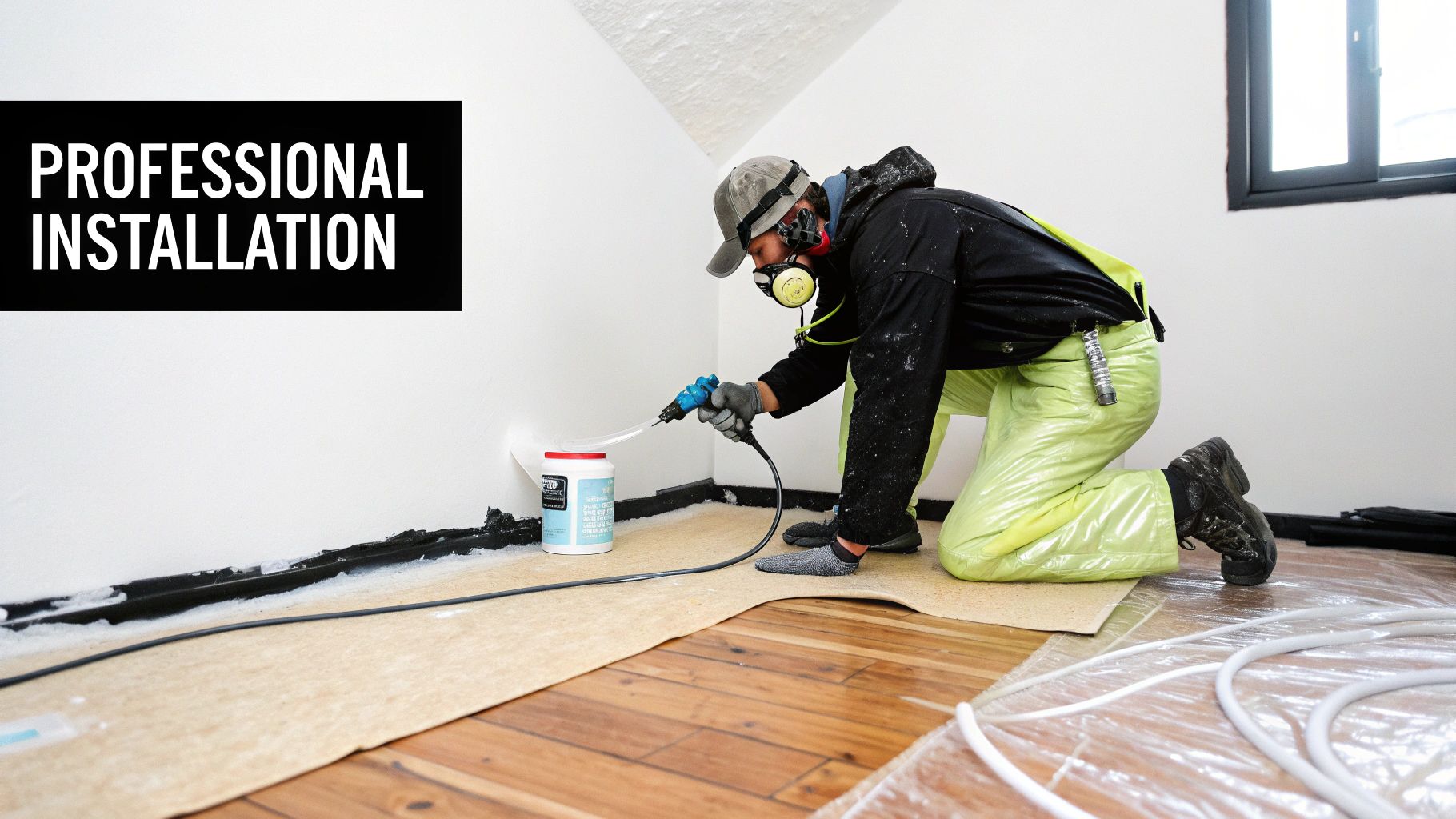
A professional low VOC spray foam installation isn’t the messy, chaotic job you might be picturing. It’s actually a precise, methodical operation that’s all about protecting your property and delivering a flawless result. Think of it less like a construction site and more like a surgical procedure for your home.
It all starts long before a single drop of foam is sprayed. The first step is meticulous site preparation. Our crew carefully covers floors, windows, furniture—anything not being treated—with heavy-duty plastic sheeting. We want to ensure the only thing we leave behind is high-performance insulation, not a mess.
Preparation and Application
Once the work area is completely prepped and sealed off, we bring in powerful ventilation equipment. This is a non-negotiable step for us. It keeps fresh air flowing and safely exhausts any fumes or odors from your home during the application. Our technicians gear up in full personal protective equipment (PPE), including respirators and suits, because safety is always priority one.
Then, the real magic happens. Using specialized equipment, two liquid components are mixed right at the nozzle and sprayed onto the target surface, whether it’s your attic’s roof deck or inside a wall cavity. The liquid immediately expands up to 100 times its original volume in just a few seconds. It’s pretty incredible to watch as it rises to fill every single gap, crack, and hard-to-reach crevice, creating that perfect airtight seal.
Curing and Safe Re-Entry
After spraying, the foam begins to cure, hardening into the solid, stable barrier that will protect your home for decades. We keep the high-powered ventilation systems running during this phase to help speed up the process and clear the air.
A huge advantage of modern low VOC spray foam is how quickly it cures. The off-gassing period is significantly shorter than with older formulas, which means you can get back into your home much faster and with total peace of mind.
While some old-school insulation might have required you to be out of the house for days, the standard for most modern low VOC products is a 24-hour re-entry time. Your installer will give you a specific timeline based on the product and your home’s conditions. Sticking to this guidance is key to ensuring all chemical reactions are complete and your indoor air is clean.
Finally, our crew does a full cleanup, removing all the protective sheeting and equipment. The goal is to leave your space cleaner than we found it. We finish with a final walkthrough to make sure every detail meets your expectations. Hiring a certified, experienced team is the only way to guarantee this methodical, safe, and clean process from start to finish.
Understanding Costs and Certifications
When you’re thinking about insulation, it’s easy to get fixated on the initial price tag. But with a high-performance solution like low-VOC spray foam, that’s only a small part of the story. The real value comes from understanding its long-term benefits and knowing how to spot a genuinely safe, certified product.
Think of certifications as your proof that the foam meets strict, independent standards for chemical emissions. They take the guesswork out of the equation and give you real confidence that you’re making a healthy choice for your home’s air quality.
Decoding Certifications for Peace of Mind
Here’s the thing: not all “low-VOC” claims are created equal. To make sure you’re getting a product that’s truly safe, you need to look for reputable, third-party certifications. These labels aren’t just marketing fluff; they’re earned through rigorous testing for a whole cocktail of chemicals.
Here are the big ones to look for:
- GREENGUARD Gold: This is the gold standard, period. Products with this certification have been tested for over 10,000 different chemicals and are cleared for use in sensitive places like schools and hospitals. It’s serious business.
- UL Environment: You’ve probably seen the UL logo on electronics, but Underwriters Laboratories also provides trusted, independent validation for environmental and air quality claims.
- SCS Indoor Advantage Gold: Much like GREENGUARD, this certification confirms that a product meets tough indoor air quality emission standards.
When you see a label like GREENGUARD Gold on a spray foam product, it means an independent lab has signed off on its low chemical emissions. This is your best tool for comparing products and asking your insulation contractor the right questions.
Don’t be shy about asking your installer which certified products they use. It’s a simple but critical step to ensure you’re getting both top-tier performance and a healthier living space.
Calculating the True Return on Investment
Let’s be straight—the upfront cost of low-VOC spray foam insulation is higher than old-school materials like fiberglass batts. But looking at it as just an expense is missing the bigger picture entirely. This is a permanent upgrade that starts paying you back from day one and continues for the life of your home.
You have to weigh that initial investment against the massive long-term savings. The airtight seal created by spray foam immediately takes a huge load off your HVAC system. That translates directly into lower monthly energy bills. For homeowners here in South Florida, that often means savings of 15% or more, which adds up fast in our year-round cooling season.
But the financial wins don’t stop at your FPL bill. A home insulated with high-performance spray foam is more durable, way more comfortable, and healthier—all things that significantly boost its market value. When it comes time to sell, a properly insulated, energy-efficient home is a massive selling point that helps you command a higher price.
Ultimately, installing low-VOC spray foam isn’t a cost; it’s an investment in your property’s infrastructure. It pays for itself over and over through lower utility bills, better comfort, a healthier home environment, and increased property value. It’s one of the smartest upgrades any Florida homeowner can make.
Answering Your Questions About Low VOC Foam
Even after learning about all the benefits, it’s completely normal to have a few more questions before making a decision for your property. We get it. Here are some straightforward answers to the most common things we’re asked about low-VOC spray foam insulation.
Is There Still a Smell with Low VOC Foam?
While low-VOC foam is engineered to have far fewer odors, you might notice a faint scent during and right after the application. Think of it like the smell of fresh paint—it’s temporary. The good news is that it disappears much faster than the smell from older, traditional foams, and our crews use powerful ventilation to clear the air quickly.
Once the foam cures, which usually takes about 24 hours, it becomes a completely inert, rigid plastic. At that point, there’s no lingering odor whatsoever. Certified low-VOC products are specifically designed to give you excellent long-term indoor air quality.
How Long Does Low VOC Spray Foam Insulation Last?
This is where spray foam really shines. When a certified pro installs it correctly, low-VOC spray foam is incredibly durable. It’s not going to sag, settle, or break down over the years like fiberglass or cellulose often do.
It literally becomes a permanent, solid part of your home’s structure. That means you can expect it to last for the entire life of the building, delivering the same thermal performance and air sealing for decades without ever needing to be replaced.
Can You Install Low VOC Spray Foam in an Existing Home?
Absolutely. In fact, retrofitting an existing home with spray foam is one of the most powerful upgrades you can make. Our installers can apply it to open areas and cavities to dramatically improve your home’s efficiency and comfort.
We commonly retrofit foam in places like:
- Attics: Applying foam to the underside of the roof deck is a game-changer, creating a conditioned attic space that stays much cooler.
- Crawl Spaces: Sealing and insulating a crawl space is key to stopping moisture and drafts from getting into your living space.
- Rim Joists: This is a huge source of air leakage in many homes and a perfect spot for our crews to seal up tight.
Installing foam in finished walls is a more involved process, but it’s often possible. It’s an excellent way to bring an older South Florida home up to modern standards for energy bills and indoor air quality.
Ready to upgrade your home’s comfort and efficiency with the healthiest, most effective insulation on the market? The team at Airtight Spray Foam Insulation has the hands-on experience and certified materials to do the job right. We serve homeowners, contractors, and property managers throughout Jupiter, Palm Beach Gardens, and the surrounding communities.
Get Your Free, No-Obligation Quote Today!
Homeowners in Stuart, FL often look for low-VOC spray foam options to improve indoor air quality during and after installation. Our team uses products designed for minimal odor, low emissions, and safe curing for sensitive households.
👉 Learn more about our Stuart spray foam services:
https://yourwebsite.com/spray-foam-insulation-stuart/