Blog
Installing Insulation in Crawl Space A DIY Guide

Tackling your crawl space insulation is one of those home improvement projects that pays you back in ways you might not expect. It’s about so much more than just slapping up some insulation to save a few bucks on your energy bill. When you create a proper barrier against moisture and the South Florida heat, you’re boosting your home’s comfort, clearing up your indoor air, and heading off major structural problems before they start.
Think of it as an investment in your property’s long-term health and your family’s well-being.
Why Insulating Your Crawl Space Is a Game Changer
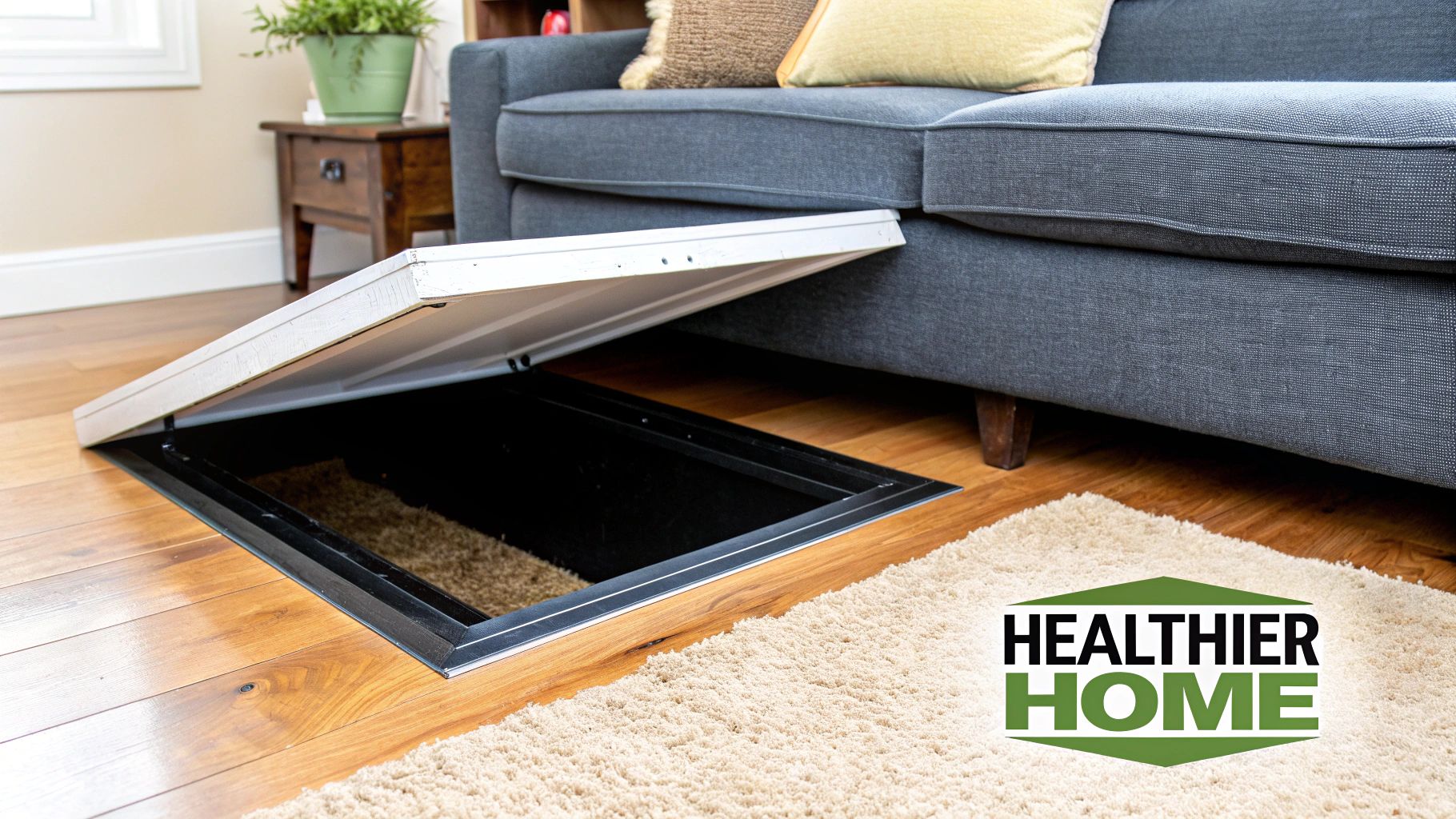
Most homeowners would rather not think about what’s going on in the crawl space. It’s out of sight, out of mind. But what happens down there directly impacts every room above it. An uninsulated, vented crawl space is basically a welcome mat for everything you don’t want in your home: moisture, pests, and muggy, unconditioned air.
This isn’t just a minor drafty floor issue. A huge chunk of the air you’re breathing inside your house—some building science experts say up to 50%—actually comes up from the crawl space. It’s a phenomenon called the “stack effect.” That means any mold, mildew, or allergens festering below get pulled right into your living areas. It’s a recipe for poor indoor air quality and potential respiratory issues.
The Real-World Benefits of a Sealed Crawl Space
When you properly insulate a crawl space—usually as part of a full encapsulation—you turn that neglected, problematic zone into a genuine asset. The improvements aren’t just theoretical; you’ll feel them almost immediately.
- Serious Energy Efficiency: A sealed and insulated crawl space stops that hot, humid air from sneaking in. Your HVAC system finally gets a break and doesn’t have to run constantly to keep you comfortable. The result? Lower monthly power bills.
- Healthier Indoor Air: By blocking out moisture and sealing up all the little gaps and cracks, you make the crawl space a terrible place for mold, mildew, and pests to live. That translates directly to cleaner, healthier air circulating through your home.
- A More Comfortable Home: Forget about those chilly floors in the winter. Insulation creates a thermal break, keeping the floors above at a steady, comfortable temperature all year long. It’s also surprisingly effective at dampening noise. You can learn more about this in our guide on using insulation as a sound barrier.
- Protecting Your Foundation: Moisture is the number one enemy of a home’s structure. A dry, insulated crawl space protects your wooden joists and beams from the rot and decay that lead to expensive, messy repairs.
This isn’t just another weekend project. It’s a fundamental upgrade. A well-insulated crawl space is one of the cornerstones of a healthy, efficient, and durable home here in Florida.
The secret is getting out. The global market for crawl space encapsulation, which always includes insulation, was valued at USD 839 million in 2024 and is on track to hit USD 1,550 million by 2032. This growth is being pushed by smarter building codes that recognize how much energy is wasted by old-school vented crawl spaces. In fact, sealing them off can slash heating and cooling costs by up to 20%.
Your Pre-Installation Inspection and Prep Work
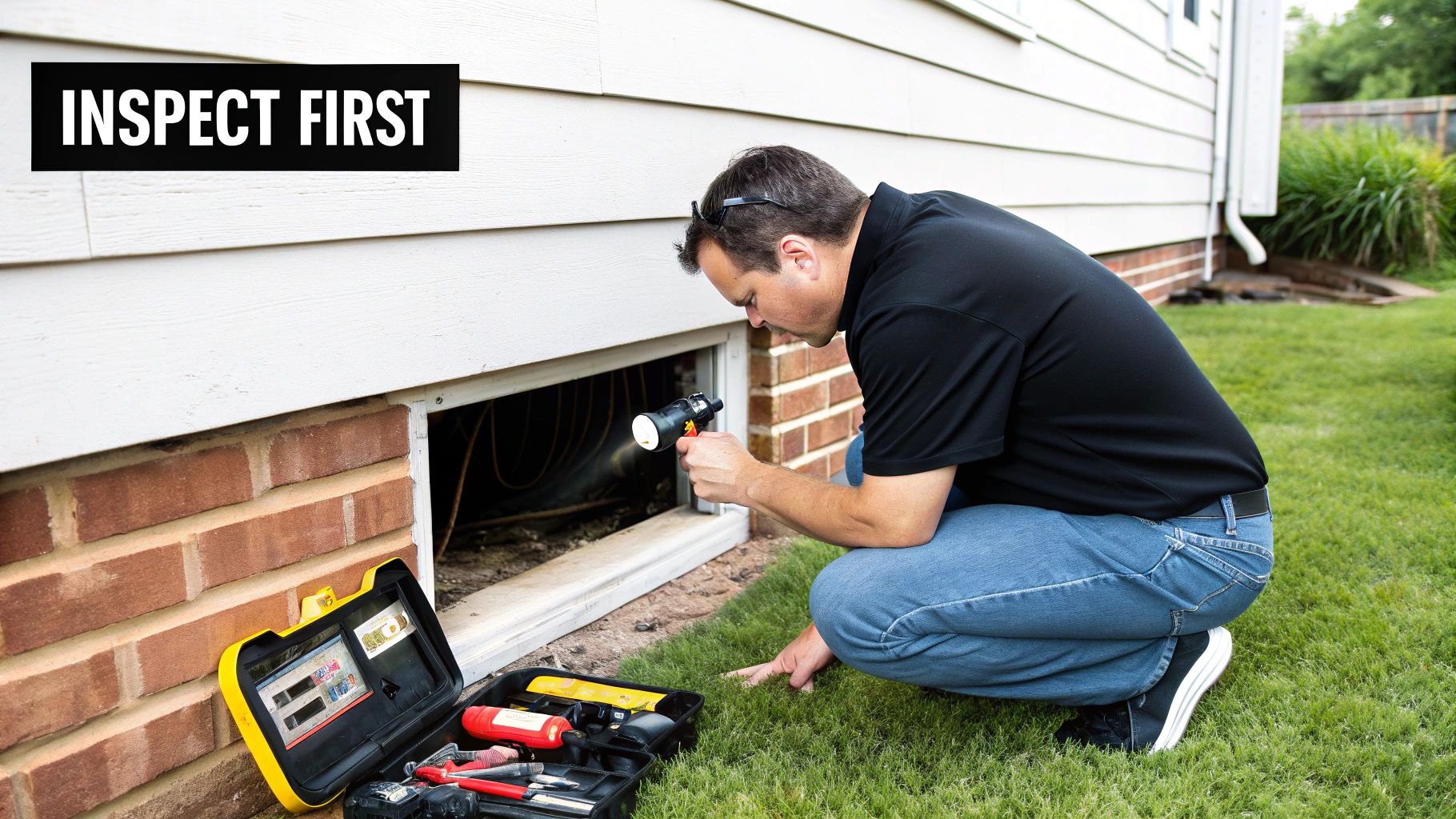
Before you even think about buying insulation, the real work begins with a thorough inspection of your crawl space. This isn’t a step you can afford to rush. Trust me, skipping the prep is like building a house on a shaky foundation—it only leads to bigger, more expensive headaches down the road.
Think of your crawl space as a diagnostic tool for your home’s overall health. What you find down there tells a story about water intrusion, air leaks, and potential pest problems. Getting to the root of these issues first is what makes your insulation investment pay off for decades.
Your Moisture Detective Checklist
In South Florida, water is the number one enemy of any crawl space. Your first job is to play detective, find out where it’s coming from, and put a stop to it. A digital moisture meter is your best friend here; it gives you hard numbers instead of just guessing.
Get in there and probe the wooden floor joists, the sill plates (the wood sitting on top of your foundation), and any subflooring you can reach. If you see a reading above 15-20%, you’ve got a problem that needs fixing, pronto. High readings often pop up near exterior walls or right under plumbing lines.
Here’s what you need to hunt for:
- Foundation Cracks: Scour the foundation walls, inside and out, for any cracks. Even hairline fractures are an open invitation for water.
- Plumbing Leaks: Check every single pipe and drain. Look for drips, corrosion, or water stains. A tiny, slow leak can saturate the ground and wood over time.
- Poor Grading: Walk around your house. Is there standing water near the foundation? Does the ground slope toward your home? If so, every rainstorm is pushing water into your crawl space.
- Condensation: See beads of water on pipes, ducts, or the foundation walls? That’s a huge red flag for high humidity, which has to be controlled before you add a single piece of insulation.
I can’t stress this enough: Skipping a detailed moisture check is the biggest mistake homeowners make. If you trap existing moisture behind new insulation and a vapor barrier, you’re creating a five-star resort for mold and wood rot. It will silently destroy your home’s structure from below.
Clearing the Way for a Clean Slate
Once you’ve stopped the water, it’s time for a major clean-out and pest inspection. This is more than just tidying up; you’re creating a healthy, stable environment for the new materials.
Start by hauling out all the debris—old, nasty insulation, forgotten construction scraps, wood, you name it. That old fiberglass insulation that’s damp and falling down? It’s useless and a perfect nesting spot for critters. Make sure you bag it up securely so the fibers don’t get all over your house.
Final Prep for Installation
With the space cleared, do one last sweep for pests or wood damage. Look for the tell-tale mud tubes of termites on the foundation walls, rodent droppings, or any wood that feels soft and crumbly. If you find signs of an active infestation or serious rot, stop and call a professional exterminator or structural engineer. Don’t cover up a problem.
Here are your final prep steps:
- Seal Air Leaks: Use a good quality caulk or low-expansion spray foam to seal every gap you can find—around pipes, wiring, and where the wood frame meets the foundation. This is absolutely critical for stopping air infiltration.
- Smooth the Ground: Rake the soil or gravel on the crawl space floor to get it reasonably level. Pull out any sharp rocks or debris that could tear a hole in your new vapor barrier.
- Final Sweep: Give the whole area one last sweep to get rid of dust and small debris. You want a clean surface so the vapor barrier can be properly sealed to the foundation walls.
By being methodical with your inspection and prep work, you’re not just installing insulation in a crawl space—you’re making a fundamental upgrade to the health and durability of your entire home.
Choosing the Right Insulation for Your Crawl Space
Not all insulation is created equal, especially when you’re dealing with the damp, tough environment of a South Florida crawl space. Getting this choice right isn’t just about R-value; it’s about picking a material that can stand up to constant humidity, pests, and the unique conditions under your home. This one decision will make or break the long-term success of your project.
There are two main ways to tackle installing insulation in a crawl space: insulate the floor joists (the crawl space ceiling) or insulate the foundation walls. Hands down, insulating the foundation walls is the modern, preferred method, especially in our humid climate. This approach, which is a key part of encapsulation, brings the crawl space into your home’s conditioned envelope, giving you real control over temperature and humidity.
Foundation Walls vs. Floor Joists
When you insulate the foundation walls and seal the vents, you create a clean, dry, semi-conditioned space. This is a game-changer. It protects your pipes and ductwork from extreme temperatures and moisture, stopping condensation and mold before they can start. You essentially turn the entire underbelly of your house into a protective buffer zone.
Insulating the floor joists is the old-school way of doing things in a vented crawl space. While it might seem easier, it leaves all your plumbing and ductwork exposed to that harsh, humid outside air. This is a recipe for condensation, massive energy loss from leaky ducts, and even frozen pipes if we ever get a rare cold snap.
For nearly every home we see, the benefits of insulating the foundation walls completely eclipse the outdated joist-insulation method.
The real goal here is to control the environment under your home. Insulating the walls conditions the entire space, solving the problem at its source. Insulating the floor just puts a blanket between a problematic, damp area and your living room—it doesn’t fix anything, it just hides it for a while.
Comparing Your Material Options
Your choice of material is absolutely critical. In a crawl space, you need something that won’t turn into a soggy sponge, lose its insulating power when damp, or become a five-star restaurant for mold.
Here are the heavy hitters you should be considering:
- Closed-Cell Spray Foam: This is the gold standard for crawl space walls, period. It delivers a high R-value (around R-6 to R-7 per inch), but more importantly, it’s completely waterproof. It acts as your insulator, air barrier, and vapor barrier all in one shot, creating a seamless, monolithic seal against the foundation wall. Nothing gets through it.
- Rigid Foam Board (XPS/EPS/Polyiso): These boards are another fantastic option for foundation walls. They’re moisture-resistant, tough, and a skilled DIYer can handle the installation. Extruded polystyrene (XPS) is a common choice, offering a great balance of performance and cost with an R-value of about R-5 per inch.
- Mineral Wool: Made from rock and slag, mineral wool is naturally moisture-resistant and inorganic, which means mold can’t grow on it. It’s also fire-resistant and does a great job of dampening sound. If for some reason you must insulate the floor joists, this is a solid choice.
It’s crucial to understand why some common materials just don’t belong here. Homeowners are often tempted by traditional fiberglass batts because they’re cheap, but they are a disastrous choice for a crawl space. They act like a giant sponge, soaking up ambient moisture and quickly becoming a disgusting, moldy mess. To see how these materials perform in the real world, check out our detailed guide on spray foam versus blown-in insulation.
To make it even clearer, here’s a direct comparison of the most common options.
Crawl Space Insulation Material Comparison
| Material Type | R-Value/Inch | Moisture Resistance | Avg. Material Cost/sq ft | Best For |
|---|---|---|---|---|
| Closed-Cell Spray Foam | R-6 to R-7 | Excellent (Waterproof) | $2.50 – $6.75 | Foundation walls; ultimate performance and moisture control. |
| Rigid Foam (XPS/EPS) | R-4 to R-5 | Good (Water-resistant) | $1.00 – $2.50 | Foundation walls; great for skilled DIY or budget-conscious projects. |
| Mineral Wool | R-3 to R-4 | Good (Moisture-wicking) | $1.25 – $2.00 | Floor joists in vented crawl spaces (if necessary). |
| Fiberglass Batts | R-3 to R-4 | Poor (Absorbs moisture) | $0.30 – $1.50 | Not recommended for crawl spaces, especially in humid climates. |
As you can see, when moisture is the primary enemy—which it always is in a crawl space—your options narrow pretty quickly to materials that can stand up to it.
A Look at Costs and Performance
Of course, budget is always a factor, and the material costs can swing wildly. The average cost of crawl space insulation materials ranges from $0.30 to $6.75 per square foot, depending entirely on what you choose. Fiberglass and foam boards are on the lower end, while high-performance closed-cell spray foam sits at the top of that range. For a broader look at market trends, you can discover more insights on insulation materials at Grand View Research.
But the upfront price tag doesn’t tell the whole story. A superior material like closed-cell spray foam might cost more initially, but its unmatched air-sealing and moisture-blocking capabilities lead to serious energy savings and prevent thousands in costly moisture repairs down the road. Think of it as an investment in your home’s long-term health and value.
The right material really depends on your specific situation. If you’re a hands-on homeowner tackling the foundation walls yourself, rigid foam board is a manageable and very effective choice. But for the absolute best performance and a truly sealed, protected environment, nothing beats a professional closed-cell spray foam installation.
Getting Hands-On: The Crawl Space Insulation Process
Alright, your crawl space is clean, dry, and ready for action. Now comes the part that demands patience and a sharp eye for detail. This isn’t just about slapping up some insulation; it’s about building a high-performance thermal and moisture barrier under your home, piece by piece.
Every seam you tape and every board you cut is a critical step. Rushing this stage will make all that prep work pointless. Think of it like assembling a waterproof puzzle—every piece has to fit perfectly, or the whole thing fails.
Laying the Foundation: Your Vapor Barrier
First things first, you have to tackle the ground moisture. This is non-negotiable in South Florida. The key is a heavy-duty vapor barrier, and this is no place to cut corners. That thin plastic sheeting from the big-box store? It’ll tear, degrade, and leave you with the same moisture problems you started with.
What you need is a cross-laminated polyethylene barrier, somewhere in the 12-mil to 20-mil thickness range. This stuff is tough and built to last.
Start by rolling the sheeting across the entire crawl space floor. Make sure you overlap any seams by at least 12 inches. The barrier also needs to run up the foundation walls, leaving about a foot of extra material at the top to secure later. As you go, smooth it out and press it tightly into corners and around support piers. Every wrinkle is a potential weak spot.
Seal It Up: Taping Every Seam and Penetration
An unsealed vapor barrier is really just a fancy tarp. To turn it into a true moisture shield, every single seam, edge, and hole must be sealed airtight. This is where specialized, waterproof construction tape becomes your best friend.
- Seal the Seams: Go over every overlapped seam with the tape, pressing down firmly to create a continuous, unbreakable bond.
- Secure the Perimeter: Attach the top edge of the barrier to the foundation walls. A combination of mechanical fasteners and a thick bead of sealant will lock it in place.
- Wrap All Penetrations: You’ll have pipes, wires, and posts coming through the floor. Cut the barrier neatly around them and use your seam tape to seal the plastic directly to the pipe or post itself.
Think of your vapor barrier like the hull of a boat. One small hole can sink the whole ship. The goal here is zero air movement and zero moisture coming up from the ground. Period.
Cutting and Fitting the Rigid Foam
With the floor completely sealed, it’s time to insulate the crawl space walls. For most DIYers, rigid foam board (XPS) is the way to go. It’s moisture-resistant, easy to work with, and very effective.
Measure each section of the wall carefully, then cut the foam boards to size with a utility knife or a specialty foam saw.
The fit needs to be snug. You want the boards to press tightly against each other, leaving no gaps for air to sneak through. When you hit an obstacle like a pipe, take your time and cut the foam for a precise fit. For any small, unavoidable gaps, a can of low-expansion spray foam sealant will fill them perfectly. If you’re curious about how different foundation materials perform, check out our guide on the insulation value of concrete block.
This whole decision-making process—from climate to material choice—is laid out well in the infographic below.
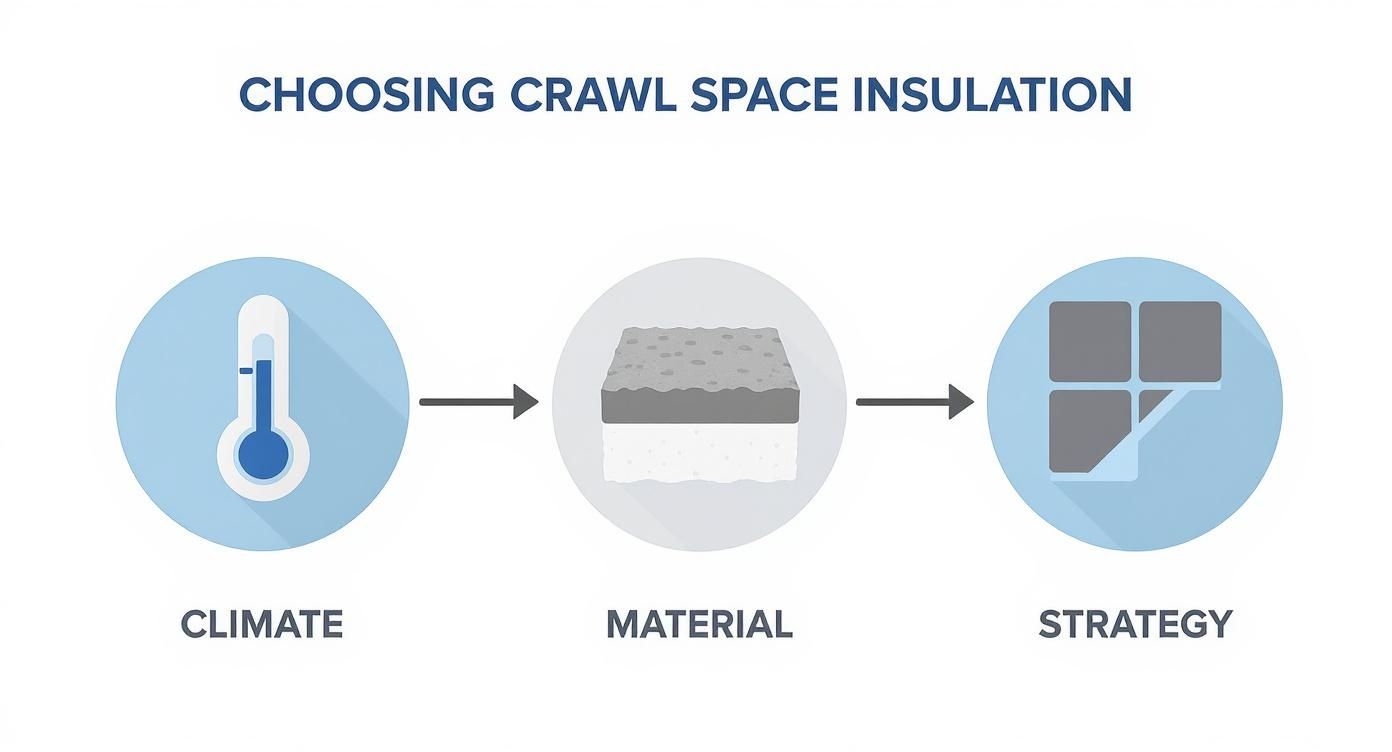
As you can see, our hot, humid climate points directly toward insulating the walls of a sealed crawl space, not the floor joists.
Safety First: Don’t Skip the PPE
Let’s be clear: working in a crawl space has risks. Personal protective equipment (PPE) isn’t optional—it’s essential for protecting yourself from dust, mold spores, and chemical fumes.
Your Essential PPE Checklist:
- Respirator: Get a NIOSH-approved respirator with P100 cartridges. Your lungs will thank you.
- Goggles: You need full-seal safety goggles to keep dust and splashes out of your eyes.
- Gloves: A pair of heavy-duty work gloves will prevent countless cuts and scrapes.
- Coveralls: Disposable coveralls keep the grime off you and stop you from tracking it through the house.
- Knee Pads: You’ll be on your knees a lot. Good knee pads are a must.
Ventilation is just as important. Even though you’re sealing the space, you need fresh air while you work, especially when using sealants. Position a powerful fan at the entrance to pull fumes out and bring fresh air in.
Taking this methodical approach pays off. Research shows that a properly sealed and conditioned crawl space can lead to energy savings of up to 20%. It’s why modern building codes are shifting this way—it just works.
Common Mistakes to Avoid and Long-Term Care
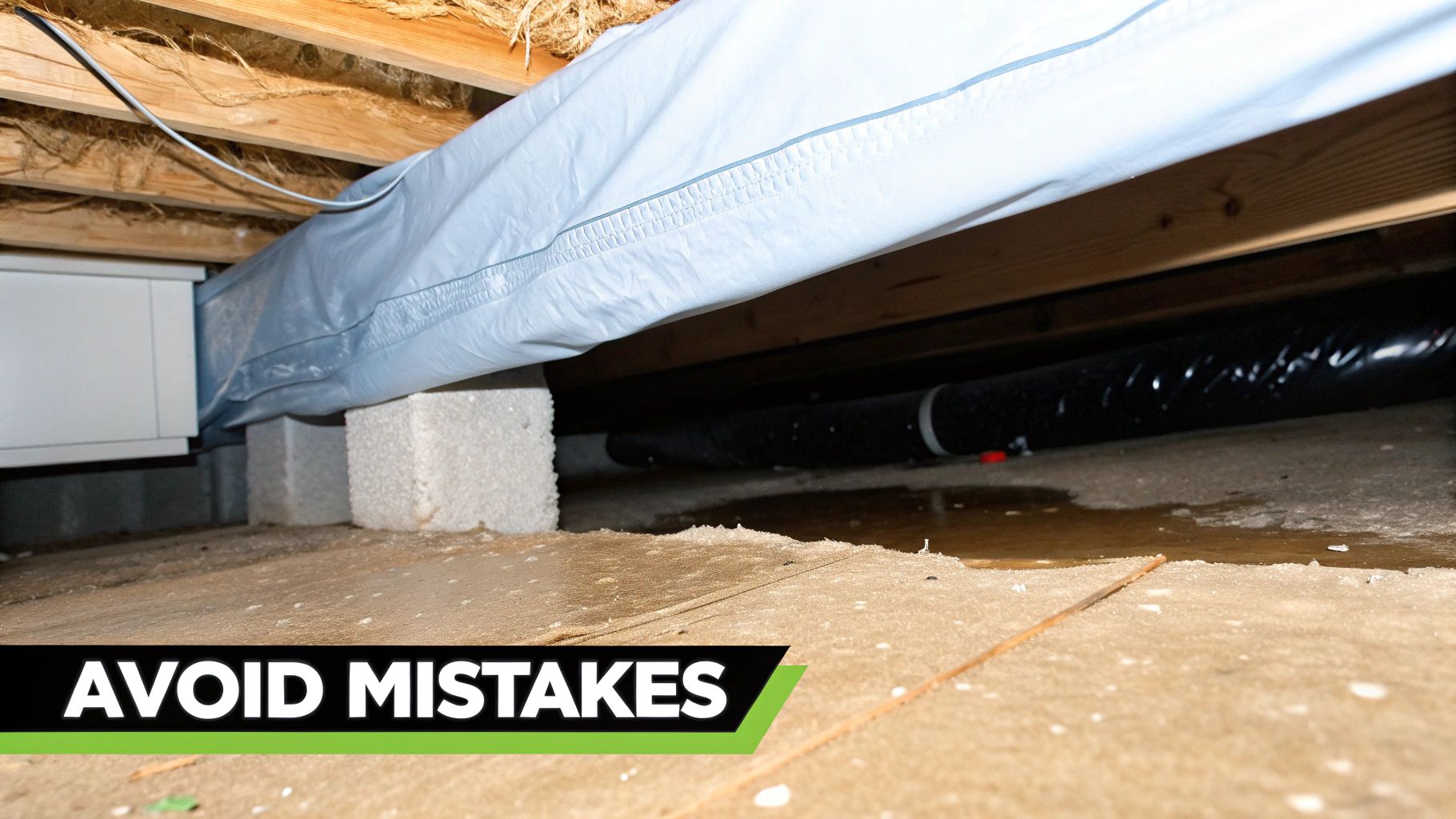
Getting the spray foam installed is a huge step, but the job isn’t over. Honestly, the long-term success of the whole project depends on what happens next. A few common—and completely avoidable—mistakes can undo all that hard work, turning a smart investment into a recurring headache.
Think of this part as protecting your investment. Let’s walk through the critical errors I see time and again and how a little annual maintenance will keep your crawl space healthy, dry, and efficient for years to come.
Pitfall 1: The Flimsy Vapor Barrier
This is probably the most frequent mistake I see. To save a few bucks, people grab the standard 6-mil plastic sheeting from the big box store. It’s a recipe for disaster in a crawl space. That stuff tears if you look at it wrong, gets punctured by rocks, and simply won’t survive any foot traffic.
A cheap barrier lets ground moisture sneak right back into your newly sealed space, defeating the whole purpose of the project. This is one corner you absolutely cannot cut.
The fix is simple but non-negotiable: invest in a heavy-duty, cross-laminated vapor barrier that’s at least 12-mil thick. This material is engineered for encapsulation and provides a durable, lasting shield against ground moisture. It’s the foundation of a healthy crawl space.
Pitfall 2: Ignoring Air Gaps and Penetrations
Insulation is only as good as its weakest link. Tiny gaps around pipes, wiring, or between foam board seams might seem like no big deal, but they create thermal bridges. These are little highways for air and moisture to bypass your insulation, leading to condensation and energy loss right where you can’t see it.
Meticulous air sealing is what separates a professional job from a DIY attempt. Every single penetration needs to be buttoned up.
- Pipes and Wiring: Use a quality, low-expansion spray foam to seal around every pipe and wire passing through the foundation or floor.
- Seams and Joints: Tape every seam between rigid foam boards with approved construction tape. The goal is a monolithic, airtight shell.
- Rim Joists: The rim joist—where the house frame sits on the foundation—is notoriously leaky. It must be sealed and insulated just as thoroughly as the walls.
Pitfall 3: Choosing the Wrong Insulation Material
We’ve covered this before, but it bears repeating: not all insulation can handle a damp crawl space. The biggest mistake here is using traditional fiberglass batts. They are like a sponge for moisture, quickly becoming saturated, heavy, and useless.
Once damp, fiberglass loses its R-value and becomes a breeding ground for mold and mildew. I’ve seen it countless times—a costly error that requires a full tear-out and replacement within just a few years. Stick to moisture-impermeable materials like closed-cell spray foam or rigid foam board for the walls.
Your Long-Term Maintenance Checklist
Your crawl space is now a managed part of your home, not a forgotten dungeon. A quick annual check-up is all it takes to keep it in prime condition and catch small issues before they blow up.
The Annual Inspection:
- Check for New Moisture: Once a year, preferably after a heavy rain, pop your head in for a visual inspection. Look for new water stains, drips, or puddles. If you have a sump pump, make sure it’s working.
- Inspect the Vapor Barrier: Walk the perimeter. Check that all seams are still taped down securely and look for any new tears or punctures.
- Look at the Insulation: Ensure all insulation is still firmly in place. If you used rigid foam, confirm it hasn’t shifted or created new gaps.
- Scan for Pests: Look for signs of new pest activity, like droppings or nests. A sealed crawl space is a great deterrent, but it’s always smart to check.
This simple routine ensures your project continues to pay dividends in energy savings and home health for decades.
Common Questions About Crawl Space Insulation
Even after laying out the whole process, it’s completely normal to have a few questions left. Every South Florida home has its quirks, and the details can feel a bit much. Let’s dig into some of the most frequent questions we get from homeowners.
Should I Insulate the Crawl Space Ceiling or the Walls?
Here in our humid climate, insulating the foundation walls is almost always the right call. It’s the modern, building-science-backed method.
When we insulate the walls as part of a full encapsulation, we bring the entire crawl space into your home’s conditioned envelope. This is huge—it controls both moisture and temperature, which protects your pipes and ductwork from sweating and condensation.
The old-school way of stuffing insulation between the floor joists (the “ceiling” of the crawl space) was designed for vented crawl spaces. Honestly, it’s a recipe for moisture problems and energy loss, leaving all your mechanicals exposed to that swampy outdoor air. For real energy savings and moisture control, the walls are the clear winner.
What R-Value Do I Need for My Crawl Space?
The R-value you need depends on your climate zone, as set by the Department of Energy. For us here in South Florida (Zones 1-3), the general targets are:
- Foundation Walls: R-5 to R-13
- Floor Assembly (if needed): R-13 to R-19
But these are just starting points. You should always check your local building codes for the exact requirements in your city or county. Hitting those local standards makes sure you’re compliant and getting the most bang for your buck on energy savings.
A common mistake is getting hung up on R-value alone and forgetting about air sealing. I’ve seen it a hundred times: a lower R-value insulation installed perfectly airtight will easily outperform a higher R-value product that’s full of gaps and leaks.
Can Crawl Space Insulation Really Improve Air Quality?
Absolutely. It’s one of the biggest—and most overlooked—perks. A huge chunk of the air you breathe inside your home actually comes from your crawl space. It’s called the “stack effect,” where air is naturally pulled upward from the bottom of the house.
Think about it: an unsealed, damp crawl space is often a breeding ground for mold, mildew, and dust mites. When that contaminated air gets sucked into your living areas, it can be a nightmare for allergies and other respiratory issues.
By properly insulating and sealing the crawl space with a vapor barrier, you cut off moisture and pollutants right at the source. The result is cleaner, healthier air for you and your family to breathe. It’s a game-changer.
Ready to put a stop to moisture and sky-high energy bills? The team at Airtight Spray Foam Insulation has the hands-on expertise to turn your South Florida crawl space into a clean, dry, and efficient part of your home. Request your free quote today and find out how our Airtight Comfort System can make all the difference.
Homes in West Palm Beach, FL with crawl spaces can face moisture issues, musty odors, and energy loss when insulation is outdated or missing. We help WPB homeowners understand the best insulation methods to protect the home from humidity and improve efficiency.
👉 Explore our West Palm Beach spray foam services:
https://yourwebsite.com/spray-foam-insulation-west-palm-beach/