Blog
Why Is My Ceiling Sweating? A Guide to Condensation on Ceilings

Ever looked up and noticed your ceiling is “sweating”? Those water droplets are a classic sign of condensation, and it’s basically indoor rain.
This happens when the warm, humid air inside your home hits a colder ceiling surface. The sudden temperature drop forces the moisture in the air to turn from an invisible vapor back into liquid water.
Why Condensation Forms on Your Ceiling
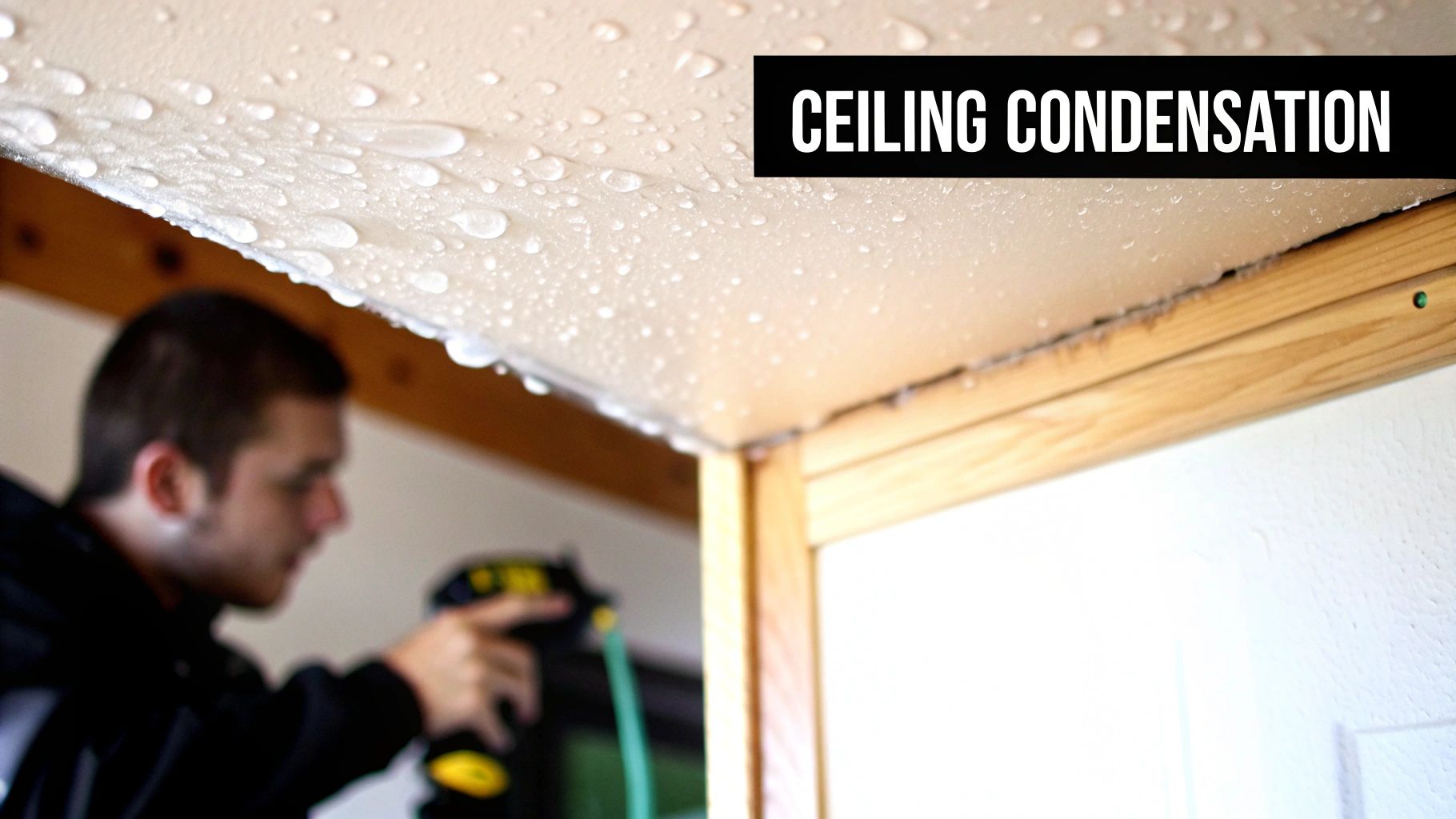
Think about setting a glass of ice water down on a hot South Florida day. Within minutes, the outside of the glass is covered in moisture. That’s because the cold surface is chilling the humid air around it. Your ceiling is acting just like that cold glass.
When the conditions are just right, your ceiling becomes a magnet for moisture. It’s a common problem, especially in our climate, but it’s a clear signal that the balance of temperature, humidity, and airflow in your home is out of whack.
The Three Main Culprits
To get to the bottom of it, we need to understand the three main culprits behind ceiling condensation. While every home’s situation is a little different, the problem almost always traces back to one or more of these core issues.
Let's break down the "what" and "why" for each cause. The table below gives a quick overview of what's likely happening in your home.
The Three Main Causes of Ceiling Condensation at a Glance
| Cause | What It Means for Your Home | Common Warning Signs |
|---|---|---|
| Excessive Indoor Humidity | Your home is trapping too much moisture from daily activities like cooking and showering. | Foggy windows, musty smells, a "damp" feeling in the air. |
| Poor Air Circulation | Stagnant air allows warm, humid pockets to form and linger near the ceiling. | Rooms feel stuffy, some areas are noticeably warmer or cooler than others. |
| Inadequate Insulation | A poorly insulated attic is letting your ceiling get too cold, creating a prime surface for condensation. | Hot spots in summer, high energy bills, visible water stains on the ceiling. |
These factors often work together, creating a perfect storm for moisture problems.
A damp ceiling isn't just a minor annoyance. It’s a direct warning that your home's systems for managing temperature and moisture aren't working in sync. The global insulation market, which is expected to hit USD 119.23 billion by 2032, is growing for this very reason—homeowners are realizing that controlling temperature differences is key to preventing moisture damage.
Fixing this is about more than just aesthetics. It’s about protecting your property’s structure and ensuring the air you breathe is healthy.
By tackling humidity, improving airflow, and upgrading your insulation, you can put an end to condensation for good. A holistic solution like our Airtight Comfort System is designed to address all three of these areas at once, providing a comprehensive and lasting fix.
The Hidden Damage Caused by Ceiling Moisture
Those few water droplets on your ceiling might seem like a small, harmless annoyance, but they're often the first clue to a much bigger problem brewing out of sight. Ignoring condensation is like ignoring a persistent cough—it could be nothing, or it could be a sign of a serious issue that will only get worse.
The hard truth is that unchecked moisture can silently inflict thousands of dollars in damage to your home’s structure while creating major health risks for your family.
This is far more than a cosmetic issue. The constant dampness from ceiling moisture creates the perfect breeding ground for mold and mildew. In as little as 24 to 48 hours, mold can start growing on damp drywall, wood, and insulation. Once it takes hold, it pumps spores into your home's air, which can trigger allergic reactions, asthma attacks, and other respiratory problems.
From Stains to Structural Failure
The physical damage from condensation is a slow-motion disaster, escalating from minor cosmetic flaws to major structural compromises. It's a chain reaction that often happens silently within your ceiling or attic.
The destruction usually follows a predictable path:
- Paint and Drywall Damage: The first thing you'll notice is the paint bubbling, peeling, or cracking as it gets saturated. Soon after, the drywall beneath absorbs water like a sponge, leaving behind those ugly yellow or brown water stains.
- Weakened Drywall: Drywall that stays damp loses its integrity. It gets soft and brittle, and you might see it start to sag or bow under its own weight. If left long enough, this can lead to a partial or even a total ceiling collapse.
- Wood Rot: The worst-case scenario is when moisture seeps into the wooden bones of your house—the ceiling joists and roof trusses. Long-term exposure leads to wood rot, which compromises the entire framework of your roof and can lead to incredibly expensive repairs.
Moisture that is left unaddressed doesn't just disappear; it gets absorbed by surrounding materials. A seemingly small patch of condensation can saturate insulation, reducing its effectiveness and creating a cycle of even more condensation.
The Financial Cost of Inaction
What starts as a few drops of water can quickly spiral into a financial nightmare. Imagine a homeowner in West Palm Beach notices some peeling paint in a bathroom. They paint over it, but the condensation comes right back. Before long, a musty smell develops, and a dark stain appears on the ceiling.
A professional inspection reveals the chronic condensation has not only ruined the drywall but has also allowed mold to grow throughout the attic insulation and started to rot the wooden joists. What could have been a simple fix is now a multi-thousand-dollar project involving:
- Mold Remediation: Safely removing all the contaminated materials.
- Insulation Replacement: Tearing out the old, damp stuff and installing new insulation.
- Structural Repairs: Cutting out and replacing rotted wood joists.
- Drywall and Painting: Putting the ceiling back together and finishing it.
This is exactly why you have to get to the root cause of ceiling condensation. The damage is progressive, and the cost of repairs grows exponentially the longer you wait. Being proactive saves you money, protects your property value, and keeps your family breathing healthier air.
Your Home Diagnostic Checklist
Figuring out exactly why your ceiling is sweating takes a little detective work. Before you can land on the right fix, you need to gather some clues. Is it a simple humidity issue, or are you looking at a more serious problem with your attic or roof?
This checklist will walk you through the investigation, starting inside your house and working your way up into the attic. Think of yourself as a home inspector, ruling out one possibility at a time to get a clear picture of what’s happening overhead.
Step 1: Investigate Your Indoor Environment
More often than not, the extra moisture starts right inside your living space. Everyday activities like showering, cooking, and even breathing can pump gallons of water vapor into the air. If that moisture has nowhere to go, it’s going to find the coldest surface available—which is often your ceiling.
Let's start by checking the usual suspects inside your home.
- Check Your Exhaust Fans: This is a big one. Do the fans in your bathrooms and kitchen actually work? Here's an easy test: turn the fan on and hold a single square of toilet paper up to the vent. If the fan can't hold the paper, it's not pulling enough air to do its job. All that steam from your shower is just lingering in the house.
- Measure Indoor Humidity: You don't have to guess. Grab an inexpensive hygrometer from a home improvement store and get a real reading of your home’s relative humidity. In Florida, you want to see that number stay between 30% and 50%. If you're consistently clocking in above 60%, you’ve found a major contributor to your condensation problem.
- Inspect for Airflow Blockages: Take a quick walk around the house and look for furniture, curtains, or boxes blocking your AC vents. Poor air circulation creates stagnant, humid pockets, especially near the ceiling.
If you’ve gone through these checks and haven't found a smoking gun, it’s time to head up into the attic.
This decision tree helps you visualize the process, guiding you from simply noticing water drops to identifying potential damage.
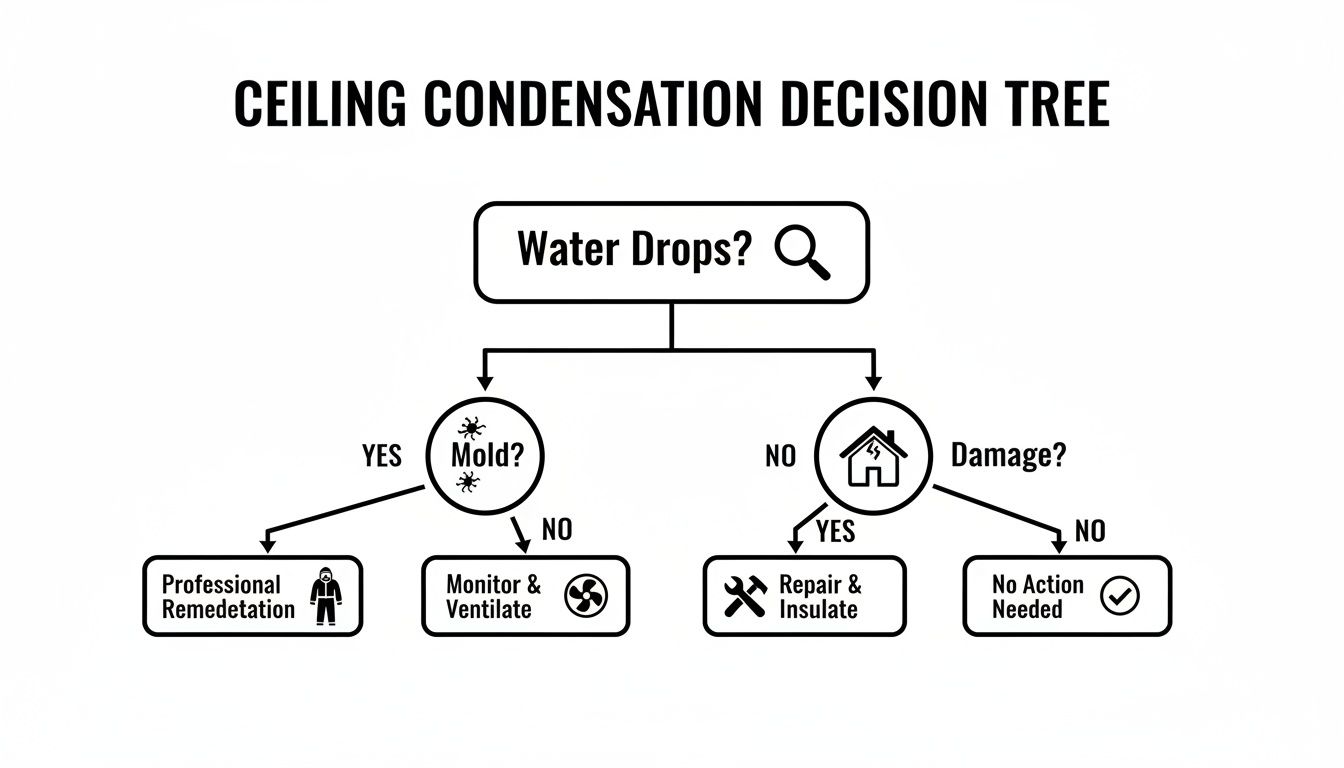
As you can see, the moment you spot mold or physical damage, the situation becomes much more serious and points toward a more urgent fix.
Step 2: Perform an Attic Inspection
If your indoor air seems fine, the problem is almost certainly hiding in your attic. The condition of your attic—specifically its insulation and ventilation—is the number one factor in preventing condensation on ceilings. A poorly performing attic allows your ceiling to get just cold enough for moisture to form.
Grab a good flashlight, be careful where you step, and look for these tell-tale signs.
- Examine Attic Ventilation: Check your soffit vents (where air is supposed to come in) and ridge vents (where it's supposed to go out). Are they clogged with insulation, leaves, or even old animal nests? Blocked vents trap hot, moist air, turning your attic into a sauna that creates condensation problems on the ceiling below.
- Inspect Insulation Coverage: Is your insulation spread out evenly, or do you see thin spots and bare patches? Pay close attention to the areas right above where the condensation is forming on your ceiling. If the insulation is compressed, wet, or missing altogether, you've found a cold spot. That's ground zero for condensation.
- Look for Signs of a Roof Leak: While you're up there, you have to rule out a roof leak. Look for dark stains, water marks, or mold on the underside of the roof deck and the wooden rafters. If the wood or insulation feels damp—especially after it rains—you may be dealing with a leak that needs a roofer's attention right away.
By running through this checklist, you stop guessing and start making an informed decision. Knowing whether you're dealing with a weak bathroom fan, bad insulation, or a leaky roof is the key to choosing the right solution and avoiding expensive, pointless repairs.
Immediate Fixes to Reduce Condensation Today
While you figure out the real reason your ceiling is sweating, you need to take action now to get the moisture levels in your home under control. These are the immediate, low-cost steps you can take to provide quick relief and disrupt the humidity cycle. Think of them as your first line of defense.
These strategies are like first aid for your home. They won’t fix a deep-seated insulation or ventilation issue, but they will absolutely reduce the amount of "indoor rain" forming on your ceiling today. The goal is simple: make less moisture and move more air.
Adjust Your Daily Habits
It sounds small, but tiny changes in your daily routine can have a surprisingly huge impact on your home's humidity. The trick is to grab moisture right at the source, before it has a chance to wander through your house and cling to your ceiling.
Start with these simple habits:
- Use Exhaust Fans Religiously: Seriously. Always run your bathroom fan during a shower and for at least 20 minutes after. Do the same with your kitchen’s range hood fan anytime you cook, especially when boiling pasta or soup. These fans are designed to pull that steamy air straight outside.
- Open a Window: If it’s not pouring rain or 95 degrees out, crack a window in the bathroom or kitchen for 15-20 minutes after you’ve created steam. This is the fastest way to swap out that heavy, humid air for fresh, drier air.
- Wipe Down Surfaces: After a shower, grab a squeegee and give the wet walls and glass a quick wipe-down. You'll be amazed how much water you remove—water that would have otherwise evaporated and ended up in the air.
These adjustments cost you nothing but can dramatically lower the amount of work your HVAC system has to do.
Deploy Low-Cost Tools and Checks
Beyond changing a few habits, a couple of simple tools and maintenance checks can bring immediate relief from that sticky, humid feeling and help your home manage moisture better.
An overly humid home forces your air conditioner to work harder, not smarter. Your AC might cool the air, but if it doesn't run long enough to dehumidify, you're left with a cold, damp environment perfect for ceiling condensation.
Try these powerful and affordable next steps:
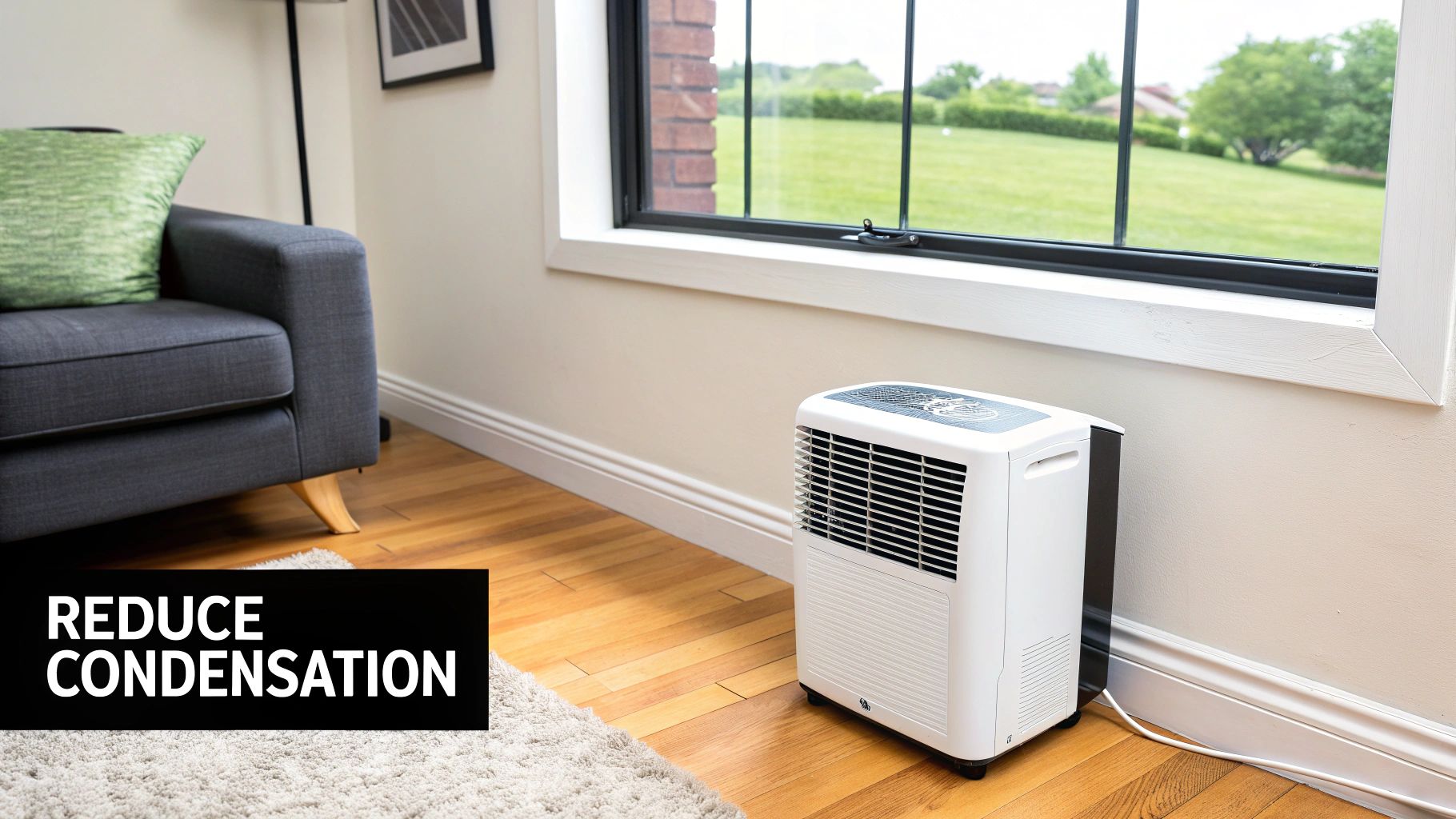
- Run a Dehumidifier: This is a game-changer. Place a portable dehumidifier in the room where the condensation is worst, set it to maintain a relative humidity between 40% and 50%, and let it work its magic pulling moisture right out of the air.
- Check Your AC Filter: A dirty, clogged air filter is like trying to breathe through a straw. It chokes your HVAC system, killing its efficiency and its ability to dehumidify. Check your filter—if it's dirty, swap it out. A clean filter lets your system breathe.
- Rearrange Furniture: Take a quick look around. Is a big couch, a bookshelf, or even a large plant blocking an air vent? Obstructed vents kill air circulation, creating dead spots where humid air can just sit and condense on your ceiling.
Taking these immediate steps starts the drying-out process right away. This buys you valuable time to plan a permanent, long-term solution to keep your ceilings dry for good.
Permanent Solutions for a Dry Ceiling
Quick fixes like wiping down your ceiling offer temporary relief, but they don't get to the heart of the problem. To truly stop the "indoor rain" for good, you need to address the root causes with solutions that last. A genuinely dry and healthy home is built on three pillars that work together to control moisture and temperature: ventilation, dehumidification, and insulation.
These aren't just band-aids. They're permanent upgrades that create a balanced environment, allowing your home to breathe properly and manage humidity on its own. The goal is simple: make your ceiling an impossible place for condensation to form.
Supercharge Your Home Ventilation
Effective ventilation is all about a simple exchange: swapping out stale, humid indoor air for fresh, dry outdoor air. When air just sits there, moisture builds up, and you’ve got the perfect recipe for condensation. Upgrading your home’s ventilation is the first real step toward a permanent fix.
Start with the basics, like your exhaust fans. That old, rattling bathroom fan that can't even hold a piece of toilet paper to its grate? It's not doing its job.
- Upgrade Bathroom and Kitchen Fans: Ditch the outdated models and install modern, high-capacity fans rated by their CFM (cubic feet per minute). A properly sized fan will forcefully pull steam and cooking vapors straight outside before they ever have a chance to spread through your house.
- Install a Balanced Attic System: Proper attic ventilation is non-negotiable in Florida. A balanced system uses soffit vents to draw in cooler, drier air while ridge or gable vents push out hot, moist air. This constant airflow keeps your attic dry and stops heat and moisture from baking down into your ceiling.
A well-ventilated home is an active fighter against moisture. Think of it like constantly airing out a stuffy room, but it happens automatically, 24/7, protecting your home from the silent damage of trapped humidity.
Master Moisture with Dehumidification
Here in South Florida, our air is practically dripping with moisture. Even with great ventilation, sometimes your home needs an extra hand to wring out all that excess humidity. This is where dedicated dehumidification systems become your best friend in the fight against ceiling condensation.
While a portable unit can help in a pinch, a whole-home solution is the real powerhouse for permanent control.
A whole-home dehumidifier ties directly into your existing HVAC system. It works alongside your air conditioner to constantly monitor and maintain the perfect humidity level, which is usually between 40% and 50%. This ensures your home stays dry and comfortable, even during the swampiest days in Jupiter or Wellington.
The Ultimate Defense: Insulation
Insulation is the final—and most critical—piece of the puzzle. It's the thermal barrier that stands between your cool, air-conditioned living space and the sweltering, humid attic above. If your insulation is old, thin, or compressed, your ceiling gets cold, turning it into a magnet for condensation.
The power of insulation is measured by its R-value, which is just a number indicating its ability to resist heat flow. The higher the R-value, the better it works. In South Florida, our attics need a seriously high R-value to fight back against the intense sun.
This is where the type of insulation you choose changes the game entirely. Traditional materials like fiberglass and cellulose can work, but they have a major weakness: they absorb moisture. Once damp, they lose their effectiveness and can become a breeding ground for mold.
The Spray Foam Advantage for South Florida
For a truly bulletproof solution, spray foam insulation is in a league of its own, especially in our climate. Unlike other materials, spray foam creates both a thermal and an air barrier. It expands to fill every single crack and gap, forming a completely airtight seal.
This seal accomplishes two crucial things:
- It Stops Air Leaks: Humid attic air can no longer sneak into your ceiling cavity and touch the cold drywall.
- It Keeps Your Ceiling Warm: By completely cutting off the ceiling from the attic's extreme heat, it keeps the drywall surface temperature well above the dew point, so condensation simply can't form.
Investing in advanced building materials to stop moisture is becoming standard practice. In fact, the market for specialized climate ceilings designed for moisture control is projected to grow significantly from its USD 1.2 billion valuation in 2024. It shows just how seriously modern builders are taking this issue.
Closed-cell spray foam, in particular, is the top choice for South Florida homes. It’s rigid, completely waterproof, and even adds structural strength to your roof. Its ability to create a seamless barrier is also incredibly effective on the concrete block walls so common in our area. You can learn more about the insulation value of concrete block walls in our detailed guide.
By combining these three permanent solutions—smart ventilation, powerful dehumidification, and superior insulation—you can finally win the war against ceiling condensation for good.
Special Considerations for South Florida Homes
Living in South Florida isn't just about sunshine; it's a constant battle with relentless humidity, intense heat, and hurricane season. This environment makes our homes, from Jupiter to West Palm Beach, uniquely vulnerable to problems like condensation on ceilings. Our local building styles have adapted over the years, but they can still unintentionally create the perfect storm for indoor moisture issues.
Down here, the fight against condensation is a daily one. The air outside is so thick with moisture that even a small temperature drop between your blistering attic and your cool living room can make your ceiling sweat. That's why a cookie-cutter solution from up north just won't work for a home in Palm Beach Gardens or Stuart. We have to think differently.
The Impact of a Sealed Building Envelope
In our climate, a tightly sealed home is non-negotiable—not just for energy bills, but for keeping moisture out. Modern impact windows, a must-have for hurricane season, are a huge part of this. They create a solid barrier that stops humid, sticky air from sneaking in and clashing with your air-conditioned space.
But here's the catch: a sealed home also traps all the moisture we create inside from cooking, showering, and even just breathing. This makes managing that indoor humidity absolutely critical.
For South Florida homeowners, the goal isn't just to cool the air but to aggressively rip the moisture out of it. An air conditioner that only drops the temperature without tackling humidity is only doing half its job.
Why Your Air Conditioner is Your Best Defense
Your AC system is your number one weapon against the high humidity—what we call the latent heat load—that causes ceiling condensation. The problem is, it has to be the right AC, and it has to be working correctly. An oversized air conditioner is one of the most common mistakes we see. It blasts cold air so fast that it satisfies the thermostat and shuts off before it gets a chance to run long enough to pull all that moisture out of the air.
The result? A cold, clammy house. It feels damp, and it's the perfect breeding ground for condensation. A properly sized system, however, runs in longer, more consistent cycles, giving it the time it needs to do its a full job: cooling and dehumidifying.
Region-Specific Insulation Solutions
Given our climate, the right insulation isn't a luxury; it's a necessity. It has to form an absolute, unbroken barrier between the sweltering attic and your cooled living space below. While traditional insulation like fiberglass or cellulose exists, its performance can really take a nosedive in our high-humidity environment.
This is where you have to get smart about your materials. For a deep dive into how different insulation types stack up in our climate, check out our guide on spray foam versus blown-in insulation. Ultimately, stopping condensation for good requires a strategy built from the ground up for the unique challenges of living in South Florida.
Common Questions About Ceiling Condensation
After you've spotted the signs and started thinking about solutions, a few key questions always come up. As insulation experts, we hear these all the time from homeowners trying to get to the bottom of their moisture problems. Let's clear up the confusion.
How Can I Tell Condensation from a Roof Leak?
This is the first and most important question to answer. The fix for one is completely different from the other, so getting it right from the start is critical. While both leave water marks, they behave very differently.
Condensation usually looks like a fine mist of water droplets or a damp sheen spread across a bigger area of the ceiling. You’ll often notice it after a big temperature swing or on an especially humid day.
A roof leak, on the other hand, typically creates a focused, ugly stain that’s often yellow or brown. That spot will get noticeably worse every time it rains. The ultimate test? If you can safely get into your attic during a storm, check the wood and insulation right above the stain. If it's bone dry up there, condensation is your culprit.
Is It Normal to See Condensation Around AC Vents?
A tiny bit of "sweating" right on a cold metal AC vent can happen on the muggiest South Florida days. But it should never be enough to drip or stain the drywall around it. If you’re seeing brown or yellow rings forming around the vent, that’s a major red flag.
This is a classic symptom of poorly insulated ductwork or air leaks in your attic. Hot, humid attic air is hitting the cold metal of your duct or the vent boot, causing condensation to form and then drip down onto your ceiling. It’s a sure sign that your HVAC system's insulation needs a professional look.
A brown stain around an AC vent is never just a cosmetic issue. It means moisture is getting into your ceiling cavity, a problem that will only worsen over time and can lead to mold growth and drywall damage.
Will Running My Air Conditioner More Fix the Problem?
Not necessarily. In fact, sometimes it can make things worse. An air conditioner is supposed to cool and dehumidify, but it can only do its job right if it runs in proper cycles.
A huge issue we see all over South Florida is an oversized AC unit. It blasts cold air so fast that it cools the room and shuts off before it has a chance to pull enough moisture out of the air. This leaves you with a cold but clammy-feeling house—the perfect recipe for condensation on ceilings. The real key to humidity control isn't just a powerful AC; it's a properly sized and well-maintained HVAC system.
At Airtight Spray Foam Insulation, we provide permanent solutions that address the root causes of ceiling condensation. If you’re tired of dealing with indoor moisture, let our experts assess your home. Request your free quote today.