Blog
Benefits of spray foam insulation: Save energy, comfort, and protection

The benefits you’ll see right away with spray foam insulation are pretty incredible. We’re talking dramatic energy savings, a huge boost in comfort, and a healthier home environment. By creating a truly airtight seal, it stops energy loss in its tracks—something traditional materials just can’t do. The result? Lower utility bills and a noticeably quieter house.
The Airtight Advantage of Spray Foam Insulation
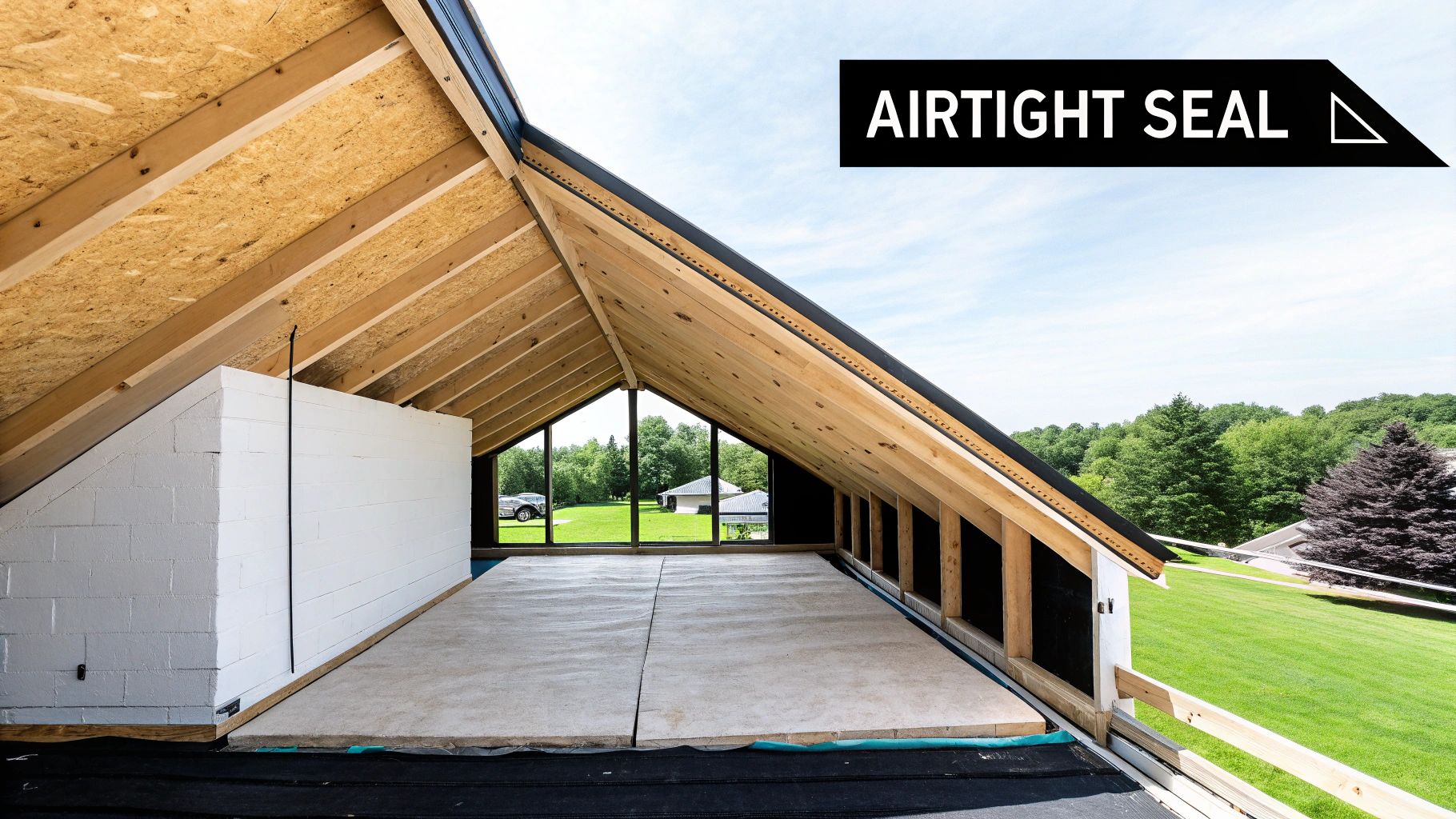
Think of your home like a boat trying to stay cool and dry in the brutal South Florida climate. If you have old-school insulation like fiberglass batts, your boat is riddled with tiny, invisible holes. Through these gaps, your expensive conditioned air leaks out, while blistering heat, sticky humidity, and allergens find their way in.
Spray foam is the ultimate hull repair, sealing every one of those leaks for good. It isn’t just another layer of insulation; it’s a complete performance upgrade for your home’s entire protective shell, what we in the industry call the “building envelope.”
What This Really Means for Your Home
Because spray foam expands to fill every last crack, gap, and crevice, it creates a single, solid barrier. This fundamentally changes how your home performs, and it’s an investment that pays off in multiple ways.
Here are the key benefits you can expect:
- Drastically Lower Energy Bills: It takes the constant strain off your HVAC system, which translates to immediate and significant savings every month.
- Unmatched Indoor Comfort: By killing drafts and keeping temperatures steady, your home just feels better all year long. No more hot and cold spots.
- Cleaner Air Quality: That airtight seal is your home’s first line of defense, blocking outdoor pollutants, dust, and pollen from getting inside.
- Serious Moisture Control: It forms a barrier against our relentless Florida humidity, which is absolutely critical for preventing mold growth.
A landmark study by Habitat for Humanity put this to the test. They compared two identical homes—one with spray foam and one with fiberglass. The results were staggering. The spray foam home’s monthly energy cost was just $105.41, while the fiberglass home’s bill was $258.03. That’s a 60% reduction in energy costs.
More Than Just Keeping Cool
Beyond fighting the heat, spray foam is also a fantastic sound blocker. Its dense, seamless structure absorbs and deadens sound waves from the outside, creating a much more peaceful home. If you’re tired of hearing traffic, loud neighbors, or storms, spray foam makes a world of difference. To see how it works, you can learn more about how spray foam insulation acts as a sound barrier in our detailed article.
How Superior Energy Efficiency Slashes Your Utility Bills
Let’s be honest: the number one reason most homeowners look into spray foam insulation is the promise of lower monthly energy bills. It’s a big deal. While traditional insulation focuses on R-value (its ability to resist heat), spray foam delivers a much bigger punch by creating a complete thermal envelope.
Think of it like this: your old insulation is like a leaky bucket. Your AC system is constantly pumping cool air into it, but that air is always escaping through dozens of tiny holes and gaps. You’re paying to cool the outdoors.
Spray foam comes in and plugs every single one of those holes. As it’s applied, it expands to fill every crack, seam, and odd corner, creating a solid, seamless barrier. This airtight seal is the real secret to unlocking massive energy savings because it stops air leakage in its tracks—the main culprit behind sky-high bills in most homes.
Taking the Strain Off Your HVAC System
Once your home is properly sealed, your air conditioner can finally do its job without fighting a constant battle against the hot, humid South Florida air pouring in from outside. It reaches the temperature you set on the thermostat and then cycles off. It can finally take a break.
This has a couple of huge financial benefits for you:
- Lower Monthly Bills: Your AC is the biggest energy hog in your house. When you cut its runtime, you see an immediate, noticeable drop in your FPL bill.
- Longer Equipment Lifespan: An AC that runs 24/7 is an AC that’s headed for an early grave. All that extra wear and tear on motors and compressors leads to expensive repairs and premature replacement. Easing that strain saves you money down the road, too.
On a daily basis, homes with spray foam can save anywhere from 5 to 10 kWh. That might not sound like a lot, but over the course of a year, it really adds up. Your insulation upgrade starts paying for itself right away.
The Financial Payoff of a Sealed Home
The financial case for spray foam is crystal clear because you can actually measure the return on your investment. In fact, over its entire lifespan, a spray foam installation can save 104 times the energy it took to manufacture it. That’s a serious long-term upgrade.
A typical home insulated with spray foam can save approximately 2,000 kWh of energy every single year. This translates directly into hundreds of dollars in real, annual savings—money that goes right back into your pocket.
And this isn’t a temporary fix. The performance you get on day one is the performance you’ll have for decades to come. It’s a permanent improvement to your home’s efficiency and your bottom line. To learn more, check out this guide on the long-term energy savings of spray foam.
Creating a Healthier Home by Blocking Pollutants and Moisture
The air quality inside your home is one of the biggest factors affecting your family’s health. More than just keeping you cool, spray foam insulation acts as a powerful gatekeeper for your indoor environment, creating a living space that’s not just comfortable, but genuinely healthier.
Think about traditional insulation like fiberglass or cellulose for a moment. It’s porous. Air moves right through it, carrying outdoor allergens, dust, pollen, and other pollutants into your home through countless tiny gaps in your walls and attic. This can be a constant trigger for allergies and respiratory issues.
Spray foam, on the other hand, creates a solid, monolithic barrier. It’s like upgrading from a screen door to a solid oak door—it completely seals off the outside world. This robust air seal is your best defense against poor outdoor air quality.
Winning the War Against Moisture and Mold
Here in South Florida, controlling moisture isn’t a bonus feature; it’s an absolute necessity. Humid air seeping into your home’s structure is the #1 cause of dangerous mold and mildew, which can lead to serious health problems and even structural rot.
This is where spray foam, especially the closed-cell variety, really shines. It doesn’t just resist moisture; it stops it cold. By preventing humid, moisture-heavy air from getting into your walls and attic, it eliminates the damp conditions that mold needs to survive.
A drier home is a healthier home, period. By creating an effective moisture barrier, spray foam helps shut down the growth of mold and mildew—the very things that can trigger allergic reactions and breathing problems.
This single application gets right to the root cause of many indoor air quality issues, making your home a safer place for your family.
How Spray Foam Improves Your Indoor Air
The combination of a perfect air seal and total moisture control delivers a powerful one-two punch for a healthier home. Here’s a quick breakdown of how it works:
- Blocks Allergens: It forms a continuous shield that keeps pollen, dust, and other common irritants from sneaking into your living space.
- Prevents Mold Growth: By stopping moisture from getting in, it denies mold the damp environment it loves, protecting both your family’s health and your home’s framing.
- Reduces Indoor Pollutants: Sealing the building envelope means fewer unwanted fumes or particles from garages or crawl spaces can mix with the air you breathe.
When you create this airtight and moisture-resistant shield, you take back control over your indoor atmosphere. The air circulating through your home becomes cleaner, drier, and healthier, which reduces the risk of sickness and improves your family’s overall well-being. It’s one of the most important long-term benefits you get with spray foam insulation.
Choosing Between Open-Cell and Closed-Cell Foam
Once you’ve decided that spray foam is the right move, the next big question is: which kind? Not all spray foam is created equal, and the choice between its two main types—open-cell and closed-cell—is a critical one. Each has unique strengths and is designed for different jobs around your home. Picking the right one ensures you’re getting the absolute best performance and value for your money.
Open-Cell vs. Closed-Cell: What’s the Real Difference?
Think of it this way: open-cell foam is like a dense, firm sponge. It’s soft and flexible, made up of millions of tiny cells that aren’t completely sealed off from each other. This structure is fantastic for absorbing sound waves and allows the foam to expand massively, filling every awkward nook and cranny in a wall cavity.
On the other hand, closed-cell foam is more like a solid, rigid board. Its cells are completely sealed and packed tightly together, making it incredibly dense and strong. This structure not only gives it a much higher insulation value (R-value) but also creates a powerful barrier that stops both air and moisture dead in its tracks.
To make it even clearer, let’s break down the key differences and where each type truly shines.
Open-Cell vs Closed-Cell Spray Foam At a Glance
| Feature | Open-Cell Foam | Closed-Cell Foam |
|---|---|---|
| Structure | Soft, flexible, sponge-like | Rigid, dense, solid |
| R-Value | Lower (around R-3.5 per inch) | Higher (R-6 to R-7 per inch) |
| Air Barrier | Excellent air barrier | Excellent air barrier |
| Moisture | Permeable (can absorb water) | Impermeable (acts as a vapor barrier) |
| Sound Dampening | Excellent | Good |
| Structural Strength | Does not add structural strength | Adds significant structural rigidity |
| Cost | Less expensive | More expensive |
| Best For | Interior walls, attics, soundproofing | Roof decks, exterior walls, metal buildings, crawl spaces |
Ultimately, the choice comes down to what you’re trying to achieve—sound control in a dry space, or maximum thermal and moisture protection in a demanding one.
Understanding Open-Cell Foam Applications
Because of its softer, more flexible texture, open-cell foam is an exceptional sound-dampening material. It’s the go-to choice for interior walls, ceilings, and the spaces between floors where you want to cut down on noise traveling through the house.
Imagine finally quieting the sound from a home theater or creating a truly peaceful home office. That’s where open-cell foam really proves its worth.
However, its sponge-like nature means it will soak up water if exposed to it. This makes it a poor choice for any area with high moisture, like a crawl space or an exterior wall in our South Florida humidity. Its main job is to provide great thermal insulation and top-notch sound control in dry, protected parts of your home.
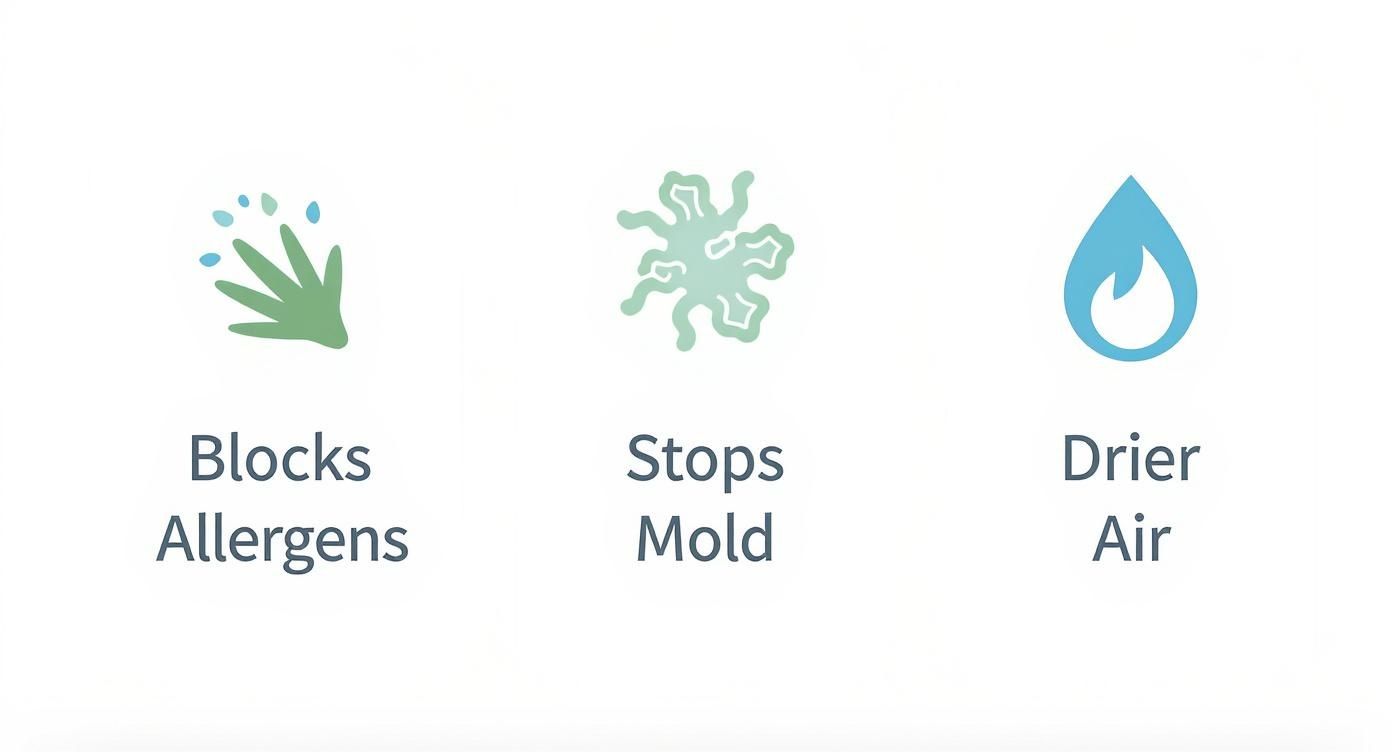
The big takeaway here is that by completely sealing your home’s “envelope,” you gain direct control over your indoor environment, which is a massive win for your family’s health.
When to Choose Closed-Cell Foam
Closed-cell foam is the heavy-hitter of the insulation world, especially for tough jobs. Its rigid structure and high density give it a much higher R-value per inch, which means you get more insulating power without taking up as much space. This makes it perfect for exterior walls, roofs, and metal buildings where getting the highest possible thermal resistance is the goal.
But the most significant benefit of closed-cell foam, especially here in Florida, is its ability to act as a complete vapor barrier. It flat-out rejects bulk moisture, which is an absolute game-changer for preventing mold and rot in our humid climate.
Its rigidity also adds real structural strength to walls and roof decks, helping to reinforce your home against high winds—a seriously valuable feature for any Florida property. While it does come at a higher price, its superior performance in moisture resistance, R-value, and durability often makes it the smartest long-term investment.
For a deeper dive into how these materials stack up against other common options, check out our guide on spray foam vs. blown-in insulation. Each type has its place, and choosing the right one is the final step to unlocking all the amazing benefits spray foam has to offer.
Boosting Your Home’s Long-Term Value and Durability
Choosing insulation isn’t just about today’s comfort; it’s a serious investment in your home’s future. While the immediate drop in your FPL bill is a great perk, one of the biggest wins with spray foam is its incredible durability and the real structural strength it adds to your home.
Unlike old-school insulation like fiberglass batts or blown-in cellulose, spray foam is in it for the long haul. It doesn’t sag, settle, or fall apart over time. That means the R-value and air-sealing performance you get on day one is exactly what you’ll have decades from now. It’s a true “one-and-done” solution that becomes a permanent, high-performing part of your home’s very structure.
Reinforcing Your Home from the Inside Out
The structural magic really happens with closed-cell spray foam. Picture it like a super-strong glue that bonds directly to your home’s skeleton. As it expands and cures into a rigid, dense solid, it literally glues your roof sheathing to the rafters and the wall sheathing to the studs.
This creates a dramatically stronger building. In fact, studies have shown this process can boost a home’s resistance to racking forces—the kind you get from hurricane-force winds—by up to 300%. Here in South Florida, where storm resilience is a top priority, that’s not just a feature; it’s genuine peace of mind.
By adhering to and reinforcing the building assembly, closed-cell spray foam transforms individual structural components into a stronger, unified system, adding real strength against severe weather.
This added durability isn’t just about weathering storms. It also makes your home more valuable. A property that’s stronger, more energy-efficient, and protected from our relentless humidity is a much more attractive asset to any potential buyer.
A Smart Financial Investment with a Fast Payback
The long-term financial case for spray foam is rock-solid, backed by a rapidly growing market valued at USD 2.4 billion in 2023. The payback period is often much shorter than people think—sometimes just a few years.
This quick return comes from major energy savings, with homeowners often seeing their gas bills drop by up to 40% and their electricity costs cut by over 25%. The initial investment quickly pays for itself. You can learn more about these economic insights and the future of spray foam insulation technology.
By combining longevity, structural reinforcement, and a clear return on investment, spray foam proves to be one of the smartest upgrades you can make to your property. It protects your biggest asset, raises its value, and puts money back in your pocket for years. This is especially true for our common concrete block homes; for a deeper dive, check out our guide on the insulation value of concrete block walls.
Answering Your Questions About Spray Foam
Making a big change to your home always comes with questions, and that’s a good thing. We believe in educating first and selling second, so here are some straight answers to the most common things homeowners ask us about spray foam insulation.
Is Spray Foam Insulation Safe?
Yes, absolutely. Once it’s professionally installed and has had a short time to cure, modern spray foam is completely safe.
Our certified installers follow strict safety protocols, which include ventilating the area during application and letting you know the specific re-entry time. After that brief curing window, the foam becomes an inert, stable, and non-toxic material that’s perfectly safe for your family and pets to be around.
How Long Does Spray Foam Insulation Last?
Think of spray foam as a permanent upgrade. It’s designed to perform for the entire life of your house—truly a “one-and-done” investment in your property.
Unlike old-school insulation that sags, compresses, or breaks down over the years, spray foam rigidly bonds to the surfaces it’s applied to. It holds its shape and its insulating power indefinitely, so you’ll never need to worry about top-ups or replacements down the road.
The durability of spray foam, particularly closed-cell, means the energy-saving benefits you experience on day one will continue for decades, making it a reliable, long-term upgrade.
Can It Be Installed in an Existing Home?
Of course. While it’s a no-brainer for new construction, a huge part of our work is upgrading existing homes to deliver a massive boost in energy efficiency.
Our crews can easily apply spray foam in open areas like attics and crawl spaces. For enclosed walls, we can inject the foam into the cavities with minimal disruption. It’s hands-down one of the most effective ways to arm an older home against the relentless Florida heat.
What Is the Installation Process Like?
Getting the job done right is all about professional installation—it’s critical for both safety and performance. The process starts with our team prepping the site, which means carefully covering floors, furniture, and anything else that needs protection.
We ensure the area is properly ventilated, then apply the foam using specialized equipment. After the application, we keep the space ventilated until the foam is fully cured and 100% safe for you to re-enter. And, of course, we handle all the cleanup afterward, leaving your home just as we found it.
Ready to feel the difference for yourself? The team at Airtight Spray Foam Insulation is here to help you create a more comfortable, efficient, and healthier home. Request your free, no-obligation quote today!