You're in a hot South Florida house, the attic feels like a furnace, and the next FPL bill is sitting on the counter with a number that makes you wince. That's the moment most homeowners start asking whether insulation is just a comfort upgrade or something that can pay them back. The answer is often both, because the same attic or wall project that helps hold the indoor temperature can also qualify for the federal insulation tax credit.
The credit is easier to understand once you stop thinking of it as tax paperwork and start thinking of it like a rebate that comes back at filing time. If your project is in an existing primary residence, uses qualifying materials, and the installer gives you the right paperwork, you may be able to claim 30% of qualified costs up to the annual cap. The trick is making the job-site invoice match what the IRS expects, which is where a lot of homeowners get tripped up.
For a Jupiter, Palm Beach Gardens, West Palm Beach, Wellington, or Stuart homeowner, the most useful question isn't “Does insulation qualify?” It's “Which parts of my attic, wall, or metal building project count, what documents do I need, and how much does the credit change my out-of-pocket cost?” The examples below answer that with real numbers, South Florida-style projects, and the kind of documentation a tax preparer can work with.
A homeowner in Jupiter opens an August power bill, sees the attic upstairs cooking the bedrooms below, and starts looking for a way to stop paying for all that heat leakage. The installer explains that spray foam can seal gaps, cut air leakage, and make the house easier to cool. Then the conversation gets better, because the same job may also qualify for the federal insulation tax credit.
That's the part many people miss. The credit isn't a separate program just for one type of insulation, and it isn't limited to a particular neighborhood, roof shape, or climate zone. It's part of the IRS Energy Efficient Home Improvement Credit, and it can apply to qualifying insulation and air-sealing work in an existing U.S. primary residence.
For a South Florida homeowner, that matters because attic heat and humidity are not abstract problems. They show up as higher runtime, hotter rooms, and a house that never quite feels calm in the afternoon. A properly chosen insulation project can help, and the tax credit can soften the upfront bill when the materials and paperwork line up.
Practical rule: If the project is already making sense for comfort and energy control, the credit should be treated as a bonus, not the only reason to do the work.
In the sections below, the numbers stay simple and grounded. You'll see what the credit pays for, which insulation types can qualify, what documents the installer should hand you, and how the math plays out on common attic, garage, and metal-building projects. The goal is to leave you with a clear answer, not tax jargon.
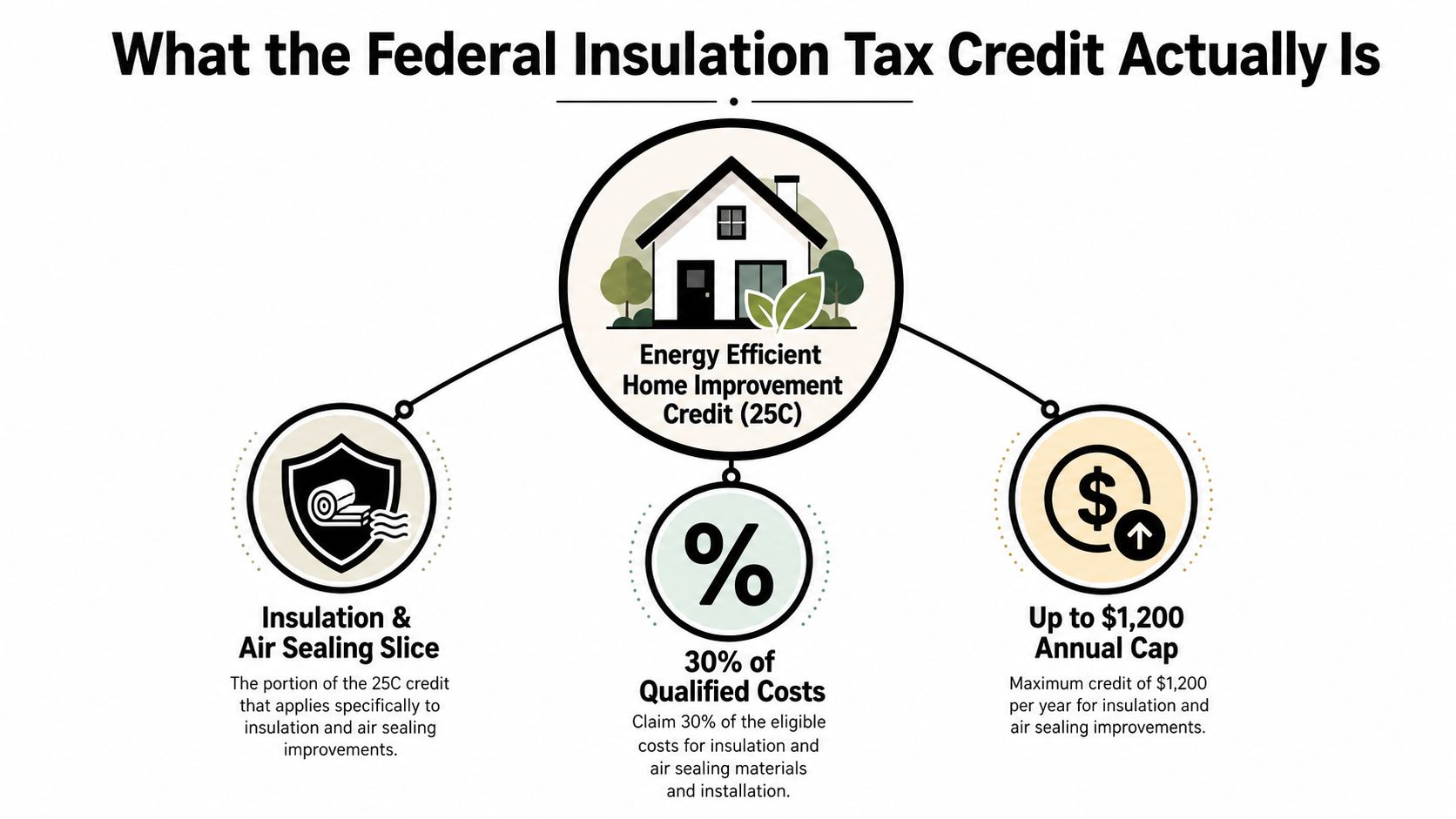
The federal insulation tax credit is the insulation and air-sealing part of the IRS Energy Efficient Home Improvement Credit. It gives you a 30% credit at tax time for qualified product costs, not for the full contractor invoice. For insulation and air sealing, the annual cap is $1,200, and the credit applies to improvements placed in service after January 1, 2023, and through December 31, 2025 in an existing U.S. primary residence, with no lifetime dollar limit. The IRS says the broader household cap can reach $3,200 per year when the insulation cap is combined with the separate $2,000 allowance for heat pumps, heat pump water heaters, biomass stoves, and biomass boilers. See the IRS guidance on the Energy Efficient Home Improvement Credit.
A South Florida attic project makes the math easier to see. If the insulation portion of the job qualifies, the credit does not keep growing forever as the attic gets bigger. It works like a meter that stops at the cap. A larger spray foam job can still be worth doing for comfort and lower cooling load, but the federal credit only applies up to the allowed insulation amount, even if the invoice is much higher. For homeowners comparing attic quotes, the 2026 spray foam pricing guide can help frame what a typical project cost looks like before the tax filing side comes into view.
The credit is also nonrefundable. That means it can reduce tax you owe, but it will not create a refund larger than your tax liability. If your tax bill is small, the credit can only offset that bill, not go past it.
On the job site, the split is simple. One side is the insulation and air-sealing work that improves how the house holds cool air. The other side is the tax return, where only the qualified product cost counts. For a homeowner, that means the installer's invoice, product details, and eligibility paperwork matter just as much as the foam or batt that goes into the attic.
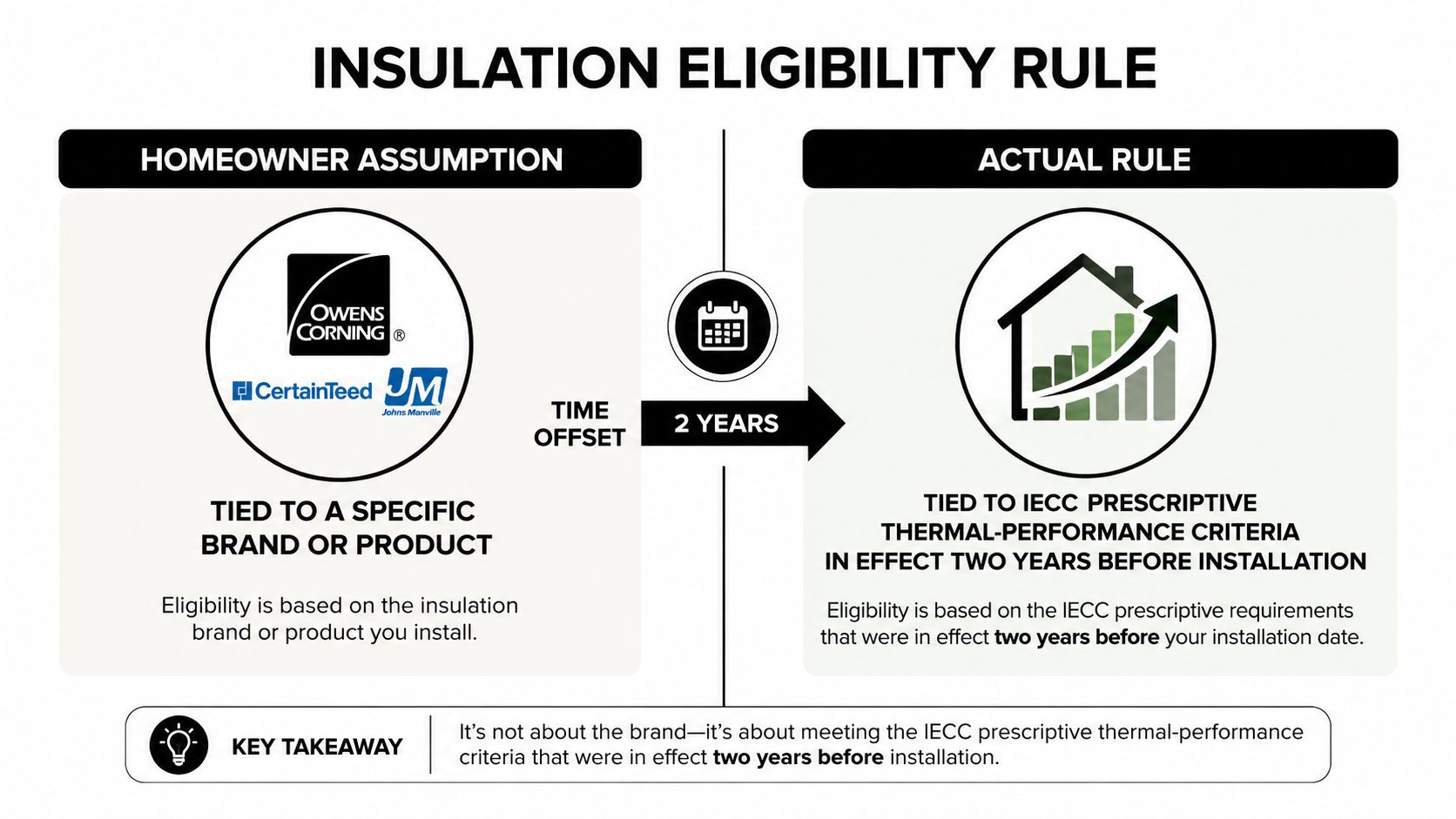
The biggest surprise for most homeowners is that the credit is not tied to a favorite brand or a single chemistry. Eligibility turns on whether the insulation meets the prescriptive criteria in the IECC standard in effect at the start of the calendar year that is two years before installation. For a 2025 project, that means the product has to satisfy the IECC criteria in effect on January 1, 2023. ENERGY STAR's guidance lists qualifying products as spray foam, batts, rolls, blow-in fibers, rigid boards, and pour-in-place systems. The official materials are on the ENERGY STAR federal tax credit page for insulation eligibility rules.
That code-based rule is why both open-cell and closed-cell spray foam can qualify when the installed product meets the thermal-performance standard. In South Florida, open-cell often shows up in vented or unvented attic applications, while closed-cell can make sense in tighter roof assemblies, walls, garages, and metal buildings where moisture control and structural rigidity matter. The credit doesn't care whether the project is an attic, a wall cavity, or a steel structure, it cares whether the installed material meets the qualifying performance criteria and whether the paperwork proves it.
Labor is a separate issue. ENERGY STAR says the insulation and air-sealing portion is limited to 30% of product costs up to $1,200 annually, and labor costs are excluded. That distinction matters on spray foam jobs because homeowners often get one bundled number that includes prep, masking, spraying, cleanup, and material. For tax purposes, the invoice needs to separate the qualifying product cost.
If you're comparing spray foam against other insulation types, a practical cost guide like the 2026 spray foam pricing guide can help you understand where product pricing usually lands before you ask for a written quote. If you're still weighing blown-in versus batt insulation in an attic, this blown-in or batt insulation overview can help you think through the basic tradeoffs before the estimate.
Homeowner rule of thumb: Ask the installer to show you which part of the quote is the qualifying product, because that is the part the credit is built on.
If the crew seals attic penetrations, leaks, or transitions as part of the qualifying insulation project, that work falls within the same $1,200 insulation and air-sealing cap. The key is still the paperwork. The job can be a comfort upgrade first, but it only becomes a tax claim if the installer can document what was installed, where it was installed, and that the product meets the code rule.
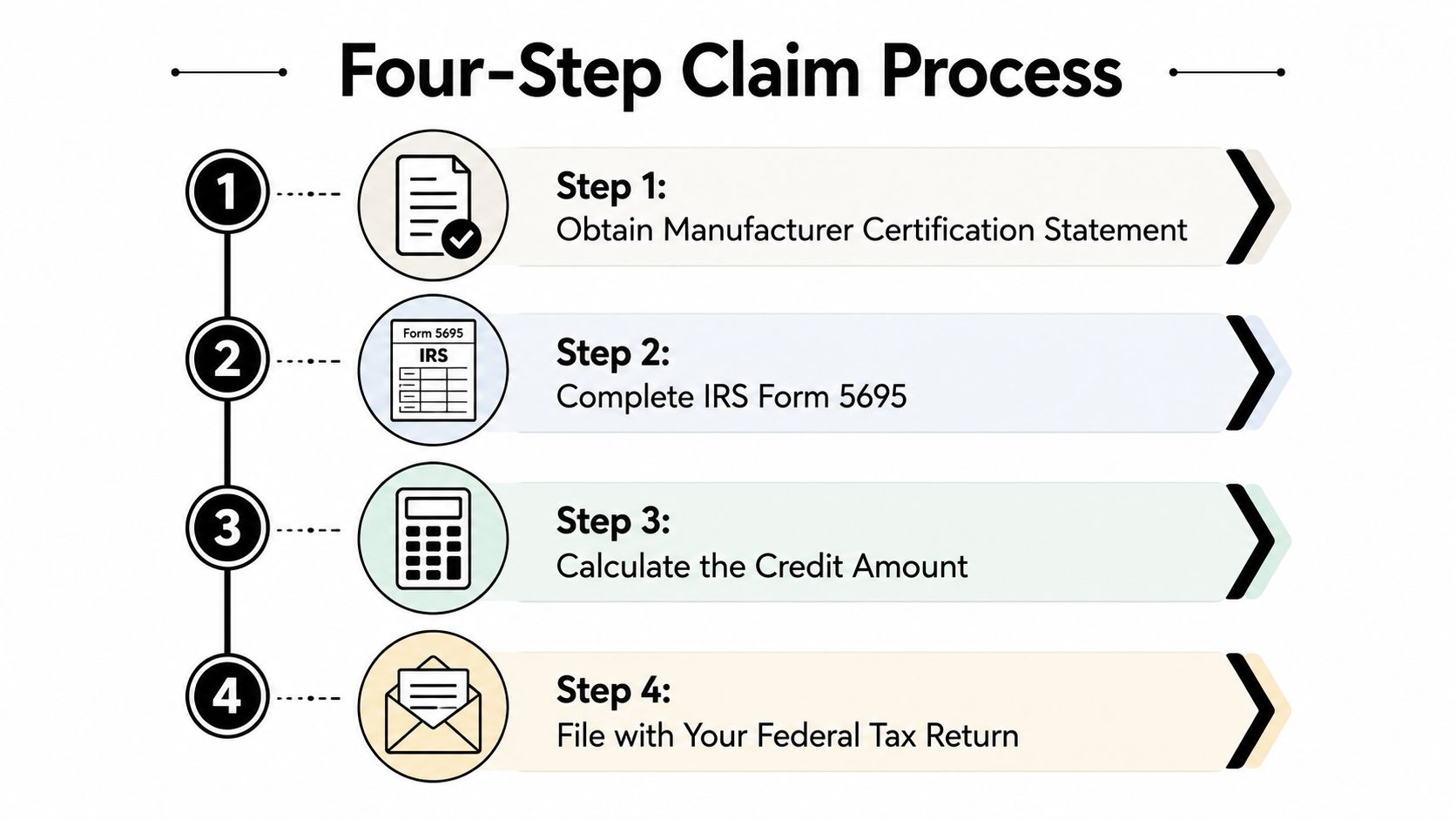
The cleanest claims start with clean paperwork. Before the insulation truck leaves the driveway, ask for a Manufacturer Certification Statement showing the product qualifies under the federal rules. That document matters because it connects the material in your attic or wall to the IECC-based eligibility standard the IRS expects.
The invoice should do more than give you a lump-sum total. It should separate material cost from labor, show the square footage, list the R-value or product specification, and include the date the insulation was placed in service. If the quote is bundled and the contractor can't separate product from labor, the tax claim gets harder to defend.
A lot of homeowners are used to simple home-improvement invoices. Tax paperwork is less forgiving. If you want the filing to be straightforward later, ask the installer to keep the language precise before work begins. That's especially important for attic spray foam, where the final bill can include prep work, equipment time, and other line items that the IRS does not treat the same way as qualifying product cost.
Once you have the documents, the claim generally flows through IRS Form 5695, then onto Schedule 3 (Form 1040). Energy Star's guidance says the insulation and air-sealing portion is limited to 30% of product costs up to $1,200 annually, with labor costs excluded, and it applies only in the year the improvements are placed in service. See the ENERGY STAR insulation tax credit guidance.
If you want a more focused walkthrough on attic paperwork, the attic insulation tax credit guide is useful alongside your installer's estimate.
Keep the certification, the final invoice, and your tax return copy together. That small folder can save a lot of back-and-forth later.
The numbers make the credit feel real. They also show why a big project and a big credit are not the same thing, because the insulation slice tops out at $1,200 per year.
| Project Type | Typical Product Cost | Calculated 30% Credit | Credit Applied, capped at $1,200 | Homeowner Pays After Credit |
|---|---|---|---|---|
| 1,500 sq ft attic open-cell spray foam | $4,500 | $1,350 | $1,200 | $3,300 |
| 600 sq ft garage attic closed-cell spray foam | $3,000 | $900 | $900 | $2,100 |
| 2,000 sq ft metal building closed-cell roof | $8,000 | $2,400 | $1,200 | $6,800 |
In the first example, a 1,500 sq ft attic project with $4,500 in product cost would generate a calculated credit of $1,350, but the homeowner can only claim $1,200 because of the annual cap. The project still makes sense if the attic is bleeding heat, because the tax credit is only part of the value. Better comfort and lower utility demand are the rest of the story.
The second example is simpler. A 600 sq ft garage attic with $3,000 in product cost produces a $900 credit, so the full calculated amount fits under the cap. That's a good illustration of how smaller jobs can still produce meaningful tax savings without hitting the ceiling.
The third example shows why large South Florida buildings need careful planning. A 2,000 sq ft metal building roof with $8,000 in product cost would calculate to $2,400, but the claim is still capped at $1,200 for that year unless the owner has other eligible 25C improvements and room under the broader annual household limit. Sales tax, permit fees, and labor stay outside the product-cost calculation.
Practical estimate check: Ask the contractor for a written quote that isolates the qualifying product cost, because that is the number the tax credit is built on.
If you're comparing comfort upgrades with financing options, a guide to HVAC financing can help you think through how a cooling system replacement and insulation improvements sometimes get planned in the same year.
A homeowner in South Florida can treat the insulation credit like one line in a project ledger, not the whole ledger. If the same tax year also includes a heat pump or heat pump water heater, the home can still move toward the broader $3,200 annual limit, with $2,000 set aside for heat pumps, heat pump water heaters, biomass stoves, and biomass boilers. The rules are laid out in the home energy efficiency credit overview, and the key point is simple, the insulation claim sits inside a larger household cap.
A utility rebate and a federal tax credit can live side by side, but the same dollar cannot be used twice for two federal benefits. If a rebate lowers the amount you paid, the qualifying expense has to be reduced before the credit is calculated. That is why a homeowner should keep the rebate letter, the final invoice, and the contractor's product breakdown together before handing anything to a tax preparer.
IRS data shows taxpayers claimed more than $2 billion in energy-efficient home improvement credits on 2023 tax returns filed and processed through May 23, 2024. An IRS-based analysis also cited about 2.3 million tax returns for tax year 2023 using the Energy Efficient Home Improvement Credit overall. Those figures show the credit is being used broadly, and they also show why clean paperwork matters, because the credit depends on matching the job cost to the right line items.
For a South Florida homeowner, that matters in practical terms. A spray foam attic project may be paired with a rebate from a utility program, then followed by a separate HVAC upgrade later in the year. The federal credit can help with the insulation piece, while the rebate lowers out-of-pocket cost, but each layer has to be documented on its own so the same expense is not counted twice.
If you are weighing insulation against a larger system upgrade, a guide to HVAC financing can help you compare how a cooling replacement and insulation work together in the same budget. The right order is usually to fix the comfort problem first, then see how the tax credit and any rebate reduce the final bill.
The first myth is that new construction qualifies. It doesn't. The federal insulation tax credit applies to an existing U.S. primary residence, so a brand-new build is outside the rule set.
The second myth is that there's a lifetime dollar limit. For the 2023 through 2025 window, the rules give you an annual cap, not a lifetime ceiling. That distinction matters if you plan to do an attic one year and another eligible project later.
The third myth is that the credit is refundable. It isn't. It can reduce what you owe, but it can't push you past zero and create a refund beyond your tax liability. That's a common surprise for first-time filers.
The fourth myth is that DIY spray foam automatically qualifies. The IRS and ENERGY STAR rules center on qualified products, code-based performance, and documentation. Homeowner labor is not part of the credit calculation, and missing paperwork can make a DIY claim hard to support.
The credit is generous enough to matter, but not so complicated that it has to become a headache. Most mistakes happen before the tax return is ever filed.
Start with the basics. Confirm the home is an existing primary residence, make sure the insulation project falls in the 2023 through 2025 window, and ask the contractor whether the product meets the required code-based criteria. Then request a written quote that separates product cost from labor and includes square footage, product type, and the relevant certification details.
Keep everything in one tax folder. That means the estimate, final invoice, manufacturer certification, warranty paperwork, and any rebate letters if you receive them. When tax season comes around, Form 5695 is much easier to complete if the file is already organized.
If you're in South Florida and want a project reviewed by a team that works with spray foam in attics, walls, garages, metal buildings, and new construction, ask for a free estimate before you schedule the job. A qualified installer can help you match the right material to the space and make sure the paperwork is ready for your preparer.
Airtight Spray Foam Insulation helps South Florida homeowners plan spray foam projects with the federal credit in mind, from the first estimate through the final documentation. If you want a quote that lines up with attic comfort, moisture control, and tax filing requirements, visit Airtight Spray Foam Insulation and ask for a free estimate.