If your upstairs rooms stay hot long after sunset, your air conditioner runs for hours, and dust keeps showing up no matter how often you change filters, you're dealing with more than “not enough insulation.” In Las Vegas, homes fight heat from every direction. The roof bakes all day, outside air pushes through gaps in the envelope, and summer storms can flip the moisture conditions fast.
That's why spray foam insulation in Las Vegas isn't just an insulation upgrade. It's a building envelope upgrade. The right foam, installed in the right place, changes how the whole house performs. It slows heat gain, seals hidden leakage paths, and helps keep wind-driven dust and sudden humidity swings from working their way into the structure.
A lot of homeowners compare foam to fiberglass as if they're interchangeable. They're not. In a desert climate, the details matter. Foam type matters. Where it's installed matters. Whether the installer understands moisture movement matters. That's where most online advice falls short.
By midafternoon in Las Vegas, a poorly insulated house starts to feel predictable in the worst way. One room is comfortable, another is stuffy, and the hallway near the attic access feels warmer than the rest of the house. The thermostat says one thing, but your body says something else.
That happens because desert heat doesn't only move through open windows or thin attic insulation. It also rides air leaks. It slips through wiring penetrations, top plates, rim areas, recessed fixtures, duct chases, and every small break in the shell of the house. Traditional insulation can slow heat transfer, but it often doesn't stop air movement.

Homeowners don't call about insulation because they're thinking about R-values. They call because daily living gets annoying.
Spray foam addresses those problems at the source by turning the house into a tighter, better-controlled shell.
In Las Vegas, comfort problems usually start as air leakage problems. Insulation that only fills space but doesn't seal gaps leaves too much performance on the table.
Las Vegas heat is relentless, but the desert climate adds another layer. Homes also deal with wind-driven dust and sudden monsoon shifts. A system that performs well in a mild climate may not be enough here. What works best is an insulation strategy that handles heat, air movement, and moisture behavior together, not one at a time.
That's the reason spray foam keeps coming up in serious retrofit conversations. It's one of the few insulation options that can do more than just sit in a cavity.
Think of spray foam as a custom-fitted liner for the parts of your home that leak the most. Instead of cutting pieces to fit between framing and hoping they stay in place, the installer applies liquid components that react, expand, and bond to the surface. Once cured, the foam forms a continuous layer across irregular gaps, corners, and penetrations that are hard to seal with batt insulation alone.
That airtight layer is the difference-maker. In a hot climate, stopping air leakage is just as important as adding insulation value because moving air carries heat into the house.
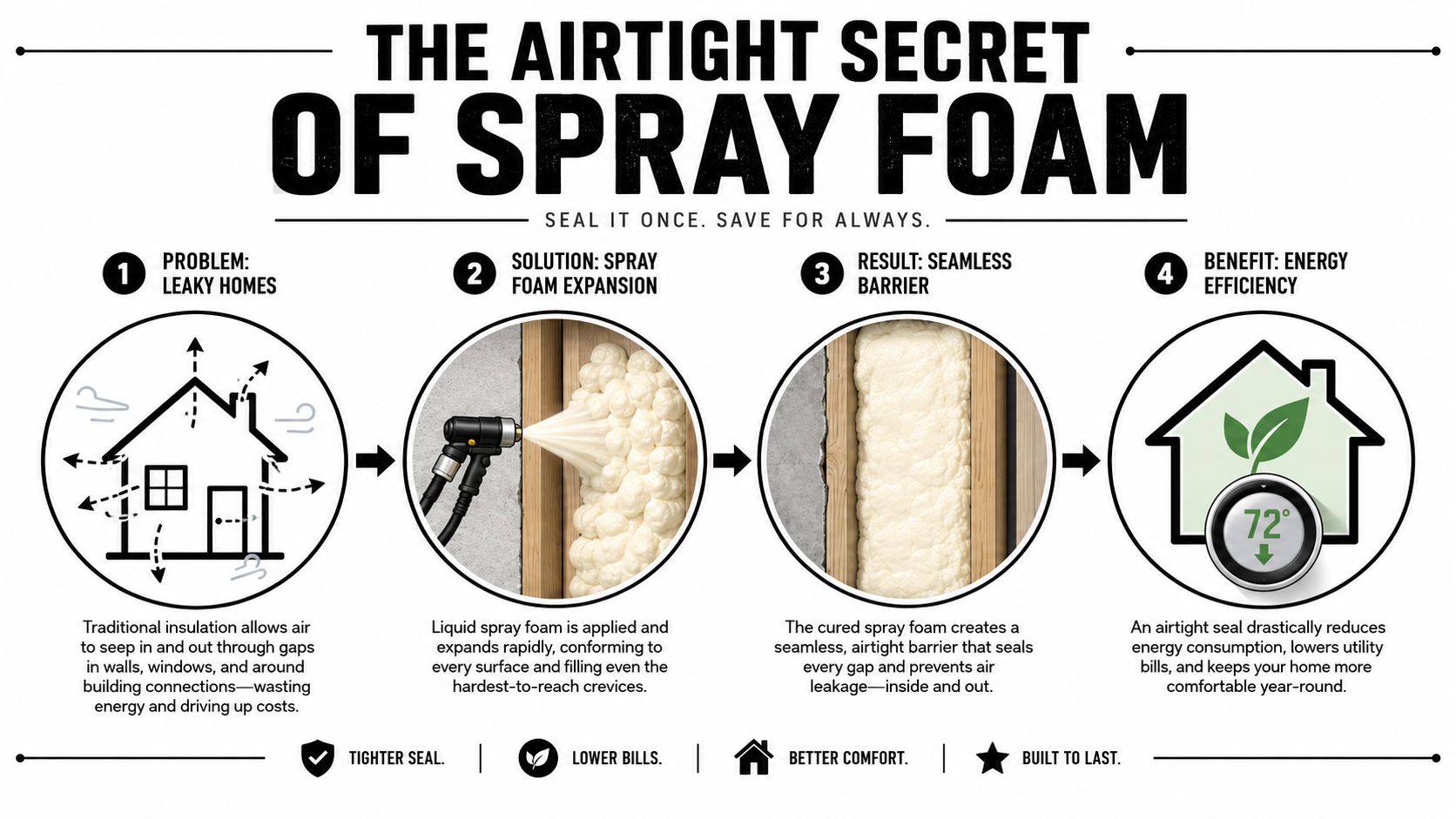
Spray foam doesn't work by magic. It works by coverage and adhesion.
If you want a simple companion explanation of this concept, air sealing basics for homeowners is a useful reference.
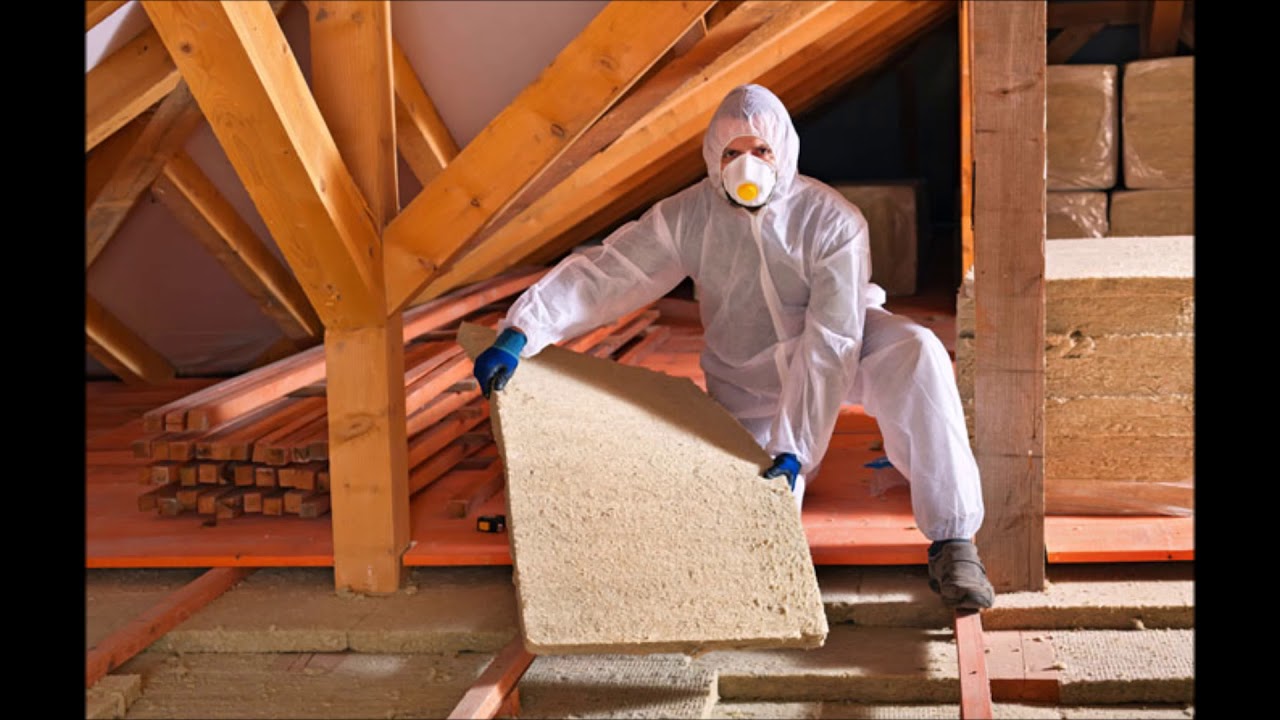
Fiberglass still has a place in some assemblies, but it doesn't solve the same problem. It can insulate. It does not automatically air seal. If there's a gap around a penetration, a framing seam, or a chase, air can still move through or around the insulation layer.
That distinction matters in Las Vegas. A leaky attic floor or leaky wall assembly doesn't just waste cooling. It can pull in dust and allow the structure to respond poorly when outdoor conditions shift.
Practical rule: If the home has persistent comfort imbalance, attic heat gain, and dust infiltration, the first question shouldn't be “How much insulation is up there?” It should be “Where is the house leaking air?”
Homeowners often focus on thickness. Contractors who understand building performance focus on continuity. A thinner layer that seals properly can outperform a thicker layer that leaves bypasses at the edges and seams.
That's why spray foam earns its reputation in demanding climates. It doesn't just occupy the cavity. It changes how the assembly behaves.
Now, practical considerations guide the decision. Both open-cell and closed-cell spray foam can insulate and air seal, but they do not behave the same way in a Las Vegas home. In this market, the better choice often comes down to where the foam is going and what the assembly needs to resist.
For many Las Vegas applications, closed-cell foam is the stronger fit because the climate puts pressure on the building envelope from heat, dust, and seasonal humidity swings.
In Las Vegas's hot-arid climate, closed-cell spray foam at 2.0 lb/ft³ density delivers R-6.0 to R-6.5 per inch and acts as a continuous air barrier and vapor retarder, which helps reduce condensation risk in unvented attic assemblies and improves resistance to wind-driven dust infiltration, according to local guidance on closed-cell spray foam performance in Southern Nevada.
Open-cell foam has its uses. It's lighter, generally less expensive, and can work in the right assembly. But in a desert market where roof decks and unvented attic spaces take a beating, closed-cell often gives homeowners a more durable envelope strategy.
Here's the side-by-side view.
| Feature | Open-Cell Foam | Closed-Cell Foam |
|---|---|---|
| R-value per inch | Lower than closed-cell | R-6.0 to R-6.5 per inch |
| Density | Lighter | 2.0 lb/ft³ density |
| Air barrier | Can help air seal when installed correctly | Functions as a continuous air barrier |
| Moisture behavior | More vapor permeable | Acts as a vapor retarder |
| Structural effect | Limited structural contribution | Adds structural rigidity to roof decks and walls |
| Dust resistance | Less robust in high-stress assemblies | Better resistance to wind-driven dust infiltration |
| Best fit in Las Vegas | Select interior applications where vapor permeability is acceptable | Unvented attics, roof decks, rim areas, and demanding envelope conditions |
For a broader primer on material differences, this open-cell vs. closed-cell foam comparison is worth reviewing.
Closed-cell is usually the stronger call for:
Open-cell may still make sense when:
The mistake isn't choosing open-cell or closed-cell. The mistake is choosing based only on price without looking at where the foam will go and how that part of the house behaves.
Las Vegas doesn't stay simple year-round. The climate is mostly dry, but it can turn humid fast during monsoon events. That's why the local conversation has to include vapor behavior, not just heat. If a contractor talks only about R-value and square footage, that's not enough. In this market, the insulation decision is also a moisture-management decision.
A Las Vegas attic can hit punishing temperatures by early afternoon, and that heat does not stay politely above the ceiling. If the building envelope leaks, your air conditioner keeps paying for it every day of the cooling season. That is why cost alone is the wrong starting point. Homeowners need to look at installed price, likely energy reduction, and how well the foam addresses the desert problems that fiberglass often misses, especially dust-driven air leakage and short bursts of monsoon humidity.
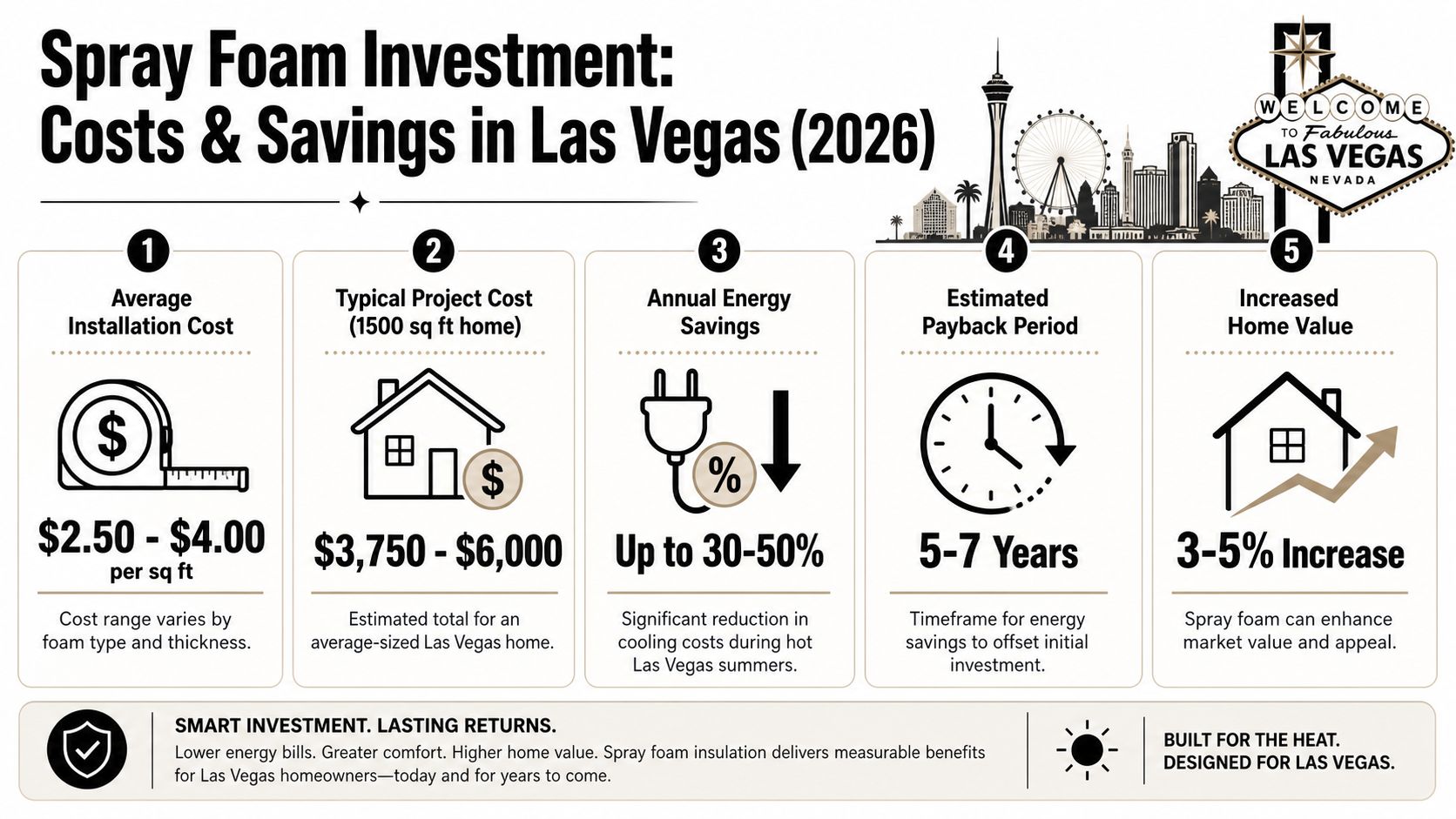
For 2026 projections in the Las Vegas market, spray foam insulation installation typically runs $1,500 to $6,000, with the average homeowner paying about $3,750, while open-cell foam generally costs $1.20 to $1.80 per square foot and closed-cell runs $1.80 to $2.50 per square foot, based on Las Vegas spray foam cost data.
Two homes with the same square footage can price very differently. I see that all the time in retrofit work. One attic is open and clean. Another has low clearance, old loose-fill insulation, recessed lights, disconnected ducts, and dozens of penetrations that need careful prep before any foam goes in.
A realistic quote usually changes for a few practical reasons:
If you're comparing bids, this breakdown of spray foam insulation cost factors gives a useful picture of what should be included and what often gets left out.
The biggest return in Southern Nevada usually comes from reduced cooling demand and better control of air movement through the house. The U.S. Department of Energy explains that homeowners can save an average of 15% on heating and cooling costs by air sealing their homes and adding insulation in attics, floors over crawl spaces, and accessible basement rim joists, as noted in the Energy Saver guidance on air sealing and insulation.
That average is useful, but Las Vegas homes often have another layer to the problem. Wind-blown dust works through gaps around top plates, can lights, duct chases, and attic penetrations. Summer monsoon moisture can follow the same paths. Spray foam earns its keep by reducing heat transfer and by closing those leakage paths that make HVAC systems run longer and indoor air dirtier.
Payback depends on the house. A newer home with decent air sealing may see a slower return than an older house with a vented attic, duct leakage, and obvious infiltration. Closed-cell at the roofline also costs more upfront than a simpler attic-floor upgrade, so the best value comes from matching the scope to the actual weak points in the building.
A quick visual overview helps put the investment in context.
Insulation works best as part of a full enclosure strategy. If the attic is sealed well but the windows still allow major solar gain, comfort and operating cost can still fall short of expectations. Homeowners comparing broader upgrade packages may also want to read these expert insights on argon gas in windows to see how glazing improvements can support insulation performance.
A lower bid can still be the more expensive choice if it leaves air leaks, dust entry points, or moisture risks in place.
The product matters. The installer matters more. Spray foam is not forgiving of sloppy prep, poor temperature control, weak masking, or a one-size-fits-all recommendation. In Las Vegas, a qualified contractor needs to understand building science, not just spraying technique.
That's especially true in roofline and attic applications, where heat and moisture behavior have to be evaluated together.

A critical step that many installers skip is a pre-installation HAM report. In Las Vegas, local guidance notes that sudden monsoon humidity spikes can create condensation issues if the building envelope isn't evaluated properly first, even though closed-cell foam acts as a vapor retarder. Reputable installers should recommend or perform this assessment to confirm the foam plan fits the structure and Climate Zone 3 requirements, as explained in this discussion of HAM reports and Las Vegas spray foam planning.
If a contractor treats spray foam like a generic fill material, that's a warning sign. The best installers ask how the house is built, where the HVAC equipment sits, how the attic is vented or unvented, and where moisture risks could develop.
Use these during estimate visits.
Some bids sound attractive because they skip the hard parts.
| Red flag | Why it matters |
|---|---|
| “Foam is foam, it all works the same” | It doesn't. Material choice changes performance and moisture behavior. |
| No discussion of attic design or moisture | That suggests the contractor is not evaluating the assembly as a system. |
| Very vague scope of work | You need clear language on areas covered, foam type, and prep responsibilities. |
| Lowest-price pressure only | Cheap jobs often cut masking, prep, cleanup, or material thickness. |
Good installers don't rush the diagnosis. They spend time on the house before they spend time with the spray gun.
Homeowners are often more comfortable with the project once they know what the actual workday looks like. A proper spray foam job should feel controlled, not chaotic.
The job starts with prep. The area being insulated needs to be accessible, and the crew should protect surfaces that aren't being sprayed. That usually means masking, covering, and setting up the work zone so overspray doesn't become a cleanup problem later.
If the project is in an attic, the crew may need to address old insulation, clear pathways, and make sure the substrate is ready. Good prep is one of the clearest signs you hired the right company.
When spraying begins, the crew should be in proper protective gear and the site should be managed with safety in mind. The foam is applied in passes, not dumped into place all at once. Experienced installers pay attention to surface conditions, coverage consistency, and the geometry of the cavity or roof deck.
From a homeowner's point of view, this is usually the most unfamiliar part of the process. You'll notice active equipment, controlled work zones, and a crew focused on application sequence rather than speed alone.
The installation day should look methodical. If it looks rushed, the final product usually is too.
Once the foam cures, the crew trims excess material where needed and cleans the area. A solid final walkthrough should cover what was insulated, what was trimmed, and whether any follow-up steps are needed before drywall or other finishes go in.
A careful contractor will also explain what you're looking at. Spray foam doesn't need to look decorative. It needs to be continuous, properly adhered, and appropriate for the assembly. Homeowners who know that are less likely to judge quality by appearance alone and more likely to focus on the details that matter.
A common Vegas situation looks like this. The upstairs runs hot every afternoon, the AC seems to stay on forever, and fine dust keeps showing up even with the windows closed. In that kind of house, spray foam can be worth it because it addresses several problems at once instead of treating insulation as R-value alone.
The payoff is usually strongest where the home has both heat gain and air leakage. In Las Vegas, that often means attics, rooflines, cantilevers, and other areas where extreme outdoor heat and wind-driven dust keep working their way into the building shell. Good spray foam also helps during late-summer humidity swings, because uncontrolled outside air brings moisture with it.
Square footage only tells part of the story. Foam type matters. Access matters. Prep work matters just as much.
Closed-cell foam generally costs more than open-cell because it uses more material per inch and is chosen for different performance reasons. The price also changes if the crew has to remove old insulation, work around mechanicals, correct dirty or unsuitable substrates, or spray difficult roof geometry. A clean, open wall cavity is one kind of job. A tight attic with recessed lights, ductwork, and limited access is another.
That is why two houses with similar size can end up with very different proposals. Compare what is being sprayed, how thick it will be, and whether the contractor is solving the actual weak points in the house.
No. Closed-cell foam can reduce vapor movement, but moisture control still depends on the assembly.
That matters more in Las Vegas than many homeowners expect. The climate is dry for long stretches, but monsoon season changes the pressure and humidity conditions fast. If humid outdoor air finds cooler surfaces through gaps, disconnected framing cavities, or poorly planned transitions, you can still end up with moisture trouble. Dust infiltration and moisture movement often show up together because both follow air leaks.
A good installer looks at the whole assembly, not just the foam product.
Properly installed spray foam can last for decades. The bigger variable is installation quality.
Foam that is applied at the right temperature, to a properly prepared surface, and in the right assembly tends to hold up well. Foam installed carelessly can pull away, cure poorly, or leave hidden voids that undercut the whole job. Homeowners should focus less on the advertised lifespan and more on whether the contractor has the experience to get the details right the first time.
Start where the house is losing control of heat, air, and dust. In many Las Vegas homes, that is the attic or roofline, especially if the second floor gets hit hard in the afternoon or HVAC equipment sits in a brutal attic environment.
Sometimes the best return comes from a targeted approach instead of a whole-house spray job. I usually tell homeowners to spend money where the building envelope is failing, not where the sales pitch sounds biggest. The right priority comes from inspection, pressure boundaries, and how the home is behaving through summer and monsoon season.
If you want a professional assessment of where your home is leaking energy and whether spray foam is the right fit, contact Airtight Spray Foam Insulation. Their team can walk you through practical options, explain what works for your structure, and help you make a long-term insulation decision with confidence.