You're probably in one of two spots right now. Either you're a contractor looking at South Florida demand and thinking spray foam belongs in your service mix, or you're already around insulation work and want to move from helper-level tasks into real install responsibility.
That move is worth making, but only if you respect what this trade is. Spray foam isn't paint with a bigger rig. It's chemistry, jobsite safety, building science, moisture control, code compliance, and equipment discipline all tied together. In South Florida, add heat, humidity, salt air, tight timelines, and demanding inspectors, and the margin for sloppy work gets even smaller.
People get into this business because they see opportunity. The opportunity is real. The path is also narrower than many expect. Good training keeps you on it.
A South Florida attic at 2 p.m. will expose every weak installer fast. The substrate is hot, the air is wet, the HVAC crew wants access, the builder wants speed, and the inspector will not care that the foam looked fine when it left the gun. Training matters because spray foam reacts to conditions, not good intentions.
A crew can get away with average work in some trades and still finish the job. Spray foam does not give that kind of margin. Temperature, surface prep, lift thickness, hose settings, ventilation, and re-entry planning all have to line up. In humid coastal markets, small errors turn into big, expensive problems. Foam can pull away, cure off-ratio, hold odor, or end up in an assembly that creates moisture trouble instead of solving it.
Poor installation shows up on the jobsite, in callbacks, and on your insurance record.
In South Florida, the failures usually follow a predictable pattern:
The hard truth is simple. Foam hides mistakes until it does not. Once a homeowner smells it, sees shrinkage, or starts asking why a space feels damp, the job has already become harder to defend.
Practical rule: If you cannot explain the assembly, verify substrate conditions, and state the ventilation and re-occupancy plan before spraying, you are not ready to run the gun.
Training is not only about spraying a clean pass. It protects your margins, your schedule, and your reputation.
New contractors often focus on equipment first. The better approach is to build a repeatable process first, then put equipment behind it. A trained installer knows when conditions are wrong, when a surface is not ready, when another trade has created a conflict, and when a job should be paused instead of forced through. That judgment is what keeps a South Florida foam business alive through warranty calls, municipal inspections, and word-of-mouth scrutiny.
Good training also separates material knowledge from sales talk. Open-cell and closed-cell foam behave differently. Coastal homes, mixed-use buildings, unvented attics, block construction, and metal structures all bring different moisture and code questions. If an installer cannot read those conditions and choose the right approach, the crew is guessing. Guessing is expensive in this trade.
The contractors who last are the ones who learn to spray safely, document carefully, and say no when the job conditions are wrong.
A new hire steps into a South Florida attic in July, geared up, gun loaded, ready to prove he can spray. Ten minutes later, he is fighting heat, poor footing, low visibility, and a substrate that is not behaving the way it looked from the hatch. That is why the foundation work comes first.
Spray foam installation starts with discipline before production. Good crews build that discipline in a set order: jobsite safety, building awareness, equipment handling, material control, then spray technique. Skip that order and the mistakes show up fast in this climate.
The trade offers real opportunity. The U.S. Bureau of Labor Statistics projects insulation worker employment will grow 7% from 2022 to 2032, with about 3,400 openings each year nationwide, as summarized in this insulation worker career profile. But opportunity is not the same thing as readiness.
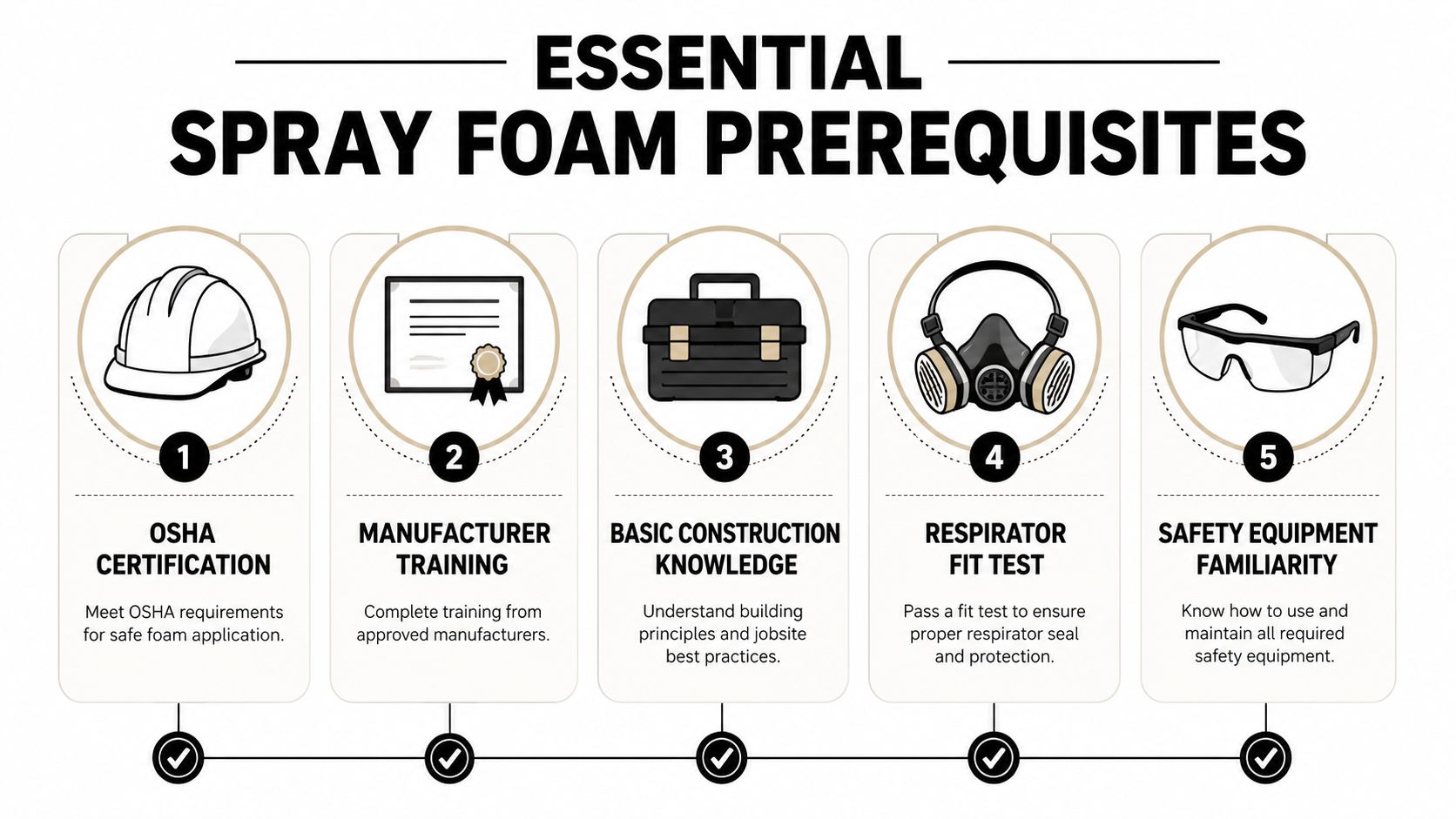
Before any trainee sprays, four basics need to be in place:
In South Florida, those basics matter even more because heat stress, slick surfaces, and tight attic conditions add pressure to every step of the job. A trainee who cannot work safely in that environment has no business learning spray technique yet.
Strong training programs do not rush people to gun time. They put trainees with experienced crews first so they can learn hose control, machine startup and shutdown, masking, surface prep, drum handling, and communication between the sprayer and helper. That early exposure matters because production foam work is a coordinated crew task, not a solo performance.
Many trainees spend weeks doing related insulation work before they are trusted to spray. That period builds habits that separate dependable installers from expensive ones.
Typical foundation tasks include:
I have seen plenty of people who were eager to spray and nowhere near ready to install foam for a paying customer. The weak point is usually not trigger control. It is prep, reading conditions, staying organized, and keeping quality steady through a long day.
A trainee is getting close when he can arrive on site, check the work area, protect adjacent finishes, confirm the assembly, and spot a condition that could ruin the job before material starts flowing. In South Florida, that means paying attention to moisture, substrate temperature, ventilation setup, and whether the assembly should receive open-cell or closed-cell foam for the application.
Local code enforcement also shapes the learning curve. Installers here run into questions about ignition barriers, attic assemblies, unvented rooflines, and moisture behavior that are easy to mishandle if training stayed too general. A classroom can introduce those issues. Field training is where an installer learns how they affect scheduling, material choice, inspection readiness, and callbacks.
Advancement comes after safe habits and sound judgment are consistent. Helpers can move into gunner or crew lead roles within a relatively short time, but only if they treat this like a trade, keep records, maintain equipment, and respect how fast humid conditions can turn a routine job into a problem.
Not every installer needs the same track. In South Florida, the material choice changes the training emphasis because the assemblies, moisture exposure, and performance goals are different from one job to the next.
Open-cell and closed-cell foam both require discipline, but they don't reward the same mistakes. A trainee who understands that early will save a lot of wasted material and avoid bad recommendations in the field.
If you're training for interior wall applications where sound control matters and the assembly design supports it, open-cell may be the better fit. If you're working around roof decks, metal buildings, coastal exposure, or assemblies where moisture resistance and rigidity matter more, closed-cell often enters the conversation faster.
That's why your training path should follow the jobs you plan to do, not the jobs that sound interesting in a classroom.
For a practical overview of application differences, this guide on open-cell vs. closed-cell foam is a useful field reference.
| Training Aspect | Open-Cell Foam | Closed-Cell Foam |
|---|---|---|
| Material behavior | Expands aggressively and fills cavities well | Denser material with less forgiveness on pass control |
| Spray technique emphasis | Uniform fill and avoiding over-expansion issues | Lift control, edge detail, and disciplined thickness management |
| Best beginner lesson | Reading cavity fill and trimming cleanly | Learning how quickly bad technique shows in the finished surface |
| Common South Florida use discussion | Interior partitions, some wall and attic applications depending on assembly design | Roof decks, exterior-oriented assemblies, metal buildings, higher-demand moisture environments |
| Inspection mindset | Check fill quality, adhesion, voids, and trimming | Check adhesion, thickness consistency, edge transitions, and code-related covering requirements |
| Troubleshooting focus | Overfill, uneven expansion, rough trimming | Heat management, pass control, adhesion concerns, and avoiding heavy-handed application |
For open-cell, beginners need repetition on cavity reading. A trainee has to learn what proper expansion looks like, how to avoid creating extra trimming work, and how to keep a clean, even application across framing variations. Open-cell can fool new installers because it looks easy once it starts expanding. It isn't. Fast expansion can hide uneven technique until trimming exposes the problem.
For closed-cell, the training has to be stricter. Installers need a better feel for pass thickness, substrate condition, and consistent gun movement. This is usually where weak equipment habits start showing up. If your pressure, temperature, surface prep, or spray pace are off, closed-cell tells on you.
Closed-cell work is where many crews learn that “good enough” isn't a setting on the proportioner.
Some new contractors chase whichever foam they think sells easier. That's the wrong reason to choose a training path. Build around the market you serve and the assemblies you'll encounter. South Florida isn't forgiving with moisture, roof heat, or poorly thought-out details.
The best route is simple. Learn both at a working level. Then go deeper in the one that matches your target jobs, your local code environment, and your ability to deliver repeatable quality.
A real hands-on program should feel more like shop training and field rehearsal than a seminar. If students leave with a binder but can't set up equipment, read the foam, or solve a bad spray pattern, the course missed the point.
The curriculum has to build from controlled repetition. You don't want a trainee learning first on a finished home in August heat with a GC waiting on four other trades.
The first half of strong spray foam insulation training is mechanical discipline. That means understanding the rig, not just standing near it.
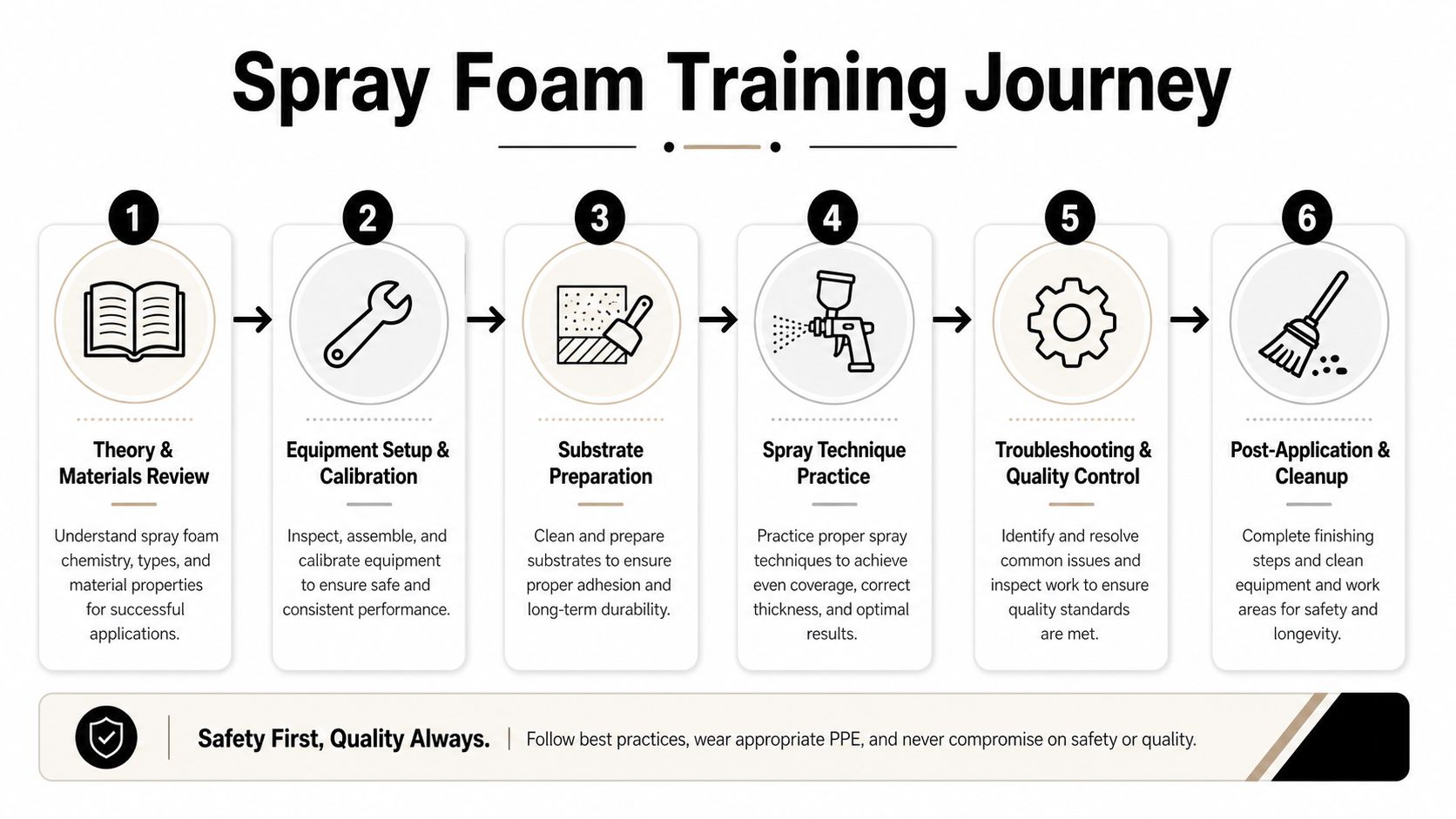
The curriculum should include:
A practical field walkthrough on how to spray foam insulation can help connect the classroom side to actual application sequence.
The first sign of a useful program is whether it trains failure response. Foam jobs rarely go wrong because somebody forgot the sales pitch. They go wrong because the gun clogs, the pattern tails, the temperature drifts, the substrate changes, or the foam starts looking off-ratio and the installer hesitates instead of stopping.
A good curriculum puts trainees through common problems such as:
Here's a useful visual example of training steps in motion:
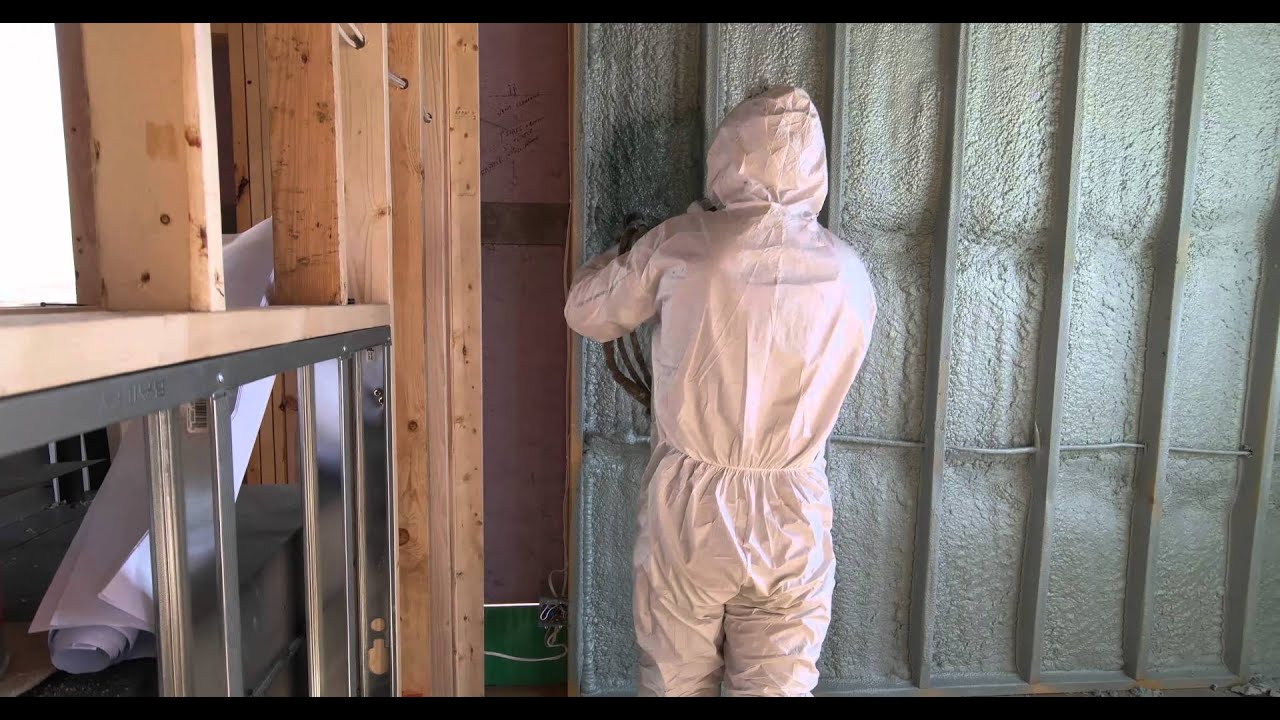
Many training programs come up short; they teach application, but they don't teach what tight buildings require after the foam goes in.
A critical point from this discussion of air sealing and ventilation requirements is that spray foam can reduce air changes to 1.1 ACH, and without HVAC adjustment to provide mechanical ventilation, including a minimum of 50 CFM of supply air, that tightness can lead to moisture buildup and attic rot. That matters everywhere. In South Florida, it matters even more because humidity pressure is relentless.
Field reminder: Build tight, ventilate right. If the house gets tighter and the mechanical plan doesn't change, you haven't finished the job. You've created the next problem.
The strongest installers develop an eye for conditions before they spray:
That judgment is what turns training into a career. Equipment matters. Product knowledge matters. But field awareness is what keeps a South Florida install performing after the crew leaves.
You can spot weak training fast by how it handles safety. If the course reduces safety to gloves, goggles, and a quick warning about chemicals, it's not enough.
Spray foam work puts installers around chemical exposure, confined or semi-confined spaces, overhead application, electrical penetrations, and ignition concerns. Safety has to be taught as a sequence, not a checklist somebody signs once and forgets.
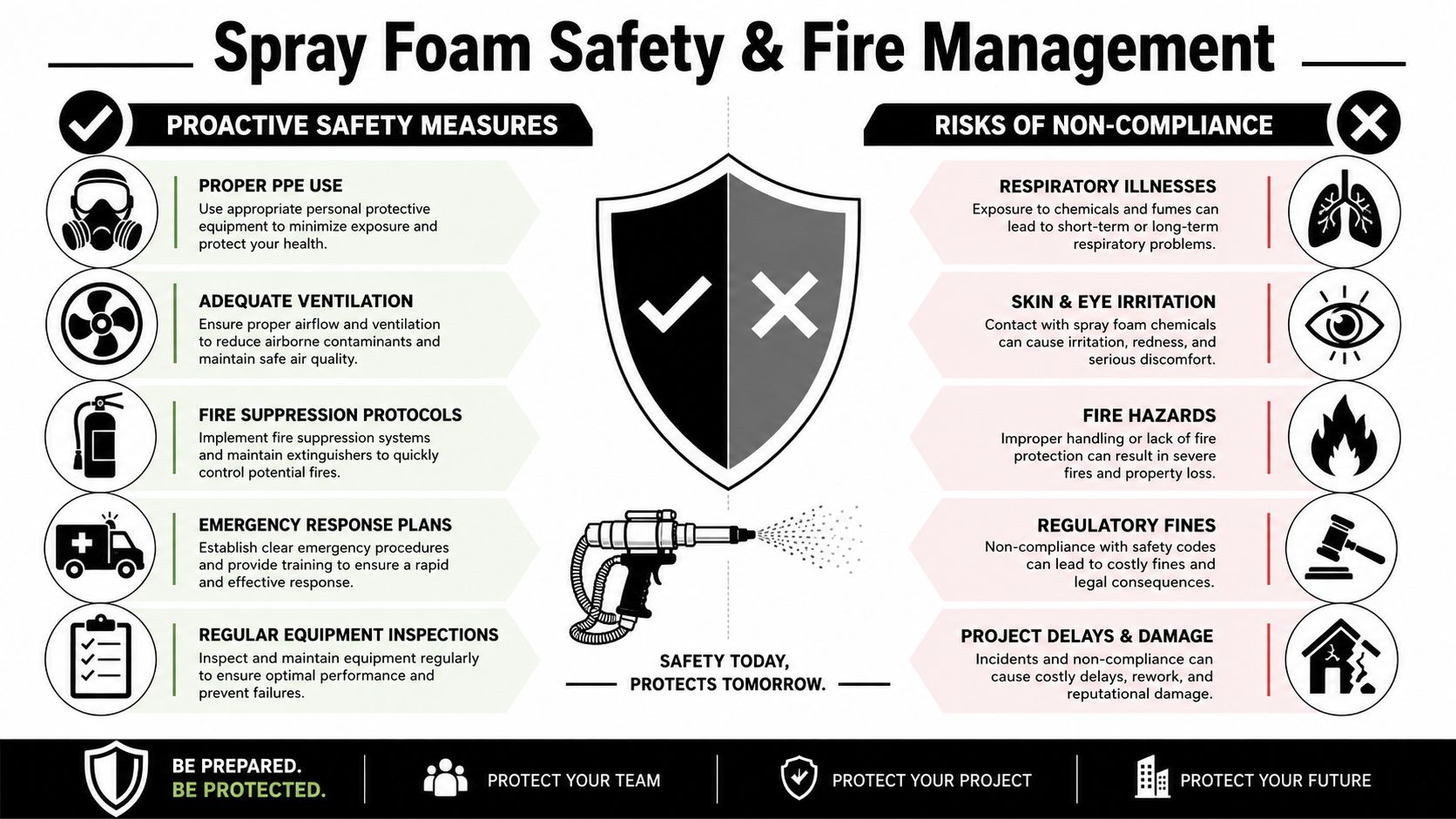
A competent installer needs to understand why each protection step exists. Respiratory protection, skin protection, eye protection, containment, and controlled ventilation aren't optional just because the job is small. The same goes for keeping other trades, occupants, and bystanders out of the work zone during application and the immediate post-application period.
On a real job, site safety usually comes down to whether the crew controls the environment:
The code and fire side is where old habits cause problems. Training must cover specific conditions, not vague warnings.
This fire safety discussion focused on spray foam installation details highlights a mandatory 3-inch free airspace around recessed lighting, tied to a documented incident in Santa Barbara where overheating lights caused insulation failure. It also notes that understanding when and where to use intumescent coatings as a thermal barrier is a critical code compliance and safety issue.
For a plain-language overview, this article on whether spray foam insulation is flammable is worth reviewing.
Keep foam clear of recessed lighting where required. Don't guess. Verify the fixture, the assembly, and the code requirement before the trigger gets pulled.
Crews rarely decide to be reckless. What happens is smaller shortcuts stack up. Somebody skips a pre-check. Somebody assumes the can lights are fine. Somebody rushes masking because the schedule got tight. Somebody treats a coating decision like a punch-list item for later.
That's how avoidable incidents happen.
The installers who stay in business for the long run treat safety as production discipline. The same crew that keeps a clean hose layout, protects finished surfaces, and respects light clearances usually keeps a cleaner callback record too.
A new installer can look sharp in training and still get exposed fast on a South Florida job. The hose is hot, the attic is hotter, the substrate temperature is climbing, and the humidity is working against the foam before the pass is finished. That is the difference between learning the trade and staying in the trade here.
South Florida has steady demand, but it is not a forgiving market. Inspectors expect crews to know the assembly, the product requirements, and the local code. Builders want production that stays on schedule. Homeowners want comfort, lower humidity, and no callbacks. If your work creates adhesion problems, shrinkage, odor complaints, or moisture trouble, word gets around quickly.
Start with the basics, then build field judgment.
If you are serious about becoming an installer in this region, focus on these steps:
A lot of newcomers underestimate moisture management. In South Florida, that mistake follows you.
Good installers here learn how vented and unvented attics behave, how foam changes drying potential, and why indoor humidity complaints are not always insulation problems alone. They also learn when a job should be declined, delayed, or re-scoped because the substrate, weather, or project conditions are wrong. That judgment protects margins as much as it protects the building.
Field skill does not fill the calendar by itself. Once your installation quality is consistent, study practical guidance on marketing for insulation companies so your sales process can keep up with your production capability.
That matters in South Florida, where builders and property owners expect quick communication, local references, and clear proof that you understand humid-climate assemblies.
The installers who build steady careers in this region usually share a few habits:
If you are changing over from roofing, drywall, HVAC, or general construction, some of that experience helps. It does not replace spray foam training. The crews that last are the ones that respect the chemistry, respect the climate, and respect the code.
If you need a local team that understands how spray foam performs in humid South Florida conditions, Airtight Spray Foam Insulation is a strong resource. They serve homeowners, builders, and property owners across the region with open-cell and closed-cell applications, and they bring deep field experience, strict safety standards, and a practical understanding of moisture control, comfort, and code-minded installation.