
Your air conditioner runs all afternoon, the bedrooms still feel sticky, and the ceiling under the attic seems to radiate heat long after sunset. That’s a common South Florida complaint. Homeowners in Jupiter, West Palm Beach, Wellington, and Stuart often assume they just need “more insulation,” but the proper answer is usually more specific than that.
Cellulose can be an excellent material when it’s installed correctly. It fills irregular gaps better than batt products, works well in attics and wall cavities, and it’s widely used in retrofit work because it can adapt to older framing and awkward spaces. The market reflects that demand. The global cellulose insulation market is projected to reach USD 4.1 billion by 2034, and blown-in methods accounted for nearly 57% of installations because they work well in retrofits and can cut heating and cooling costs by 15% to 50% when properly installed, according to Market.us on the global cellulose insulation market.
That last phrase matters most. When properly installed.
In South Florida, installing cellulose insulation isn’t just about hitting an R-value on paper. The job has to deal with humid air, attic heat, wind-driven rain events, older ductwork, recessed lights, bath fan leaks, and soffit areas that get blocked by sloppy crews. Good cellulose work can improve comfort. Bad cellulose work can hide problems, trap moisture, and leave you with uneven results that look full from the attic hatch but perform poorly where it counts.
I’ve seen both outcomes.
The difference usually comes down to details people skip because they don’t look dramatic. Air-sealing before blowing. Keeping ventilation paths open. Dense-packing walls to the right density instead of guessing. Verifying coverage with bag count and depth markers instead of eyeballing it. In this climate, those aren’t optional extras. They are the install.
Cellulose is mostly recycled paper fiber treated for fire resistance and pest resistance. In the field, what matters more is how it behaves once it’s in place. It knits together well, conforms around wiring and plumbing better than batts, and can do a good job in irregular framing where perfectly cut batt insulation is unrealistic.
That’s why homeowners ask about it so often. They’ve got hot rooms, drafty walls, an older house with little or no wall insulation, or an attic that was topped off years ago without any prep. They want one material that can improve comfort without tearing the whole house apart.
In retrofit work, blown cellulose makes sense because crews can install it in places that are hard to reach with rigid materials or batt products. Attics are the obvious example, but wall retrofits are another strong use case when the installer understands drill-and-fill technique and cavity pressure.
A few traits make cellulose attractive:
Practical rule: Cellulose is forgiving of odd-shaped cavities. It is not forgiving of careless installation.
The mistake I see most often is treating insulation as a standalone upgrade. It isn’t. In South Florida, insulation performance is tied directly to air movement and moisture movement.
If humid attic air is bypassing into the house through electrical penetrations, top plates, can lights, and hatch openings, adding loose-fill over the top won’t fix the root problem. It may even make later diagnosis harder because the leaks are buried.
The same goes for walls. Dense-pack cellulose can work very well, but only if the installer controls density and fills the cavity completely. If the wall is under-packed, it can settle, leave voids, and create temperature differences you’ll feel on the drywall.
That’s why installing cellulose insulation should be approached as a system job, not a “blow in some bags and leave” job.
Before the machine starts, get your setup right. Most failed insulation jobs don’t fail because cellulose is a bad product. They fail because the crew showed up with the wrong machine, poor lighting, weak prep, or no plan for verifying coverage.

For attic loose-fill, the basic setup is straightforward. For wall dense-pack, the tool list grows fast.
Here’s the checklist I’d want on site before installing cellulose insulation:
| Item | Category | Pro Tip |
|---|---|---|
| Insulation blower | Equipment | Rent a unit that can maintain steady feed without shredding clumps poorly. Consistent output matters more than raw noise. |
| Blower hose | Equipment | Use a hose long enough to reach the farthest attic corner without dragging the machine into a bad position. |
| Cellulose bags | Material | Buy enough to meet the manufacturer’s settled coverage chart, not your guess from the attic hatch. |
| Staple gun | Tool | For wall work, use it to secure netting tight so it doesn’t wrinkle and telegraph through drywall. |
| Utility knife | Tool | Keep extra blades. Dull blades slow every cut, especially with netting and bag opening. |
| Depth markers | Layout | Mark target height before blowing. Don’t trust your eye once the attic starts looking uniformly gray. |
| Work lights or headlamps | Safety | Dark attics hide chases, open soffits, and truss edges. Good lighting prevents both falls and missed areas. |
| Caulk and one-part foam | Air-sealing | These are for penetrations and gaps before insulation, not after. |
| Gloves | PPE | Cellulose is easier on skin than some materials, but your hands still need protection when handling bags and sheet metal barriers. |
| Eye protection | PPE | Blowing overhead in an attic throws dust and debris where you least want it. |
| Respirator | PPE | A properly fitted N95 or P100 is the minimum standard I’d consider. |
| Knee boards or planks | Access | In attics with limited framing visibility, these keep you from stepping through the ceiling. |
A lot of homeowners underestimate the environment. South Florida attics are hot, dusty, cramped, and full of trip hazards. Add low visibility and electrical penetrations, and small mistakes get expensive fast.
Consider these essential:
If you want a broader homeowner overview of insulation-related safety concerns, this guide on whether insulation is dangerous is a useful starting point.
Not all cellulose jobs are the same. Loose-fill attic work and dense-pack wall work place different demands on the installer and the equipment. Don’t assume one rental setup handles both equally well.
Cellulose also has a strong safety reputation in fire testing. In one test, a cellulose-insulated wall assembly showed up to 77% more fire resistance than an uninsulated wall and withstood direct flame for 70 minutes, which was over three times longer than a fiberglass-insulated assembly, according to this insulation effectiveness report from Reitzel Bros.
Buy your gear and material with the install method in mind. Attic loose-fill forgives more. Wall dense-pack does not.
Most of the critical workmanship in installing cellulose insulation happens before a single bag goes into the hopper. If prep is weak, the finished job may still look full and even. It just won’t perform the way the homeowner expects.
In South Florida, preparation comes down to two things. Stop uncontrolled air leakage and preserve the ventilation path.

If you skip air-sealing, you’re burying leaks. The attic floor is full of bypasses that allow hot, humid air to move where it shouldn’t.
Walk the attic slowly and seal these areas first:
Top plate gaps
The framing-to-drywall connection often leaks more than people think, especially in older homes and remodeled spaces.
Wire and plumbing penetrations
Around cable bundles, plumbing stacks, and refrigerant lines, use appropriate sealants to close visible gaps.
Bath fan housings and duct boots
These are common leakage points. If the duct connection is loose or disconnected, fix that before insulating.
Recessed lighting and boxes
Some fixtures need clearance and proper protection. Never bury a fixture without confirming it’s rated for that condition.
Attic hatch or pull-down stairs
This is often one of the worst leaks in the whole house. Weatherstrip it and insulate the cover correctly.
This part gets butchered all the time. Installers blow cellulose tight into the eaves and choke off soffit intake, then the attic loses the airflow it needs.
Use baffles or rafter vents at the perimeter so air can travel from soffit vents upward without cellulose plugging the path. In South Florida, where heat and humidity already work against you, blocked intake ventilation creates a bad attic environment quickly.
A good prep crew treats the eaves separately from the open field of the attic. They don’t just aim the hose and hope for the best.
If soffit vents are blocked, the attic may still look insulated. It just won’t breathe correctly.
Before adding new insulation, identify what’s already there. Some older materials should not be disturbed casually, especially if you’re not sure what you’re looking at. If you’re dealing with an older home and see suspicious insulation around ducts, pipes, or wall cavities, review this guide on how to identify asbestos insulation before moving anything.
Also look for conditions cellulose won’t fix by itself:
Use a punch list, not memory.
Good prep doesn’t photograph as well as a big fluffy attic. It’s still the part that determines whether the homeowner notices cooler rooms or calls back six months later asking why the house still feels damp.
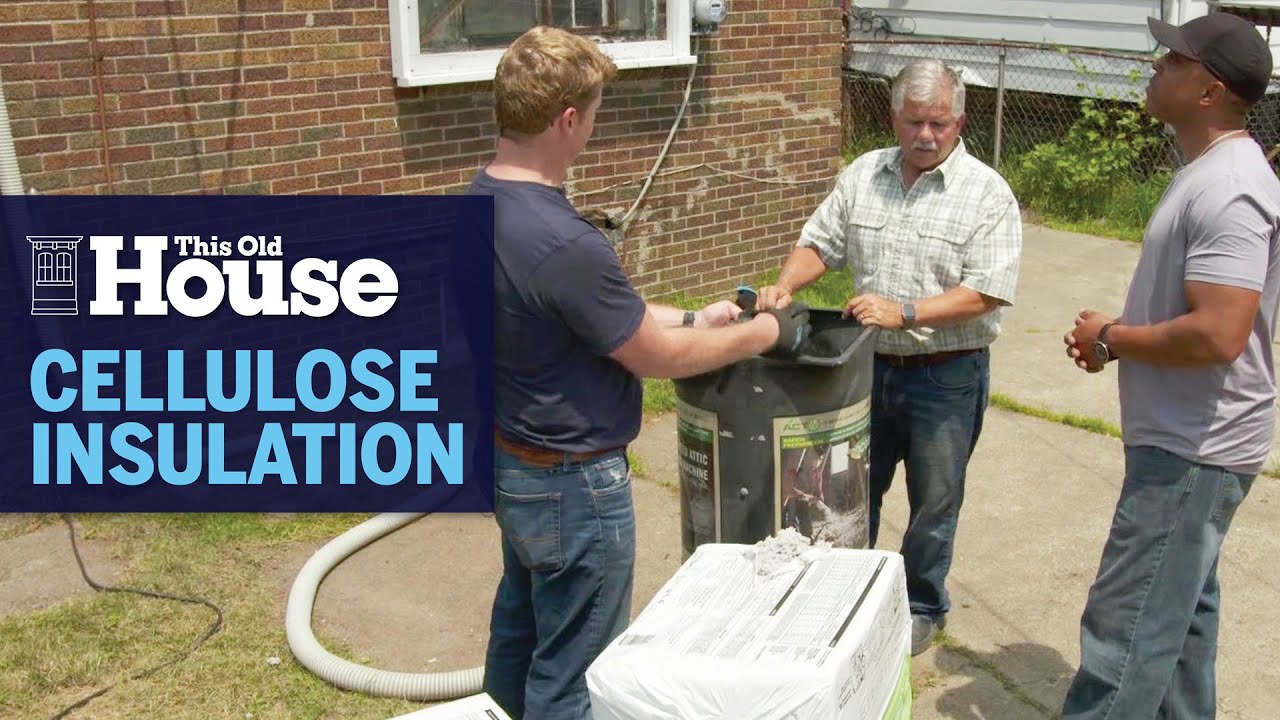
Attic loose-fill is where most homeowners picture installing cellulose insulation. It’s also the part that seems easiest from the ground and gets harder once you’re sweating in a low-slope attic, working around ducts and truss webs, trying to hit a uniform depth without burying every problem below it.
This visual gives a clear overview of the sequence.

A two-person setup is standard for attic work. One person feeds the machine, breaks up compacted material, and watches hose flow. The other handles the hose in the attic and controls coverage.
That division matters. Cellulose blows better when the feed is steady and the attic operator doesn’t have to stop constantly because the hopper is starving or the hose is clogging.
For loose-fill attic applications, the process works best when the blower is set up outside or in a garage with good access, and the hose is run cleanly to the attic entry. Avoid hard kinks, sharp bends, and foot traffic over the hose.
Don’t start near the attic hatch and wander around. Start at the farthest areas first and work your way back.
The hose technique is simple, but it takes discipline:
A lot of DIY jobs leave thin spots where the machine can’t throw well into tight corners. The attic may look covered from a standing position near the hatch, but the weak areas are usually at the edges and under low slopes.
Here’s a useful installation reference on blown insulation installation if you want a side-by-side look at professional expectations.
Don’t judge the job by appearance alone. Verify it two ways. Depth markers and bag count.
According to Angi’s cellulose insulation guide, professionals achieve a 90% to 95% success rate in attic applications by maintaining consistent density and leaving fewer than 5% voids. The same source notes that skipping air-sealing first can cause a 25% to 40% loss in insulation performance, and properly installed cellulose can deliver 20% to 40% energy savings.
That lines up with what crews see in practice. The houses that improve most are usually the ones where the installer respected the prep and verified coverage instead of guessing.
Save every bag wrapper until the job is done and checked. If the material count doesn’t match the attic area and target depth, something is off.
A short video can help if you’ve never watched the process in motion.
Attic cellulose is simple enough to attempt and easy enough to mess up. These are the errors I see most:
South Florida houses benefit from a methodical pace. Blow evenly, keep the material fluffy rather than compacted in random piles, and pay attention to any sign that the attic already has a moisture issue. If ducts are sweating, decking shows staining, or bath fans vent into the attic, solve those issues before adding more insulation.
Loose-fill cellulose can perform well overhead. It just needs to sit on a properly prepared attic floor, with airflow paths preserved and moisture sources controlled.
Wall work is different. Dense-pack cellulose is one of the few insulation methods that can improve enclosed wall cavities without gutting every room, but it isn’t beginner-friendly. Attics are open. Walls are blind.
That changes everything.

Loose-fill in an attic lets you see your coverage. Dense-pack in a wall requires you to read hose pressure, cavity resistance, and fill behavior through experience.
The target density matters. According to Green Building Advisor’s guidance on installing cellulose insulation, wall cellulose must be dense-packed to 3.0 to 3.5 lb/ft³ to prevent settling. The same guidance notes that professionals use a lip-stitching technique for netting and a top-down blowing method, and that under-packing can lead to 15% to 25% settling over time.
That’s why I rarely encourage homeowners to treat wall dense-pack like a casual weekend project.
In open-wall new construction, crews staple air-permeable netting across the stud bay and secure it tightly. The lip-stitching detail matters here. If the netting wrinkles, it can create issues later and makes the cavity harder to pack evenly.
A proper wall install usually includes these steps:
Air-seal the cavity first
Before netting goes up, seal obvious leakage paths, penetrations, and framing joints that are accessible.
Install the netting tight
Sagging netting makes density control harder and can cause a poor finish behind drywall.
Use the right hose and pressure
The blower setup has to build enough pressure to pack the material, not just spray it into the space.
Fill the bay methodically
Skilled installers read the cavity as they work, building density evenly rather than leaving soft pockets.
Existing walls are usually done with a drill-and-fill approach. The installer cuts or drills access holes, then fills the cavity through those openings. You don’t get visual confirmation inside the bay, so technique and verification become even more important.
Retrofit success depends on understanding what may be inside the wall:
Those details can interrupt the material path and create hidden voids if the installer uses a one-size-fits-all approach.
Wall cavities don’t care what the bag says. They care whether the installer filled the whole bay.
When walls are under-packed, the homeowner may not notice right away. Later, the signs show up as uneven wall temperatures, comfort complaints near exterior walls, and thermal weak spots around outlets, corners, or mid-wall sections.
This is one reason dense-pack cellulose gets mixed reviews. The material often gets blamed for what was really an installation problem.
For a technical overview of expected thermal performance, this page on dense-pack cellulose R-value is a helpful companion to the installation side of the discussion.
Dense-pack is worth hiring out when the wall cavities matter. Bedrooms with intense afternoon heat gain, older masonry-adjacent framed sections, additions with poor insulation continuity, and hard-to-access retrofits are not ideal places to learn by trial and error.
A good dense-pack crew does more than fill a cavity. They control density, track material use, understand how to work around obstructions, and know when a wall condition makes another insulation strategy the better choice.
That judgment is the difference between a wall that performs for years and one that settles, leaks air, and leaves the owner wondering why the room still feels hot.
A lot of cellulose discussions stop too early. They focus on install day and ignore what happens after several humid seasons, one roof leak, or years of attic heat cycling.
That matters in South Florida because long-term performance is where good-looking jobs get exposed.
Loose-fill cellulose in attics doesn’t stay exactly where it started. Over time, settling can reduce effective thermal performance if the installer didn’t account for it on day one.
According to Fine Homebuilding’s discussion of dense-pack cellulose done right, attic cellulose can settle 10% to 20% over time, which can drop an R-38 installation closer to R-32 over five years. That source also notes that this variability can be more concerning in humid climates like South Florida, while spray foam does not settle.
That doesn’t mean cellulose is automatically a bad choice. It means the common “set it and forget it” assumption is too casual.
Cellulose is hygroscopic. It can absorb and release moisture. In some assemblies, that buffering quality can help. In a poorly controlled South Florida attic or wall assembly, it can also become part of a bigger moisture problem.
The material itself isn’t the only issue. The surrounding conditions are.
Watch for these risk factors:
When those conditions are present, no insulation product performs at its best. Cellulose just demands that you respect those building conditions instead of ignoring them.
In South Florida, insulation choice and moisture control are tied together. Treating them separately is where jobs go sideways.
A cellulose job should be revisited, especially after the first stretch of hot, wet weather.
Look for:
If those issues show up, don’t assume adding more material is the first answer. Diagnose the air and moisture conditions first.
For some homes, especially in high-humidity conditions or assemblies with repeated moisture concerns, a non-settling insulation approach may offer a more stable long-term result. The right answer depends on the building, not the sales pitch.
If your home, rental property, metal building, or new construction project in South Florida needs a more durable air-sealing approach, Airtight Spray Foam Insulation serves Jupiter, Palm Beach Gardens, West Palm Beach, Wellington, Stuart, and nearby areas with professional spray foam installation designed for heat, humidity, and long-term performance. Christian Cates and the Airtight team bring more than 25 years of hands-on experience, with careful recommendations for attics, walls, roofs, garages, and commercial spaces. Request a free quote if you want a solution built around comfort, moisture control, and workmanship that holds up.