Blog
Will Mice Chew Through Spray Foam? A Homeowner’s Guide

Let’s get straight to the point: yes, mice will absolutely chew through spray foam. While it’s one of the best insulators on the market, it’s not a rodent-proof barrier. A mouse's teeth are constantly growing, which means they have a biological need to gnaw on things. Spray foam, with its soft, carveable texture, is an easy target for them to create tunnels and nests.
The Unsettling Truth About Mice and Spray Foam
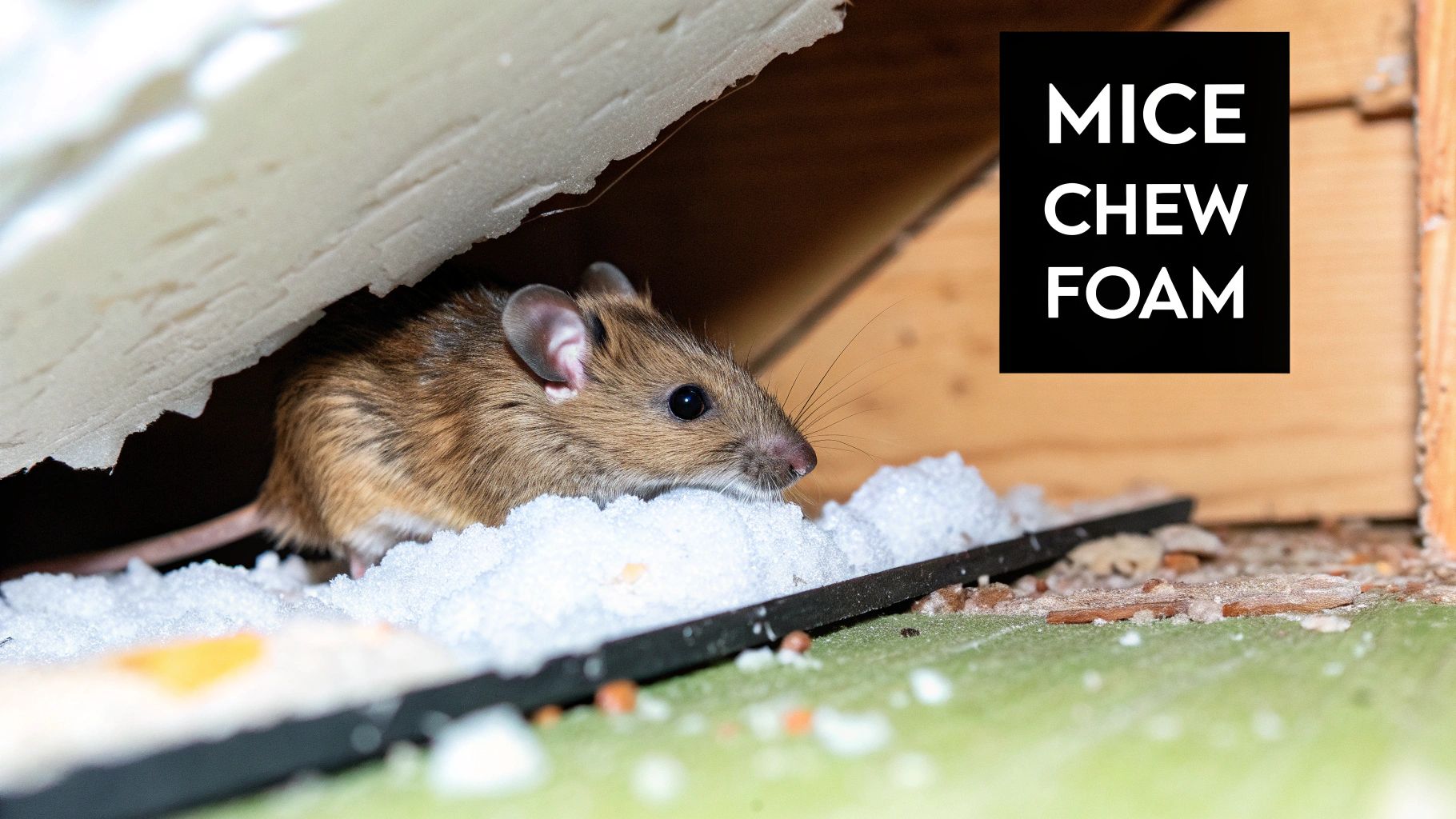
It’s an unfortunate irony. Homeowners invest in spray foam for its incredible energy efficiency and its ability to create an airtight seal. But that same protective material can become a perfect, hidden highway for rodents.
Mice aren’t eating the foam for food; they’re destroying it to create warm, sheltered nesting sites, completely hidden from predators and the elements.
Here in South Florida, this isn’t just a winter problem. Our warm, humid climate means pests are a year-round threat, always on the hunt for a safe place to hide from the heat, rain, and storms. To a mouse, your insulated attic or crawl space is prime real estate.
Understanding the Rodent Problem
The real issue isn't that spray foam attracts mice, but that it offers almost no resistance once they’ve found a way into your home. A single determined mouse can easily burrow through both open-cell and closed-cell foam, wrecking your home's thermal barrier and creating pathways for more pests to follow.
This damage quickly snowballs into bigger problems:
- Skyrocketing Energy Bills: All those tunnels and nests create gaps in your insulation. Conditioned air pours out, and your AC unit has to work overtime, driving up your utility costs.
- Serious Safety Risks: Rodents love to chew on electrical wiring. When those wires are hidden inside insulated walls, it creates a major fire hazard that you might not discover until it's too late.
- Health and Air Quality Issues: Mice leave behind droppings and urine wherever they go. This waste can contaminate your indoor air, circulate through your HVAC system, and spread diseases.
The real challenge isn't just asking "will mice chew through spray foam?" but understanding how to build a complete defense system. Relying solely on your insulation to stop pests is a common and costly mistake.
This guide will walk you through everything you need to know. We’ll cover why mice are so destructive, how to spot the early signs of an infestation, and most importantly, how to build a real strategy to protect your home and keep it rodent-free for good.
To a mouse, your attic isn't just another part of the house. It's a five-star, climate-controlled condo that’s incredibly easy to renovate. If you want to protect your home, you first have to understand why mice find spray foam so irresistible. And here’s a hint: it has nothing to do with food. It’s all about instinct.
The biggest reason is their teeth. A mouse's incisors grow constantly, and they have to gnaw on things to wear them down. If they don't, their teeth can grow so long they can't even eat, which leads to starvation. The firm but yielding texture of cured spray foam? It's the perfect material for this non-stop dental work.
A Perfect Storm of Biology and Environment
A mouse’s need to chew gets supercharged by the environment, especially here in South Florida. The scorching summer heat, the sudden torrential downpours, and the annual threat of hurricanes send pests scrambling for a safe, stable place to ride it out. Your insulated attic, crawl space, or walls offer the perfect escape from the wild weather outside.
Once they're in, they don't just hang out. They get to work.
- Tunneling Highways: Mice carve out hidden pathways right through the foam. These secret tunnels let them move between walls and different floors of your home completely undetected.
- Nesting Nurseries: They hollow out cozy pockets in the insulation to build warm, protected nests. It's the ideal spot to raise a family, safe from predators and the elements.
- Probing for Weak Spots: All that gnawing isn't just for their teeth—it’s how they explore. They test barriers, search for new entry points, and map out vulnerabilities in your home’s structure.
This mix of biological necessity and environmental pressure makes spray foam an easy choice for them. The foam itself isn't what attracts them, but it’s the perfect solution for their two most basic needs: shelter and dental care.
Think of it this way: Mice don't see insulation as a building material. They see it as a resource to be mined—a soft, workable substance perfect for constructing their own hidden world right inside of yours.
The Relentless Reality of Rodent Gnawing
It's easy to underestimate just how powerful and persistent their chewing is. Mice are driven by a biological command to grind down their incisors, which can grow up to 5 inches a year if left unchecked. It’s not a hobby; it’s a full-time job.
This isn't just a minor nuisance. Research shows a single mouse can chew through materials equal to 15 times its body weight every single day just to keep its teeth in check. That relentless pressure makes even dense spray foam an easy target. Whether it's open-cell or closed-cell, the structure just doesn't stand a chance against a rodent that’s biologically programmed to chew. You can learn more about how rodents interact with building materials over at SPF Solutions.
This biological imperative means just having spray foam isn't a guaranteed pest barrier. They’ll chew through it not because they're malicious, but because their survival literally depends on it. And that makes your insulated spaces prime real estate for their destructive work.
Choosing the Right Foam for Rodent Resistance
When you're picking out insulation, it’s about more than just R-value. It’s about choosing a material that can stand up to the unique challenges we face in South Florida, and that absolutely includes pests. In the world of spray foam, the choice between open-cell and closed-cell is a critical one, especially if you're worried about mice turning your insulation into their next home.
Open-Cell vs. Closed-Cell: A Tale of Two Foams
Think of open-cell spray foam as a dense, rigid sponge. It’s light, soft, and expands like crazy to fill every little gap. While this makes it a fantastic soundproofer, that soft, pliable texture is exactly what makes it so vulnerable to rodents. Mice can tear right through it with almost no effort, carving out tunnels and nests as if it were nothing more than a minor inconvenience.
Now, imagine closed-cell spray foam. It's a completely different animal—more like a hard, solid plastic. Its cellular structure is incredibly dense and tightly packed, making it far more rigid and durable. This creates a tough physical barrier that is significantly harder for a mouse to get through.
To make an informed decision, it's helpful to see a direct comparison of how each foam type performs against rodents and other environmental factors.
Foam Type Comparison for Rodent Resistance
| Feature | Open-Cell Spray Foam | Closed-Cell Spray Foam |
|---|---|---|
| Density | Low-density, soft, and spongy | High-density, rigid, and hard |
| Rodent Resistance | Very low. Easy for mice to chew and tunnel through. | High. Difficult for mice to chew, acting as a deterrent. |
| Moisture Barrier | Permeable to vapor (not a barrier) | Impermeable to vapor (acts as a barrier) |
| Structural Strength | Adds minimal structural support | Adds significant rigidity to walls and roofs |
| Best Use Case | Interior walls, soundproofing | Attics, crawl spaces, areas needing a moisture barrier |
While no foam is truly "rodent-proof," the dense and rigid nature of closed-cell foam turns what would be an easy meal into a serious obstacle, giving your home a much better line of defense.
Why Density Is Your Best Defense
It all comes down to the foam’s density and structural integrity. Sure, a really determined mouse might eventually be able to gnaw through closed-cell foam, but it’s going to take a ton of time and effort. That extra resistance is often all it takes to make them give up and look for an easier target.
For us here in South Florida, the perks of closed-cell foam go way beyond just keeping critters out. Its dense structure is also a powerful vapor barrier, which is a must-have for managing our relentless humidity. It stops moisture in its tracks, cutting down the risk of mold and giving you much cleaner indoor air.
While no foam is completely "rodent-proof," choosing a denser, more rigid material like closed-cell foam dramatically increases your home's resilience. It turns an easy-to-chew material into a difficult obstacle.
This isn't just theory. A 2019 study from the University of California found that 85% of homes using closed-cell foam saw a major drop in rodent activity after it was installed. Its ability to create a near-perfect seal makes it incredibly difficult for mice to find or create entry points in the first place.
This simple chart breaks down the two main drivers behind why mice feel the need to chew through materials in your home.
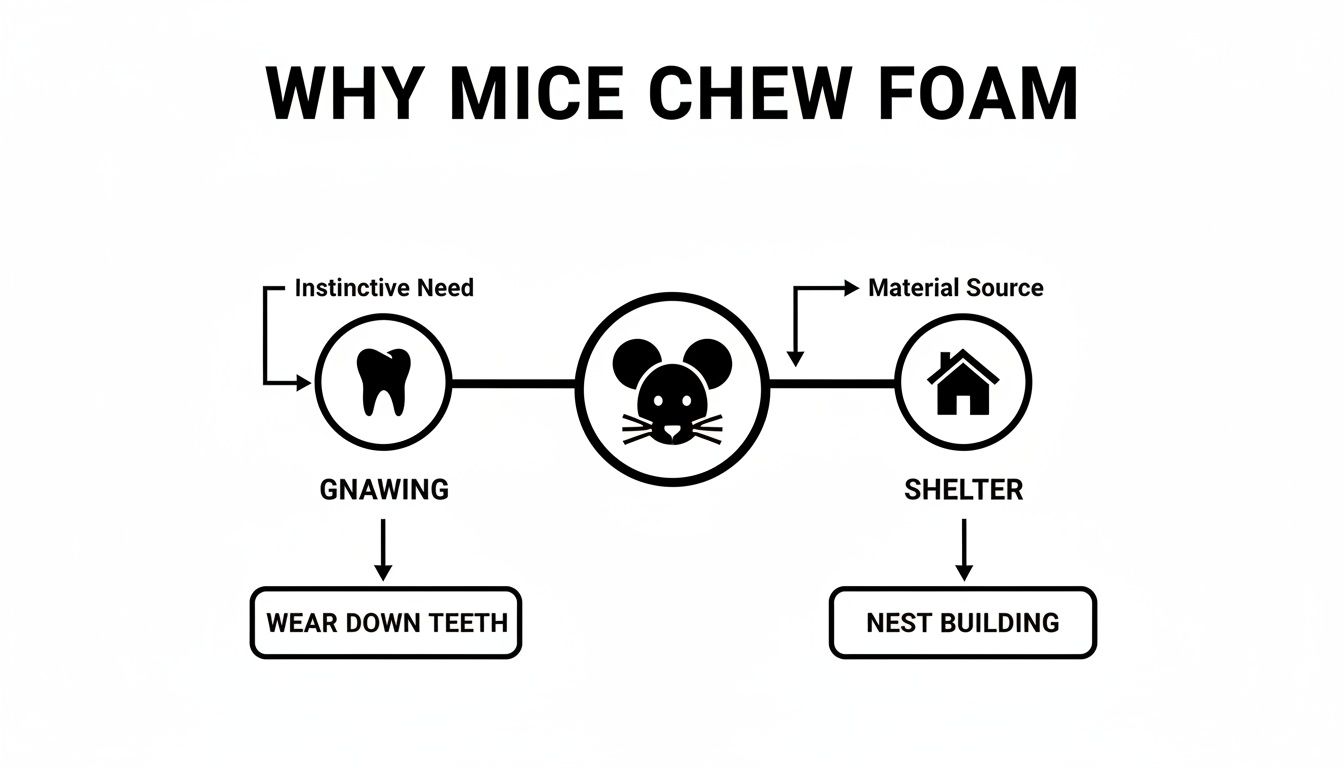
As you can see, their destructive behavior is all about survival—a biological need to file down their teeth and a powerful instinct to build a safe, warm nest.
Making the Right Investment
At the end of the day, choosing closed-cell foam is an investment in both top-tier insulation performance and powerful pest deterrence. Yes, it has a higher upfront cost than open-cell or other materials, but the long-term savings are undeniable. You’ll see it in your lower energy bills and feel it in the peace of mind that comes from not having to deal with pest-related repairs down the road.
When you're trying to decide, comparing spray foam vs. blown-in insulation can offer even more clarity on which material is the best fit for your home. That extra density doesn't just help with your utility costs—it gives you an invaluable sense of security.
How to Spot the Telltale Signs of Rodent Damage
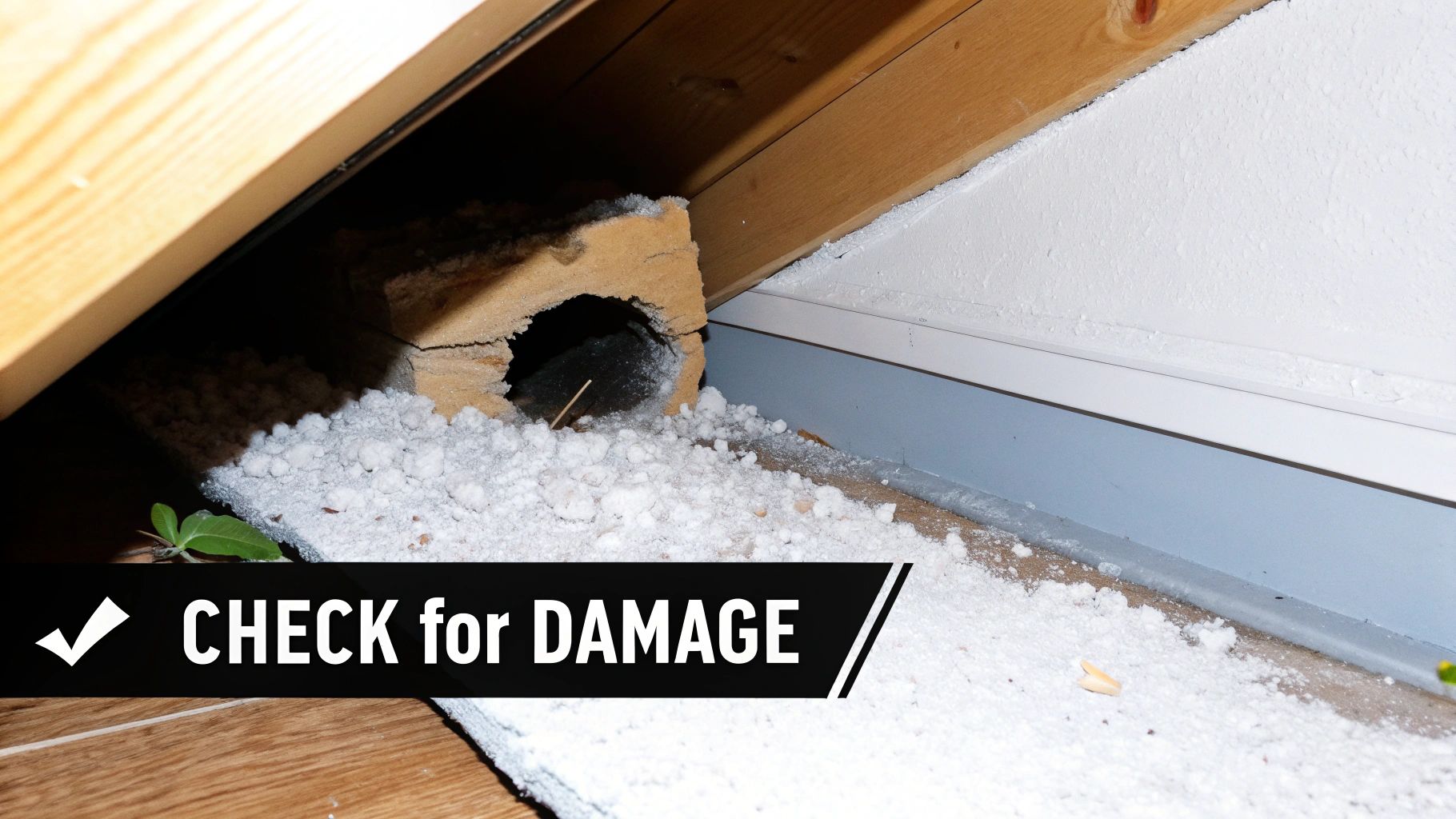
Catching a rodent problem early is the single best way to prevent expensive damage to your insulation and your home. You have to think like a detective and learn to spot the subtle clues mice and rats leave behind. These signs go way beyond just finding a hole; they tell a story of where these pests are traveling, nesting, and causing the most harm.
A lot of homeowners think the first sign will be obvious, but rodents are masters of staying hidden. The initial evidence is often indirect and takes a keen eye to notice. By knowing what to look for, you can diagnose an infestation long before it wrecks your home's energy efficiency and structural integrity.
Your Visual Inspection Checklist
Grab a good flashlight and start methodically checking the key areas—your attic, crawl space, and along the baseboards in the garage. Don't just do a quick scan. You're looking for specific patterns of destruction. Mice are creatures of habit, and their damage shows you their routine.
Here are the primary visual signs to search for:
- Small, Chewed Tunnels: Look for narrow, carved-out paths in the spray foam. You'll often find them along rafters, wall studs, or near entry points like plumbing pipes and vents.
- Piles of Foam Dust: When mice chew through spray foam, they create a fine, powdery mess. Finding little piles of this "sawdust" on the floor or on top of trusses is a dead giveaway.
- Hollowed-Out Nests: Mice will carve out larger cavities inside the foam to create warm, protected nests. They look like little caves dug right into the insulation.
- Droppings and Urine Stains: Finding small, dark, rice-sized droppings near the damaged foam is undeniable proof. Yellowish stains on the foam or nearby wood also point straight to rodent activity.
Using Your Other Senses
Sometimes, the most damning evidence isn't what you see—it's what you hear or smell. This is especially true in South Florida homes, where hot attics can amplify even the quietest sounds.
A distinct, musky odor in your attic or near an insulated wall is a classic sign of a rodent infestation. This ammonia-like smell comes from their urine and is a strong signal that you have an established colony, not just a single visitor.
Listen carefully at night when the house is quiet. Do you hear faint scratching, scurrying, or gnawing sounds coming from inside your walls or ceiling? Those are unmistakable signs. Mice are nocturnal, so their activity usually peaks right when you're trying to sleep. Recognizing these sounds and smells helps you pinpoint the problem area and act fast.
Your Proactive Guide to Rodent-Proofing Your Home
The best defense against mice isn't about hoping your insulation can stop them; it's about making your home an impenetrable fortress in the first place. While closed-cell foam is tough, true protection comes from exclusion—the hands-on process of finding and sealing every potential entry point before a mouse even thinks about testing your insulation.
Remember, a mouse can squeeze through a hole the size of a dime. That means you need a detective's eye for detail.
Your first move is a thorough walk-around of your home's exterior. Start at the foundation and work your way up. Look for tiny cracks, gaps around utility pipes (like your AC lines and plumbing), and any weak spots where different building materials meet. Pay extra attention to corners, vents, and the seam where your siding meets the foundation block—these are rodent superhighways.
Sealing Entry Points the Right Way
Once you’ve found the weak spots, it’s time to seal them with materials that mice genuinely can't stand. Spray foam is fantastic for air sealing, but it should never be your main weapon for rodent exclusion. Instead, think in layers, combining durable physical barriers with a proper sealant.
For small cracks and holes, the strategy is simple but incredibly effective:
- Pack the opening tightly with steel wool. Its coarse fibers are a nightmare for mice to chew through without hurting themselves.
- Seal right over the steel wool with a high-quality caulk or silicone sealant. This creates an airtight and watertight barrier that locks the steel wool in place.
For larger gaps, like those around pipes or in vents, hardware cloth (a sturdy wire mesh) is the way to go. Just cut a piece to size, secure it firmly over the opening, and then seal the edges. This one-two punch creates a truly rodent-proof seal that foam alone can't deliver. If you're sealing up a structure like a concrete block wall, understanding its natural insulating properties can give you more context. You can learn more about the insulation value of concrete blocks and see how proper sealing boosts its performance.
The goal of exclusion is to make getting inside so difficult and annoying that rodents simply give up and find an easier target. Relying on a single material, especially one they can chew like spray foam, is leaving the welcome mat out.
Landscaping for a Rodent-Free Zone
Your yard can either be an invitation for pests or a buffer zone that keeps them away. Overgrown shrubs, tree branches touching your roof, and piles of debris are perfect hiding spots and bridges for rodents to get to your house.
Put these smart landscaping tips into practice to create a clean perimeter:
- Trim shrubs and trees so they are at least three feet away from your house.
- Keep firewood stacks up on a rack and stored well away from the foundation.
- Clear away leaf litter, weeds, and any other junk that gives them cover.
By combining meticulous exclusion work with smart landscaping, you take away both the opportunity and the motivation for mice to target your home. This proactive approach ensures your spray foam insulation can do its job without ever being put to the test by unwanted pests.
When to Call in a Professional for Pest Control
While setting a few traps can handle a stray mouse or two, some pest problems are just too big to tackle on your own. Knowing when to wave the white flag and call a professional is a critical step in protecting your home—and your spray foam investment—from serious, long-term damage.
Recognizing the limits of a DIY approach is key. If you’ve already sealed every crack you can find and set out traps but still see fresh droppings or hear that telltale scratching in the walls, it’s a clear sign you’re dealing with an established infestation. Persistent activity means the mice have found hidden highways you’ve completely missed.
Defining the Tipping Point
So, when does a nuisance become a job for an expert? A professional becomes essential when the problem grows beyond your control. You should pick up the phone immediately if you're dealing with any of these issues.
- Persistent Infestation Signs: Despite your best efforts, you’re still finding new droppings, gnaw marks, or nests. This means you have a breeding population that a few store-bought traps will never solve.
- Extensive Insulation Damage: You’ve discovered large sections of your spray foam have been turned into a rodent superhighway, with tunnels and hollowed-out cavities. This level of damage requires a professional eye to assess whether a simple repair will do or if replacement is necessary.
- Audible Activity in Walls or Ceilings: Hearing scurrying and scratching inside your home’s structure means you have a deep-rooted problem. Professionals have the specialized tools and knowledge to get into these hidden spaces and fix it.
- Unpleasant Odors: A strong, musky smell that just won't go away often signals a large, hidden nest or, worse, deceased rodents trapped in your walls. This isn't just unpleasant—it's a significant health risk.
Calling a professional isn’t an admission of defeat; it’s a strategic investment in a permanent solution. They have the experience to see what you can't and the tools to solve the problem at its source.
Pest control pros bring a systematic approach to the fight. They’ll conduct a thorough inspection to identify every single entry point—even the ones you’d never dream of checking. With that intel, they can build a comprehensive plan that not only gets rid of the current rodent family but also keeps new ones from moving in. They make sure your South Florida home is truly sealed, restoring your peace of mind and protecting your insulation for the long haul.
Frequently Asked Questions About Spray Foam and Mice
Even with a solid game plan, it's natural to have a few lingering questions about spray foam and rodents. Getting these answers straight is key to developing a pest control strategy that actually works for your South Florida home.
Does Spray Foam Actually Attract Mice?
No, spray foam itself doesn't attract mice like a piece of cheese would. The material has zero nutritional value for them. What does attract them is the promise of a safe, warm, and stable environment.
When a mouse finds a foam-filled attic, it doesn't see a meal. It sees a five-star hotel—a pre-built condo, perfectly insulated from predators and Florida's unpredictable weather. The soft texture is also a bonus, giving them something easy to satisfy their constant biological urge to gnaw. It's not an attractant, but it’s an irresistible opportunity once they're inside.
Can I Just Patch Holes with More Foam?
Spraying a new layer of foam over a mouse-chewed hole is like putting a band-aid on a broken arm. It's a temporary fix that does absolutely nothing to solve the real problem. Mice will chew through spray foam—including the new patch—just as easily as they chewed through the original, sometimes in less than a day.
This approach only hides the damage while ignoring the root cause: the entry points mice are using to get into your house in the first place.
A real fix involves a few critical steps:
- First, you have to make sure the entire infestation is gone. No exceptions.
- Next, find and seal every single entry point using rodent-proof materials like steel wool, hardware cloth, or specialized caulk.
- Only when your home is completely sealed should you even think about repairing the insulation damage.
Are There Rodent-Repellent Spray Foam Products?
Yes, you can find some specialty foam products on the market that include bitter-tasting additives designed to deter pests. While they might add an extra layer of defense, they are far from a cure-all. Their effectiveness can fade over time, and a really determined rodent will often just chew right through it anyway.
The most reliable strategy is, and always will be, total exclusion. Physically blocking every potential hole and gap into your home is infinitely more effective than relying on a single "repellent" material to do the job.
For a deeper dive into insulation science and protecting your home, feel free to explore our Learning Center. In the end, nothing beats a proactive approach that combines a professionally sealed home with the right type of insulation.