Blog
What does house insulation do: Cut energy bills and boost home comfort in 2026

Let's get right to it. The simplest way I explain insulation is to think of it as a high-tech thermos for your entire house. Its main job, the one everyone knows, is to slow down heat transfer. This keeps your home cool when it's blazing hot outside and warm on those rare chilly nights.
Your Home’s Four Protective Shields
But stopping heat is just the beginning. A truly effective insulation system gives your home four distinct layers of protection. When they all work together, you get a home that's not just energy-efficient but also healthier and far more comfortable.
It’s not about just stuffing pink fluff into your walls—it's about creating a complete performance envelope.
Think of it this way: if you were heading out into a cold, windy, and rainy day, you wouldn't just throw on a thick sweater. You’d layer up. You’d start with a thermal shirt (your thermal barrier), add a windbreaker (air sealing), and top it off with a waterproof jacket (moisture control). That’s exactly what a complete insulation system does for your house.
Before we dive deep into each function, here's a quick look at the four core jobs insulation performs.
Insulation's Four Core Functions at a Glance
| Function | What It Means for Your Home |
|---|---|
| Thermal Barrier | Resists heat flow, keeping your home cooler in summer and warmer in winter. |
| Air Sealing | Stops drafts and air leaks, preventing energy loss and improving comfort. |
| Moisture Control | Blocks humidity and condensation, protecting against mold, mildew, and rot. |
| Sound Dampening | Absorbs sound waves, reducing noise from outside and between rooms. |
Understanding these four roles is the first step to seeing how insulation is more than just a single product—it's a system that protects your biggest investment.
Thermal Barrier
This is insulation's most famous job: creating a thermal barrier. The very structure of materials like fiberglass, cellulose, or spray foam is designed to trap air and fight the natural flow of heat.
We measure this resistance with an R-value—the higher the number, the better it stops heat. During a brutal South Florida summer, this thermal barrier is what stands between the sun baking your attic and that heat radiating straight down into your living room.
Air Sealing
A great thermal barrier is almost useless without proper air sealing. You can have the best insulation in the world, but if your home is full of tiny gaps and cracks, you're just bleeding money.
Air leakage around windows, electrical outlets, and attic hatches lets your expensive conditioned air escape while hot, humid outside air sneaks in. This single issue can sabotage your energy bills. This is where certain insulation types, especially closed-cell spray foam, really shine. It expands to fill every single crevice, creating a truly airtight seal that works like a windbreaker for your house.
Moisture Control
Here in South Florida, moisture control isn't a bonus feature; it's absolutely critical. When our famously warm, moist air seeps into a cooler, air-conditioned home, it can cause condensation inside your walls and attic. That’s a recipe for disaster, leading to mold, mildew, and wood rot.
Some types of insulation, like closed-cell spray foam, act as a true vapor barrier. They don't just slow down moisture; they block it completely. This is essential for protecting your home’s structure and the quality of the air you breathe.
Sound Dampening
Finally, one of the most underrated benefits of good insulation is sound dampening. The same physical properties that trap air to slow down heat also happen to absorb and deaden sound waves.
The result? A much quieter home. It dials down the noise from street traffic, neighbors, and airplanes. It also helps minimize sound traveling between rooms, giving everyone a little more peace and quiet.
The Science of Keeping Your Home Comfortable and Efficient
To really get a handle on what insulation does, you have to understand a bit about the physics of heat. Your house is in a constant tug-of-war with the outside temperature. In the summer, heat is always trying to get in; in the winter, it’s always trying to get out. Insulation is what stands in the way.
The key metric here is R-value. You can think of R-value as the insulation's defensive power. The higher the number, the better it is at resisting heat flow, creating a stronger thermal barrier between you and the outdoors. A high R-value is what keeps your living space comfortable year-round.
If you're curious about what your own home might need, this insulation R-value calculator can give you a good starting point based on different climate zones.
How Heat Gets Into Your Home
Heat is a slippery opponent. It uses three different methods to infiltrate your house, and good insulation has to be able to counter all of them. Knowing how heat moves explains why some insulation types work so much better than others.
- Conduction: This is heat moving through direct contact. It’s why a metal stud in your wall feels cold in the winter—the cold is traveling right through it. Heat moves directly through the solid parts of your home's structure, like studs and rafters.
- Convection: This is heat moving through the air. Warm air rises and cool air sinks, creating little currents inside your wall cavities and attic. These "convective loops" are constantly moving, carrying heat from one side of the wall to the other.
- Radiation: This is heat traveling as an invisible wave. It's the same principle that lets the sun warm your face from 93 million miles away. A sun-scorched roof radiates heat downward, warming up your attic and the rooms below without ever touching them.
Winning the Fight Against Heat Transfer
Most traditional insulation, like fiberglass and cellulose, works by trapping pockets of air. This does a decent job of slowing down both conduction and convection.
But there’s a weak link. Heat can still find a way around the insulation by traveling through the wood or metal framing of your house—a problem known as thermal bridging.
This is why a complete air seal is just as important as the insulation itself. It’s like wearing a top-of-the-line winter coat but leaving it unzipped. The coat helps, but that cold wind still cuts right through.
This is where spray foam really shines. It expands to fill every single gap, crack, and seam, creating a single, solid barrier. It stops those convective loops cold and truly "zips up" the building envelope, giving you a far superior thermal shield.
And the benefits don't stop at temperature control. The dense, rigid structure of closed-cell spray foam also acts as a powerful sound dampener. It can turn a home on a busy street into a quiet, peaceful sanctuary by blocking out unwanted noise.
Comparing Your Best Insulation Options
Not all insulation is created equal, especially when you’re up against South Florida's brutal heat and humidity. Choosing the right material isn't about finding a one-size-fits-all product; it’s about matching the insulation’s strengths to the specific performance you need for your home.
Making the wrong choice isn't just a missed opportunity for savings. In our climate, it can actually create new problems, like trapping moisture that leads to mold. Let's break down the common options you'll encounter so you can see how they really perform where it matters most.
This chart gives you a good starting point for matching a common household problem to the right type of insulation solution.
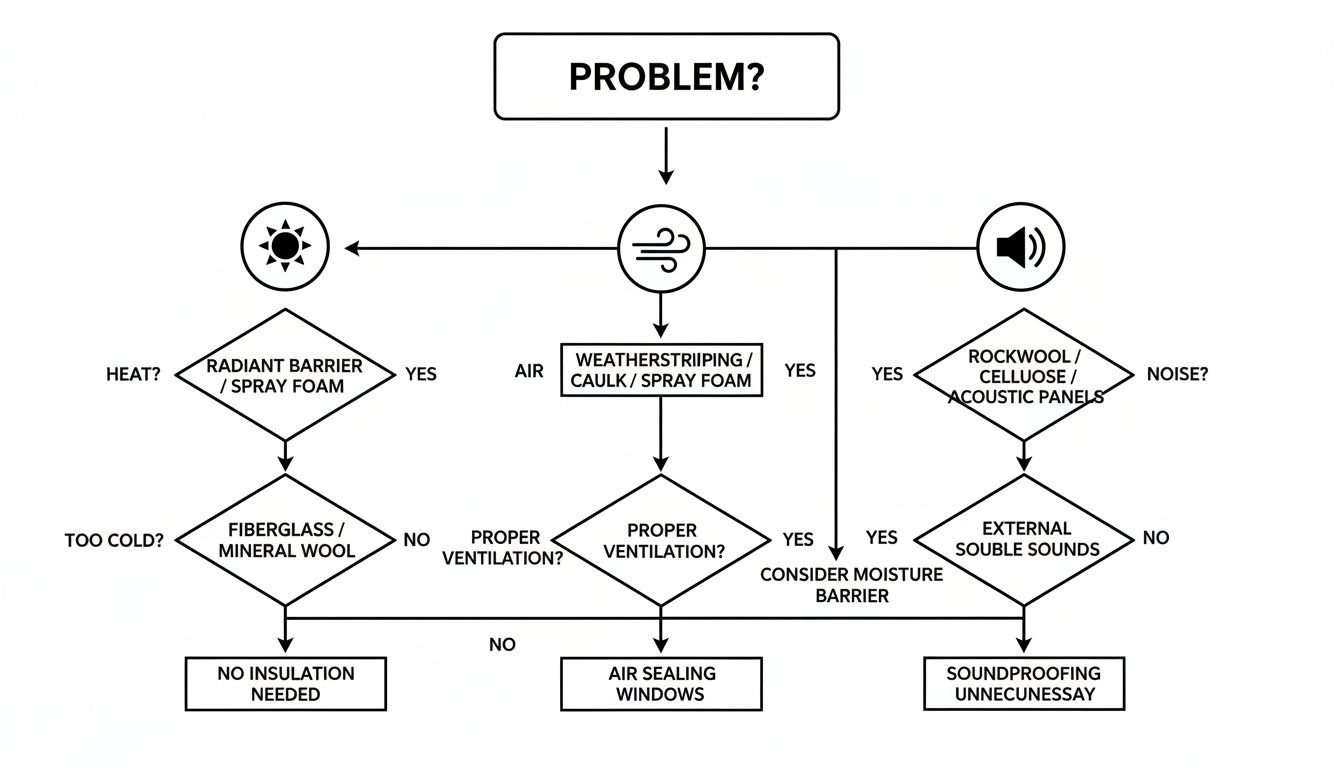
You'll notice that issues like unwanted airflow and radiant heat often point toward solutions that do more than just insulate—they create a complete barrier.
Insulation Type Performance Comparison
To help you see the differences at a glance, this table compares the key performance metrics of the most common insulation materials we see in South Florida homes.
| Insulation Type | R-Value Per Inch | Air Sealing | Moisture Resistance | Best For… |
|---|---|---|---|---|
| Fiberglass Batts | R-3.1 to R-3.4 | Poor | Poor (absorbs moisture) | Basic, budget-friendly projects in dry, protected cavities. |
| Blown-In Cellulose | R-3.2 to R-3.8 | Fair | Poor (absorbs moisture) | Filling attic floors and enclosed walls to a consistent density. |
| Open-Cell Spray Foam | R-3.5 to R-3.8 | Excellent | Poor (vapor permeable) | Interior walls, attic roof decks for air sealing and sound dampening. |
| Closed-Cell Spray Foam | R-6.5 to R-7.0 | Excellent | Excellent (vapor barrier) | High-humidity areas, metal buildings, and anywhere you need maximum performance. |
While every material has its place, the chart makes it clear why spray foams are often the preferred solution for the specific challenges we face with air leakage and moisture here.
Fiberglass Batts: The Old Standard
You’ve seen it a thousand times—the fluffy pink or yellow stuff rolled out in attics or stuffed between wall studs. Fiberglass is the long-standing budget option because it's cheap and it does a decent job of slowing down heat transfer (conduction).
But here’s the problem I’ve seen in countless homes: fiberglass has no defense against air or moisture. Air flows right through it, carrying heat and humidity with it. If it gets even slightly damp from a minor roof leak or condensation, its R-value collapses, and it becomes a useless, soggy mess.
Blown-In Cellulose: The Eco-Friendly Filler
Cellulose is essentially shredded, recycled paper treated with a fire retardant. It's blown into attics or wall cavities with a large hose, which allows it to settle in and around obstructions better than pre-cut batts. This creates a denser layer with fewer gaps.
It’s a step up from fiberglass in terms of getting a tighter fit, but it shares the same critical flaw: vulnerability to moisture. Once wet, cellulose compacts, loses its loft and R-value, and can hold that moisture against your home’s wood framing—a perfect recipe for rot and mold. You can see a direct comparison of how these traditional materials stack up against modern alternatives in our guide on fiberglass vs. foam insulation.
Open-Cell Spray Foam: The Air and Sound Blocker
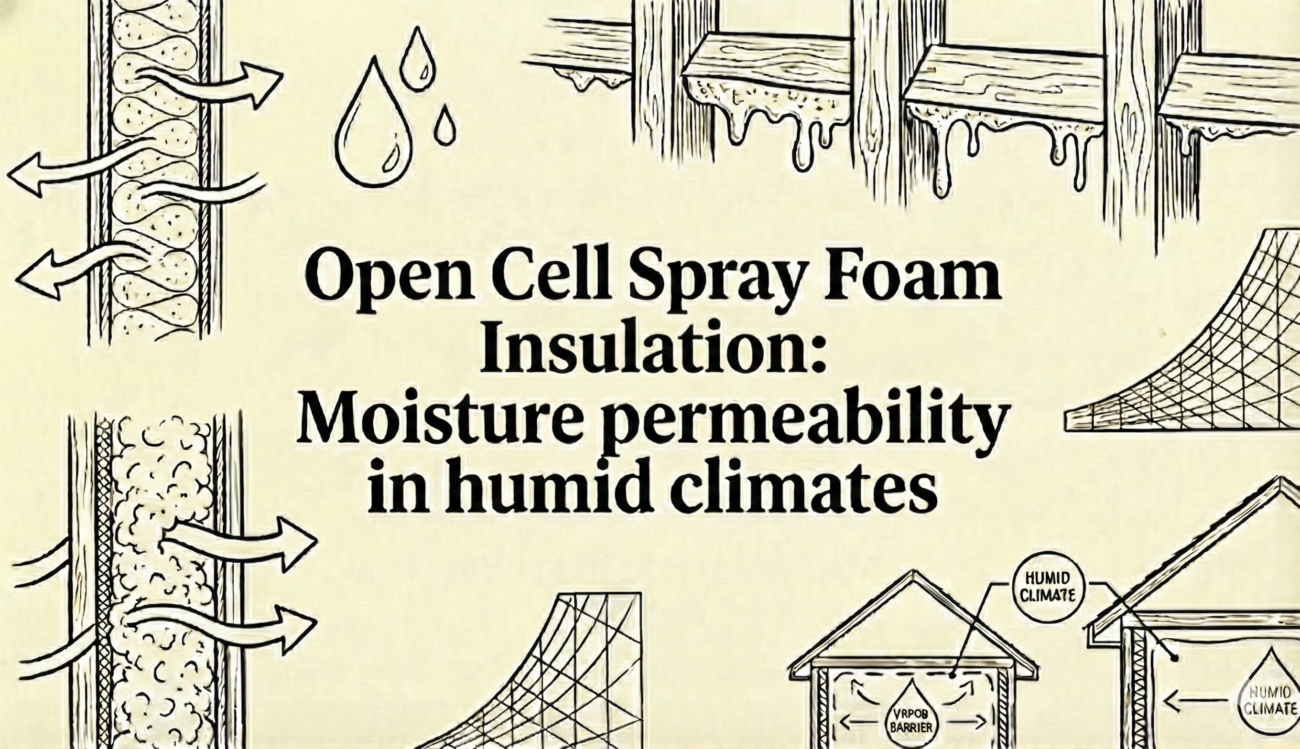
This is where insulation technology starts getting serious. Open-cell foam is applied as a liquid that expands over 100 times its size in seconds, creating a soft, sponge-like barrier. Its single greatest strength is forming a near-perfect air seal.
Because it expands so aggressively, open-cell foam seals every crack, gap, and penetration. This stops drafts and convective heat loops in their tracks. It’s also an incredible soundproofer, dramatically quieting a home from outside noise. However, it's vapor-permeable, meaning water vapor can pass through it, so we don't use it in areas where it might get directly wet.
Closed-Cell Spray Foam: The Ultimate Protector
If you’re looking for the highest level of performance, this is it. Closed-cell spray foam is the workhorse of modern insulation. It cures into a dense, rigid material with the highest R-value per inch available, typically between R-6.5 and R-7.
But its R-value is only part of the story. Its closed-cell structure makes it completely waterproof and a certified vapor barrier, so it stops heat, air, and moisture all in one shot. It’s so strong, it even adds structural integrity to walls and roof decks. This is why it’s the go-to solution for our climate, especially for crawl spaces, metal buildings, and commercial roofs that might use systems like tapered roof insulation to manage water and thermal performance.
What Good Insulation Actually Does for Your Home
All the talk about R-values and building science is great, but what does proper insulation actually do for you and your home? The benefits aren't just technical—they're things you'll see on your power bill and feel every single day. This is about more than just keeping your house cool; it's about your money, your comfort, and the long-term health of your property.
For most homeowners I talk to, the biggest win is the immediate drop in their energy bills. When your home has a solid thermal barrier and is properly air-sealed, your HVAC system simply doesn't have to run itself into the ground. It cycles on less often and for shorter bursts, which shows up right away as savings on your monthly FPL bill. This isn't a tiny tweak; it's a major dent in one of your biggest household expenses.
Lower Energy Bills, Guaranteed
Think of it this way: a well-insulated home finally gives your AC a fighting chance against the Florida heat. A 2024 study in the UK found that properly insulating older homes could cut energy bills by up to 30% a year. Here in the US, the EPA estimates homeowners can save an average of 15% on heating and cooling costs just by air-sealing and adding insulation to their attics and crawl spaces. You can read more about how these findings demonstrate the real-world potential of energy efficiency upgrades.
For anyone in South Florida, this means your air conditioner isn't fighting a losing battle all summer long. By sealing up those hidden gaps and stopping heat from radiating through your ceiling, you're keeping the cool air you paid for right where it belongs: inside your house.
A Whole New Level of Comfort
Forget the numbers for a second. The improvement in day-to-day comfort is something you can truly feel. Proper insulation gets rid of those annoying hot and cold spots that have you constantly messing with the thermostat. Your home just stays at a steady, comfortable temperature, from one room to the next.
It also means you can finally say goodbye to those pesky drafts you feel near windows or electrical outlets on a windy day. When we create a complete, sealed building envelope, the result is a quiet, stable indoor environment. It's the difference between a house that feels unpredictable and a home that feels like a true sanctuary.
Healthier Indoor Air Quality
What does insulation have to do with your health? A lot, actually. A properly air-sealed home does more than block heat—it creates a barrier against all the junk you don't want floating around inside. This includes:
- Pollen and Allergens: It keeps the worst of Florida's seasonal pollen from sneaking into your living space.
- Dust and Debris: It blocks fine particles from getting sucked in through countless tiny cracks and gaps.
- Pests: It creates a physical barrier that makes it much, much harder for insects and rodents to find a way in.
When you have control over how air gets into your home, you have much more control over the quality of the air your family breathes.
Finally, and this is a big one for us in Florida, the right insulation protects the very structure of your home. Uncontrolled moisture is the enemy down here. Closed-cell spray foam, in particular, is a game-changer because it acts as a true vapor barrier. It stops moisture from getting into your walls and attic, preventing the mold, mildew, and wood rot that can cause massive damage over time. This isn't just about maintenance; it's about protecting your home's integrity and its long-term value.
Warning Signs Your Home Needs Better Insulation
Your house has a way of telling you when something’s wrong. It sends out little signals that its thermal defenses are down, and if you know what to look for, you can catch a problem long before it causes serious damage. Spotting these signs is the first step toward fixing an issue that’s quietly draining your wallet and ruining your comfort.
The most obvious clue is stubbornly high energy bills. If your AC runs nonstop just to keep things bearable, there's a good chance poor insulation is the culprit. Your HVAC system is fighting a losing battle against the heat pouring into your home, and that’s a fight you pay for every month.
Are You Living in a Problem Home?
Another dead giveaway is having rooms with their own microclimates. Does your living room feel like an oven while the bedroom stays relatively cool? That's a classic sign that insulation has settled, shifted, or was never installed correctly in the first place, creating frustrating hot spots.
You might also feel drafts, especially around outlets, light switches, and windows. It’s easy to blame the window, but often, that air is moving right through your unsealed walls. These tiny leaks seem minor, but they add up to a major energy drain.
One of the most common things we see is a sweltering hot attic. When that space feels like a furnace, all that intense radiant heat is being pushed right down through your ceiling. It forces your AC to work way harder than it should, shortening its lifespan.
This isn’t a rare problem—it’s the norm. A recent study found that a staggering 89% of single-family homes in the U.S. are under-insulated by today's standards. That means millions of us are putting up with uncomfortable homes and paying way too much for energy. You can dig into the data yourself by checking out the Insulation Institute's report on under-insulated homes.
Finally, keep an eye out for moisture or frost in your attic. Here in South Florida, a damp attic is a huge red flag. It means warm, humid air is condensing where it shouldn't, which is not just a sign of energy loss—it’s an open invitation for mold, mildew, and wood rot.
Why South Florida Homes Have Unique Insulation Needs
Having worked on homes from Jupiter to West Palm Beach for years, I can tell you that insulating a house here is a completely different ballgame than it is up north. A generic, one-size-fits-all approach just doesn’t cut it. Our fight isn't about keeping the cold out; it's a constant battle against our two biggest enemies: relentless heat and oppressive humidity.
This is the key to understanding what does house insulation do in our part of the world. Sure, all insulation resists heat, but it’s the non-stop war with moisture-saturated air that truly defines the job here. High humidity doesn't just feel sticky and miserable; it's actively trying to break down your home from the inside out.
When that heavy, damp air works its way into your attic and wall cavities, it eventually condenses. This creates the perfect breeding ground for mold and mildew. Left unchecked, this trapped moisture leads to rot, threatening the very structure of your house. It's why a simple thermal barrier is never enough.
Winning the War Against Heat and Humidity
To properly defend a home against our climate, an insulation system has to do two things flawlessly: block intense radiant heat and stop moisture from getting in. Your attic is ground zero for the first fight. Without the right protection, it acts like a giant radiator, beaming extreme heat down into your living areas and forcing your AC to run constantly.
For the second battle, controlling moisture takes more than just stuffing some insulation into the walls. You need a material that creates a truly impenetrable air and moisture seal.
This is where a modern material like closed-cell spray foam becomes a real game-changer. It doesn’t just insulate—it cures into a rigid, non-permeable vapor barrier that completely locks out humidity. You can learn more about how a proper vapor barrier and insulation system work together to protect your home.
This is especially critical for the types of homes we see all over South Florida. For concrete block (CBS) houses and metal buildings, spray foam’s ability to expand and create a seamless, airtight bond is second to none. It seals every tiny crack and gap that traditional materials miss, giving you a complete defense against our region’s toughest challenges.
Your Next Steps Toward an Energy-Efficient Home
Okay, so you’ve seen what house insulation does. It’s not just about stuffing pink fluff in your walls—it’s a complete system that makes your home more comfortable, saves you real money, and even protects the building itself.
Now you have the knowledge to take the next practical step: getting a professional to come out and see what’s really going on in your attic and walls. Choosing the right partner for this is everything.
When you invite a contractor into your home, you're not just buying a product. You're buying their experience and their eye for detail. A true pro won't just hand you a quote; they'll give you a clear diagnosis of your home's performance issues.
Questions to Ask Any Insulation Contractor
To sort the real experts from the rest, you need to go into the conversation prepared. Here are the essential questions you should be asking.
- What specific type of insulation do you recommend for my attic and walls, and more importantly, why?
- What’s your game plan for air sealing before you insulate?
- What are your team’s safety protocols during the installation?
- Can you show me proof of your license and insurance?
- Do you stand behind your work with a warranty on both the materials and the installation itself?
Their answers will tell you a lot, especially about how well they understand South Florida's unique battle with heat and humidity. Vague answers are a red flag; a detailed explanation is the sign of a seasoned professional.
Making your home more energy-efficient also has a significant environmental benefit. Upgrading insulation contributes to massive emission reductions, with studies projecting that improved building efficiency can save hundreds of millions of tons of CO2. For more on this, check out the research on insulation's positive impact on energy efficiency.
Getting a no-obligation estimate is your best first move. It’s the only way for an experienced technician to put eyes on your home, find its specific weak spots, and recommend a solution that actually fits.
This is where it all clicks—that conversation is where you’ll connect the dots between your home’s symptoms and the right fix. You’ll walk away with a clear path to a quieter, healthier, and more affordable home.
Ready to feel the difference a truly airtight home can make? The experts at Airtight Spray Foam Insulation provide free, no-obligation estimates across South Florida. Schedule your free quote today and discover your home’s true potential for comfort and efficiency.