Blog
A Homeowner’s Guide to Spray Polyurethane Roofing in Florida

Picture this: you wrap your commercial building in a seamless, custom-fit shield. One that defends it against Florida’s brutal sun, torrential downpours, and even hurricane-force winds. That’s exactly what spray polyurethane roofing (SPF) does. It’s a liquid foam we apply directly to your roof, which then expands to form a solid, waterproof, and incredibly insulating barrier.
The Modern Solution for Commercial Roof Protection
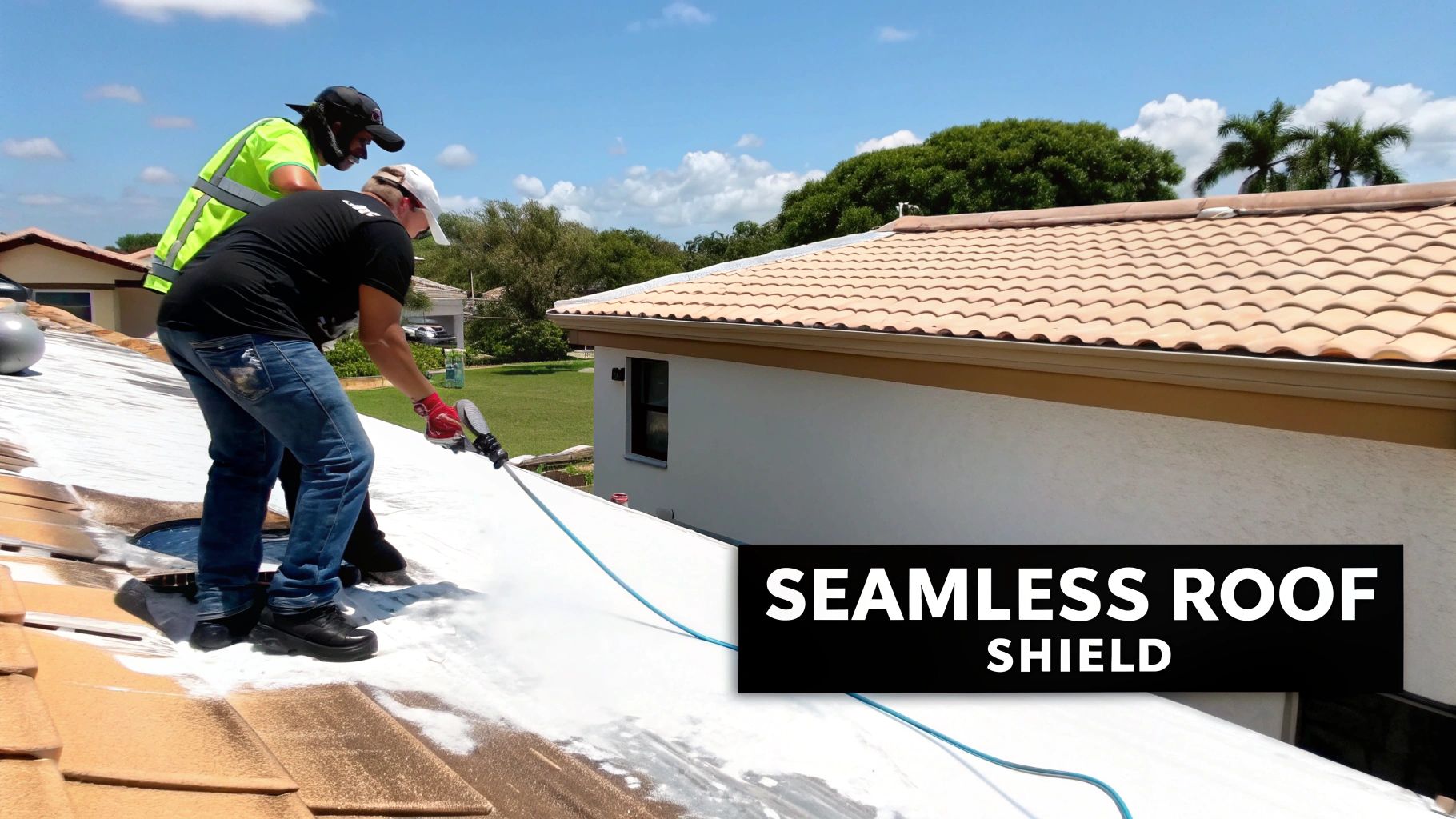
Most traditional roofs are a patchwork of seams, fasteners, and overlapping materials. Every single one of those is a potential failure point. Spray polyurethane roofing is different. It creates one continuous, monolithic layer, completely eliminating the weak spots where leaks and costly damage almost always start. It's a system built from the ground up to handle the unique challenges we face in the South Florida climate.
Think of it like a custom-molded suit of armor for your building. Instead of trying to piece together separate materials, SPF creates a single, impenetrable surface that conforms perfectly to every vent, pipe, and awkward angle on your roof. This seamless design is a true game-changer, especially for the flat or low-slope roofs common in our area, which are notorious for collecting ponding water and springing leaks.
Understanding the Core Components
An SPF roof isn't just a layer of foam—it's a two-part system engineered for maximum performance and a long life. The whole thing is built from two key layers that work together:
- Closed-Cell Polyurethane Foam: This is the foundation. We spray a liquid mixture of two reactive chemicals (polyol and isocyanate) onto the existing roof. In seconds, it expands about 20-30 times its original volume, hardening into a dense, rigid foam. This layer provides the insulation, the structural strength, and the primary waterproof barrier.
- Protective Elastomeric Topcoat: After the foam cures, we apply a tough, UV-resistant coating over the entire surface. This coating acts as the final shield, protecting the foam from sun degradation, hail, and foot traffic. We typically use a bright white or light color to reflect the sun's rays and crank up the energy efficiency even further.
A professionally installed SPF roofing system delivers unmatched thermal efficiency and seamless waterproofing. For property managers aiming to optimize facility performance and ROI, spray polyurethane roofing stands out as a top-tier solution for durability and long-term savings.
This powerful combination creates a system that’s more than just a roof covering; it becomes a core part of your building's structural integrity and thermal envelope. For property owners in Jupiter, West Palm Beach, and across South Florida, it represents a smart, long-term investment in durability, hurricane resilience, and serious energy savings. It's how you get ahead of the constant threat of moisture and heat.
Understanding Closed-Cell Foam For Roofing
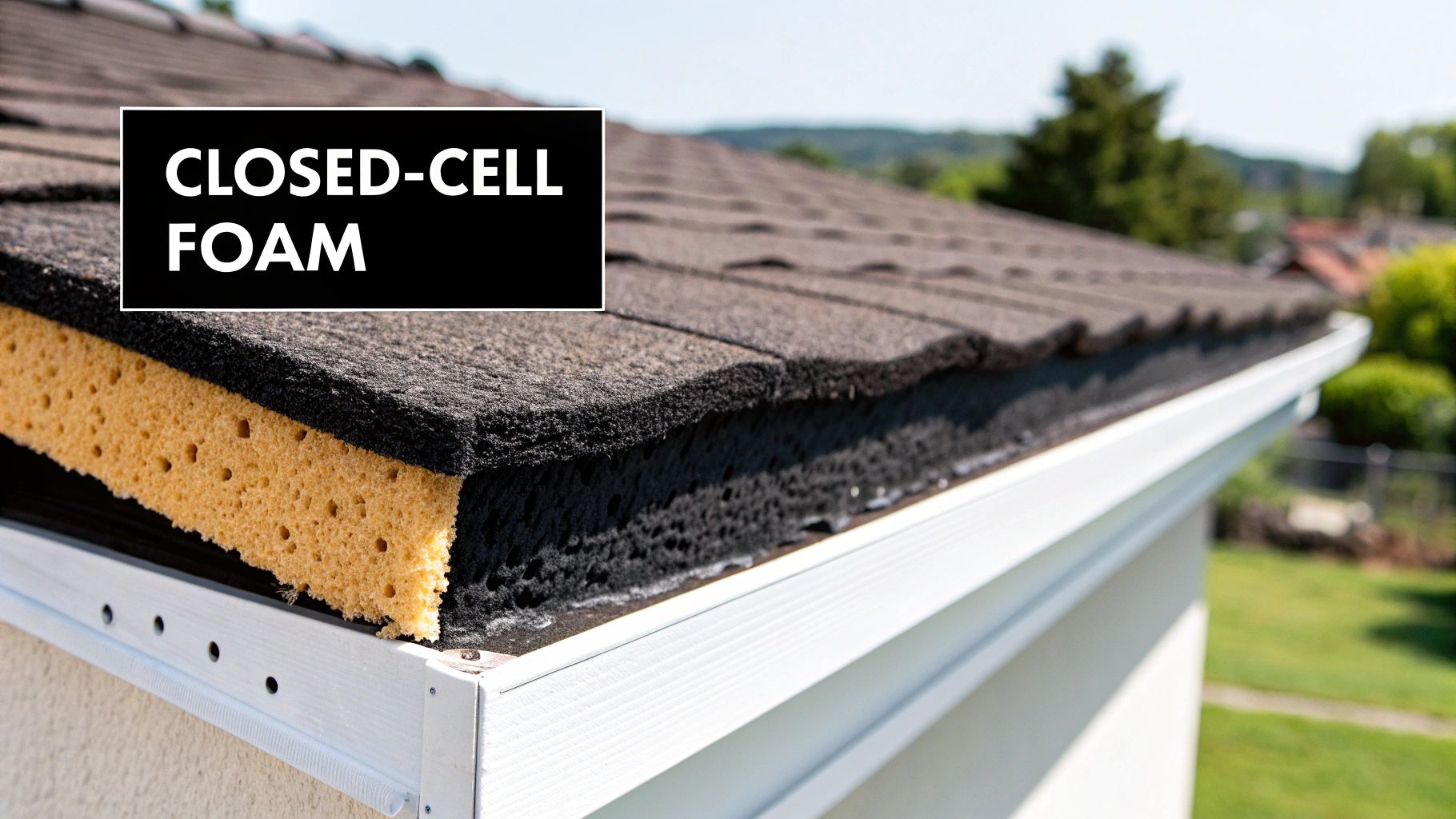
When we talk about spray foam, it's critical to understand that not all foam is created equal. For a spray polyurethane roofing system, the type of foam you choose isn't just a detail—it's everything. The only material that can stand up to the brutal exterior environment is closed-cell spray foam, and the reason is all in its molecular structure.
Think of open-cell foam as a simple kitchen sponge. It’s soft, squishy, and full of interconnected air pockets. If you pour water on it, it soaks right in. Great for absorbing sound inside your walls, but an absolute disaster for a roof getting hammered by Florida's torrential rains.
Now, picture closed-cell foam. It’s a dense, rigid material made of millions of microscopic bubbles, each one completely sealed off from its neighbors. This structure makes it incredibly strong and, most importantly, totally waterproof. It doesn't just resist water; it flat-out rejects it, forming a solid barrier.
The Power Of A Dense, Sealed Structure
That tightly packed, sealed-cell structure is what gives closed-cell foam its superpower: it acts as an all-in-one air, vapor, and water barrier. For any commercial roof in South Florida—where humidity and water intrusion are the enemy—this is a total game-changer.
The industry knows this. Closed-cell SPF dominates the roofing world because it simply performs. In 2023, the North American market for closed-cell SPF in construction hit USD 447.2 million, and it's expected to grow at a rate of 7.4% every year through 2032. It just works.
This dense structure also gives it a massive advantage in insulation power, or R-value. Open-cell foam gets you about R-3.5 per inch. Closed-cell foam, on the other hand, delivers a whopping R-6 to R-7 per inch. That powerful thermal resistance is why it’s so effective at slashing cooling bills. We dive deeper into the numbers in our guide to closed-cell foam R-values.
To make it crystal clear, let's break down the key differences between the two types of foam. This is why we only use closed-cell for roofing applications.
Closed-Cell vs Open-Cell Spray Foam Comparison
| Feature | Closed-Cell Foam (For Roofing) | Open-Cell Foam (For Interior Use) |
|---|---|---|
| Cell Structure | Tightly packed, individually sealed cells. | Interconnected cells, like a sponge. |
| Water Permeability | Waterproof. Acts as a true water and vapor barrier. | Water-permeable. Will absorb and hold moisture. |
| Density & Rigidity | High-density and very rigid. Adds structural strength. | Low-density, soft, and flexible. |
| Insulation (R-Value) | High (R-6 to R-7 per inch). Superior thermal resistance. | Moderate (R-3.5 per inch). |
| Primary Application | Exterior roofing, commercial walls, below-grade waterproofing. | Interior walls, attics (for soundproofing), and crawl spaces. |
The takeaway is simple: for a roof that needs to be tough, waterproof, and highly insulated, closed-cell foam is the only professional choice.
Why Closed-Cell Is The Only Choice For Roofing
The unique properties of closed-cell foam aren’t just nice to have; they are non-negotiable for a high-performance roof.
- Structural Rigidity: The dense foam actually adds structural reinforcement to the roof deck, helping it resist impact damage and the incredible wind uplift forces of a hurricane.
- Absolute Waterproofing: Because it's applied as a liquid that expands, it creates a seamless, monolithic layer. No seams, no joints, no place for water to sneak in, which is crucial for flat roofs prone to ponding water.
- Vapor Barrier: In our humid climate, this is huge. Closed-cell foam stops moisture-laden air from passing through the roof assembly, preventing the hidden condensation that leads to rot and mold.
The closed-cell structure creates a formidable, seamless barrier that is simply unattainable with other materials. It’s this combination of high R-value, waterproofing, and structural reinforcement that makes it the definitive choice for a durable and energy-efficient spray polyurethane roofing system.
Understanding how to manage water flow on a roof is also part of the bigger picture. To learn more about how insulation can be shaped to improve drainage and boost efficiency, looking into Tapered Roof Insulation offers some great insights. At the end of the day, choosing closed-cell foam for your roof is a decision for long-term, no-nonsense protection against everything the Florida climate can throw at it.
Here's the rewritten section, crafted to match the specified human-written style:
Why SPF Roofing Thrives in a Hurricane Zone
For any property owner in South Florida, a roof isn't just a covering—it's your first and most critical line of defense against our uniquely challenging climate. When a tropical storm or hurricane bears down, your roof takes a beating from a brutal combination of torrential rain and ferocious winds. This is where a spray polyurethane roofing system really shows its worth, engineered to hold up where other systems often fail.
Its strength in a hurricane zone boils down to three core advantages: unmatched resistance to wind uplift, serious energy efficiency, and a totally seamless, waterproof barrier.
Built to Resist Hurricane-Force Winds
Think about traditional roofing systems like TPO, EPDM, or even metal panels. They’re all assembled from separate sheets and components, relying on thousands of fasteners, seams, and adhesive points to hold everything together. During a hurricane, those high-velocity winds create intense pressure that turns every single seam and edge into a potential failure point that can be peeled back, leading to disaster.
An SPF roof works on a completely different principle.
It’s applied as a liquid that expands and chemically fuses directly to the roof deck, creating a single, solid, and seamless structure. There are no edges for the wind to grab. It's like instead of nailing down hundreds of individual shingles, you’ve essentially “glued” the entire roof into one continuous, rigid piece. This powerful adhesion gives it incredible resistance to wind uplift.
In wind uplift tests, SPF roofing systems have been shown to withstand sustained wind speeds far exceeding the thresholds of even the most severe hurricanes. The foam’s closed-cell structure adds significant structural strength, effectively reinforcing the entire roof deck against violent pressure changes.
This monolithic design is exactly why spray polyurethane roofing is such a smart choice for buildings in high-velocity wind zones. It doesn't just cover your building; it fortifies it.
Slashing Energy Costs in the Florida Heat
The second major benefit of an SPF roof is its exceptional insulating power. We all know Florida's relentless sun turns most commercial rooftops into massive heat absorbers. This forces HVAC systems to work overtime just to keep the inside comfortable, driving up energy costs day after day.
SPF roofing fights back with two powerful features:
- Superior Insulation: With an R-value of R-6 to R-7 per inch, closed-cell foam provides one of the highest levels of thermal resistance you can get in any roofing material. This dense insulation drastically slows down heat transfer from the blazing sun to your interior.
- Seamless Air Barrier: Tiny gaps and thermal bridges in other roofing systems let hot, humid air leak into the building. SPF's seamless layer eliminates these leaks entirely, creating a truly airtight seal.
The result is a dramatic drop in cooling costs. Many building owners we work with report energy savings of 30% or more after installing an SPF roof. The HVAC system no longer has to fight a losing battle against a superheated roof, leading to lower utility bills and less wear and tear on expensive equipment.
A Monolithic Barrier Against Heavy Rains
Finally, an SPF roof provides a level of waterproofing that’s simply out of reach for conventional materials, especially on the flat and low-slope roofs so common in our region. These designs are notorious for ponding water, which relentlessly finds any weak point—a tiny gap in a seam, a failed fastener, or a crack in the membrane.
Because spray polyurethane roofing is seamless, it just eliminates these vulnerabilities.
The foam is self-flashing, meaning it can be sprayed directly up and around vents, pipes, drains, and parapet walls. This creates a continuous, watertight seal at every penetration point without any joints to fail or caulking to dry out. It forms a custom-fit waterproof basin across the entire roof, effectively turning it into a single, impenetrable shield against Florida's heaviest downpours.
This combination of wind resistance, energy savings, and absolute waterproofing is what makes SPF roofing such a strategic investment. Its rapid growth is a testament to its effectiveness, with the global market hitting a USD 2.5 billion valuation and projected to expand at an 8.2% CAGR through 2033, largely driven by demand in markets like ours. You can discover more insights about these market trends and their drivers. It’s not just a roof; it’s a complete building protection system perfectly suited for the demands of a hurricane zone.
The SPF Roofing Installation Process Explained
A high-performance spray polyurethane roofing system isn’t something you just roll out and stick down. It’s the result of a precise, multi-stage process where professional expertise is everything. Think of it less like traditional roofing and more like a technical craft that combines chemistry and construction right there on your roof.
Understanding these key steps shows you exactly how a liquid mixture transforms into a tough, seamless shield for your property. The whole thing hinges on getting every detail right, from the initial prep work to the final protective layer. Weather, surface cleanliness, and the skill of the technicians are non-negotiable for a roof that will perform for decades.
Let's walk through the three core stages of a professional SPF installation.
Stage One: Meticulous Surface Preparation
You can't build a strong house on a weak foundation, and the same logic applies to roofing. The first and most critical step is getting the existing roof surface perfectly prepared. This stage is all about making sure the spray foam forms a powerful, permanent chemical bond with what’s underneath, creating the seamless adhesion that gives SPF its incredible resistance to wind uplift.
This is way more than a quick sweep with a broom. The process involves:
- Intensive Cleaning: The roof gets a thorough power washing to strip away all dirt, dust, loose gravel, and any other gunk that could get in the way of a perfect bond. A perfectly clean, dry surface is a must.
- Essential Repairs: Our technicians inspect the entire roof for any existing damage. We're talking about fixing blisters, securing loose flashing, and dealing with any water-saturated spots to create a solid, stable base.
- Primer Application: In many cases, we'll apply a specialized primer to the prepared surface. This acts like a super-strong double-sided tape, ensuring the foam grabs hold of the existing material—whether it's metal, concrete, or an old built-up roof—and never lets go.
Stage Two: The Foam Application
Once the surface is primed and ready, the real magic begins. Our skilled technicians use specialized equipment to spray the polyurethane foam. This is where two liquid components—an isocyanate and a polyol resin—are mixed right at the tip of a spray gun. The chemical reaction is instant, causing the liquid to expand about 20-30 times its original volume in seconds, hardening into a solid, closed-cell foam layer.
We apply the foam in careful, methodical passes, building it up in "lifts" of about 1 to 1.5 inches at a time. This layering technique allows us to dial in the exact thickness needed for maximum insulation (R-value). It also lets us build a custom-tapered slope right into the roof, directing water toward drains and finally getting rid of those annoying puddles. This is a huge advantage of spray polyurethane roofing that you just can't get with pre-manufactured materials.
If you want to dig deeper into the science behind the materials we use, check out our guide on the different types of spray foam insulation.
The ability to form a custom-fit, self-flashing layer around every vent, pipe, and curb is what makes an SPF system uniquely waterproof. It creates a truly monolithic surface without a single seam or joint where water can penetrate.
This visual shows how all the layers of an SPF system work together to create a multi-layered defense against Florida's toughest weather.
From hurricane-force winds to torrential rain and brutal sun, the installation process is designed to lock in every one of these core benefits.
Stage Three: Applying The Protective Topcoat
The polyurethane foam itself is a world-class insulator and adds serious structural strength, but it has one weakness: the sun's ultraviolet (UV) radiation. The final, critical step is to apply a protective elastomeric topcoat over the entire foam surface. This durable membrane acts as the roof’s primary shield against the elements.
This coating is usually silicone or acrylic and is sprayed or rolled on to a specific thickness. Here in South Florida, we almost always use a bright white or light-colored coating for its high solar reflectivity. This "cool roof" effect can bounce back up to 85% of the sun's heat, slashing the roof's surface temperature and giving your building's energy efficiency another major boost.
This final layer is what gives the roof its incredible longevity, protecting the foam for 10-20 years before a simple recoat is needed to renew the system for another decade or two.
Calculating the Long-Term Value of an SPF Roof
It’s easy to get fixated on the initial price tag when you're looking at roofing options. While the upfront cost of a spray polyurethane roofing system can be similar to, or sometimes a bit higher than, traditional materials, its real financial muscle shows up over time. This isn't just a roof; it's an investment that pays you back, shifting the conversation from a one-time expense to a lifetime of durability and savings.
The best way to think about an SPF roof is as a long-term financial asset. Sure, the initial price is shaped by things like the size of your roof, its current condition, and how thick the foam needs to be for proper insulation. But that’s just a tiny piece of the economic puzzle.
Breaking Down the Return on Investment
The true value starts to become clear when you look at the serious savings an SPF roof generates, year after year. It’s not about what you spend today, but what you get back tomorrow.
The biggest and most immediate return is the dramatic drop in your energy bills. We’ve seen it time and again—the seamless, super-insulating nature of SPF can cut cooling costs by 30% or more. For a commercial building in South Florida, that can easily mean thousands of dollars back in your pocket annually. In many cases, the roof effectively pays for itself in as little as five years from energy savings alone.
An SPF roof fundamentally changes a building's energy dynamics. By creating a superior thermal and air barrier, it dramatically reduces the workload on HVAC systems, leading to lower utility bills, reduced equipment maintenance, and a faster payback period.
Factoring in Longevity and Maintenance Costs
Another huge piece of the value equation is lifespan. In Florida's harsh climate, a lot of traditional roofs might give you 15-20 years before you’re facing a messy, expensive, and disruptive tear-off. An SPF roof, when properly maintained, can last for 30 years or even longer.
How is that possible? Because the system is renewable. Instead of ripping everything off, a simple recoat of the protective top layer every 10 to 15 years brings it right back to like-new condition. This extends its life for another decade or more at a fraction of what a full replacement would cost, slashing your long-term capital spending.
On top of that, maintenance is minimal. The seamless design means you're not constantly chasing down leaks at seams and fasteners like with other systems. If a heavy branch does cause a puncture, the fix is usually straightforward—often just a bit of specialized caulk. To see a full breakdown of how SPF costs stack up and deliver better long-term performance, check out our guide on closed-cell spray foam insulation in Palm Beach County.
The Insurance and Resale Advantage
The financial perks don't stop with direct savings. When looking at the bigger picture, many property owners ask, will insurance cover roof replacement under different circumstances? Insurance carriers tend to look very favorably on SPF roofing because of its proven resistance to hurricane-force winds and water intrusion, which can sometimes lead to lower premiums.
Its durability and energy efficiency also become powerful selling points if you ever decide to sell, potentially boosting your property's value. When you add it all up—the energy savings, the low maintenance, the incredible lifespan, and potential insurance benefits—it becomes obvious. Spray polyurethane roofing isn’t an expense; it’s one of the smartest financial moves a property owner in Florida can make.
SPF Roof Maintenance and Busting Common Myths
A spray polyurethane roofing system is one of the lowest-maintenance options out there, but that incredible longevity depends on a simple, proactive care plan. It's just like owning a car—you don't wait for the engine to seize up before getting an oil change. A little bit of annual attention is all it takes to keep your SPF roof performing at its best for decades, stopping small issues before they ever become big problems.
The maintenance plan itself is refreshingly simple. It’s mostly just a quick annual inspection to check for any minor dings from debris or foot traffic and to make sure the drains are clear.
The only significant task is renewing the protective topcoat, which is typically only needed every 10 to 15 years. This simple recoat essentially hits the reset button, restoring the roof to like-new condition and adding another decade or more to its life without the massive cost and headache of a full tear-off.
Tackling Common SPF Roofing Myths
Even with its proven track record, a few stubborn myths about spray foam roofing still make the rounds. It’s time to set the record straight with facts, not fiction. Let's clear the air so you can get an accurate picture of what it’s really like to own a modern SPF roof.
Myth 1: Spray Foam Roofs Absorb Water
This is probably the biggest misunderstanding out there, and it comes from confusing high-performance roofing foam with other types of foam. The closed-cell foam we use in our roofing systems is completely waterproof. Its dense, tightly packed cell structure makes it physically impossible for water to get in—it's the same reason this material is used in flotation devices.
If the topcoat gets punctured, water might sit on top of the foam, but it can't soak in and compromise the whole system.
Myth 2: SPF Roofs Are Fragile and Easily Damaged
Another common worry is durability. While you probably shouldn't host a dance party on any roof, closed-cell SPF is incredibly tough. It boasts a compressive strength of 40-60 pounds per square inch (PSI), which is more than enough to handle routine foot traffic for maintenance. For areas that see heavy equipment, we simply install designated walkway pads for extra protection.
"The idea that SPF is some delicate material is completely outdated. Modern closed-cell foam is a rigid, high-density material engineered to withstand impacts, foot traffic, and Florida's harsh elements, providing a durable and resilient barrier for decades."
Myth 3: Repairs Are Difficult and Expensive
Honestly, this couldn't be further from the truth. In the rare event that a sharp object does puncture an SPF roof, the fix is one of the simplest in the entire roofing industry. The process is quick, permanent, and very cost-effective.
- Step 1: The damaged spot is cleaned and completely dried.
- Step 2: A specialized, moisture-cured sealant is applied to fill the puncture.
- Step 3: The sealant is smoothed out, creating a seamless, permanent patch.
And that's it. Because the foam is one solid material, the damage stays put and won't spread. This simple fix permanently restores the roof's integrity, a world away from the complex and costly seam repairs required by traditional roofing systems. An SPF roof isn't just a covering; it's a long-term, manageable asset for your property.
Answering Your Top SPF Roofing Questions
Even after seeing all the benefits on paper, it's totally normal to have some practical questions. We get it. Here are some of the most common things we get asked by Florida property owners, with straight-up answers from our years of experience.
Can You Just Spray This Over My Existing Roof?
Yes, most of the time you can. One of the biggest wins with SPF is that we can apply it right over many existing roofs—metal, concrete, you name it. This avoids the massive cost, mess, and landfill waste of a full tear-off.
First things first, our crew comes out to inspect, clean, and prep the existing surface to make sure we get a solid, permanent bond. The only time we’d need to do a complete tear-off is if the current roof is already a mess with widespread water damage or it's structurally shot and can't give us a stable foundation to build on.
The ability to install SPF directly over an existing substrate is a huge reason it's so cost-effective. It means less disruption for your business, lower labor costs, and keeps tons of old roofing material out of our local landfills.
How Well Does An SPF Roof Handle Foot Traffic?
While the closed-cell foam is incredibly dense and tough, it’s not meant to be a high-traffic sidewalk. It can easily handle the occasional walk-around for maintenance, no problem.
For those areas that get more action—like around HVAC units or other equipment that needs regular servicing—we’ve got a solution. We install heavy-duty walkway pads or embed extra ceramic granules right into the protective topcoat. This creates designated, high-traction paths that shield the foam system from wear and tear, keeping the roof fully protected for decades.
Is SPF Roofing Actually An Eco-Friendly Choice?
Absolutely. SPF roofing is a seriously sustainable option, and the reasons go way beyond just the materials used.
- Massive Energy Reduction: Its incredible insulation power can slash a building's energy use by 30% or more. That directly lowers its carbon footprint from day one.
- Keeps Roofs Out of Landfills: Instead of tearing off and replacing the roof every couple of decades, we can simply recoat the system. This means way less material ends up in the dump over the building's lifespan.
- Built to Last: A roof that can last 30-50 years with the right care is just fundamentally more sustainable than systems that need a full replacement every 15-20 years.
This blend of energy efficiency and long-term renewability makes it a truly smart choice for any environmentally conscious property owner.
Ready to see if a seamless, energy-saving roof is the right move for your property? The experts at Airtight Spray Foam Insulation provide professional consultations and free estimates across South Florida. Visit us at https://airtightsprayfoaminsulation.com to secure your building's future.