Blog
What Makes Spray Foam Insulation a Dual-Action Barrier in Jupiter, FL?

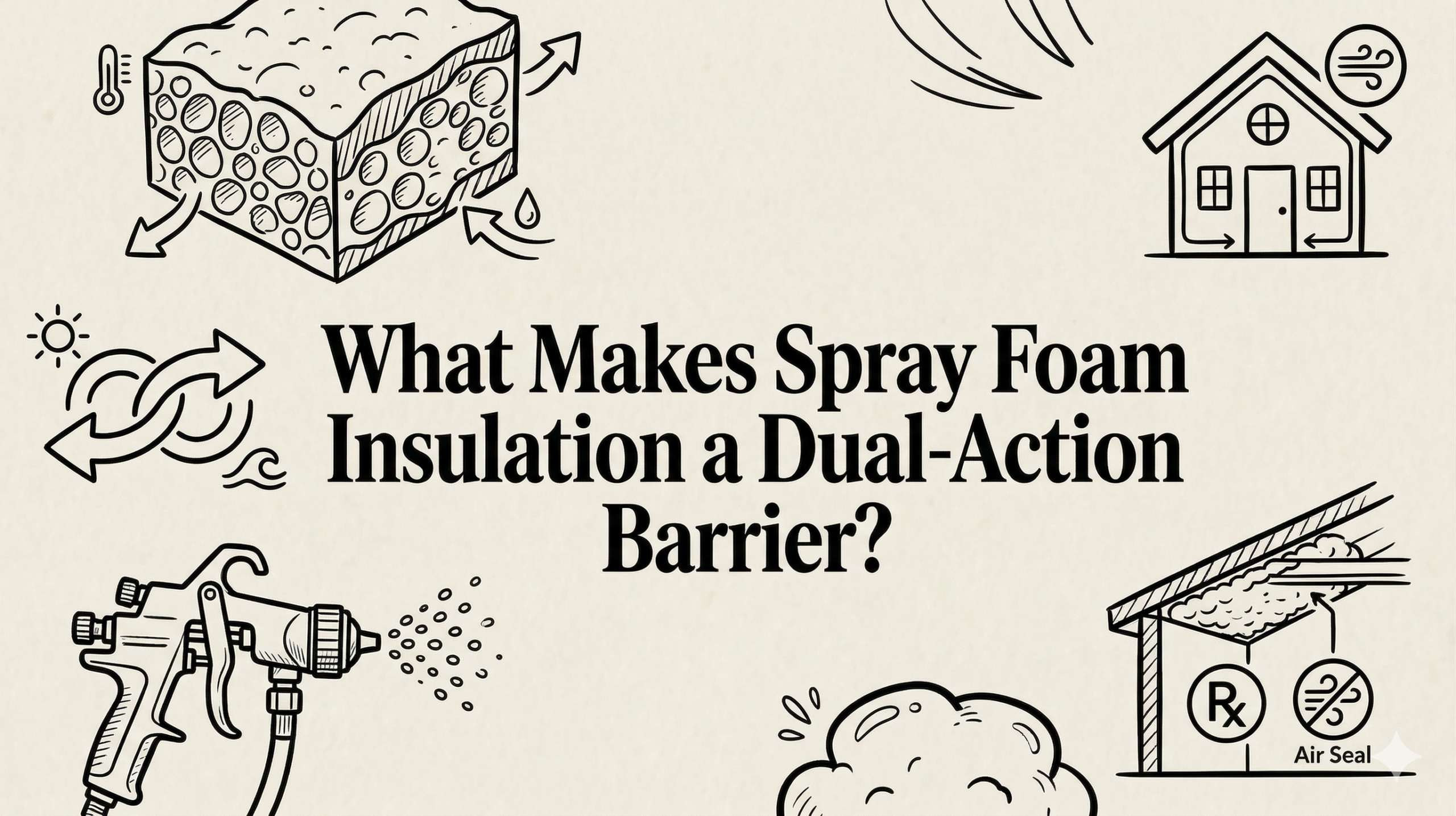
Living in Jupiter, FL, requires a strong defense against intense heat and relentless humidity. The tropical climate pushes air conditioning systems to their absolute limits year-round. Traditional fiberglass batts often fall short in this harsh coastal environment. A modern physical barrier exists in the form of a continuous chemical application. Polyurethane foam expands upon contact with building surfaces. This rapid chemical reaction creates two distinct forms of protection simultaneously: a dense thermal barrier and an impenetrable air seal.
What Is an Air Seal in Building Science?
An air seal is a continuous physical boundary blocking the unintended movement of air into and out of a building enclosure. The process stops conditioned, cooled indoor air from escaping through cracks, gaps, and structural joints. Simultaneously, it blocks hot, humid outdoor air from pushing its way inside the living space.
Drafts occur through tiny imperfections in a home’s framing, around window casings, plumbing penetrations, and electrical outlets. The expanding material fills these voids completely. The liquid application expands up to 100 times its original volume within seconds. The expansion forces the material into every microscopic crevice. Once cured, the rigid or semi-rigid structure forms a completely impermeable layer. Wind-driven pressure from coastal storms cannot penetrate this boundary.
What Constitutes a Thermal Barrier?
A thermal barrier resists the conductive transfer of heat energy between materials of varying temperatures. Heat naturally moves toward cooler areas. During a Florida summer, the solar radiation superheats the roof deck and exterior walls. The heat energy attempts to transfer into the cooler, air-conditioned living spaces.
The structure of the foam stops this transfer cold. Millions of tiny, tightly packed cells trap insulating gases or still air. These pockets of gas possess very low thermal conductivity. The heat energy hits the outer layer of the material and slows down drastically. The internal temperature of the home remains stable because the heat cannot bridge the gap through the dense insulation layer.
Why Do Homes in Jupiter, FL Require Both Protections?
The geographical location of Jupiter creates unique environmental stressors. Proximity to the Atlantic Ocean and the Loxahatchee River means the surrounding air holds immense amounts of moisture. High humidity combined with temperatures frequently exceeding 90 degrees Fahrenheit creates a heavy, oppressive exterior climate.
Fiberglass and cellulose materials filter air but do not stop it. They slow down heat transfer, but humid air easily passes right through the fibrous materials. Humid air entering an attic or wall cavity meets the cooled drywall inside the home. This collision of hot, wet air and cool surfaces causes instant condensation. Condensation breeds mold, mildews, and wood rot deep within the walls.
Blocking heat represents only half the battle. Stopping the physical movement of the air itself is the true solution. Combining these two properties into a single application creates a highly controlled indoor environment.
How Does Spray Foam Insulation Form an Unbroken Air Seal?
The secret lies in the precise application method. Installers use specialized, heated equipment to mix two separate chemical components right at the nozzle of the spray gun. The moment the chemicals mix and hit a substrate, a rapid exothermic reaction occurs.
The mixture goes on as a thin, warm liquid. This liquid state allows it to seep into the tiny gaps between wall studs, the micro-cracks in exterior sheathing, and the awkward spaces around plumbing stacks. Within moments, the liquid froths and expands massively. It conforms perfectly to the unique geometry of any architectural space.
Pre-cut rigid boards or fluffy batts always leave small gaps at the edges. A house shifts and settles over time, widening these gaps and creating new drafts. The expanded foam adheres tenaciously to wood, metal, concrete, and masonry. It flexes slightly with the building, maintaining the unbroken boundary year after year.
How Does the Material Stop Heat Transfer Across Three Mediums?
Heat travels in three ways: conduction, convection, and radiation. A high-performance envelope addresses all three methods of heat transfer.
Stopping Conduction: Conduction involves heat moving through solid materials. The sun heats the exterior siding, which heats the wall studs, which heats the interior drywall. The high R-value of the cellular plastic resists this physical transfer. The trapped gases inside the closed cells provide massive resistance to conductive heat flow.
Stopping Convection: Convection involves heat moving via fluids or air. When hot air leaks into a house through gaps around a window, it carries heat energy inside. The airtight seal completely stops convective heat transfer.
Stopping Radiation: Radiant heat transfers through empty space, much like the sun heating a dark roof deck. Applying the material directly to the underside of the roof deck absorbs and blocks the radiant heat from baking the attic space below.
What Happens When Coastal Humidity Enters a Florida Home?
Moisture infiltration wreaks havoc on comfort and structural integrity. Water vapor moves via air transport and vapor diffusion. Air transport carries massive amounts of water vapor through unsealed gaps.
Once inside, this moisture makes the air feel sticky and uncomfortable. The air conditioning unit faces a massive, continuous workload. The AC system must cool the air and act as a heavy-duty dehumidifier, pulling the moisture out of the living space. This constant workload shortens the lifespan of expensive HVAC equipment.
The structural risks pose a severe threat to the property. Wood framing absorbs trapped moisture. Termites and carpenter ants seek out damp wood for nesting. Mold spores, naturally present in the outdoor air, find a perfect breeding ground on damp drywall paper and wet structural timbers. An airtight boundary blocks the moisture-laden air from ever reaching the cool interior surfaces.
Does a Tightly Sealed Building Require Mechanical Ventilation?
Creating a highly efficient envelope changes the way a house breathes. Older homes rely on natural, uncontrolled ventilation. They leak air constantly, exchanging indoor air with outdoor air through structural flaws. This uncontrolled exchange brings in humidity, dust, and pollen.
A properly sealed home stops this uncontrolled draft. The indoor air can become stale if occupants do not introduce fresh air intentionally. Building science dictates that houses should be built tight and ventilated right.
Mechanical ventilation systems, such as Energy Recovery Ventilators (ERVs), handle this process perfectly. These systems pull fresh air in from the outside while exhausting stale indoor air. The system passes the two air streams through a heat exchanger core. The outgoing cool air pre-cools the incoming hot air. The ERV also transfers moisture, keeping the incoming air dry. This controlled exchange provides fresh, filtered air without destroying the energy efficiency of the sealed envelope.
Which Areas Yield the Greatest Benefit from Application?
Targeting specific zones yields massive improvements in comfort and efficiency throughout the property.
- The Attic Roof Deck: Applying the material to the underside of the roof creates an unvented, conditioned attic. This method stops the intense radiant heat of the Florida sun from penetrating the top layer of the house. Ductwork located in this space no longer operates in an oven-like environment, allowing the AC to deliver colder air to the vents.
- Exterior Wall Cavities: Filling the void between the exterior cladding and the interior drywall stops conductive heat transfer through the walls. It creates a solid wall of defense against the afternoon sun.
- Raised Crawl Spaces: Homes built on raised foundations benefit heavily from under-floor applications. Sealing the underside of the floor blocks moisture rising from the damp Florida soil and prevents pests from nesting in the floor joists.
- Cantilevers and Overhangs: Rooms built over unconditioned spaces, like garages or open porches, suffer from dramatic temperature swings. Sealing these exposed floors blocks the hot exterior air from radiating upward into the bedrooms above.
What Are the Differences Between Open-Cell and Closed-Cell Applications?
Installers use two primary types of polyurethane materials. Both provide excellent air sealing properties, but they function differently regarding water vapor and structural rigidity.
Open-Cell Structure: The cells within the material remain intentionally broken or open. This makes the final product softer and more flexible. It expands significantly, filling large cavities easily. It acts as an incredible sound dampener, absorbing acoustic waves between rooms. Water vapor can slowly pass through open-cell structures, making it suitable for interior walls or areas where moisture needs to escape rather than get trapped.
Closed-Cell Structure: The cells remain completely intact and tightly packed. The resulting material is rigid and extremely dense. It adds notable structural rigidity to the walls and roof deck, a valuable trait during Florida hurricane season. The dense structure acts as a complete vapor retarder, outright rejecting water vapor penetration. It carries a higher thermal resistance value per inch compared to the open variant, making it ideal for tight spaces requiring massive heat resistance.
How Does the Application Process Protect Your Home’s Envelope?
Building a secure envelope requires attention to every joint, seam, and connection point. A typical home features thousands of feet of framing connections. Wood warps, shrinks, and swells with seasonal temperature changes.
Rigid boards require tape and caulk at every seam to maintain a boundary. Tape degrades in extreme heat. Caulk dries out and cracks. The polyurethane liquid application eliminates seams entirely. The continuous layer bonds directly to the building materials. It creates a monolithic, unbroken shell around the conditioned space.
The bonding capability seals difficult areas effortlessly. Rim joists, where the floor framing meets the foundation, are notoriously difficult to seal with traditional methods. The expanding liquid fills the chaotic geometry of the rim joist, sealing the wood and the concrete in one swift motion.
What Impact Does This Barrier Have on Indoor Air Quality?
Jupiter’s coastal environment carries salt spray, sand, and high pollen counts. Unsealed homes pull these particulates indoors every time the wind blows or the AC turns on. The negative pressure created by the HVAC return duct pulls outdoor air through any available crack in the building envelope.
Establishing a solid boundary stops this infiltration dead in its tracks. The home’s air filtration system only has to process the air already inside the house, rather than constantly filtering newly introduced outdoor pollutants. Dust accumulation drops significantly. Allergy sufferers experience relief because the exterior environmental triggers remain strictly on the outside.
Why Rely on Airtight Spray Foam Insulation, LLC in Jupiter?
Airtight Spray Foam Insulation, LLC understands the exact challenges presented by the South Florida climate. Proper application requires precise temperature control of the chemicals, accurate mixture ratios, and detailed knowledge of modern building science.
Applying polyurethane requires highly trained technicians. Mixing the chemicals at the wrong temperature alters the expansion rate and the final density. A poorly applied product will not provide the necessary thermal resistance or the continuous boundary required for success against the Jupiter heat.
Airtight Spray Foam Insulation, LLC brings deep local experience to every project. Our technicians evaluate the specific needs of your Jupiter property. We identify the critical failure points in your current envelope. We execute the installation with precision, verifying the continuous seal and proper depth across all treated areas to guarantee a perfect barrier.
Does Spray Foam Insulation Protect Against Florida Pests?
Florida is home to an aggressive insect and rodent population. Traditional fiberglass provides a welcoming environment for these pests. Rodents easily tear fiberglass apart to build warm, soft nests. Insects burrow through blown-in cellulose without any resistance.
Polyurethane presents a massive physical deterrent. The rigid, closed-cell variant offers no food value. Rodents cannot easily chew through the dense plastic matrix to establish nesting grounds. Expanding the material into cracks blocks the tiny entry points insects use to invade the home from the outside. Stopping the moisture infiltration also removes the damp environment that attracts pests like termites and roaches in the first place.
How Long Does the Protection Last?
Traditional materials degrade rapidly in harsh climates. Fiberglass sags under its own weight, pulling away from the top of wall cavities and leaving uninsulated gaps. Cellulose settles over time, losing its intended thermal resistance. Both materials lose all effectiveness if they become wet from a minor roof leak or high ambient humidity.
Polyurethane provides a permanent, stable solution. Once cured, the inert plastic does not settle, sag, or degrade over time. It maintains its shape and its exact physical properties for the entire lifespan of the building. It does not absorb water like a sponge. The dual-action protection remains exactly as effective on day one thousand as it was on the day of installation.
Protect Your Jupiter Home Today
Stop letting Jupiter’s intense heat and heavy humidity invade your living space. A proper air seal and thermal barrier change the entire feel of your house. Your HVAC system will catch a break, your indoor air will feel crisp, and your walls will firmly block out the severe Florida weather.
Contact Airtight Spray Foam Insulation, LLC today. Schedule a detailed inspection of your current building envelope. Our local team is ready to show you exactly where your home leaks and how our continuous application fixes the problem permanently. Reach out to Airtight Spray Foam Insulation, LLC right now to secure your Jupiter, FL home against the elements.