Blog
Non Toxic Insulation: A Homeowner’s Guide to non toxic insulation

When we talk about insulation, most people immediately think about R-value and lower energy bills. Those are huge benefits, for sure. But there's a deeper conversation we need to have—one about the health of your home and the materials you seal inside its walls.
This is where non-toxic insulation comes in. It’s about choosing materials like cellulose, mineral wool, or modern low-VOC spray foams that are made without the harmful chemicals—specifically formaldehyde and volatile organic compounds (VOCs)—that can compromise your family’s health. It’s about picking an insulation that lets your home, and everyone in it, breathe easier.
Defining Non-Toxic Insulation for a Healthier Home
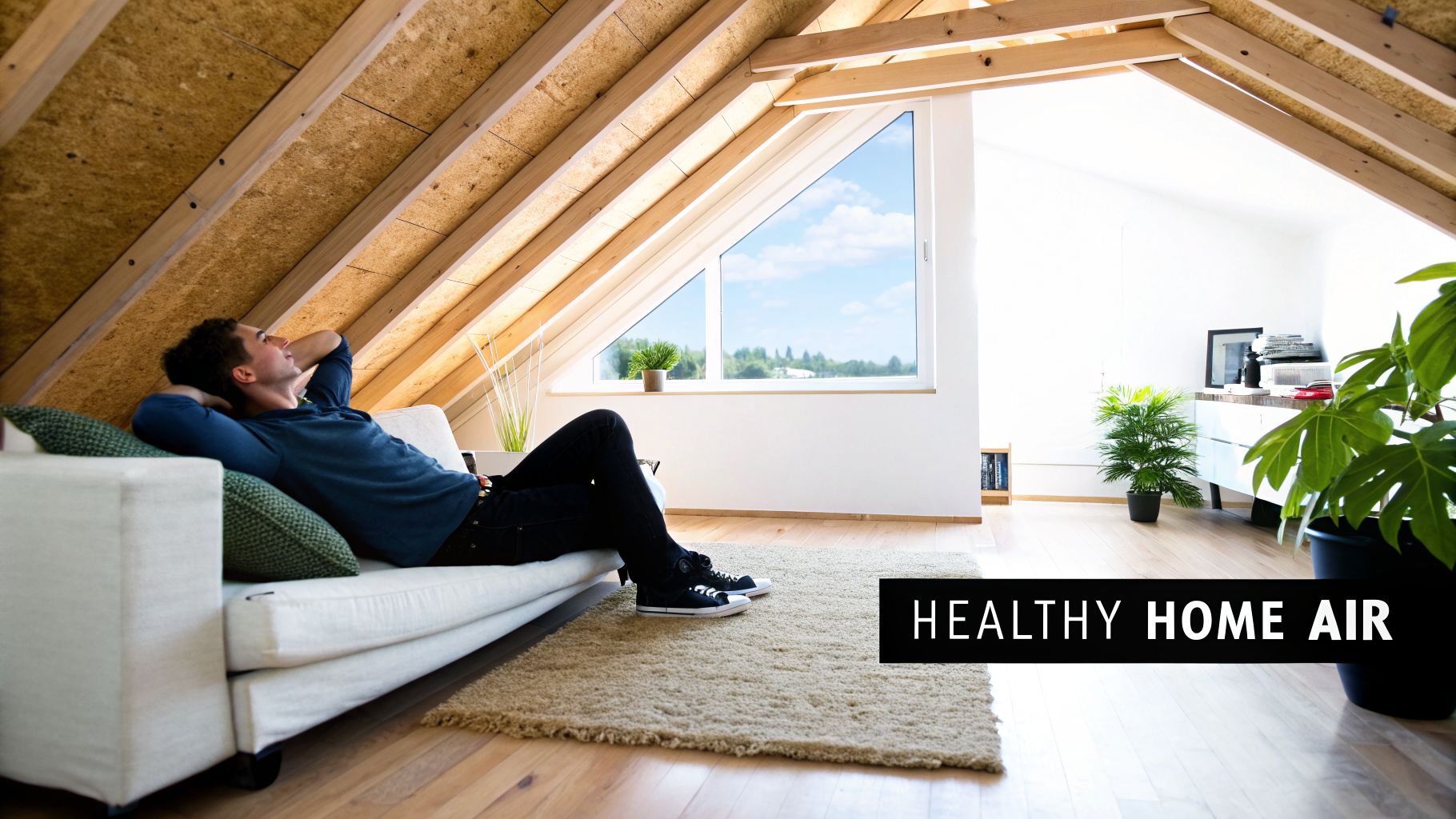
Think of your home's insulation less like a simple winter jacket and more like its lungs. While its main job is to keep your home comfortable, the materials it's made from have a massive impact on the quality of the air you breathe day in and day out.
At its core, "non-toxic" simply means the material is made without chemicals known to cause health problems. For years, many conventional insulation products have used binders and flame retardants that slowly release substances into your home's air. We call this slow chemical release "off-gassing."
Understanding VOCs and Off-Gassing
The biggest culprits behind poor indoor air quality are often Volatile Organic Compounds (VOCs). We've all experienced them—that "new car smell" is a perfect example. What you’re smelling is the off-gassing of VOCs from new plastics and adhesives. In a house, these compounds can come from paint, new furniture, and, you guessed it, your insulation.
When insulation off-gasses harmful chemicals, it can lead to a whole host of issues, from nagging headaches and allergy symptoms to more serious respiratory conditions. This is especially true in modern, tightly sealed homes where fresh air doesn't circulate as freely.
The principles are the same whether you're looking at laundry soap or building materials. It’s all about understanding what "non-toxic" truly means in household products and applying that knowledge to create a healthier environment from the ground up.
Your Quick Guide to Non-Toxic Insulation Choices
To make it easier, here's a quick look at some of the best non-toxic options available today. These materials prioritize health without sacrificing performance.
| Insulation Type | Primary Material | Key Health and Safety Benefit |
|---|---|---|
| Cellulose | Recycled paper or plant fiber | Made from natural materials with a very low-VOC profile. |
| Mineral Wool | Spun rock or slag fibers | Naturally fire-resistant and does not require chemical additives. |
| Sheep's Wool | Natural animal fiber | Naturally manages moisture and filters common air pollutants. |
| Low-VOC Spray Foam | Water-blown polyurethane foam | Cures into an inert solid with zero off-gassing potential. |
These choices represent a significant step up from older, chemically-laden materials, giving you a solid foundation for a healthier home.
The Link Between Insulation and Breathability
Choosing non-toxic insulation is one of the most proactive decisions you can make for your home's indoor air quality. It ensures the materials hidden in your walls and attic aren't secretly working against your family's well-being.
- Reduced Chemical Exposure: These materials are made without formaldehyde, a known carcinogen, and other harsh chemicals that are often used as binders in traditional insulation.
- Improved Air Quality: By picking low-VOC or zero-VOC options, you drastically cut down on the pollutants that get circulated through your HVAC system and into the air you breathe.
- Peace of Mind: Nothing beats the confidence of knowing your home is a safe space, especially for children, elderly family members, or anyone with respiratory sensitivities.
Ultimately, your insulation choice is foundational. It’s a decision that goes far beyond R-values and energy savings—it’s about building a safe, breathable sanctuary for your family. Prioritizing non-toxic materials is one of the smartest investments a homeowner can make.
The Hidden Health Risks in Traditional Insulation
We all know insulation is great for saving on energy bills, but there’s a side to it that most homeowners and even some builders overlook: the quality of the air you breathe every day. Not all insulation is the same, and many traditional products can quietly release harmful chemicals into your home.
It's critical to look past the R-value and ask what your insulation is actually made of. After all, you wouldn't build your home with materials you knew were unsafe, and the same thinking should apply to what's inside your walls.
The Problem with Off-Gassing
One of the biggest issues I’ve seen with older and cheaper insulation materials is off-gassing. This is where chemicals called volatile organic compounds (VOCs) slowly escape from the insulation and mix with your indoor air.
It’s not a one-time event. This happens continuously for months, or even years, after installation. In a well-sealed, modern home, these VOCs have nowhere to go, and they build up over time. This slow-drip exposure can be the source of mysterious health problems like nagging headaches, persistent allergies, and respiratory irritation that you just can't seem to shake.
Common Culprits in Conventional Insulation
Over my years in the industry, I've seen firsthand what goes into some of these products. A few specific chemicals are notorious for causing problems.
- Formaldehyde: This VOC was a common ingredient in the binders used for old-school fiberglass batts. It's a known carcinogen and a major irritant for your eyes, nose, and throat.
- Toxic Flame Retardants: To meet fire codes, many older insulations included chemicals like PBDEs. The problem is, these chemicals are toxic, they stick around in the environment, and they can build up in your body, potentially disrupting hormones.
- Isocyanates: These are a key ingredient in many traditional spray foam formulas. If the foam is mixed improperly or doesn't cure just right—a common issue with inexperienced installers—isocyanates can become airborne. They are potent respiratory irritants and can even trigger asthma.
The real danger here is how persistent these chemicals are. They don't just air out and disappear a week after the job is done. They become a permanent part of your indoor environment, polluting the very air your family breathes.
How to Protect Your Home and Family
So, how do you avoid these risks? It comes down to asking the right questions and choosing your materials and your installer wisely. We cover this in-depth in our complete guide on whether insulation is dangerous to your health, but a good contractor should have no problem showing you what they're using.
Always ask to see the Material Safety Data Sheet (MSDS) for any product being installed in your home. This document breaks down the chemical makeup and any health warnings. Even better, look for materials that have earned third-party certifications like GREENGUARD Gold, which proves they've been independently tested for low chemical emissions.
Choosing non toxic insulation is more than just an eco-friendly decision—it's a direct investment in your family's health. By picking materials free from these chemicals, you’re ensuring your home is the safe, comfortable sanctuary it’s meant to be.
A Practical Comparison of Non-Toxic Insulation Materials
Choosing the right non-toxic insulation comes down to a balance of performance, safety, and your specific project goals. With so many materials on the market, it’s easy to feel overwhelmed. We're going to break down the most common options, looking at them from a practical, real-world perspective to help you decide with confidence.
Let's compare them head-to-head on the factors that matter most in the field: how well they insulate (R-value), how they handle moisture, and their soundproofing and fire-resistant qualities. Understanding where each one shines—and where it falls short—is the key to getting the job done right.
Natural Fiber Insulation Options
Natural fibers are getting a lot of attention, and for good reason. These materials come from renewable sources, require minimal processing, and are inherently non-toxic, making them an excellent starting point for a healthier home.
Sheep Wool:
This is a really impressive material, especially for a humid climate like ours in South Florida. Sheep wool can absorb and release moisture—up to 30% of its own weight—without getting damp and losing its insulating power. This natural ability helps manage indoor humidity and keeps mold at bay.
- R-Value: Around 3.5 to 3.8 per inch.
- Key Advantage: Unbeatable moisture management. It also naturally traps and neutralizes indoor air pollutants like formaldehyde.
- Consideration: It's one of the more premium-priced options.
Cork:
Harvested from the bark of cork oak trees, this is a remarkably tough and sustainable choice. Cork is naturally resistant to moisture, rot, and pests, making it one of the most resilient materials you can find.
- R-Value: Between 3.6 and 4.0 per inch.
- Key Advantage: It delivers fantastic thermal performance and sound dampening while being naturally moisture-proof.
- Consideration: Like sheep wool, its high performance comes with a higher price tag.
This flowchart breaks down some of the most common chemical risks we see in older, traditional insulation. It really shows why so many homeowners are looking for safer alternatives.
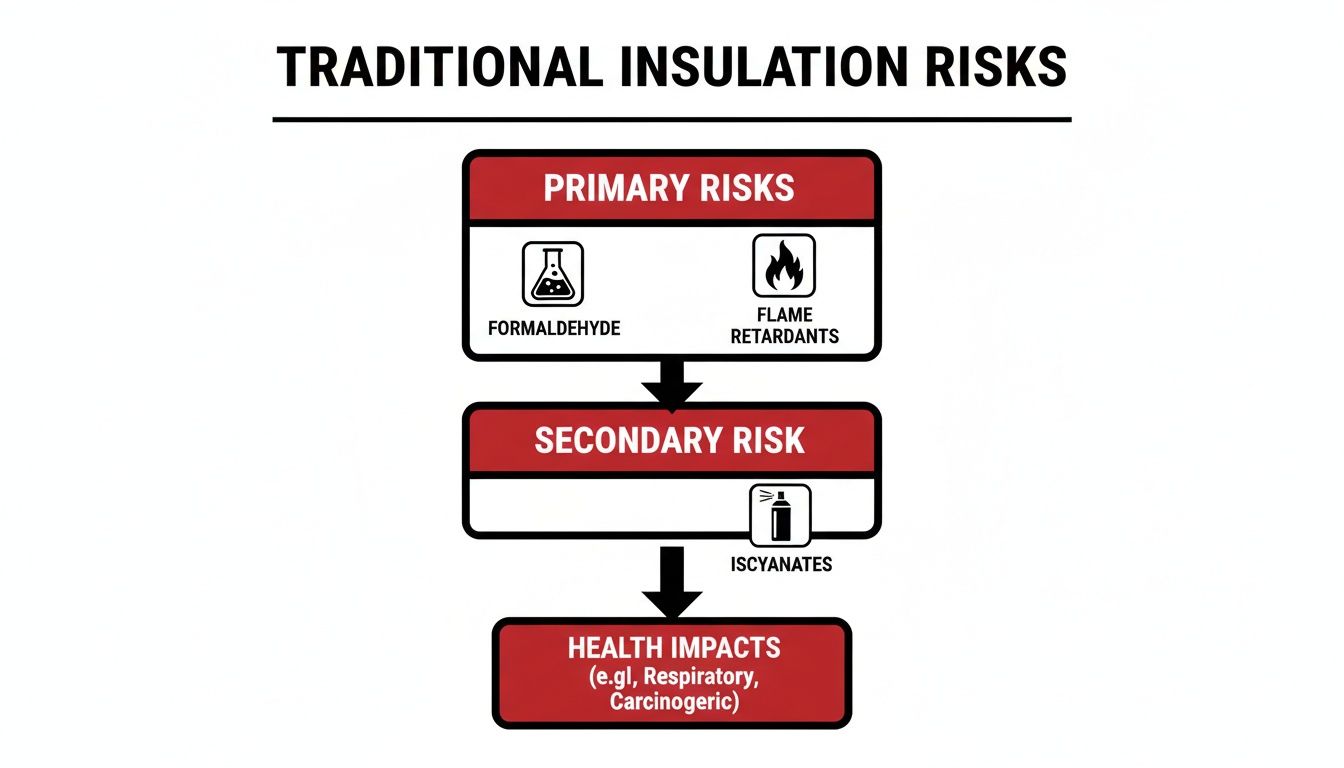
The image pinpoints exactly why materials with formaldehyde, nasty flame retardants, and isocyanates are a problem, driving the shift toward the healthier options we're discussing here.
Non-Toxic Insulation Materials Head-to-Head Comparison
To make things even clearer, here’s a quick table comparing the key performance metrics of these materials. Think of this as a cheat sheet to help you narrow down the best fit for your home and budget.
| Material | Typical R-Value (per inch) | Moisture Resistance | Soundproofing | Key Advantage |
|---|---|---|---|---|
| Sheep Wool | 3.5 – 3.8 | Excellent | Good | Superior moisture management and air purification. |
| Cork | 3.6 – 4.0 | Excellent | Excellent | Naturally rot-proof and great for sound dampening. |
| Cellulose | 3.2 – 3.8 | Fair | Excellent | Cost-effective and made from high recycled content. |
| Mineral Wool | 3.0 – 3.3 | Good | Excellent | Exceptional fire resistance and sound blocking. |
| Low-VOC Spray Foam | 3.5 – 6.5 | Excellent | Very Good | Creates an unbeatable airtight seal. |
Each material has its place, but seeing the specs side-by-side helps clarify which one aligns best with your biggest priorities—whether that's affordability, moisture control, or top-tier thermal performance.
Recycled and Mineral-Based Insulation
These materials strike a great balance between performance, cost, and safety. They are typically made from recycled content or natural minerals, giving you a robust and fire-resistant barrier.
Cellulose:
Made from recycled newspaper and other paper products, cellulose is an affordable and effective choice. It’s treated with non-toxic borates to give it excellent fire and pest resistance. Its dense, packed-in consistency does a great job of filling cavities and creating a solid air seal.
- R-Value: Between 3.2 and 3.8 per inch.
- Key Advantage: Great value, high recycled content, and excellent soundproofing.
- Consideration: It's critical that it's installed correctly and kept away from any direct water leaks to perform as intended.
Mineral Wool (Rock Wool):
Created by spinning molten rock and industrial slag into fine fibers, mineral wool is an absolute workhorse. It's naturally fire-resistant and can handle temperatures over 1,800°F without creating toxic smoke.
- R-Value: Typically 3.0 to 3.3 per inch.
- Key Advantage: Top-tier fire resistance and fantastic sound-dampening capabilities.
- Consideration: It doesn't actively manage moisture like sheep wool does, so a proper vapor barrier is crucial in humid climates.
Modern Low-VOC Spray Foam
While old-school spray foams gave the product a bad name with their chemical smells, today's formulas are a different story entirely. Modern, high-quality spray foams are engineered for safety from the ground up, delivering benefits other materials just can't touch.
Certified low-VOC spray foam is "water-blown," which means it uses water—not harsh chemicals—as its blowing agent. Once it cures, which usually takes about 24 hours, it becomes a completely inert, stable plastic that doesn’t off-gas.
This technology makes it a fantastic non-toxic option, especially when you need a perfect air seal. It expands to fill every single crack and gap, creating a monolithic barrier that stops drafts, moisture, and allergens cold. If you need the highest level of performance for air sealing and moisture control, it’s worth a serious look. You can get the full story on how these new formulas earned their safety ratings in our guide to low-VOC spray foam insulation.
In the end, the "best" non-toxic insulation really depends on your budget, climate, and what you’re trying to achieve. Whether you need the moisture-wicking power of sheep wool, the fire-stopping ability of mineral wool, or the unmatched air barrier from a certified spray foam, there’s a healthy option out there to make your home safer and more comfortable.
Insulating for Florida's Unique Climate Challenges
Insulating a home in South Florida is a completely different ballgame than it is up north. Down here, our biggest enemy isn’t the cold—it’s the relentless one-two punch of intense heat and crushing humidity. In this kind of subtropical environment, your insulation has to do a lot more than just block heat. It has to be a formidable defense against moisture.
Think of humid air as an unwanted guest who’s always trying to sneak inside. It will seep through any microscopic crack or gap in your home's exterior, bringing moisture right along with it. When that warm, wet air hits your cool, air-conditioned surfaces, you get condensation. That’s the perfect recipe for mold and mildew, which just love to grow in damp, dark spaces like attics and wall cavities.
This is exactly why focusing only on R-value in Florida is a rookie mistake. A material's ability to resist and manage moisture is just as critical—if not more so—for protecting your home’s structure and your family’s health.
The Critical Role of a Moisture and Air Barrier
To win the war against Florida humidity, you need an insulation that acts as both a thermal barrier and an air barrier. A complete air seal is non-negotiable. It stops that humid, unconditioned air from getting into your home in the first place, which is the root of so many moisture problems.
Certain types of non toxic insulation are perfectly suited for this job because they are inherently resistant to moisture.
- Closed-Cell Spray Foam: This is a top performer in humid climates, period. When installed, it expands and cures into a rigid, non-permeable plastic that serves as an all-in-one air, vapor, and thermal barrier. It doesn’t just resist moisture; it flat-out blocks it.
- Mineral Wool: Made from spun rock and furnace slag, mineral wool batts are naturally hydrophobic, which means they actually repel water. While they don't create a perfect air seal on their own like spray foam does, they won’t absorb moisture or support mold growth, making them a really durable choice for walls.
By stopping air infiltration cold, these materials prevent the whole condensation cycle that leads to rot, structural damage, and the poor indoor air quality that comes with mold. For a deeper look at this, you can learn more about how a proper moisture barrier insulation system is engineered to protect your home.
Why Sealing the Envelope Is Your Best Strategy
Imagine your home is a ship. You wouldn't just plug a few obvious holes and hope for the best on the open sea; you'd make sure the entire hull is watertight. The exact same principle applies to your home's "building envelope"—the complete barrier between your conditioned indoor space and the outside world.
In South Florida, achieving a complete air seal is the single most effective strategy for both energy efficiency and preventing moisture-related health issues. A properly sealed home requires far less energy to cool and keeps humidity levels where they belong, making the entire house more comfortable and much healthier.
This is where a material like closed-cell spray foam really proves its worth. It expands to fill every single crack, crevice, and odd-shaped gap around your plumbing, electrical wiring, and framing. The result is a monolithic seal that traditional batt or blown-in insulation simply can't replicate on its own.
By choosing a non toxic insulation that also serves as a robust air and moisture barrier, you are tackling the primary challenges of the Florida climate head-on. This approach doesn't just lower your utility bills by keeping your expensive cool air inside; it also protects your investment by stopping the destructive effects of humidity and mold. It’s simply a smarter, healthier way to insulate in the subtropics.
Choosing the Right Installer for Your Insulation Project
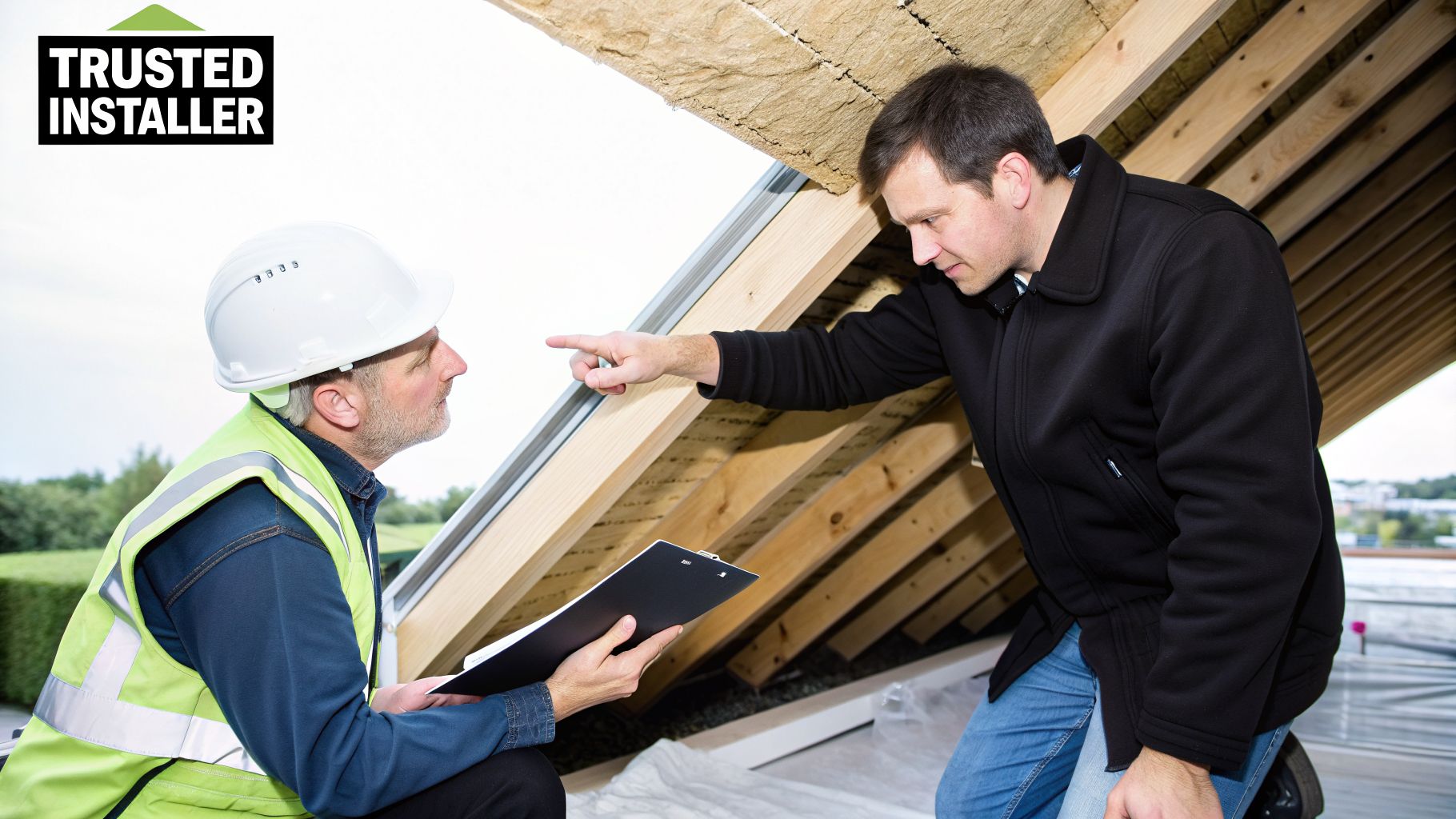
You can pick the best, healthiest non toxic insulation on the market, but if it’s installed incorrectly, you’ve just wasted your money—and potentially compromised your home’s health. The material itself is only one part of the equation.
This is especially critical with advanced systems like low-VOC spray foam. The installer isn't just putting a product in your walls; they are manufacturing the final, finished insulation right there on-site. The safety and performance of that foam depend entirely on their skill.
A great installer isn’t just a technician. They’re a partner who understands building science and genuinely cares about your family’s well-being. They see your home as a complete system, where every component has to work together to deliver real comfort and efficiency. Their expertise is what turns a good material into a great result.
Vetting Contractors: A Practical Checklist
Finding the right professional means asking the right questions. You have to look past the price tag and dig into their experience, their process, and their commitment to doing the job safely and correctly. A contractor who knows their stuff will be happy to answer.
Here are the non-negotiable questions you should ask every potential installer:
- Experience With Your Chosen Material: "How many homes have you installed with [your specific material, e.g., closed-cell spray foam]?" General experience is one thing; specific expertise with the product you’re paying for is another.
- Team Certifications and Training: "Are your technicians certified? By who?" For spray foam, a key credential is certification from the Spray Polyurethane Foam Alliance (SPFA).
- Safety and Curing Protocols: "What are your exact safety procedures during the job, and what is the mandatory 're-entry time' before my family can come back home?" They need a clear, non-negotiable plan for ventilation, containment, and air quality.
- Material Sourcing and Documentation: "Can you give me the Material Safety Data Sheet (MSDS) and show me the GREENGUARD Gold certification for the exact product you plan to use?" Don’t take their word for it; ask for the proof.
A sign of a highly organized and professional operation is often the tools they use behind the scenes. For instance, many top-tier contractors use platforms like Exayard construction estimating software to ensure their project bids are accurate and professionally managed.
Why Expertise is Non-Negotiable for Spray Foam
With batt insulation like mineral wool, a sloppy installation might leave you with a draft or a slightly higher energy bill. But with spray foam, the stakes are much, much higher.
The two components that create the foam are mixed at your property, creating a chemical reaction in real time. An installer who gets the ratio wrong, sprays in the wrong weather conditions, or doesn't prepare the surface correctly can create a foam that never fully cures. This can lead to lingering chemical odors, completely undermining your goal of a healthy home.
This is where a company’s reputation and process are everything. At Airtight Spray Foam, for example, our technicians are trained to a standard that goes far beyond the basics. We know our job isn't just to insulate—it’s to create a final product that is 100% inert, stable, and safe for your family to live with for decades.
From Initial Assessment to Final Walkthrough
A true professional doesn't just show up and start spraying. The entire project should feel like a comprehensive service, from start to finish.
Here’s what that process looks like:
- Thorough Home Assessment: It all starts with a detailed evaluation of your home to spot air leaks, identify moisture risks, and assess ventilation.
- Clear and Detailed Proposal: The quote you get should be crystal clear. It needs to lay out the exact scope of work, the specific materials being used, and the total cost with no hidden surprises.
- Meticulous Site Preparation: The crew should treat your home with respect. That means protecting floors, furniture, and landscaping, and establishing proper, powerful ventilation from the very beginning.
- Post-Installation Cleanup and Inspection: When the job is done, the team should leave your home exactly as they found it. They should then walk you through the finished work to make sure you’re 100% satisfied.
Your choice of installer is just as important as your choice of insulation. By focusing on proven expertise, strict safety protocols, and a transparent process, you’ll find a partner who can deliver the healthy, comfortable, and efficient home you’re investing in.
Your Questions About Non-Toxic Insulation, Answered
When you’re trying to make the healthiest choice for your home, the world of insulation can feel overwhelming. You’re not just picking a product—you're investing in your family’s well-being and your home’s future. We get it. You need clear, straightforward answers without the industry jargon.
Let’s cut through the noise and tackle the most common questions we hear from homeowners, so you can move forward with confidence.
Is Non-Toxic Insulation a Lot More Expensive?
This is probably the number one question we get, and the answer is: not necessarily. It’s a myth that going non-toxic will automatically blow your budget. While some specialty natural materials like cork or sheep's wool come with a premium price tag, many excellent options are surprisingly affordable. For example, cellulose, which is made from recycled paper, is often right in line with what you’d pay for traditional fiberglass.
But the sticker price is just the beginning of the story. You have to look at the total value.
A superior, healthier insulation often delivers better air sealing and moisture control. That means real, long-term savings on your energy bills. An upfront investment in a healthier home can also save you from having to deal with expensive problems like mold down the road.
Modern, certified low-VOC spray foam is a perfect example. While it might cost more initially than simple fiberglass batts, it creates a powerful air and moisture barrier that can slash your heating and cooling costs. In a climate like South Florida, that high performance often means the insulation pays for itself over time, all while keeping your indoor air clean.
Can I Install This Stuff Myself?
Whether you can DIY the job really comes down to the material you choose. Some types of non toxic insulation are manageable for a seasoned DIYer, but others should only ever be handled by a certified professional.
- DIY-Friendly Options: Batt insulation like mineral wool or sheep wool can be a weekend project if you have some construction experience. The job involves cutting the batts to get a snug fit between studs and joists.
- Professional-Only Options: Blown-in insulation like cellulose and all spray foam applications are absolutely not DIY jobs. These materials demand specialized, expensive equipment and a high level of training to get right.
With spray foam, professional installation isn’t just a suggestion—it's critical for the product's safety and performance. An incorrect mix ratio or a poor application technique can lead to a material that never cures properly. This not only negates the low-VOC benefits but also gives you a poor R-value. To get the health benefits and energy savings you're paying for, especially in our humid climate, hiring a certified pro is the only way to go.
What Certifications Actually Mean an Insulation is Non-Toxic?
With so many products being marketed as "green" or "healthy," you have to look for proof from independent, third-party labs. These certifications are your assurance that a product has been tested for chemical emissions and meets strict health and safety standards. Don’t just take a manufacturer’s word for it; ask to see the paperwork.
Here are the key certifications to look for:
- GREENGUARD Gold: This is one of the most trusted standards out there. GREENGUARD Gold certified products have been tested for over 10,000 different chemicals and are proven to have exceptionally low VOC emissions. It’s the benchmark for materials used in schools, hospitals, and homes where air quality is paramount.
- Red List Free: This label, from the International Living Future Institute, confirms that a product is free of the worst-in-class chemicals common in building materials. This includes things like formaldehyde, halogenated flame retardants, and phthalates.
Beyond certifications, always ask your contractor for the Material Safety Data Sheet (MSDS) or the newer Safety Data Sheet (SDS). A reputable installer will be completely transparent about their materials and will have no problem showing you the documentation for their non toxic insulation products.
How Long Does Non-Toxic Insulation Last?
When it’s installed the right way, most non-toxic insulation will last as long as—or even longer than—traditional materials. Think of it as a permanent upgrade to your home. You shouldn’t have to worry about it degrading, settling, or losing its insulating power over the years.
Longevity does vary a bit by material, but they are all built to last:
- Mineral Wool, Cork, and Closed-Cell Spray Foam: These materials are incredibly durable. They resist moisture, pests, and compression, so they won't settle or break down. When professionally installed, they are expected to last for the life of the building, easily over 50 years.
- Cellulose and Sheep Wool: These are also very durable materials, as long as they are kept away from constant water leaks. Cellulose is treated with borates to resist pests and fire, and sheep wool is naturally mold-resistant. With proper moisture management in the home, they will perform well for decades.
Ultimately, choosing a quality material and hiring an experienced professional means your insulation is a one-and-done investment. It will keep your home comfortable, efficient, and healthy for as long as you own it.
At Airtight Spray Foam Insulation, we’re dedicated to bringing South Florida homes and businesses the safest, highest-performing insulation available. Our certified low-VOC spray foam creates a complete air and moisture barrier—the perfect solution for fighting our region's intense heat and humidity. Request your free quote today to see how the Airtight Comfort System can make your property healthier and more energy-efficient.