Blog
Your Guide to Interior Insulation for Walls in South Florida

When we talk about interior wall insulation, we're really talking about a thermal shield hidden inside your home's walls. Its job is to slow down heat, manage moisture, and ultimately make your home more efficient. For anyone living in South Florida, this isn't just a nice-to-have feature; it's your first line of defense against our brutal heat and humidity, and it has a direct impact on your comfort and those ever-climbing A/C bills.
Why Your South Florida Home Needs Better Wall Insulation

Life in South Florida is a constant battle with the elements. All day long, the sun beats down on your home’s exterior walls, causing that heat to radiate straight into your living space and forcing your air conditioner to run nonstop. At the same time, that sticky, humid air finds its way through every tiny crack and porous surface it can. Upgrading your interior insulation for walls is the single most effective way to win this fight.
Think of your home like one of those high-end coolers. You know the kind—the ones that can actually keep ice frozen on a beach in July. A cheap, thin cooler doesn't stand a chance. Your walls work the exact same way. Without solid insulation, all that cool, conditioned air you're paying for just seeps out while the outside heat pours in.
The Role of Insulation in a Humid Climate
Here in places like Jupiter and West Palm Beach, insulation has to do a lot more than just manage temperatures. It has to be an expert at handling moisture. The problem with a lot of traditional insulation, like old-school fiberglass batts, is that it can trap moisture right inside your walls. This creates the perfect breeding ground for mold and mildew, which can rot your home's structure and destroy your indoor air quality.
This is exactly where modern insulation solutions come in. They’re built to tackle our specific climate challenges head-on.
- Air Sealing: Materials like spray foam don't just sit in the wall cavity; they expand to fill every single gap, creating a powerful airtight seal. This stops both heat and humid air in their tracks.
- Moisture Resistance: The right insulation also acts as a vapor barrier, which stops water vapor from moving through the wall and condensing. We get into the nitty-gritty of how a proper vapour barrier and insulation work together in our detailed guide.
- Structural Integrity: By keeping the inside of your walls dry, you protect the wood framing and drywall from rot and decay. This is crucial for preserving your home’s long-term value.
A well-insulated wall system is the foundation of a healthy, comfortable, and energy-efficient home in Florida. It’s not just about adding material; it’s about creating a complete thermal and moisture barrier that stands up to our unique climate.
Beyond Basic Temperature Control
While this guide is focused on your walls, it's important to think of your home as a complete system. True energy efficiency comes from a holistic approach. For instance, top-notch interior insulation for walls works even better when you also have proper attic insulation paired with roofing to stop heat from coming in through the top of your house. When your walls, attic, and foundation are all sealed and insulated, you create a truly stable and comfortable indoor environment.
Choosing the right material makes all the difference. Many older homes are stuck with outdated fiberglass that just can't keep up. Today's options, especially spray foam, offer vastly superior performance. It provides a much higher resistance to heat flow and an unmatched ability to seal off air leaks.
When you invest in better insulation, you’re not just making a home improvement. You’re making a long-term investment in your family's comfort, health, and your own financial savings. You finally get to be the one in control of the thermostat—and your energy bills.
Understanding How Wall Insulation Actually Works
When we talk about insulating your walls, we’re not just talking about stuffing some material into the empty spaces behind the drywall. From an expert’s point of view, it’s about engineering a high-performance system that controls the three biggest factors affecting your home's comfort: heat, air, and sound.
Getting these three things right is the secret to a genuinely comfortable and efficient home. Think of these performance metrics as the "spec sheet" for your house—they tell you exactly how well it will protect you from the elements.
The Power of R-Value
You’ve probably heard people talk about R-value. It’s the most common metric, and for good reason. Simply put, R-value measures how well a material resists heat flow. The higher the number, the more effectively it stops heat in its tracks.
It’s like the difference between wearing a thin cotton t-shirt and a thick wool sweater on a cold day. The t-shirt has a low R-value, letting your body heat escape. The heavy sweater has a high R-value, trapping that heat and keeping you warm.
For a South Florida home, I like to think of R-value as the "SPF rating" for your walls. A higher R-value provides better protection from the relentless solar heat trying to bake its way into your living space, which is key to keeping your home consistently cool.
This is where you see a huge performance gap between materials. Old-school fiberglass batts might give you an R-value of about 3.1 to 4.3 per inch. In stark contrast, modern closed-cell spray foam delivers a powerful R-value of around 6.5 per inch, packing far more insulating power into the exact same space. This level of performance is a major reason the global building wall insulation market, valued at US$37.63 billion in 2023, is projected to hit US$62.78 billion by 2030. You can explore more data on insulation market trends to see how material performance is driving these changes.
Sealing the Gaps with Air Barriers
Now, R-value is crucial, but it only tells half the story. Heat doesn't just seep through your walls; it also catches a ride on moving air. In fact, tiny, unseen gaps and cracks in your home’s structure can be responsible for up to 40% of your energy loss.
That’s basically like leaving a window cracked open all year long. Your AC runs constantly, but warm, humid air just keeps sneaking in, completely undermining all that hard work. This is where a proper air barrier becomes non-negotiable.
An effective air barrier seals every one of those cracks and crevices, creating a truly airtight envelope. This is another area where the choice of insulation makes all the difference:
- Spray Foam: When we apply spray foam, it expands to fill every single void—no matter how small or irregular. It cures into a solid, seamless barrier that makes it virtually impossible for air to get through.
- Fiberglass Batts: These are just cut and fit into wall cavities. They don’t seal anything. Gaps are always left around electrical outlets, plumbing, and the wood studs themselves, creating highways for air to flow freely.
In a humid climate like ours here in South Florida, a solid air seal is everything. It eliminates drafts, takes a massive load off your HVAC system, and—most importantly—stops humid air from getting inside your walls where it can lead to moisture and mold.
Quieting Your Home with Sound Dampening
Finally, let’s talk about peace and quiet. Quality insulation dramatically improves your home’s acoustics by tackling sound on a physical level. Sound travels in waves, and when those waves hit a hard, flat surface like drywall, they just bounce around the room.
Good interior insulation for walls acts like a sponge for sound. It absorbs those waves, stopping them from passing between rooms or coming in from outside.
Think about the echo in an empty room compared to one filled with plush furniture and thick rugs. The furnished room is quiet because all those soft surfaces absorb sound. Insulation does the exact same job inside your walls, dampening noise from street traffic, loud neighbors, or even just the TV in the next room. It’s what transforms a house into a peaceful, private home.
Exploring Spray Foam Insulation for Florida Walls
When it comes to getting serious about interior wall insulation, especially here in South Florida's relentless climate, nothing performs like spray foam. We're not just talking about another roll of insulation; spray foam is an entire system that tackles heat, air, and moisture all at once. For homeowners in Jupiter, West Palm Beach, and beyond, it’s the single most effective upgrade you can make.
But not all spray foam is created equal. There are two main players: open-cell and closed-cell. Knowing the difference is absolutely critical to getting the right result for your home.
Open-Cell Spray Foam: The Sound and Air Barrier
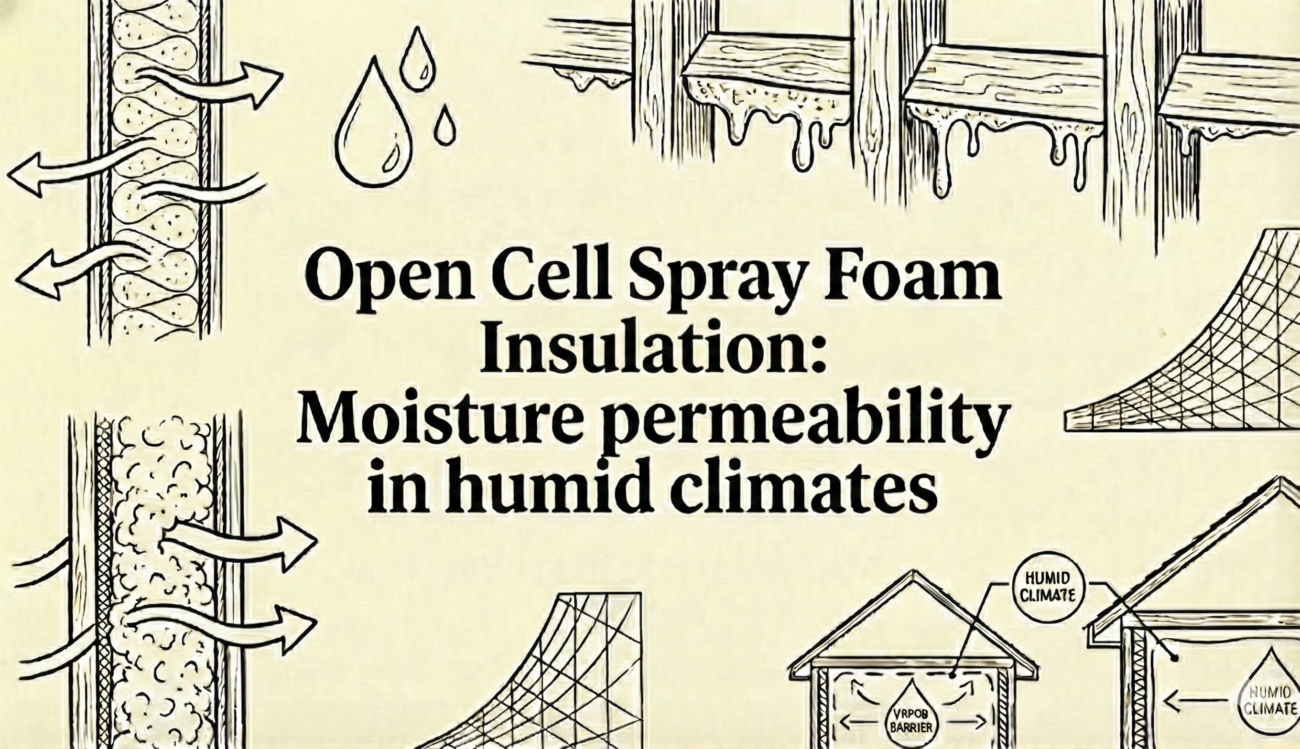
Think of open-cell spray foam like a thick, dense sponge. As the foam expands and cures, it creates millions of tiny air pockets that are connected to each other. This structure gives it a soft, flexible, and almost fluffy texture.
Its real strength is its incredible ability to absorb sound. This makes it a fantastic choice for interior walls between rooms—think home offices, nurseries, or media rooms where you want to create a pocket of peace and quiet. While it offers a solid thermal barrier, its sponge-like quality means it can hold moisture, so we keep it away from any areas with a direct risk of water intrusion.
Closed-Cell Spray Foam: The Rigid, Waterproof Shield
Now, closed-cell spray foam is a completely different animal. It's a rigid, incredibly dense material that cures into a solid, waterproof barrier. Its cells are completely sealed off from one another, which is what stops both air and moisture dead in their tracks. It’s so strong, it even adds structural integrity to the wall itself.
For the exterior walls of any South Florida home, closed-cell is the undisputed champ. Its ability to block water vapor is a true game-changer in our humid environment, stopping moisture before it ever has a chance to sneak into your wall cavities. This is your number one defense against the mold and mildew that plague so many local homes.
If you're wondering where your home's biggest weaknesses might be, this chart is a great place to start.

As the flowchart shows, if your rooms are always hot and the AC is running nonstop, it's a sure sign your insulation isn't doing its job.
To help you decide, here’s a straightforward comparison of how the two types of foam stack up for our unique climate.
Open-Cell vs. Closed-Cell Spray Foam for Interior Walls
| Feature | Open-Cell Spray Foam | Closed-Cell Spray Foam | Best for South Florida… |
|---|---|---|---|
| Structure | Soft, flexible, sponge-like | Rigid, dense, solid | Closed-cell offers superior strength and moisture blocking. |
| Air Barrier | Excellent. Fills gaps to stop drafts. | Excellent. Creates a true monolithic air seal. | Both are great, but closed-cell's rigidity provides a more durable seal. |
| Moisture Barrier | No. It will absorb and hold water like a sponge. | Yes. Acts as a Class II vapor retarder, blocking moisture. | Closed-cell is the only choice for exterior walls to prevent humidity and mold. |
| Soundproofing | Excellent. Its soft structure is great at dampening sound. | Good. Its density blocks noise, but it's less absorptive. | Open-cell for interior walls; closed-cell for a quieter home overall. |
| R-Value | Around R-3.5 to R-3.8 per inch | Around R-6 to R-7 per inch | Closed-cell provides double the insulating power in the same space. |
| Cost | Less expensive upfront. | More expensive upfront, but higher ROI. | Closed-cell's long-term energy savings and moisture protection justify the cost. |
Ultimately, choosing between open-cell and closed-cell spray foam comes down to location and goals. For sound control between interior rooms, open-cell is a great fit. But for protecting your home from Florida’s heat and humidity, closed-cell applied to your exterior walls is the superior investment.
A Local Home's Transformation Story
Let me tell you about a project we just finished in Wellington. It was a beautiful two-story home, but one side got blasted by the afternoon sun. The upstairs bedrooms were unbearable, even with the air conditioner running full tilt. The air felt thick, sticky, and just plain uncomfortable.
After taking a look, we knew exactly what they needed. We installed closed-cell spray foam in their exterior walls. The change wasn't just noticeable—it was immediate and dramatic.
- Even, Cool Temperatures: Those "hot" rooms instantly felt just as cool and comfortable as the rest of the house.
- Drastic Humidity Drop: That sticky, damp feeling vanished. The foam had created a true air and moisture seal.
- A Quieter Home: The family was shocked at how much neighborhood noise the foam blocked out. It was a bonus they hadn't even expected.
This is a perfect example of what the right interior insulation for walls can do. It's not just about energy bills. It's about taking back control of your home's comfort and creating a healthier space for your family. If you want to get into the nitty-gritty, we break down all the technical details in our guide on closed-cell vs open-cell spray foam insulation.
What to Expect During a Professional Installation

It’s one thing to decide you need better insulation. It’s another to know what it actually looks like to have professionals in your home. We get it. That's why we’ve spent years refining our process here at Airtight Spray Foam to be as clean, efficient, and respectful as possible.
We believe an informed homeowner is a confident one. Let's walk you through exactly what happens when our crew shows up, from the first handshake to the final inspection. This isn’t just a job for us; it’s about doing things the right way.
Step 1: The Initial Consultation and On-Site Assessment
It all starts with a conversation. We’re not here to give you a hard sales pitch; we’re here to solve a problem. You tell us what’s going on—whether it's a second-floor bedroom that feels like an oven, shockingly high FPL bills, or that nagging feeling of damp, humid air inside.
From there, one of our experienced technicians will come to your home to see things firsthand. This isn't a quick five-minute look-around. We meticulously inspect and measure the walls, identify any problem spots like hidden air leaks or existing moisture, and get a true feel for your home's unique layout. This in-depth assessment is how we give you an accurate, transparent quote with no surprises down the line.
Step 2: Meticulous Prep Work
On installation day, our crew's first job has nothing to do with spraying foam—it’s about protecting your home. We treat your property like it’s our own, and the prep work is something we take very seriously.
Before a single drop of insulation is applied, we take several key steps:
- Protecting Surfaces: We lay down heavy-duty floor coverings and shield furniture, windows, and fixtures with thick plastic sheeting. Everything in the work area gets covered.
- Isolating the Zone: To keep the rest of your home pristine, we seal off the work area to contain any dust and prevent overspray.
- Managing Air Quality: Proper ventilation is non-negotiable. We set up professional-grade ventilation to ensure air quality remains safe throughout the entire application, following all safety protocols.
You can tell a lot about a crew by how they prepare a home. A team that’s careful and thorough with the prep work is a team that will be just as diligent when it’s time to actually apply the insulation.
Step 3: The Spray Foam Application
With your home fully protected, our certified technicians get to work. This is where real skill and experience make all the difference. Using state-of-the-art equipment, they apply the foam with a practiced, steady hand.
They work in controlled layers, allowing the foam to expand and perfectly fill every single crack, seam, and cavity in the wall. This creates that critical monolithic air seal. Whether we’re using open-cell or closed-cell, our applicators know how to achieve the exact thickness required to hit the target R-value. They also monitor ambient temperature and humidity to ensure the foam cures correctly, creating the tough, high-performance barrier your home needs against the brutal South Florida heat.
Step 4: Final Cleanup and Quality Walkthrough
Once the foam has fully cured, our job still isn't done. We immediately begin a detailed cleanup, removing all the plastic sheeting and floor coverings. We sweep, vacuum, and make sure your home is left just as clean as we found it—if not cleaner.
Finally, our lead technician will walk you through the completed job. This is your chance to see the work up close, ask any questions, and get confirmation that everything meets our exacting standards. We don't leave until you're completely satisfied and confident in your new interior insulation for walls. It's how we ensure we've delivered the Airtight Comfort System we promised.
The Real Cost and ROI of New Wall Insulation
Alright, let's talk about the big question on every South Florida homeowner's mind: what’s this going to cost, and is it actually worth it? It’s easy to get hung up on the initial price tag for new wall insulation. But thinking about it that way misses the bigger picture entirely.
The real story behind modern interior insulation for walls is its powerful return on investment (ROI). This isn't just another home expense. It’s a strategic upgrade that starts paying you back from the moment it's installed.
Beyond Upfront Costs to Long-Term Savings
The first thing you’ll notice is a serious drop in your monthly FPL bill. When your home is properly insulated and air-sealed, your air conditioner doesn't have to work nearly as hard to keep you cool. You’re no longer paying to air-condition the entire neighborhood. Simple as that.
For most homeowners, this means real-world energy savings of 15% to 25%, sometimes even more, every single month. Over a year, that adds up fast, actively chipping away at the initial investment. You can see a more detailed breakdown of the numbers in our guide on if spray foam insulation is worth it.
A Widespread Opportunity for Improvement
The potential for savings is massive, especially when you realize just how many homes are under-insulated. Industry analysis reveals a staggering number of homes aren't performing as they should. For instance, a market report from the North American Insulation Manufacturers Association found that a shocking 89% of U.S. single-family homes have inadequate wall insulation.
By retrofitting these homes with a high-performance solution like spray foam, owners could cut their energy use by 15-25%. Spray foam is a game-changer because it expands to fill every last crack and crevice, slashing air leaks by 75% or more and delivering a level of performance other materials just can't touch.
Protecting Your Home’s Value
The financial benefits don’t stop with your energy bill. A quality insulation upgrade is a major selling point that directly boosts your property’s value.
An investment in quality wall insulation is an investment in your home's health, efficiency, and future resale potential. It's one of the few upgrades that enhances your daily comfort while simultaneously strengthening your financial asset.
Here’s how the returns really stack up:
- Higher Resale Value: Energy-efficient homes are hot commodities. Buyers in South Florida are savvy—a home with documented low utility bills and modern insulation is far more appealing.
- Preventing Costly Damage: In our humid climate, the moisture-blocking power of closed-cell spray foam is your best defense against mold and wood rot. This helps you dodge thousands of dollars in future remediation and structural repair bills.
- A More Durable Structure: Because closed-cell foam becomes rigid as it cures, it actually adds structural integrity to your walls. It’s an extra layer of strength that helps protect your home for the long haul.
Beyond the monthly savings, upgrading your insulation is a significant home improvement. Understanding the core principles of what adds value to a home shows just how powerful this upgrade can be.
When you add it all up—the lower energy bills, the higher property value, and the expensive repairs you'll avoid—upgrading your interior insulation for walls stops looking like a cost. It becomes one of the smartest investments you can make in your home.
A Homeowner's Checklist for Better Insulation
We've covered the science behind modern insulation, but now it’s time to see how your own home stacks up. Think of this as a quick, honest check-up. The answers will tell you a lot about whether your insulation is actually doing its job or just letting your money slip through the cracks.
Take a walk through your house and ask yourself if any of these common symptoms of poor interior insulation for walls sound familiar:
- Uneven Temperatures: Do you have rooms that are always hotter or colder than the rest of the house, no matter where you set the thermostat?
- Sky-High Energy Bills: Are your cooling costs creeping up every year, even though your habits haven't changed?
- Constant AC Operation: Does your air conditioner seem to run all day long just to keep things bearable?
- Noticeable Outside Noise: Can you hear neighborhood traffic or the neighbor's conversations a little too clearly from your living room?
- Damp or Sticky Air: Does the air inside your home feel humid or clammy, even with the AC blasting?
If you found yourself nodding "yes" to any of these, it's a strong signal that your current insulation isn't pulling its weight.
When to Call an Insulation Professional
A quick self-check is a great starting point, but some problems are too serious to DIY. You absolutely need to call in an expert if you spot any of these red flags:
- Visible Mold or Mildew: Any dark spots on your walls or a persistent musty smell point to a moisture issue that needs to be handled immediately.
- Signs of Water Damage: Discolored or soft drywall is a sure sign water is getting into your wall cavities, and you need to know why.
- During a Major Renovation: If you're already tearing down drywall, there is no better or more affordable time to upgrade your insulation.
Don't guess when it comes to your home's health. If you even suspect a moisture or structural problem, getting a professional assessment is the only safe and smart move.
You shouldn't have to fight a daily battle for comfort in your own home. If you're done with hot rooms and shocking energy bills, it's time to take back control. Contact the experts at Airtight Spray Foam Insulation today for a free, no-obligation estimate and let us show you how our Airtight Comfort System can truly transform your South Florida home.
Frequently Asked Questions About Interior Wall Insulation
Making a significant upgrade to your home, especially something inside the walls, is bound to bring up some practical questions. We get it. These are the things homeowners across South Florida ask us every day, so we wanted to give you some clear, no-nonsense answers.
How Long Does a Wall Insulation Project Take?
It’s usually faster than people think. For an existing home, we can typically have the whole job wrapped up in one to three days.
Of course, every house is different. The final timeline really depends on a few things:
- The Scope: Are we insulating just the west-facing walls that get baked by the sun, or the entire house?
- Wall Complexity: Working around a maze of pipes, outlets, and tricky corners takes more detailed prep work than a long, clear wall.
- The Insulation Itself: While applying spray foam is fast, the real pro-level work is in the prep and cleanup to protect your home.
Our crew’s goal is always to get in, get the job done right, and get out with as little disruption to your life as possible. We work efficiently, but we never rush quality.
Can I Stay in My Home During the Installation?
Absolutely. In most situations, you can stay right in your home. The only exception is the immediate area where we're actively spraying.
For everyone's safety—including your family and pets—we require that space to be completely clear during the application and for a few hours afterward while the foam cures. We set up containment barriers and use high-powered ventilation to keep the work zone isolated. Once it's fully cured and stable, the area is perfectly safe to be in again. We’ll work with you to plan it all out.
Does the Insulation Require Any Maintenance?
This is the best part: zero maintenance. Once we install high-quality spray foam, you’re done. It’s not like old-school insulation that can sag, get compressed, or become a nesting ground for pests.
Think of it as a permanent upgrade to your home's core structure. It's a one-and-done solution that will continue delivering energy savings, comfort, and moisture protection for the life of your home without any further attention from you.
Spray foam creates a solid, rigid structure that bonds directly to your studs and sheathing. It becomes a permanent, integral part of your wall, so you can just sit back and enjoy a more comfortable, quiet, and efficient home for decades.
Ready to stop fighting a losing battle with South Florida's heat and humidity? The experts at Airtight Spray Foam Insulation can provide a permanent solution. Request your free, no-obligation quote today and discover how our Airtight Comfort System can transform your home.